


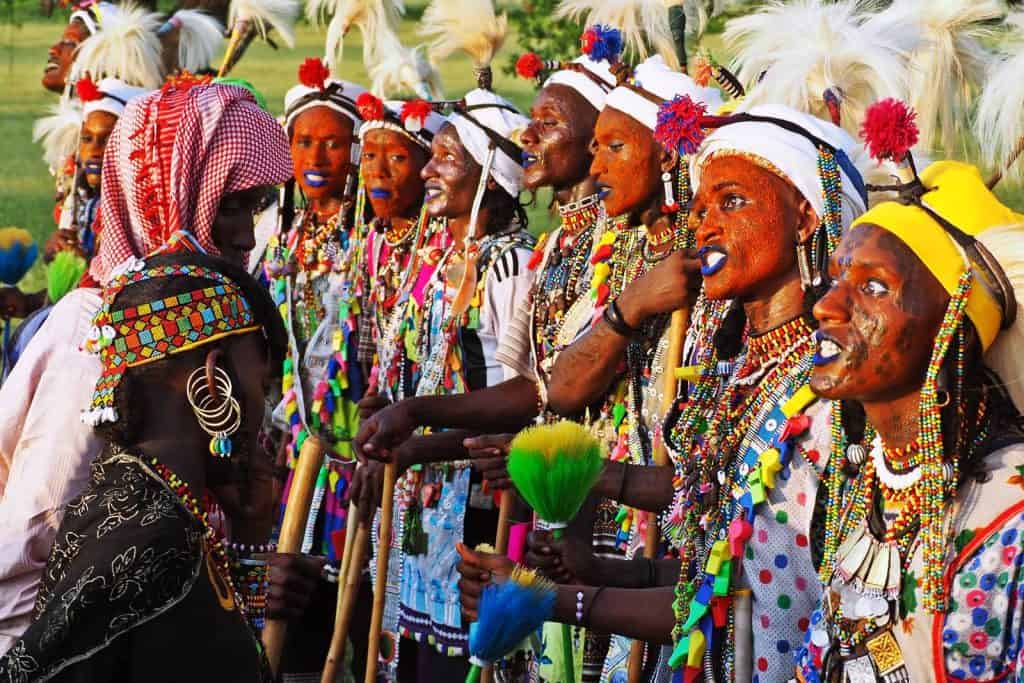
In recent years, the Gerewol ceremonies in Niger and Chad have become some of the most fascinating cultural events in the Sahel, and more and more travelers are interested in experiencing this unique beauty contest among the Wodaabe nomads. But what are the differences between the Gerewol in Niger and the Gerewol in Chad? What are the celebrations like, and what can we expect from each experience? In this article, we’ll explain the main differences.
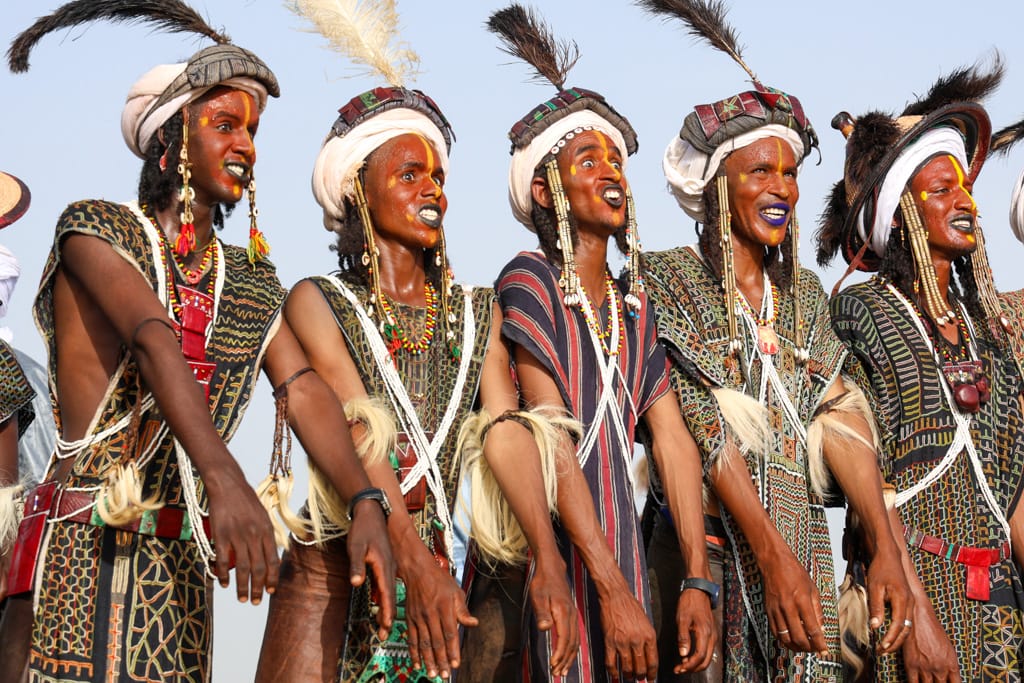
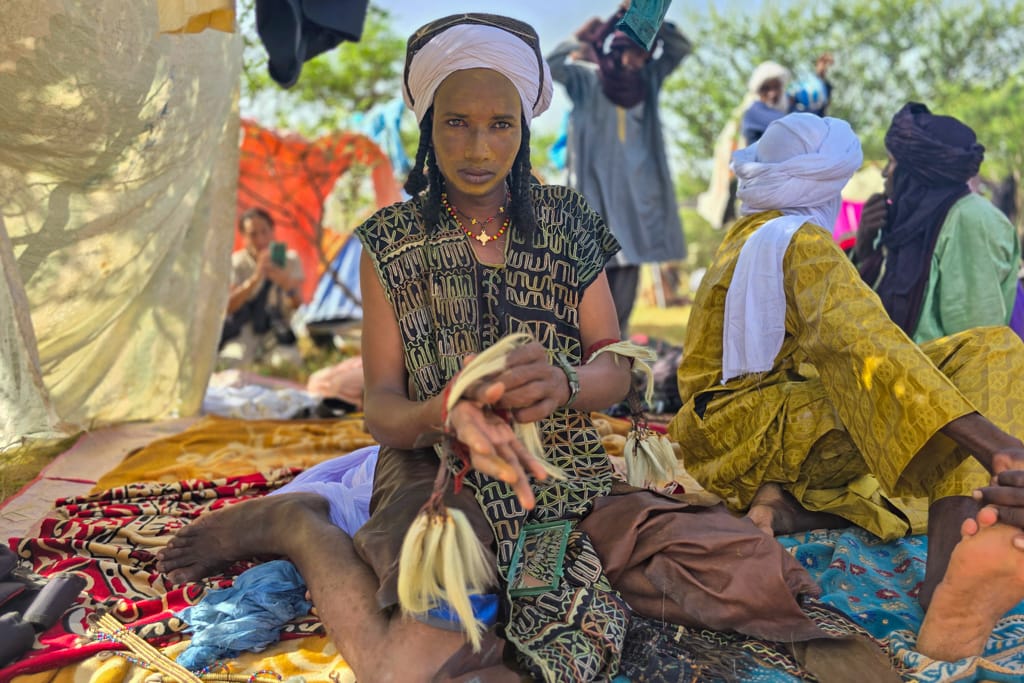
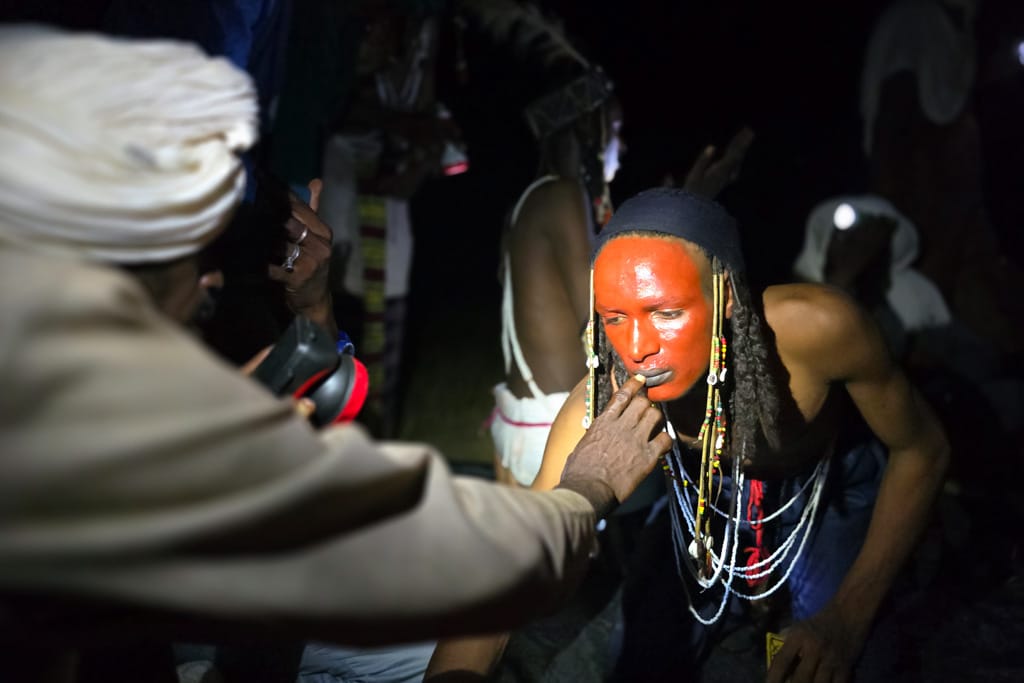
As someone passionate about the nomadic cultures of the Sahel, and after many years of trips with various Fulani groups across Africa, in this article I’ll share my honest opinion about these two events that have attracted so much attention in recent years.
Let me start by saying that both Gerewol festivals—the one in Niger and the one in Chad—are fascinating and very different, each with its own pros and cons.
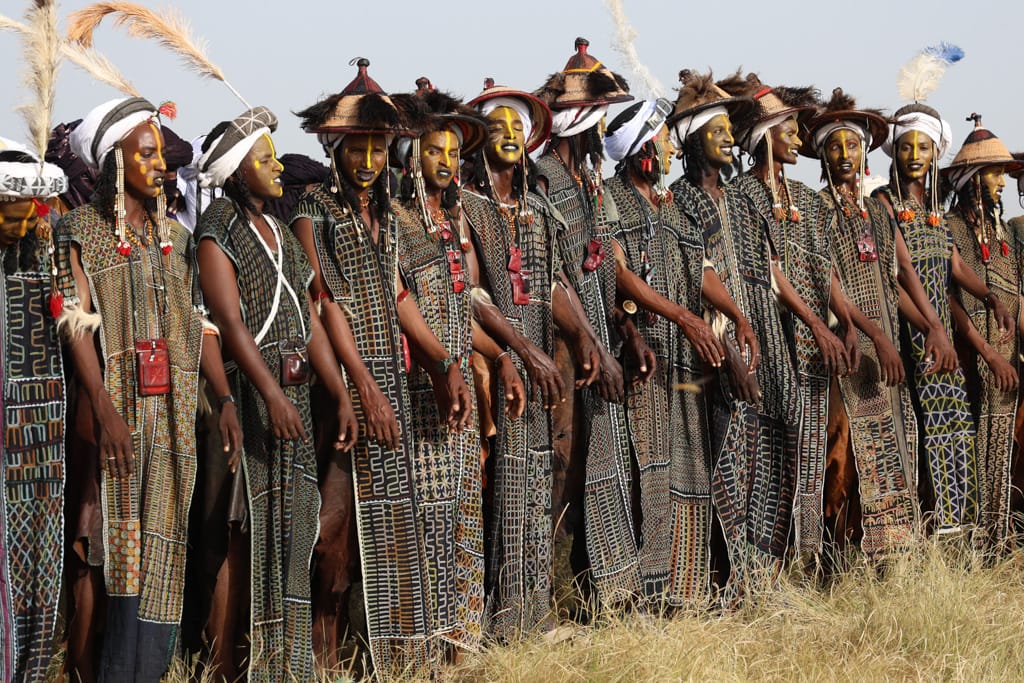
Gerewol in Niger: Grand Celebrations and the Richness of Wodaabe Traditions
The Best of Niger’s Gerewol: Dances and Grand Camps
We invite you to read our account of the 2026 Gerewol festival in Niger.
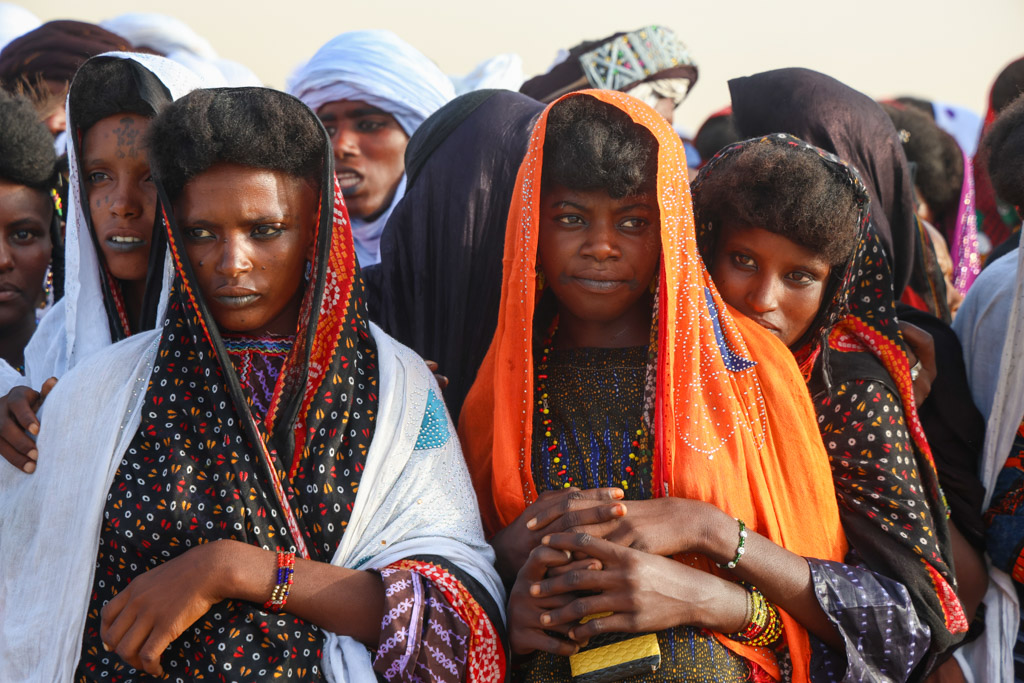
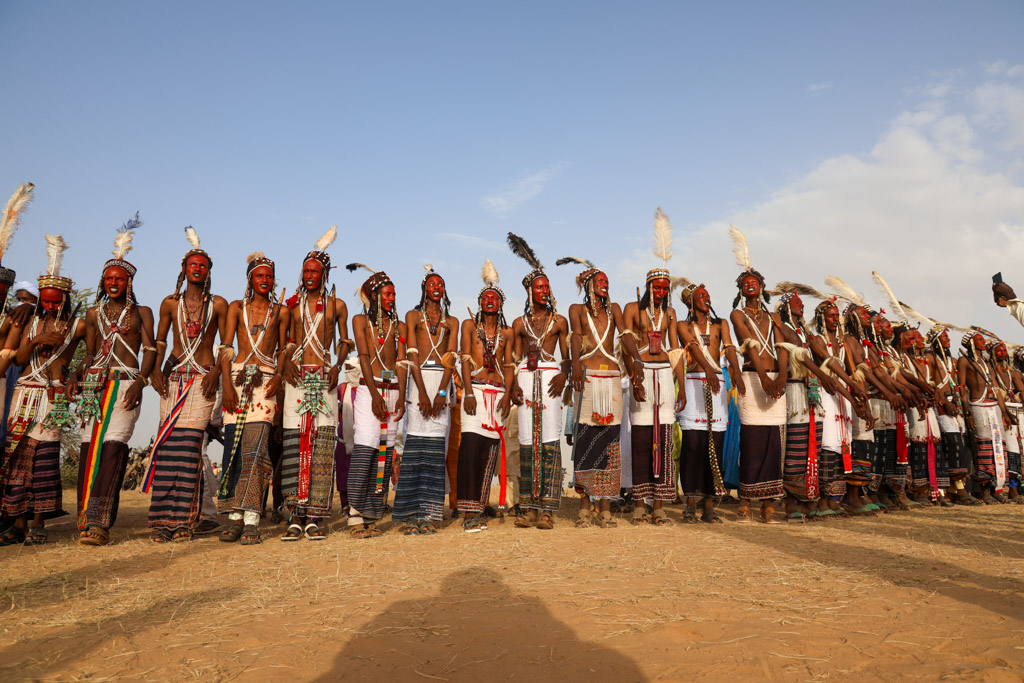
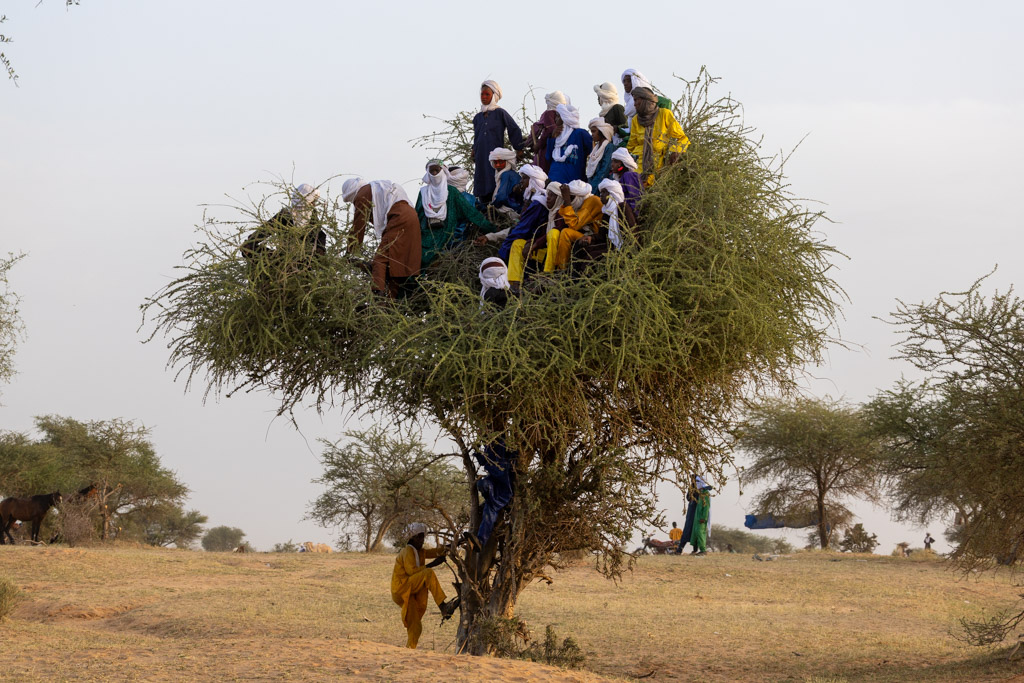
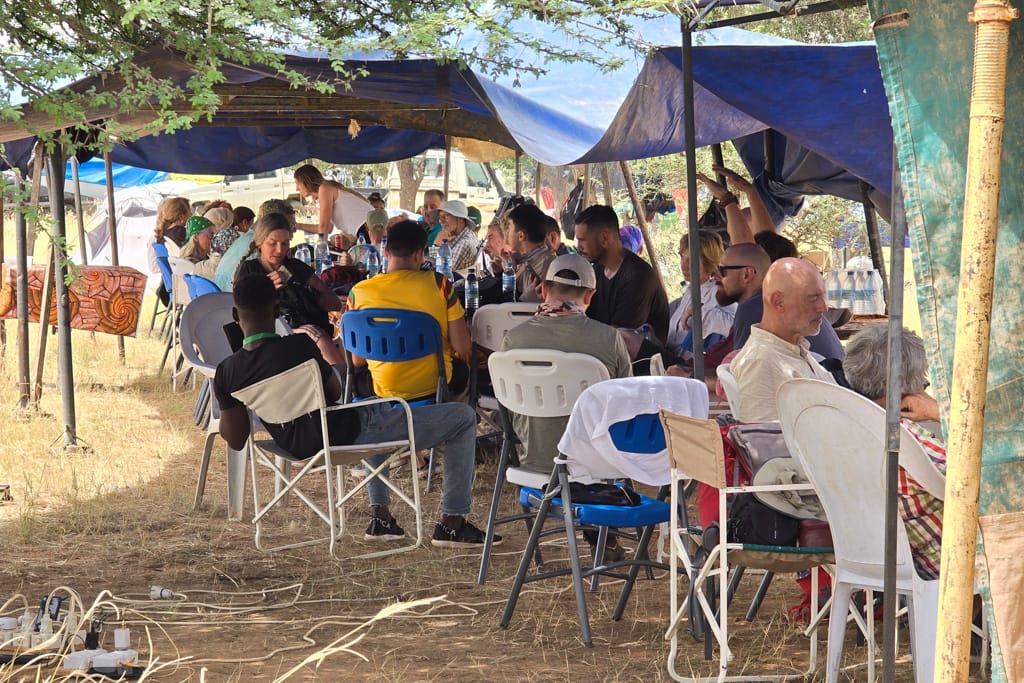
Challenges of the Gerewol Festival in Niger: Tourism, Safety, and Costs

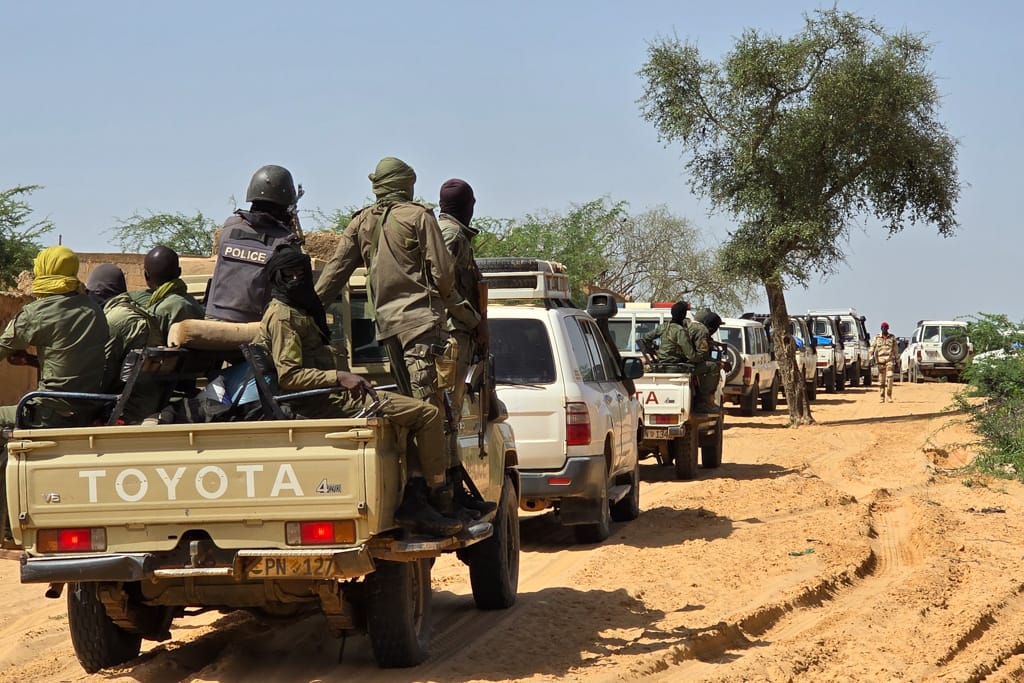
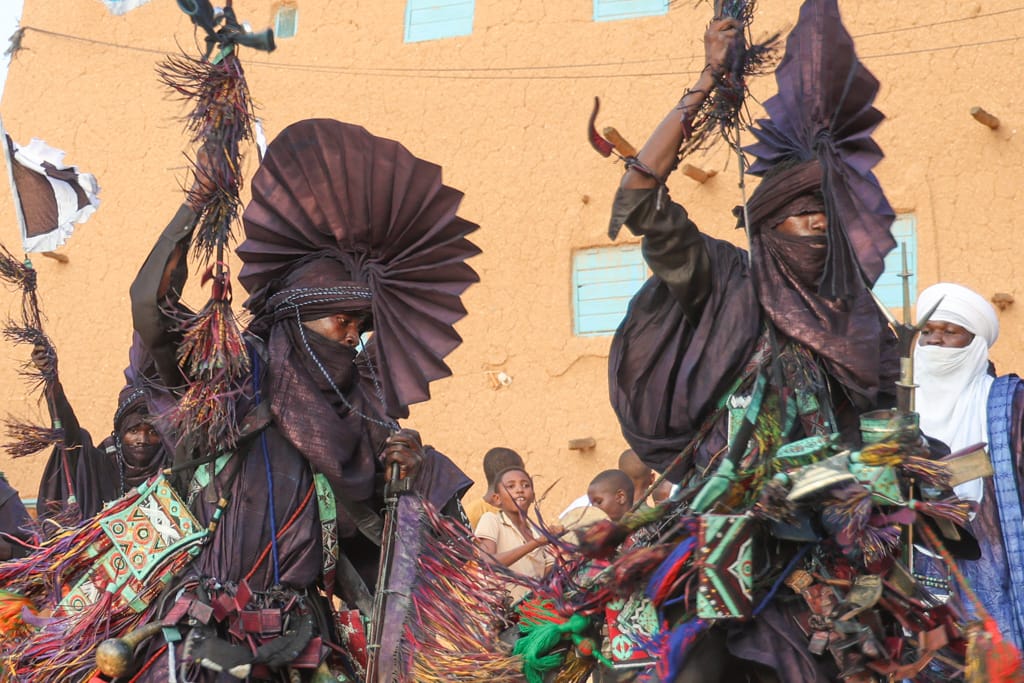
What Else to See in Niger: Agadez, Yaama, and Tuareg Culture
What amazes me most about Niger—aside from the nomadic Wodaabe and Tuareg cultures, with their impressive Bianou ceremony—is its spectaculararchitecture. Don’t miss cities like Agadez and the town of Yaama, with their countless adobe mosques.
If you want to learn more about this country, check out our page on Niger Destination page.
Don’t miss our upcoming trip to Niger—you can find more information at this link.

Gerewol in Chad: A More Intimate Experience with the Wodaabe
The Best of Chad’s Gerewol: Community and Clan Diversity

Challenges Facing Chad’s Gerewol Festival: Rain, Accessibility, and Tourism

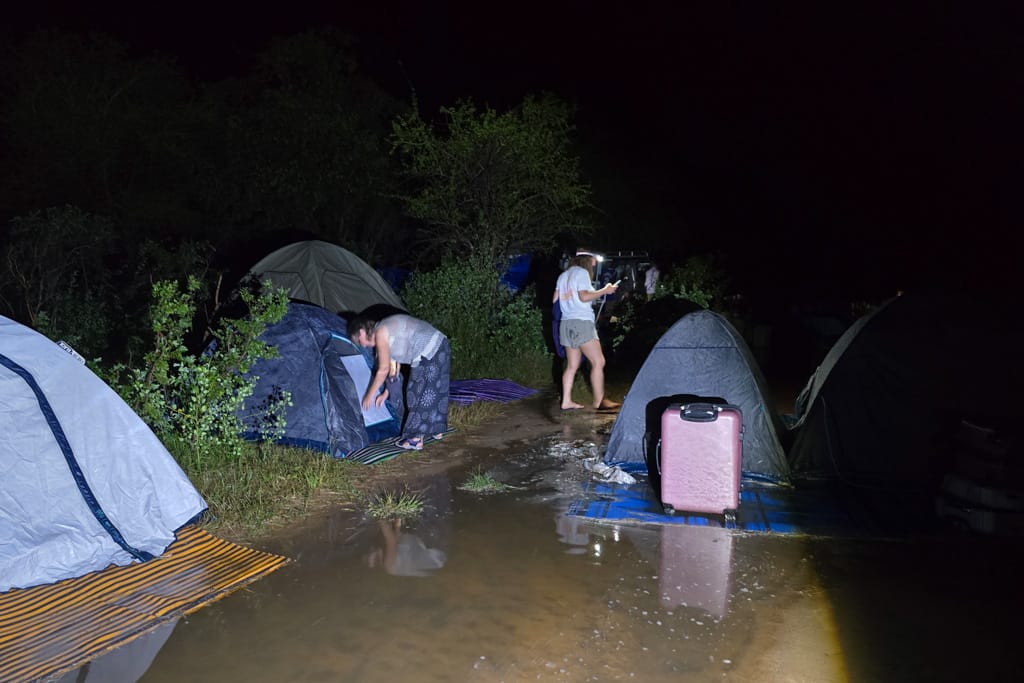
What to See in Chad Besides the Gerewol: Ennedi, Tibesti, Lake Chad, and Nomadic Cultures
Chad’s attractions are countless. It is one of Africa’s most fascinating and little-known countries, a vast territory home to some of the Sahara’s most extraordinary landscapes, tremendous cultural diversity, and one of the continent’s largest concentrations of nomadic peoples.
Without a doubt, the star attraction is the Ennedi Massif Natural and Cultural Reserve, a fantastical landscape made up of natural stone arches, canyons, rock labyrinths, dunes, and gueltas hidden deep in the desert.
Further north, we find the spectacular Ounianga Lakes, designated a UNESCO World Heritage Site, and the remote Tibesti Mountains, an impressive volcanic massif with enormous calderas, oases, and almost lunar landscapes—the traditional territory of the Tubu nomads.
But Chad is much more than just deserts. In the region of Lake Chad , we find a completely different world, with islands, waterways, fishing villages, and an extraordinary diversity of cultures. It is also home to numerous nomadic peoples and Fulani herders, some as fascinating as the Yayai or the Kanoumoudji.
In the south, Zakouma National Park reveals another side of the country, with large herds of elephants, buffalo, and giraffes, as well as an impressive abundance of wildlife. We also encounter tribes such as the Sara, with their own traditions and initiation ceremonies.
After nearly a decade of trips through Chad, we continue to discover new places and cultures. From the salt caravans crossing the desert to the camps of the Sahel’s nomadic herders, Chad is a vast country to which we always find reasons to return.
Don’t miss our upcoming trip to the Gerewol Festival in Chad and Ennedi.
The Gero and the Gimul of the Yayai: Other Ceremonies on Lake Chad
After several years of trips in Chad, we have continued to discover and be amazed by this great country. For example, during a recent visit to the Lake Chad region, we managed to locate a large Yayai nomadic camp where we were able to witness two spectacular and large-scale dances: the Gimul and the Gero of the Yayai nomads.
These are dances of celebration, beauty, and courtship. The Gero dance bears many similarities to the Gerewol of Chad, and Gimul is a frenetic dance in which men and women mix. Both are tremendously energetic dances.
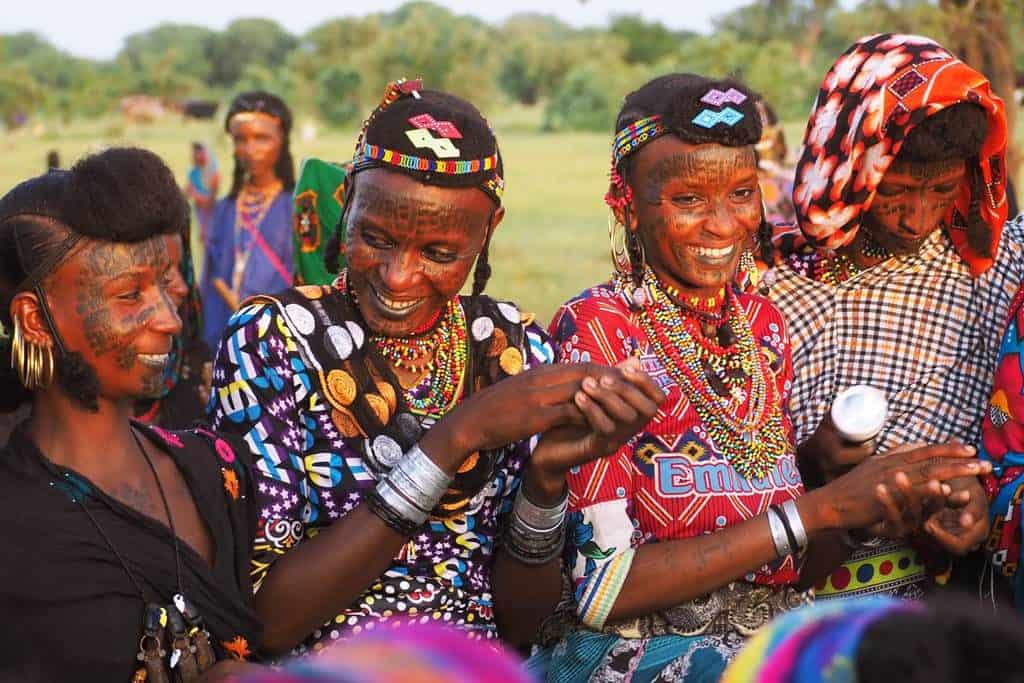
Even more striking than the men’s adornments is the powerful visual impact of the women with their traditional hairstyles and scarification. Furthermore, there are far more women present than at the other traditional Gerewol festivals in Niger and Chad.
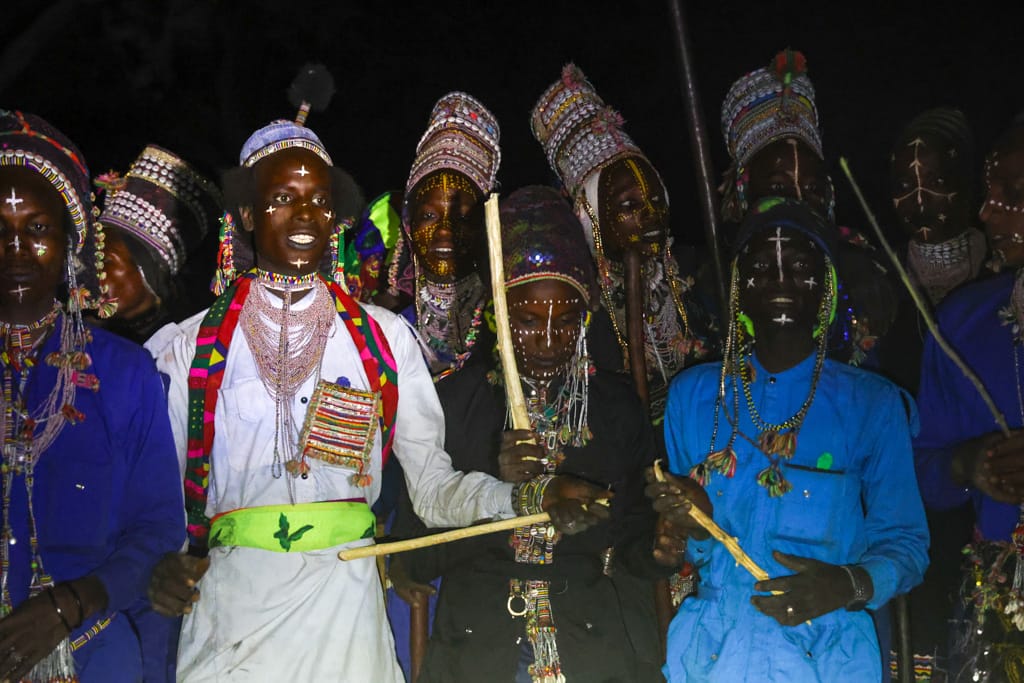
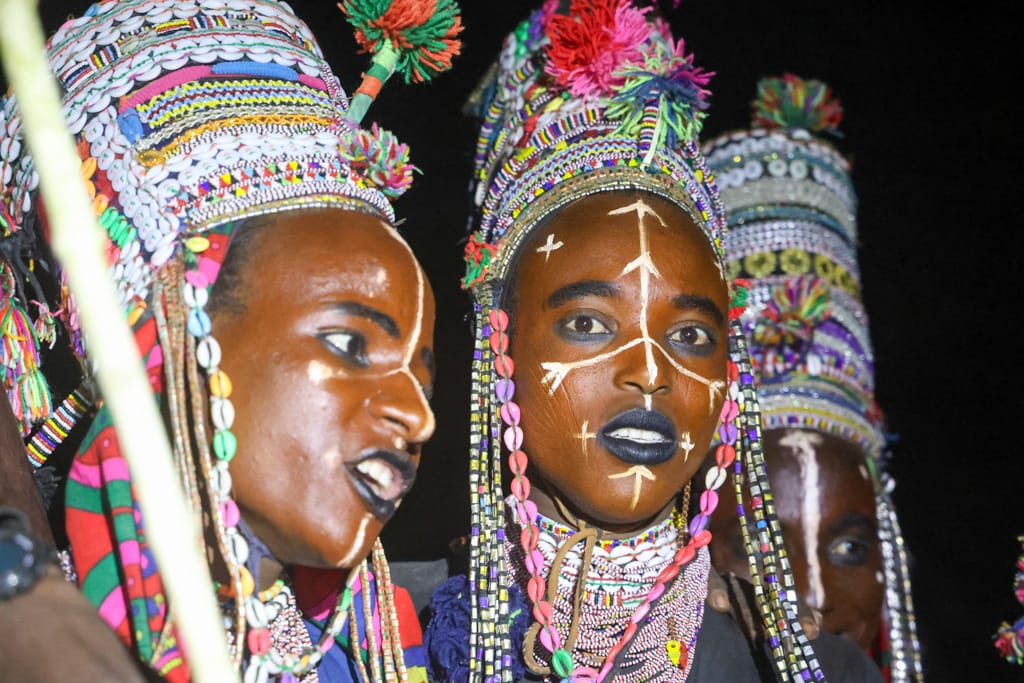
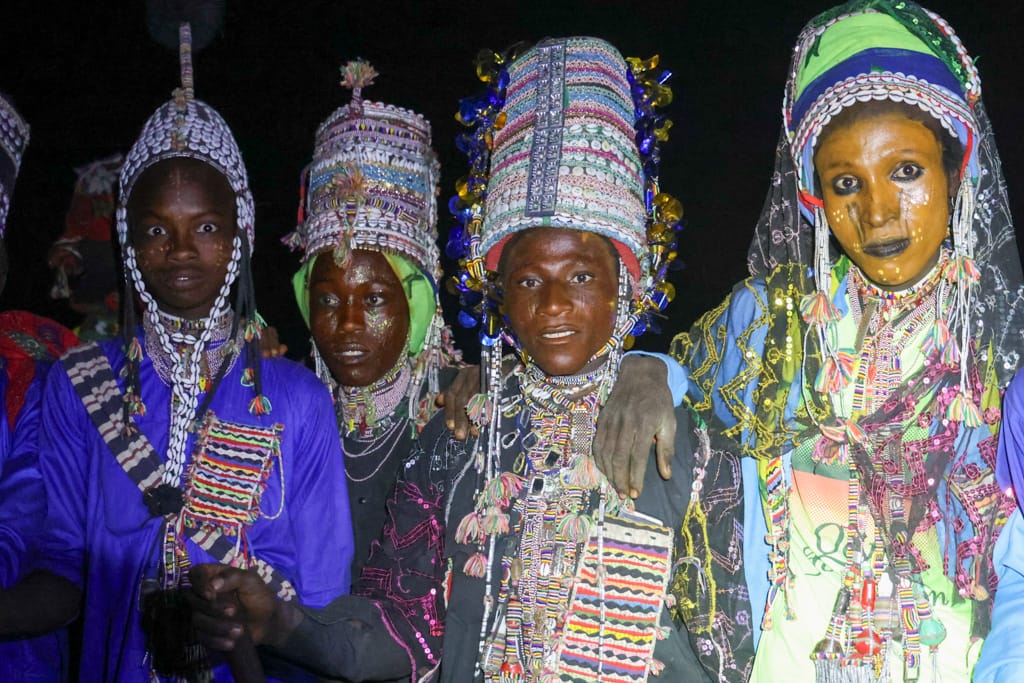
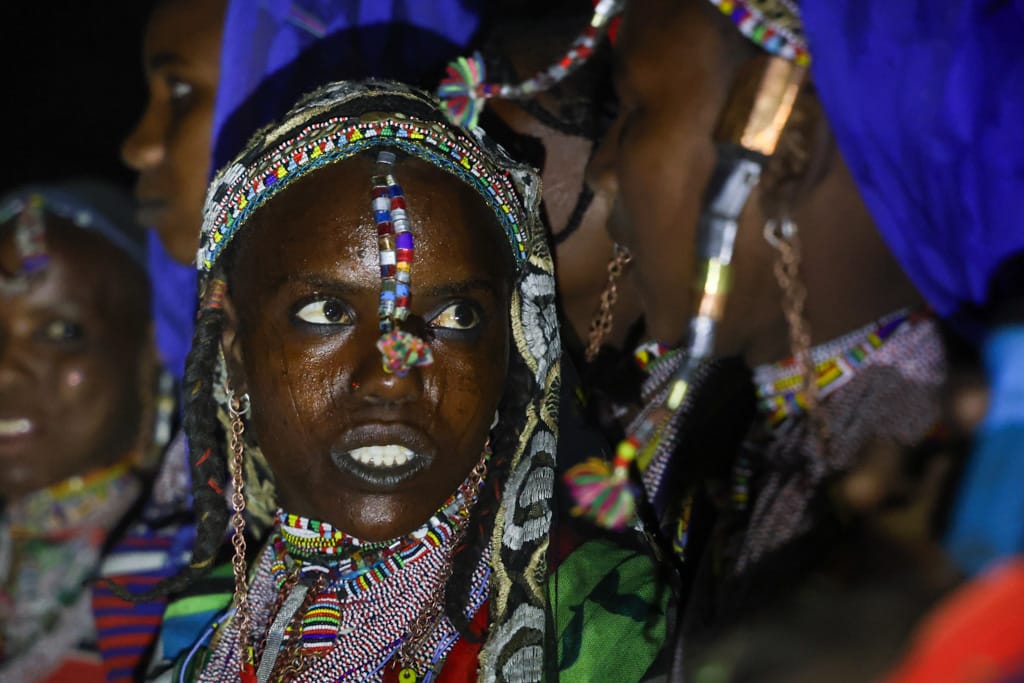
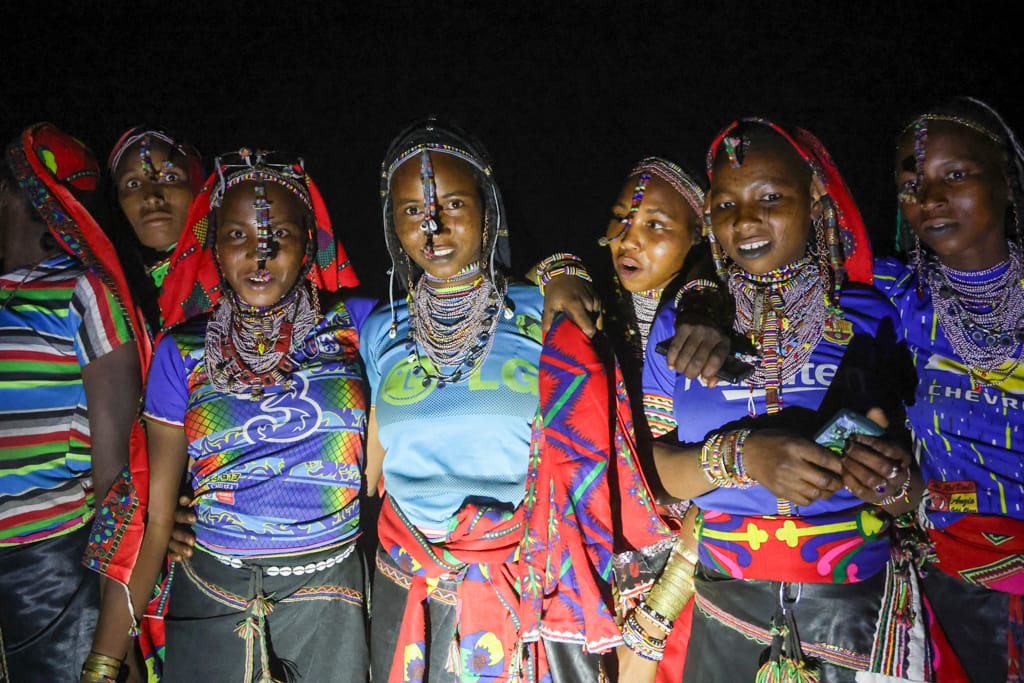
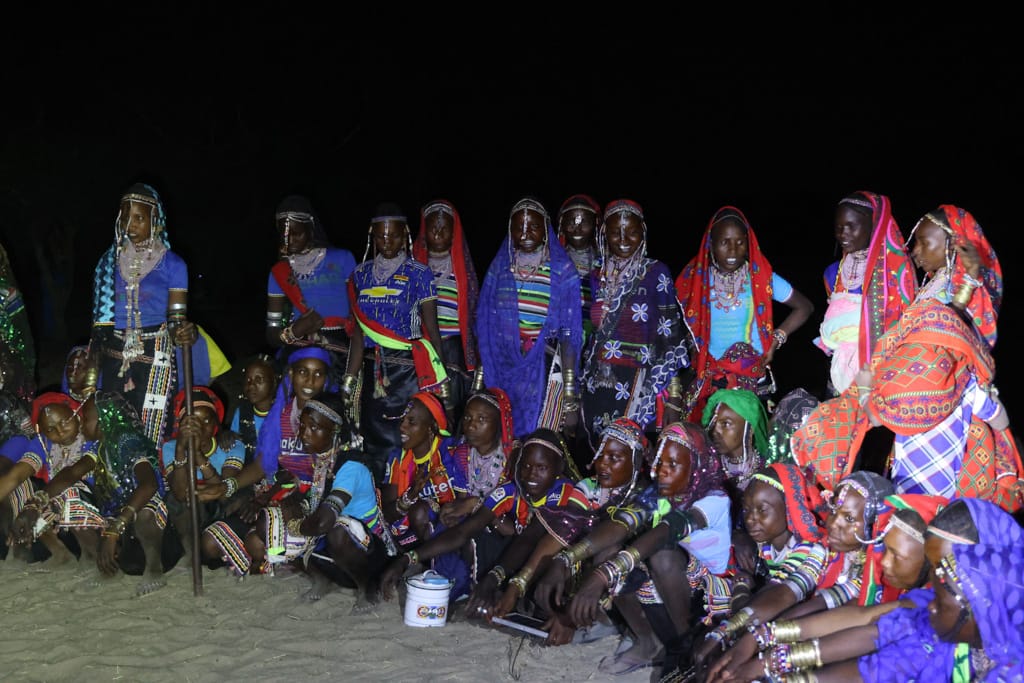
The Gerewol in Niger or the Gerewol in Chad? Which one should you choose?
After many years of trips through the Sahel and sharing experiences with different groups of Wodaabe nomads, it’s hard to choose between the Gerewol in Niger and the one in Chad. Both are extraordinary, but they offer very different experiences.
The Gerewol festival in Niger is notable for its spectacular ceremonies, rich traditions, and large gatherings of participants. The festival in Chad, on the other hand, generally offers a closer interaction with nomadic families, with smaller-scale celebrations and a more intimate experience.
In any case, no two Gerewol festivals are alike. The number of participants, the weather conditions, the movements of the clans, and the specific circumstances of each celebration mean that every year and every trip are different.
Beyond the dances and the participants’ stunning attire, what is truly fascinating is getting to know the Wodaabe culture, understanding their way of life, and respectfully sharing in one of the most important moments of their social calendar.

Autor:
Austerio Alonso
Co-founder of Kumakonda. Passionate of Africa. Specialist in the design, preparation and realization of expeditions in Africa. Content creator.
Travel with us