


Trips to the Central African Republic
The Central African Republic is one of the least known and least visited countries in Africa. A land of great rivers, equatorial rainforests, and savannas, it is located literally in the heart of the continent, where travel still carries a strong sense of adventure and exploration.
For decades, the image of the Central African Republic has been linked to its turbulent political history. And few figures epitomize that history better than Jean-Bédel Bokassa, the country’s president and later self-proclaimed emperor.
In 1976, Bokassa transformed the Central African Republic into the Central African Empire, and a year later he staged an extravagant coronation in Bangui inspired by Napoleon. The empire lasted barely three years, but Bokassa became one of the most controversial figures in 20th-century African history, and his legacy continues to be part of the country’s history.
But behind the stories of emperors, coups, and conflicts lies another Central African Republic that is far more evocative and inspiring.
A country with extraordinary natural wealth, located between the Congo Basin and the vast savannas of Central Africa, and home to one of the continent’s most important nature reserves: Dzanga Sangha.
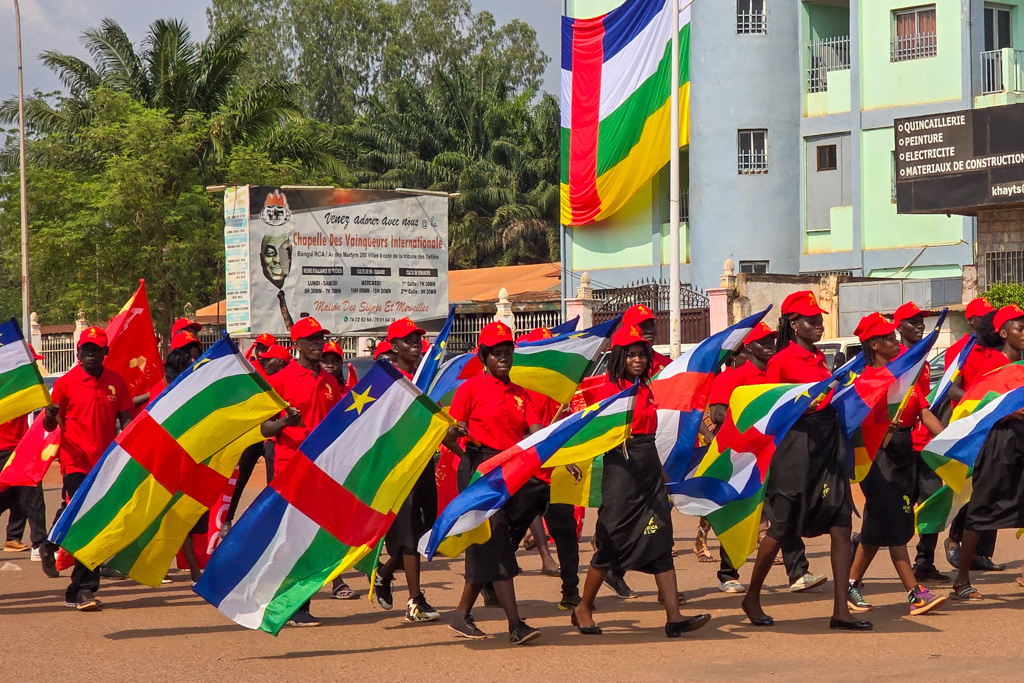
Traveling to the Central African Republic, one of the least-visited countries in the world
The Central African Republic receives very few international travelers. Its isolation, poor infrastructure, and decades of instability have kept the country virtually off the tourist map. As is the case in much of Central Africa, infrastructure here is scarce, distances are long, roads can be difficult to navigate, and organizing a trip through the Central African Republic requires experience, logistics, and flexibility.
But it is precisely this isolation that has made it possible to preserve vast natural areas.
The south is part of the great Congo Basin, covered by tropical rainforest and traversed by rivers such as the Oubangui and the Sangha. To the north, the landscape gradually changes into vast expanses of savanna.
Our main destination on this trip through the Central African Republic is located in the far southwest of the country: Dzanga Sangha, one of the most extraordinary places in Africa to observe western lowland gorillas and forest elephants and to experience the culture of the BaAka people.
But the journey begins in its capital.
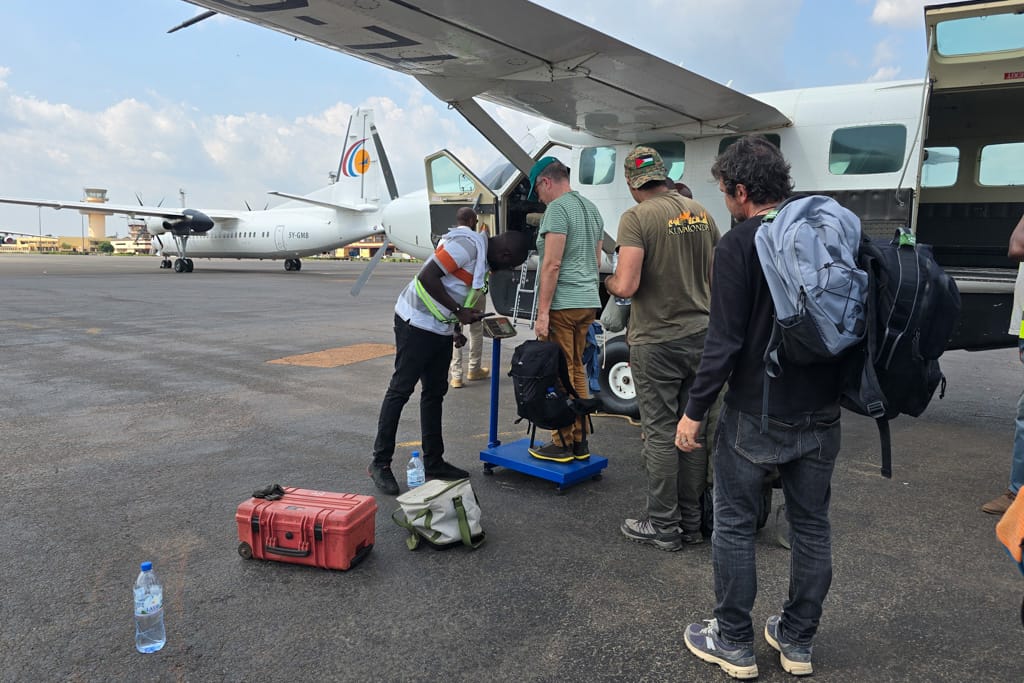
Bangui, the capital of the Central African Republic
Bangui lies along the Oubangui River, one of the major tributaries of the Congo River. On the opposite bank lies the Democratic Republic of the Congo, and behind the city rise hills covered with vegetation.
For many travelers, Bangui turns out to be different from the city they had imagined before arriving.
The capital has a relatively laid-back pace and is a good introduction to the country. We explore its markets and neighborhoods, visit the massive Oubangui River, and set aside time to experience the city’s daily life as well.
As evening falls, the bars, outdoor cafes, restaurants, and small establishments where the people of Bangui gather come to life.
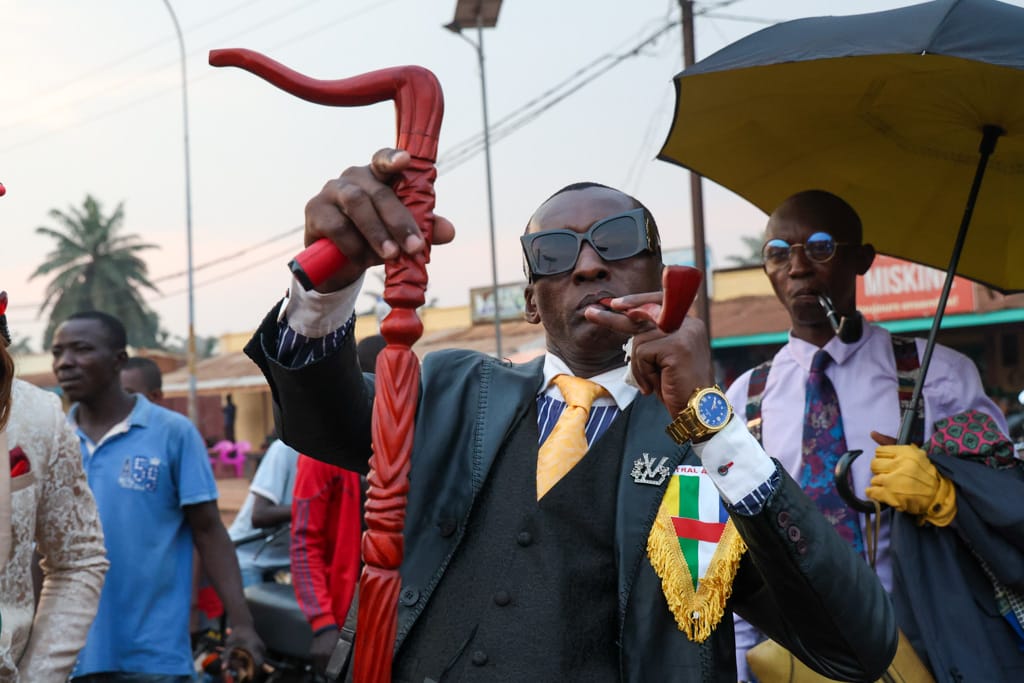
And here we also find some of our favorite characters: the sapeurs of Bangui.
The Sapeurs of Bangui
SAPE—the Société des Ambianceurs et des Personnes Élégantes—is much better known in Brazzaville and Kinshasa, but its influence has also reached Bangui.
Impeccable suits, shiny shoes, hats, canes, and impossible color combinations are all part of an urban culture where elegance becomes a statement of identity.
On our trips, we try to get to know this other side of Bangui, sharing a few beers, music, and dancing with the capital’s sapeurs before heading into the jungle.
It’s a much more fun way to start a trip through the Central African Republic than staying cooped up in a hotel.
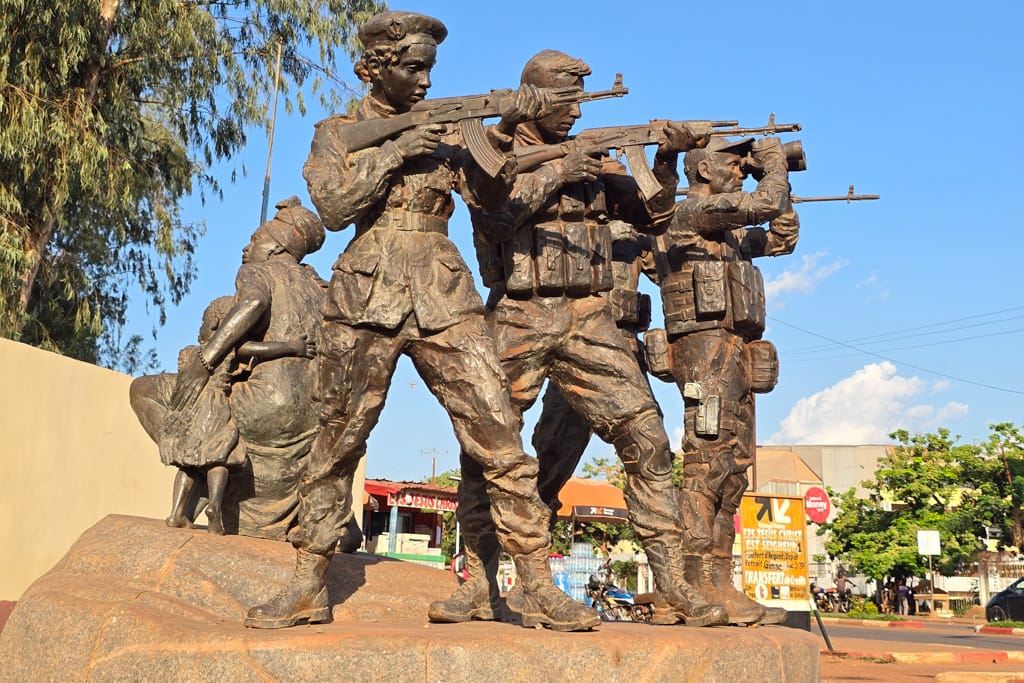
Traces of Recent History
Bangui also offers insight into some of the contradictions of the Central African Republic today.
Among the city’s most surprising features are the monuments related to Russia and the Wagner Group—a sight that may seem unusual to travelers but is part of the political and urban landscape of the contemporary CAR.
The city, its markets, its bars, and the Oubangui River thus coexist with the visible traces of an extremely complex political history.
The Boali Waterfalls
From Bangui, we can also visit the Boali Falls, one of the most famous natural landmarks in the Central African Republic.
Located northwest of the capital, the waters of the Mbali River cascade down a wide rocky face surrounded by vegetation. Its appearance changes dramatically depending on the time of year and the water level.
Boali gives us a chance to discover a very different landscape before we head toward the vast rainforests of the southwest.
And that is where another Central African Republic truly begins.
Dzanga Sangha: The Heart of the Central African Jungle
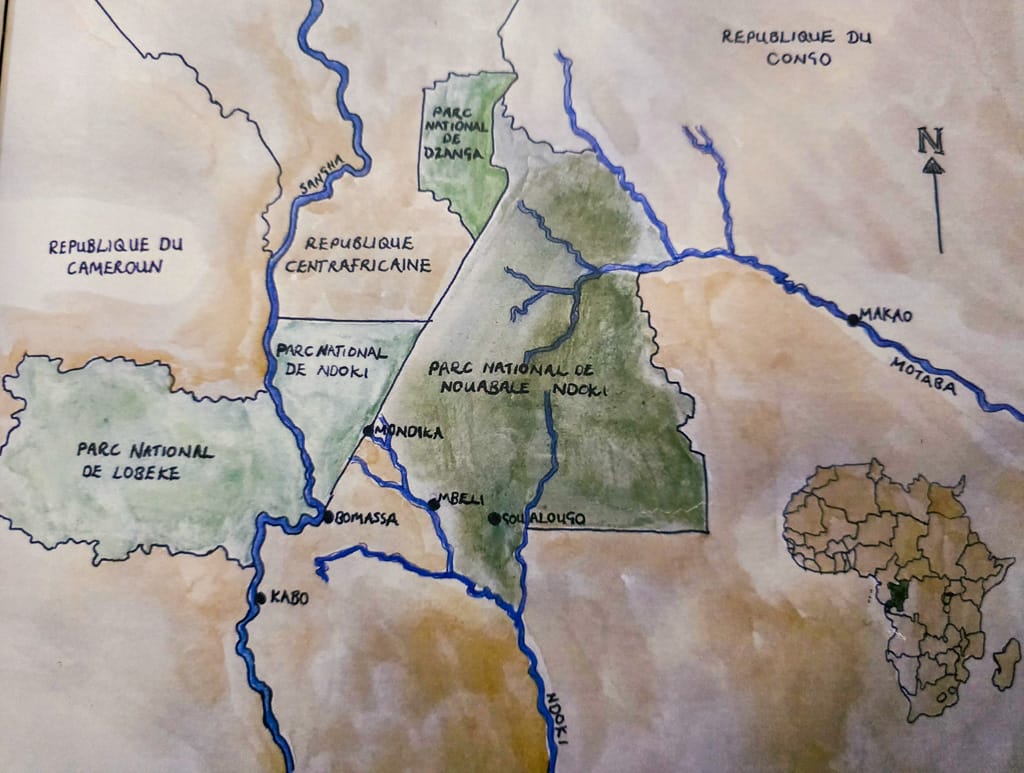
In the southwestern corner of the country lies Dzanga Sangha, a vast expanse of tropical rainforest that is part of the Sangha Tri-National Park, a natural area shared by the Central African Republic, Cameroon, and the Republic of the Congo.
It is one of the major wildlife sanctuaries in the Congo Basin.
Here, the jungle seems to go on forever. A vast expanse of trees crisscrossed by rivers, small trails, and natural clearings known as bais.
Our base for exploring the region is Bayanga, on the banks of the Sangha River and the gateway to the Dzanga Sangha protected areas.
From here, we head into the jungle to enjoy two of the greatest natural experiences a trip to the Central African Republic has to offer: Dzanga Bai and an encounter with the western lowland gorillas.
Dzanga Bai and the Forest Elephants
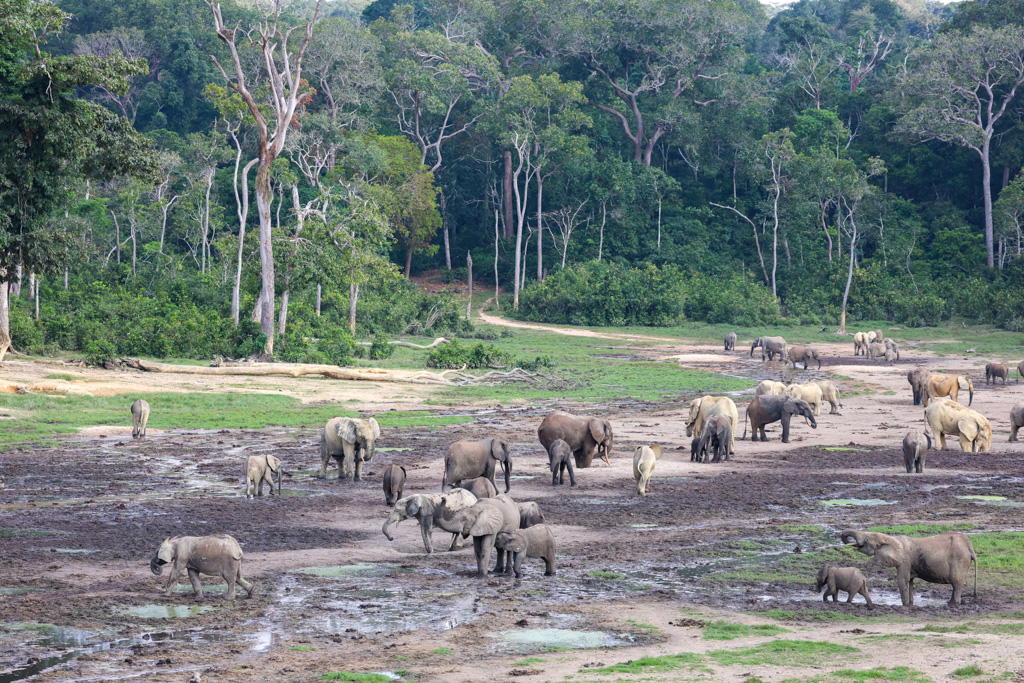
Dzanga Bai is one of the most spectacular places in Central Africa.
In the middle of a virtually impenetrable jungle, a huge, mineral-rich marshy clearing suddenly appears. Animals emerge from the forest to feed on the salts in the soil and drink.
And the main stars are the forest elephants.
Unlike the elephants of the savannas of East and Southern Africa, these animals spend much of their lives hidden in the dense jungle. Spotting them can be extremely difficult.
Dzanga Bai completely changes that situation.
From an elevated platform, we can spend hours watching as different groups of elephants emerge from among the trees, feed, interact, and disappear back into the forest.
Forest buffalo, bongos, and other animals may also appear.
This isn’t a traditional safari. We’re sitting in front of a clearing in the middle of the jungle in the Congo Basin, waiting and watching to see what happens.
Western Lowland Gorillas in Dzanga Sangha
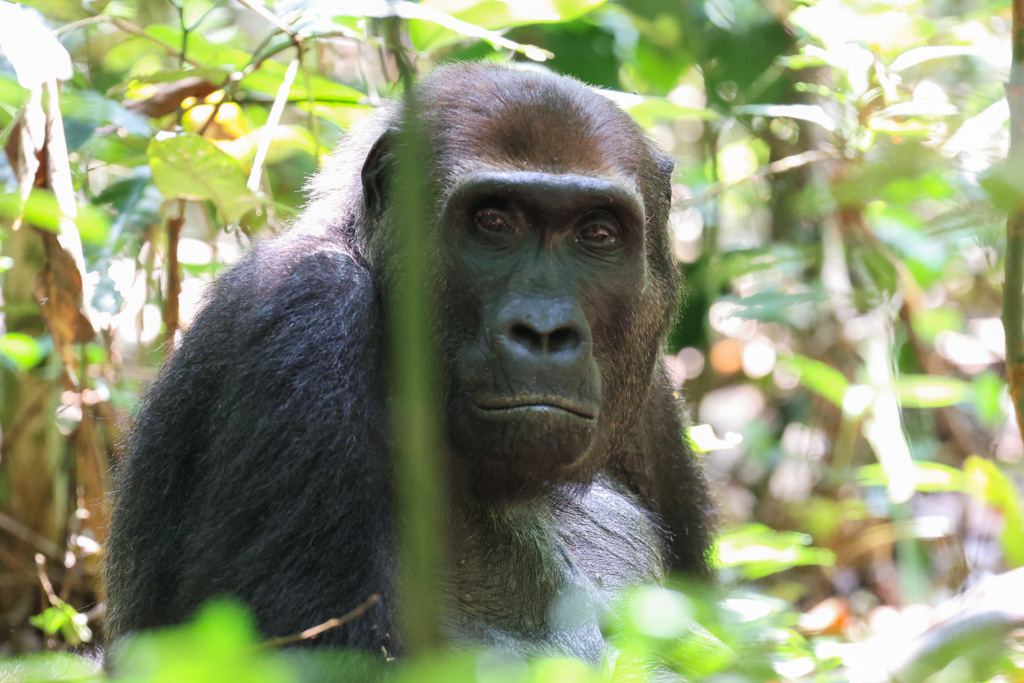
Dzanga Sangha is also one of the most interesting places to observe western lowland gorillas.
Accompanied by trackers, we walked through the jungle in search of groups of gorillas that are accustomed to human presence.
Here we make our way on foot through giant trees, vines, mud, and dense vegetation until we come upon the gorillas in their natural habitat.
But for us, wildlife is just one part of the trip.
Because this jungle has human inhabitants who know it much better than any of us.
The BaAka, inhabitants of the jungle
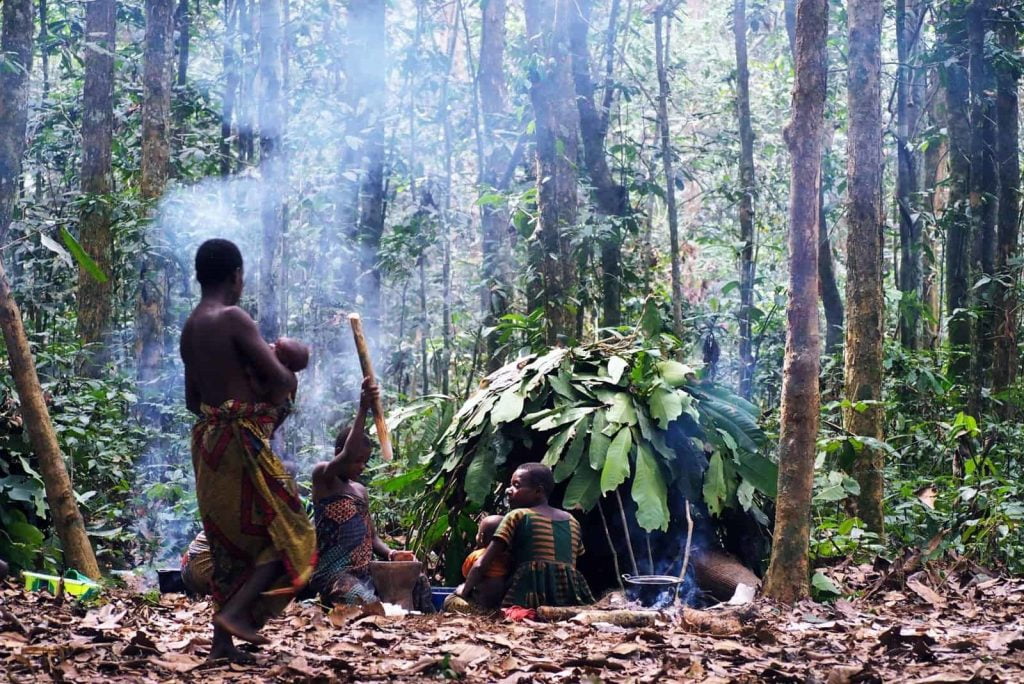
The BaAka are one of the indigenous peoples of the Central African rainforests.
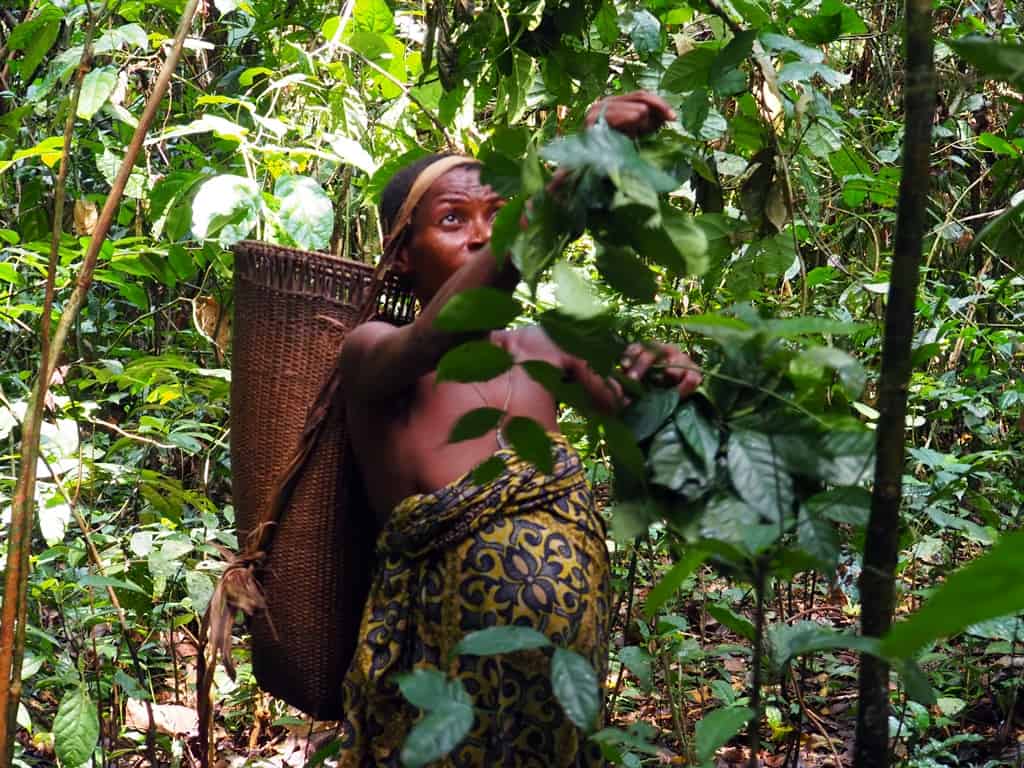
Their culture and way of life are deeply intertwined with the forest. For generations, they have developed an extraordinary knowledge of animals, medicinal plants, fruits, hunting and fishing techniques, and ways to find their way in an environment that may seem completely impenetrable to a visitor.
On many trips to Dzanga Sangha, contact with the BaAka is limited to an activity lasting a few hours.
We want to take it a step further.
Living Among the BaAka
On some of our expeditions, we go on multi-day treks through the jungle with the BaAka.
We packed what we needed and set off on foot into the forest to spend several days away from roads and towns.
We’re not trying to put on a show of how the BaAka live. We want to take our time.
Time to walk together, set up camp, forage for food, identify plants, learn traditional techniques, listen to stories, and begin to understand how a person can find their way and live in one of the densest tropical forests on the planet.
We slept in simple camps in the middle of the jungle.
And when night falls, the forest changes completely.
The sounds of animals and insects replace the noise of the day, and around the camp, the BaAka’s polyphonic chants—one of Central Africa’s most extraordinary cultural expressions—may begin.
Their songs, dances, and ceremonies are part of a culture in which music, community, and the forest are deeply intertwined.
For us, these days spent hiking and camping with the BaAka are one of the most special experiences of our trips to the Central African Republic.
The Sangha River and the Congo Basin
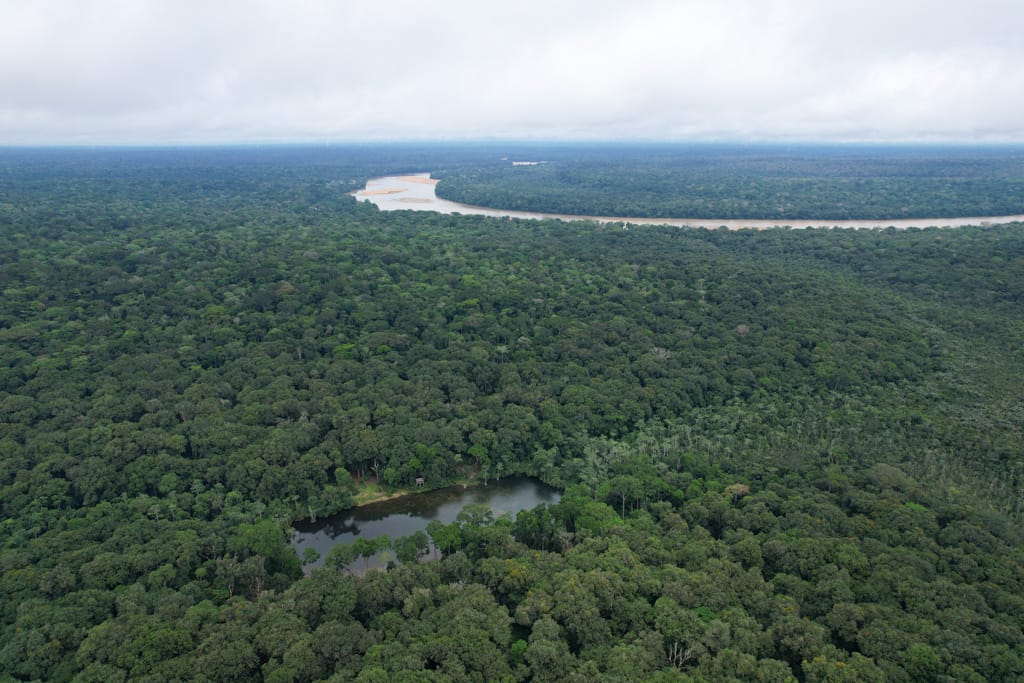
The Sangha River is another of the region’s major waterways.
Exploring it helps us understand that today’s borders tell only part of the story. On both sides of the river lies virtually the same forest, and we find culturally related communities spanning the Central African Republic, Cameroon, and the Republic of the Congo.
The Sangha continues south until it reaches the great Congo River.
This geographical continuity allows us to plan some of our expeditions that traverse different countries in Central Africa, combining jungle treks, river travel, and overland travel.
Traveling through this region means immersing yourself in the Congo Basin, the second-largest tropical forest on the planet.
Other National Parks in the Central African Republic
Although Dzanga Sangha is currently the leading destination for nature travel in the Central African Republic, the country has other vast natural areas that are virtually unknown to tourists.
To the north lies the Manovo-Gounda St. Floris National Park, a vast savanna landscape designated as a World Heritage Site.
In the eastern part of the country lies Chinko, a vast protected area situated in a fascinating transition zone between the ecosystems of the Congo Basin and the Central African savannas.
There are also other extremely remote parks and reserves.
Some of these areas are extremely difficult to visit, and access conditions may change. They are not part of our usual itineraries, but they help illustrate the Central African Republic’s immense natural diversity.
Culture and Peoples of the Central African Republic
The natural diversity of the Central African Republic has its cultural counterpart as well.
Numerous ethnic groups and languages coexist in the country. Sango, along with French, enables communication between communities in very different regions.
The forest cultures of the southwest have little in common with the societies of the northern and eastern savannas.
Fishermen from the Oubangui and Sangha rivers, farming communities, traditional pastoralist villages, and forest-dwelling groups such as the BaAka are part of a cultural mosaic that extends beyond the current borders with Cameroon, Chad, Sudan, South Sudan, and the two Congos.
The markets, villages, river travel, music, ceremonies, and encounters you come across along the way are an essential part of any trip through the Central African Republic.
Trips to the Central African Republic with Kumakonda
Traveling to the Central African Republic is not your typical trip.
Infrastructure is limited, distances are long, and travel requires patience. Conditions on the ground can change, and an expedition must always maintain a certain degree of flexibility.
Our trips to the Central African Republic focus primarily on Bangui and Dzanga Sangha, combining nature, culture, and adventure.
We visited Dzanga Bai and its forest elephants, searched for western lowland gorillas, sailed down the Sangha River, and spent several days deep in the jungle with the BaAka.
On some expeditions, we also continue on to the Republic of the Congo, traveling by land and river through some of the least-visited regions of Central Africa.
You can read a travelogue of our trip from Bangui to Brazzaville in this article.
Travel with us
Zone
Types of trips available at CENTRAL AFRICAN REPUBLIC (CAR):
- Expedition and exploration
- Wildlife and the jungle