


Trips to Burkina Faso: The Extraordinary Culture of the Sahel That Endures
Burkina Faso is one of West Africa’s great cultural regions. It is a country without grand monuments or spectacular landscapes to capture the traveler’s attention, but it offers something much harder to find: an extraordinary concentration of living cultures. And that’s exactly what we offer on our trips to Burkina Faso.
In this region of the Sahel, the Mossi, Bobo, Bwa, Gurunsi, Lobi, Senufo, Fulani, and many other communities live side by side. Masks, funerals, music, adobe architecture, hunter societies, markets, and handicrafts continue to be part of daily life.
Burkina Faso is also a country shaped by a powerful sense of resistance, dignity, and sovereignty. The figure of Thomas Sankara remains deeply embedded in the national consciousness, and in recent years, Ibrahim Traoré’s political rhetoric has revived some of that pan-Africanist language at a particularly challenging time for the Sahel.
Traveling through Burkina Faso means discovering precisely that resilience: a country that continues to create, celebrate, and keep its traditions alive.
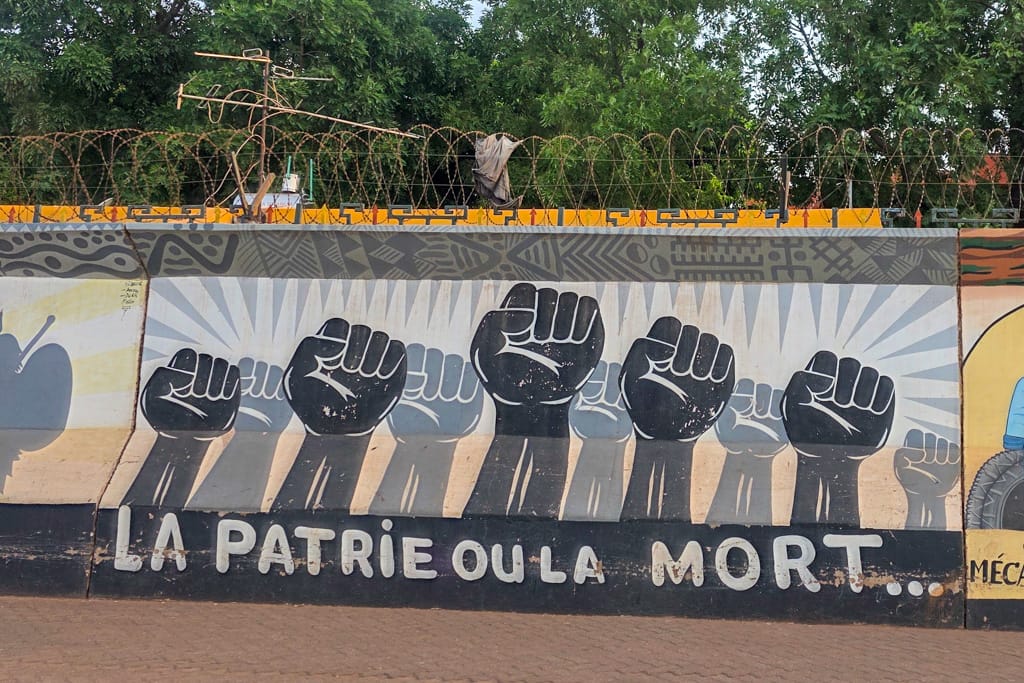
Ouagadougou: Art and Urban Creativity
Ouagadougou, commonly known as Ouaga, is the capital and largest city of Burkina Faso. At first glance, it may seem like a chaotic, dusty metropolis, marked by heavy motorcycle traffic, but beyond that first impression lies a dynamic city with a vibrant cultural and artistic scene.
Ouagadougou is the most contemporary face of Burkina Faso and one of West Africa’s major cultural hubs. The city hosts FESPACO, the Pan-African Film and Television Festival of Ouagadougou—one of the continent’s most important film events—as well as numerous venues dedicated to music, dance, theater, and the visual arts.
Its markets and workshops also offer a glimpse into Burkina Faso’s extraordinary tradition of craftsmanship. Sculptors, bronze casters, weavers, and other artisans preserve techniques passed down through generations, while a new generation of creators combines them with contemporary artistic expressions.
Beyond its monuments, Ouagadougou is best discovered through its street life: its markets, small restaurants, bars, workshops, and cultural venues. It is a capital city with a strong personality and a good starting point for understanding Burkina Faso’s creative vitality before delving into the country’s diverse cultures and traditions.
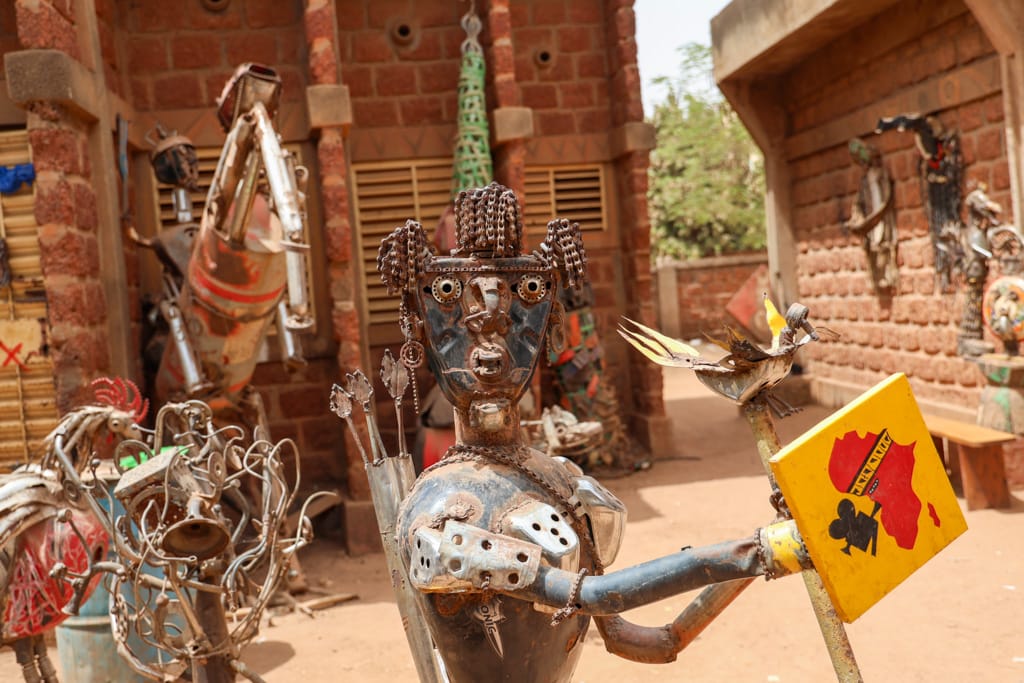

Bobo-Dioulasso: Music, Old Neighborhoods, and Bobo Culture
Bobo-Dioulasso is probably Burkina Faso’s cultural capital. With a more leisurely pace than Ouagadougou, Bobo retains a strong identity rooted in music, traditions, and the coexistence of different communities.
The historic heart of the city is the Dioulassoba neighborhood, a network of narrow streets and traditional houses where community life remains vibrant.
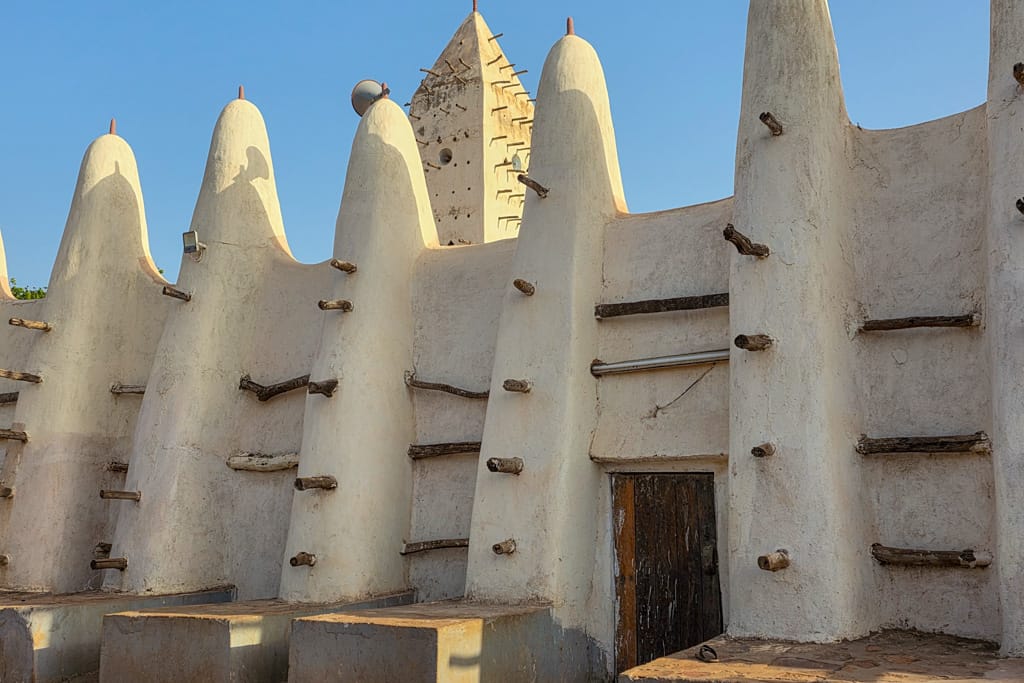
Next to the old quarter stands the Great Mosque of Bobo-Dioulasso, one of Burkina Faso’s most iconic buildings. Built of earth and characterized by its towers and the wooden beams protruding from its walls, it is one of the finest examples of traditional religious architecture in this region of the Sahel.
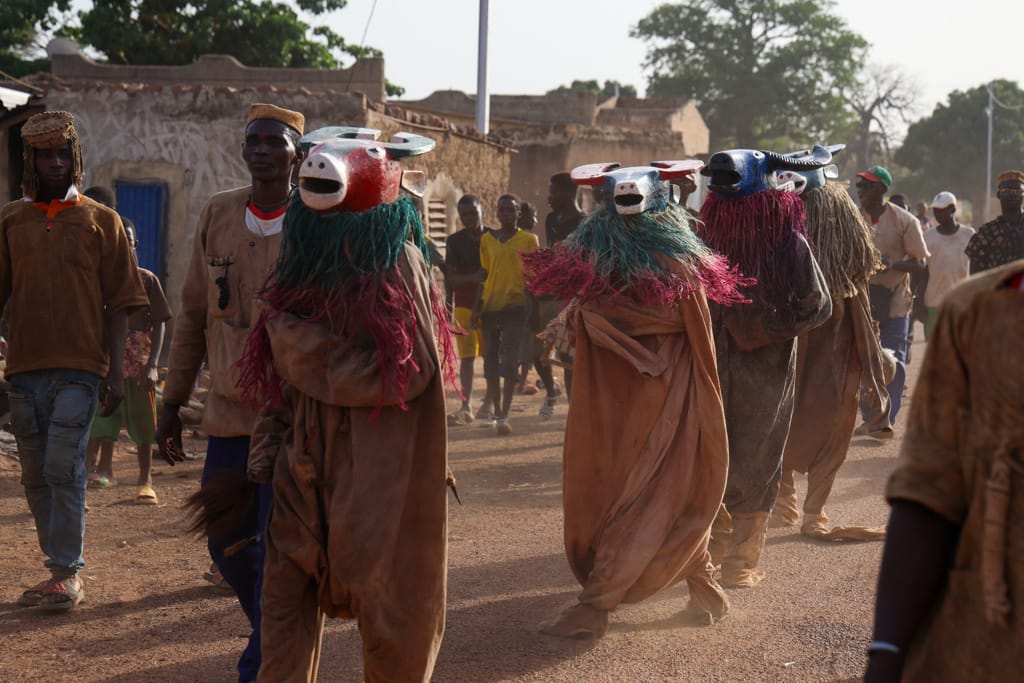
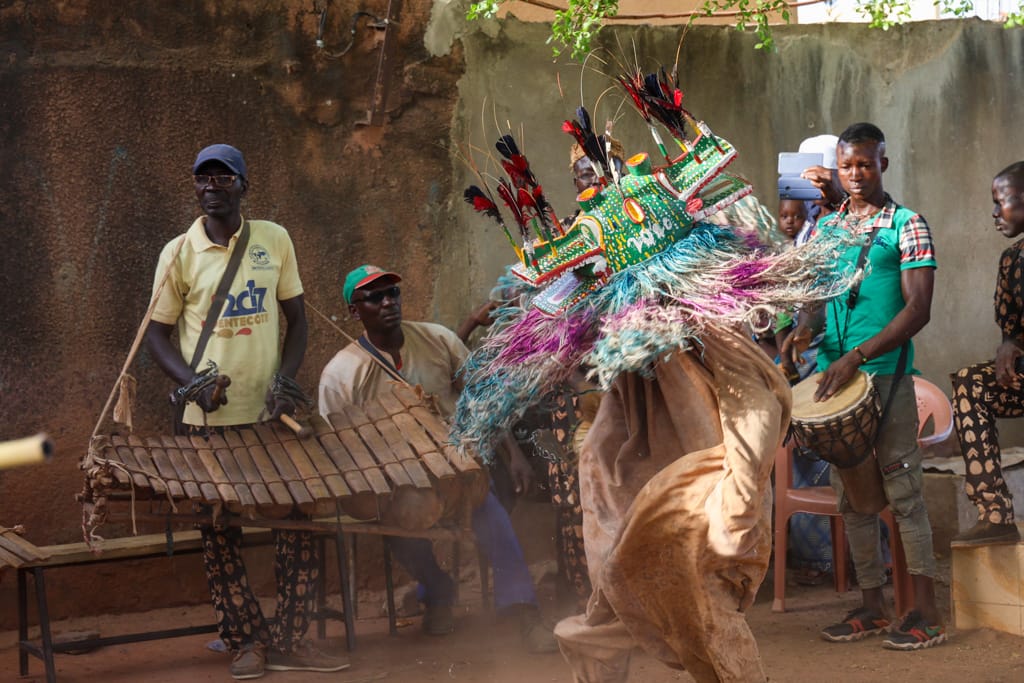
But the real attraction lies in the Bobo culture of the city and the surrounding villages. Here, traditions linked to the Dô, masks, music, and community ceremonies are still very much alive. At certain times of the year, masks made from fibers, leaves, and other materials are paraded through the streets, accompanied by percussion and dance, completely transforming the streets and squares of these communities.

Masks and Ceremonies of Burkina Faso
FESTIMA and Pouni: The World of Masks
Masks are one of the major cultural expressions of Burkina Faso. Among the Bwa, Bobo, Gurunsi, and Nuna peoples, wood, fibers, leaves, and pigments transform dancers into beings connected to spirits, ancestors, and the forces of nature.
Every two years, FESTIMA in Dédougou brings together hundreds of masks from Burkina Faso and other West African countries for several days. It’s not merely a spectacle—it’s a unique opportunity to witness, all in one place, traditions that are normally scattered across dozens of communities.
In Pouni, another major mask festival offers a unique glimpse into the cultural world of the Nuna and Gurunsi peoples, featuring grand processions accompanied by percussion and dance.
You can read more about these festivals in our article on Ceremonies and Mask Festivals in Burkina Faso.
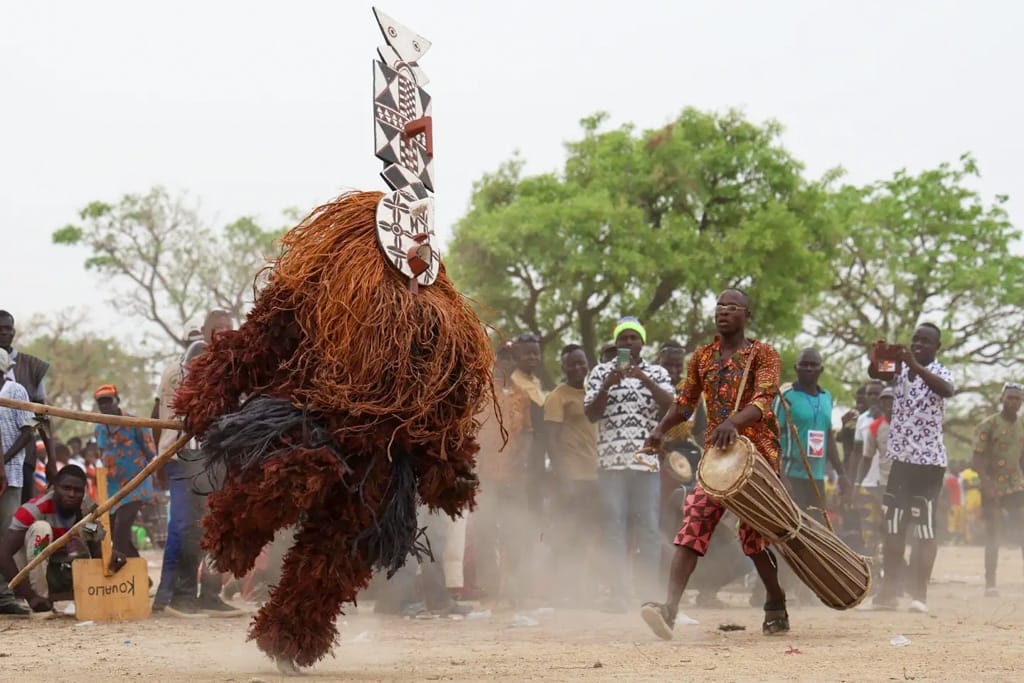

Grand Bobo Funerals: Accompanying the Ancestors
Among the most profound cultural experiences in Burkina Faso are the grand funeral ceremonies. Especially in Bobo territory, large funerals may be held long after the death. They are not merely a time of mourning: they ritually complete the deceased’s journey to the world of the ancestors and bring together entire families and communities.
Over the course of several days, music, dance, percussion, and masked processions may take place, creating some of the country’s most extraordinary ceremonial moments. There is no set schedule. The dates are determined by families and communities, and traveling to witness them means accepting that in Burkina Faso, many of the best experiences are not planned—they’re discovered along the way.
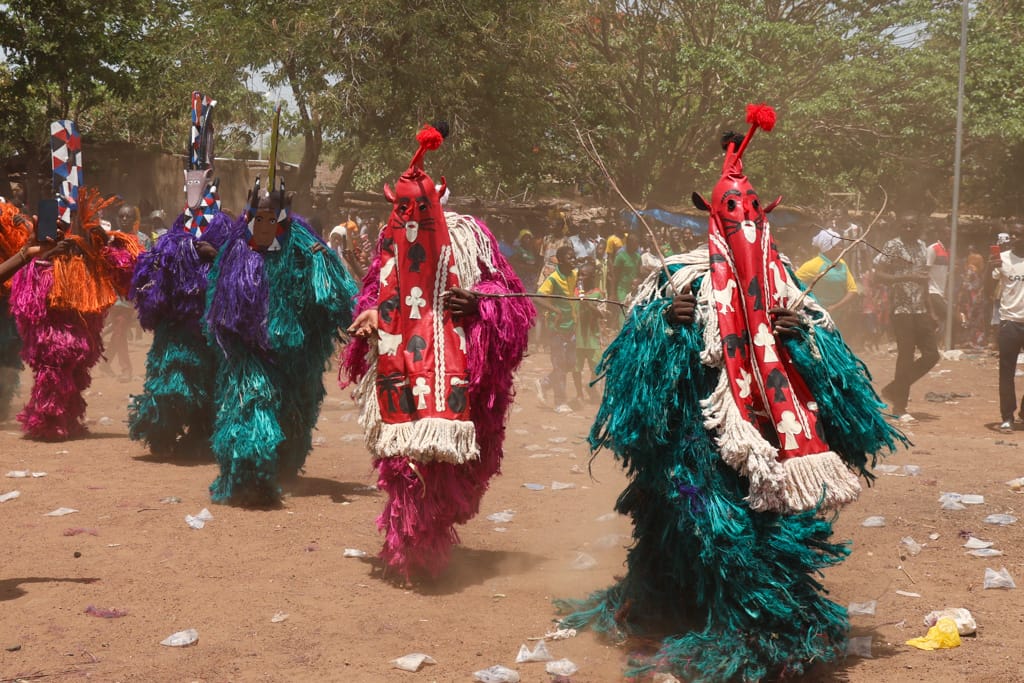
Senufo Ceremonies and Traditional Societies
Western Burkina Faso takes us into Senufo territory, a cultural world shared with Ivory Coast and Mali.
Initiatory societies, music, masks, and certain community ceremonies continue to play an important role. On special occasions, masked processions and characters associated with ancient ritual societies appear, accompanied by musicians and dancers. These are traditions that do not follow a tourist calendar and require time, local connections, and, above all, respect for the communities that decide when and how they are celebrated.
Peoples, Traditional Societies, and Artisans
Donso: Hunting Societies
In the western part of the country, we also find the ancient Donso hunter societies..
Dressed in tunic-like garments covered with amulets, hunters hold a special place within certain Mandinka societies. Their traditional knowledge encompasses the forest, medicinal plants, and codes passed down through generations, while music and ritual accompany their gatherings.
Getting to know the Donso people offers a glimpse into a world that blends hunting, traditional medicine, spirituality, and knowledge of the land.
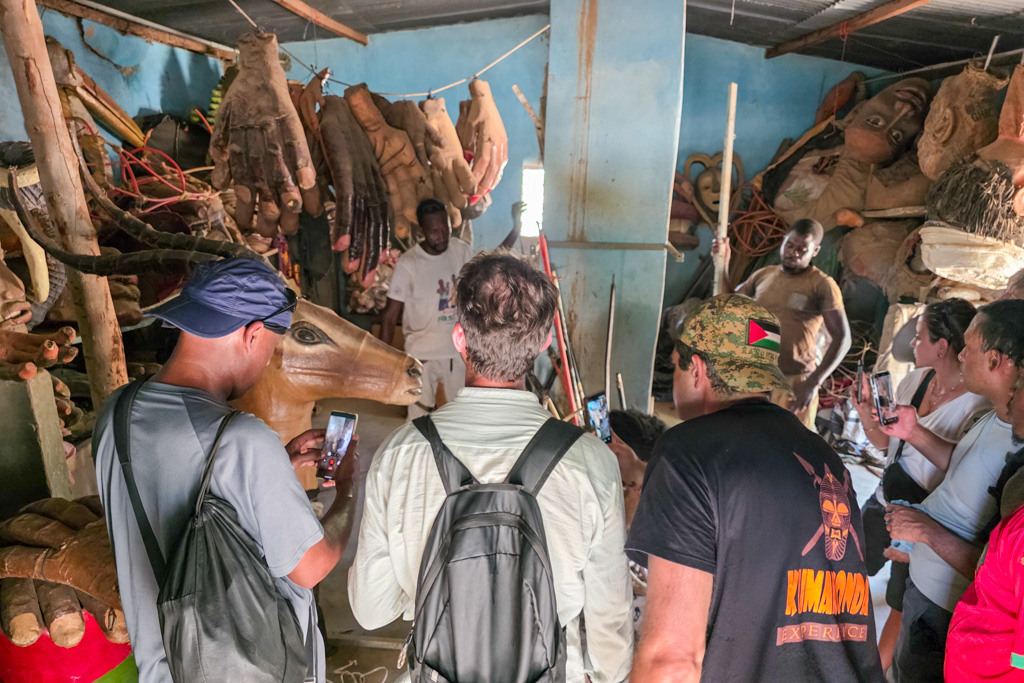
Artisans: Wood, Bronze, and Masks
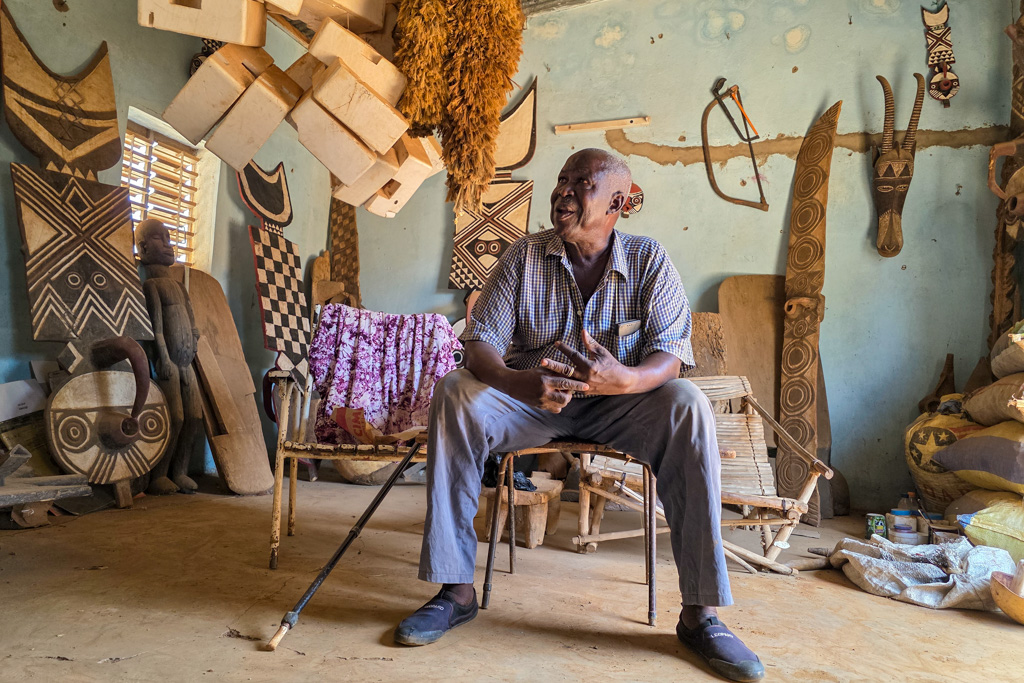
Burkina Faso’s extraordinary wealth of traditional crafts reflects the country’s cultural diversity, where peoples such as the Mossi, Bobo, Bwa, Gurunsi, Kassena, Lobi, Senufo, and Fulani, among others, live side by side. Each has developed its own traditions, symbols, and techniques, which are expressed in woodcarving, bronze work, weaving, pottery, mask-making, and numerous objects linked to both daily life and ceremonial and ritual practices. In fact, Burkina Faso boasts one of the richest craft traditions in the region.
Woodcarvers, bronze casters, weavers, musicians, and instrument makers preserve techniques passed down through generations. It is especially interesting to visit the workshops of the artisans who carve masks, watch how they select the wood, and understand the meaning of the shapes and motifs that we will later see come to life during ceremonies.
Here, the mask ceases to be merely a work of art and regains its context: the artisan, the community, the spirit, and finally, the dance.
Traditional Architecture of Burkina Faso
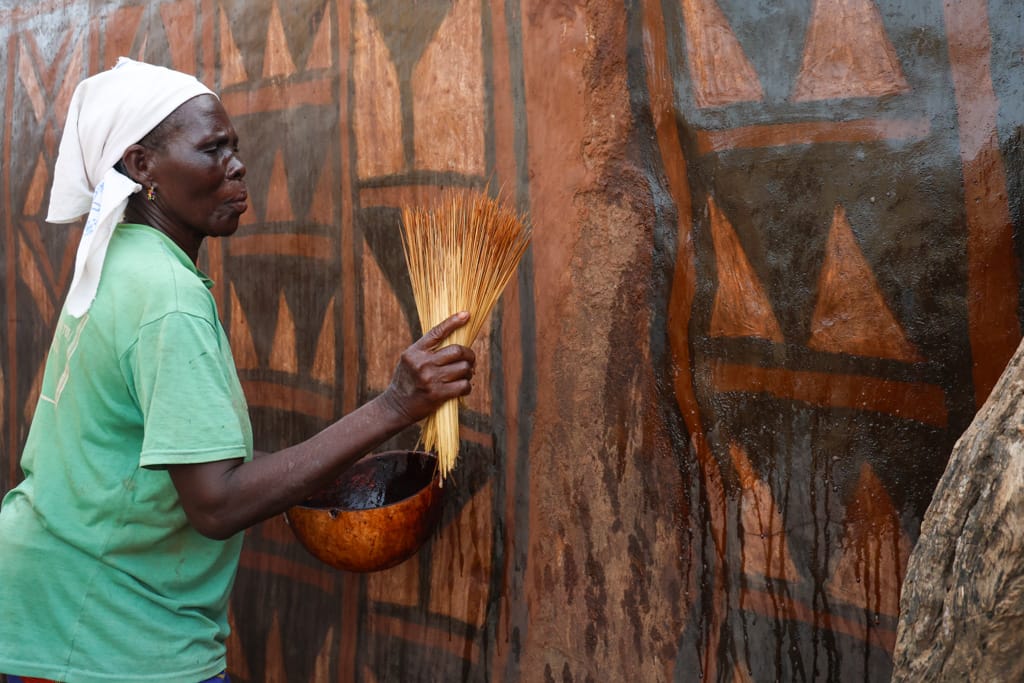
Tiébélé: Houses That Become Canvases
In the southern part of the country, Tiébélé is one of the most extraordinary examples of traditional West African architecture.
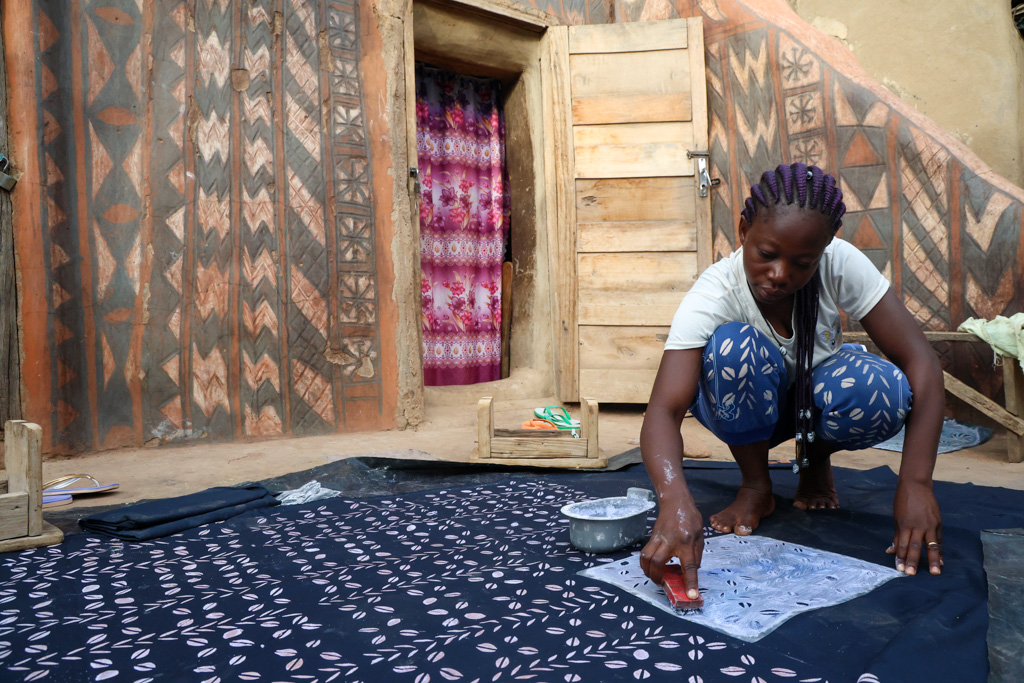
Kassena women decorate the facades of their homes with geometric patterns in black, white, and earth tones, using natural materials and techniques passed down through generations.
The royal compound and traditional dwellings showcase an architectural style designed not only for living but also to express identity, family history, and a connection to the spiritual world. If you’d like to learn more about this tradition, read our article on the painted houses of Tiébélé and Kassena architecture

The Mud Mosques of the Sahel
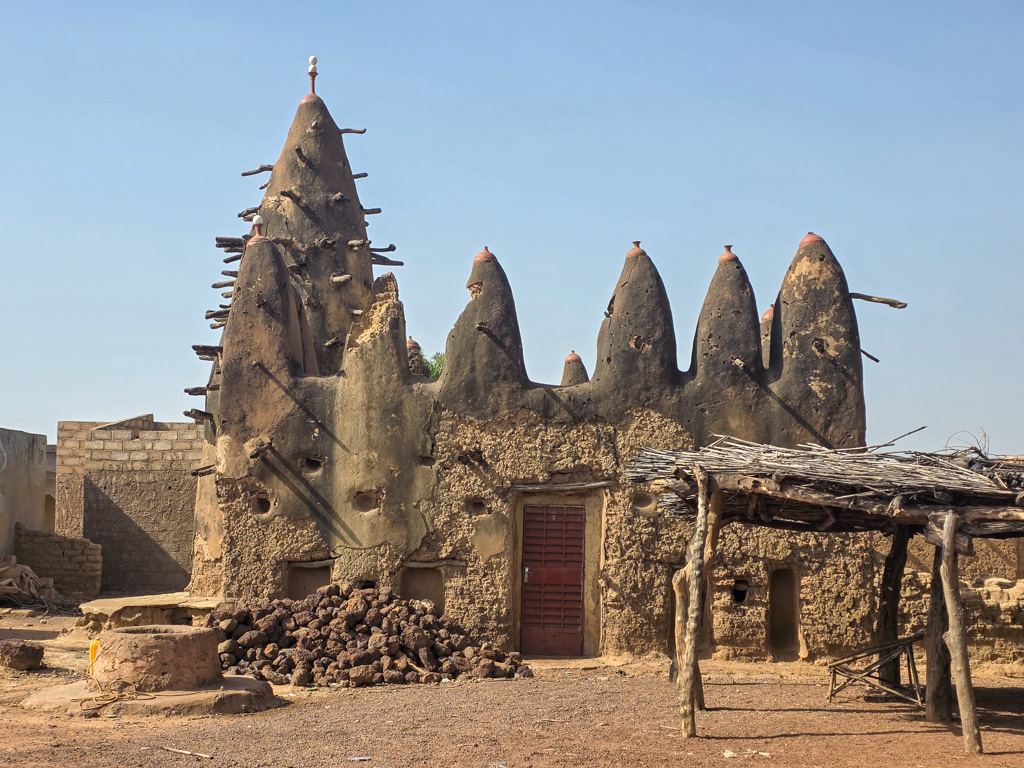
Throughout Burkina Faso, there are mosques built of earth, some of which date back centuries. Their earthen walls, minarets, buttresses, and projecting wooden beams are part of the great tradition of Sudano-Sahelian architecture found across West Africa.
The Grand Mosque of Bobo-Dioulasso is one of the best-known examples, but much of the charm lies in discovering small rural mosques tucked away in villages in the west and southwest of the country, such as those in Dioulassoba, Barani, or small communities near the borders with Mali and Ivory Coast.
These are living buildings because they require regular maintenance. The mud is damaged by rain and must be remixed and reapplied to the walls, making its preservation a community effort passed down through generations.
More than just monuments, these mosques offer insight into how architecture, religion, and daily life have adapted over the centuries to the landscape and materials of the Sahel.
Music and the Performing Arts
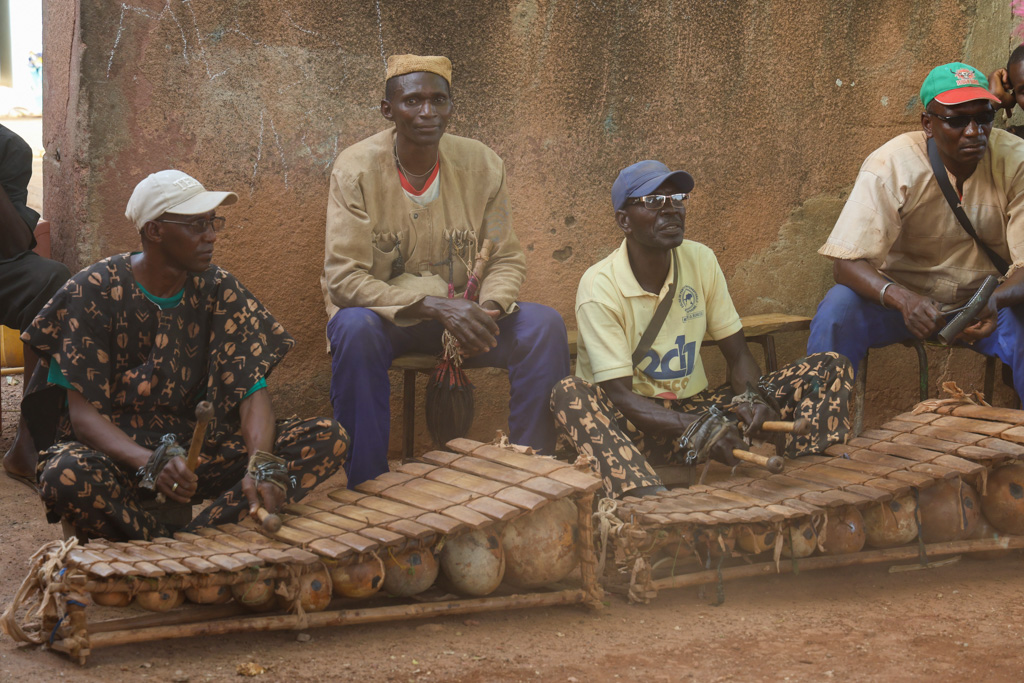
Music: The Rhythm of Burkina Faso
In Burkina Faso, music accompanies virtually every important moment in community life. Balafons, drums, koras, ngonis, and various other traditional instruments create unique musical worlds in each region.
Music accompanies funerals, initiation rites, mask ceremonies, weddings, and celebrations, but it also fills bars, courtyards, and cultural venues in cities.
Burkina also has an extraordinary contemporary music scene where young musicians are constantly engaging with the traditions passed down from their elders.
Boromo and the Great Figures of Popular Theater
Around Boromo, the performing arts and the large figures used in folk performances reveal another side of Burkinabé creativity.
Giant characters, musicians, and actors transform streets and open spaces into stages where tradition, humor, and theater come together. It is an expression distinct from the world of ritual masks, yet it shares with them the Burkinabé passion for transforming the body, telling stories, and collectively occupying public space.
Landscapes of Southwest Burkina Faso
Southwestern Burkina Faso offers a landscape very different from that of the vast plains of the central region and the drier regions of the north.
Dômes de Fabédougou: Stone in the Sahelian Landscape
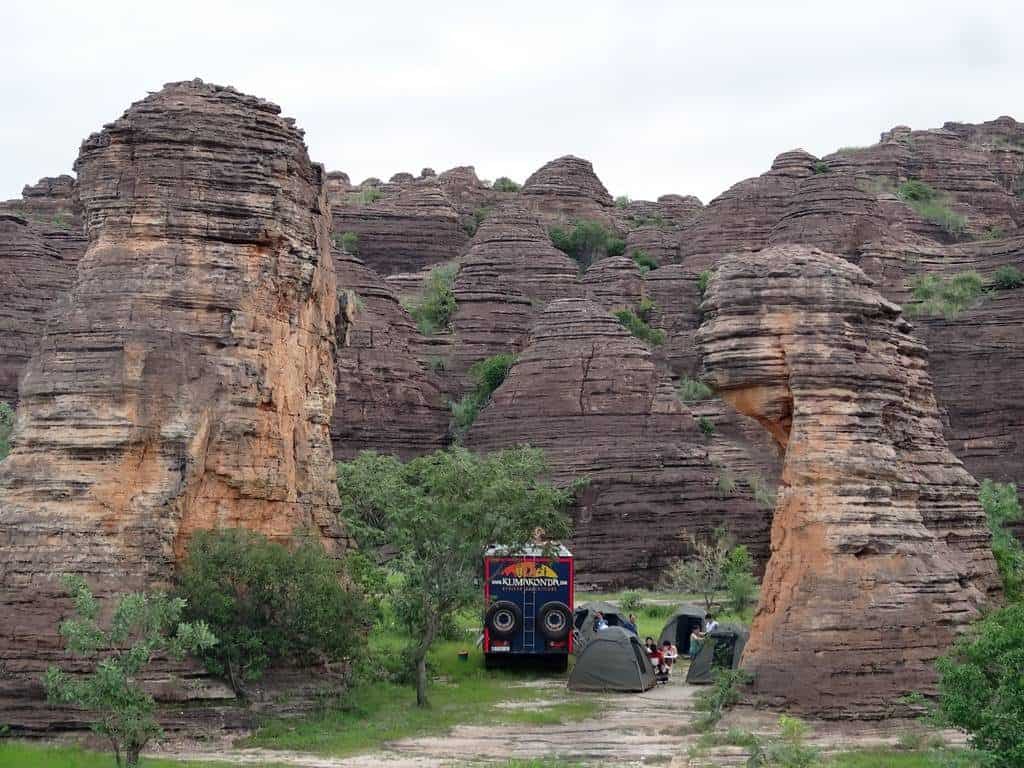
Near Banfora, the Dômes de Fabédougou rise from the landscape like enormous natural domes shaped over millions of years by erosion.
Walking among these sandstone formations reveals another side of Burkina Faso: cliffs, savannas, fields, and small villages that contrast with the vast plains of the country’s interior. Together with the nearby Karfiguéla waterfalls and the landscapes of Sindou, they form one of the most unique natural regions in southwestern Burkina Faso.
Karfiguéla Waterfalls
Very close to the Dômes are the Karfiguéla waterfalls, where the river cascades over rock formations surrounded by unexpectedly lush vegetation than what we usually associate with Burkina Faso.
The contrast between the water, the rock, and the surrounding green landscape makes this area one of the great natural surprises of southwestern Burkina Faso and offers a glimpse into the diversity of a country that extends far beyond the arid landscapes of the Sahel.
A Journey Through the Cultures of Burkina Faso
Burkina Faso is a country best understood by traveling at a leisurely pace. We’re interested in moving from a ceremony to a mask-making workshop, from a Kassena village to a night of music in Bobo-Dioulasso, and from the Donso hunters to the urban artists of Ouagadougou.
Because here, cultural heritage isn’t found only in museums. It is painted on houses, carved into wood, played on a balafon, passed down around the fire, and appears dancing behind a mask.
To travel through Burkina Faso is to enter one of West Africa’s great cultural laboratories and discover a Sahel that, despite its challenges, continues to resist, create, celebrate, and look toward the future without forsaking its roots.
Travel with us
Zone
Types of trips available at BURKINA FASO:
- Cultures and tribes
- Deserts and the Sahel
- Festivals and ceremonies