


West Africa: A Journey to the Cultural Heart of the Continent
West Africa is warmth, hospitality, encounters, music, culture, and moments. West Africa is one of the most vibrant, diverse, and fascinating regions on the continent. We can also say that it’s one of our favorites. Traveling through it means venturing into a land where culture continues to be an integral part of daily life, where music is everywhere, accompanying celebrations, rituals, festivals, and daily life.
West Africa is the world of the djelis (griots), guardians of traditions passed down from generation to generation and bearers of the unique identity of each community.
Traveling Through West Africa: From the Sahel to the Gulf of Guinea
Traveling through West Africa means passing through extraordinarily diverse landscapes. To the north, the Sahel forms a vast transitional zone between the Sahara and the savannas—a world of ancient trading cities, mud-brick architecture, pastoral cultures, and trade routes that for centuries connected the Mediterranean with the great kingdoms of sub-Saharan Africa.
Toward the south, the landscape gradually changes. The savannas give way to tropical forests, mountains, large rivers, and finally to the coasts of the Atlantic Ocean and the Gulf of Guinea. Countries such as Senegal, Guinea-Bissau, Guinea (Conakry), Sierra Leone, Liberia, Ivory Coast, Ghana, Togo, Benin, Burkina Faso, and Nigeria form a vast mosaic of landscapes, cultures, and traditions.
There is no single West African experience. Traveling through this region allows you to move, over relatively short distances, from the cultures of the Sahel to the peoples of the tropical forests, from ancient trading cities to small villages, and from major African capitals to rural areas where forms of organization and traditions passed down through generations are still alive.
Peoples and Cultures of West Africa
One of the main reasons to travel to West Africa is its extraordinary cultural diversity. The Mandinka, Fulani, Diola, Kassena, Gurunsi, Bwa, Bobo, Senufo, Lobi, Akan, Fon, Ewe, Yoruba, Hausa, and dozens of other peoples each have their own languages, social structures, beliefs, and artistic expressions.
Some cultures also extend far beyond today’s borders. The Mandinka world connects Senegal, the Gambia, Guinea-Bissau, Guinea-Conakry, Mali, and other territories; the Fulani are spread across a vast swath of the continent; and Hausa cultures occupy much of northern Nigeria and neighboring Niger.
This cultural continuity explains why we like to think of West Africa as a region rather than simply as a series of countries.

Ceremonies, Masks, and Spirituality
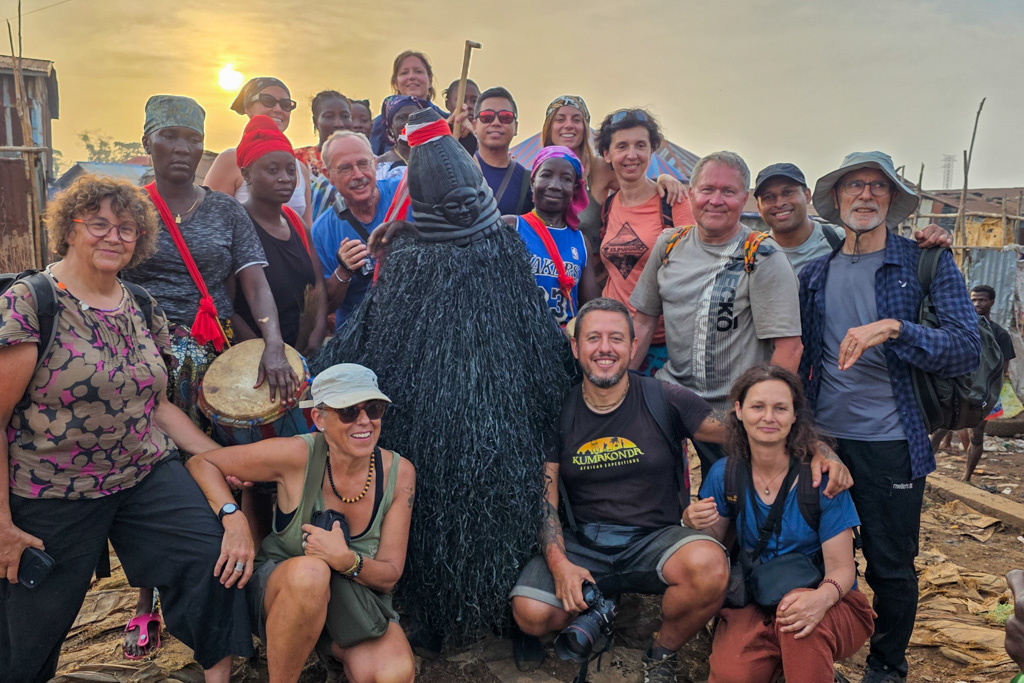
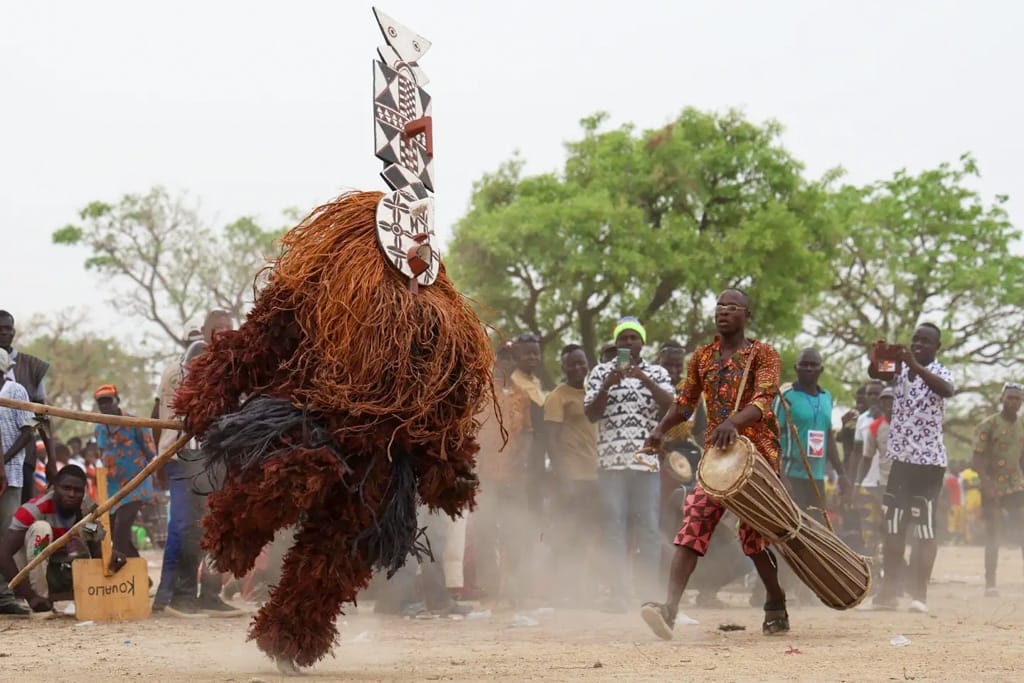
One of the most fascinating aspects of traveling through West Africa is the opportunity to experience ceremonial traditions that are still very much alive. Masks made of wood, fiber, and leaves, initiation societies, funeral ceremonies, festivals, agricultural rites, ancestral worship, and large community celebrations are all part of a complex spiritual world.
In many places, masks are not objects meant to be viewed in a museum. They emerge from the forest, dance, embody spirits, and take part in key moments in the life of the community.
Traveling during these ceremonies offers a glimpse into a side of Africa that is hard to discover from the outside.
The forms these traditions take vary greatly from one region to another. In Burkina Faso we find the extraordinary world of masks from peoples such as the Bwa, Bobo, and Gurunsi; in the Mandinka region, the Kankurang remains linked to initiation rites; and in Casamance, the Diola cultures maintain complex ceremonial systems and rites of passage.
Traveling at the right time is essential. Many of these ceremonies are tied to the agricultural, religious, or rite-of-passage calendar and are not held for the traveler’s benefit. That is why our tours of West Africa strive to adapt, whenever possible, to the rhythms of the communities and the cultural events taking place in each region.
The Rhythm of Africa: Music and Dance
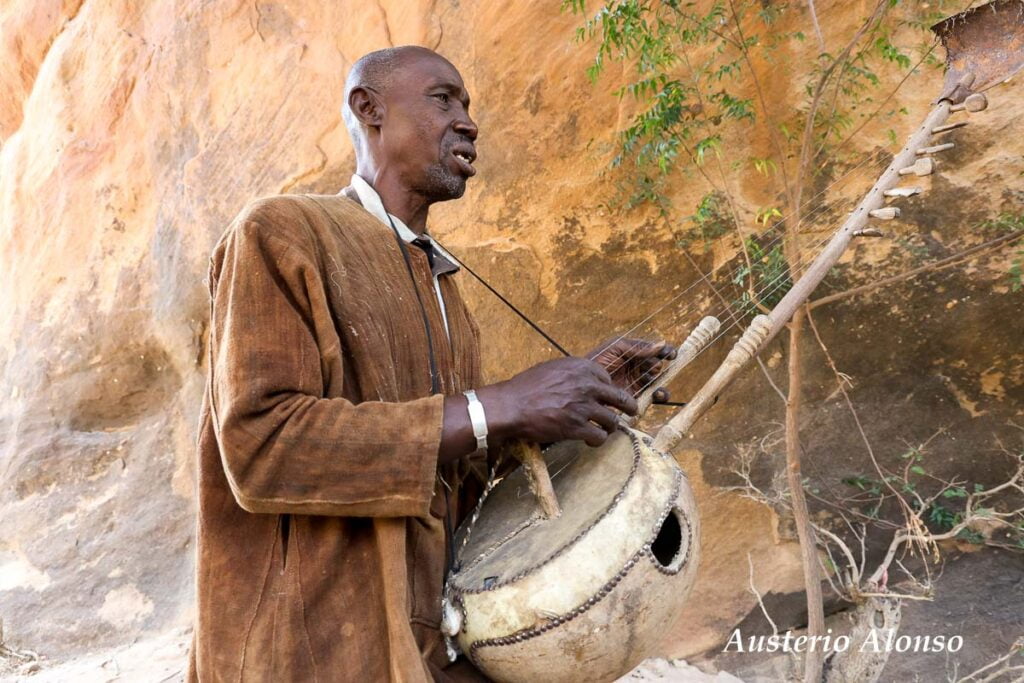
West Africa is also one of the world’s great musical regions. The sounds of the kora, the balafon, the ngoni, drums, and traditional percussion accompany festivals, ceremonies, and community gatherings.
Many musical traditions took root here and later crossed the Atlantic, leaving a profound mark on the music of the Americas and the Caribbean. But music in West Africa is far from being just a legacy of the past. In cities, villages, and small bars, griots and traditional musicians coexist alongside contemporary scenes of Afrobeat, highlife, mbalax, reggae, and numerous local fusions.
Music and dance are a wonderful way to get to know people and share moments that often end up being the best memories of the trip.
Great Civilizations and Historical Heritage
West Africa also has an exceptional historical heritage. For centuries, this region was home to great African empires, kingdoms, trade routes, and intellectual centers.
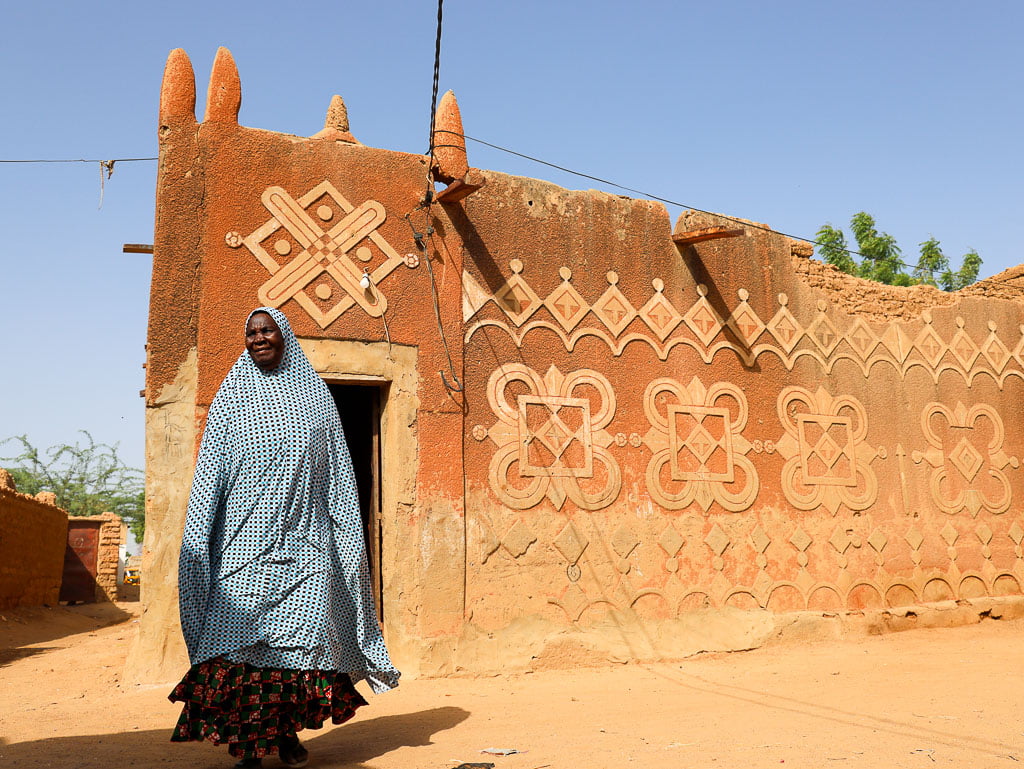
The ancient cities of the Sahel, the earthen mosques, the historic neighborhoods, the palaces of ancient kingdoms, the fortresses along the Atlantic coast, and an extraordinarily diverse traditional architecture offer a glimpse into an African history that is far more complex than is commonly understood in Europe.
From the ornate earthen structures of the Gurunsi region to the Sudanese architecture of the Sahel, each region reflects centuries of adaptation to its environment and a distinct cultural identity.
West Africa was also home to some of the great empires and kingdoms in African history. The Ghana, Mali, and Songhai empires controlled major trans-Saharan trade routes for centuries, while further south, powerful states and kingdoms such as Benin, Oyo, Dahomey, and the various Akan states emerged.
This history lives on in ancient cities, palaces, and traditional courts, but also in institutions that continue to hold cultural significance. In northern Nigeria, for example, the Hausa emirates maintain their own authorities and grand celebrations such as the Durbar, in which hundreds of horsemen and entourages gather around the emir.

Landscapes of West Africa: Much More Than Just Culture
Although culture plays a central role in our travels, West Africa also offers an enormous diversity of landscapes.
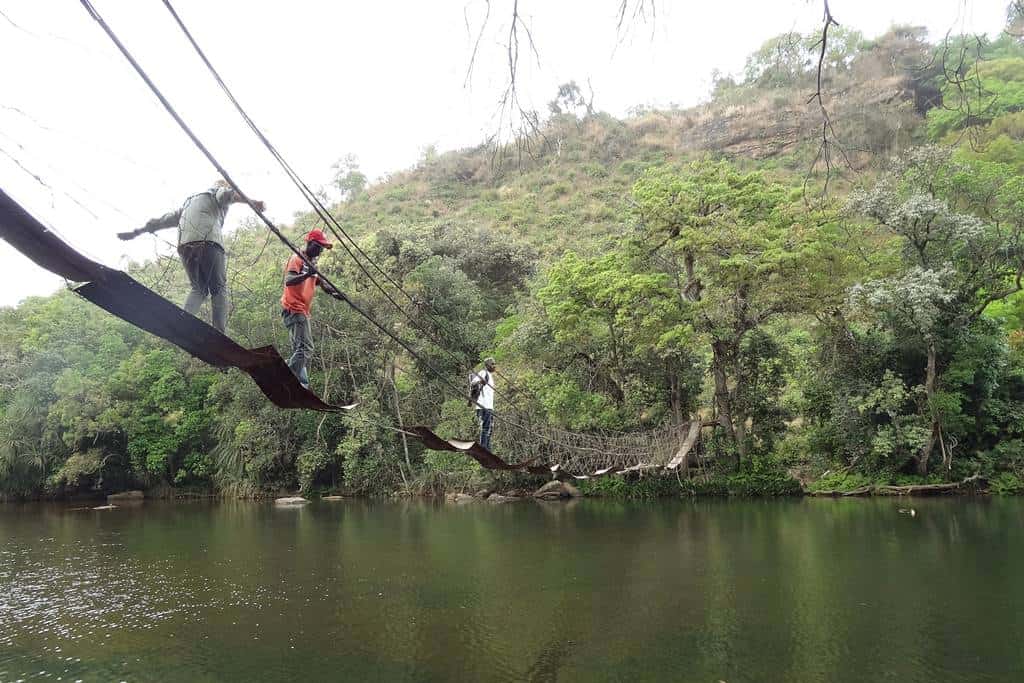
The mountains and waterfalls of Fouta Djallon in Guinea-Conakry stand in contrast to the tropical forests of Sierra Leone and Liberia, the Atlantic beaches, the inland savannas, and the arid landscapes of the Sahel. In Ivory Coast, some of the region’s last remaining large primary forests survive, and in many areas, major rivers continue to shape both the landscape and the lives of local communities.
This combination makes it possible to design journeys where days spent on the road, visiting markets and villages, alternate with hikes through forests and mountains and along coastlines that remain virtually unknown to international tourism.
Some Regions to Explore in West Africa
Traveling to Meet People
But above and beyond the monuments, landscapes, or ceremonies, West Africa’s greatest richness lies in its people. That’s why we like to travel slowly, explore markets, stroll through villages, sit down to chat, and meet artisans, musicians, families, and traditional leaders. Sharing a cup of tea, a meal, or a conversation in the shade of a tree can reveal a country far better than any guidebook.
We don’t seek to turn cultures into a spectacle. We try to engage with them with patience, respect, and curiosity, working whenever possible with local people and partners.
Because West Africa isn’t just a destination you visit. It’s a region you listen to, engage with, and experience.
Traveling through West Africa means experiencing one of the most culturally diverse regions on the planet and discovering an Africa that is deeply human, creative, and surprising.
Travel with us
Zone
Types of trips available at WEST AFRICA:
- Cultures and tribes
- Expedition and exploration
- Festivals and ceremonies