


Trip to Eritrea during the Timkat celebration
Eritrea is one of those African countries we’ve long wanted to include in our itineraries. A small territory on the map, yet extraordinarily diverse: the highlands of Asmara, historic cities shaped by centuries of cultural exchange, pastoral and nomadic communities, ancient archaeological sites, and, finally, the descent to the Red Sea.
In January 2027, we took an 11-day exploration trip to Eritrea, which also coincided with one of the highlights of the country’s religious calendar: the Orthodox celebration of Timkat, the Epiphany, in Asmara.
This will be a trip that combines large-scale religious ceremonies, architecture, historical heritage, vastly different landscapes, and encounters with some of the communities that make up Eritrea’s ethnic mosaic. From the heights of Qohaito to the coral-stone streets of Massawa, passing through Keren and its camel market and the modernist neighborhoods of Asmara.
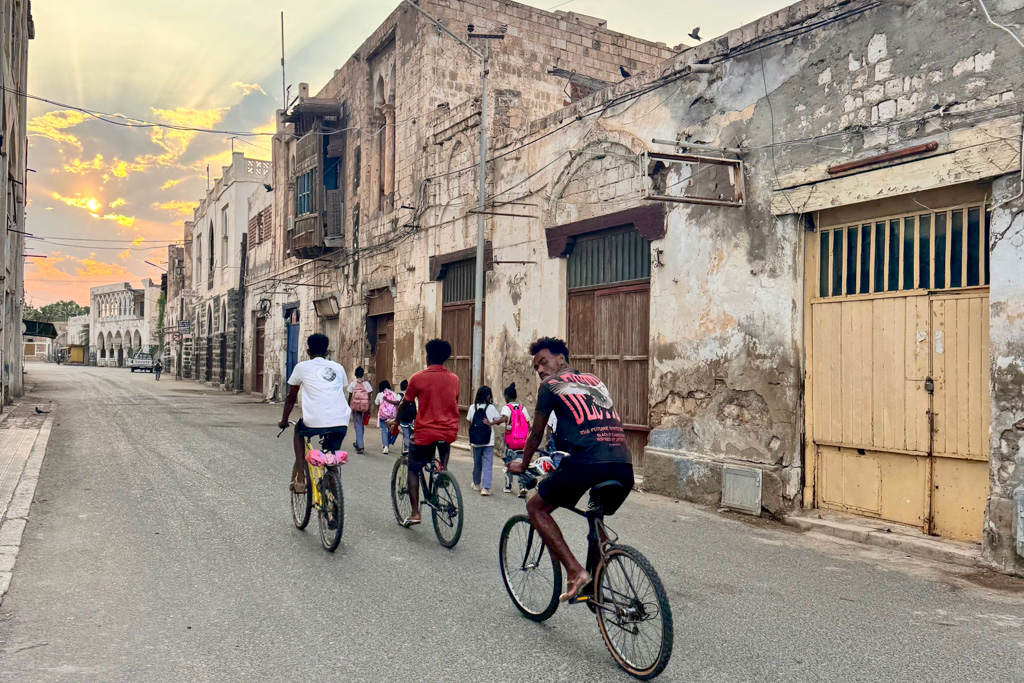
Highlights of our trip to Eritrea
Timkat in Asmara: The Grand Celebration of Epiphany
We have scheduled this trip to coincide with Timkat, one of the most important religious celebrations of the Eritrean Tewahedo Orthodox Church.
Timkat commemorates the baptism of Jesus in the Jordan River, and water is one of its most significant symbolic elements. During these days, priests, deacons, and the faithful take part in processions, hymns, prayers, and ceremonies, most of them dressed in the characteristic white robes and shawls.
One of the central elements of the celebration is the tabot, sacred representations associated with the Ark of the Covenant that are kept in churches. During Timkat, they are carried in a procession, ceremonially wrapped and accompanied by priests and the faithful amid singing, drumming, and prayers.
Another highlight is the water festival or ceremony. The water is blessed, and the faithful symbolically renew their baptism in an atmosphere that blends religious fervor with popular celebration.
In Asmara, we want to experience Timkat from the inside, moving through the spaces where the celebrations take place and observing a ceremony that isn’t staged for visitors, but is instead part of the country’s religious life.
It will undoubtedly be one of the highlights of the trip.
Asmara, one of Africa’s most unique capitals
Asmara will be much more than just our point of entry and departure. We’ll spend several days in one of the most unique capitals on the African continent.
The city preserves an extraordinary collection of Modernist and Art Deco architecture from the Italian era, evident in its avenues, cafés, movie theaters, homes, and public buildings. Strolling through its streets offers insight into a very unique part of Eritrea’s urban history: faded-colored facades, ornamental details, old cafés, and buildings that seem to have frozen in time.
During our stay, we’ll walk along Harnet Avenue, visit some of the city’s most important churches—such as the Enda Mariam Orthodox Cathedral and the Catholic Cathedral of Our Lady of the Rosary—and explore various markets.
We also want to stop in Medeber, one of the places that best showcases daily life in Asmara. There, small workshops have been reusing car parts, scrap metal, and machinery for decades to transform them into tools, stoves, furniture, and household items. It is not a market created for tourists, but a workplace where repair, recycling, and the local economy continue to be part of daily life.

The Communities and Towns of Eritrea
One of the highlights of the trip will be experiencing Eritrea’s ethnic diversity. Our route takes us through areas inhabited by communities with very different ways of life, languages, and traditions.
In the southern highlands, we will visit Saho and Tigrinya communities, which have traditionally relied on pastoralism and agriculture. On the Red Sea coast, we will enter the territory of the Rashaida, Afar, and Tigray peoples, while in Keren we will focus our attention particularly on the Bilen and Tigray communities.
We do not view these encounters as a series of “visits to tribes.” What will be interesting is understanding how these communities live today, their relationship with the land, and the place their traditions hold in contemporary Eritrea.
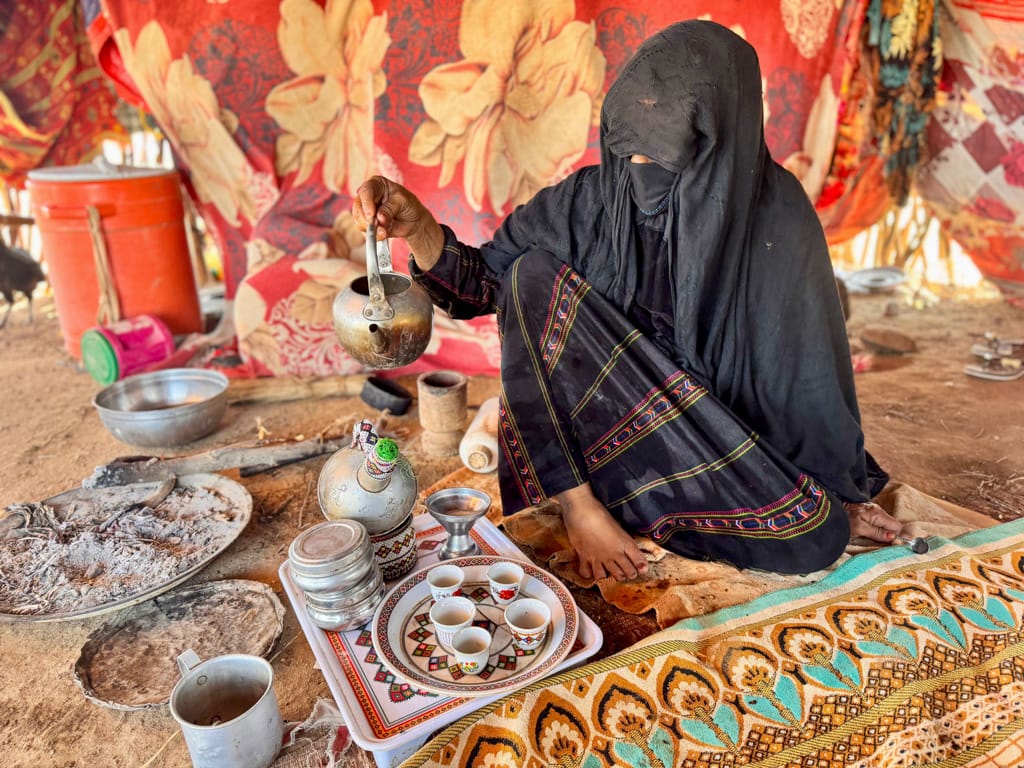
Qohaito: Archaeology of the Great Rift Valley
One of the places on the route that appeals to us the most is Qohaito or Qohayto, a major archaeological site located at an altitude of more than 2,500 meters, on a high plateau next to the Great Rift Valley.
The area is home to rock paintings and the remains of ancient structures that bear witness to the long history of this region of the Horn of Africa. But Qohaito is also notable for its location: from the plateau, sweeping views open up toward the cliffs and the Rift Valley, creating one of the most spectacular landscapes along the route.
It will be a day where archaeology, landscape, and rural life come together before we continue on to the Saho and Tigrinya communities in the Adi Keyh region.
Massawa, the Pearl of the Red Sea
After several days in the highlands, we’ll head down to Massawa, on the Red Sea coast. The change will be dramatic: we’ll leave the cool climate and the mountains behind and enter a much warmer, more maritime environment.
For centuries, Massawa was an important trading center on the Red Sea, and its historic district still bears the marks of that history. We’ll stroll through its coral-stone streets, past buildings with Ottoman influences, the Turkish quarter, the old train station, the port, and the ruins of the Imperial Palace.
The trip itself is part of the trip. The road winds down from the heights of Asmara to the Red Sea, passing through one of the route’s most striking landscape contrasts.
From Massawa, we’ll also sail to Isla Verde, where we’ll have the chance to swim and snorkel among coral reefs and turquoise waters.
Keren and Her Camel Market
North of Asmara lies Keren, a city surrounded by mountainous landscapes and one of the major commercial and cultural centers in this part of Eritrea.
We timed our stay to coincide with the day of the camel market, one of the best-known in the country and one of the highlights of this route.
Merchants from the surrounding regions gather with camels, goats, and agricultural products, creating a marketplace where different communities in the area come together.
In addition to the market, we want to explore Keren’s neighborhoods and everyday spaces, with a special focus on the Bilen and Tigray communities that have settled in the city.
From the Highlands to the Red Sea: The Landscapes of Eritrea
Although much of Eritrea’s appeal lies in its cities, ceremonies, and communities, this is also a trip marked by dramatic changes in the landscape.
Asmara is located in the Eritrean highlands. From there, we’ll travel through plateaus, valleys, and mountainous areas such as the Sycamore Valley, before descending to the lowlands and the Red Sea coast.
In just a few days, we’ll go from the cool temperatures of the highlands to the warm climate of Massawa, from the cliffs of the Great Rift Valley to the coral-rich waters of Isla Verde, and from the agricultural and livestock-raising regions of the interior to the coastal landscapes.
That geographic diversity is precisely one of the reasons why we find this small country in the Horn of Africa particularly interesting to explore by road.
A New Route for Kumakonda
This will be our first trip to Eritrea, and we want to make it clear from the start: we don’t yet know the route on the ground.
We’ve put together an 11-day itinerary based on our preliminary planning and collaboration with our local contacts, but this first trip will inevitably involve an element of exploration and discovery for us as well.
We want to get to know the country firsthand, check travel times and access, better understand local dynamics, and assess on the ground which places and experiences truly deserve to be included in future itineraries.
That is why we will travel according to a planned itinerary, but also with the flexibility needed to adjust it if logistics, local circumstances, or whatever we encounter during the trip make it advisable.
This expedition is designed especially for travelers who enjoy new routes, flexibility, and the element of exploration—and who understand that this is precisely where much of the appeal of joining us on a first trip lies.
- Guía acompañante de Kumakonda.
- Asistencia para pre-visa.
- Servicio de recogida y retorno al aeropuerto desde/a el hotel designado por Kumakonda, y en las fechas del viaje.
- Transporte para hacer la ruta y todos sus gastos derivados.
- Todas las visitas indicadas.
- Hoteles en régimen de habitación doble con desayuno.
- Vuelos internacionales
- Seguro de viaje y cancelación
- Visado a la llegada (aproximadamente 75 USD)
- Suplemento individual (350 €)
- Noches extra de hotel, ni su reserva.
- Transfer al aeropuerto desde/a un hotel diferente al designado por Kumakonda, o en fechas diferentes a nuestro viaje.
- Taxis para desplazamientos personales.
- Comidas y bebidas no especificadas.
- Propinas (opcional)
- Cualquier otro concepto no mencionado en «Incluye»
Travel with us
€ 2,100
/PERSON
- departure confirmed
- registration open
Trip details
Countries visited
- Eritrea