


Welcome to the Democratic Republic of the Congo (DRC). A mythical land open to adventure and exploration—one that everyone has heard of or read about, but to which very few have dared to travel. Although the DRC is by no means an easy country to operate in, our extensive knowledge of the country and top-notch local team allow us to offer the most exciting and comprehensive trips to the DRC.
Travel to the Democratic Republic of the Congo: One of Africa’s Great Exploration Destinations
The Democratic Republic of the Congo (DRC) is a hidden gem for travelers seeking authenticity. It also boasts an immeasurable natural heritage and an impressive cultural diversity.
When you travel to the Democratic Republic of the Congo, the overwhelming contradictions and realities of the African continent will strike you like in no other country you’ve visited in Africa before. This is a completely disorganized country, often mired in chaos; it’s very difficult to get around, lacks infrastructure, is immensely corrupt, and quite expensive—unless you have several months to travel “like a local.”

The Democratic Republic of the Congo is a country immensely rich in resources, yet unstable, volatile, and corrupt at every level. Instead of improving the quality of life for its people, the DRC’s immense wealth is a source of nightmares and endless conflicts in some regions. This reality becomes clearly apparent when we venture off the main roads, where many communities live completely isolated from the outside world, with severe shortages of resources.
And although the Democratic Republic of the Congo has numerous national parks and nature reserves that protect a significant portion of its vast territory and some of Central Africa’s most extraordinary ecosystems, the number of travelers who have been able to experience and enjoy it due to the lack of infrastructure.
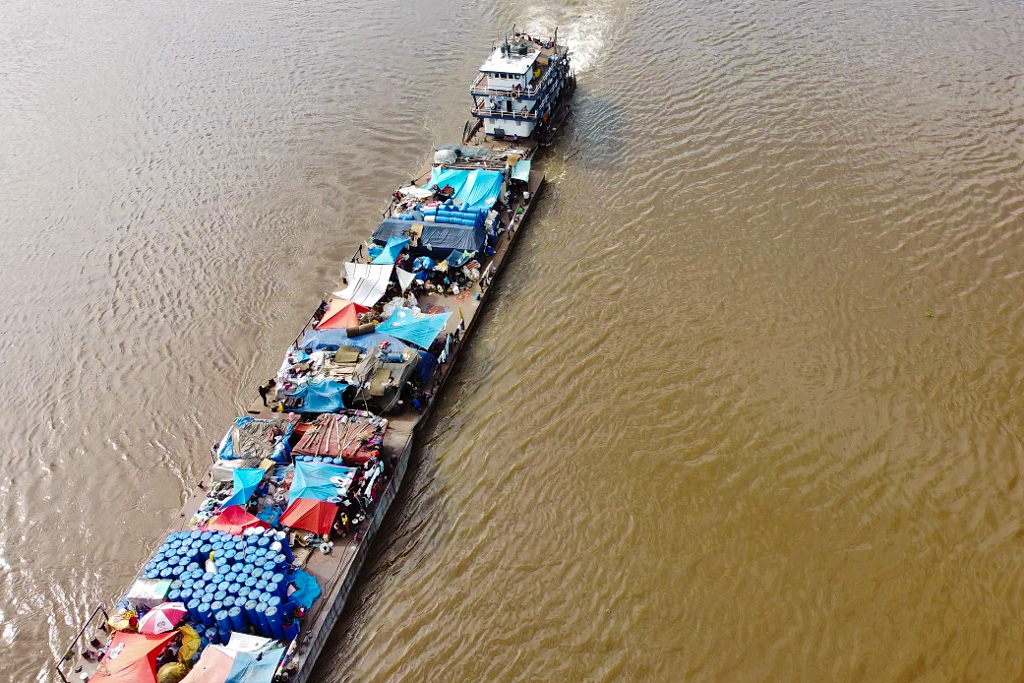
Kinshasa, a vibrant capital city
The megacity of Kinshasa offers a wealth of fascinating attractions. Museums, temples and ceremonies, nightlife, contemporary art, festivals, culture and urban movements, live music, and the bonobo sanctuary. Below, we’ll discuss some of its main attractions in more detail.
Temples and Religious Practices in Kinshasa
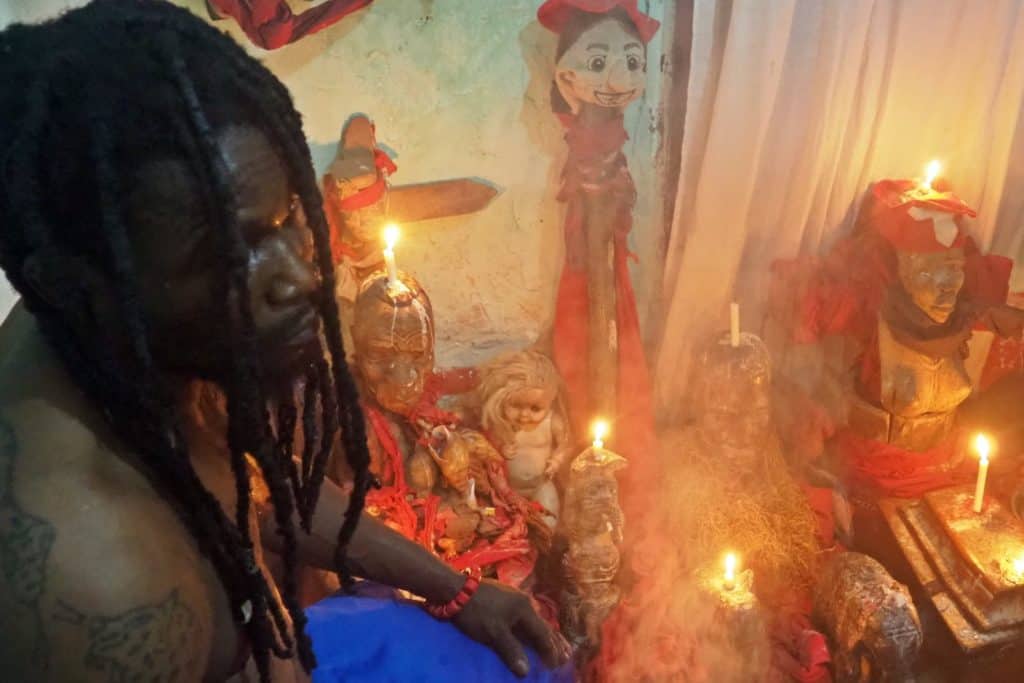
In a city with a population of more than 16 million, a multitude of ceremonies and rituals take place in small temples.
Tucked away in the suburbs of Kinshasa, these small temples are the setting for the most bizarre ceremonies you can imagine. They blend voodoo rituals, black magic, Christianity, Islam, and traditional African religions. There are also exorcisms…


Kinact Festival “Kinshasa in Action”
The KinAct Festival is undoubtedly one of the best urban festivals in Africa. Founded in 2015 by Eddy Ekete, a Congolese native of Kinshasa, and Aude Bertrand (French), the KinAct Festival is held on a rotating basis in various working-class neighborhoods of the Congolese capital.
In addition to street performances, workshops are organized to introduce children to different art forms, such as theater, sculpture, painting, and poetry.
But Kinact isn’t just about art—it’s also a gateway to social criticism and raising awareness. You can read more in our article about the Kinact Festival.

Sapeurs of Kinshasa
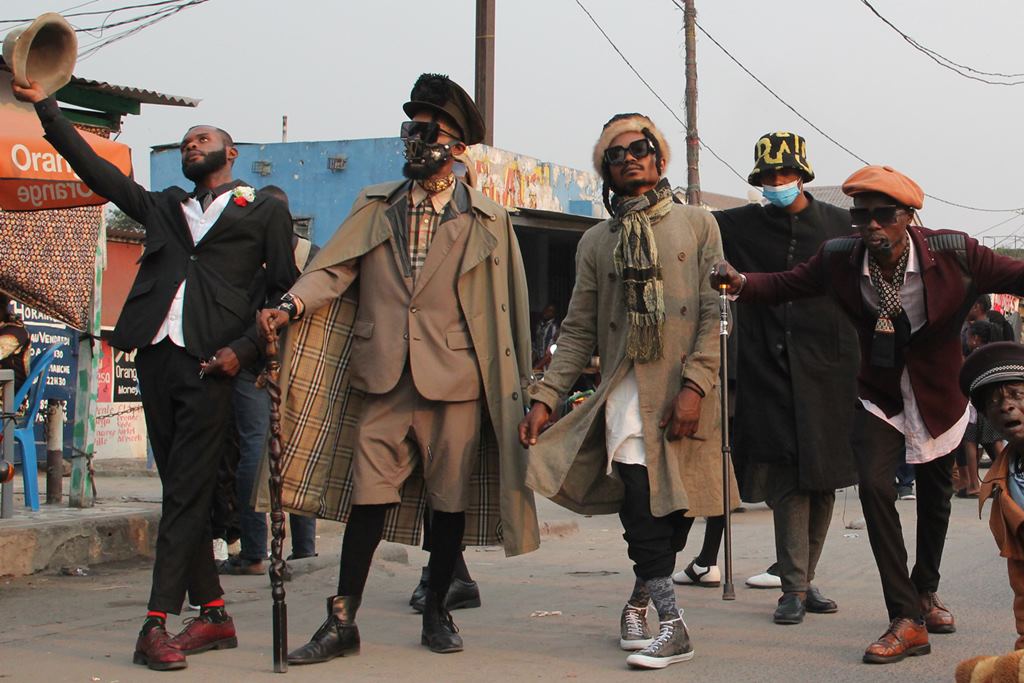
Among the encounters with urban movements are the legendary sapeurs: SAPE, which stands for “Société des Ambianceurs et des Personnes Élégantes” in French, or “Society of Entertainers and Elegant People.”
The sapeurs, SAPE, or dandyism, is an urban subculture movement that is very popular in some cities in the Democratic Republic of the Congo and the neighboring Republic of the Congo.
This movement is characterized by stylish clothing—including haute couture, luxury items, and expensive or designer brands—although the way SAPE is understood varies somewhat depending on which side of the river you’re on.
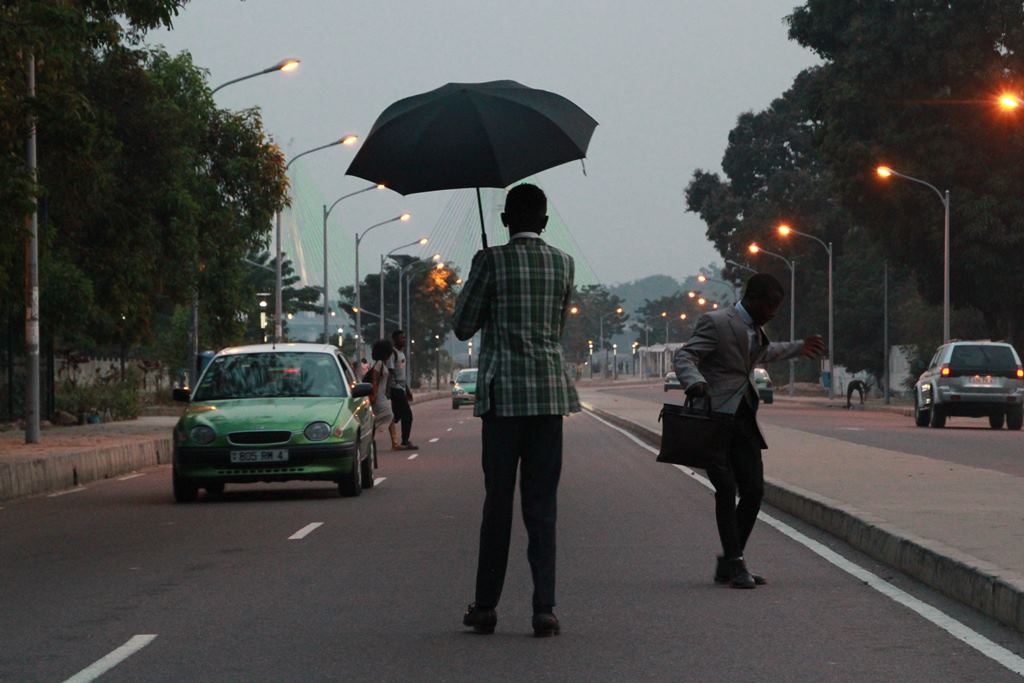
Museums, art galleries, and universities. Art in Kinshasa
The National Museum, the Academy of Fine Arts, and many other hidden gems in Kinshasa make it an incredibly attractive and interesting city to visit.
The National Museum of the Democratic Republic of the Congo, for example, is a must-see for anyone looking to begin to understand the country’s immense cultural diversity. Its modern facility in Kinshasa houses a collection of masks, sculptures, ritual objects, and artifacts from various Congolese peoples. It’s a great introduction to the cultures and traditions that, as you travel through the DRC, you’ll encounter far beyond the confines of a museum’s display cases.

Kinshasa Academy of Fine Arts
In 1949, the École Saint Luc in Matadi was moved to Kinshasa, and in 1957 it was renamed the Academy of Fine Arts.
Although his work initially focused on sculpture, other areas gradually emerged: painting (1950), ceramics (1953), metalwork (1971), advertising (1970), and interior design (1970). Finally, a new option in the visual arts was added beginning with the 2012–2013 academic year: the conservation and restoration of works of art.
A visit to the Academy of Fine Arts in Kinshasa offers an interesting contrast to other visits in the capital, as here we can see the educational system and the development of future artists who will surely contribute to the cultural and artistic movements of this great city.

Traveling Down the Congo River: From Kisangani to Mbandaka
Navigation on the Congo River between Kisangani and Mbandaka
Kisangani, with its old colonial buildings, relaxed atmosphere, and location downstream from the Boyoma Rapids, marks the true beginning of the navigable section of the Congo River.
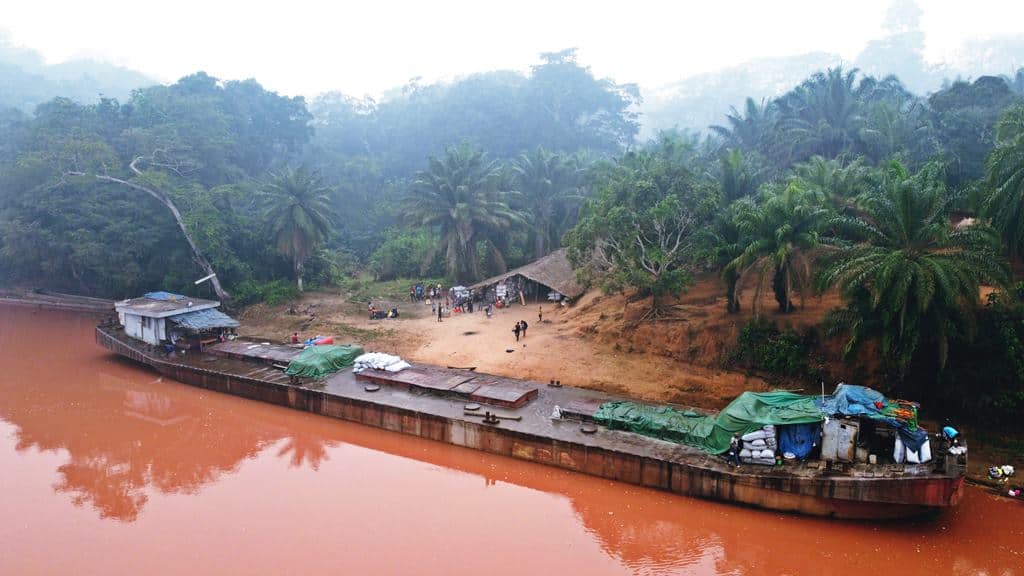
From here, the distance down the river to Kinshasa is more than 1,600 kilometers. The journey is not without its problems. Strong winds, torrential rains, and sandbars are just some of the challenges that the sailors on the old ships will have to face.
From Kisangani onward, the Congo River—which is still narrow at this point—gradually widens until it reaches 13 kilometers in width not far from Lisala. In the middle of this enormous river, there are numerous islands covered in lush jungles and inhabited by small fishing communities that live in relative isolation.
We invite you to read our article about our experience navigating the Congo River on a 35-day expedition that was as thrilling as it was grueling.
Kisangani and the Wagenia Fishermen: Traditional Fishing on the Congo River
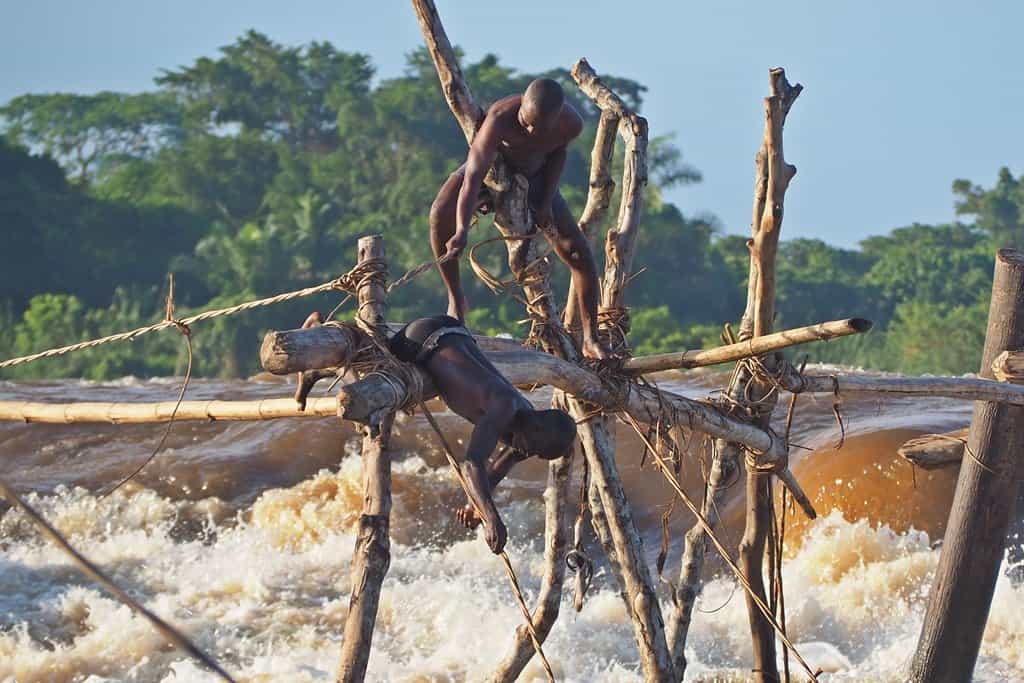
The Wagenia fisheries, located in the rapids of the Congo River near Kisangani, consist of structures made of large conical traps attached to scaffolding. Carried by the current, the fish swim into the traps, and then all that’s left to do is haul them in. Once the fish are caught, the fishermen have to retrieve the traps—a dangerous task in such powerful currents. For travelers, it’s a scene from another era—and truly spectacular.
Yangambi, the forgotten laboratories of the jungle
Sailing from Kisangani about 100 kilometers downstream along the Congo River , we arrive at the vast scientific city of Yangambi.
Built by the Belgians in 1933, Yangambi was home to the most important research center on the African continent for the study of tropical agriculture and forestry until 1962. Check out our post to learn much more about the fascinating city of Yangambi.
Pygmies of the Congo: The Twa People of Lake Tumba
In the rainforests of Équateur and around Lake Tumba, we find Twa or Batwa communities—peoples traditionally known as “Pygmies”—who for generations have lived in close association with the Ekonda and other Mongo peoples of the region. The jungle continues to play a central role in their culture and in their understanding of the land.
Traditionally hunter-gatherers, many Twa communities are now settled but continue to maintain a close relationship with the forest and preserve some of their traditions, despite the economic hardships imposed by the 21st century. Among the traditions they are determined to preserve is the Mama Walé’s unique “maternity leave.”
Traveling through this part of the Congo allows us to get closer to some of these rarely visited communities and to discover a reality that is much more complex than the image we usually associate with the Pygmy peoples of Central Africa.
Cultures and Traditions of the Democratic Republic of the Congo
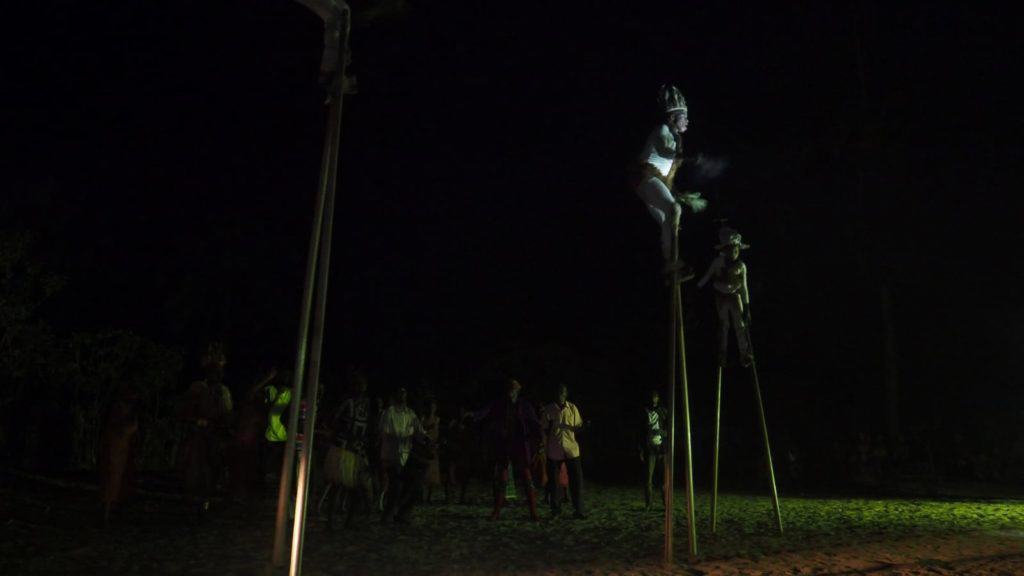
In a country where evangelization has reached virtually every corner, and hundreds of of religious movements of all kinds flourish in every corner of the Democratic Republic of the Congo, we still find villages that preserve their ancient traditions and initiation rites.
These are traditional practices in which masks continue to connect the world of the living with the spirit world, and although it is not easy to gain access to them, with the right contacts and experience, it is possible.
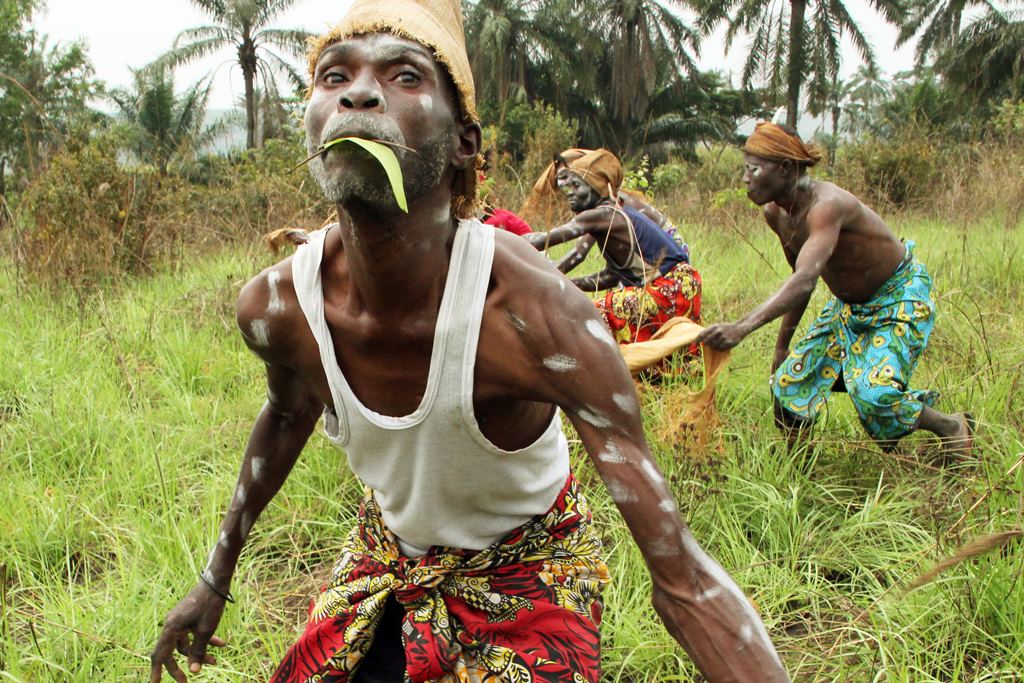

Among the ethnic groups that keep their ancestral culture—or a significant part of it—alive are some Pygmy groups in the Equateur region and in the eastern part of the country. But if travelers wish to delve deeper into the world of traditional culture, we recommend visiting the Kasai and Katanga regions. In these two regions, you’ll find a large number of ethnic groups that remain traditional to this day.

Among all these groups, the Pende, Salampasu, Yaka, Suku, Nbunda, Luba, and Songe peoples stand out. All of them are familiar with their history, continue to practice their initiation rituals, and take pride in their traditions. Without a doubt, exploring these territories—which almost no one knows about—is one of the highlights of any trip to the Congo.


Mukanda Ritual, Male Initiation
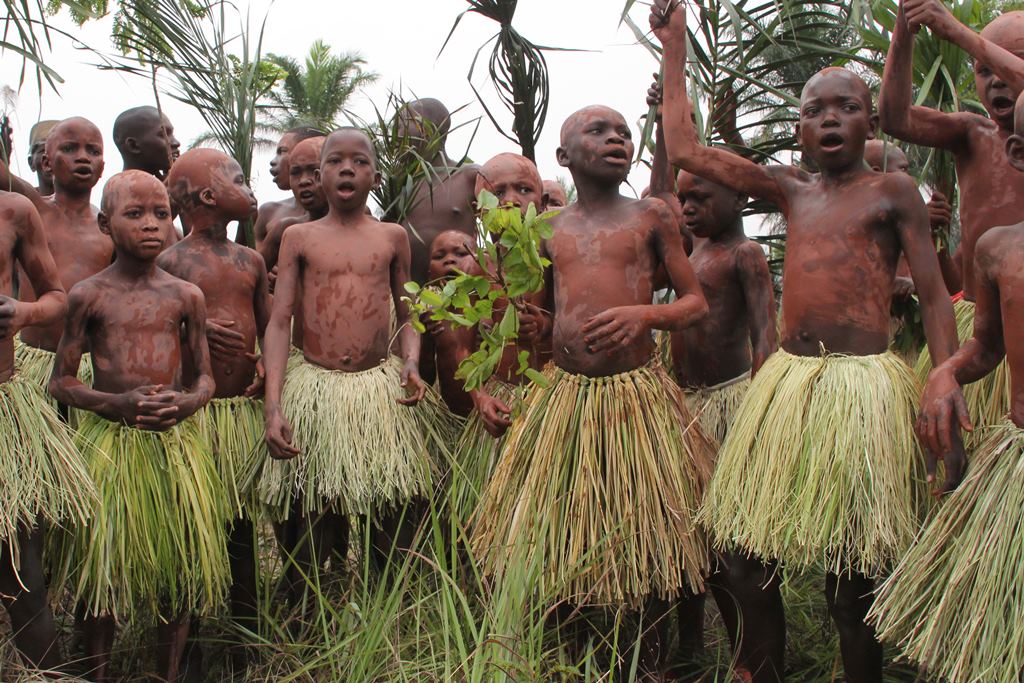
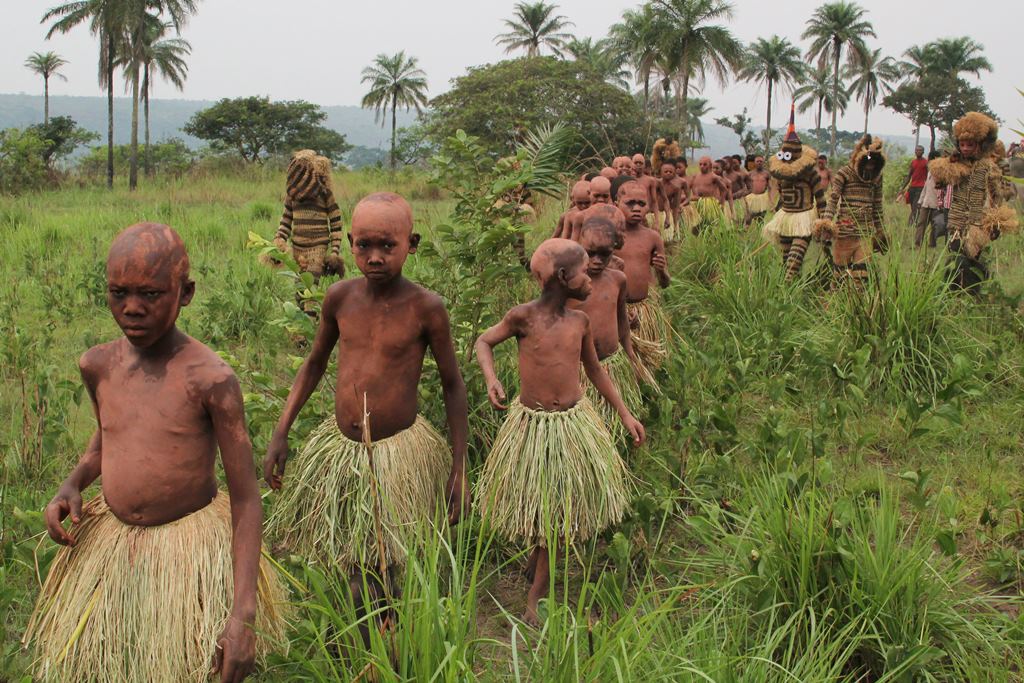
Many ethnic groups in the DRC continue to observe their rites of passage, in which boys and girls become adults after spending time in camps built specifically for this purpose. To do so, they must spend several months learning from their initiation masters.
The rite of passage for men is called Mukanda and is common among many Bantu ethnic groups in the DRC, Angola, and Zambia. During their time in the mukanda, the boys undergo a series of rites and experiences, some of which would seem cruel under normal circumstances. They may undergo circumcision.
During the Mukanda period, the boys are trained to take physical risks and to be mentally strong. In this way, they will be able to resist any temptation to reveal the secrets and rituals they are taught.
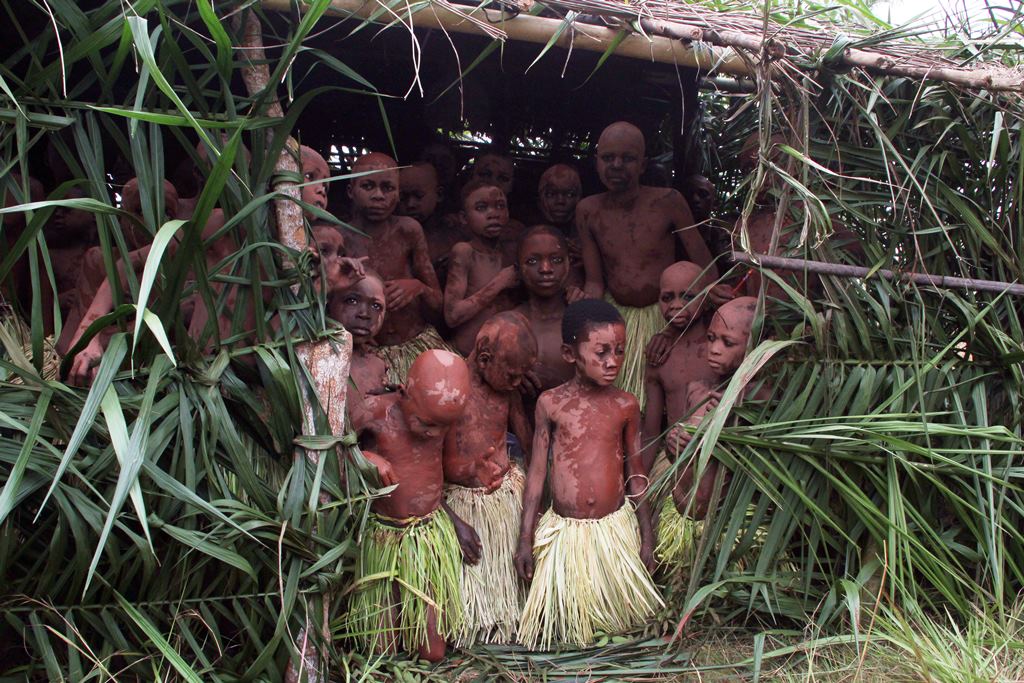
Under the guidance of their guardians, the boys learn many useful skills and manners. They are taught to obey their parents’ or guardians’ orders and instructions without question, to participate in manual labor, to eat together with their fellow novices, and to consider one another blood brothers.


Kingdom of Kuba
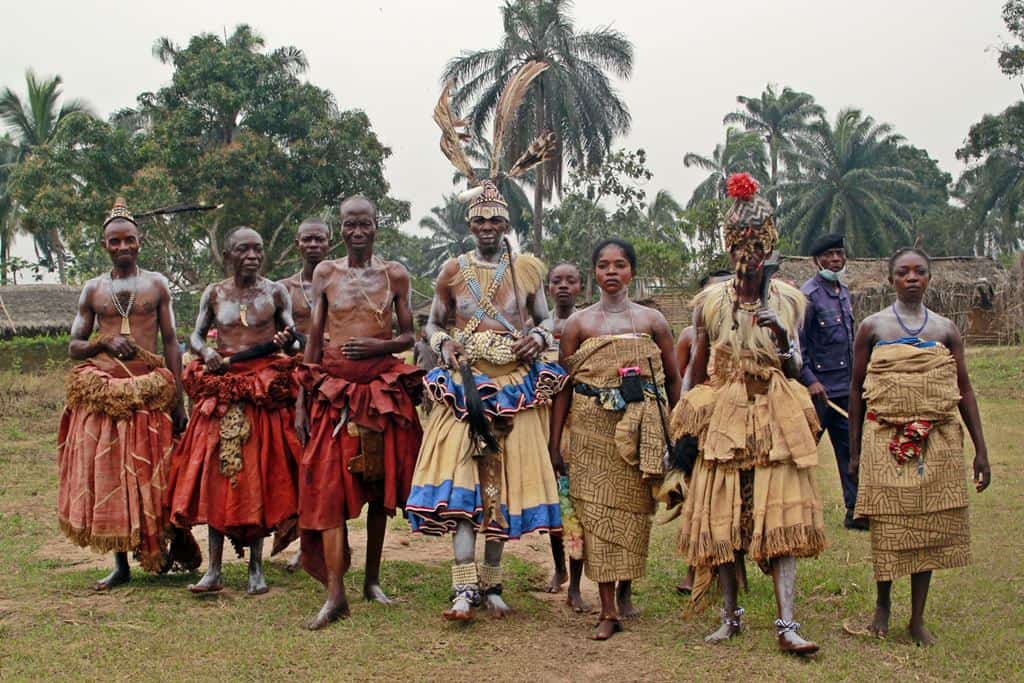
Located in the fertile forest and savanna bordered by the Sankuru, Lulua, and Kasai rivers, the Kingdom of Kuba was a confederation of several smaller principalities of diverse ethnic origins.
In the 17th and 18th centuries, the interior of Central Africa witnessed the flourishing of a kingdom known for its organization, architecture, textiles, carvings, and traditions. In this article about the Kuba Kingdom, we provide you with much more information about this ancient culture.
It takes three or four days of arduous travel to reach the heartland of the ancient Kuba Kingdom
The Famous Textiles and Sculptures of the Kuba Kingdom
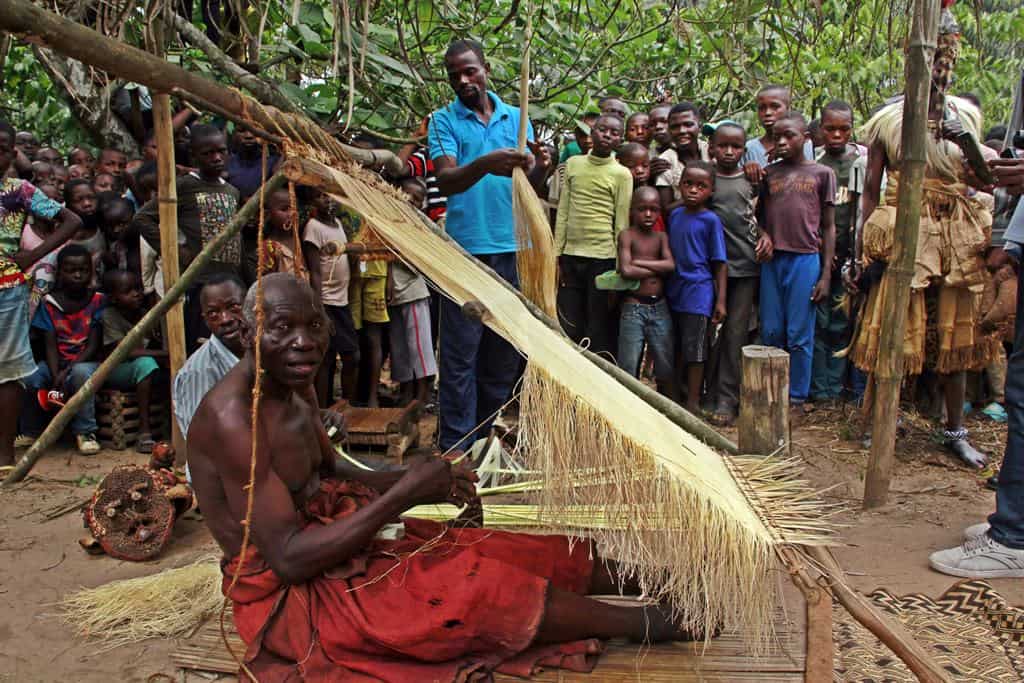
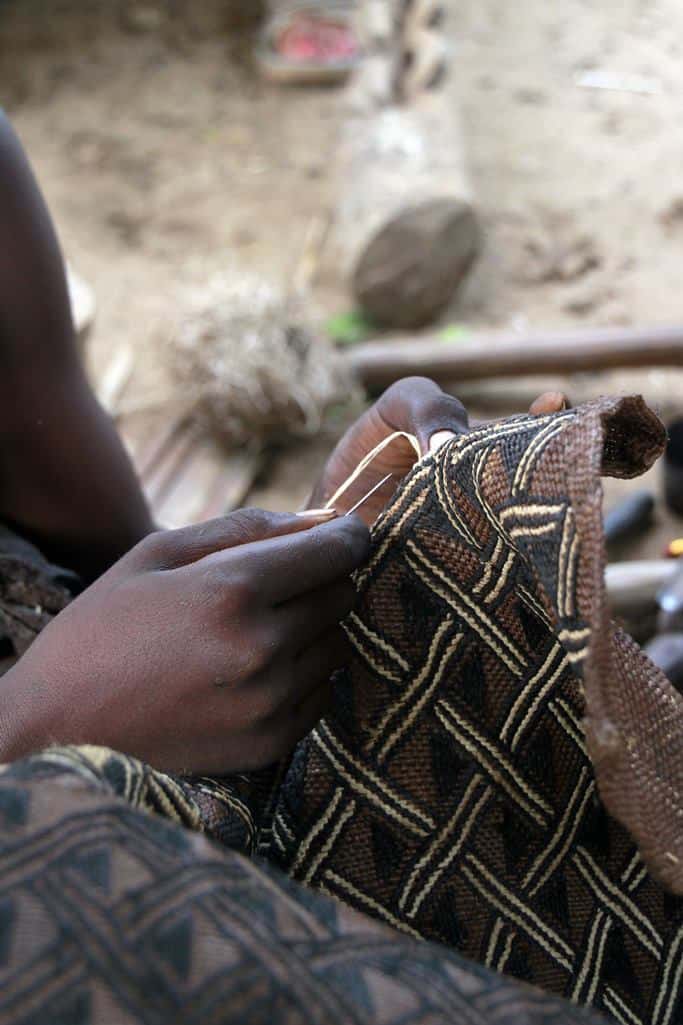
If the Kingdom of Kuba is known for anything outside the borders of the DRC, it is for its rich artistic tradition, which can still be admired today. The Kuba people were and are admired for their woven fabrics, whose main raw material is raffia, a fiber produced from the enormous leaves of a type of palm tree native to Africa and South America. The leaves make it easy to transform their fibers into large pieces of fabric.
These fabrics can take weeks or even months to make, and their geometric embroidery is rich in symbolism. Traditionally, men weave the base raffia cloth, while women are responsible for the embroidery.

The Lokele and the Language of Drums
The Lokele people live mainly along the Congo River in northern DRC, between the cities of Lisala and Lokutu, and are known throughout the Congo for being excellent percussionists and for communicating through their traditional gongs and drums.
As is the case in much of the Congo, modernity and evangelization are putting an end to this ancient world, but if you’re willing to take a few motorcycle taxis and travel into the remote interior of the Lokele region, you’ll find ancient ceremonies and drums that speak.
Tata Gonda and the New Cults of the Congo
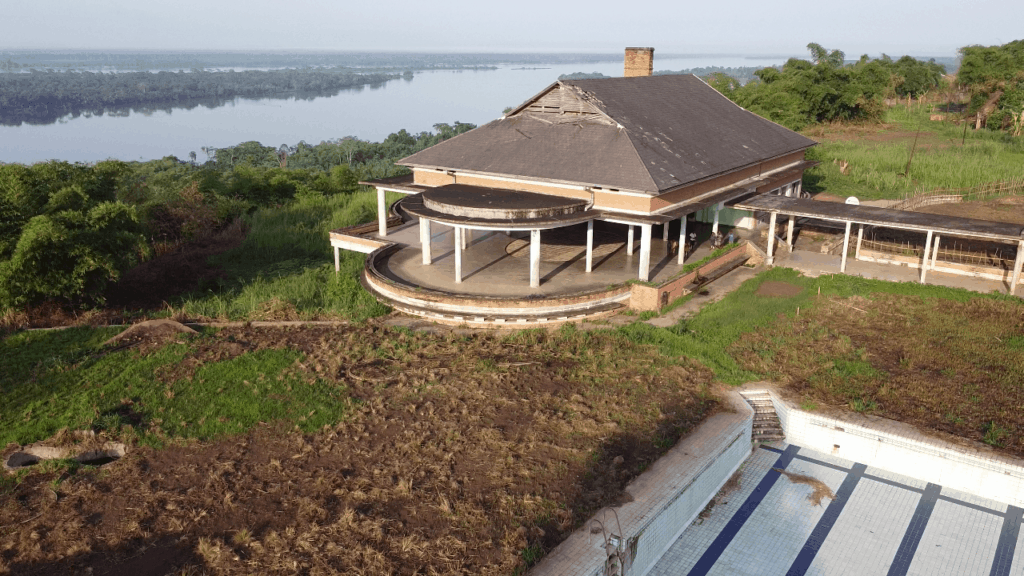
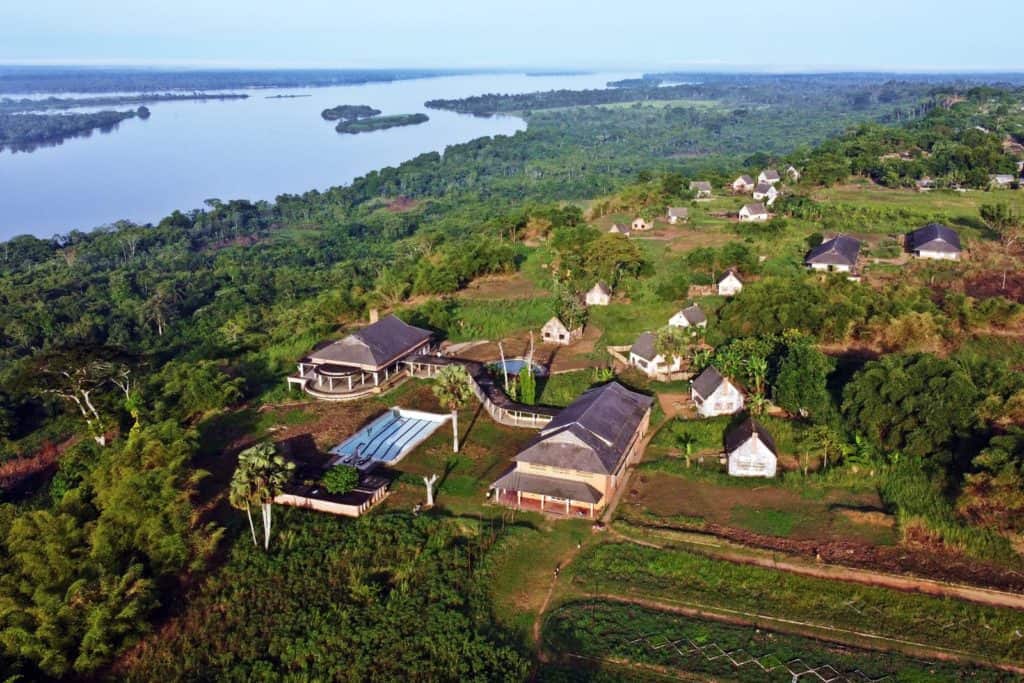
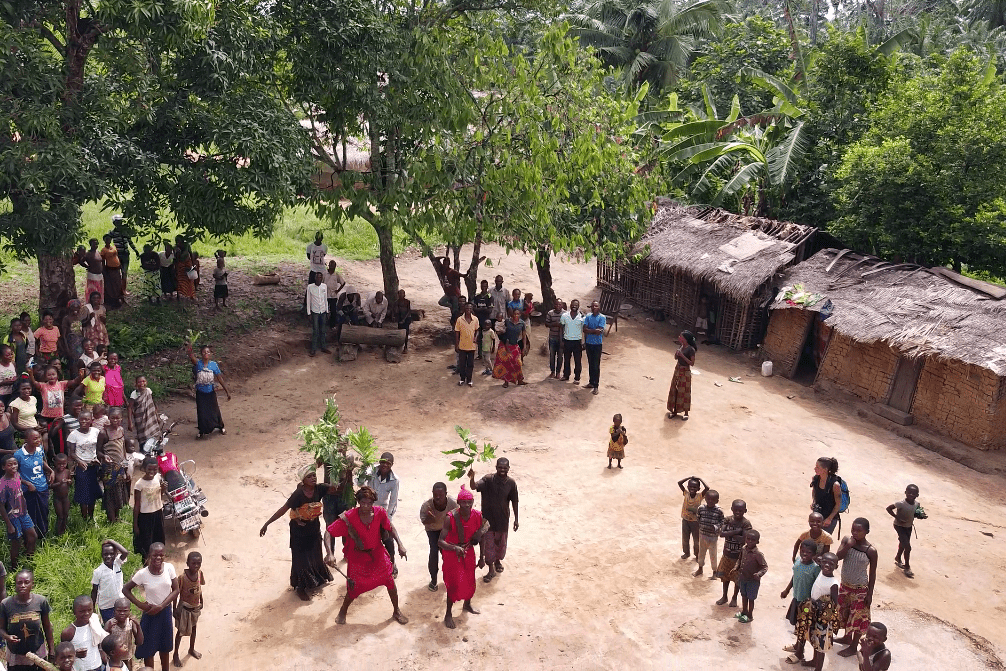
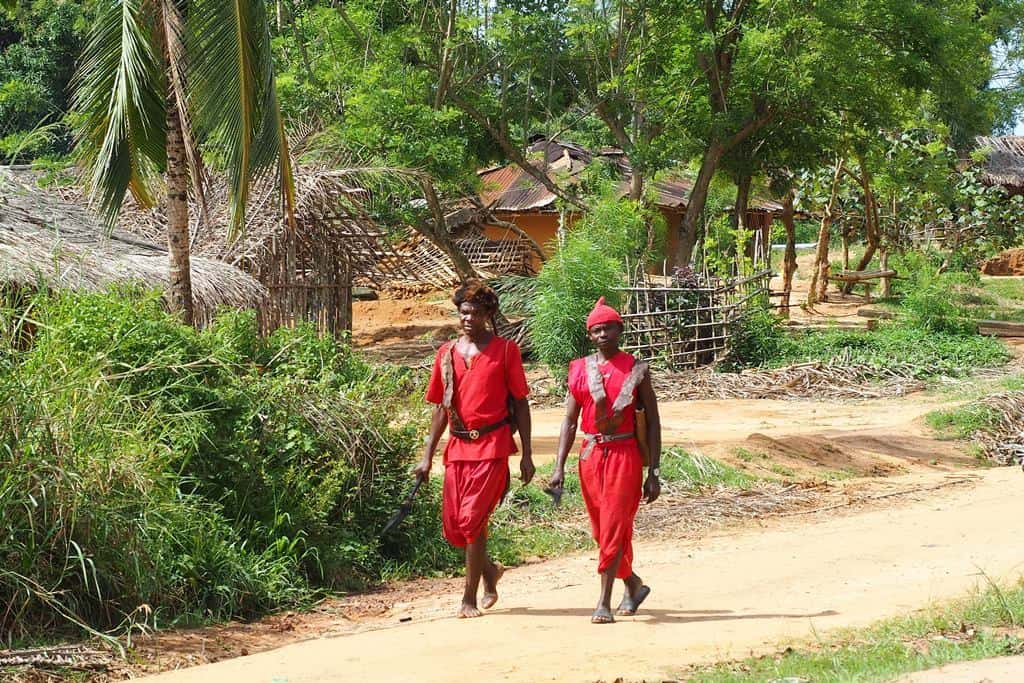
Deep in the province of Central Congo, the followers of the late prophet Tata Gonda.
Today, several hundred volunteer followers from Congo and Angola continue to follow the spiritual path laid out by their “guru.”
Their purpose is to combat an unjust and sinful world through constant prayer and an austere, monastic lifestyle. Their headquarters, which we visited, is located far away from prying eyes.
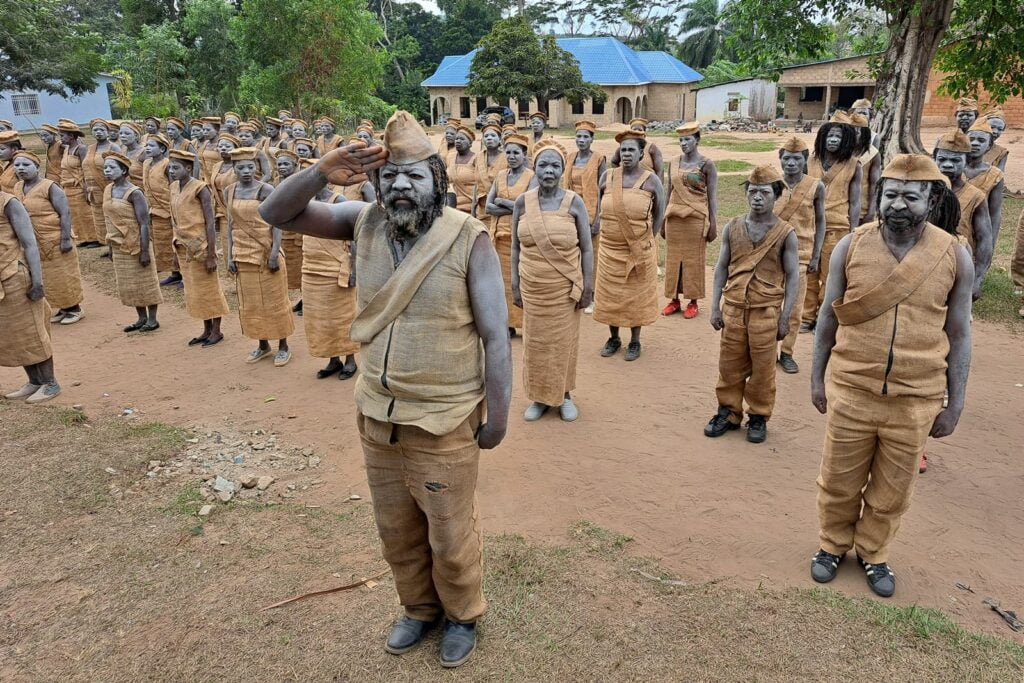
In complete privacy, this community lives self-sufficiently in accordance with its beliefs. They perform community work, have vegetable gardens, a river with drinking water, a fish farm, prayer facilities, dormitories, and everything else these “tropical Franciscans” might need.
In our opinion, life in the community feels closer to an alternative, almost hippie way of life than to what we would normally imagine as a religious sect.
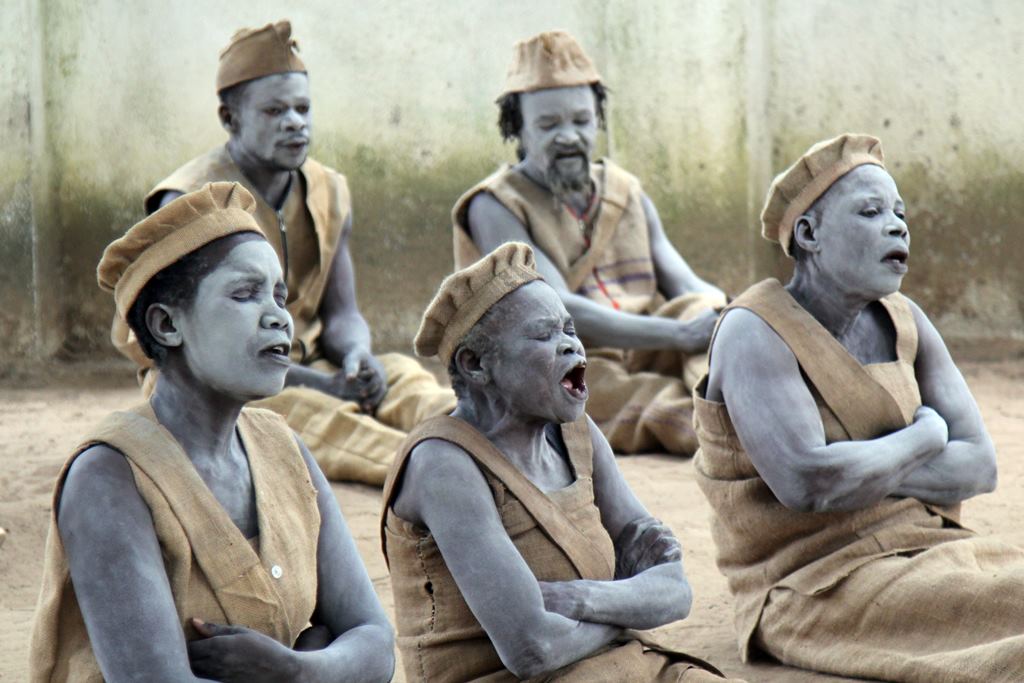
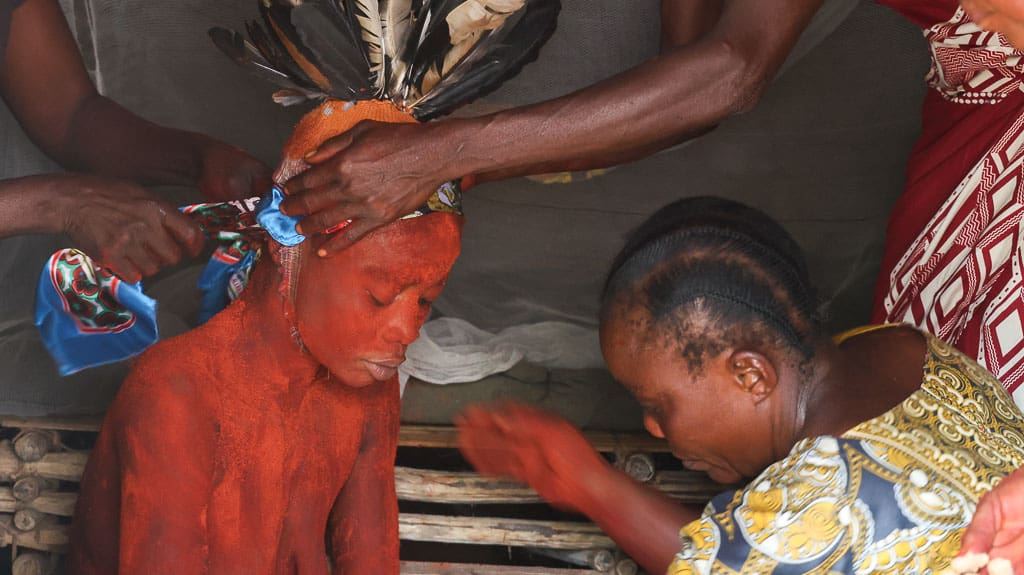
Some of the prohibitions observed by Tata Gonda’s disciples include drinking alcohol, smoking, carrying luxury items, and washing with water. For this reason, every morning they perform a ritual in which they cover themselves with ashes, which they use as an antiseptic.
His disciples wear burlap robes, a symbol of the utmost humility before God.

Nature and Biodiversity in the Democratic Republic of the Congo
Traveling to the Congo means visiting the home of more than 15,000 species of plants and animals, including more than 3,200 endemic species such as the okapi, the Congolese peacock, and the bonobo. But there are also gorillas, elephants, chimpanzees, giraffes, and many other species.
The legendary Congo River, its deep forests and jungles, mountains, volcanoes, and savannas… are some of the country’s greatest attractions and the main focus of our itineraries. On our expeditions and trips in the Democratic Republic of the Congo, we always include and explore the country’s unspoiled nature.
Garamba National Park
Located in northeastern Congo, near the Central African Republic and South Sudan, the Garamba National Park ( ), a World Heritage Site, was established in 1938, making it one of the oldest national parks in Africa.
With a mix of vast savanna of rolling grasslands and dense dry forest, Garamba is the last protected area for the largest population of elephants and the last remaining Kordofan giraffes in the Democratic Republic of Congo .
Virunga National Park
Located in the easternmost part of the Democratic Republic of the Congo, Virunga National Park—also a World Heritage Site—is Africa’s oldest national park and is considered one of the world’s most extraordinary natural sites.
Two of the main activities you can do in Virunga are mountain gorilla trekking and hiking to the summit of Mount Nyiragongo, the active volcano that contains the world’s largest lava lake.
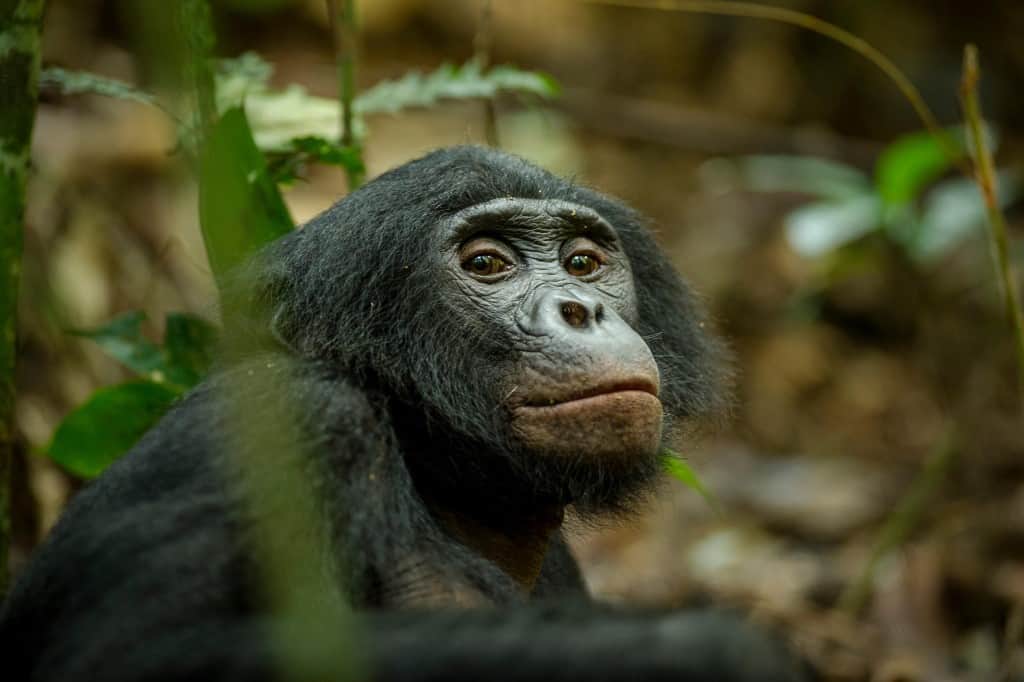
Wild bonobos in the DRC
Known as pygmy chimpanzees, wild bonobos are found only south of the Congo River, in the Democratic Republic of the Congo.
Bonobos share 98.7% of their genetic code with humans, making them—along with chimpanzees—our closest living relatives. They were the last great ape to be scientifically discovered.
Where can you see wild bonobos on your trip to the Congo?
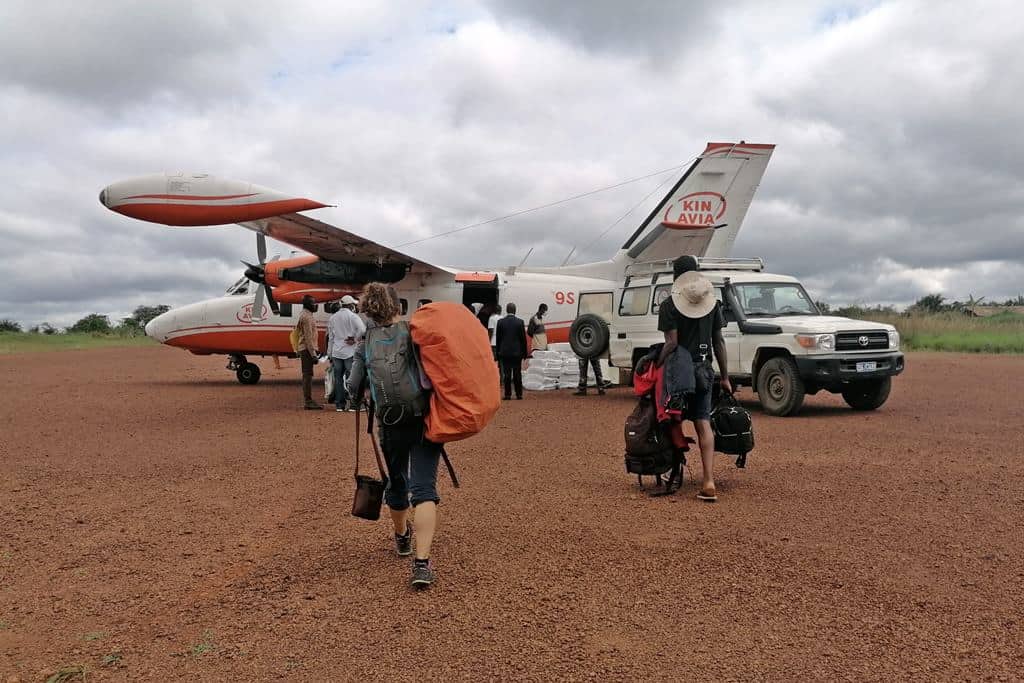
The first thing we need to tell you is that spotting bonobos in the DRC is no easy task. To visit the Lomako Reserve, you have to take one of the flights—sometimes regular, sometimes occasional—that go from Kinshasa to Boende or Basankusu, known as the “bonobo capital.”
Once you arrive at these research centers, you’ll need to spend at least 4 days to a week conducting surveys.
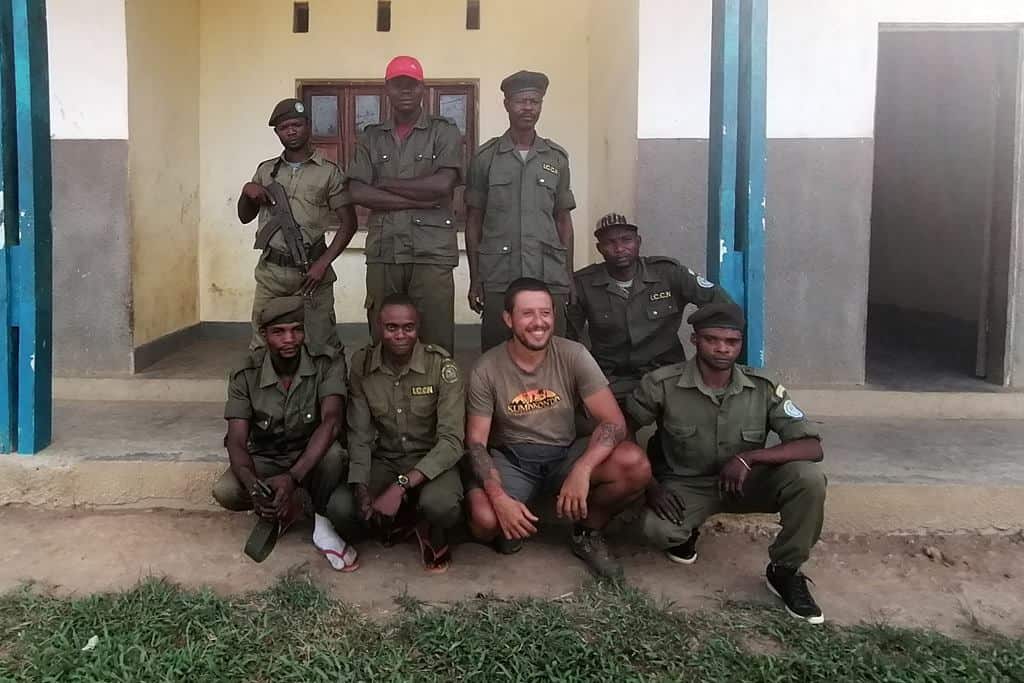
These are the places open to tourists where you can see bonobos:
Many of these sites are home to various groups of bonobos that have become accustomed to human presence, which makes it much easier to visit and observe them.

Salonga National Park
In the heart of the central Congo River basin, Salonga National Park— a World Heritage Site since 1984—is the largest protected area of dense tropical rainforest on the African continent.
Salonga is home to 40% of the world’s bonobo population and is the only national park in the DRC where they can be found.
This is one of the most isolated and remote national parks in the Congo, and it is very difficult to reach; however, the best way to get there is by plane.
Salonga is also home to many endangered endemic species, such as the Congo peacock, the forest elephant, and the slender-snouted African crocodile.
LuiKotale Forest and Research Center in Salonga
The LuiKotale Research Center is located at the western edge of Salonga National Park. Since its establishment in 2002, it has been used by international teams of researchers and students. At LuiKotale, there are two groups of habituated bonobos (work is underway on a third) totaling approximately 70 individuals.
Lomako-Yokokala Reserve
One of the most inaccessible and remote reserves on the African continent is the Lomako-Yokokala Reserve. It takes several days of sailing to reach it.
This reserve is managed by a Japanese professor who has spent his entire life studying the behavior of bonobos, and getting there is a profound experience in the jungles of the Congo.
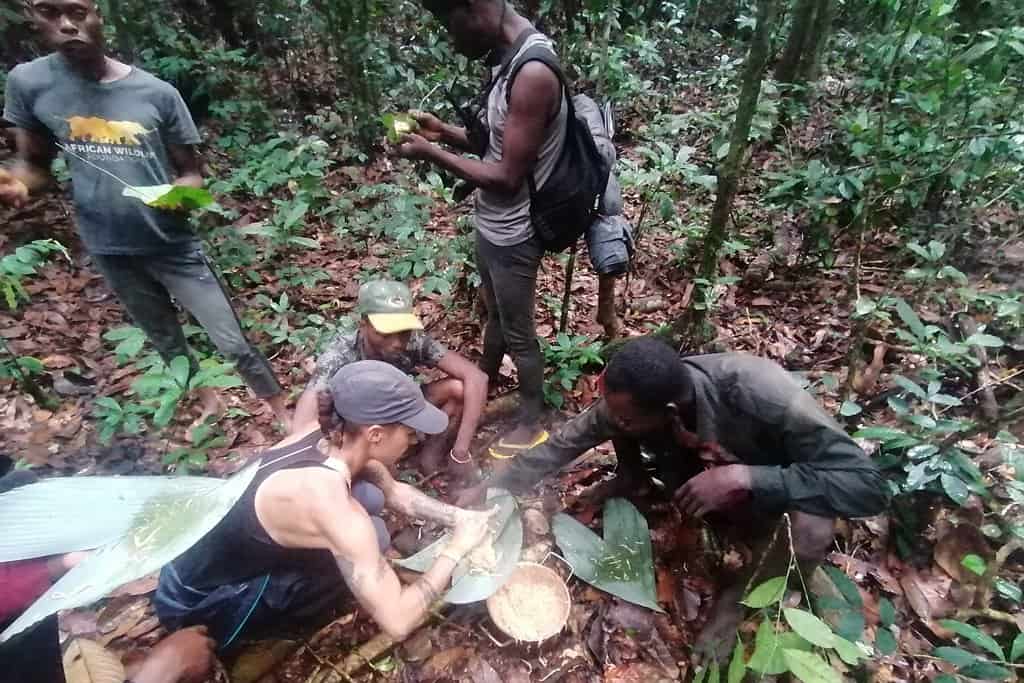

Malebo Forest
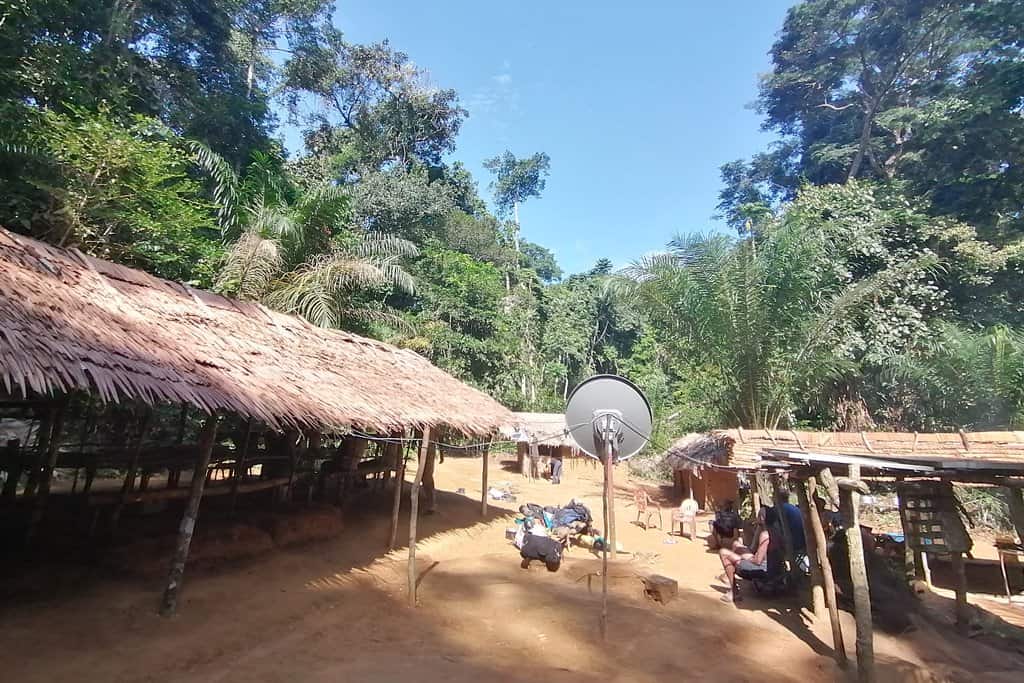
A mix of forest and savanna, the Malebo Community Forest is perhaps the most accessible place in the Democratic Republic of the Congo where it is possible to see wild bonobos, since it is relatively close to Kinshasa.
The WWF, which manages Malebo, has developed an ecotourism initiative called Picbou. Since then, three groups of bonobos have become accustomed to human presence in the region.

History and Heritage of the Congo
Forgotten Colonial Heritage
The passage of time and the chaos currently plaguing the country have left the colonial and historical heritage in a state of neglect that is on the verge of disappearance. With the exception of the country’s historic cathedrals and churches—which are very well preserved and well worth visiting—the rest of the buildings, palaces, train stations, and factories from the colonial era and the Mobutu era are on the verge of collapsing.
If you are fascinated by abandoned and semi-abandoned places, the DRC could easily become one of your favorite destinations.

Metropole Hotel in Matadi
The former Hotel Métropole in Matadi is one of those places that takes us back to another era in the Congo. Built during the colonial period, around 1930, when Matadi was one of the country’s main gateways thanks to its port on the Congo River, the building still retains some of the elegance of those years, although today it bears the marks of time and neglect.
Exploring these spaces is like delving into the history of a city that grew up tied to trade, the railroad, and navigation on the great river.
It is built in the Neo-Gothic style and was constructed according to plans by architect Ernest Callebout. Fun fact: it was the first multi-story building in the Congo.

Kumakonda in the Democratic Republic of the Congo
Every trip to the Congo deserves to be documented, and the need to tell the story of this country’s realities has given rise to this documentary project, a small preview of which we present in this video.
Our appearance on RNE’s “Nómadas” program
“It is the lifeblood and main artery of Central and West Africa—the river that gives its name and meaning to the continent’s second-largest country. A winding waterway that connects and sustains the major cities of the Democratic Republic of the Congo. Accompanied by Austerio Alonso, co-founder of the Kumakonda agency, and documentary director Jorge Saffie, we take in the bustling and chaotic city of Kinshasa. The Congolese capital is the starting point for a journey that takes us in search of isolated communities deep in the jungle. Historian Luis Alberto Lugo introduces us to the followers of Tata Gonda, a peaceful sect with Christian origins and a military aesthetic. We also explore the Mukanda rites of passage and the cultural expressions showcased by dozens of tribal groups at the Gungu National Festival, the grand celebration of masks and dance. Travelers Joxe Inazio Kuesta and Charo Rodríguez recall their experiences in this complex country with an uncertain future and a tragic past. We cannot forget the terrible effects of Belgian colonialism, particularly the genocide perpetrated under King Leopold II, which is echoed in Joseph Conrad’s novel *Heart of Darkness*.
You can listen to the radio program by clicking here. The Congo River: A Journey of a Lifetime 01/28/2023 57:12
Press Coverage
At the links below, you can read some accounts of our 35-day expedition down the Congo River and through the jungle, published in the Diario de León.
35 DAYS OF HELL AND HEAVEN IN THE CONGO (Diario de León, in Spanish): Everything and nothing, sublime beauty and the most hideous ugliness, black and white, good and evil, life and death. Everything hanging in the balance. This is the story of a wild journey on foot, by canoe, and by motorcycle along 2,000 km of the Congo River and its jungles.
– https://www.diariodeleon.es/articulo/revista/35-dias-infierno-cielo-congo/202307160333222355913.html
Bonobos, gunfire, and Pygmies of the Congo, with the jungle and Basankusu’s escape: Pérez-Reverte called it “Comanche Territory” in his book. That’s the place and moment when you know you have to get out of there and not go any further. You’re in danger. This is the story of a massacre of bonobos along the Lulonga River, the whizzing of bullets at your hotel, and the nighttime escape by canoe from Basankusu, in the jungle of northern Congo.
https://www.diariodeleon.es/articulo/revista/selva-fuga-basankusu/202307221257582357809.html
Travel with us
Zone
Types of trips available at CONGO DRC (DEMOCRATIC REPUBLIC OF THE CONGO):
- Festivals and ceremonies
- Wildlife and the jungle