


Introduction to a 35-Day Trip to the Congo River
In 2023, we undertook a 35-day expedition through the Democratic Republic of the Congo, traveling about 2,000 kilometers by river, through the jungle, and along dirt roads. The main focus of the trip was navigating the Congo River from Kisangani to Mbandaka, using motorized canoes and local boats, and branching off into its tributaries to reach some of the most remote places in the Congo Basin. Here’s the full story.
This is the Democratic Republic of the Congo
When we left Kinshasa on that trip in 2023, we had an itinerary, a plan.
Thirty-five days later, we had a completely different story. And what a story it was.
There are names that belong both to geography and to our imagination, and once we’ve visited them, they remain indelibly etched in our memory. The Congo is one of them.
The Congo is not just a vast river: it is history, exploration, jungle, and legend. A name steeped in stories that, for generations, has symbolized the remote and the unknown. Even today, few names or journeys evoke as much as the Congo.
It’s been three and a half years, and I remember this trip down the Congo River like no other. Because there are places that continue to travel with you long after you’ve returned. I could say that the same thing happened to the other 20 people I traveled with during those weeks. Sixteen travelers, three boatmen, and a local guide. One of them never returned.
My first trip to the Congo River years ago…
It wasn’t the first time I’d traveled down the Congo River; I’d done so years earlier with my friend Maria Ruiz in small canoes. In some sections, those canoes didn’t even have engines—we simply rowed. On that occasion, we didn’t make it to Mbandaka because I fell ill in the Lomako jungle, and we were lucky enough to catch a flight provided by missionaries.
On that rite-of-passage trip, we also experienced firsthand what it means to venture into this part of the African continent. From that crazy trip came an even crazier idea: 35 days sailing through the Congo Basin
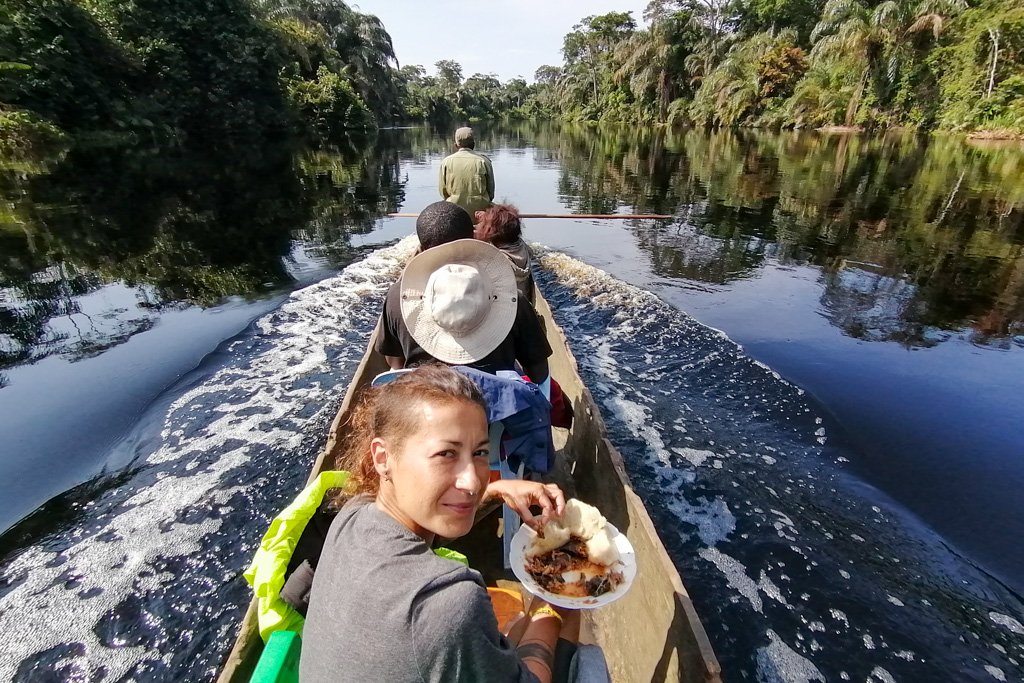
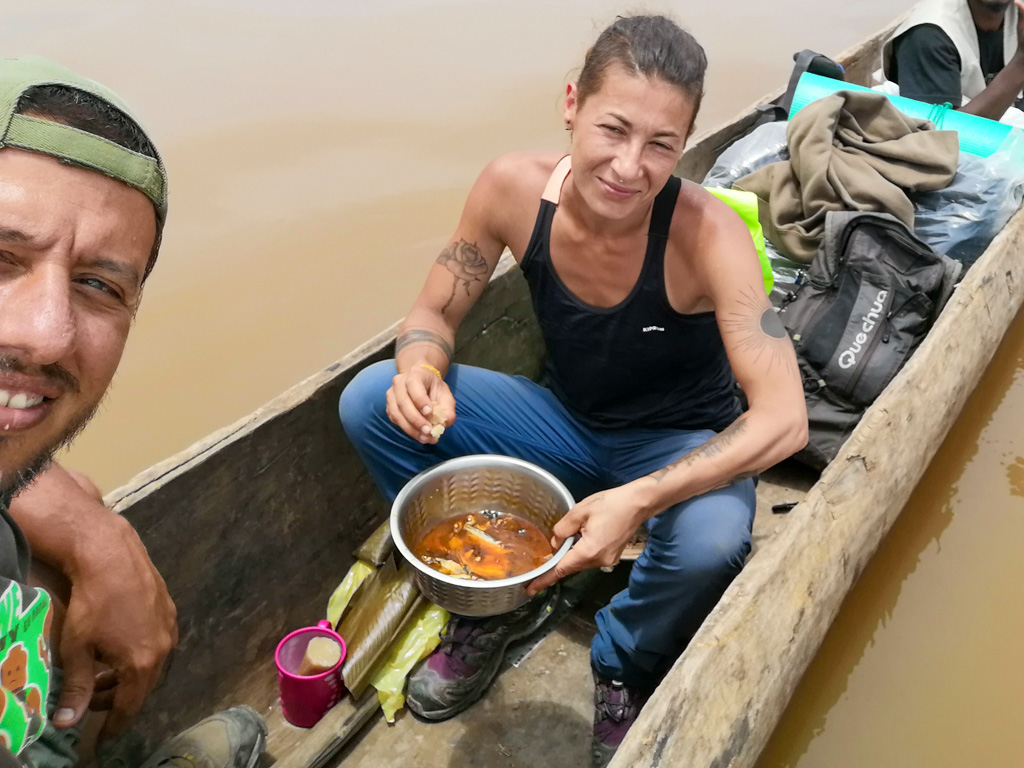
Congo: Navigating a Myth
For centuries, the Congo River has been associated with explorers, traders, missionaries, and adventurers; with Leopold II’s Congo Free State; with Stanley and the great European expeditions of the 19th century; and, above all, to Joseph Conrad and *Heart of Darkness*, the work that played a decisive role in shaping the West’s image of a remote, impenetrable, and dark Congo.
But there is another Congo.
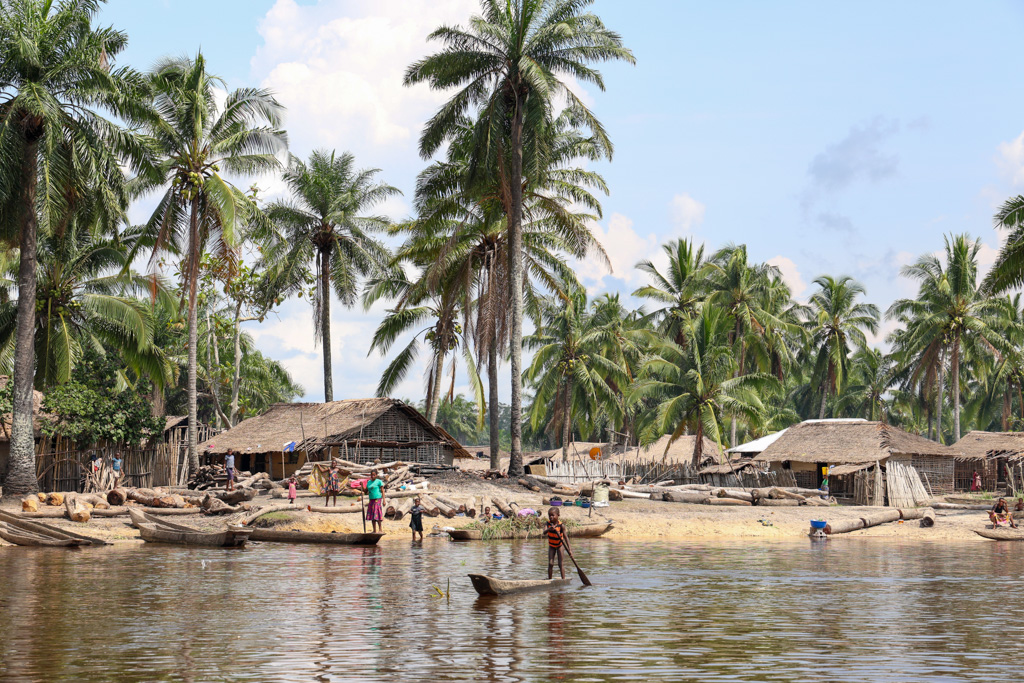
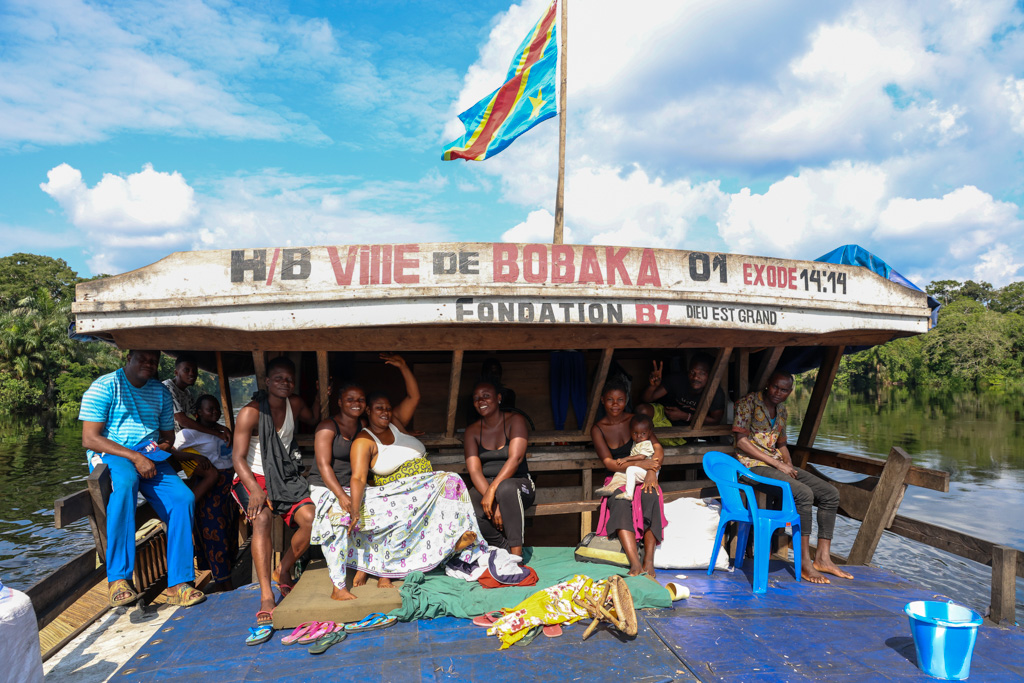
The world of millions of people who live along the water. The world of fishermen who set out every dawn in their canoes, families living in villages built on stilts, river markets, and the large, ramshackle boats known as balaniers that transport people, animals, and goods between cities separated by hundreds of kilometers of jungle.
A Trip to the Congo River from Kisangani to Mbandaka
In 2023, Kumakonda brought together a group of 16 international travelers to spend 35 days exploring the Democratic Republic of the Congo, navigating the legendary Congo River along what is undoubtedly its most spectacular stretch—from Kisangani to Mbandaka— a 1,000-kilometer expedition along Central Africa’s main waterway and some of its tributaries.
Our journey began in Kinshasa and took us by plane to Kisangani. From there, we sailed down the Congo River, but our intention was not simply to follow its course.
We wanted to leave it behind and venture into the vast network of rivers and jungles of the Congo Basin, and that is exactly what we did
We ended up traveling by plane, large boats, 4x4s, taxis, canoes, and motorcycles; covering more than 150 kilometers on motorcycles along muddy, barely discernible trails and sailing for weeks on some of Equatorial Africa’s great rivers.
Probably the trip that has had the greatest impact on my life
And as always happens in the Congo and on real expeditions, there came a point when the journey no longer went according to our plans.
This trip, which I led myself in the spring of 2023, turned out to be the greatest journey of my life. I had been traveling across the African continent for many years and had been on expeditions and great adventures, but what happened and what I experienced on that trip took it to a whole new level. I was immensely fortunate to have, for the most part, an incredible group of travelers with me, and together we made our way out of that thick fog that engulfed the Congolese jungle.
Meeting and visits with the group in Kinshasa
Before setting out to navigate the Congo River, Kinshasa offered us a fascinating and wild first glimpse into the country. A chaotic, creative megalopolis bursting with life, where tradition and modernity coexist at a frenetic pace.
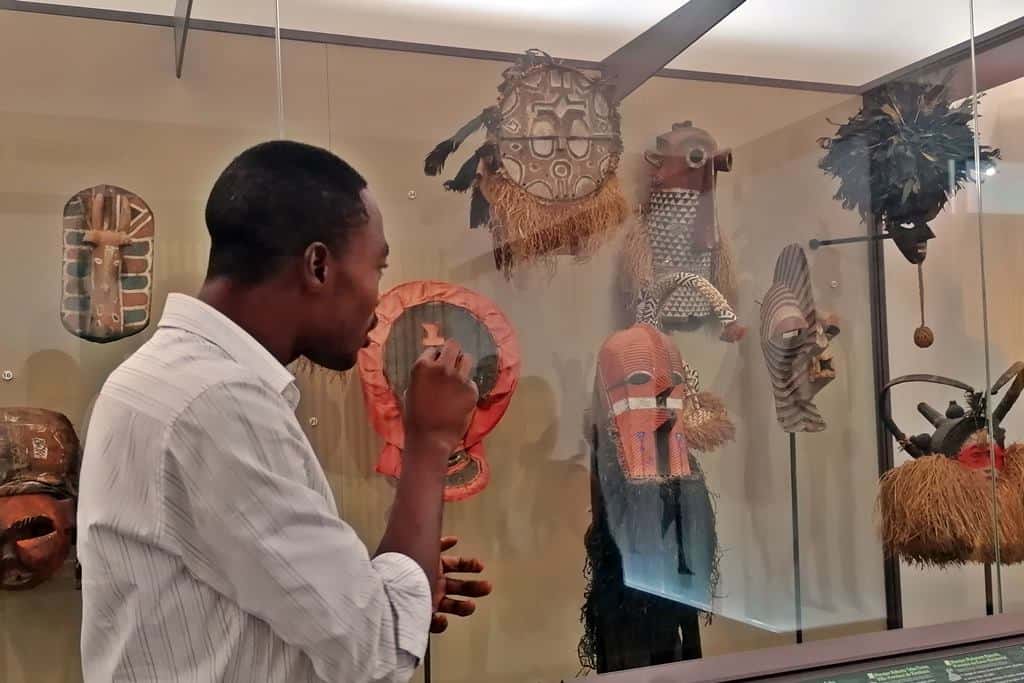
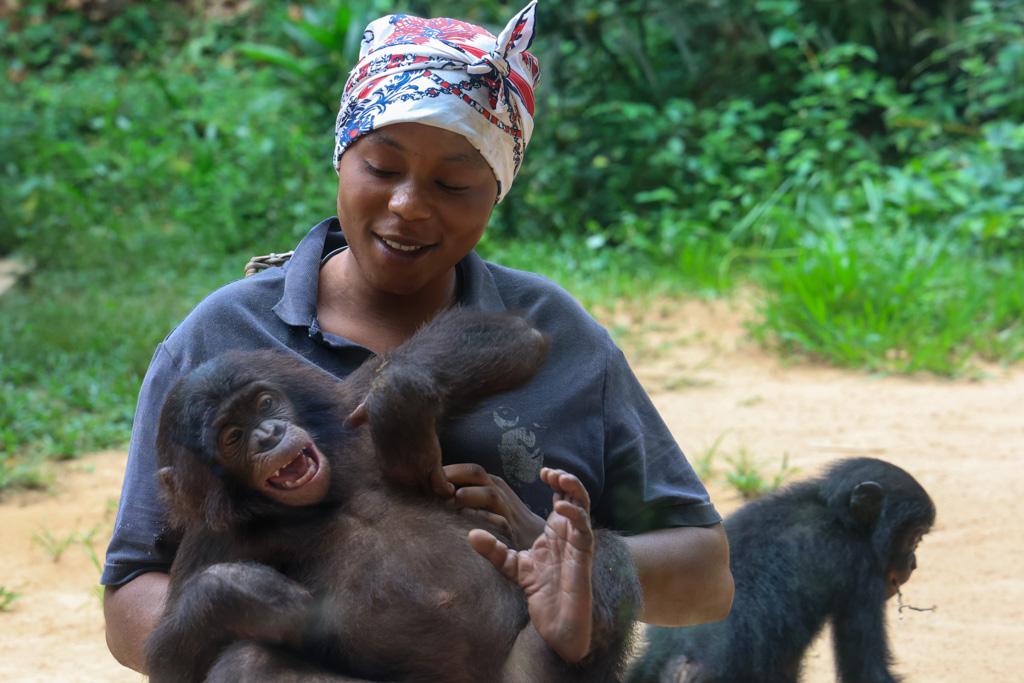
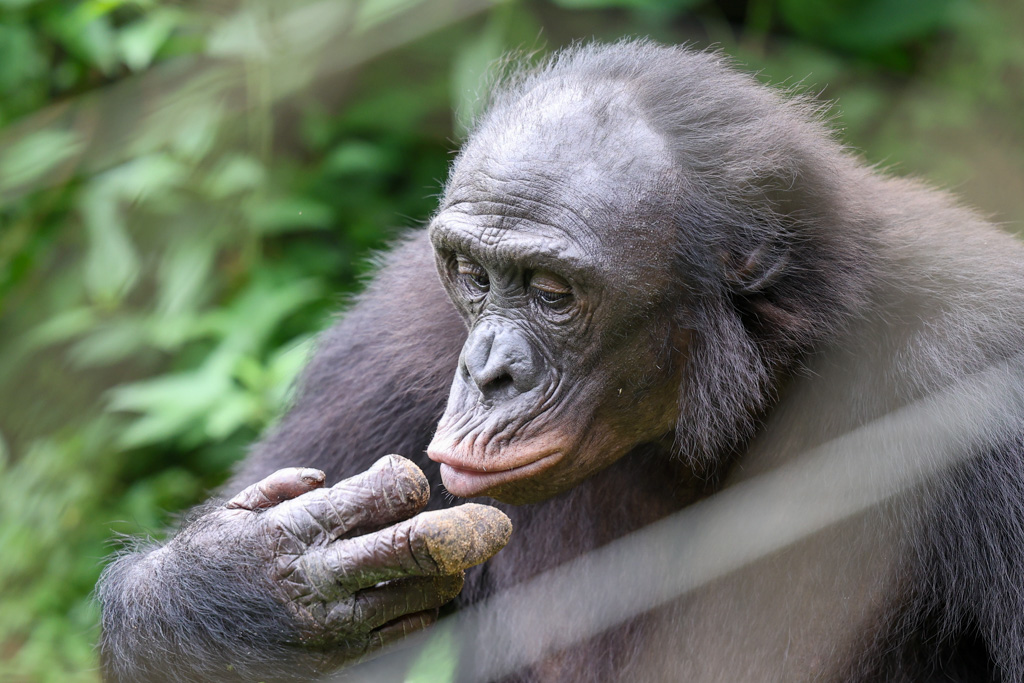
We visited the National Museum of the Democratic Republic of the Congo, a magnificent introduction to the cultural richness of a region inhabited by hundreds of peoples and home to some of Central Africa’s most important cultural traditions. At Lola ya Bonobo, we got an up-close look at these great primates, which are endemic to the Democratic Republic of the Congo and one of the great symbols of its biodiversity.
Lola ya Bonobo: A Sanctuary for Our Closest Relatives
On the outskirts of Kinshasa, amid hills covered in vegetation, lies Lola ya Bonobo, one of the most important conservation projects in the Democratic Republic of the Congo. Its name means “the bonobos’ paradise” in Lingala, a fitting description for this vast forest where bonobos rescued from illegal trafficking and poaching live.
Bonobos (Pan paniscus) are a unique species: they live exclusively in the forests of the Democratic Republic of the Congo, south of the Congo River, and, along with chimpanzees, are our closest living relatives. Their complex social organization—characterized by strong bonds among females, cooperation, and a surprising variety of social behaviors—makes them one of Africa’s most fascinating primates.
The visit allowed us to observe them in large forest enclosures, and we were able to learn about the rehabilitation efforts aimed at returning, whenever possible, some of these animals and their offspring to the country’s inland forests.
KinAct and the Sapeurs: Kinshasa as the Setting
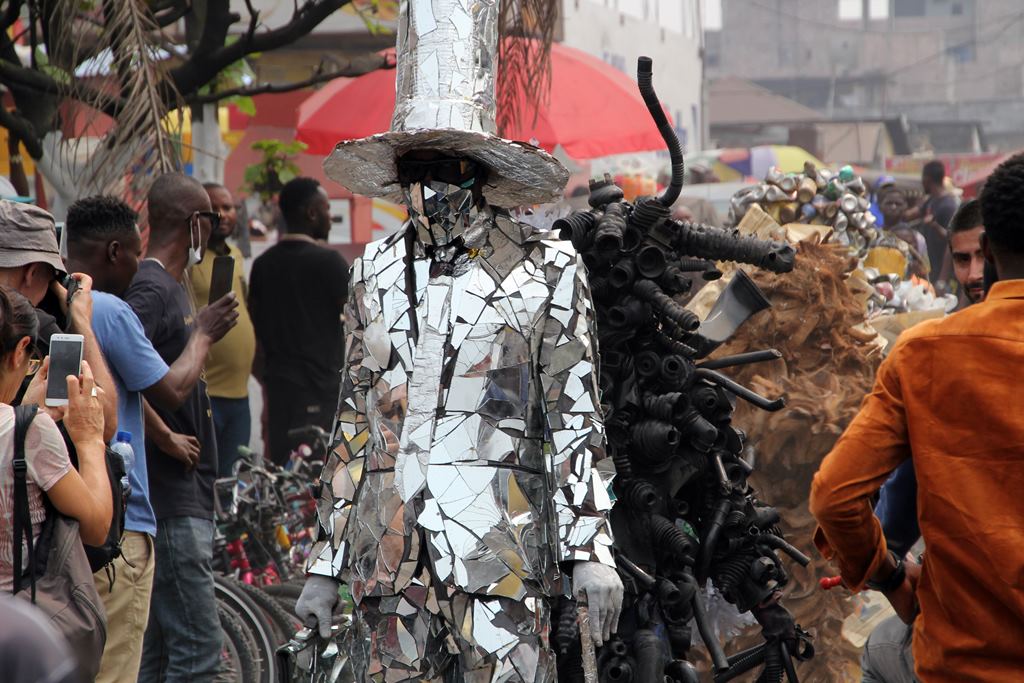
Kinshasa is a city where art spills out of galleries and museums to take over the streets. One of its most striking expressions is KinAct, a movement and gathering of artists and performers who use urban space as their stage, creating striking characters with masks, everyday objects, recycled materials, and trash collected right in the city itself. Their performances—provocative and deeply visual—explore urban chaos, pollution, politics, identity, and everyday life in the Congo.
As has been the case for years in Kumakonda, during our stay we had the opportunity to get up close to some of these artists and witness their street performances: almost surreal figures moving through markets, motorcycles, and pedestrians, interacting with a city that spontaneously becomes part of the artwork.
In a completely different vein are the Sapeurs, followers of La SAPE—Société des Ambianceurs et des Personnes Élégantes. Impeccable suits, shiny shoes, hats, canes, and impossible color combinations are all part of an elaborate ritual of elegance and attitude. More than just a simple obsession with fashion, SAPE is a unique form of self-expression and social representation.
KinAct and the Sapeurs showcase two sides of the same Kinshasa: extravagant, proud, irreverent, and extraordinarily creative—a city where simply stepping out onto the street can turn into a spectacle.
With its art, music, traffic, and the ceaseless pulse of its streets, Kinshasa is the perfect gateway to a complex and fascinating Congo. This is where our journey along the great river begins.
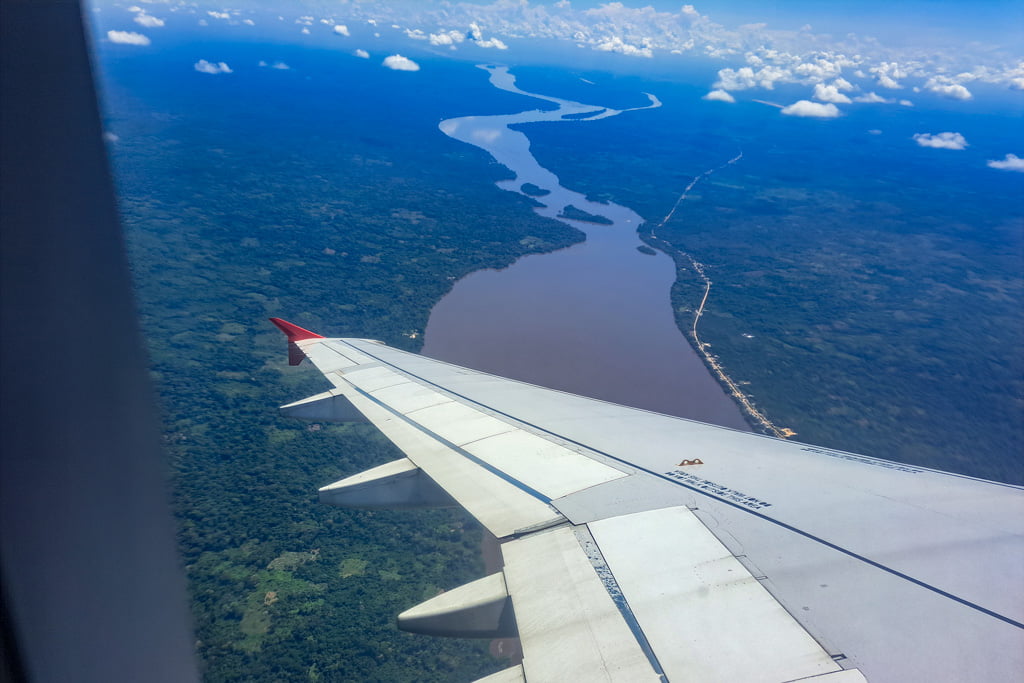
We took a flight to Kisangani, formerly known as Stanleyville, located in the heart of the Congo Basin. This is where our river journey would begin.
Kisangani, where our adventure begins
In the heart of the vast Congolese equatorial jungle, Kisangani is inextricably linked to the great river. The former Stanleyville retains the atmosphere of those remote river cities that sprang up during the exploration and colonization of the African interior, although today its streets, markets, and old buildings bear the scars of a much more complex history.
It’s a pleasant city to stroll through, with nice outdoor seating areas along the river and a market and harbor that are always worth visiting.
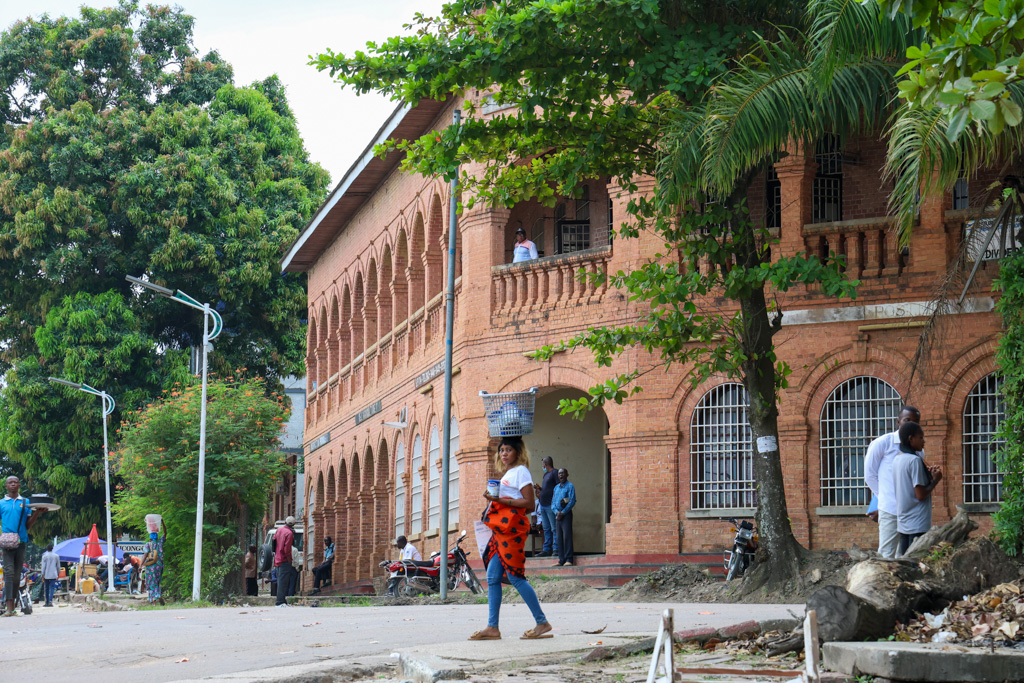
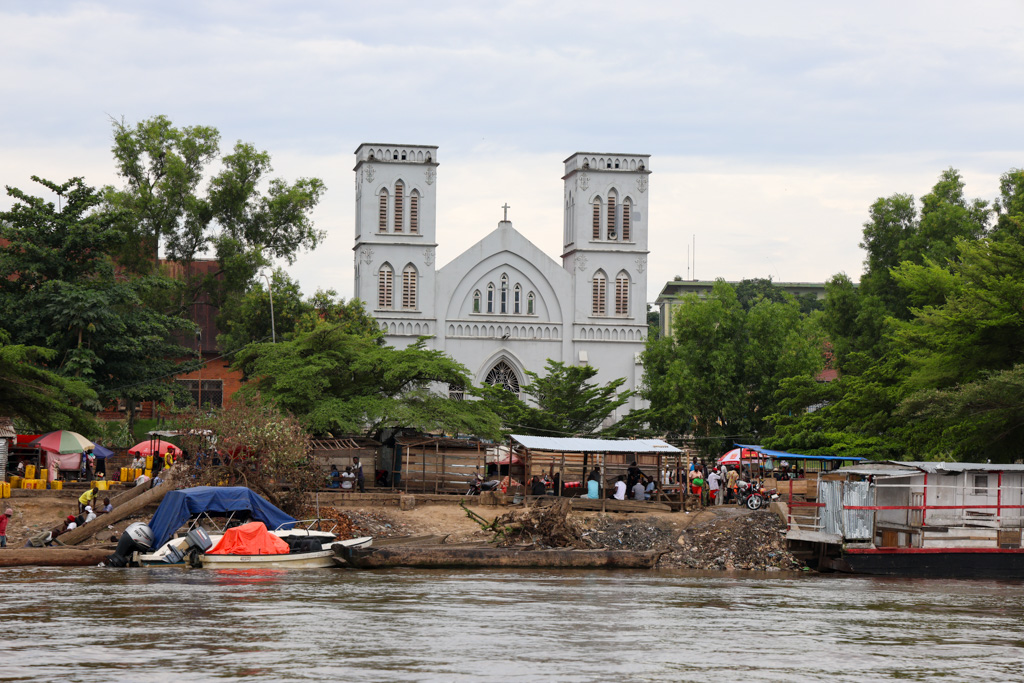
Here, the Congo ceases to be merely a river and becomes the country’s main transportation route. Canoes, small boats, ballenières, and large barges loaded with cargo and passengers are part of an everyday landscape that has barely changed in any of its essential aspects.
For us, Kisangani was also the real start of the expedition and our first night of partying.
Here we bought supplies and equipment, negotiated the purchase of canoes, motors, and crew, and outfitted our boats with awnings and chairs to prepare for the long days of sailing. From Kisangani, one of Africa’s great river journeys awaited us: traveling down the Congo River to Mbandaka, passing through the Lomako Wildlife Reserve in search of bonobos… or so we thought.
The Wagenia, fishermen of the Congo River rapids
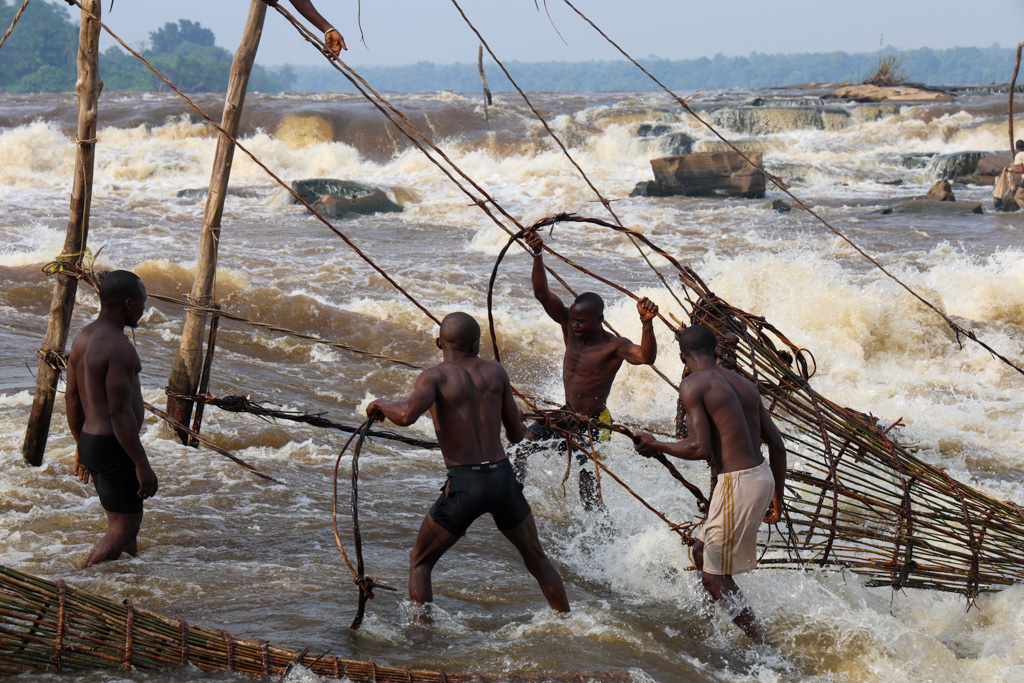
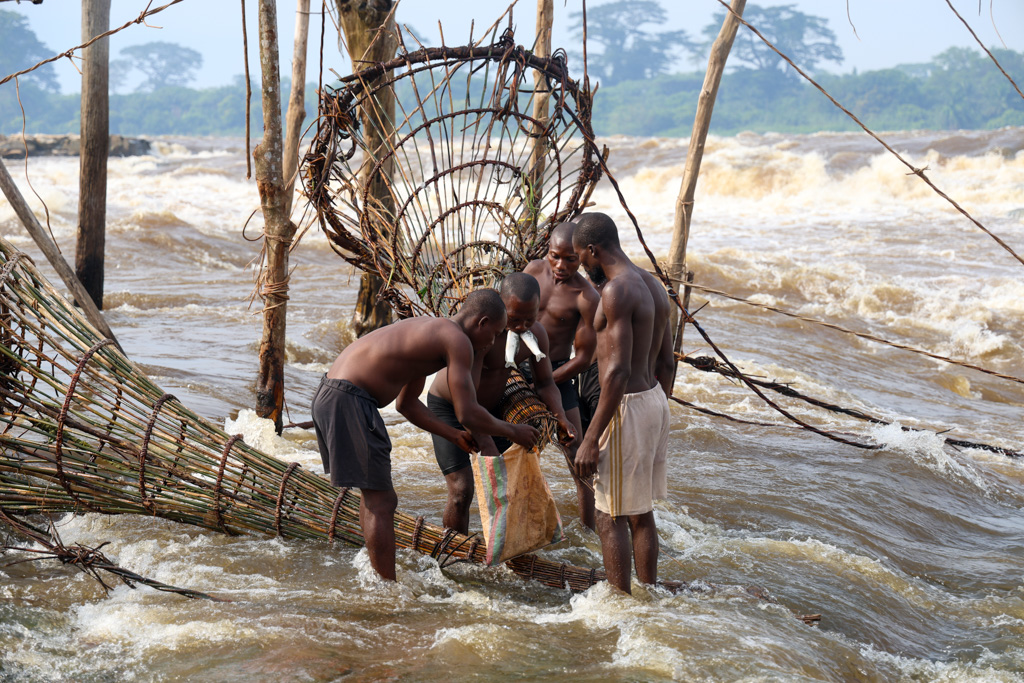
On the outskirts of Kisangani, the Wagenia people practice one of the most spectacular fishing techniques on the Congo River. For generations, they have learned to harness the immense power of the rapids by building large wooden structures on the rocks, to which they attach ingenious traps and baskets designed to catch fish swept along by the current.
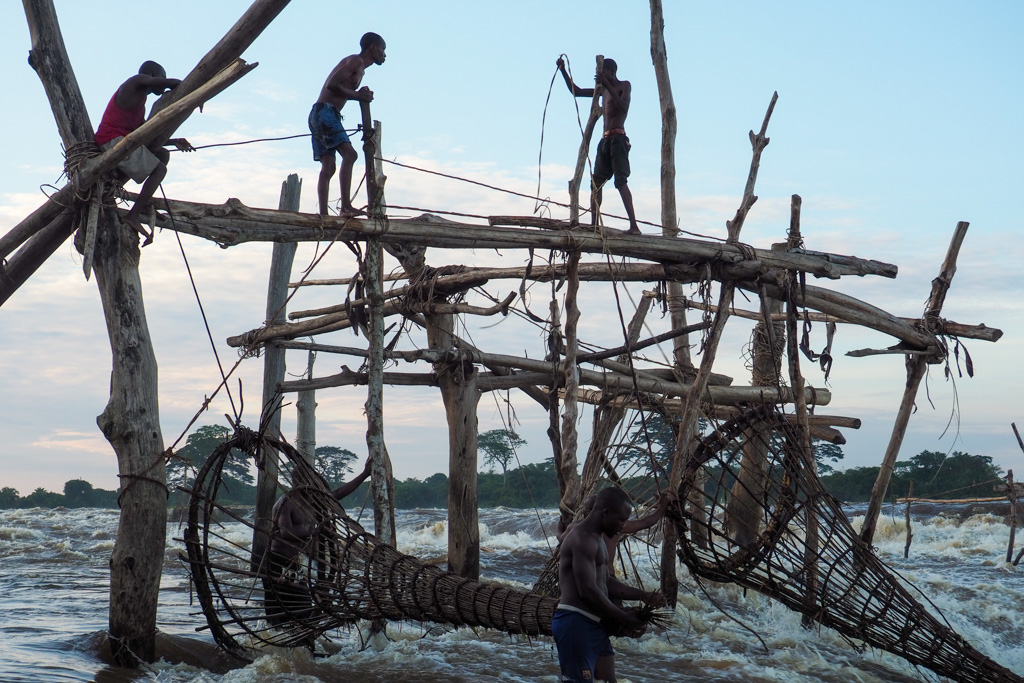
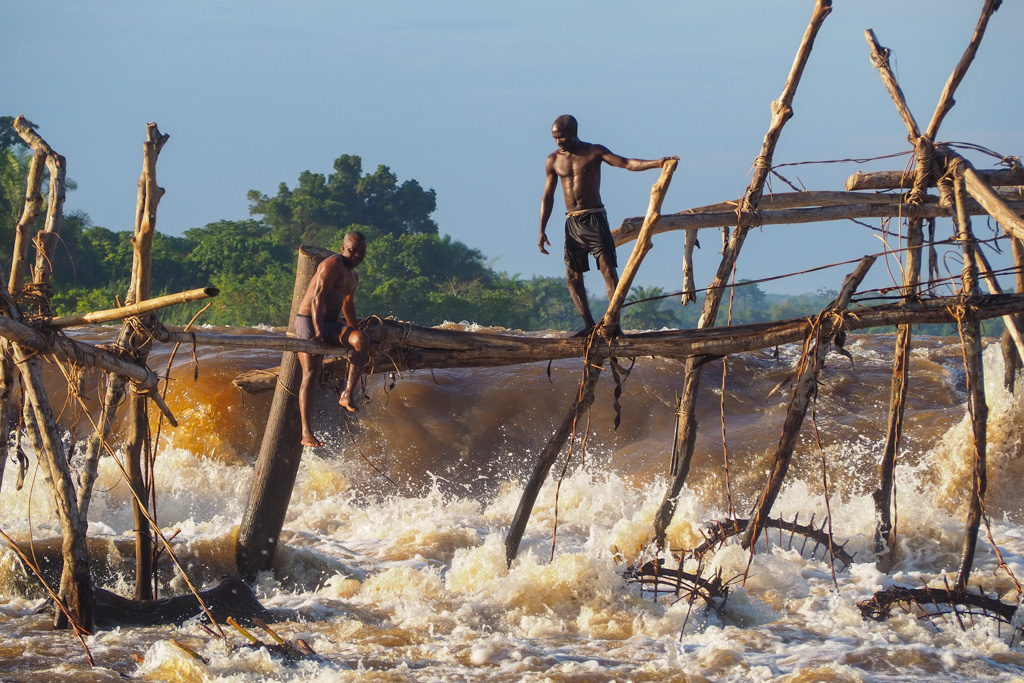
Working in these waters requires an extraordinary knowledge of the river. The fishermen make their way among rocks and wooden walkways as the Congo roars beneath their feet, inspecting structures that have been built and repaired using techniques passed down from generation to generation.
More than just a way to obtain food, Wagenia fishing represents an exceptional adaptation to river life and a tradition closely tied to this community’s identity. Watching the fishermen at work amid the rapids is one of the most powerful images of Kisangani and our first major encounter with the cultures of the Congo River.
It should be noted that these fisheries are no longer in use, as fish stocks are dwindling due to population growth, overfishing, and water pollution.
Preparing for a Congo River Expedition
An expedition down the Congo River begins long before you actually set out on the water. In Kisangani, we had to prepare everything we needed for the weeks of navigation practically from scratch.
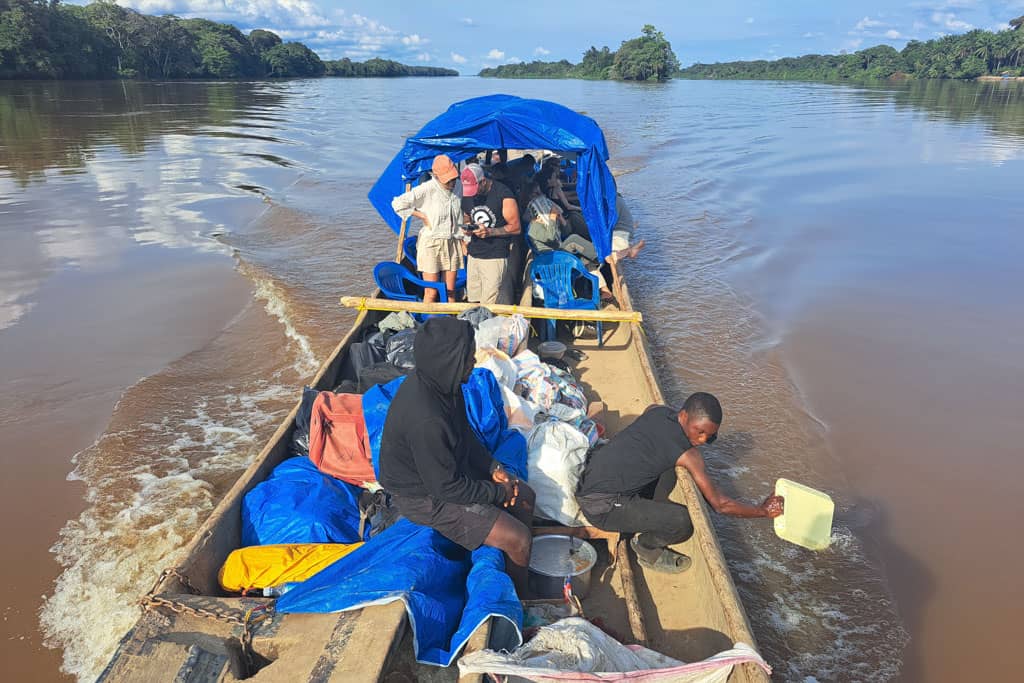
First, we had to find and negotiate for the right boats and engines, hire a crew, and calculate the fuel needed to travel hundreds of kilometers down the river and its tributaries. Prices in the DRC are usually astronomical and require days of negotiation. Then we began transforming the large canoes into our means of transportation and, for many days, into our little houseboat.
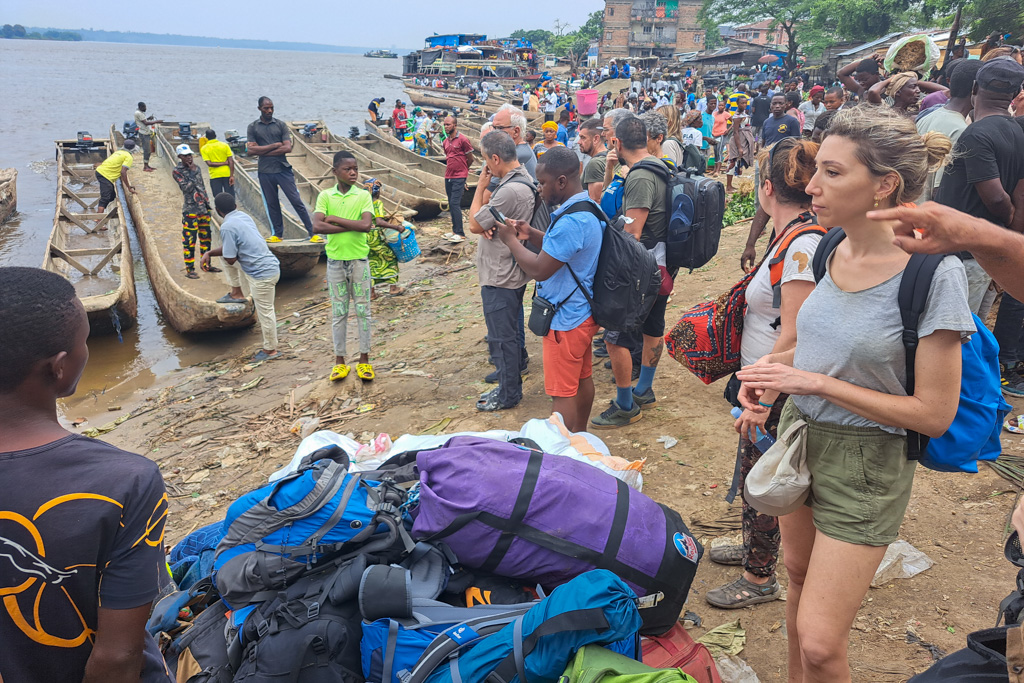
We set up awnings to protect ourselves from the equatorial sun and tropical rains, arranged chairs, and organized spaces for our luggage, fuel, water, and provisions. At the markets in Kisangani, we bought food, cooking utensils, and everything else we would need in places where we couldn’t count on finding supplies.
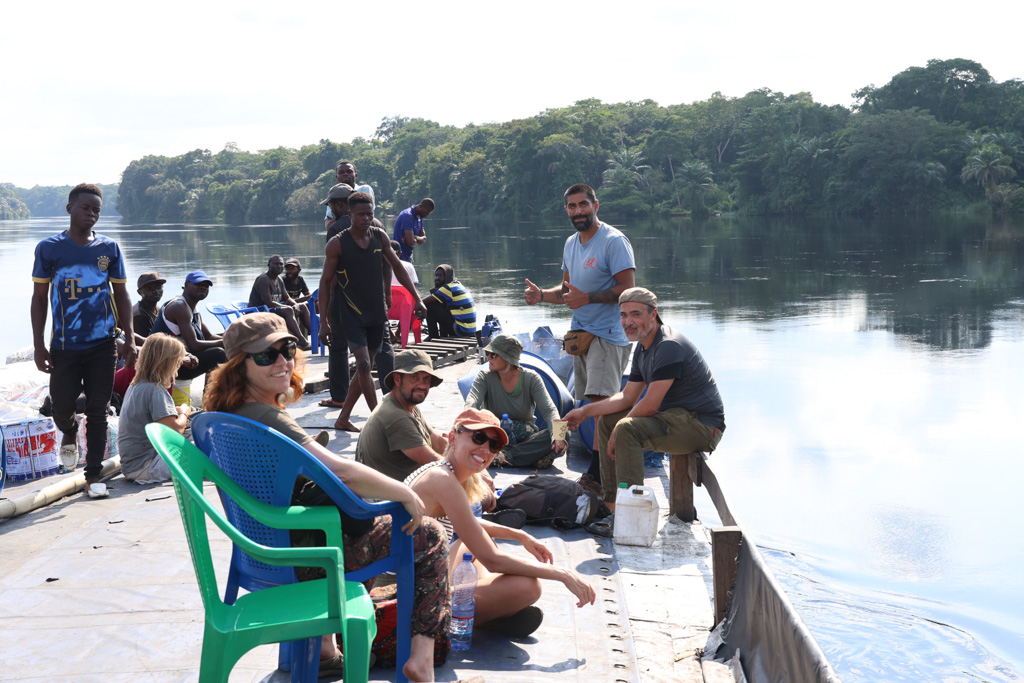
During the expedition, we cooked for ourselves on the canoes. As we navigated the Congo, one part of the canoe served as a kitchen and another as a dining area, storage space, and a place from which we could spend hours watching the riverbanks and villages pass by.
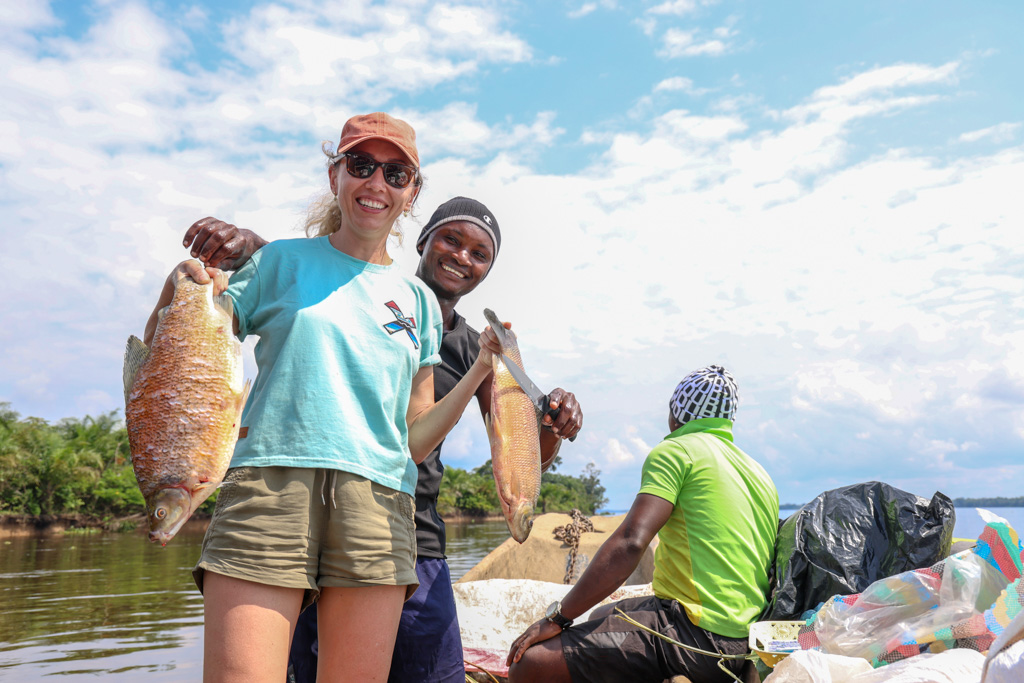
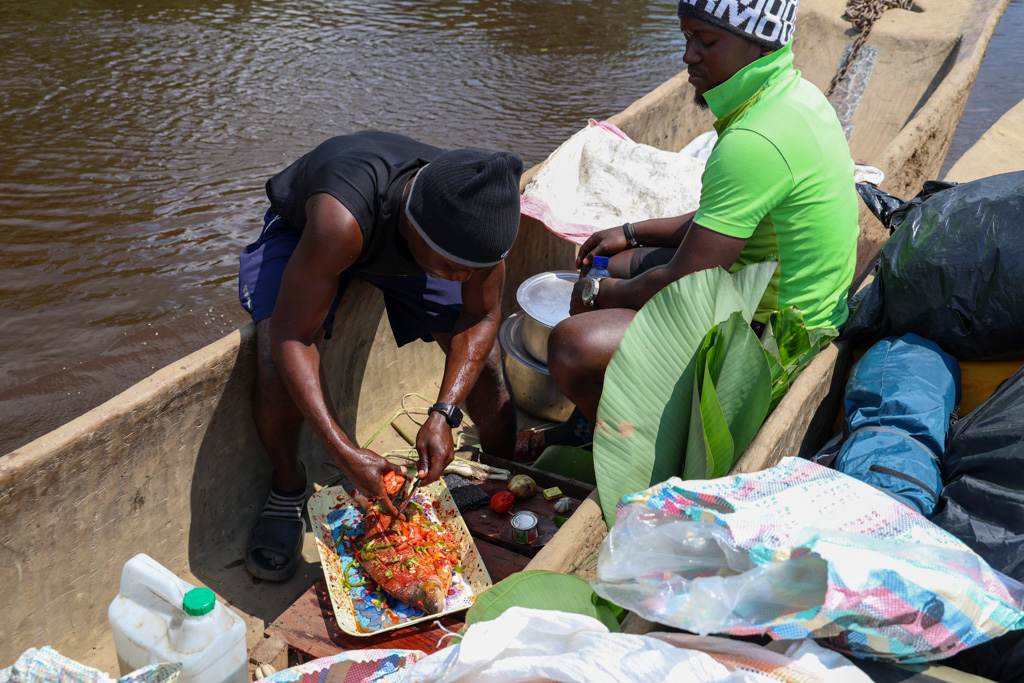
Each stop also gave us a chance to restock. We bought fresh fish, fruit, cassava, and other items at the markets or directly from fishermen and small canoes that approached us.
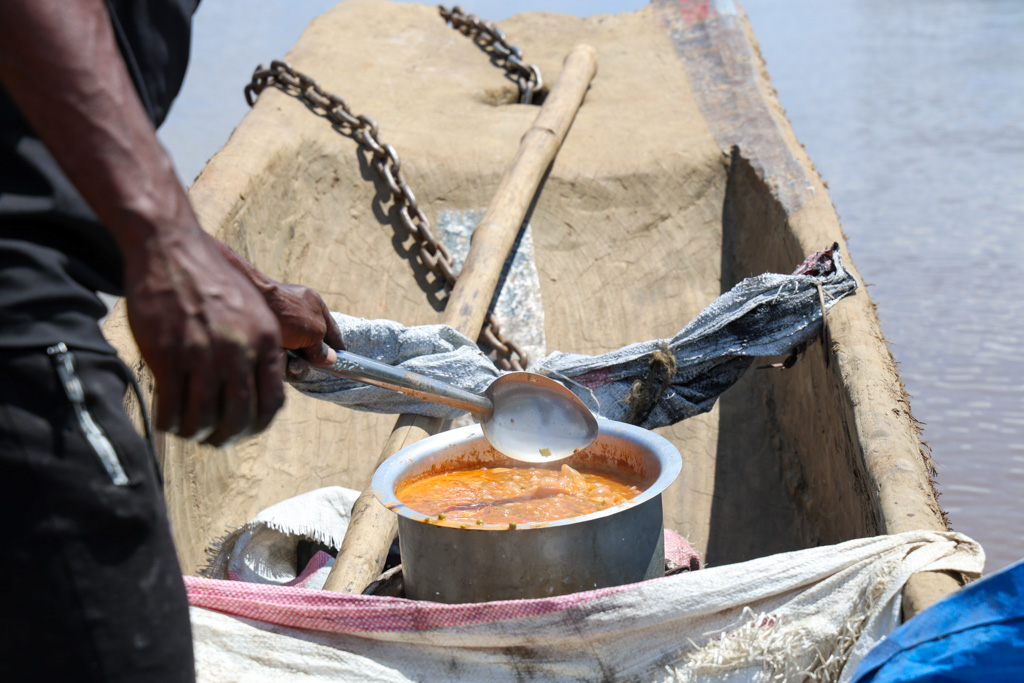
That simple boat, which we had prepared ourselves in Kisangani, ended up becoming the center of our lives for weeks. On an expedition through the Congo, it’s not enough just to travel down the river—you have to learn, little by little, to live on it.
Traveling the Congo River by Boat: From Kisangani Downstream
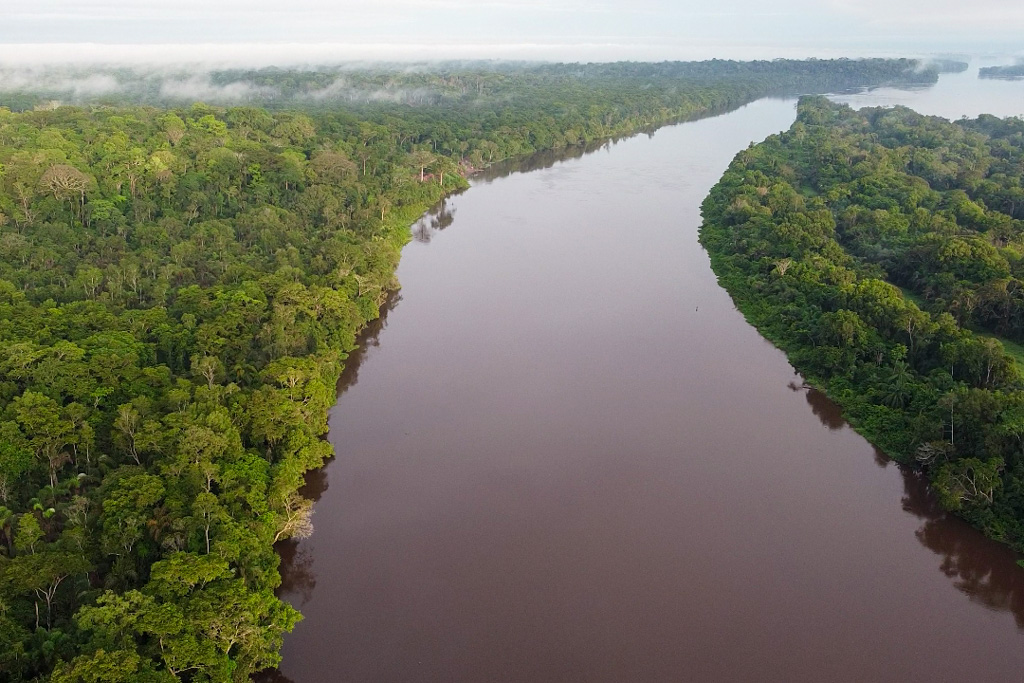
After making our preparations, we left Kisangani and began to travel down the great river toward the west. It is only after sailing for days that one begins to grasp the true dimensions of the Congo. There are moments when its banks seem to recede until it becomes a small inland sea. Large, forest-covered islands divide the river into different channels, and among them, small canoes appear as tiny dots on the water.
Roads are scarce or nonexistent in vast regions of the country. That is why the Congo continues to fulfill the role that the great rivers have played for centuries. Everything is transported on its waters.
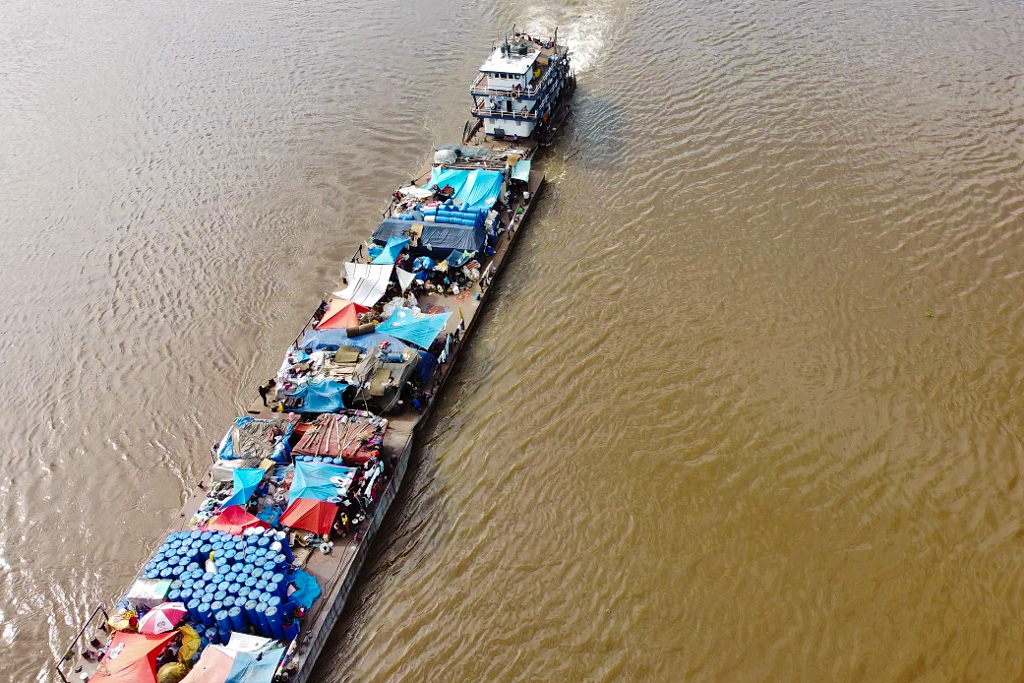
People, fish, cassava, plantains, coal, fuel, animals, motorcycles, construction materials, and practically any goods you can imagine. Some of the large vessels look like veritable floating villages, overloaded with passengers and goods.
We made our way slowly, stopping at towns, markets, and small boat landings.
The journey took place on the river.
Baleinières and ferries: the roads of the Congo
In a country where roads disappear for hundreds of kilometers, the Congo River is the great highway. The baleinières—long, locally built wooden boats—navigate its waters, transporting practically everything: passengers, sacks of cassava, smoked fish, coal, fuel drums, motorcycles, animals, and goods destined for isolated communities deep in the jungle.
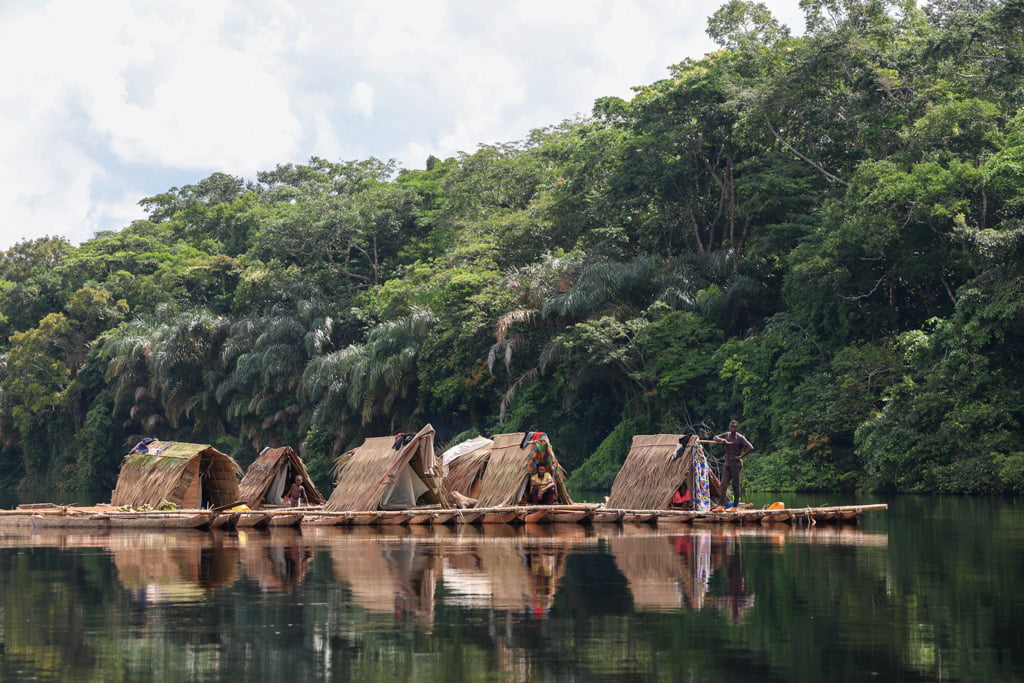
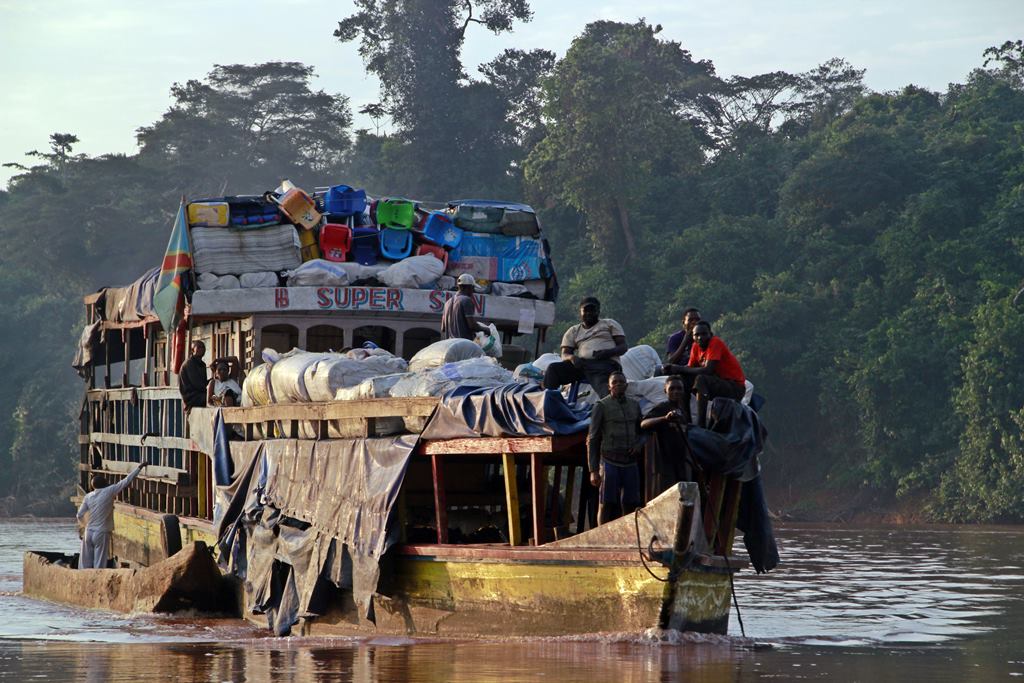
Alongside them, large ferries and river convoys move slowly—veritable floating villages where hundreds of people can spend days, or even weeks, traveling down the river. The decks turn into small, makeshift markets: people cook, sleep, and trade, and daily life goes on as the vessel makes its way to the next port.
During our expedition, we constantly came across these ships, which were often loaded to astonishing limits. From the shore, small canoes would approach to sell fish, fruit, or agricultural products to the passengers without the ship having to stop.
Watching one of these convoys gives you a sense of the Congo’s true scale. It is not just one of the world’s great rivers: it is a vast transportation network on which millions of people depend. Where the road ends, the river begins.
Yangambi: A Science City in the Jungle
Our first major stop was Yangambi.
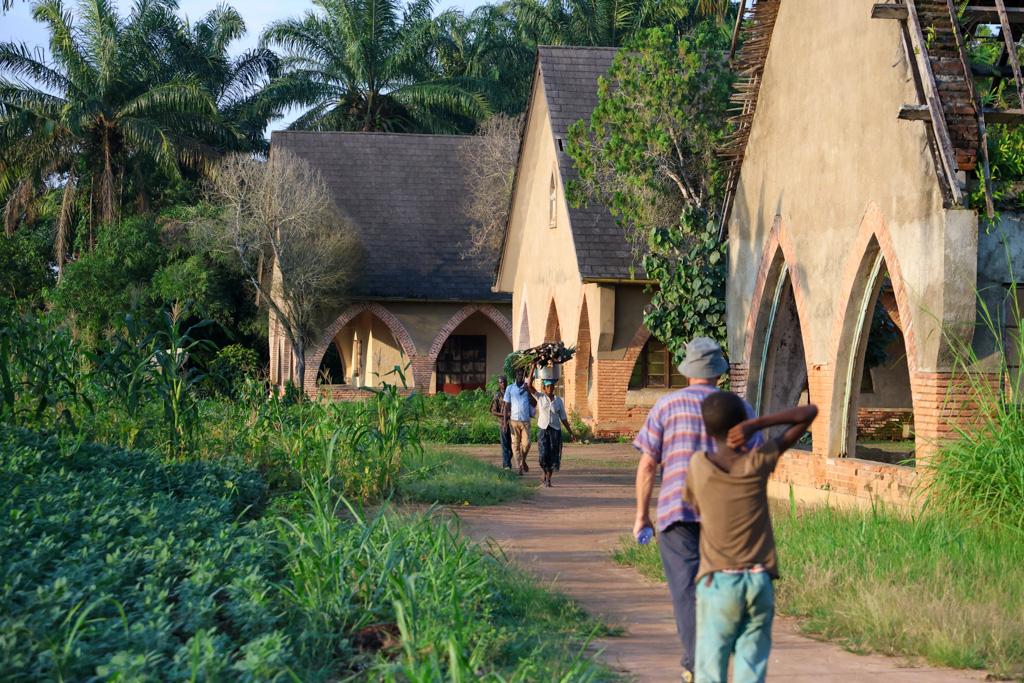
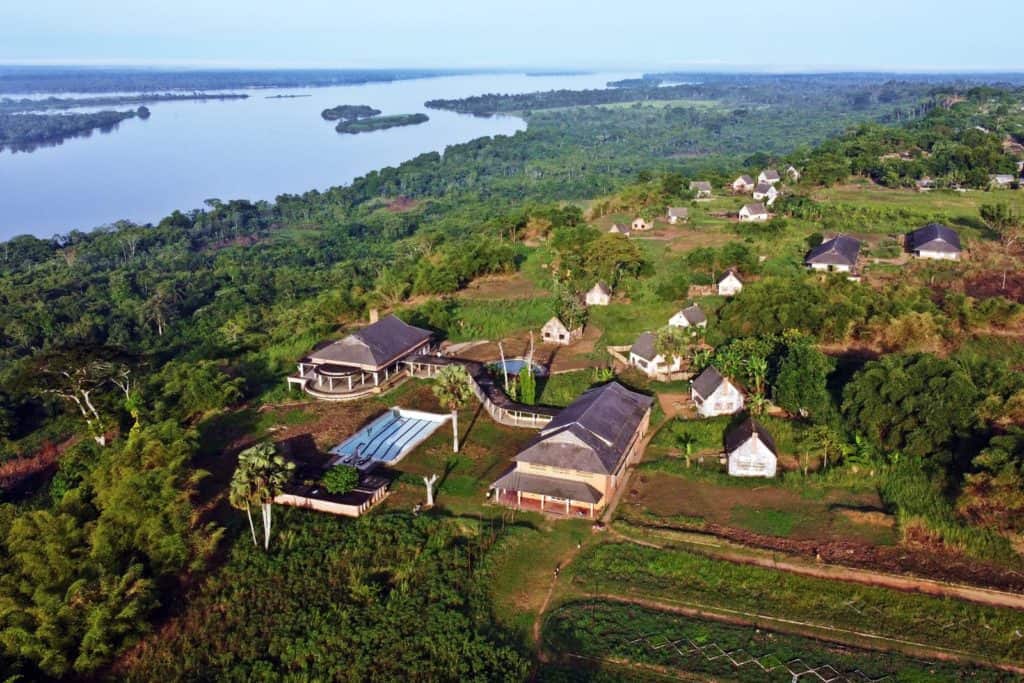
During the Belgian colonial period, one of Africa’s most important tropical agricultural and forestry research centers was established here. Numerous buildings and facilities from that era still stand, surrounded by vegetation that has gradually reclaimed the area.

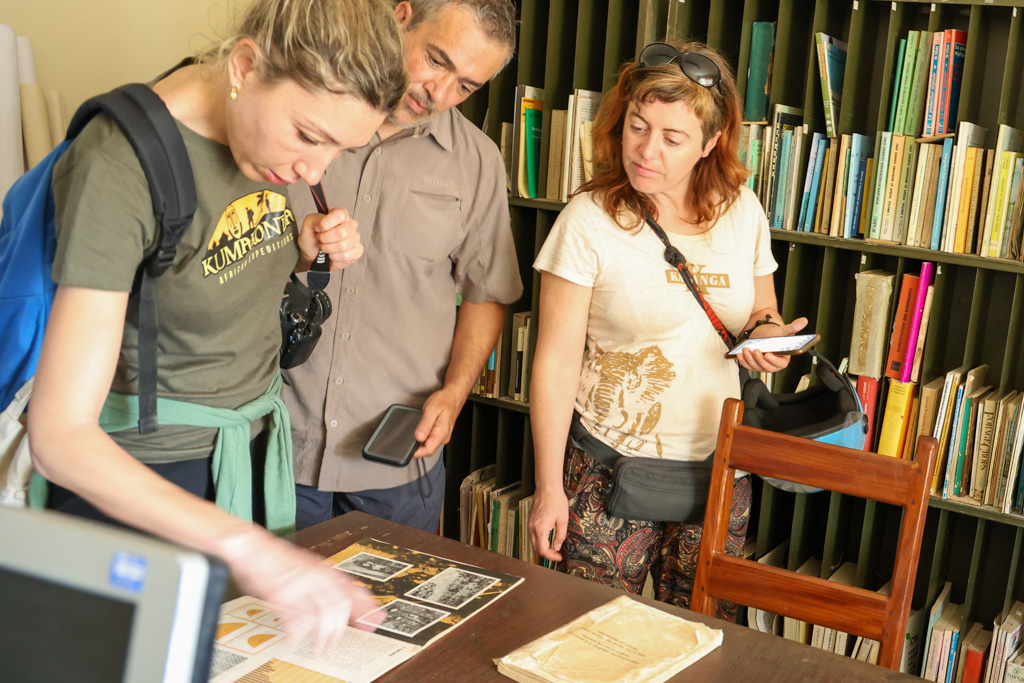
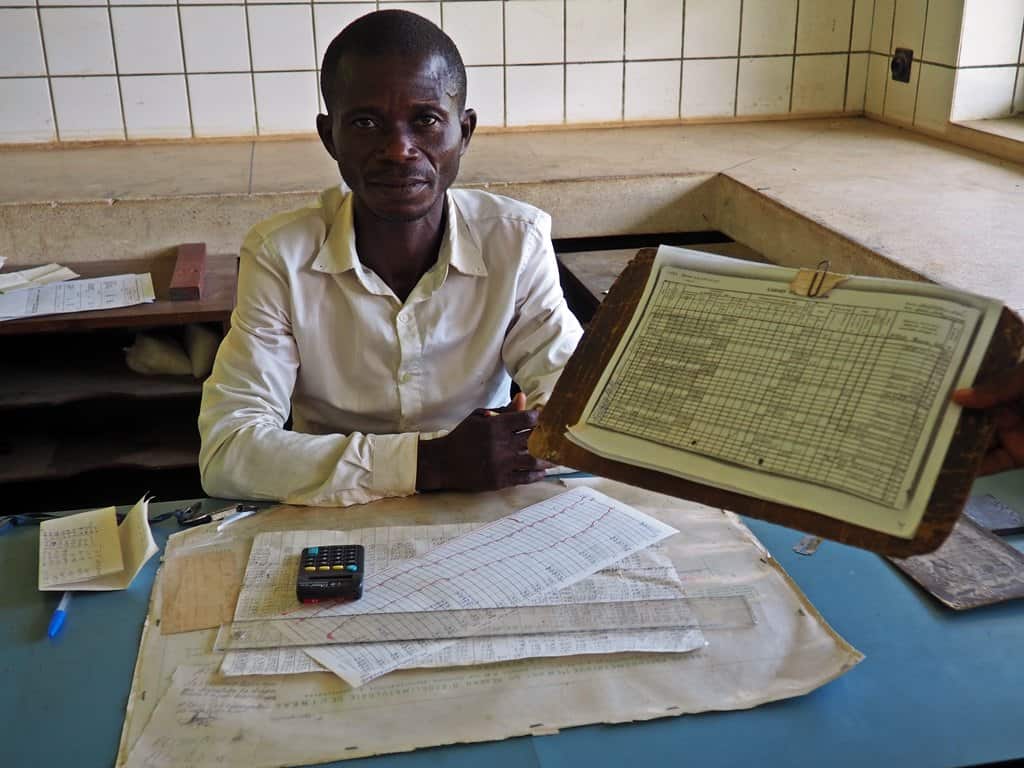
Built by the Belgians in 1933, Yangambi was home until 1962 to the most important research center on the African continent for the study of tropical agriculture and forestry: the National Institute of Agronomic Studies of the Belgian Congo (INEAC), now renamed Inera, the National Institute for Agricultural Studies and Research.
During the Belgian colonial period, it was an important center for agricultural and forestry research, with laboratories, housing, experimental plantations, and numerous facilities built in the heart of the equatorial rainforest.
Congo: Traces of a Forgotten Past
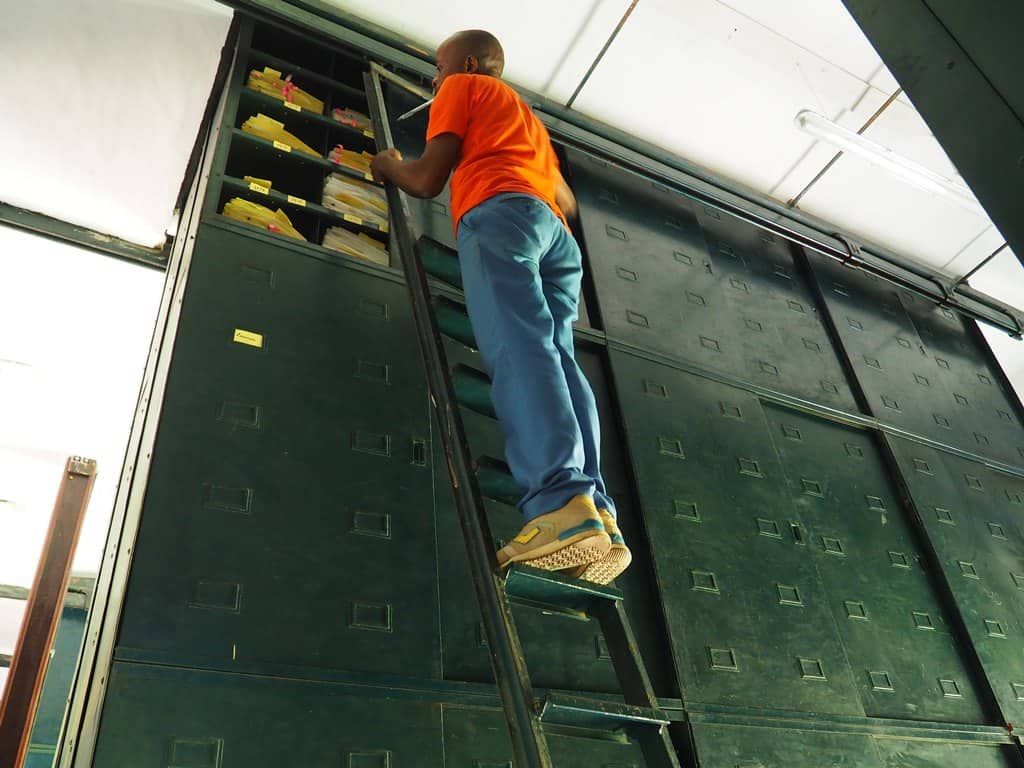
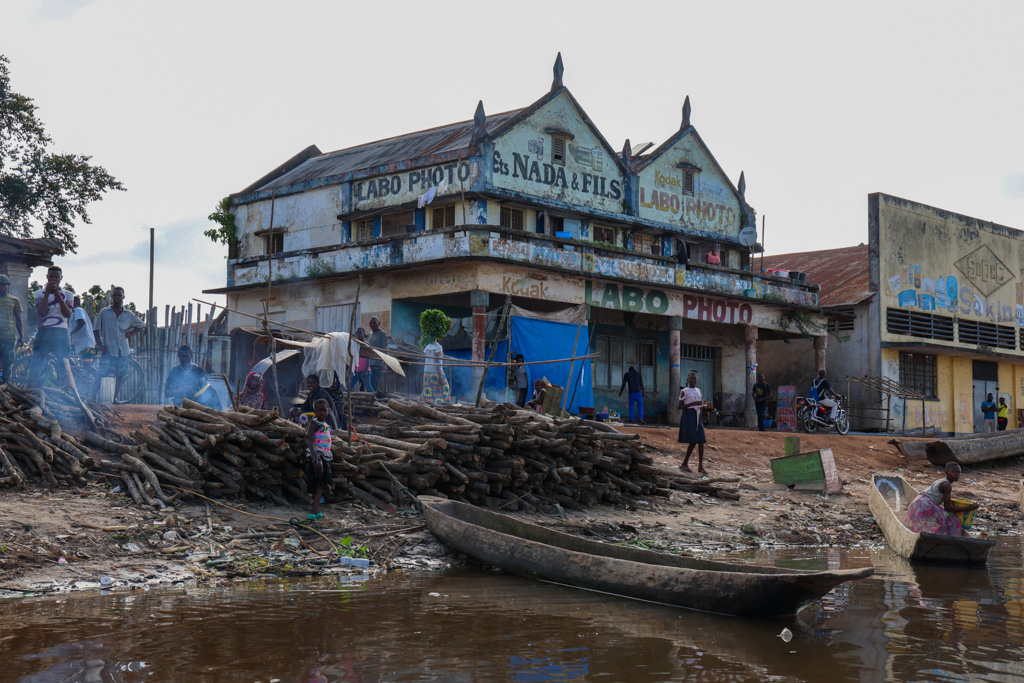
Along the Congo River and throughout the country, one frequently comes across old buildings, industrial facilities, warehouses, docks, and abandoned colonial structures that are slowly being reclaimed by vegetation. These are remnants of former farms, administrative centers, and infrastructure that once depended almost entirely on the river.


Today, walking through some of its old buildings evokes a strange sensation of traveling back in time. Dilapidated buildings, structures overrun by moisture and vegetation, and the remains of that vast infrastructure coexist with a Yangambi that is still inhabited and with scientific activity that has survived or is being revived.
Yangambi epitomizes a scene that will recur throughout our journey: ruins from different eras slowly disappearing beneath the jungle, while the great Congo River continues to flow past them.
Lisala and the Old Catholic Mission
Continuing downstream, we reached Lisala.
The city plays an important role in the history of modern-day Congo and also preserves evidence of the enormous influence that Christian missions had on these regions during the colonial period and in the decades that followed.
We visited its old Catholic mission—one of those places where architecture, religion, and colonial history are inextricably intertwined—and spent a night in that historic building.
For decades, the missions were among the few points of ongoing contact between numerous inland communities and the educational, health, and religious institutions introduced from Europe. Today, these buildings are part of the river’s historic landscape and are wonderful places to stay and eat.
Lokutu, Mongombo, and Bumba: landmarks on the map
Our trip continued toward Lokutu, Mongombo, and Bumba.
But the places that stood out at first glance on our paper map weren’t necessarily the most interesting moments or sites of the trip. These places turned into endless bureaucratic battles with local authorities.
Meanwhile, amid those major towns that appear on the maps, everyday life in the Congo was constantly present.
On the banks of the river: Everyday Life in the Congo
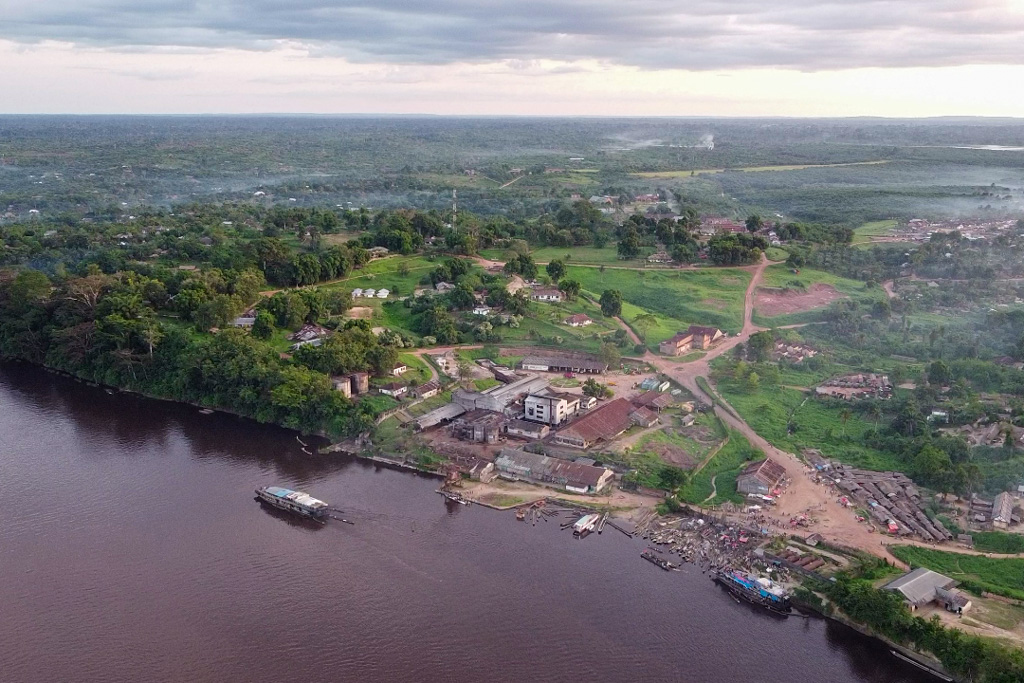
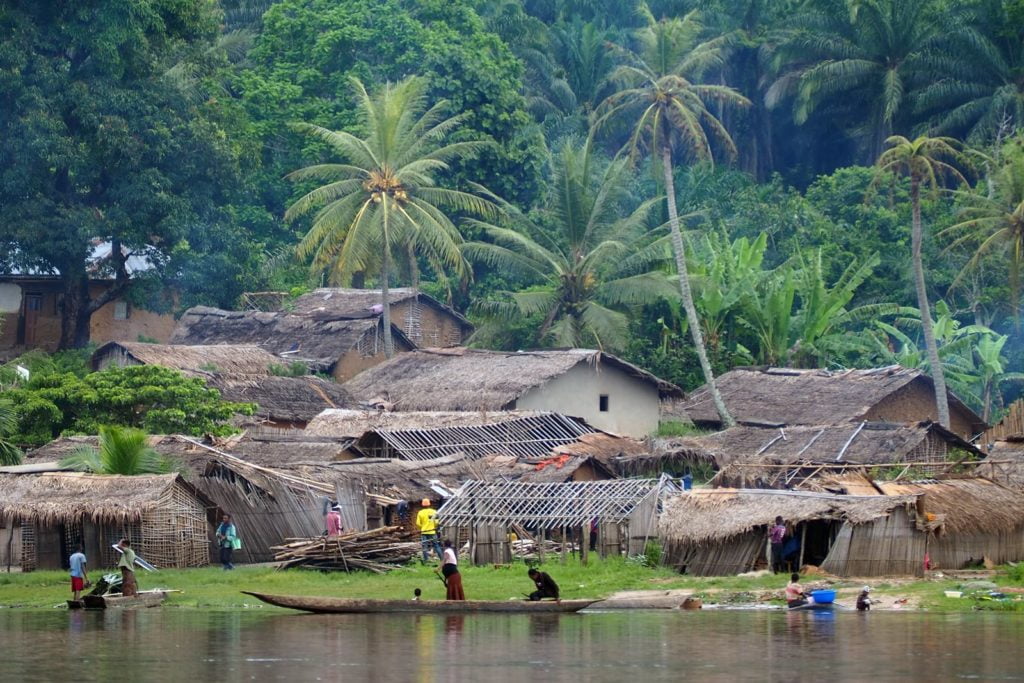
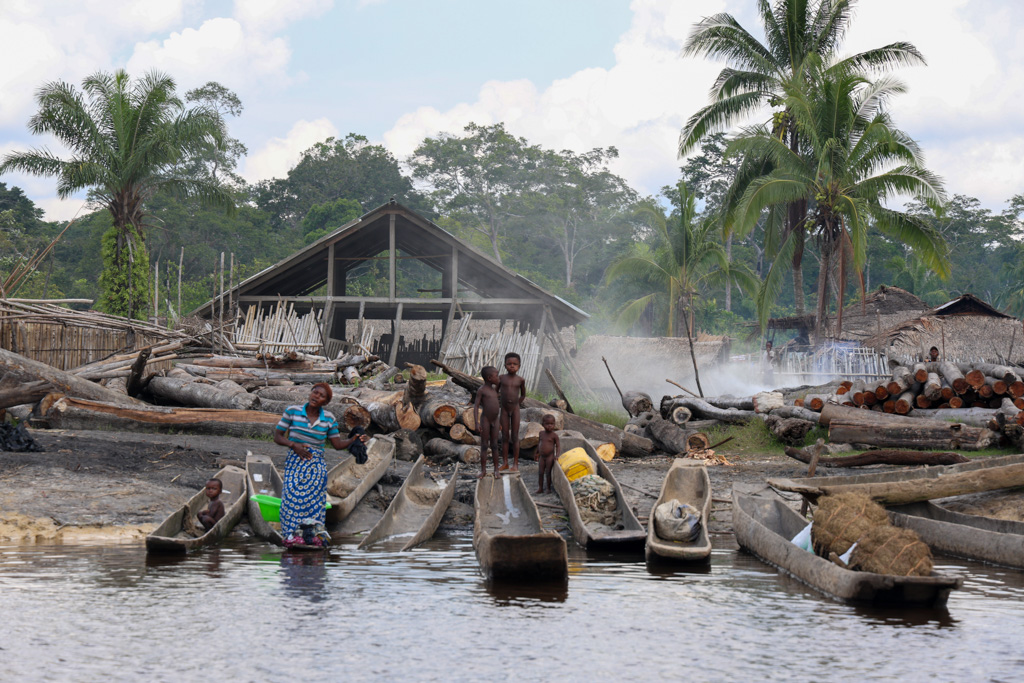
Small villages built along the water.
Houses built on stilts.
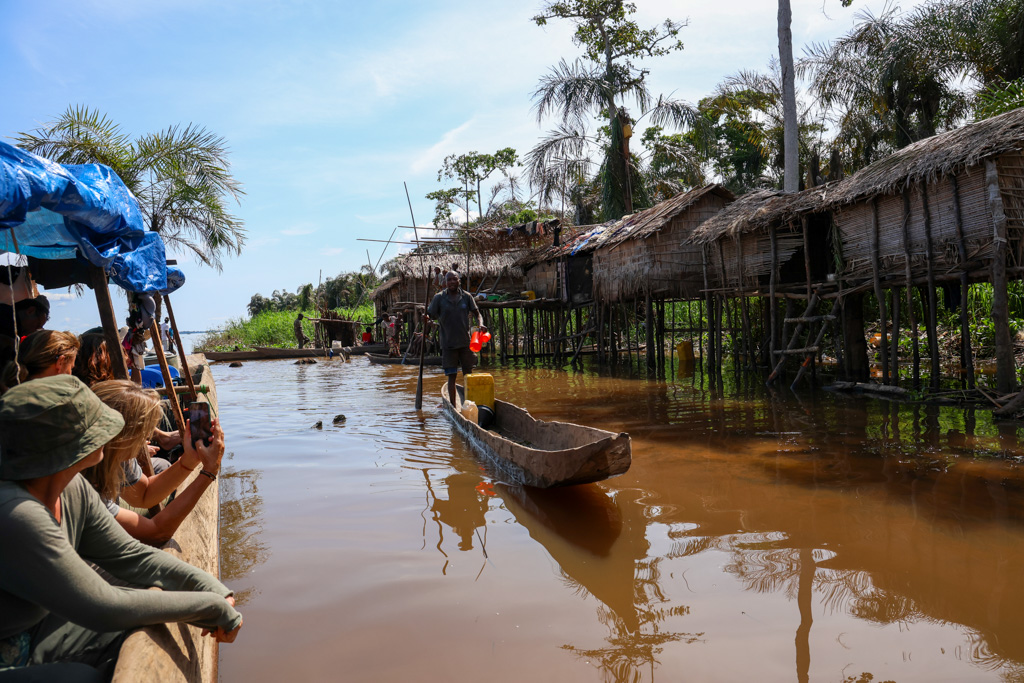
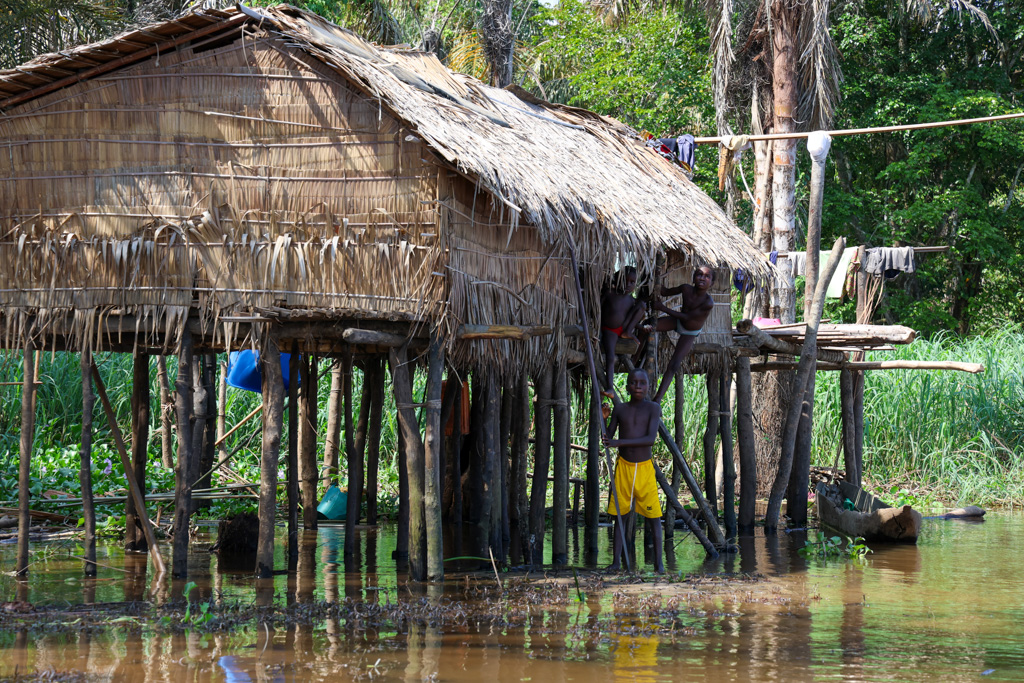
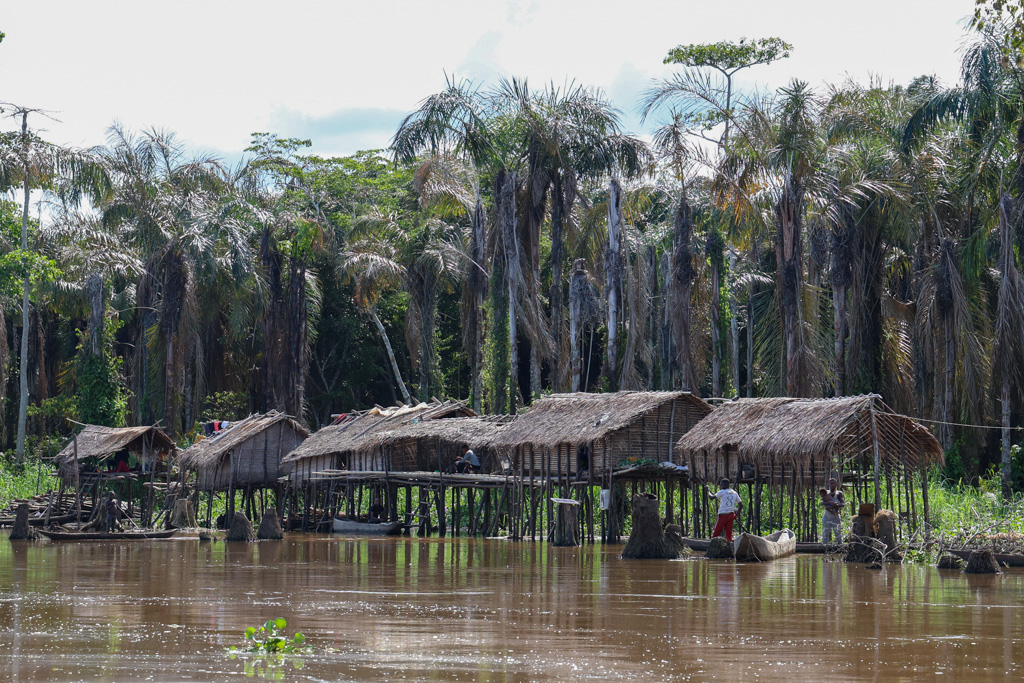
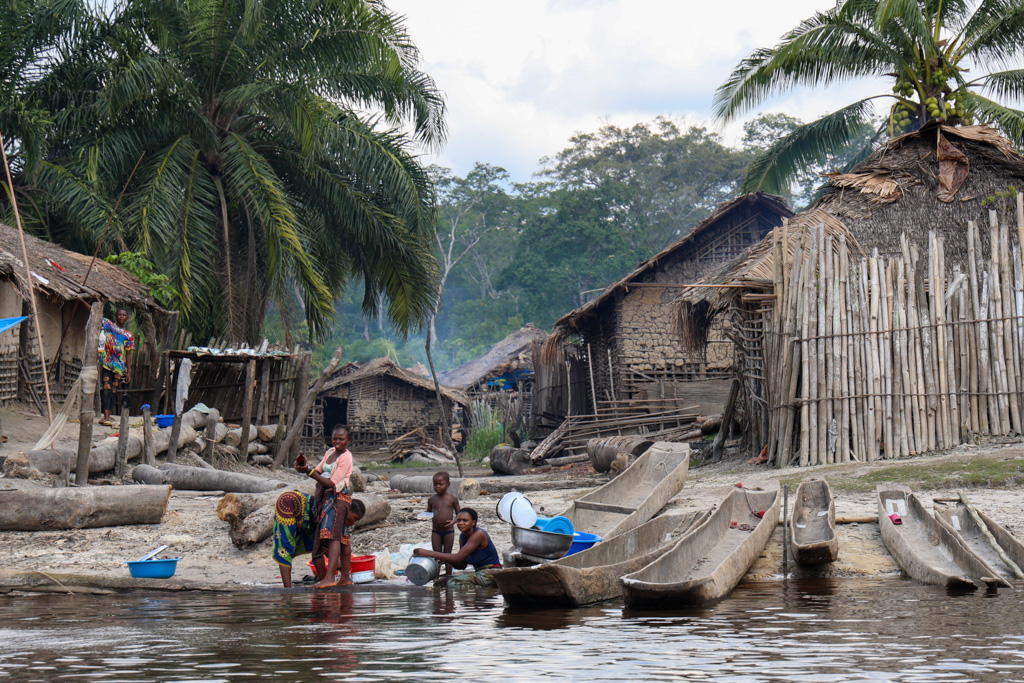
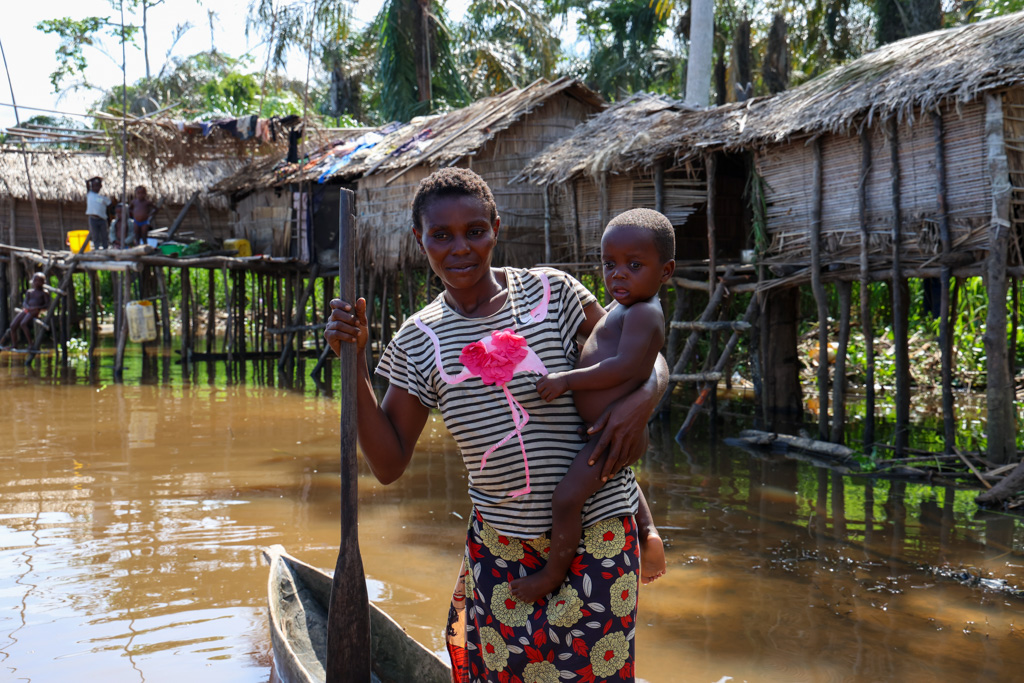
Children traveling by canoe.
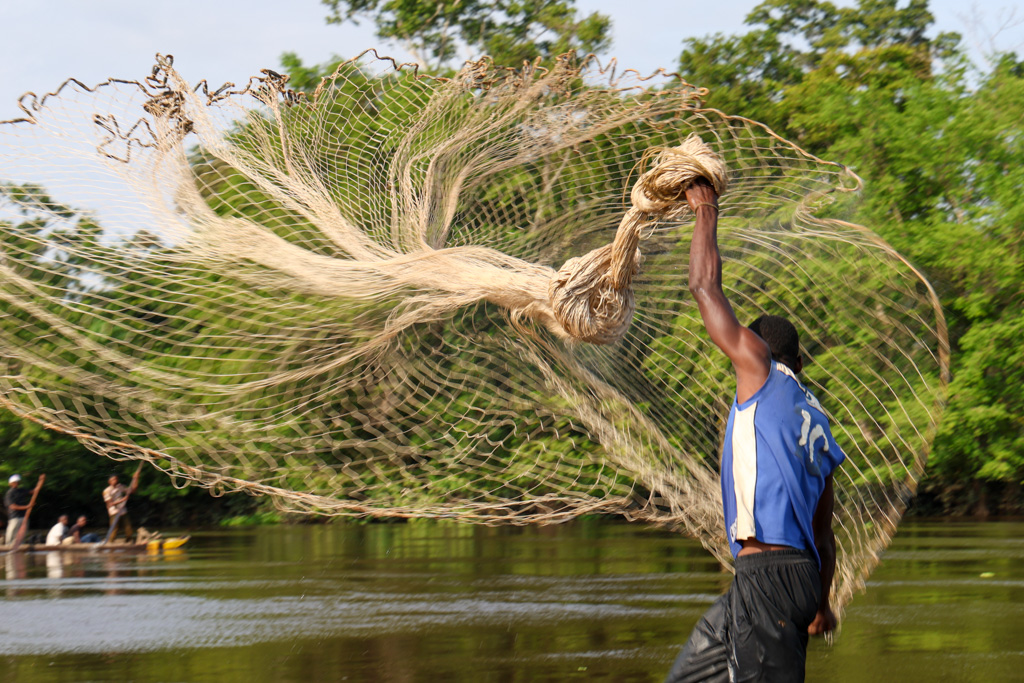
Fishermen checking their nets.
Women carrying goods to small markets.
In the vast majority of these small communities, there are no streets or roads. The river and its channels serve that purpose, and canoes take the place of cars and motorcycles.
For days, we felt as if we were traveling through a world built around water.
The Markets Along the Congo River
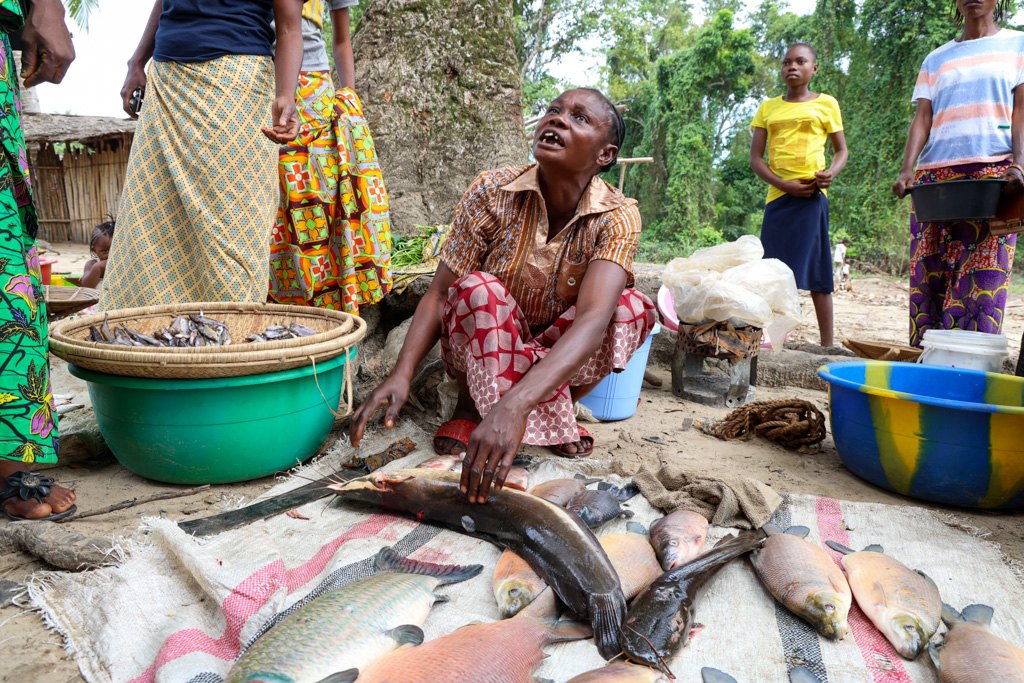
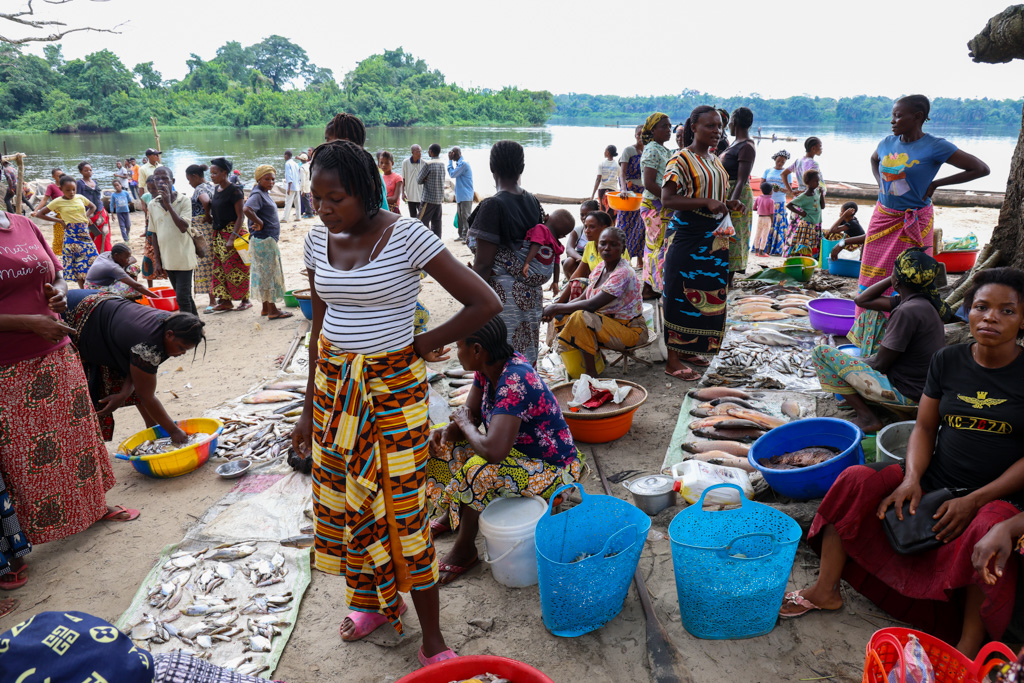
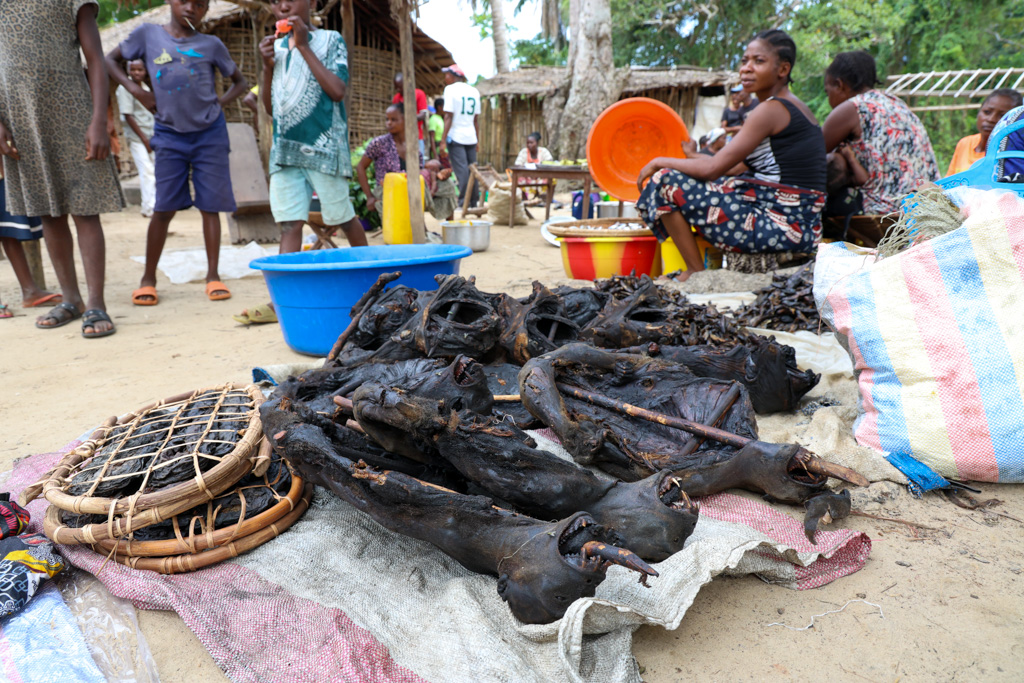
Markets were one of the best places to understand that relationship. Fish is everywhere: fresh, smoked, or dried. Large catches from the Congo sit side by side with small fish sold in piles along the riverbanks.
Sometimes, the buying and selling takes place practically on the water. At some of these markets, we find wild animal meat—bushmeat—from the jungle, including primates and crocodiles.
Lisala, the Ruins of Mobutu’s Power
Located on the banks of the great river, Lisala is one of those Congolese cities where the past unexpectedly surfaces in everyday life. The city is particularly closely linked to Mobutu Sese Seko, who was born in this region and ruled Zaire for more than three decades.
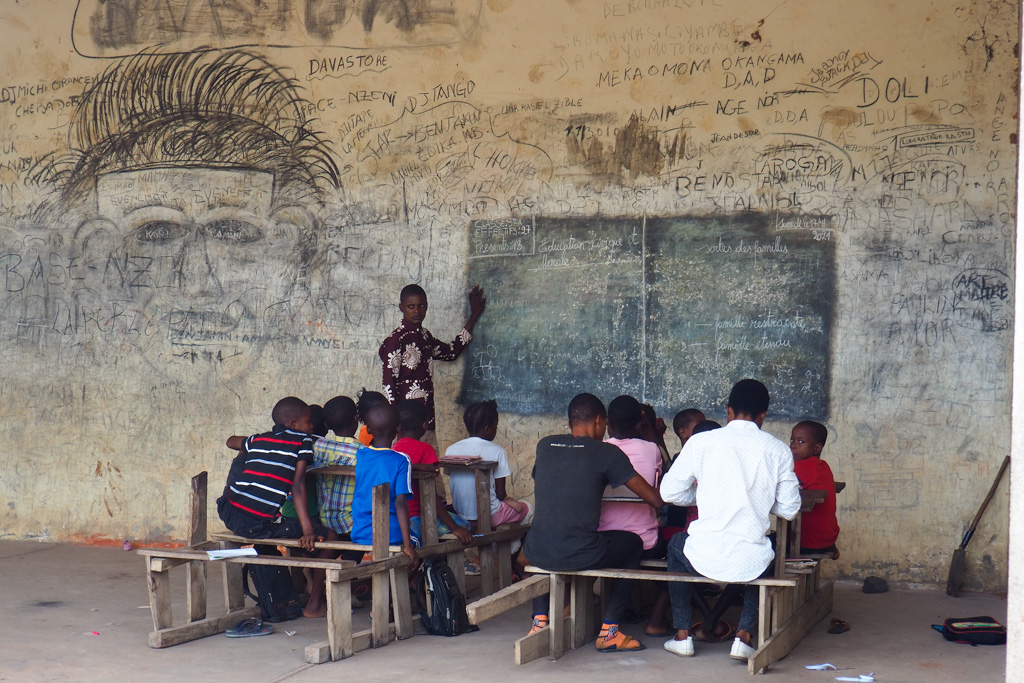
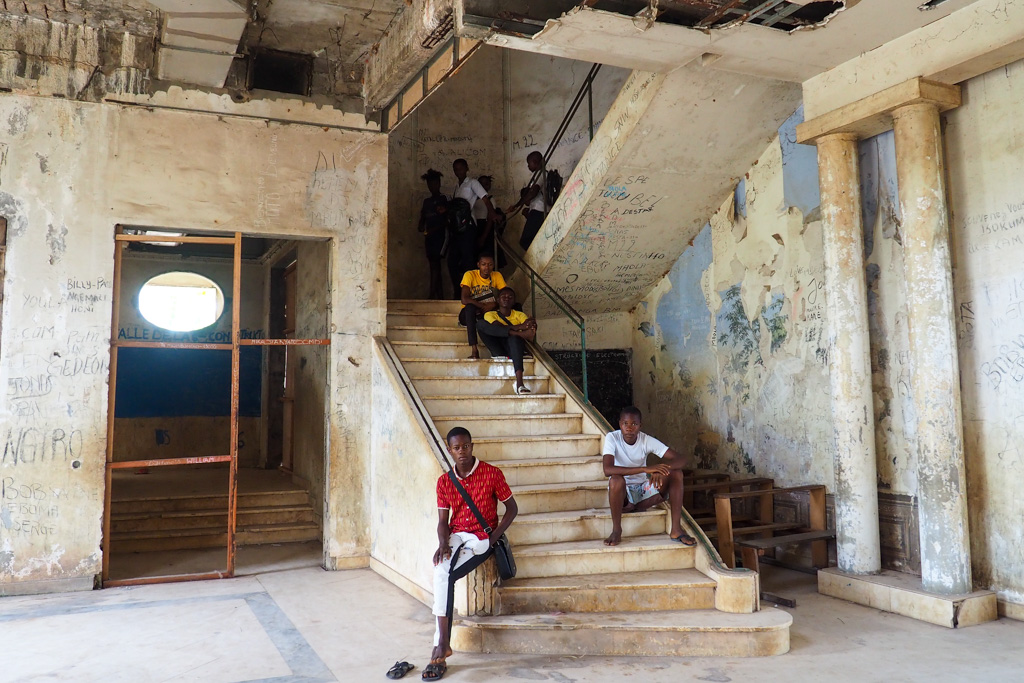
During our stop, we visited Mobutu’s former palace, a building that evokes the regime’s years of power and excess. But what’s most surprising isn’t so much its architecture as its subsequent transformation. Far from serving any of its original purposes—as is the case throughout the Congo—part of the complex has been converted into a school, while other spaces have been occupied and are being used as homes by local families.
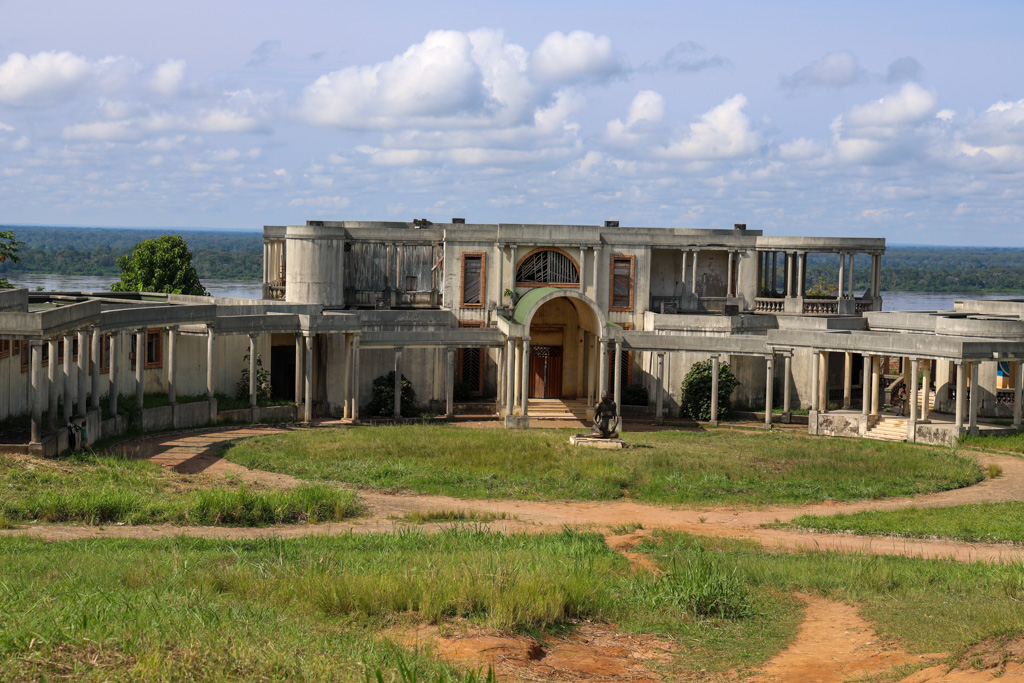
Make-shift classrooms, children, laundry hanging out to dry, and scenes of daily life now fill spaces originally intended as symbols of authority and privilege. Few places so vividly reflect the contrasts of the Congo’s recent history: a former seat of power that, decades later, has become a place of education and everyday life.
We left the Congo River behind us
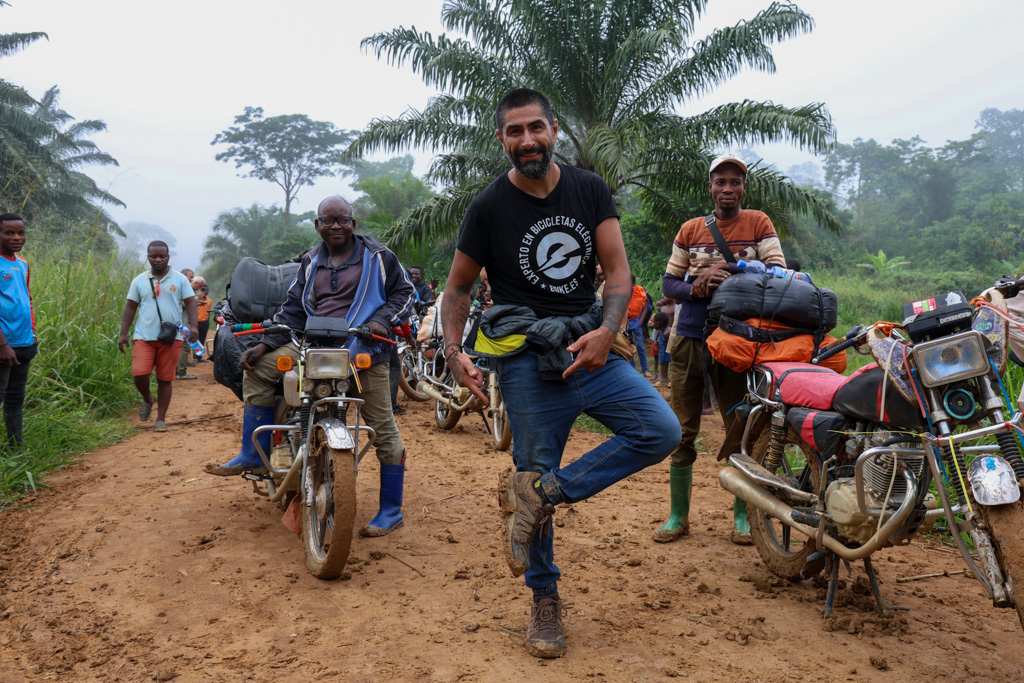
After more than a week of sailing, our expedition took a completely different turn. We left the main channel of the Congo River. Our goal was to reach Bongandanga and, from there, travel up the Lopori River basin to the Lomako Wildlife Reserve to visit the bonobos. But more than 150 kilometers of dirt roads lay between us and Bongandanga.
We traded the boats for motorcycles.
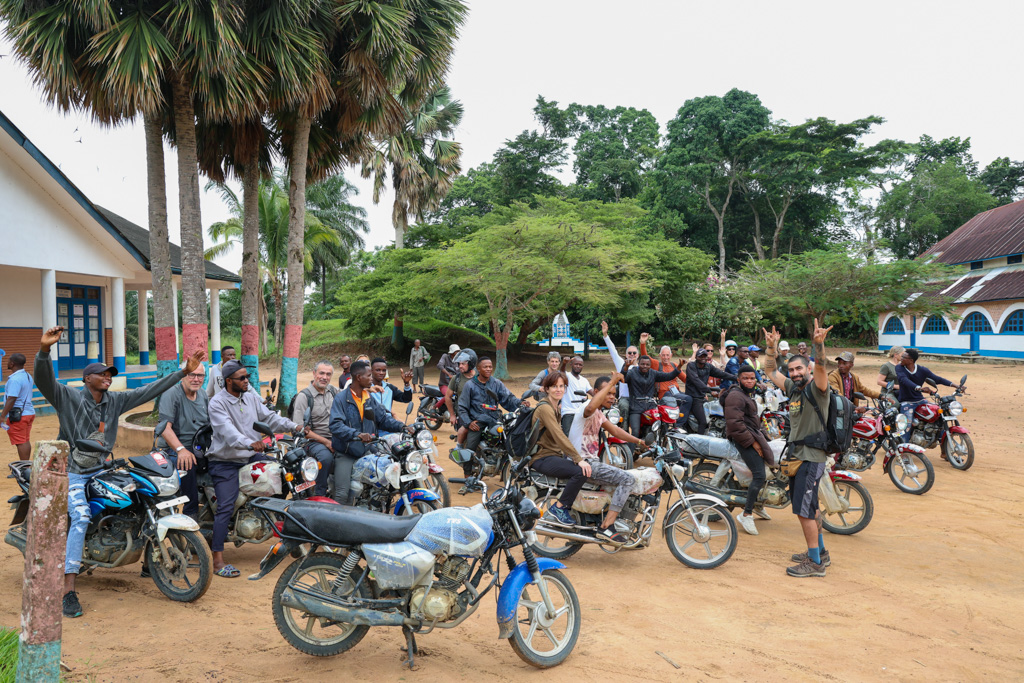
For two days, our group of 16 travelers rode motorcycles along dirt roads through the jungle and small villages. It was one of the major changes of pace during the trip. After days of just going with the flow, now every kilometer depended on the condition of the trail, the mud, the bridges, and our motorcycles.
We finally reached Bongandanga. And there, we returned to the water, where everything would change.
Bongandanga and the Lopori: Toward Bonobo Territory
In Bongandanga, we had a few surreal days—even more so given that we were in the DRC. We met an important businessman and became friends with him. The details remain part of our travel secrets, but I will say that we had a few totally crazy and impressive experiences. One of them was camping on his huge barge and sailing it privately upriver.
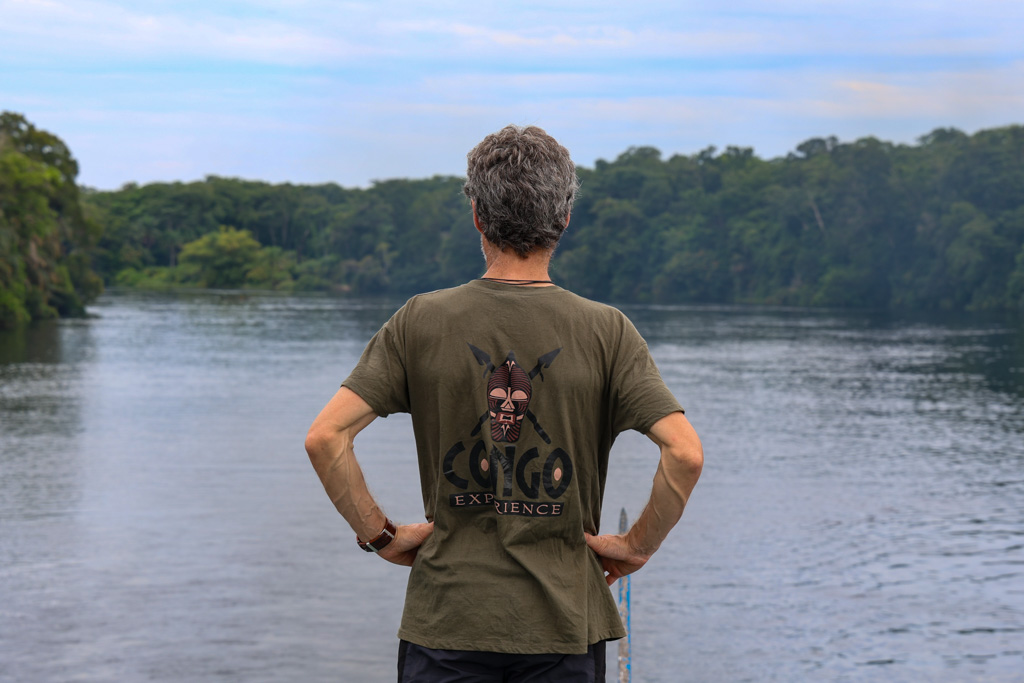
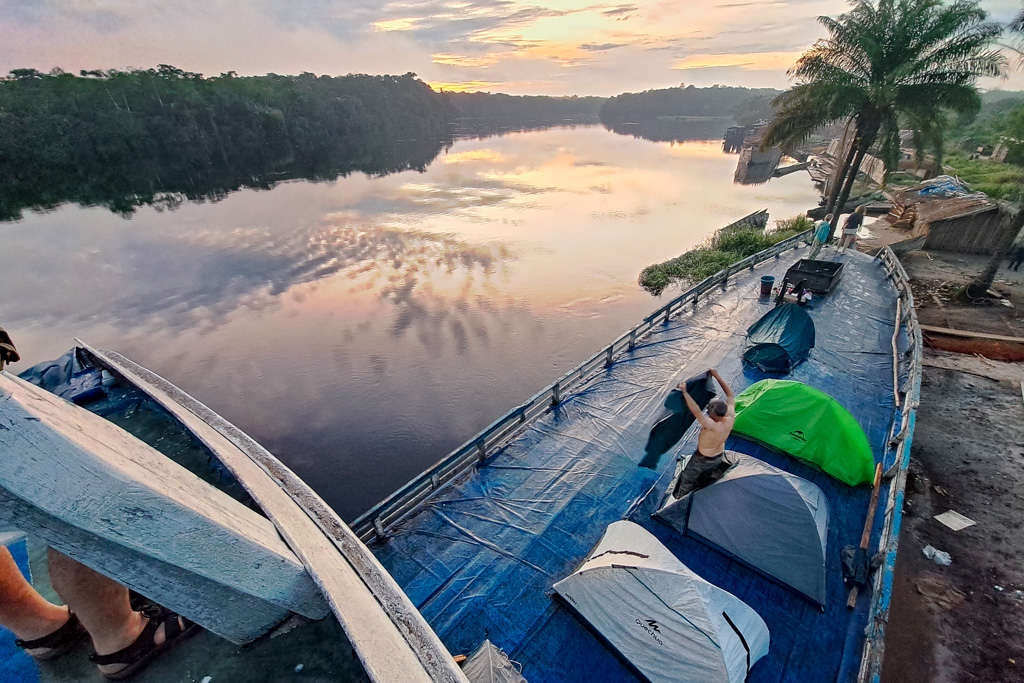
From Bongandanga, we began our descent down the Lopori River.
The landscape was different. We had left behind the vastness of the Congo to enter a much more enclosed river system, surrounded by the great equatorial jungle. The communities were small, and the isolation was much greater.
Our goal was to venture deep into the territory of the bonobos, one of the great African apes and a species that exists in the wild only in the Democratic Republic of the Congo.
We wanted to reach the Lomako Reserve
But we never made it.
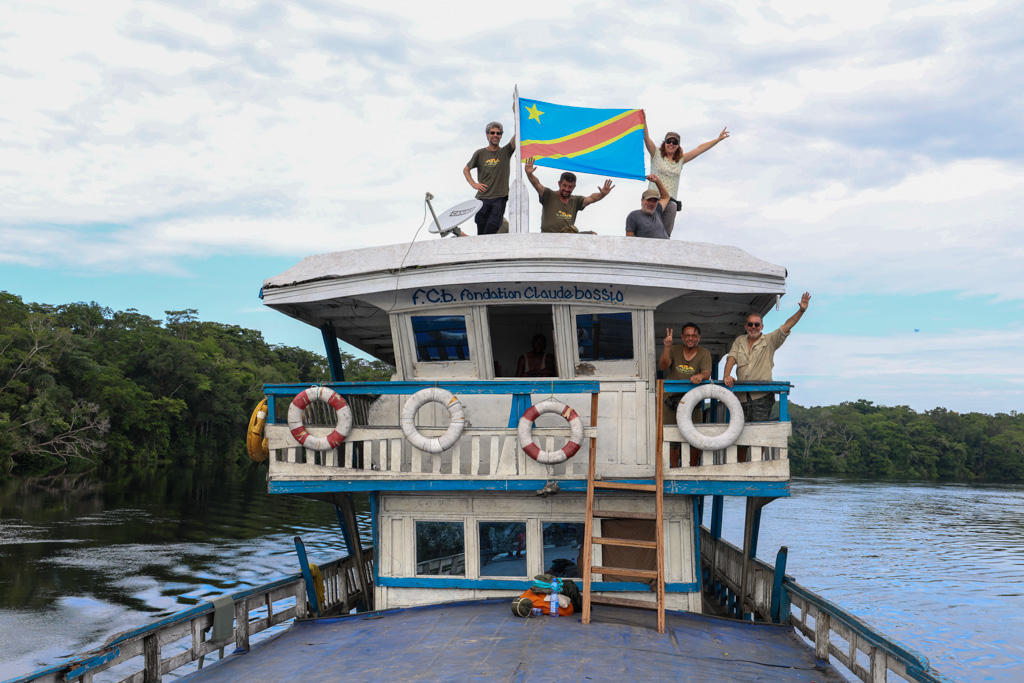
From Bongandanga to Basankuso: From Everything Going Well to Everything Going Wrong
On that descent from Bongandanga to Basankuso, we began to sense a hostile atmosphere. Problems are a daily occurrence in the DRC, but during that part of the trip, we began to feel that the local people were greeting us with hostility and a certain degree of violence. Usually, when traveling through the DRC, smiles and a warm welcome are a constant, no matter how difficult the journey may be. But everything had changed.
We found ourselves caught up in a conflict between the NGO Lola Ya Bonobo (Ekolo ya Bonobo) and the local communities. The worst place at the worst possible time. We got caught right in the middle of it—bad luck. The locals thought we were from that NGO or that we had come to defend it, and they started attacking us. We were just passing through on our way to Lomako.
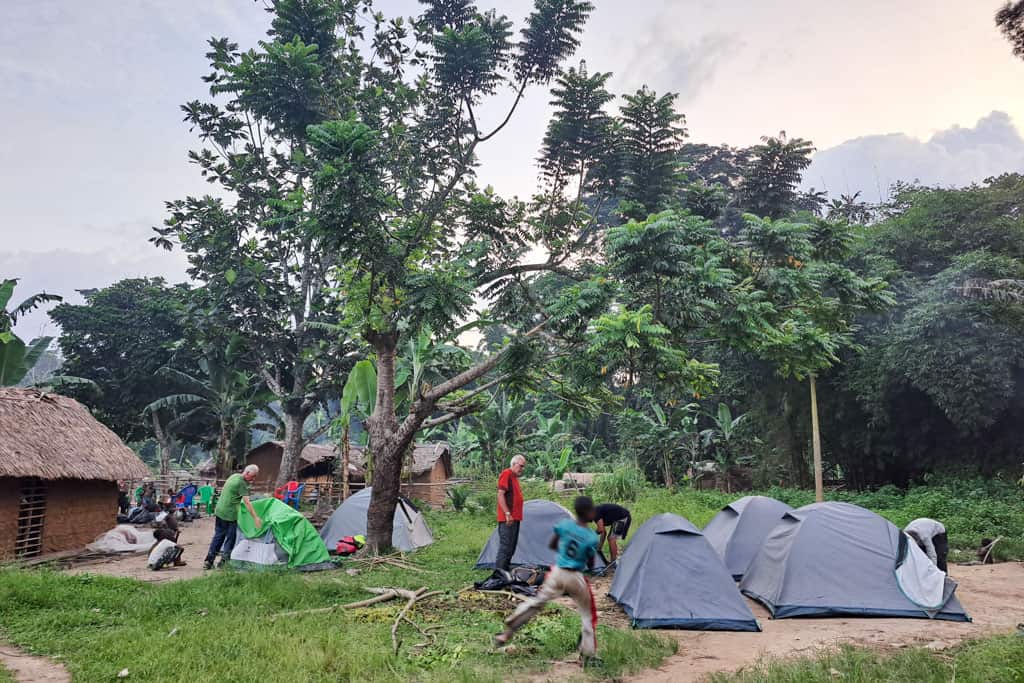
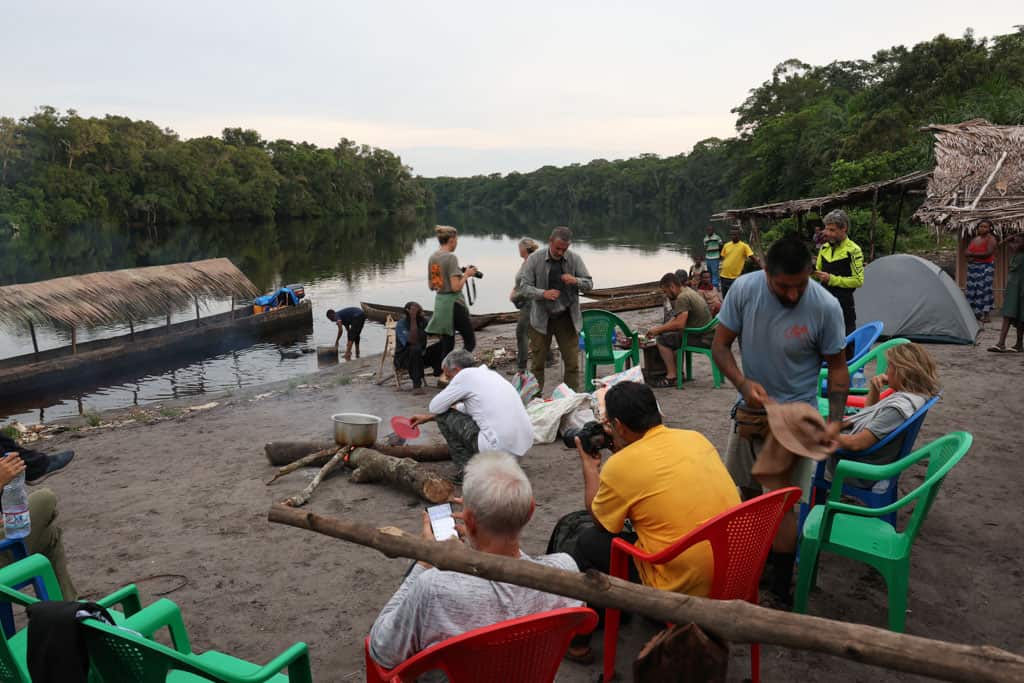
As if that weren’t enough, our boat’s engine broke down completely, and we were stranded for a few hours until a large whaling boat came by; we boarded it to sail down to Basankuso.
Basankusu: When Everything Changes
What we experienced in Bongandanga and beyond will remain in our memories forever. The trip went from being a great adventure to becoming a real challenge.
As we made our way through the region, the situation around Basankusu began to deteriorate. Serious incidents of violence were occurring in connection with Ekolo ya Bonobo, a project dedicated to the reintroduction and conservation of bonobos. But we didn’t know that.
The events were real and were unfolding while we were there. The news reports that came in afterward mentioned attacks on the Ekolo and Bonobo facilities and bonobos that had been killed. They also mentioned people who had been killed.
The tension was very palpable in Basankusu and throughout the surrounding area.
Terrible news that comes through WhatsApp
As if that weren’t enough, I received a message from the Congo River: our Congolese travel companions—that is, our local team—had been attacked on their way back to Kisangani, right on the Congo River itself.
The message read as follows: More than 100 people attacked us on the river; they were waiting for us; we lost everything (boat, engines, money); and they killed Crispin.
And then came that moment that happens on any serious expedition: the one when the purpose of the trip no longer matters.
We had to go out.
We decided not to continue on to Lomako and began to rethink our route.
It was no longer a matter of looking for bonobos.
The goal was to reach Mbandaka and get out of there.
Those were tense days, filled with anxiety, fear, arguments, phone calls, and press releases. It’s not easy to handle a situation like that.
It’s in those circumstances that people’s true characters come out. I have to say that I felt supported by almost the entire group.
Media reports on what happened
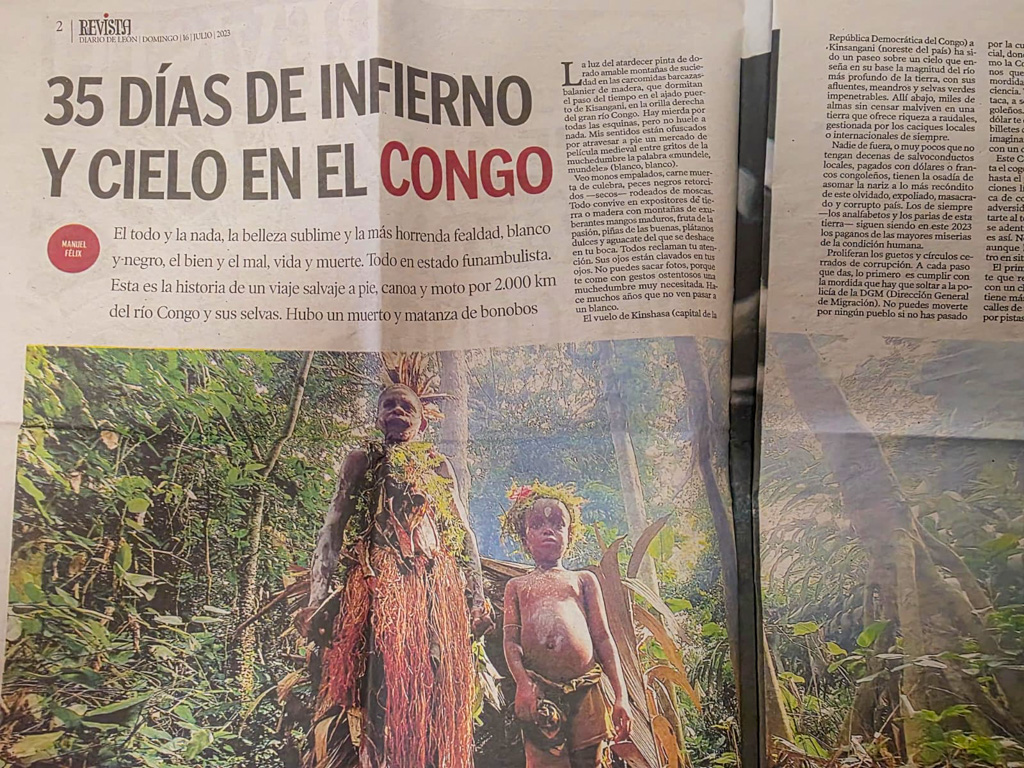
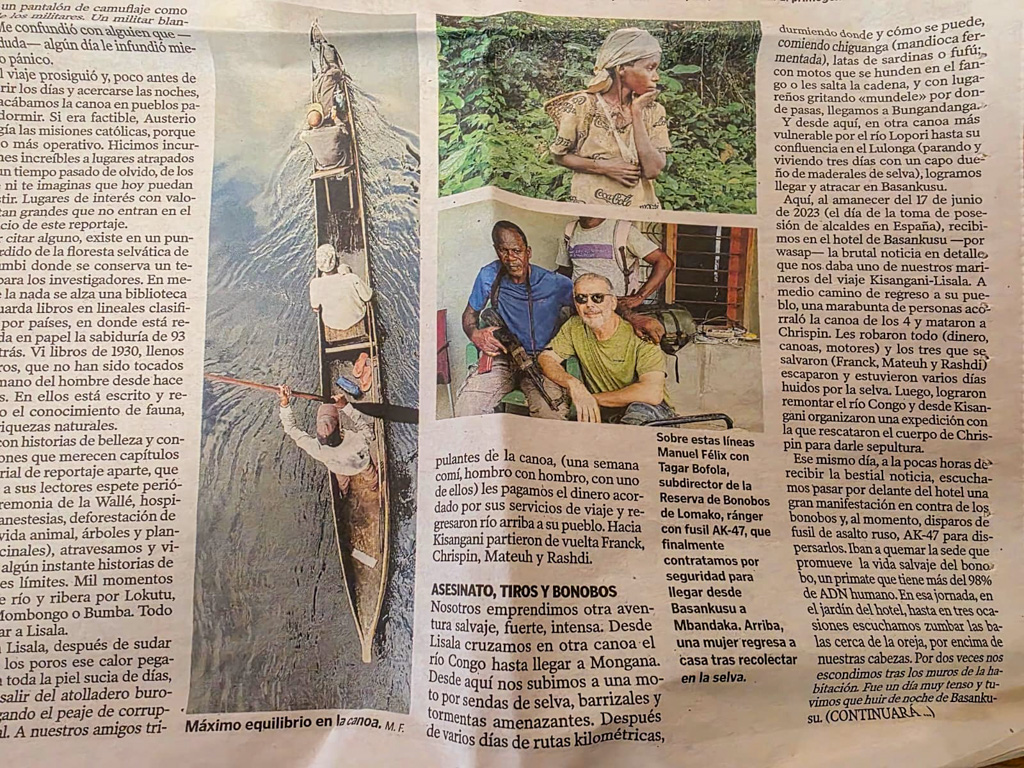
During those days and in the weeks that followed, official statements were released by Lola Ya Bonobos, along with newspaper articles such as these from the *Diario de León*, magazine features, and the subsequent book *Bruma Congo* by Manuel Felix, a member of the group and a journalist by profession.
This is how Manuel Felix would describe it in the Spanish newspaper *Diario de León*:
“Murder, Gunshots, and Bonobos
We set out on another wild, rugged, intense adventure. From Lisala, we crossed the Congo River in another canoe until we reached Mongana. From there, we hopped on a motorcycle, riding along jungle trails, through muddy patches, and past threatening storms. After several days of traveling countless kilometers, sleeping wherever and however we could, eating chiguanga (fermented cassava), cans of sardines, or fufú; with motorcycles that got stuck in the mud or had their chains come off, and with locals shouting “mundele” wherever we went, we arrived in Bungandanga.
And from there, in another, more vulnerable canoe down the Lopori River to its confluence with the Lulonga (stopping and spending three days with a boss who owned rainforest logging concessions), we managed to reach and dock at Basankusu.
Here, at dawn on June 17, 2023, we received—via WhatsApp—the harrowing details of the news from one of our sailors on the Kisangani-Lisala voyage at the hotel in Basankusu. Halfway back to their village, a mob of people cornered the four men’s canoe and killed Chrispin. They stole everything from them (money, canoes, motors), and the three who survived (Franck, Mateuh, and Rashdi) escaped and spent several days on the run through the jungle. Later, they managed to travel upriver on the Congo River, and from Kisangani they organized an expedition to recover Chrispin’s body so they could give him a proper burial.
That same day, just a few hours after receiving the horrific news, we heard a large demonstration against the bonobos passing by the hotel, followed immediately by shots from Russian AK-47 assault rifles fired to disperse them. They were going to burn down the headquarters that promotes the conservation of bonobos, a primate that shares more than 98% of its DNA with humans. That day, in the hotel garden, we heard bullets whizzing past our ears and over our heads on at least three occasions. Twice we took cover behind the walls of our room. It was a very tense day, and we had to flee Basankusu that night. (TO BE CONTINUED…)”
What happened in the conflict between the bonobos at Ekolo, now the Bonobo Community Reserve, and the local communities?
Official Statement: Violence at the Ekolo ya Bonobo Community Reserve
The statement explains that a group of young people traveled along the river that runs alongside the reserve, attacking the Ekolo ya Bonobo facilities and homes in nearby villages. The staff were able to retrieve some of their equipment and get to safety, but the structures at their base camp in Elonda were set on fire, as were several homes.
The most tragic part was the death of four bonobos: Tembo, Kole, Masisi, her daughter Boyokani ya Lola. According to the organization, photographs of the dead animals were circulated, and they hoped that those responsible would be prosecuted. The facilities on Totaka Island, used for quarantine and preparation for reintroductions, were also attacked.
The conflict eventually spread to Basankusu, where a group of armed men protested in the streets around the organization’s office. The police and Congolese military intervened, and, according to the statement, the situation subsequently stabilized.
And that’s where we showed up—on that very day and at that very moment.
The NGO Lola ya Bonobo lent us their best engines and boats, and we managed to leave Basankuso in the middle of the night and, after three days of sailing, arrive in Mbandka
We won’t be going to see bonobos at Lomako Yokokala anymore; we’ll be traveling down the Lulonga River to the Congo River
Our return route followed the Congo’s own geographical logic.
The rivers were our way out.
Our original plan was to travel up the Maringa River from Basankuso to the Lomako Yokokala Nature Reserve, but circumstances led us to head down the Lulonga. We made our way along the Lulonga, one of the Congo River’s major tributaries, and began sailing westward. These days were very different from the ones before.
Adventure had given way to uncertainty. Every hour of sailing meant moving further away from an area where the situation could worsen and drawing closer once again to the great river.
Finally, the waters of the Lulonga flowed into the Congo River once again.
Returning to the great river evoked a feeling that is hard to describe.
Weeks earlier, the Congo had represented the unknown. Now it represented a way out.
The darkness—or the mists, as we called them on that trip—were now behind us.
From Basankusu to Mbandaka on the Lulonga and Congo Rivers
As we made our way down the Lulonga River, about a two-hour boat ride from Basankuso, the situation and atmosphere along the riverbanks returned to normal. Once again, people in the villages waved to us and shouted, “Welcome.” It was a huge relief.
Since we had some extra days—having given up on the idea of reaching the Lomako Reserve—we decided to see if we could visit a Balumbe community.
The Balumbe: The Sad Realities of This “Pygmy” People
After some negotiations in a small, run-down village on the banks of the Lulonga River, the community leader agreed to take us to the village of Balumbe, a little over an hour’s journey inland. We left our barge, grabbed our backpacks and tents, and boarded smaller canoes to make our way into a forested area completely submerged in water.
The journey through the jungle canals was truly magnificent.
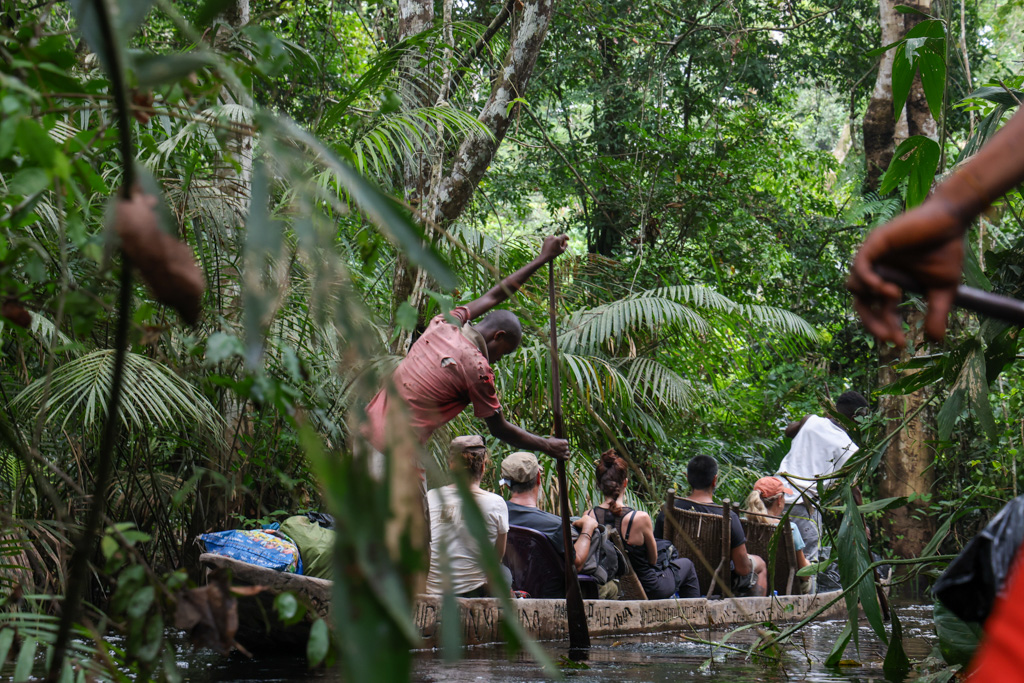
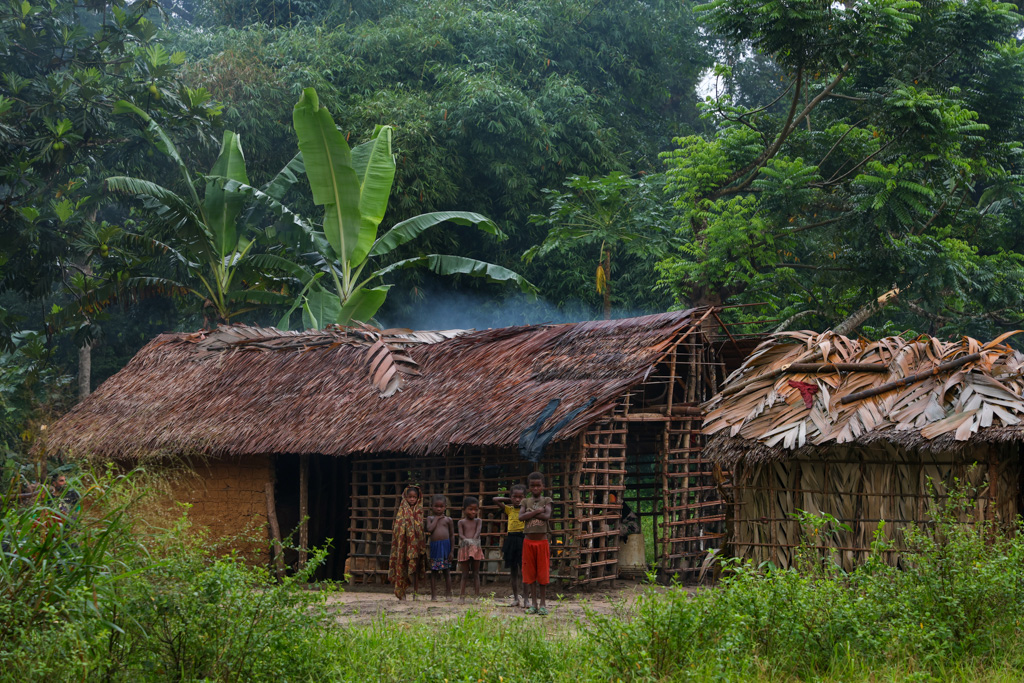
But like absolutely everything else in the Democratic Republic of the Congo, things swing from one extreme to the other in a matter of seconds. The scene we encountered was a far cry from any romanticized vision of life in the jungle.
The Balumbe community has almost completely lost its culture and traditional way of life as a result of selling the surrounding forests to loggers and granting concessions to miners. Gold and other minerals were discovered in this region a few years ago.
Money that, as so often happens, was squandered on alcohol and led to a loss of one’s way of life.
Some of the men in town were visibly intoxicated, and at times the situation became difficult to control. During the night and the following day, several of our belongings also went missing.
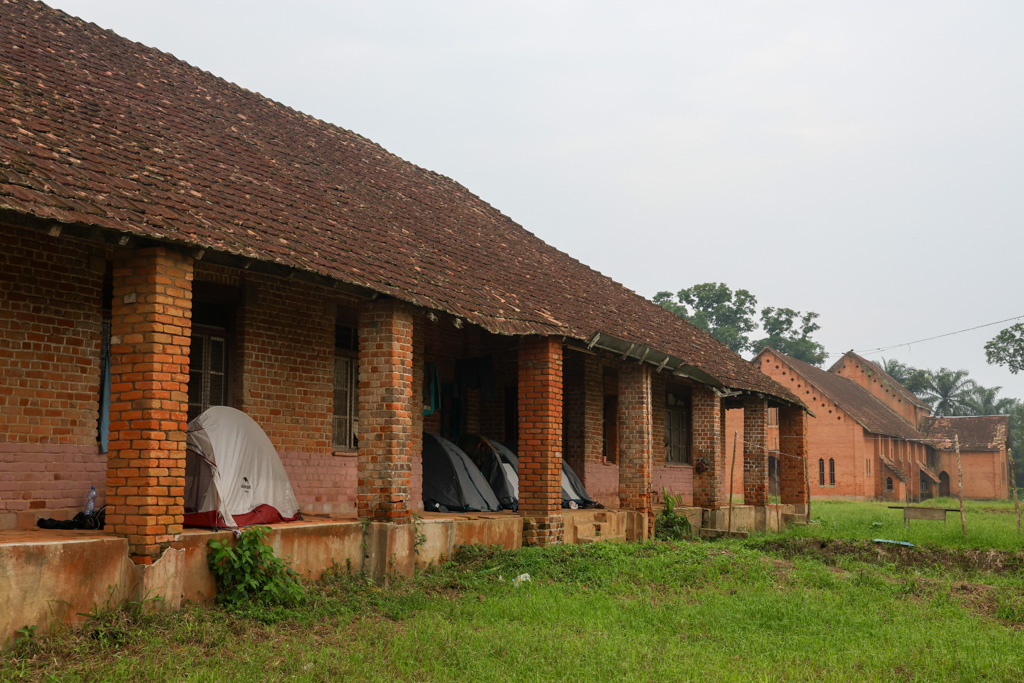
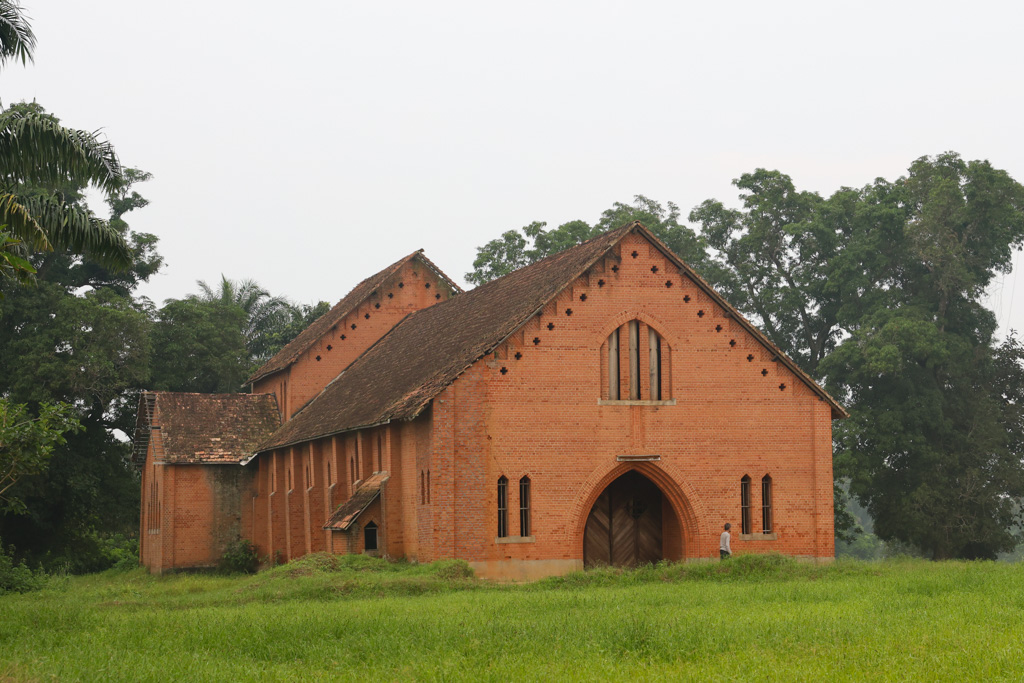
Mampoko and the San Pedro Claver Mission
Continuing our journey along the Lulonga River, we arrived at Mampoko, a former mission station located on the riverbank. There stands the San Pedro Claver (Saint-Pierre-Claver) mission, founded in 1917 by the Mill Hill Missionaries, a congregation that had begun its work in this region of the Congo in the early 20th century.
The mission eventually became one of the area’s landmarks. In addition to the church and convent, it included a school and boarding school, a clinic, a hospital, and a maternity ward, forming a small complex in the middle of the jungle. Many of its buildings were characterized by their red-tile roofs, made locally from clay found along the riverbanks.
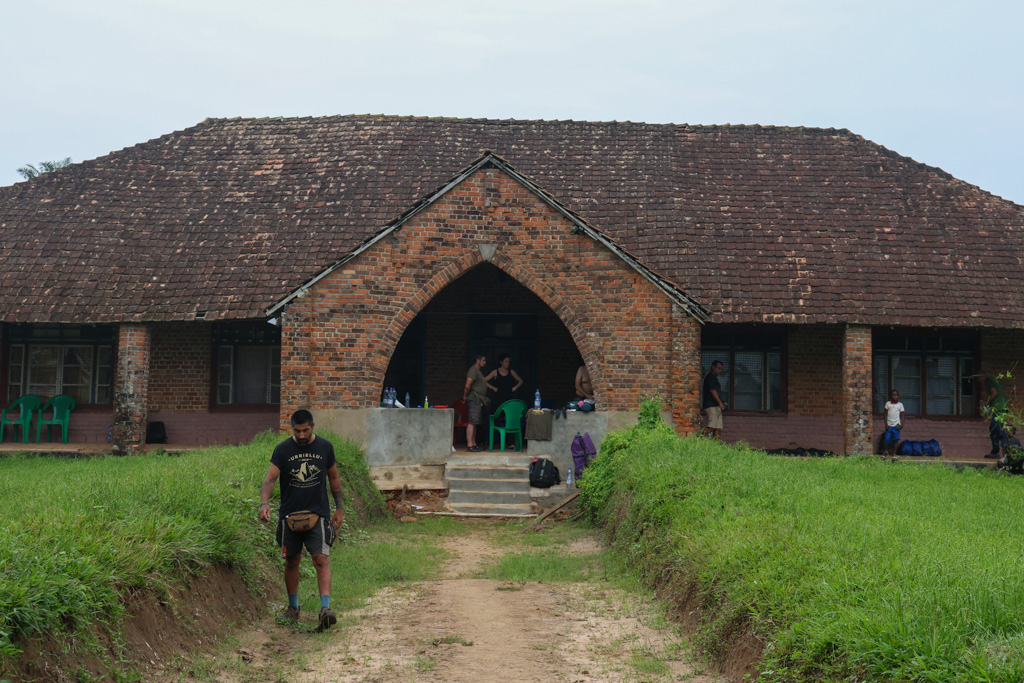
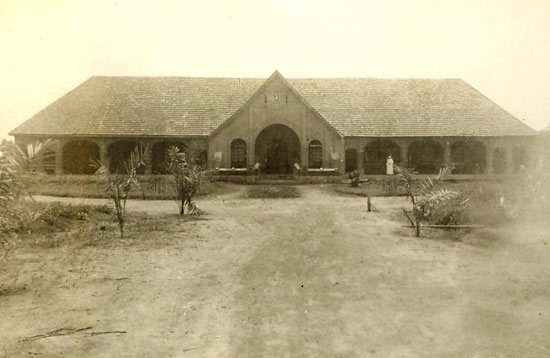
Sailing down the Congo, the Kasai, or the Lulonga means traveling along the very same rivers that, for more than a century, served as a means of transportation for missionaries, merchants, and the inhabitants of these lands. These river journeys allow us to encounter yet another of the many traces that history has left along the Congo.
We decided to spend the night in that beautiful, historic place tucked away in the middle of the Congo Basin
Mbandaka: The end of the river expedition, but not the end of the journey
Our destination was Mbandaka, the capital of Équateur Province and one of the major cities along the middle reaches of the Congo River.
Its port offers a remarkable overview of everything we had seen over the previous weeks. People and goods from a vast network of rivers that extends hundreds of kilometers into the jungle converge here.
The port market is a constant spectacle. Fish, cassava, fruit, charcoal, and products from remote communities change hands while large boats are loaded and unloaded along the shore.
After weeks of exploring small tributaries, we had a better understanding of what we were seeing.
Mbandaka was one of the points where that vast river network eventually converged. And there in Mbandaka itself, part of the group, along with my local guide, decided to cut the trip short a few days earlier. The rest of us—most of us, anyway—continued exploring the surrounding area.
Nzambe and Bakoko: The Black Church
In Mbandaka, we also visited one of the most unique places of the entire trip: the Nzambe ya Bakoko Church, popularly known as the Black Church.
After weeks of encountering Catholic missions and numerous traces of the European colonial presence, it was particularly interesting to learn about a religious tradition that emphasizes African spirituality and the connection to ancestors.
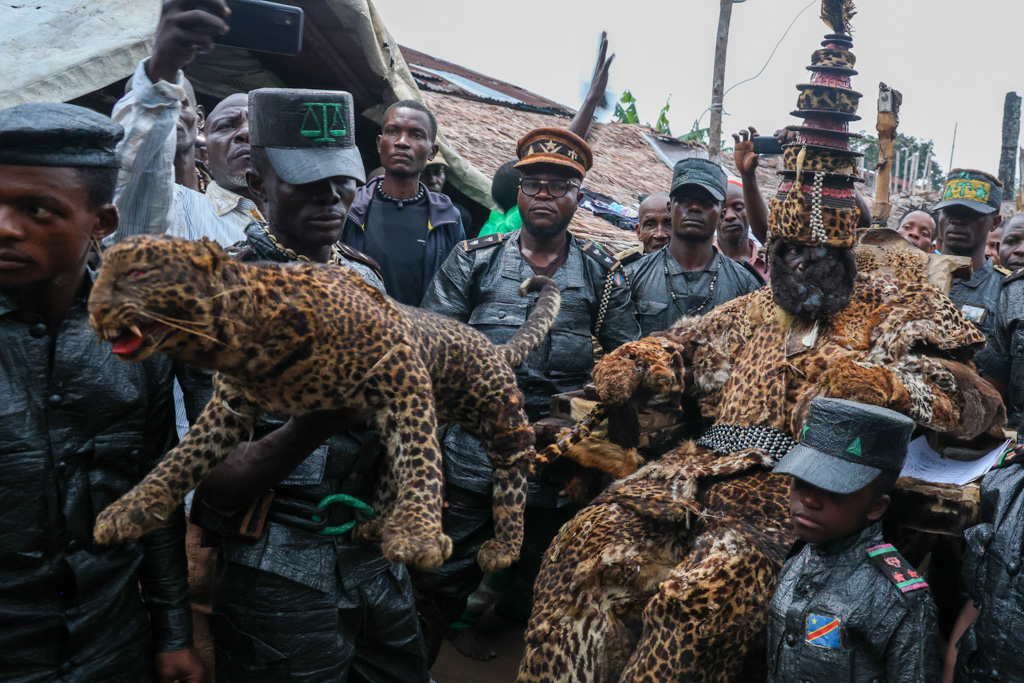
Contemporary Congo is also the result of that ongoing interplay between African traditions, Christianity, the colonial legacy, and the new identities that emerged after independence.
The Welsh Mothers, Ekonda Culture
Before saying goodbye to Mbandaka and catching our flight back to Kinshasa, we traveled south of Mbandaka, this time in a 4×4. We wanted to visit Ekonda communities that still perform a very unique ritual: the so-called Mamás Walés.
The Ekonda people’s “maternity leave” is a very curious tradition centered on first-time mothers known as Walé
Who are the Walés, and what is their “maternity leave”?
“Walé” is the title given to women who become pregnant for the first time. Generally, young girls. Teenagers between the ages of 15 and 18.
The Walé ritual is a rite of passage or initiation. Women facing their first pregnancy and breastfeeding are about to begin a new stage in their lives, and therefore must be initiated into it.
Once they are informed of the pregnancy, it is the girls’ parents who decide whether their daughter will undergo the rite. In other words, not all young Ekonda women and first-time mothers undergo the Walé rite. At least not nowadays. But there are still families—and not just a few—who decide to go ahead with it.
Our Heart of Darkness
It is almost impossible not to think of Joseph Conrad when sailing for weeks along the Congo and its tributaries—especially after what we had experienced during those weeks.
In 1890, Conrad arrived in the region to work as a seaman on a river steamboat. His experience would be brief, but it would have a profound impact on his life and would ultimately inspire *Heart of Darkness*.
Behind the fiction lay a brutal historical reality. At that time, the territory was the Congo Free State, personally controlled by King Leopold II of Belgium. The exploitation of rubber and ivory was accompanied by forced labor, violence, and mass killings. The river played a crucial role. It was the main route into the interior and, at the same time, the route by which the riches extracted from the territory were transported out.
Partly as a result of that brutal past, we have this volatile present and, unfortunately, an uncertain future.
During our journey, we discovered two worlds: one that was terrible and another that was radiantly beautiful. The journey had led us to explore ourselves.
The Congo was not just a blank canvas for tourists on which to carry out a travel itinerary.
It is a densely populated area teeming with people, factors, interests, and very radical forces that make any movement or situation completely unpredictable.
I remember all those episodes perfectly. Our Congo was the one with the Wagenia fishermen, the families living on the water, the markets, the motorboat drivers who transported us for two days, the boatmen who could read the currents, and the residents of small villages who will probably never leave that part of the river.
This account is based on our 2023 expedition and the Kumakonda team’s firsthand experience in the field. All photographs from the trip, unless otherwise noted, were taken during the journey.
When will we travel down the Congo River again?
Organizing trips to the Democratic Republic of the Congo is no easy task, but we love a challenge. You can subscribe to our newsletter to stay updated on our latest travel news and destinations, or you can contact us directly at info@kumakonda.com.
In 2027, we’ll be venturing back into the Congo River with a very small group of travelers. If you’d like to join the Congo Expedition, here’s the link to the webpage: https://kumakonda.com/trip/expedition-to-the-congo-river/
Details of the 2027 Trip to the Congo River
- Duration: 16 days
- June 14, 2027, Kinshasa.
- June 29, 2027, Kinshasa.
- Group of 4 to 8 people
- Price: 6,900€
Frequently Asked Questions About Traveling on the Congo River
Traveling through the Democratic Republic of the Congo in general—and along the Congo River in particular—is still today one of the greatest and last true adventures you can experience in Africa. It’s an experience quite unlike any conventional route across the continent.
Organizing an expedition down the Congo River requires time, a willingness to take certain risks, flexibility, and significant on-the-ground logistics. It’s not cheap, either. Having led numerous expeditions through the Democratic Republic of the Congo, we’ve compiled answers here to some of the most common questions about what it’s like to navigate the Congo River, safety, transportation, and daily life during the trip.
Frequently Asked Questions and Answers
Is it possible to travel down the Congo River on your own?
Yes, it is possible to travel down the Congo River independently, although there is no regular infrastructure for doing so. Much of the trip depends on local boats, canoes, whaling boats, and occasional transportation that you’ll have to arrange on the spot. An expedition of this kind requires experience, time, patience, and a great deal of flexibility if you want to do it on your own.
How long does it take to travel down the Congo River by public transportation?
It depends greatly on the route, the vessels, and the sailing conditions. It also depends on whether you’re traveling from Kinshasa up the Congo River or from Kisangani to Kinshasa. Large local ships can take several weeks—or even more than a month—to travel the stretch from Kinshasa to Kisangani.
How do you travel down the Congo River?
There’s no one right way. If you’re traveling with local guides, be prepared to carry everything you need with you during the expedition: a tent, a pot, food, etc. On our expeditions, we use motorized canoes, and sometimes, when the opportunity arises, we also travel on local boats.
Where do you sleep during an expedition down the Congo River?
Outside the major cities, lodging options are very limited, with choices typically limited to Christian missions or camping directly in villages. This lack of infrastructure is part of the challenge of traveling through some of the most isolated regions of the Democratic Republic of the Congo.
Is it safe to travel down the Congo River?
As you may have read previously, the security situation in the Democratic Republic of the Congo can change rapidly and varies greatly from region to region. Before organizing any trip, it is essential to check the current situation, have good local contacts, and adjust the itinerary as needed.
What can you see on a trip down the Congo River?
Beyond the equatorial rainforest landscapes, traveling through the Congo offers the chance to explore historic cities, riverside villages, markets, old colonial buildings, and ways of life closely tied to the river. During our expedition, we visited places such as Kisangani, the Wagenia fishermen, Yangambi, Lisala, Basankusu, and Mbandaka.

Autor:
Austerio Alonso
Co-founder of Kumakonda. Passionate of Africa. Specialist in the design, preparation and realization of expeditions in Africa. Content creator.
Travel with us