


Travel to Chad
With a population of around 12 million and an area of 1,284,000 km²—about two and a half times the size of Spain—Chad, located in the heart of Africa, is one of the largest countries on the African continent. Taking a trip to Chad means visiting a country with great diversity in terms of ethnic groups, cultures, and landscapes.
Chad’s three distinct climate zones—the Saharan, Sahelian, and Sudanese—are teeming with natural and cultural wonders, such as:
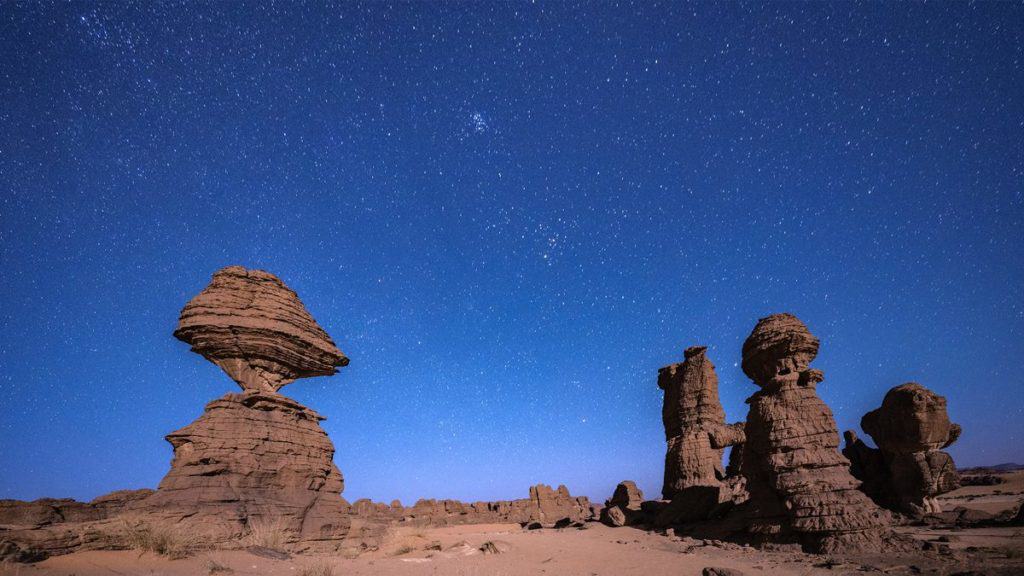
Is it safe to take a trip to Chad?
Based on our experience organizing group trips to Chad for several consecutive years—including to the Ennedi Massif, the Ounianga Lakes, the Gerewol Festival, and Zakouma—traveling to these destinations is safe.
The most adventurous travelers looking to explore regions off the beaten path will find completely unknown paradises in Tibesti or Lake Chad, and although these two regions may be subject to travel restrictions, we have been pioneers in organising expeditions to these regions, whenever conditions allow.
However, if you prefer to follow the recommendations of official authorities (the Ministry of Foreign Affairs or its equivalent), we fully understand.
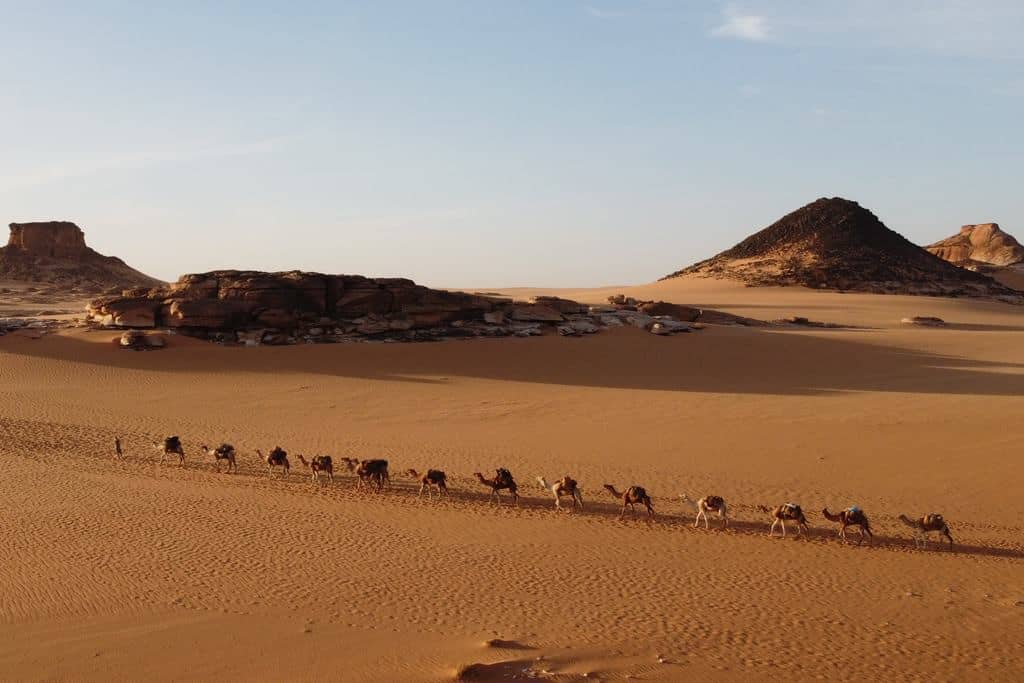
Ennedi Massif: Spectacular Landscapes, Rock Formations, and Natural Treasures of the Chadian Sahara
The Ennedi Massif, inscribed on the UNESCO World Heritage List in 2016, is located in the eastern Sahara, in northeastern Chad, and is one of the six mountain ranges of the Sahara. It is also one of the most breathtaking places on the African continent, which is why it is one of the main reasons for a trip to Chad.
Over millions of years, wind and water erosion have sculpted the marvelous Ennedi Plateau, carving out canyons and valleys that make up a spectacular landscape. Permanent groundwater is essential to sustaining the ecosystem of the Ennedi Massif, nourishing the flora, the increasingly abundant fauna—thanks to the new Ennedi Nature Reserve project managed by African Parks —and the people who live here.
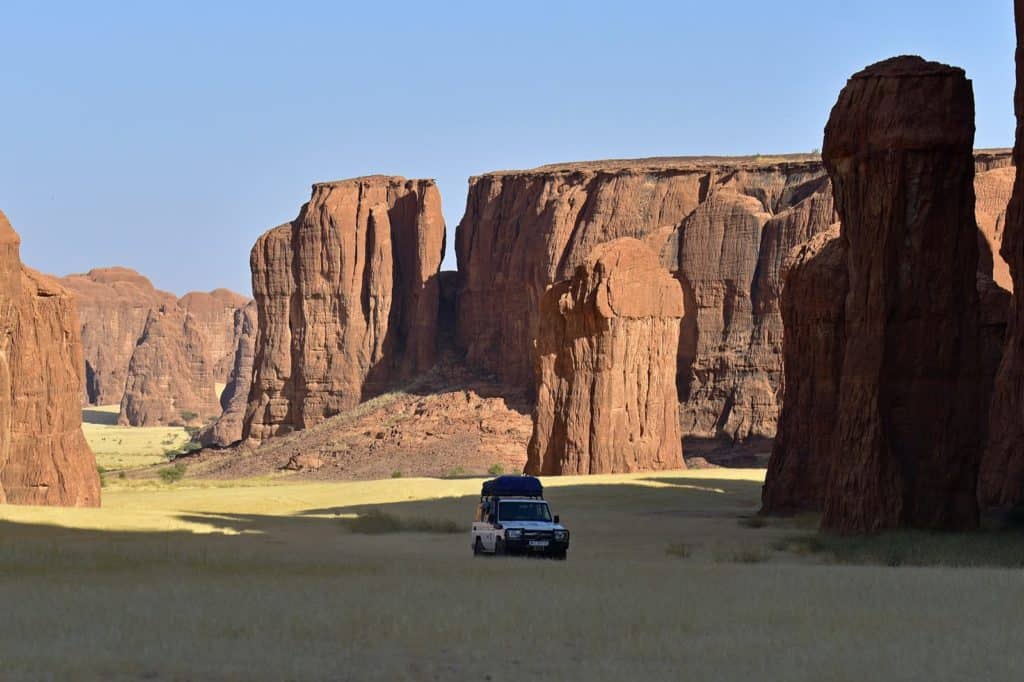
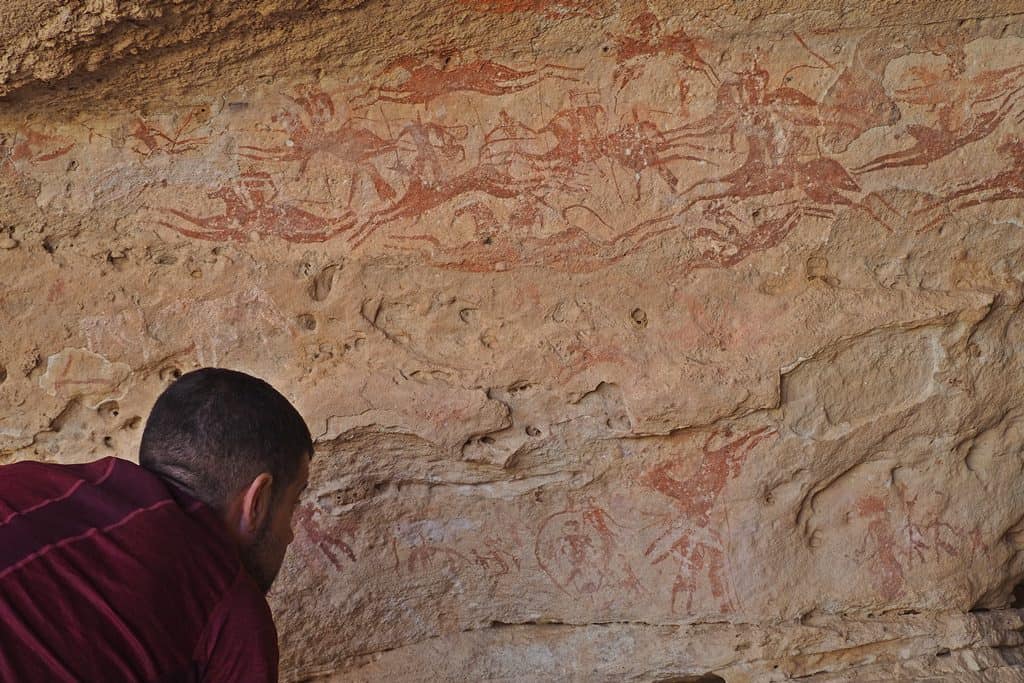
Among its many attractions are the caves and rock surfaces of Ennedi. Thousands of images have been painted and engraved there, constituting one of the largest collections of rock art in the Sahara.
The exceptional value of the Ennedi Massif stems from a combination of three factors: its natural beauty, its unique biodiversity, and its rock art.
In the Ennedi Massif, known as the “Eden of the Sahara,” visitors typically explore about 15 to 20 different sites concentrated within an area roughly the size of the Community of Madrid. However, the massif’s total area is more than five times that of the Community of Madrid, and much of it remains unexplored.
Overshadowed by the Ennedi Plateau and the Ounianga Lakes, the Mourdi Depression—with its seas of dunes and rocks—is another part of the Chadian Sahara that is well worth exploring.
Without a doubt, the ability to take to the skies and capture photos and videos offers us a breathtaking perspective on the magnificent natural scenery we’re traveling through on our trip.
In this post on “traveling to Chad,” we’ll combine some photos I took—mostly with a drone—with others taken by some of my trip companions, such as Edwin Edelelenbos, Enrique Pidal, and María Tudela.
Welcome to the planet Chad.
Stone arches of the Ennedi Massif
People interested in taking a trip to Chad often ask us about the natural stone arches of Ennedi. There are countless of them—we could spend two weeks just visiting these magnificent geological formations. Here, we’ll tell you about and show you pictures of the most iconic arches in the Ennedi Massif.
Aloba Arch
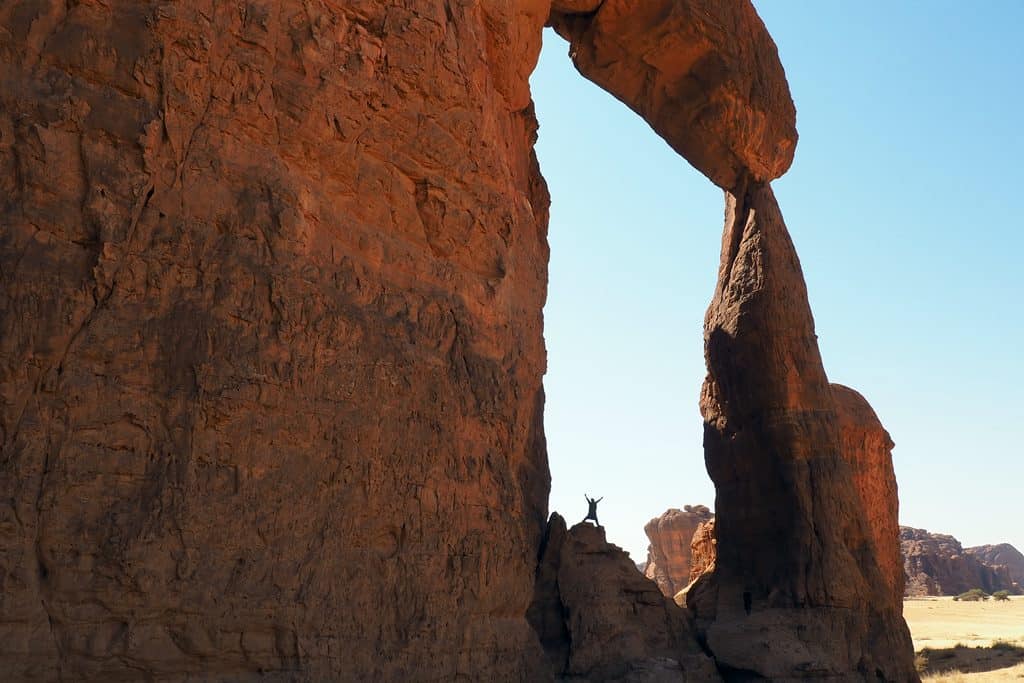
Standing 120 meters tall and 77 meters wide, the Aloba Arch is considered the largest in Africa and the second largest in the world. It is a true wonder of nature that is little known and rarely visited.
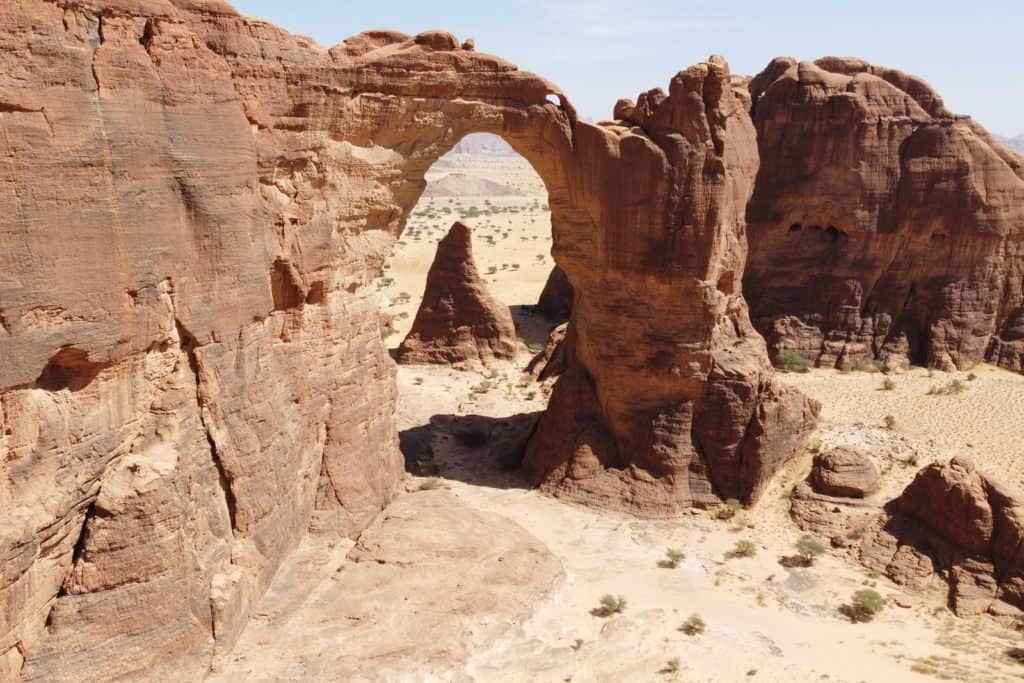
To give you an idea of the scale, here’s another photo taken from below, showing several of my trip companions
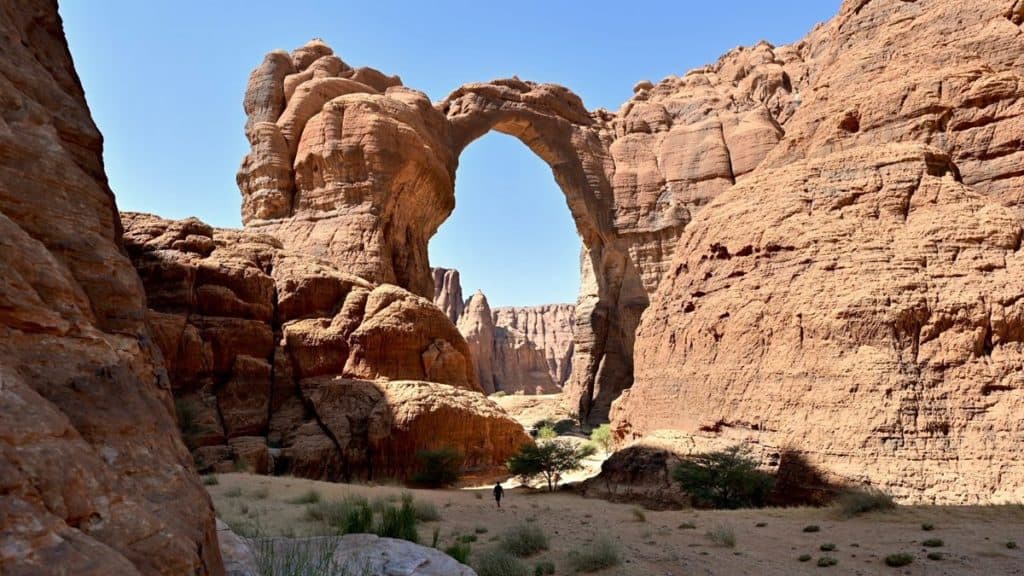
Djoulia Arch
Another masterpiece created by nature. It is an eroded sandstone arch called the Djoulia Arch, located in the Sahara Desert within the Ennedi Natural and Cultural Reserve, a UNESCO World Heritage Site in Chad. This is one of our favorite spots to camp for a night and enjoy both the sunset and the sunrise, with the play of light and shadow typical of these times of day. Not to mention the starry nights, if the sky is clear.
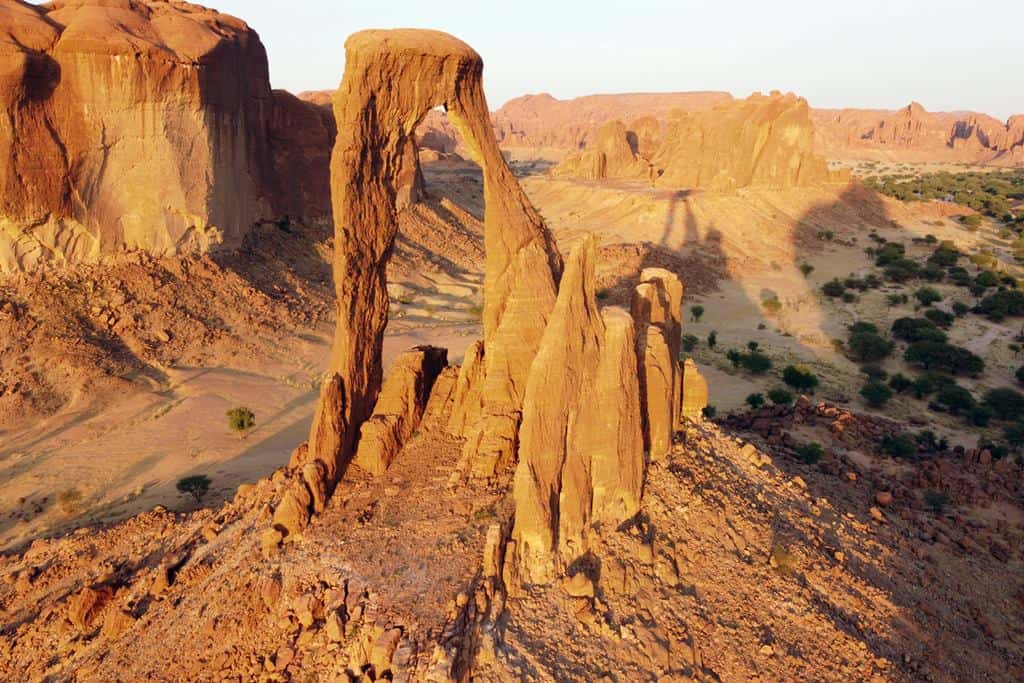
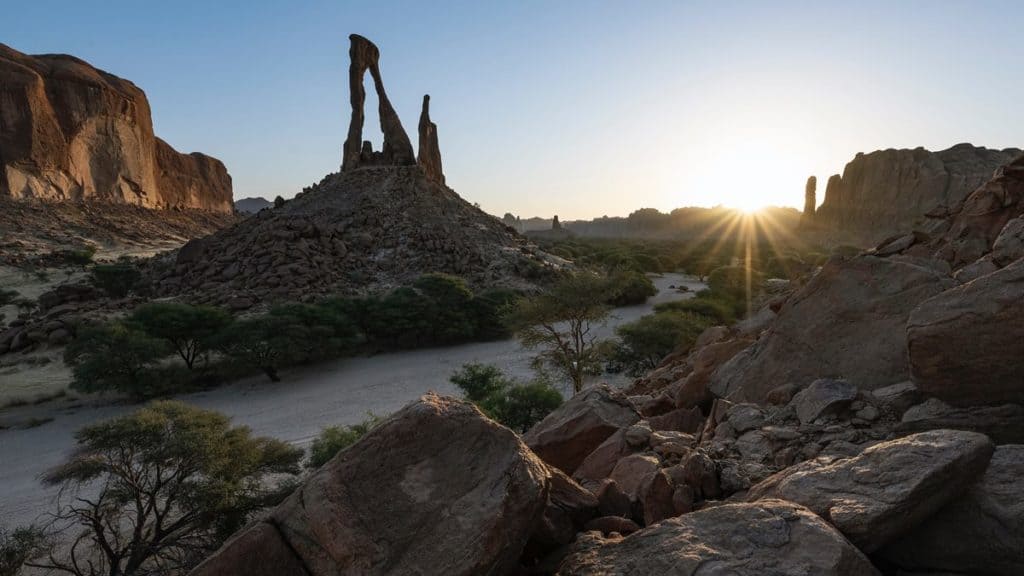
More stone arches on the Ennedi Plateau
In addition to the Aloba Arch and the Djoulia Arch, there are many other incredible examples, such as the Elephant Arch, the Djoli Arch, the Petit Aloba, and the Tooth Arch.

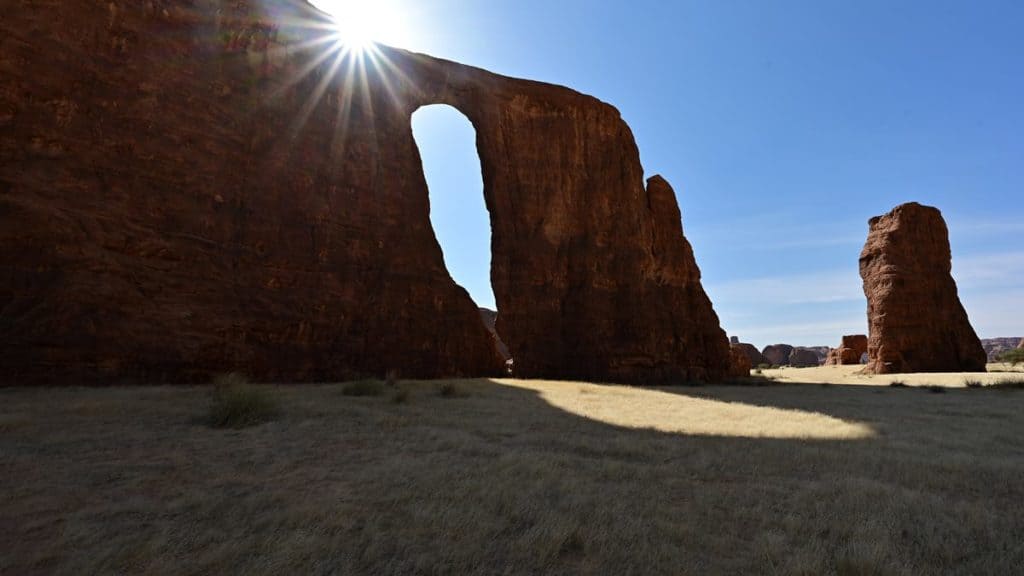
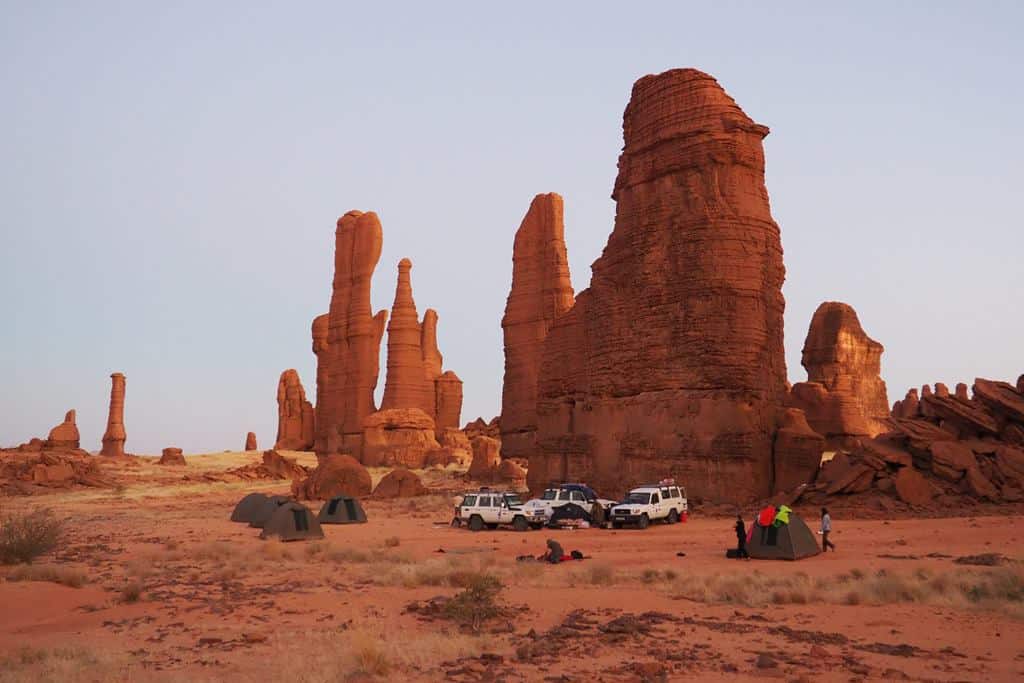
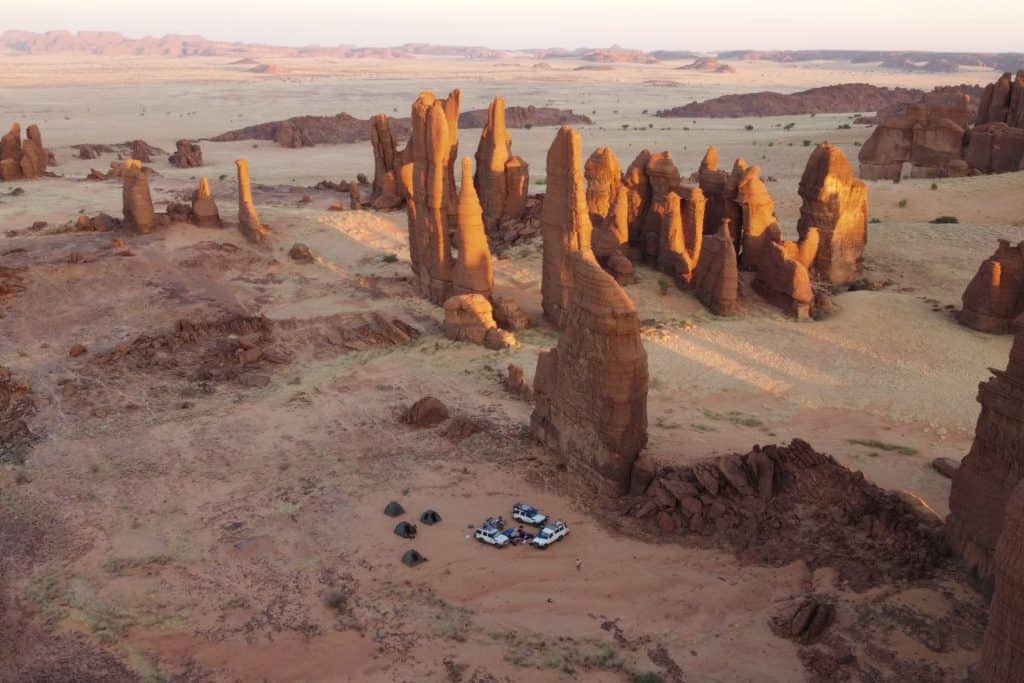
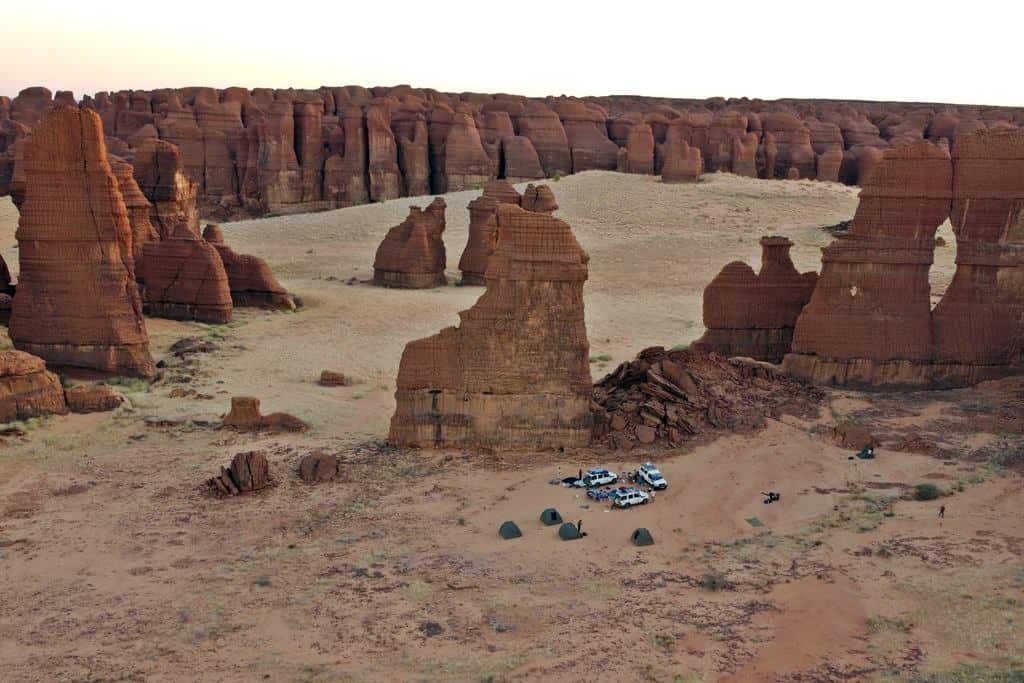
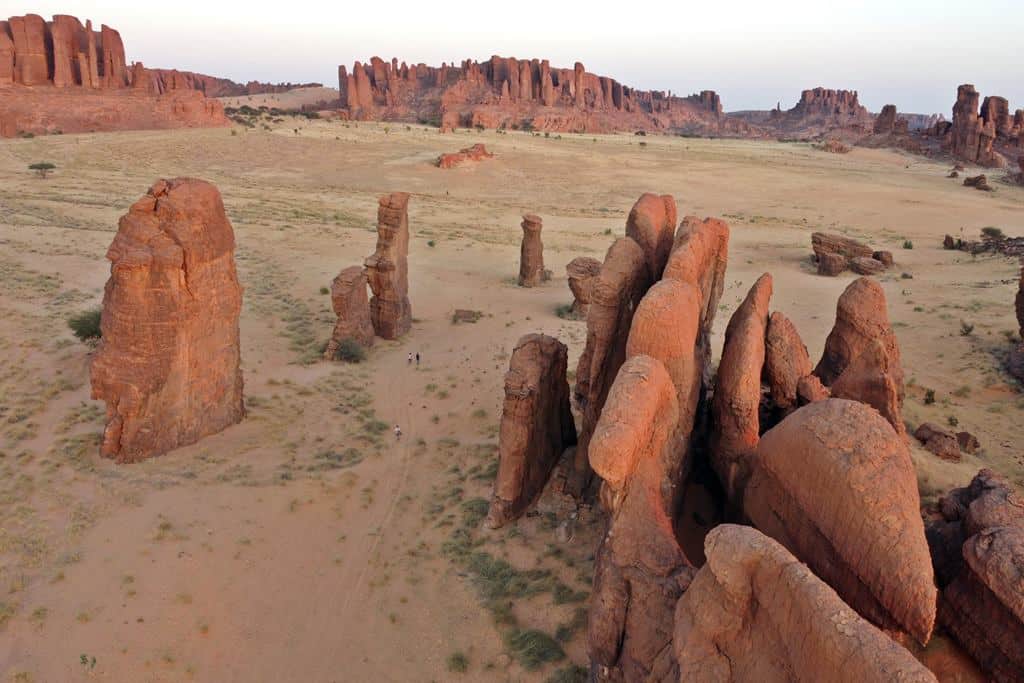
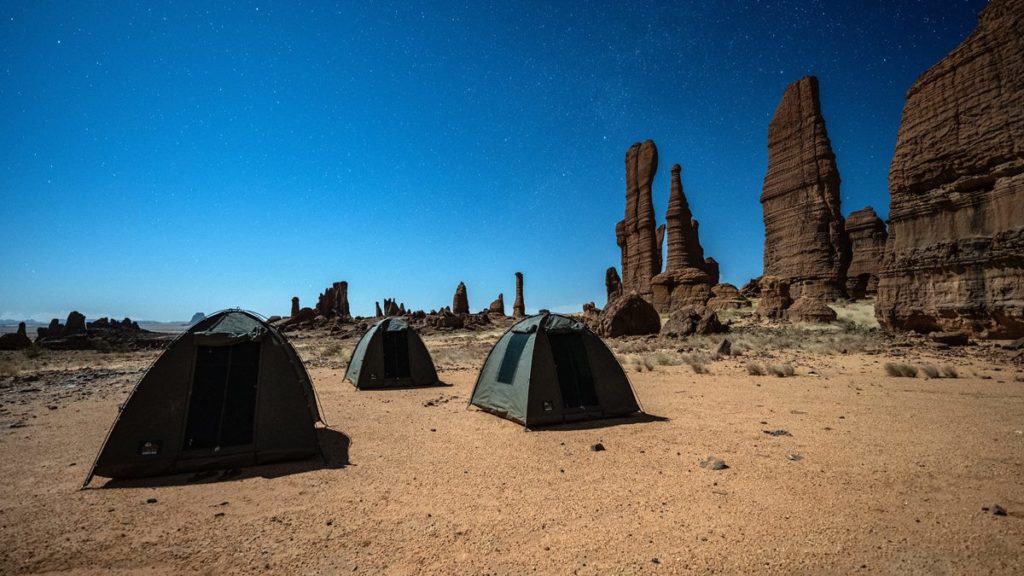
The Fantasy of the Ouimina Peaks
The Ouimina Peaks are another one of our favorite spots for camping and exploring at our own pace.
The peaks form a kind of “sandstone city” rising out of the desert. They resemble natural skyscrapers, and their beauty is extraordinary, especially at sunrise and sunset. At the same time, they offer shelter from the winds and harmatans typical of these African lands. It’s one of the unforgettable experiences of a trip to Ennedi.
Gueltas: The Miracle of Water in the Desert
The term “guelta” is of Arabic origin and is synonymous with “oasis.” These oases are the result of groundwater seeping to the surface in the deepest parts of the canyons of the Ennedi Massif.
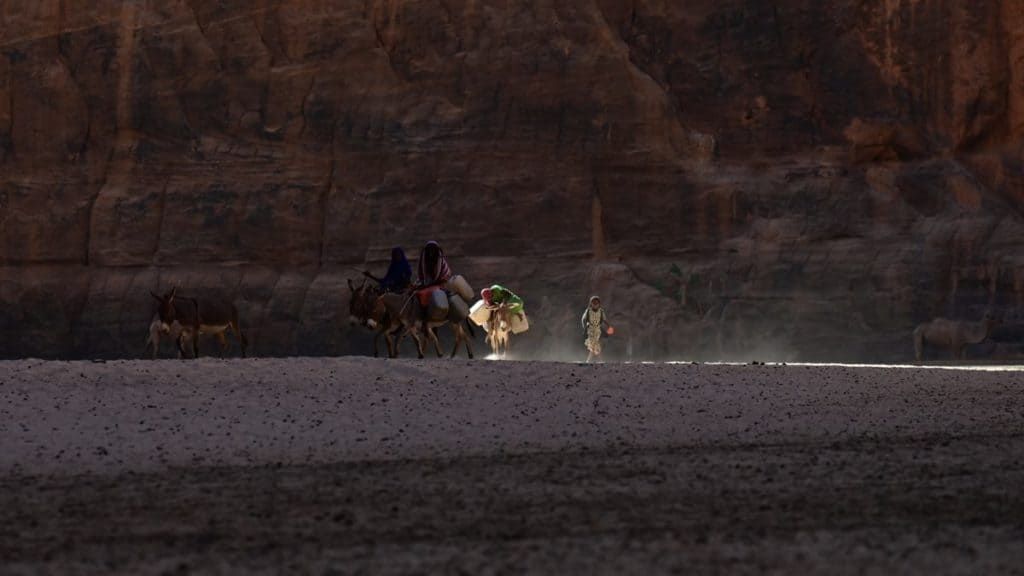
These water-filled oases play a vital role in the socioeconomic life of the local nomadic population, which roams between the western and eastern parts of the Ennedi region.
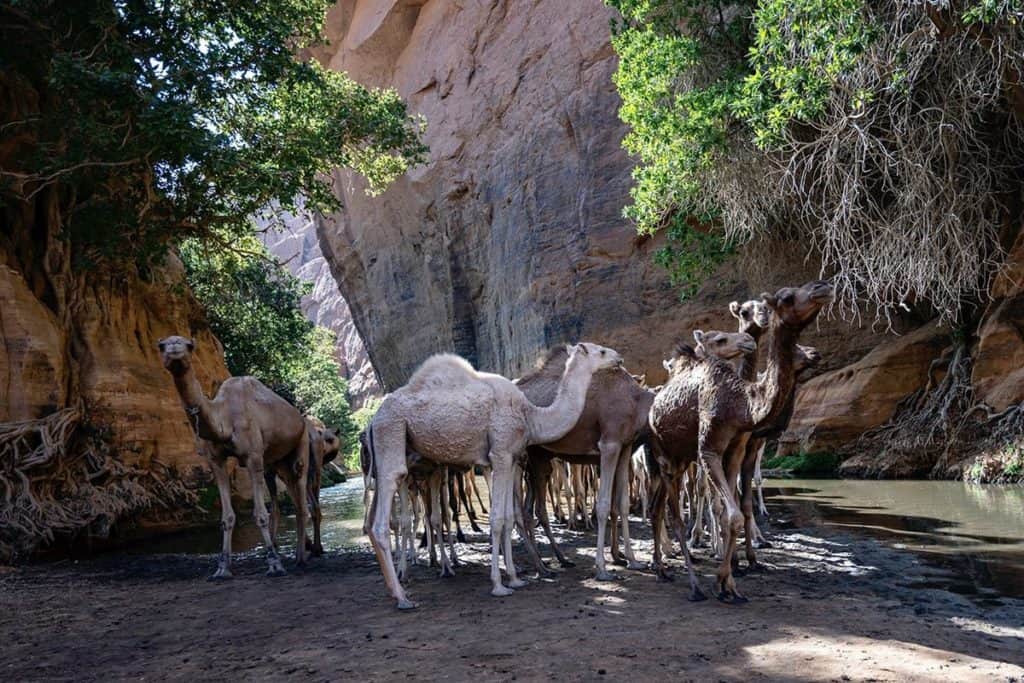
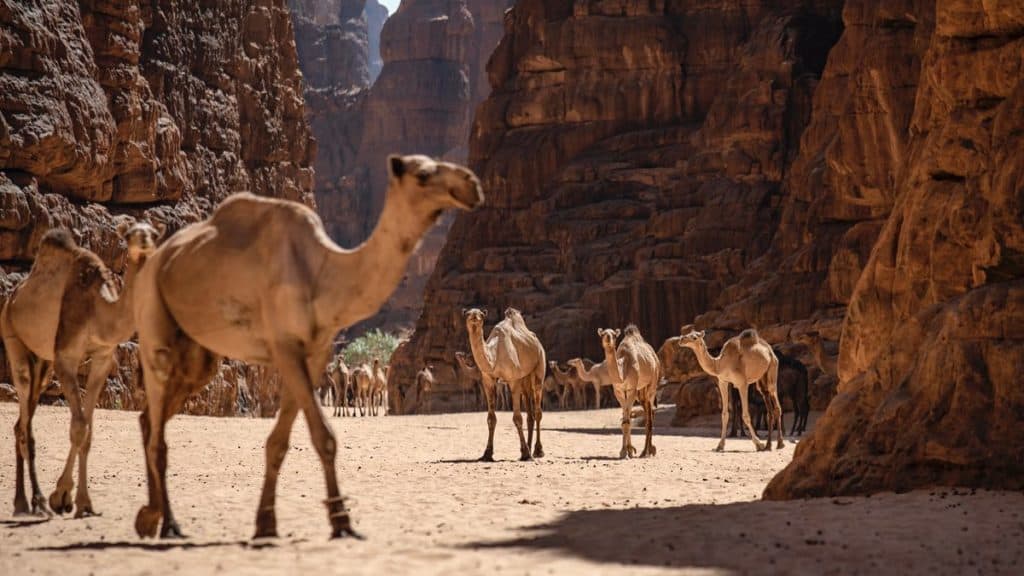
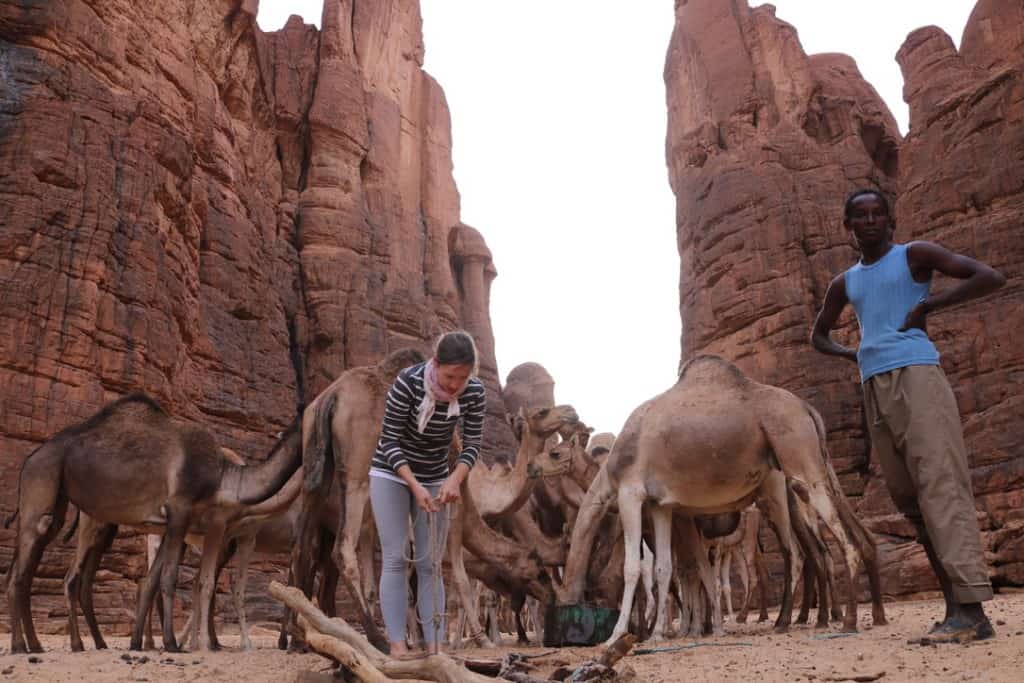
Although there are an increasing number of private wells where water is pumped using a motor and herders pay for the water they use, the large herds of camels that roam the Ennedi region continue to to visit the gueltas for water at no additional cost.
In the Ennedi Massif, we usually visit two gueltas (there are others, such as the Maya guelta) with permanent water sources where herders bring their herds of dromedaries to drink during the dry season.
Bachikele Guelta
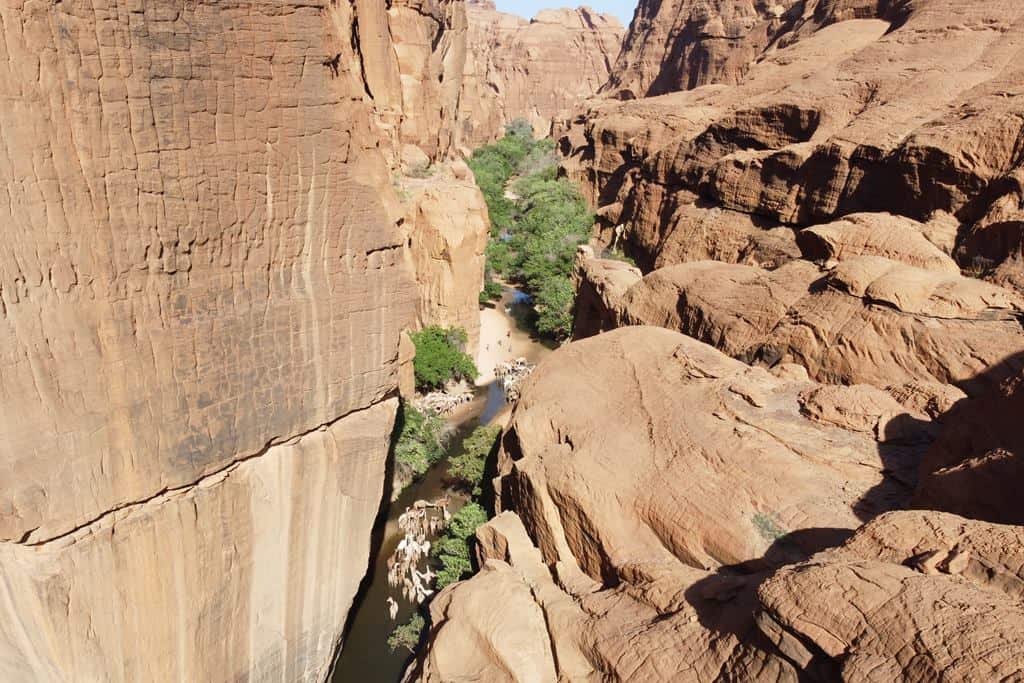
Located in the easternmost part of the Ennedi Massif—the area most commonly visited—is the Bachikele Guelta.
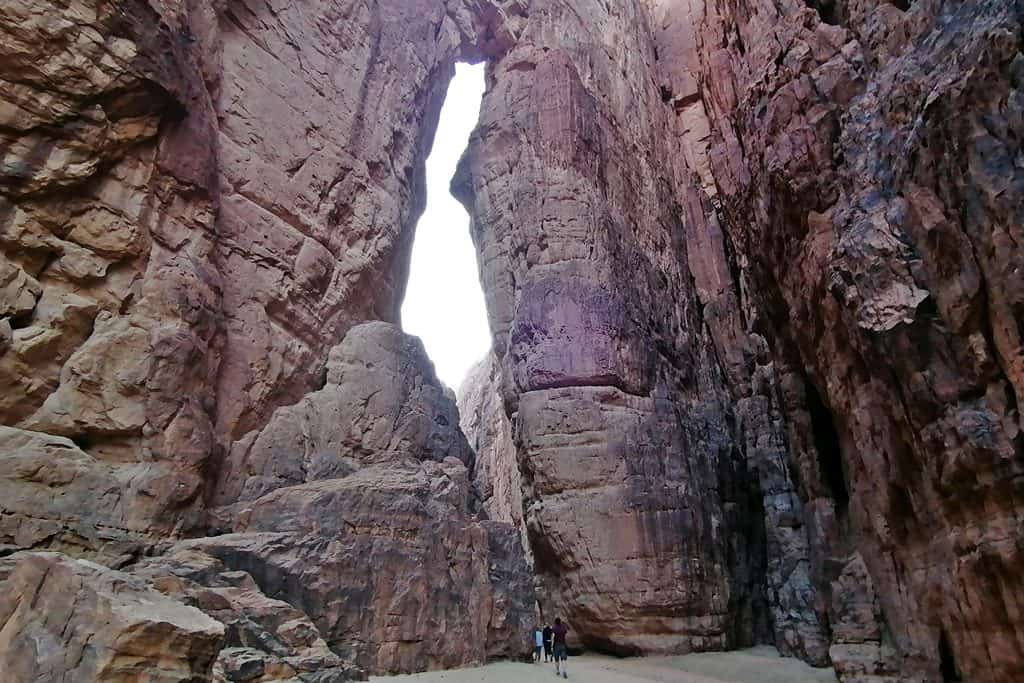
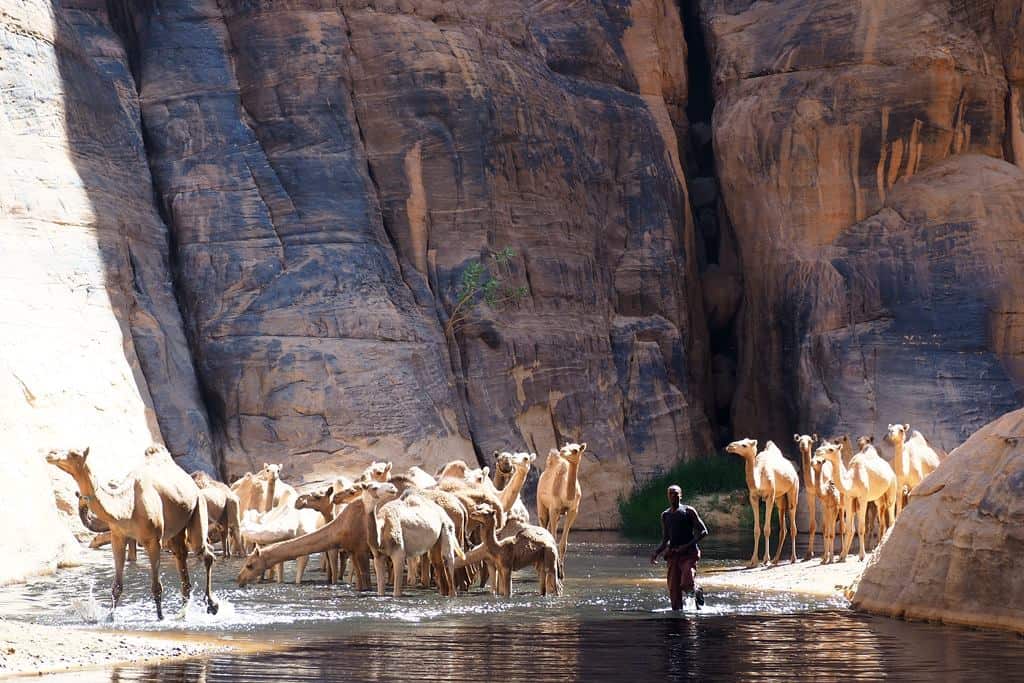
It is a beautiful, narrow canyon where you can usually find hundreds of dromedaries. Outside the canyon, dozens of monkeys watch visitors pass by from the rocks.
In the photo, we show you the Bachikele Guelta, the narrowest in the Ennedi Massif.
Guelta of Archei
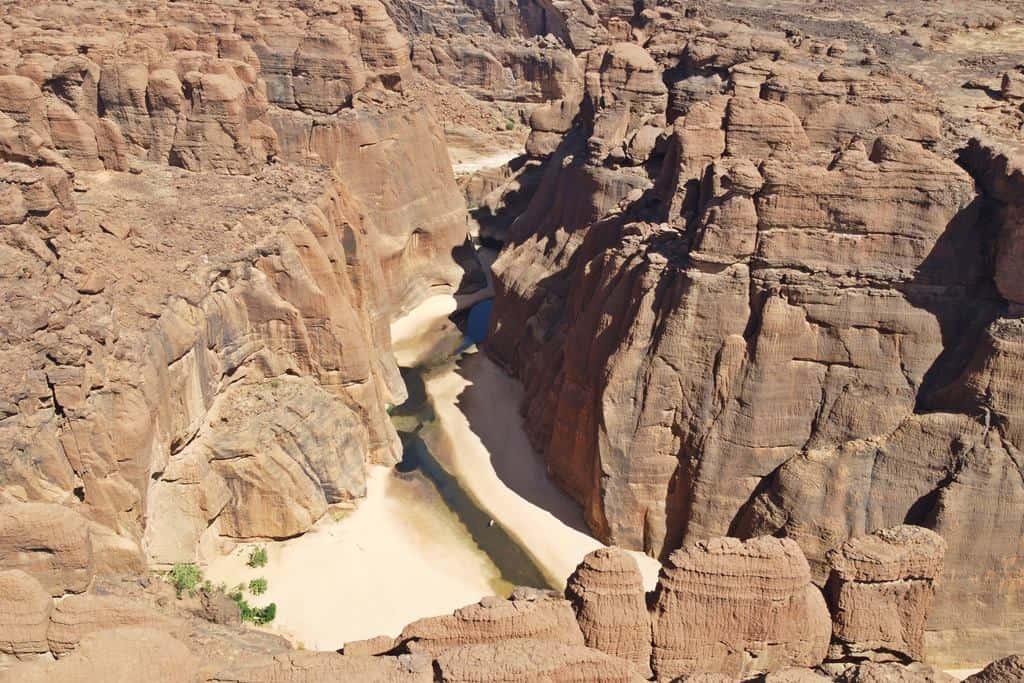
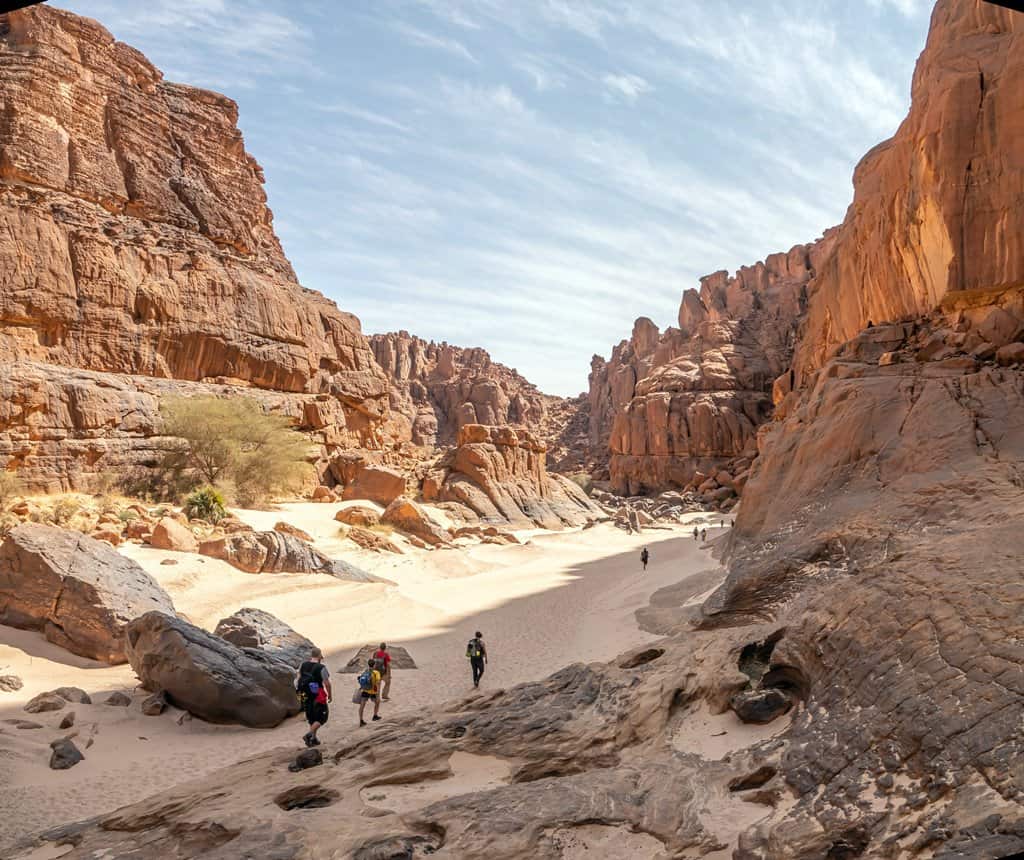
The Guelta of Archei is perhaps the best-known place not only in Ennedi, but in all of Chad. A natural landscape that looks like a movie set.
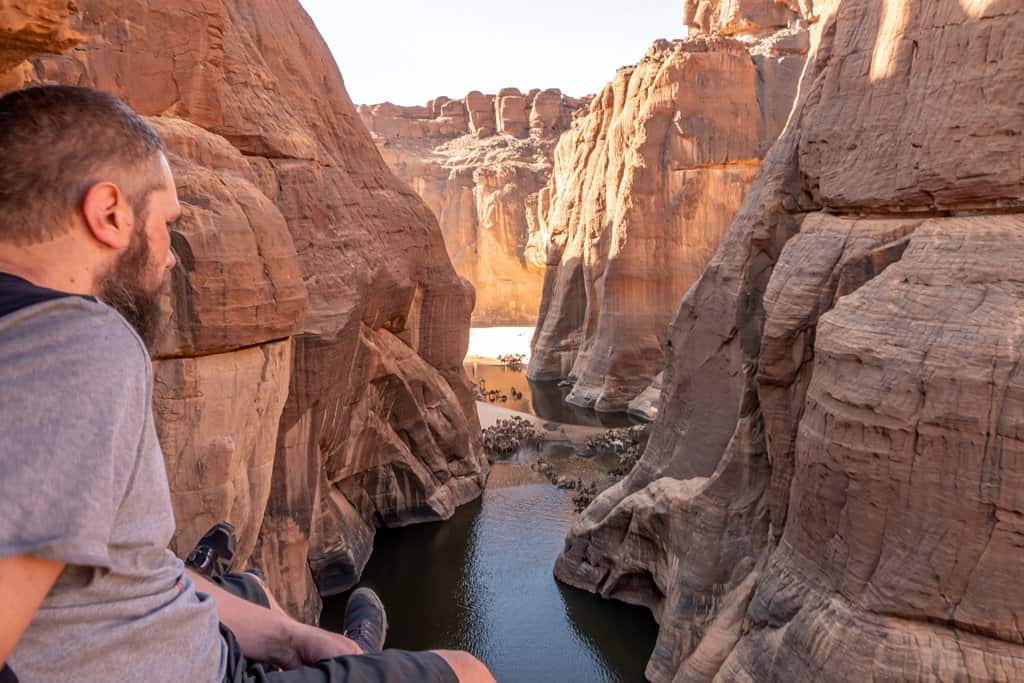
Unless the waters of the Guelta are low enough to cross on foot, the visit to Archei is divided into two parts. The first takes place inside the canyon, offering a view from below. The second offers a panoramic view from a natural lookout point high above the far end of the canyon. To reach this lookout point, you usually have to walk for an hour, crossing the stream.
Its waters, often stained black by the droppings of hundreds of dromedaries that venture into Archei every day, wind their way through rock walls over 100 meters high.
There are caves in these walls. In some of them—the ones on the outside—we can see cave paintings. Other caves are used by nomads to rest, drink tea, or store their belongings.
Bachike Gorge
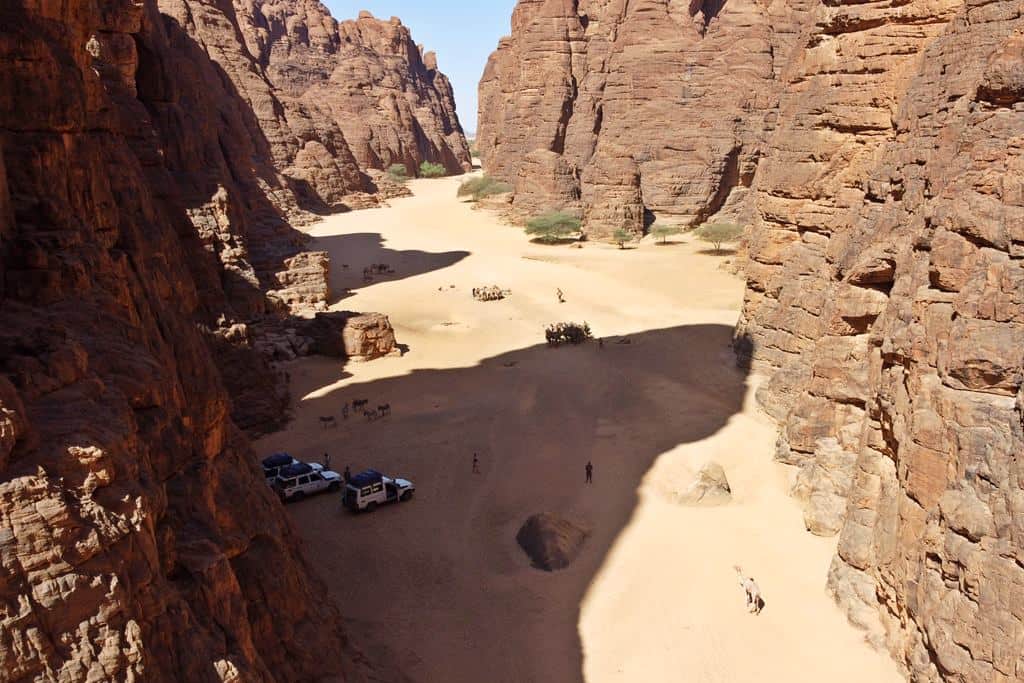
Another of the most spectacular canyons is Bachike, where it is also common to encounter nomadic herders with their large herds of dromedaries, which venture deep into the canyon in search of some of its wells. These wells consist of a simple hole in the ground from which water is drawn using a rope and a container.
The Oyo Labyrinth, another impressive formation in the Ennedi Massif
At the foot of a large dune and what is known as the Mont Saint Michel of the Ennedi lies a veritable stone labyrinth formed by erosion. Venturing into Oyo is like entering an imposing citadel. Deep within the labyrinth, sheltered from the winds, we usually set up camp for one of the nights.

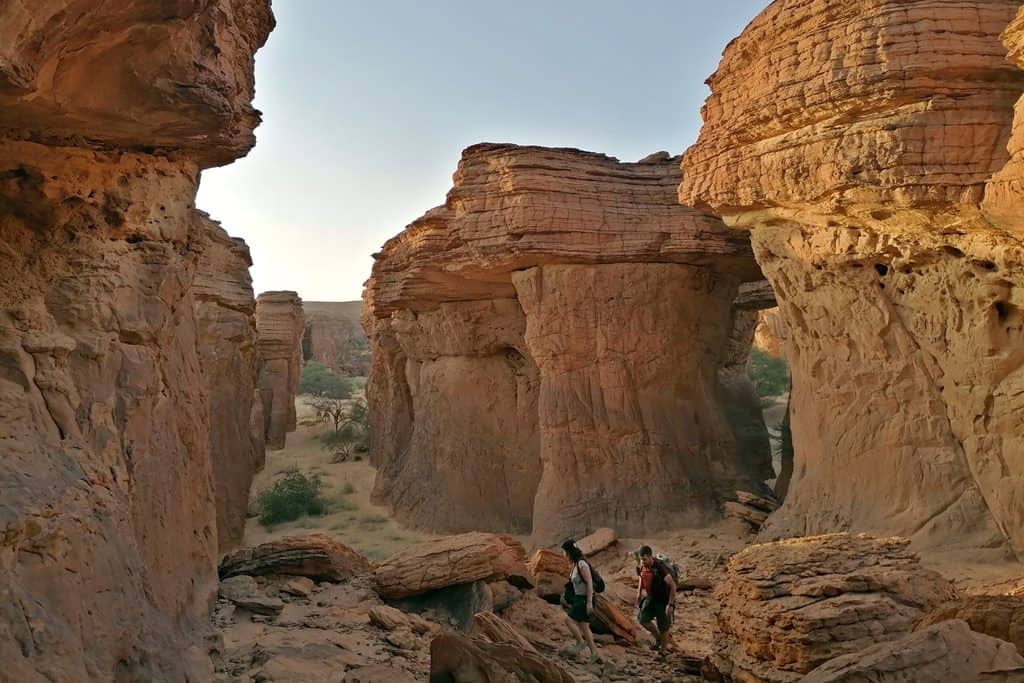
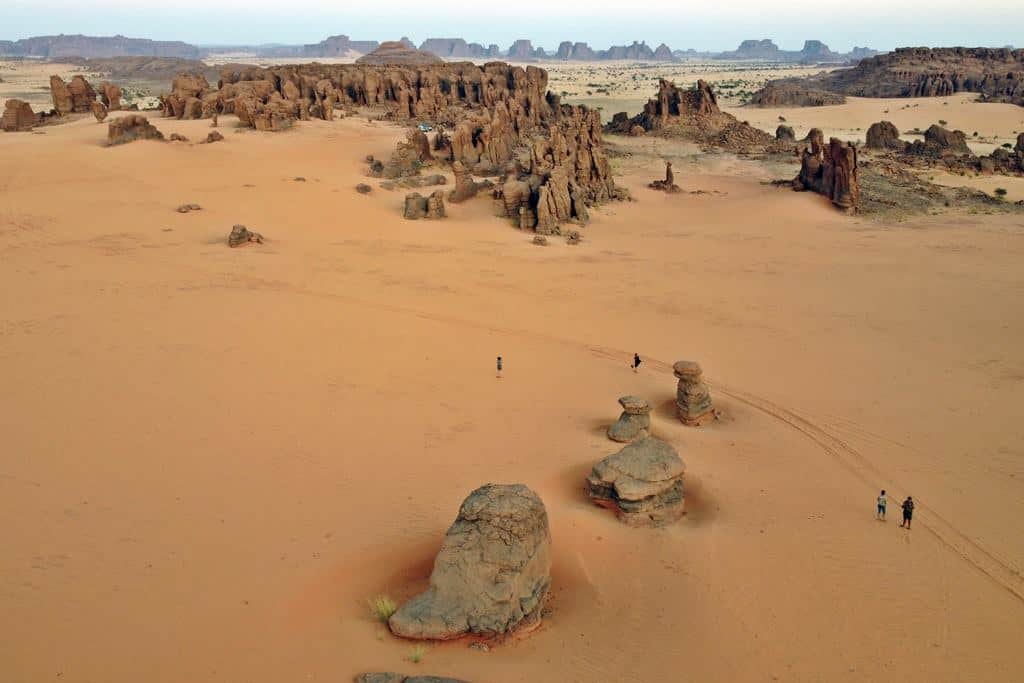
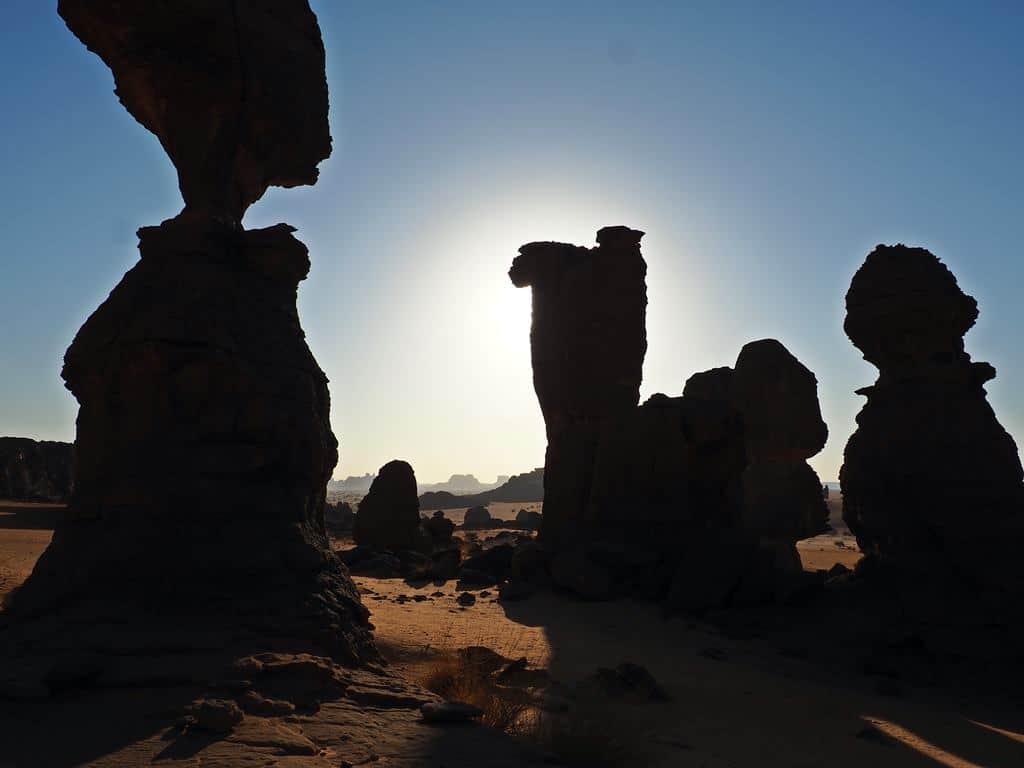
Hubaike, sand, and stone
Hubaike is another of our favorite spots in the Ennedi Massif. Perched on a hill, this spectacular labyrinth of rocks jutting out of the golden sand offers what are possibly the most beautiful sunrises in the Ennedi. We can also find the remains of an ancient settlement here.
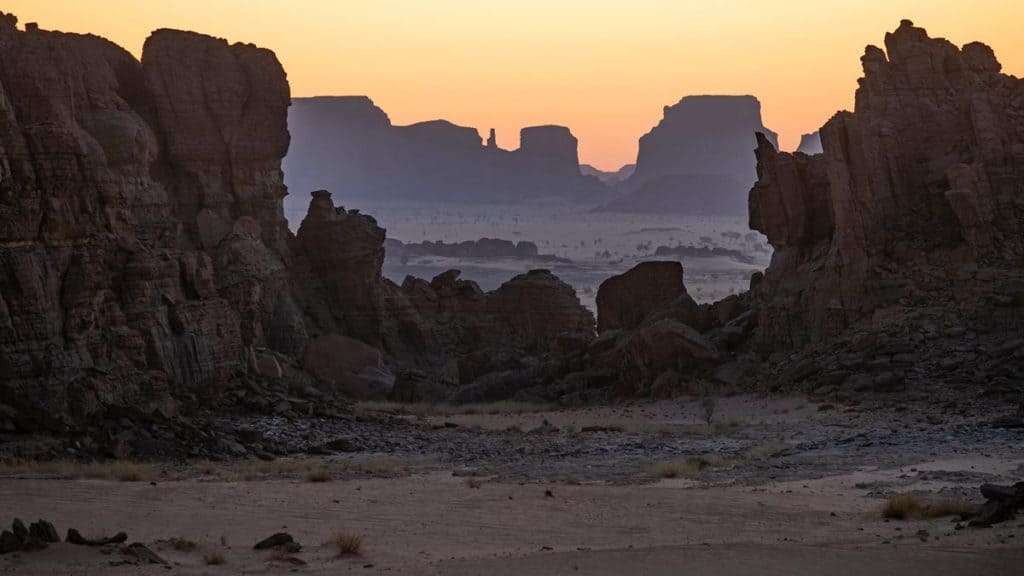
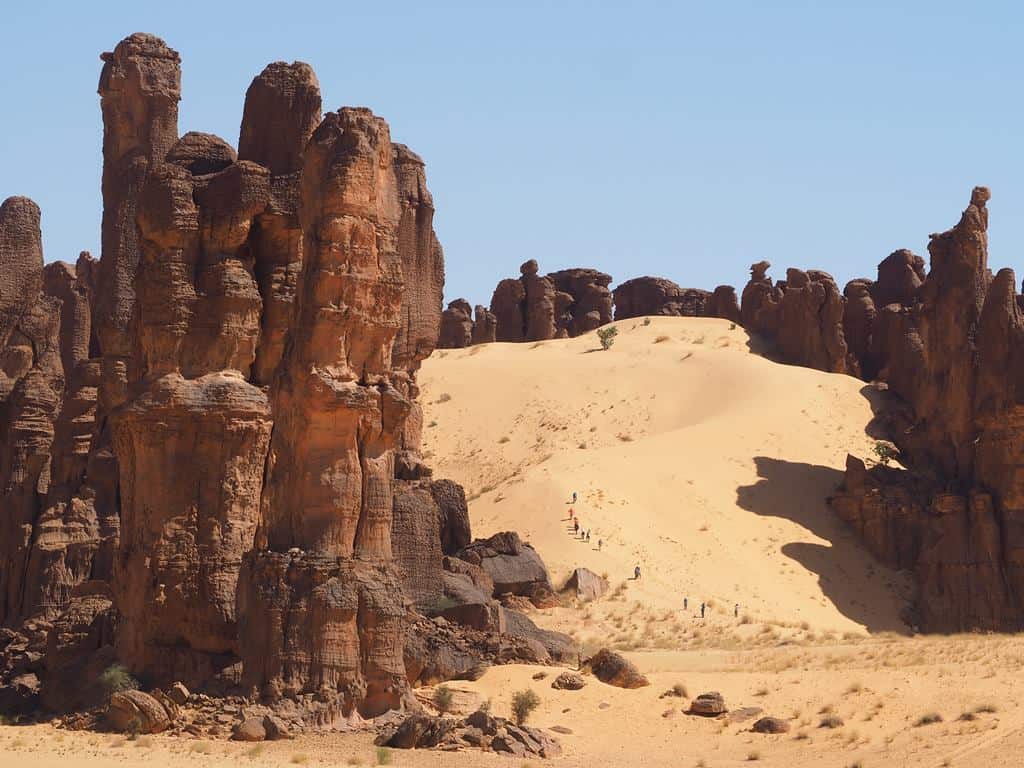
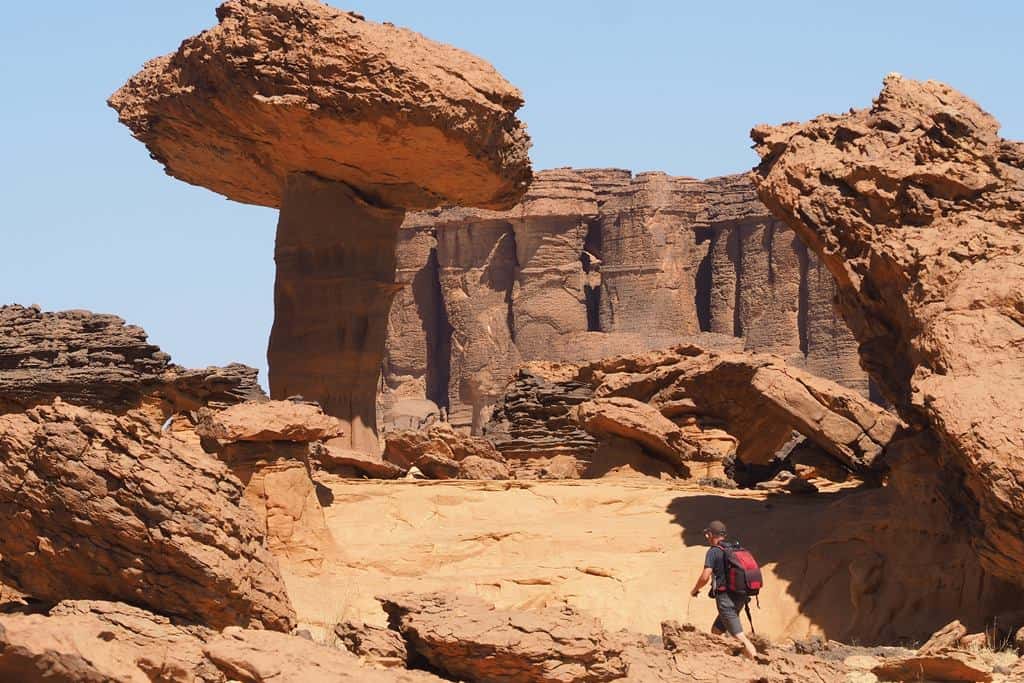
Pinnacle and the Great Dune of Chigou
Climbing the great Chigou Dune on foot offers spectacular panoramic views of the surrounding pinnacles. In front of it, we find various examples of sandstone “mushrooms.”
Remnants of the Bir Kora War
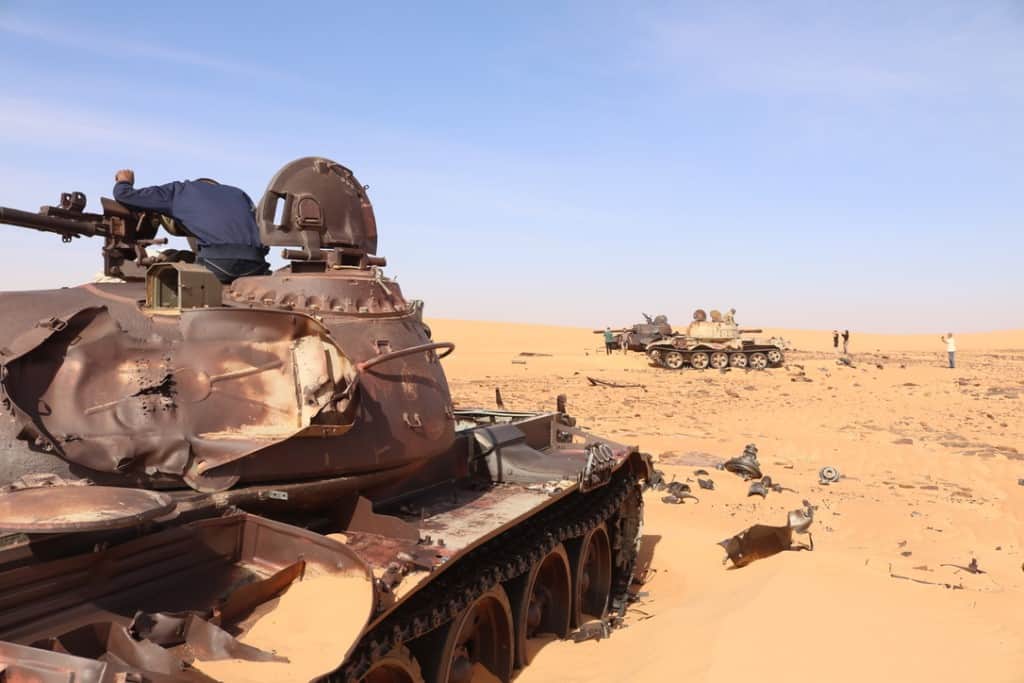
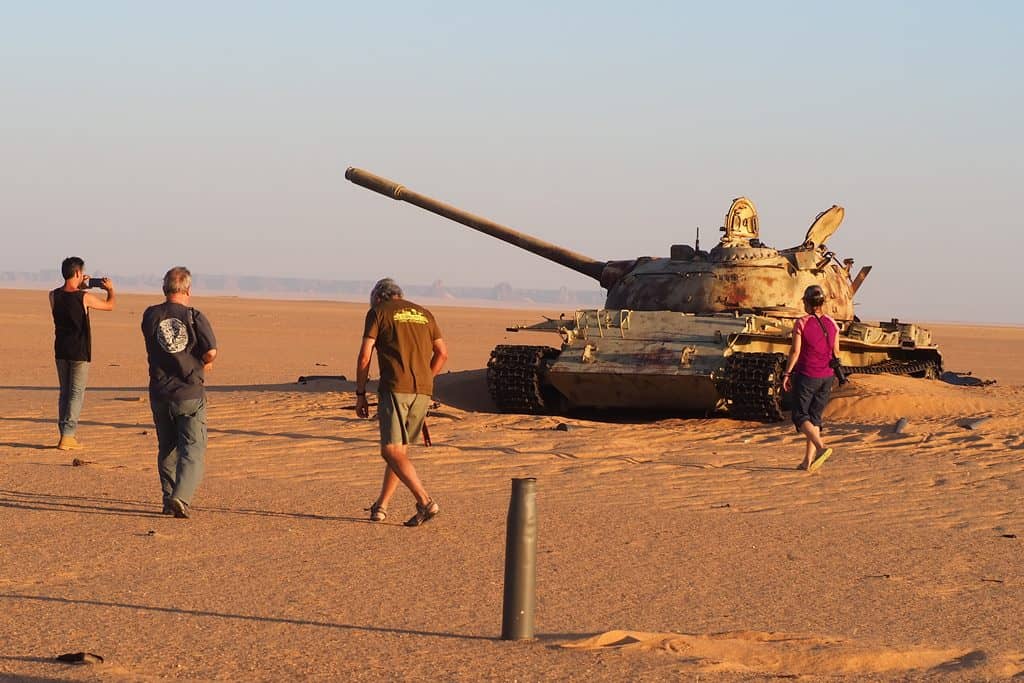
One of the most surprising things when touring the various battlefields in northern Chad, known as the “Toyota War”, is the condition of the remains of the military equipment.
It’s incredible that pieces of metal that have been abandoned in the desert for more than 30 years are perfectly clean, polished, and smooth—even the ones with shrapnel embedded in them. You really get the feeling that you’re on a movie set. I suppose those same environmental and erosional conditions are largely what have shaped the majestic landscapes of the Ennedi and Tibesti.
Caravan oases of the Ennedi Massif
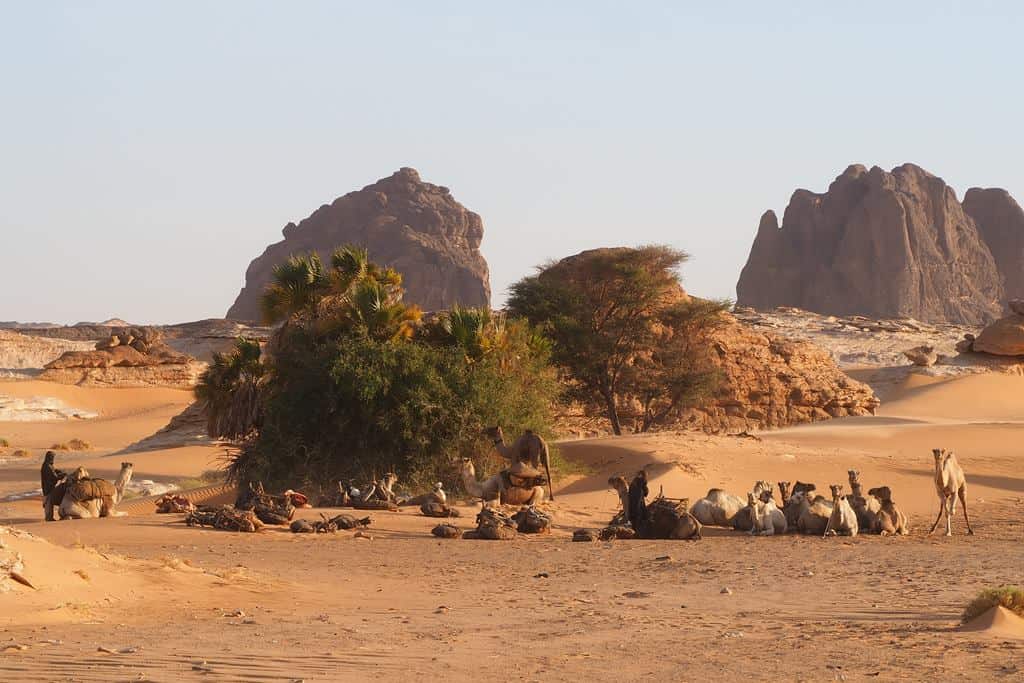
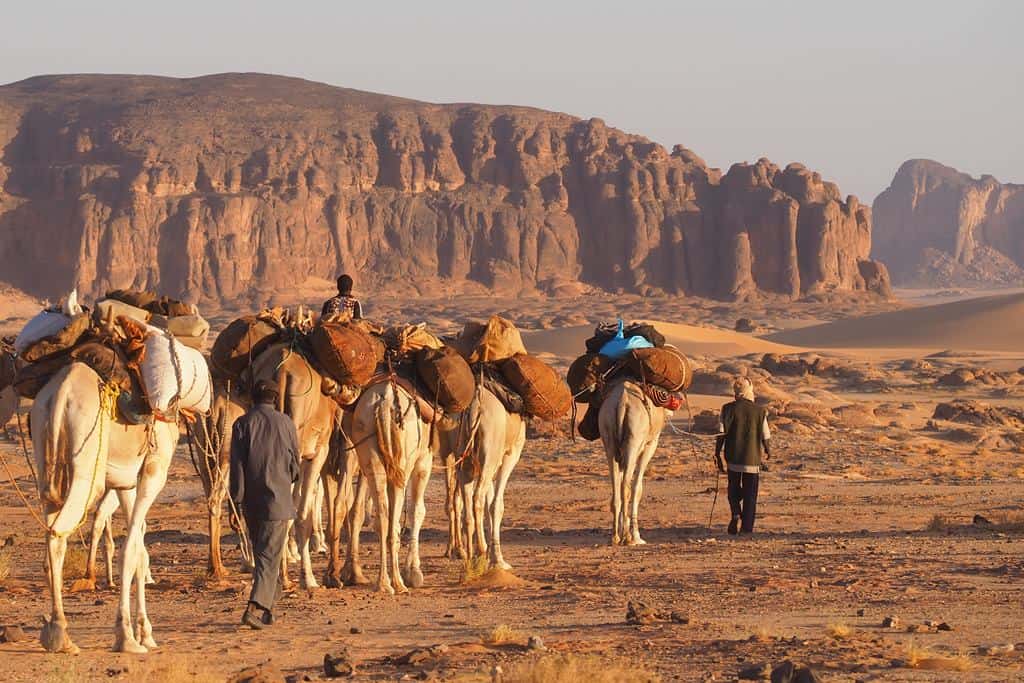
In winter, some Gorane and Anakassa herding families set out on a long, month-long trip with their families across the Ennedi. At Kumakonda, we have identified several wells and oases in rarely visited areas where these caravans spend the night and/or rest.
Travel to Chad with Kumakonda
At Kumakonda, we are experts on Chad. We have been on numerous trips throughout the country over the years and know it like few others do—not only the Ennedi but also the other places mentioned above.
You can join one of our scheduled trips to Chad (recommended option), or you can travel to Chad privately on a tailor-made trip for groups of three or more travellers.. Email us at info@kumakonda.com and we’ll get back to you.

Autor:
Austerio Alonso
Co-founder of Kumakonda. Passionate of Africa. Specialist in the design, preparation and realization of expeditions in Africa. Content creator.
Travel with us