


One of the main reasons why traveling to Angola is so appealing is the opportunity to visit some of the tribes that live in the southern part of the country and see how, in this globalized world, they preserve their customs, their traditional dress, and their ancestral way of life. Today we’ll tell you about the tribes of Angola.
Text: Alicia Ortego and Yolanda Blanco / Photos: Yolanda Blanco and Austerio Alonso
Reasons to travel to Angola
Angola could even be compared to Ethiopia ethnically, because of the number and diversity of tribes living on its borders, but it is different because Ethiopia has been a tourist destination for many years.
Angola, on the other hand, is still taking its first steps as it opens up to the world after decades of conflict. However, in just a few years, this entire situation is changing rapidly.

Visiting the tribes of Angola
In Kumakonda we have opposite feelings when visiting the tribes of Angola, although we are aware of our own contradictions, we do not hide it.
On the one hand, as lovers of Africa, we are passionate about discovering villages and tribes that have preserved their traditional way of life, and we love showing them to our passengers.
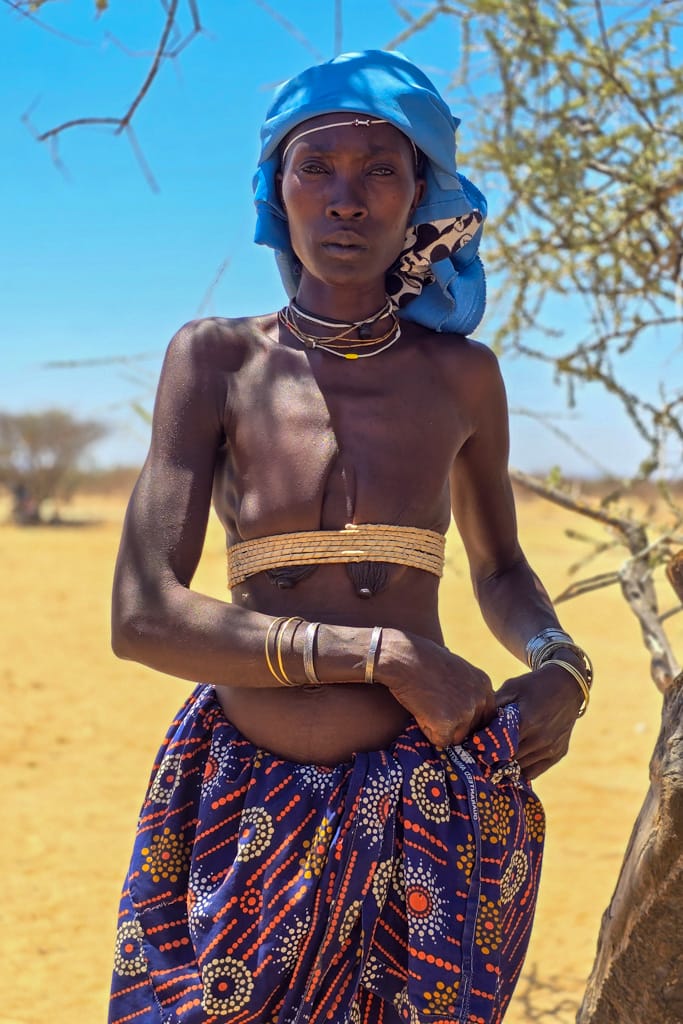
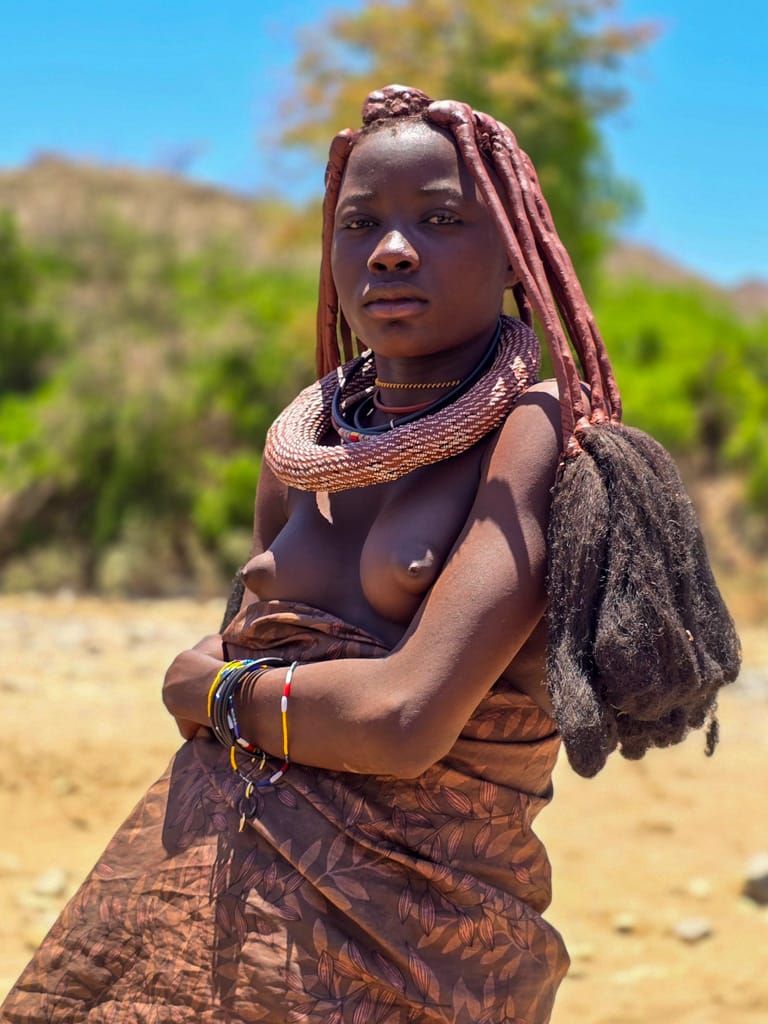
At the same time, we also see how a certain kind of inconsiderate tourism (perhaps we too are partly to blame for this) is arriving in Angola, more concerned with getting the perfect photo and treating local people as mere objects.
The obsession we have with taking photos and the opportunity to take economic advantage of this need, sometimes with disproportionate demands, on the part of some of these communities (totally licit), sometimes generates uncomfortable situations, endless negotiations, misunderstandings (even among themselves) and some embarrassing scenes (lack of empathy).
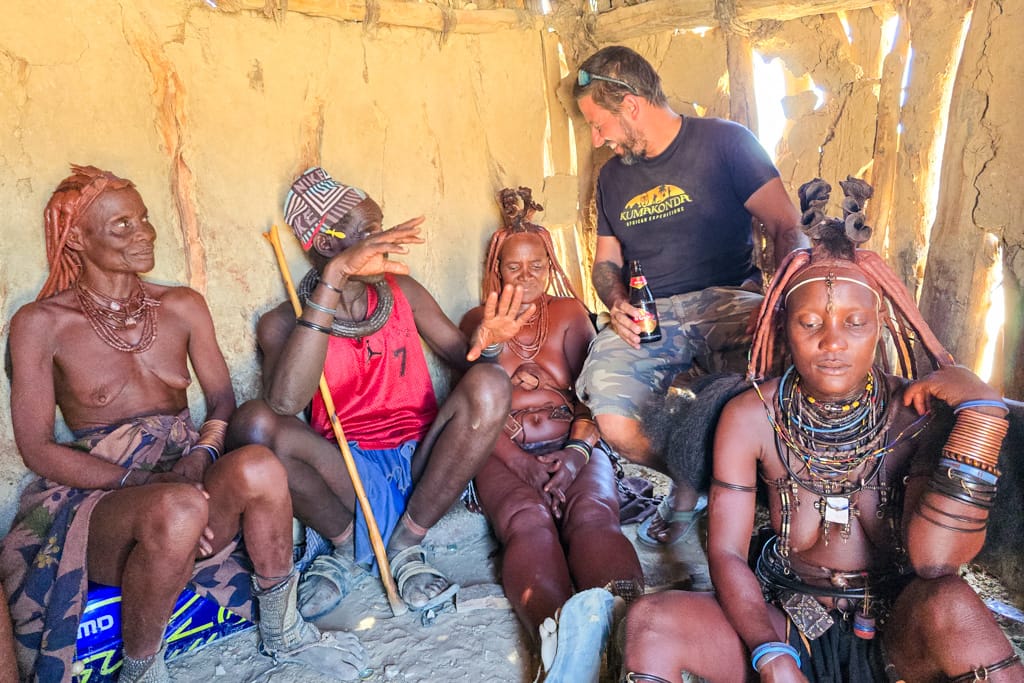
This region is definitely worth visiting, but we think you might want to put your cameras aside for a few days and focus on exploring and learning. It could be very rewarding.
Since traveling without a camera is completely out of the question, on our trips we want to show you other fascinating aspects of Angola—such as its spectacular Namib Desert, traveling to Ilha dos Tigres and Foz do Cunene, or its colonial past—rather than focusing our trips solely on Angola’s tribes.

Flying to Lubango or Mocamedes
From Luanda, we flew south to the city of Lubango, the capital of Huila Province. This area is home to most of Angola’s tribes. Another option is to start or end the trip in Mocamedes.
The beautiful city, with its modern standard of living, gives little hint that just a few hours’ drive away we will find a world of tribes living in ancestral ways.
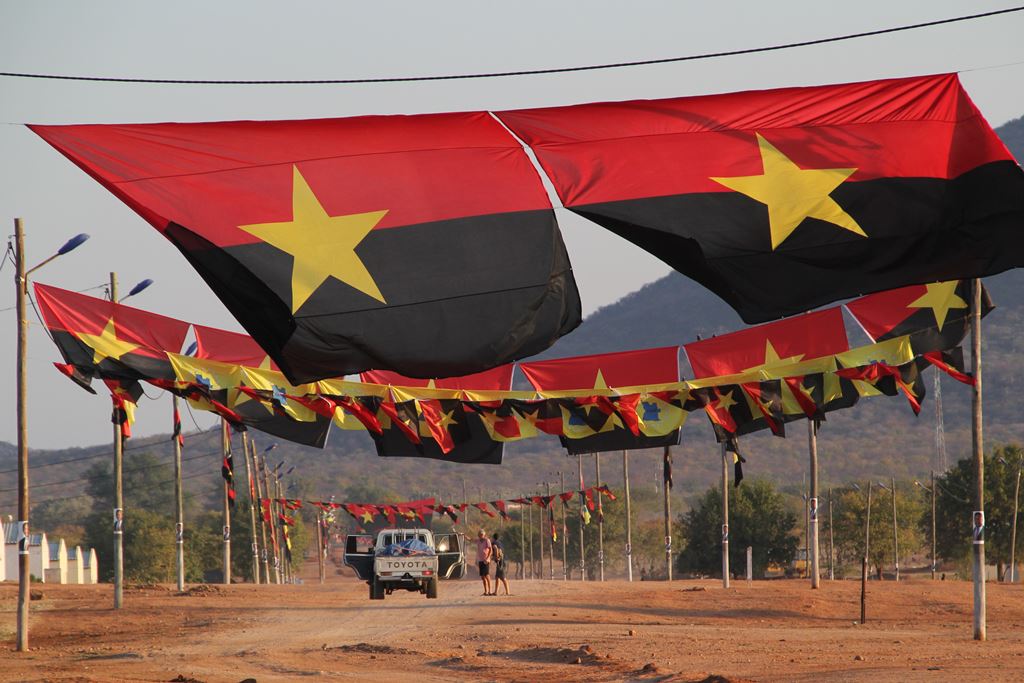
Meeting the Muila, southern Angola
Near Lubango live the Muila, a people of herders and farmers who are known above all for their large, colorful necklaces, their beads, and the ointment that the women apply to their hair—made from crushed stone—which gives them a very distinctive appearance.
The Muila continue to practice their animist religion, which centers on the worship of the sacred bull.

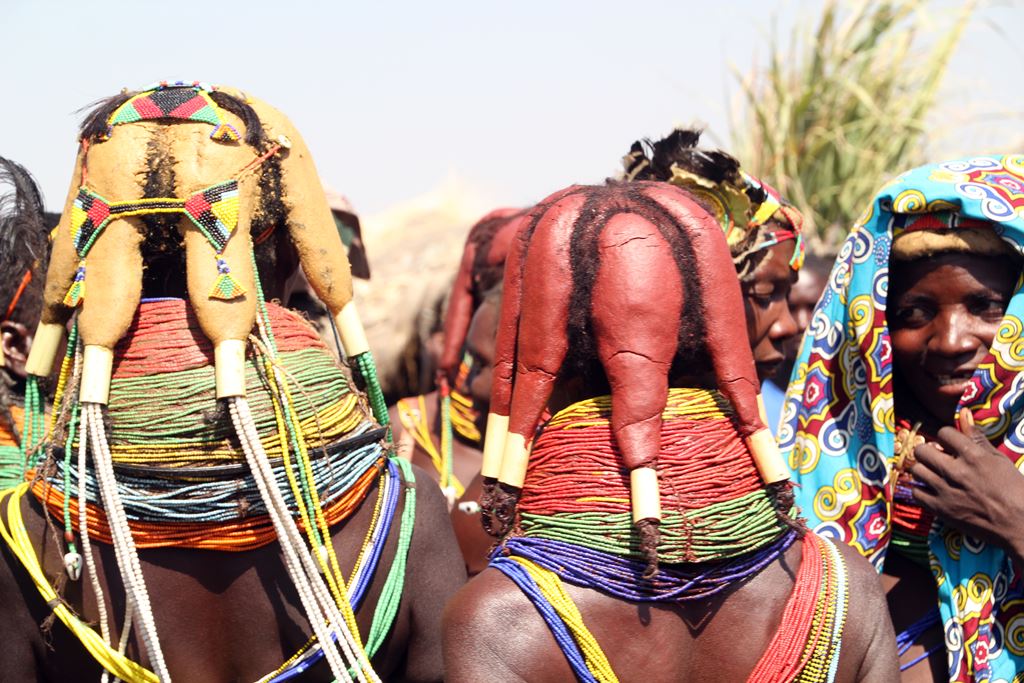
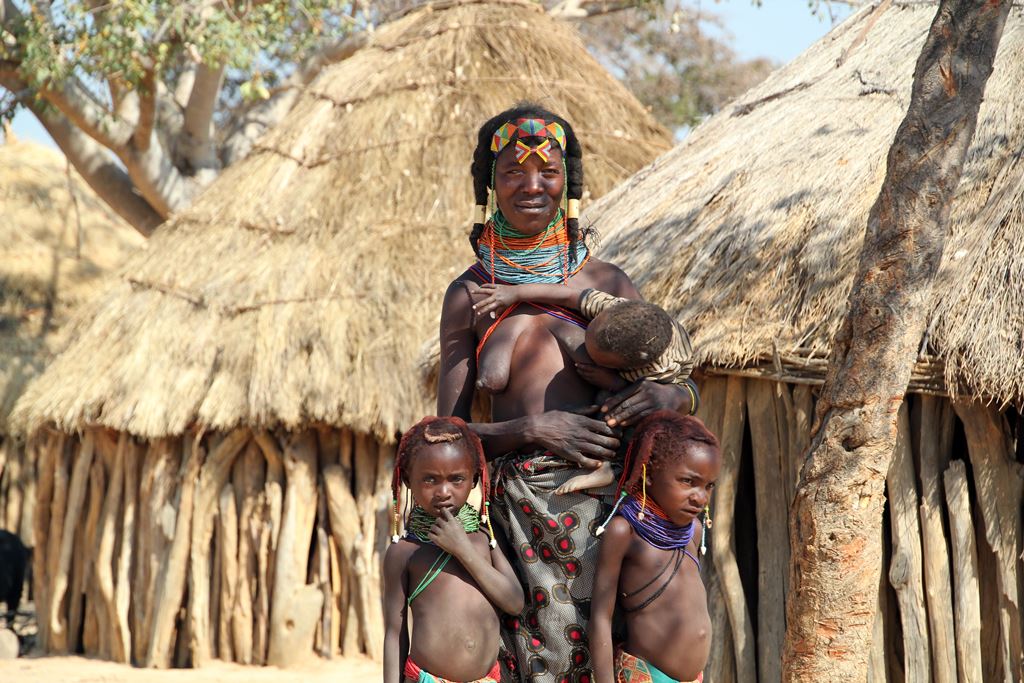

The children and women of the village—who were the ones there at that moment—stared at us in amazement as we set up our tents. A tent really isn’t that different from the houses they have… Theirs are made of adobe, logs, and straw. Ours are made of plastic or fabric, but in terms of shape and size, they’re sometimes not all that different.
Most of the time, when we arrived in a village, we were greeted by women and children, as well as by the man representing the authority.

Muila women typically work in the fields surrounding their villages. They grow cassava, corn, watermelon, and squash.
The children go with them because in these remote villages they don’t usually go to school. The girls learn their “trade”—that is, farming. The boys learn to tend livestock, since when they’re a little older they’ll go out with their parents.
They graze their livestock near the village during the rainy season, but when the dry season arrives, their work becomes harder. Sometimes they have to travel far in search of wetter areas or larger rivers, and they may be away from the village for nearly three months.
The division of labor between men and women is clearly defined. In fact, they hardly see each other at all during the day, except when they sleep, although this is quite common in rural areas of Africa.
This is why, when we visit the villages of Angola’s tribes, we don’t usually see any men until nightfall. At most, there’s the oldest man in the village, who serves as the chief or “mayor” and therefore grants permission to visit the village or spend the night there.

The Mucubal, the most numerous tribe
The Mucubal live in the area around Virey. They are the largest semi-nomadic group of Bantu origin in Angola. It is believed that they reached the Namibe Desert after a long migration from the Great Lakes Region during the 16th century.

The region where the Mucubal people live, on the edge of the Namib Desert, has an extreme climate that forces them to live on the move, always searching for pasture and water for their livestock. It is common to find abandoned villages or ones where only children and the elderly remain.

Visiting the Mugambue
After visiting the Muila people, we headed to the region where the Mugambue people live. As you can see in the photos, they wear different clothing, do not put ointment in their hair, and decorate their heads with other ornaments.
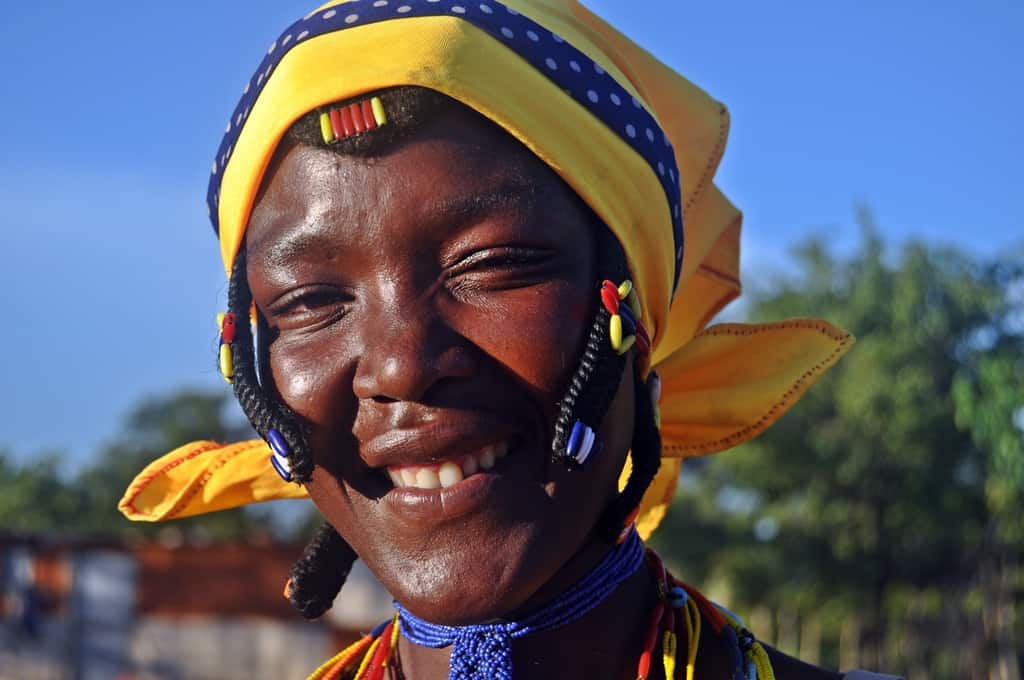
It’s fun to see how the younger generations blend European-inspired items with traditional styles, incorporating them seamlessly – just like these young women with their bras.
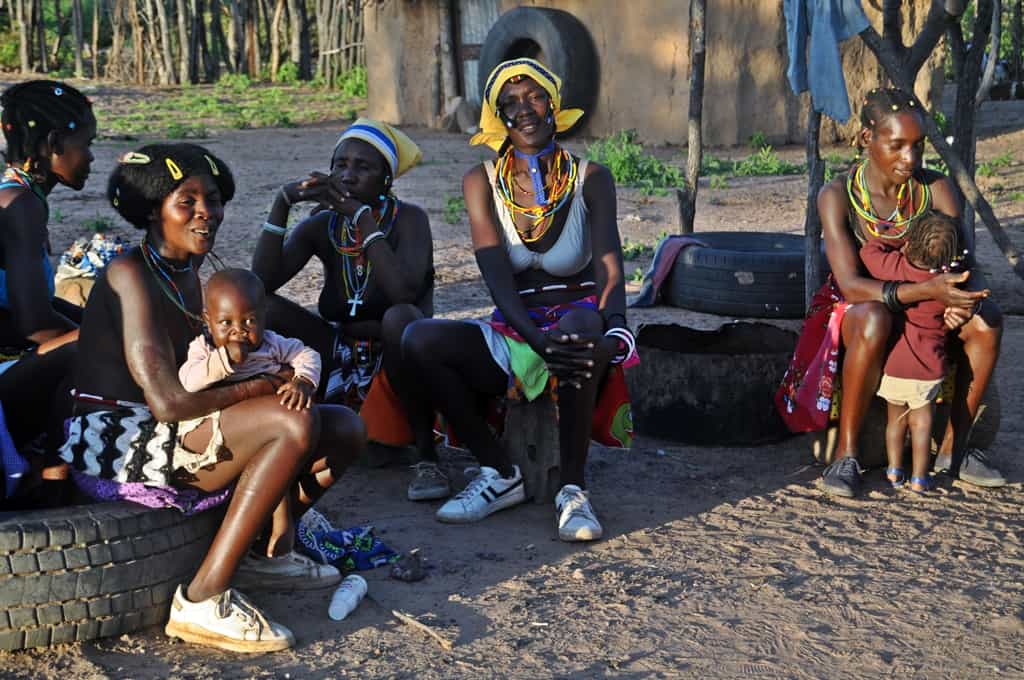

The Mugambue people are very sociable and fun; in fact, they threw us a welcome party that night to the beat of improvised drums made from the typical yellow drums found all over Africa.
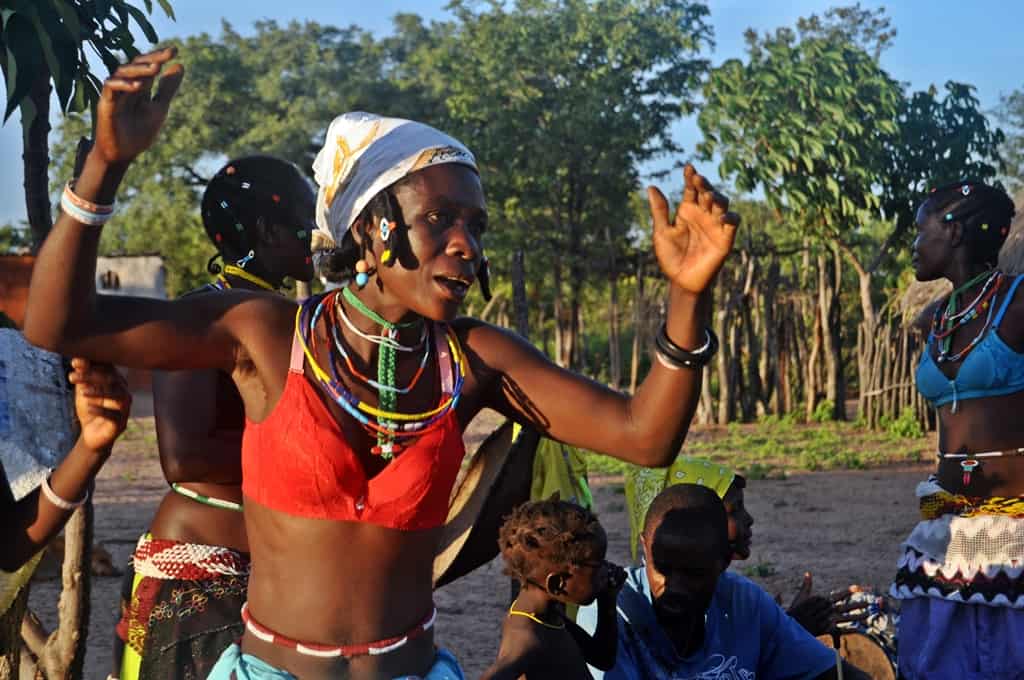
From this area, southeast of Lubango, we set off for the village of Oncocua, which is located in an even more isolated area.
Oncocua, Angola’s tribal south
To get to Oncocua we had to go through a forest track that looked like a sea of mud (we travelled in February, which is still the rainy season).
Everyone advised us not to go in our 4×4 but to take a military truck that passed through twice a week and supplied the village of Oncocua.
But we gave it a try, and… we did it!! During the summer months, it’s easy to make the trip from Lubango to Oncocua in a single day.

Oncocua offers a rare sight. As a town of considerable size (about 2,000 residents) located in the middle of nowhere, it’s impressive to see people from different tribes in Angola strolling around peacefully. It’s a paradise for tribes! It looks like something out of a movie!
There, the Muhimba (who are the same tribe as the Himba of Namibia), the Mutua (similar to the Himba in dress and customs), and the Muhacaona live together.
In this remote place there is a guesthouse, that of Mrs. Maria, but given the simplicity of the room (four walls and the floor), without a bed or any other furniture, we decided to pitch our tent outside.
Himba or Muhimba tribe
The next day we went to visit the Muhimba. As I mentioned earlier, they are the same tribe as the Himba of Namibia, who live across the Cunene River.
The Himba are a semi-nomadic people who occupy the top of the social hierarchy due to the large number of head of cattle they own. Currently, as is the case with other ethnic groups in the region, they are forced to move away from their usual grazing grounds due to the prolonged drought affecting the region.

Aesthetics of the Himba
These women look like they’ve stepped out of a galactic fairy tale. It’s hard to believe they can be so elegant with so few resources.
We were told that they shower three times a year, but they rub their bodies with ochre rock powder mixed with animal fat that smells wonderful. It leaves their skin glowing and flawless, and aside from its cosmetic benefits, it’s used to protect their skin from the sun and mosquitoes.


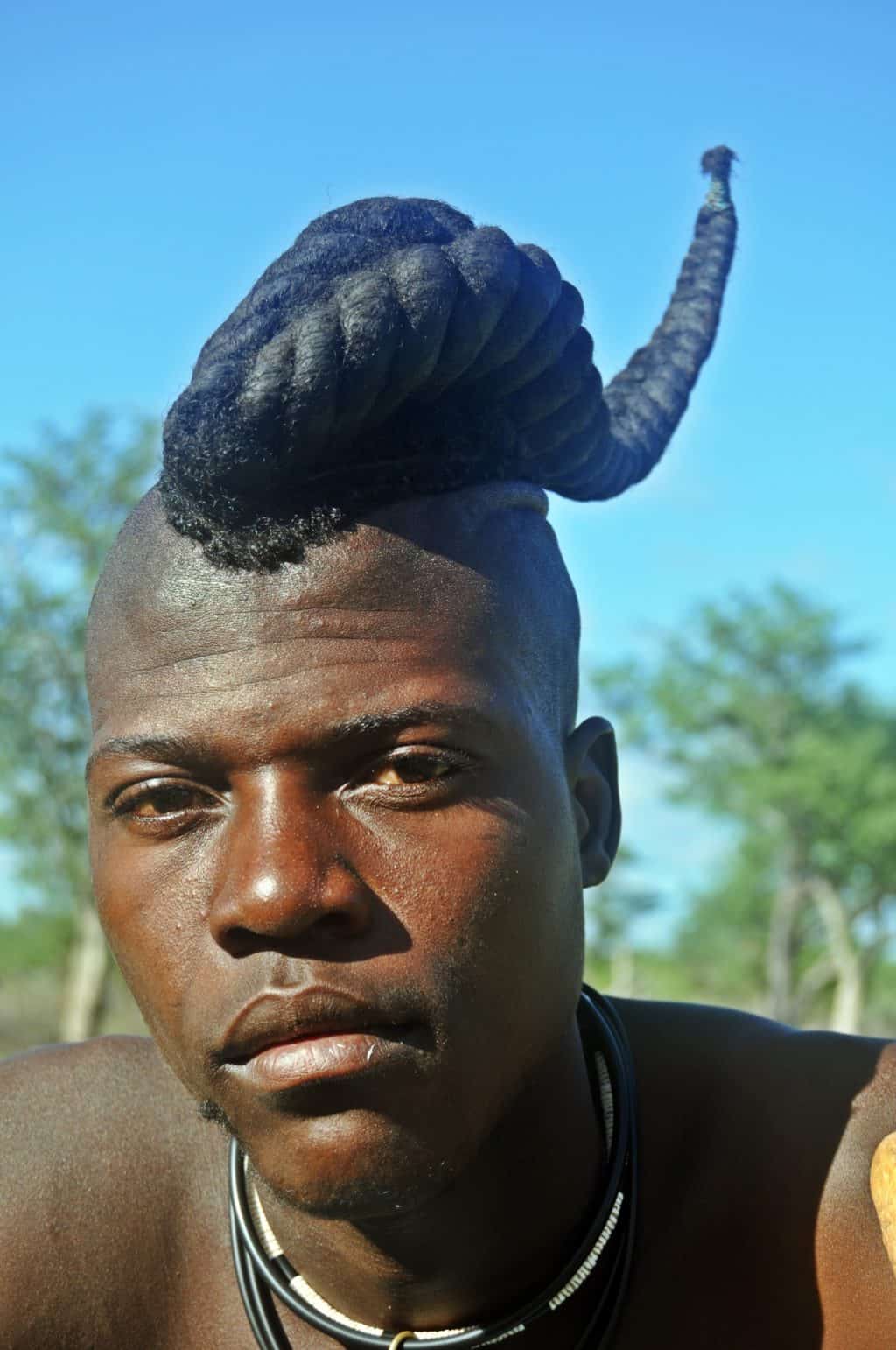
We also came across a young man whose hairstyle really caught our attention. It is the traditional hairstyle of unmarried Muhimba men who are of marriageable age, and it consists of a large, crest-shaped braid, which is sometimes covered with a piece of cloth.
He proudly allowed himself to be photographed.

The women’s hair is also striking, covered in the same substance they use to smear their skin, with synthetic hair extensions at the ends of their “dreadlocks.” They buy these extensions in the slightly larger towns.
The next day we went to visit the Hakaona, an ethnic group with darker skin and hair than the other tribes in Angola.
During our time in this area, we took advantage of the evenings to visit the “nightclub” where people went out to party, and we had the chance to dance to modern African music (kuduro and afrohouse in Angola) surrounded by the Hakaona, Muhimba, and Mutua tribes. Pure surrealism. The Muhimba women, barefoot in the nightclub, were even dancing with their children strapped to their backs. Nothing could stop their urge to dance!

Autor:
Lablanche
Gran conocedora del continente africano, fotógrafa y experimentada guía
Travel with us