


Karahay (Karahaye), the initiation ritual of the diola women of Casamance
The Diola are one of the peoples who have best preserved their ancestral culture in this part of Africa. We are in the Casamance region (Senegal), in the midst of the second edition of “African Deep Roots,” which we are conducting in 2026, in search of the initiation rituals that take place in West Africa.
Still reeling from our visit to a Kahate ceremony, the next day we were fortunate enough to attend yet another ancestral ritual on our “African Deep Roots” trip.
In the heart of Lower Casamance, near the border with Guinea-Bissau—specifically in the small village of Effok—a major women’s initiation ceremony known as Karahay took place .
What Is Karahay and Why Is It Important?
The Karahay fertility initiation ritual, practiced by Diola women in Casamance, is a cultural event deeply rooted in the beliefs and traditions of this community.
This initiation takes place approximately every 30 years and is celebrated as a way to invoke fertility—not only in terms of procreation, but also in the context of agriculture and the community’s prosperity.
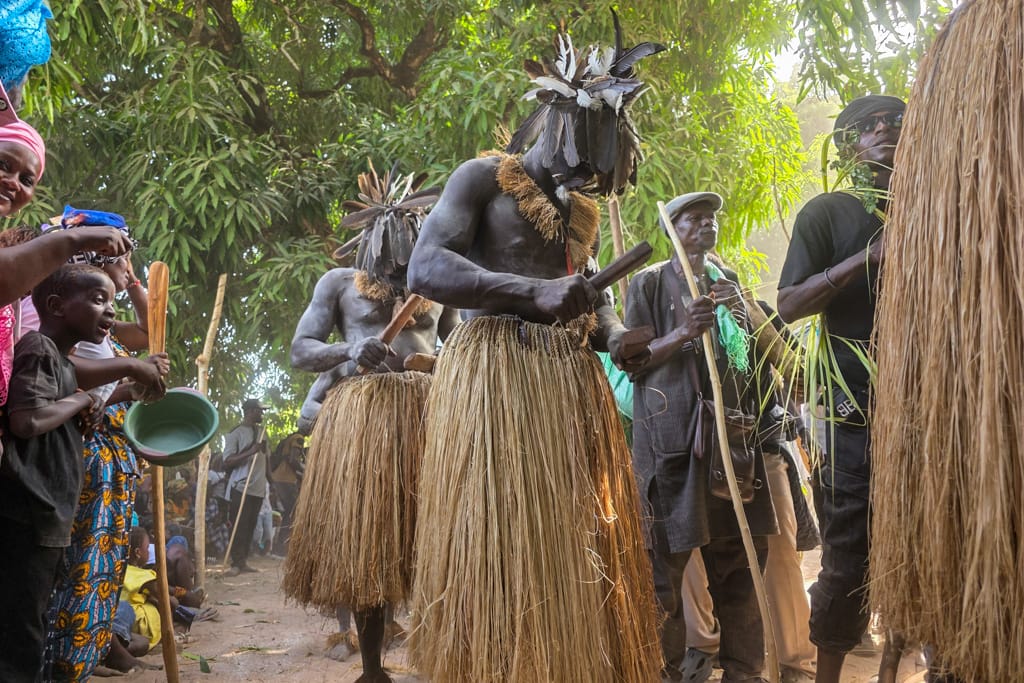
These days, women take center stage, pushing the men—who are absent from the town—into the background. The dances continue for a week, and in addition to the women being initiated from the various communities of the Diola region, women also come from Guinea-Bissau and other towns in the area.
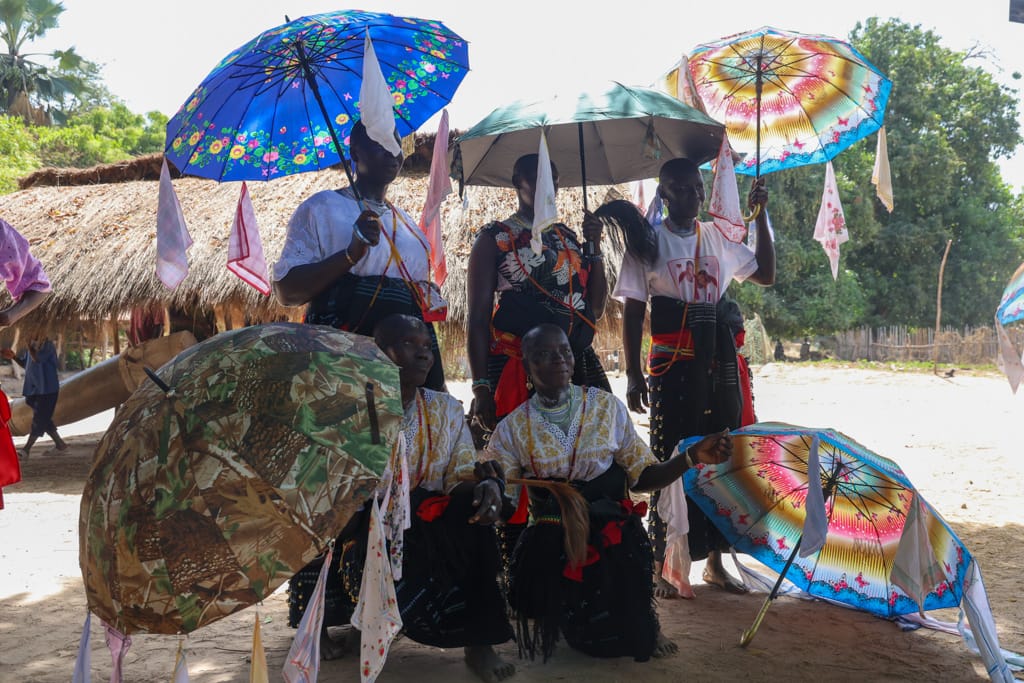
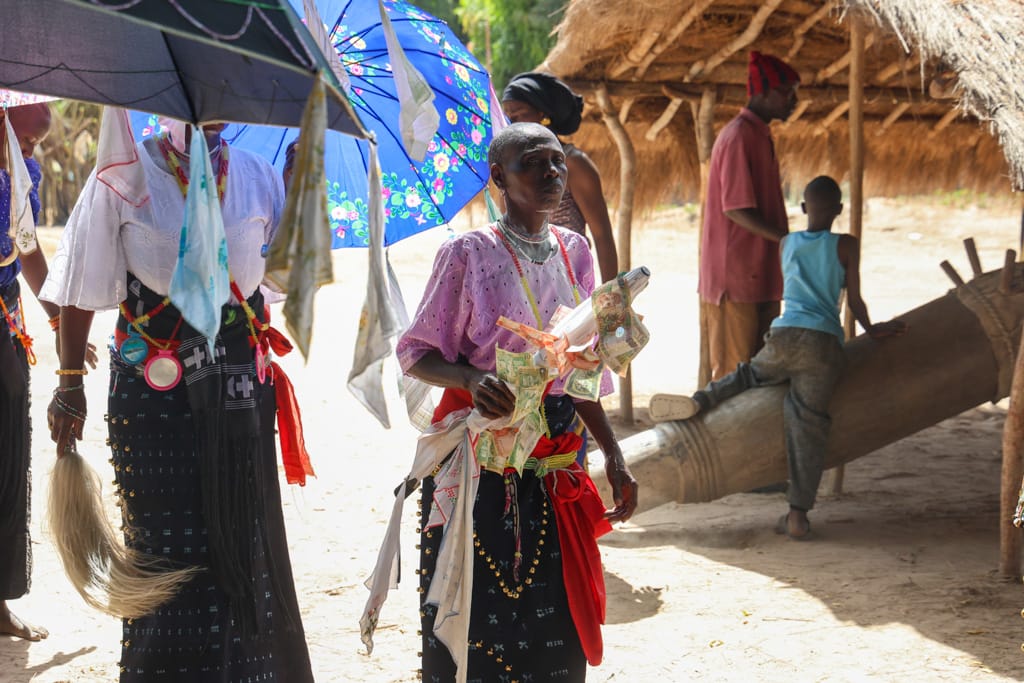
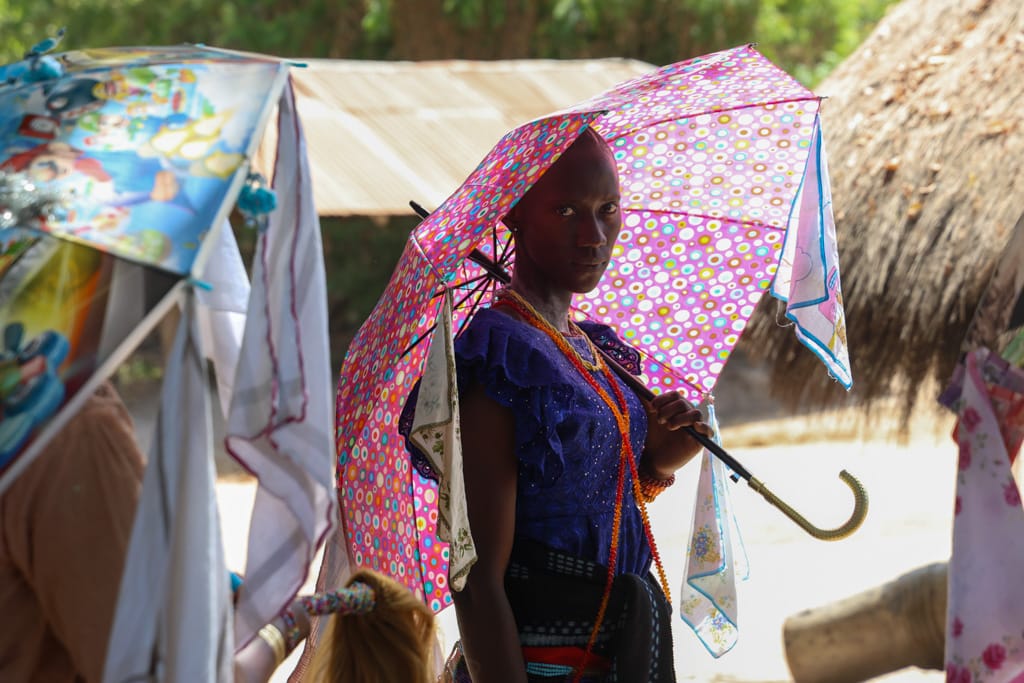
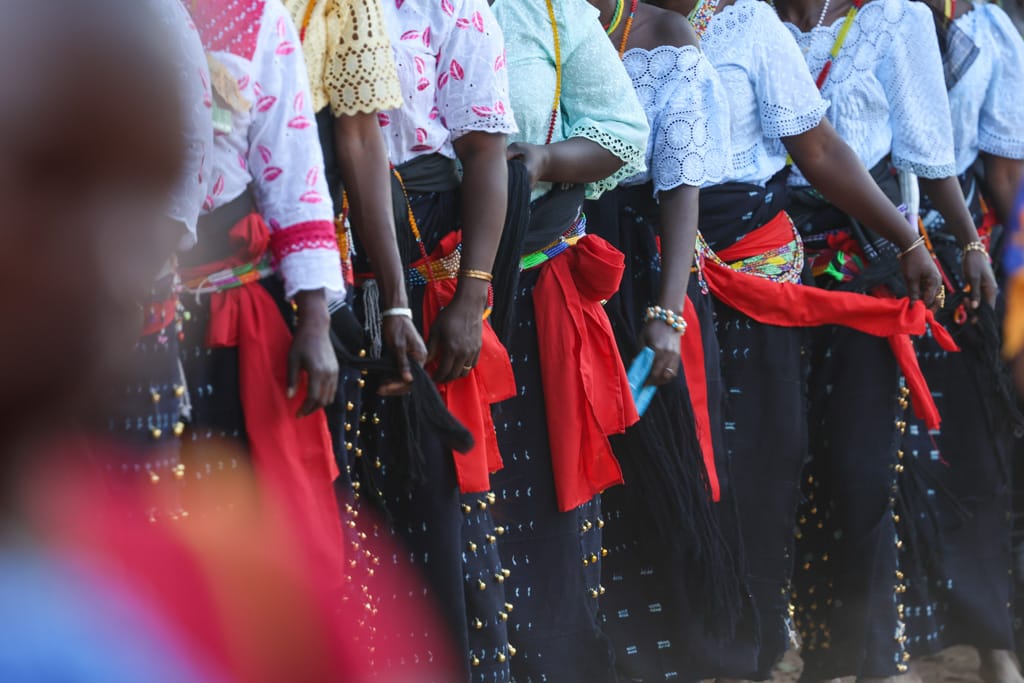
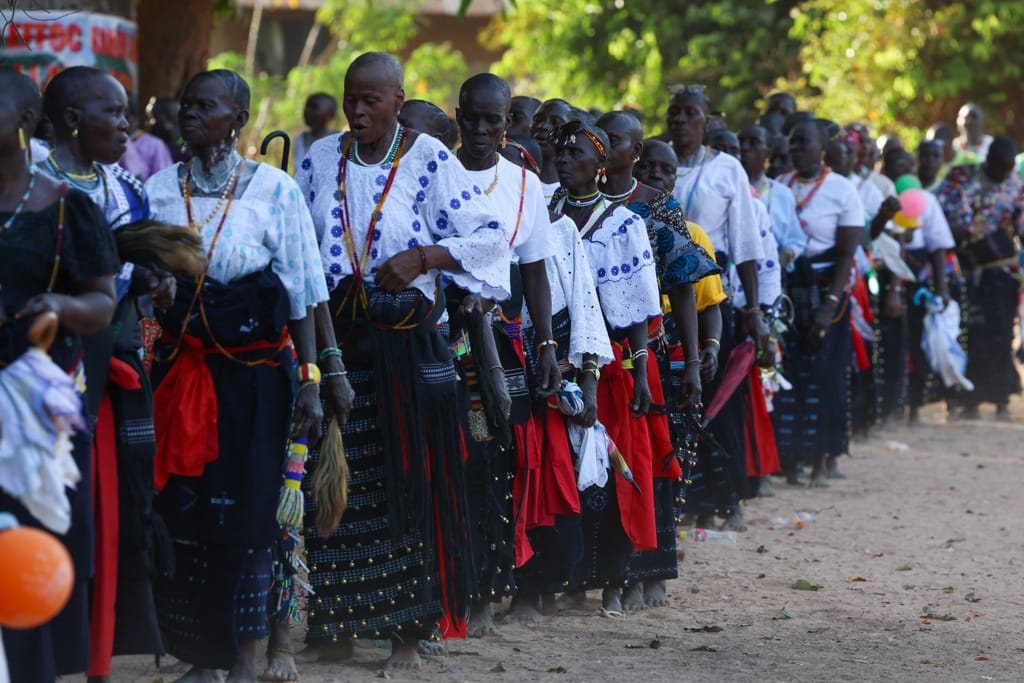
During the ceremony, Diola women wear traditional attire decorated with symbols representing fertility and life. The use of bright colors and specific ornaments highlights the importance of this occasion.
The Karahay is considered a time of unity and solidarity among women, during which they share knowledge about motherhood, caregiving, and child-rearing.
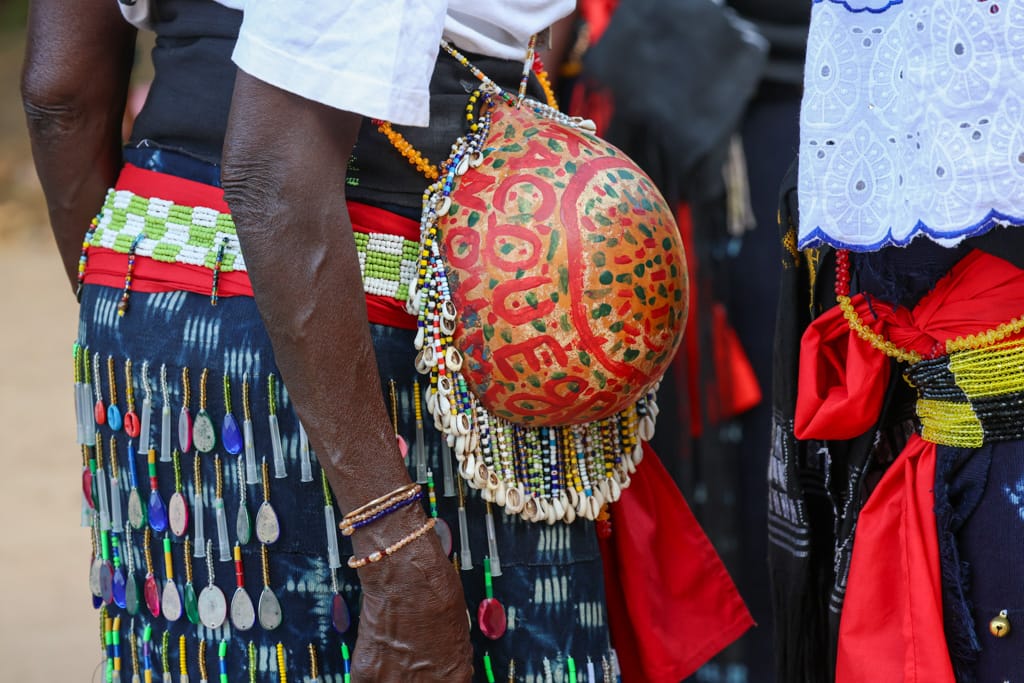
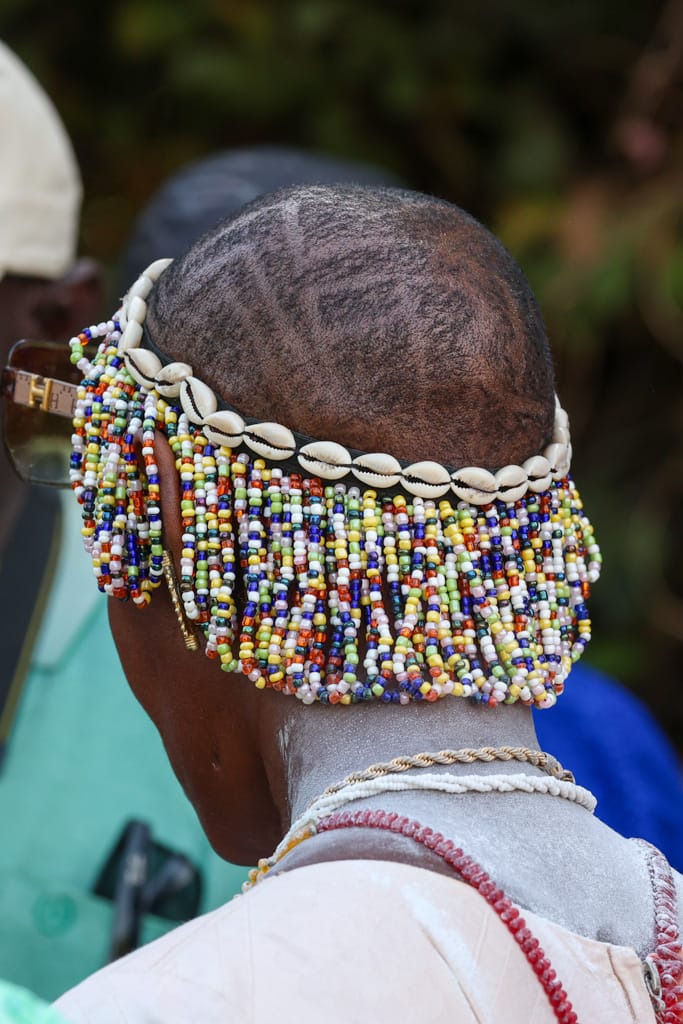
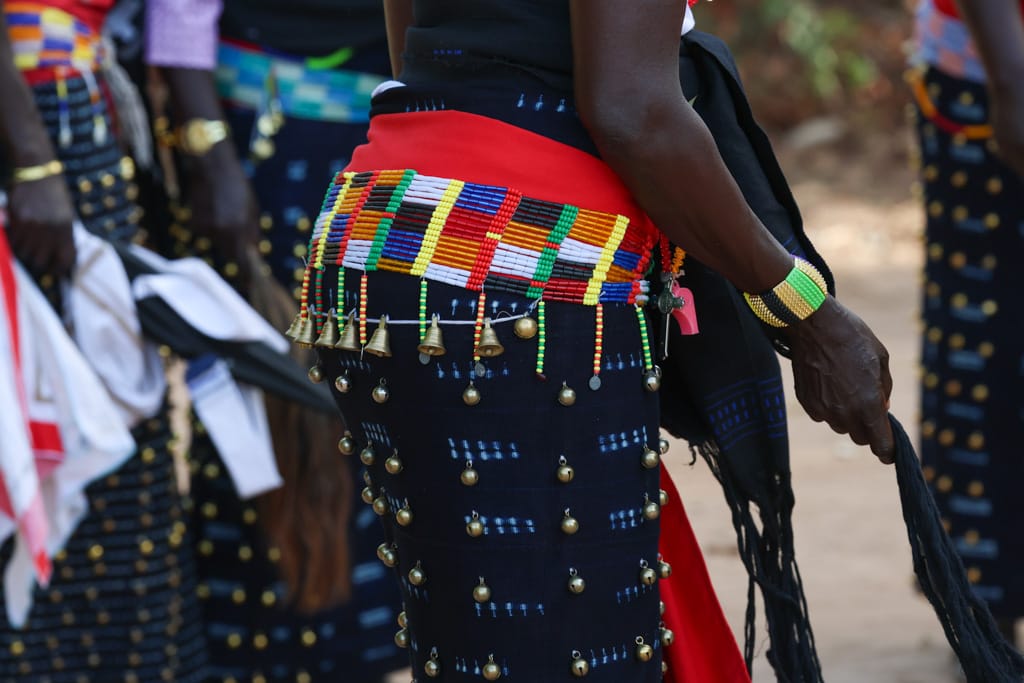
The rituals typically include dances, songs, and offerings to the spirits of the ancestors and to deities associated with fertility. Women make these offerings at sacred sites, demonstrating the connection between their culture and nature. This act reflects not only respect for their ancestors but also a deep connection to the earth and the cycles of life.

In addition, the Karahay serves as a celebration of femininity and the strength of Diola women. By participating in this ritual, women affirm their central role in society—not only as caregivers and mothers, but also as pillars of the community. This event also serves as an opportunity to pass on traditions to younger generations, ensuring that their cultural heritage endures.
The Karahay, initiation only for mothers
During the initiations held in the sacred forest, only mothers are allowed access. The “karakhayakou,” a place of transmission and initiation, is accessible only to women who have been pregnant at least once. Here, in the sacred forest—and just as with the initiations for men—an ancestral teaching is perpetuated, one that today runs parallel to what is taught in school: caring for the home, keeping secrets, and praying for life.
The forest then becomes a silent school of wisdom, a sanctuary of learning sheltered from the gaze of men, as Seydou KA, Gaustin Diatta recounts in his excellent article: “Karahay, a Fertility Ritual”

The Diola people: territory, society and belief systems.
The Diola people of Senegal, also known as the Jola, are one of the most culturally cohesive and enduring communities in West Africa. Their lives are intimately linked to the landscape, which consists of vast rice paddies, dense mangrove forests, and sacred forests. This environment is not merely a backdrop, but an active component of both their social organization and their spiritual worldview.
Rice farming is essential to community life: it requires cooperation, technical knowledge, and collective management, all of which strengthen relationships between families and lineages.
Diola society is decentralized and segmentary. There is no single, dominant authority; instead, power and decision-making are distributed among elders, family heads and ritual specialists. Social cohesion is maintained through consensus and collective participation, where community balance is prioritized over hierarchical command.
On a spiritual level, the Diola follow an animistic cosmology, in which ancestors, invisible forces, and natural elements actively shape reality. Sacred forests are not merely symbolic, but rather active spaces for rituals that are off-limits to outsiders.
Ceremonies such as the Karahaye serve to maintain continuity, fertility, and cohesion within the community, connecting the spiritual, social, and ecological dimensions of life.
Karahaye: an exceptionally rare generational ceremony
The Karahaye is an exceptionally rare event, as we mentioned at the beginning. It does not take place on a fixed date; the community council decides when a new cycle should begin, depending on when a generation of women who meet the requirements is ready.
Decades can pass between one ceremony and another, sometimes up to thirty years, making the event a profound milestone in the collective memory; however, it always takes place immediately after the male initiation known as Boukout.
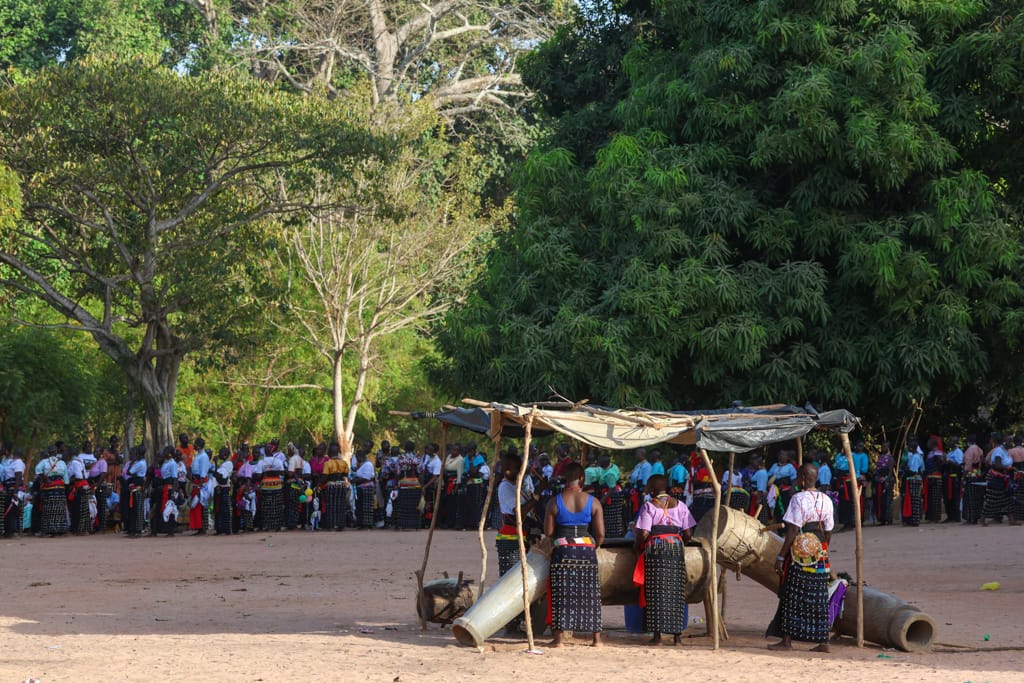
The ceremony we attended was one of these rare events. The next ceremony will take place only when the council deems it appropriate and a new group of women meets the eligibility criteria.
The infrequency of the ceremony increases its importance, deeply rooting it in both social and spiritual structures.

Duration, participation and ritual obligations
The Karahaye lasts seven days. Participation is strictly limited to women who have given birth to at least one child during the previous Karahaye cycle, including those who have suffered miscarriages. Age is irrelevant; rather, motherhood defines eligibility, making the ceremony a celebration of life, fertility, and the continuity of the community.
Many of the participating women are adults, and some are approaching fifty, which reflects the generational depth of this practice.
Participation entails material obligations. Each woman contributes one pig for the week and provides approximately twenty liters of bunok (the local palm wine) per day.

Most women carry kunyalenau (palm fruits) or gourds, which represent fertility fetishes and are used as specific ritual vessels. Their presence underscores the ceremony’s connection to reproductive power, the invocation of ancestors and the cyclical nature of life.

Clothing, appearance and ritual objects the Karahaye
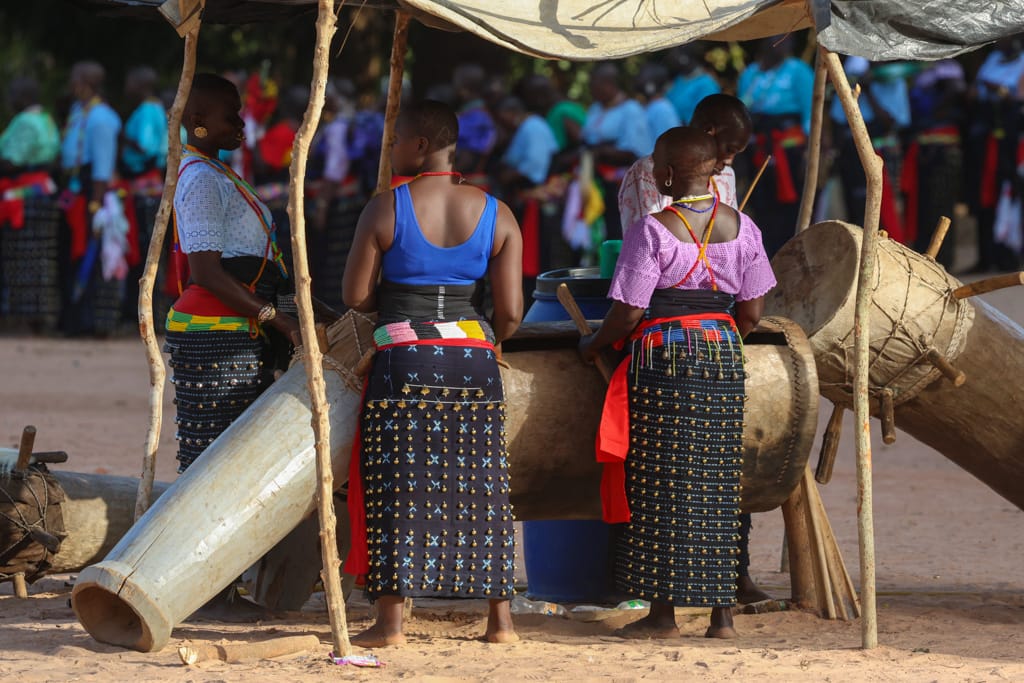
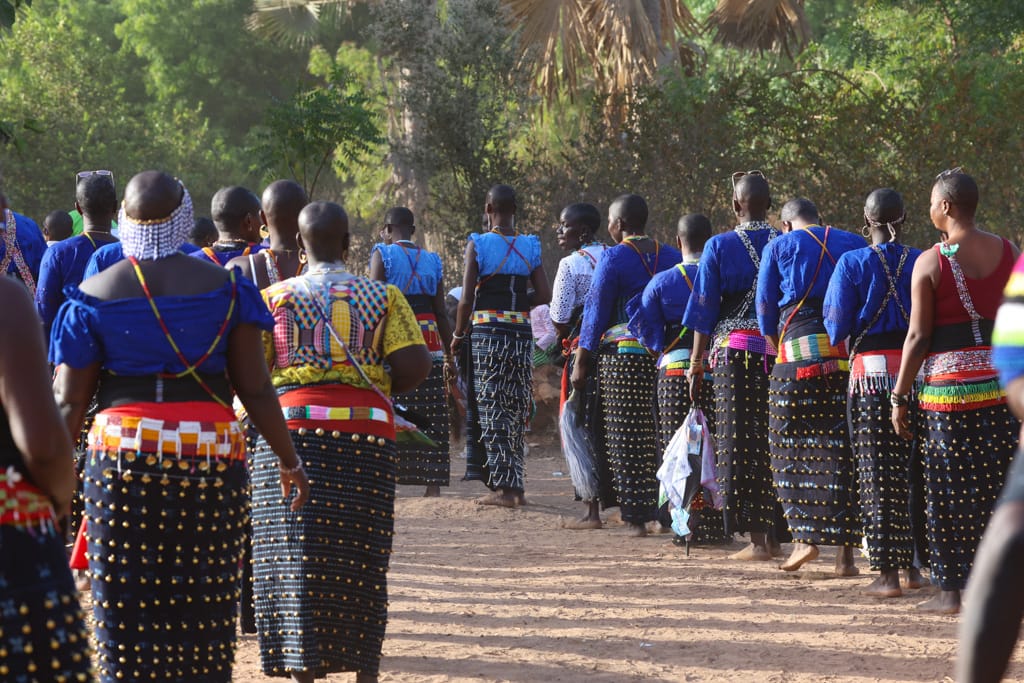
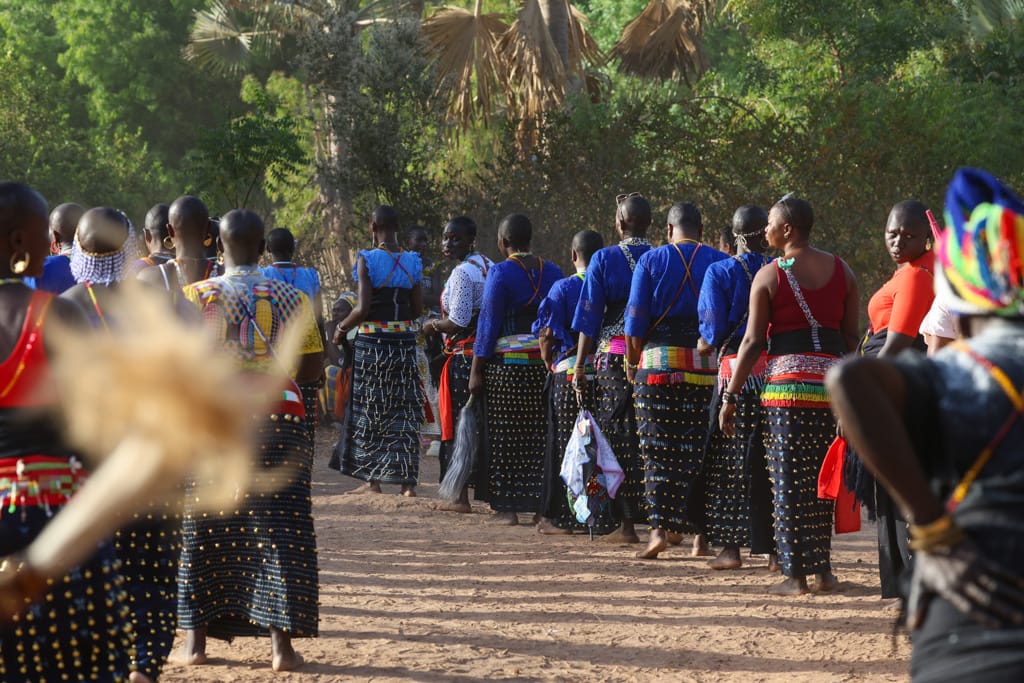
The ceremonial attire is striking both to the eye and to the ear. The women wear long, dark skirts adorned with bells, beads and shells, which create a rhythm as they move. A black sash and red shawl provide vivid contrast, while multiple necklaces and a beaded crown complete the ensemble. The movement of the bells on the skirts intertwines with the rhythms of the drums, turning the body itself into an active instrument of the ceremony.
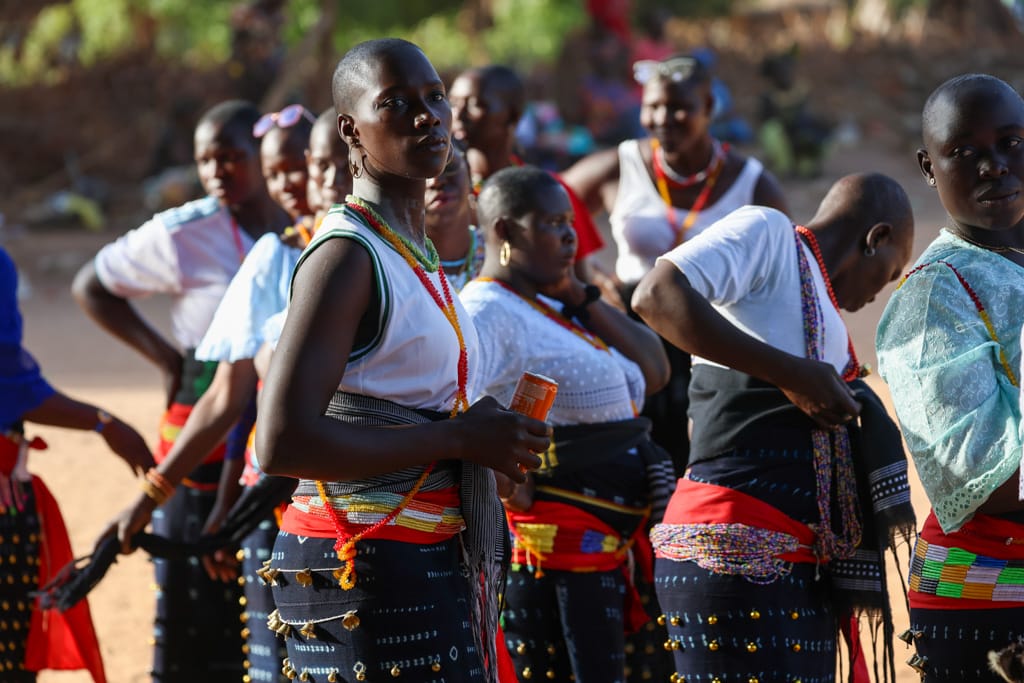
One particularly significant aspect has to do with the head. Diola women in the area where Karahaye is celebrated shave their heads in the forest, creating intricate geometric designs. These forest rituals are secret and inaccessible to outsiders, underscoring the sacred and secretive nature of the practice.
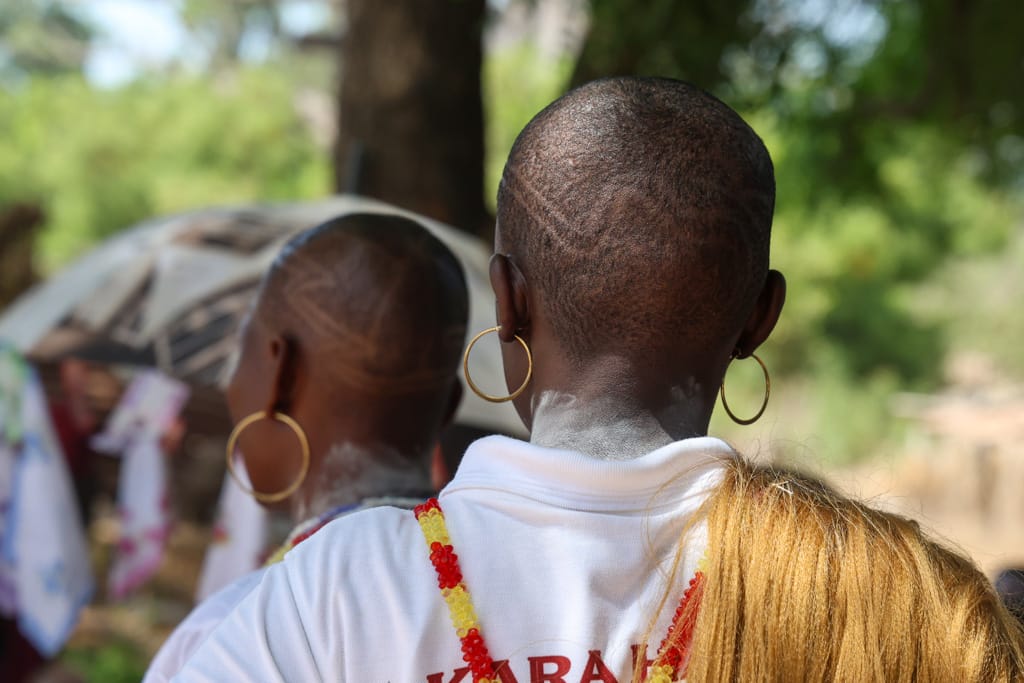
Women also carry ritual objects, such as sticks adorned with cow hair, considered protective talismans and good luck charms. Another key object is the calabash, a dried gourd used for secret fetishes in the forest. During the ceremony, these painted and decorated gourds are often worn as headdresses or used to drink palm wine.


The ceremony at the Embela (the main square)
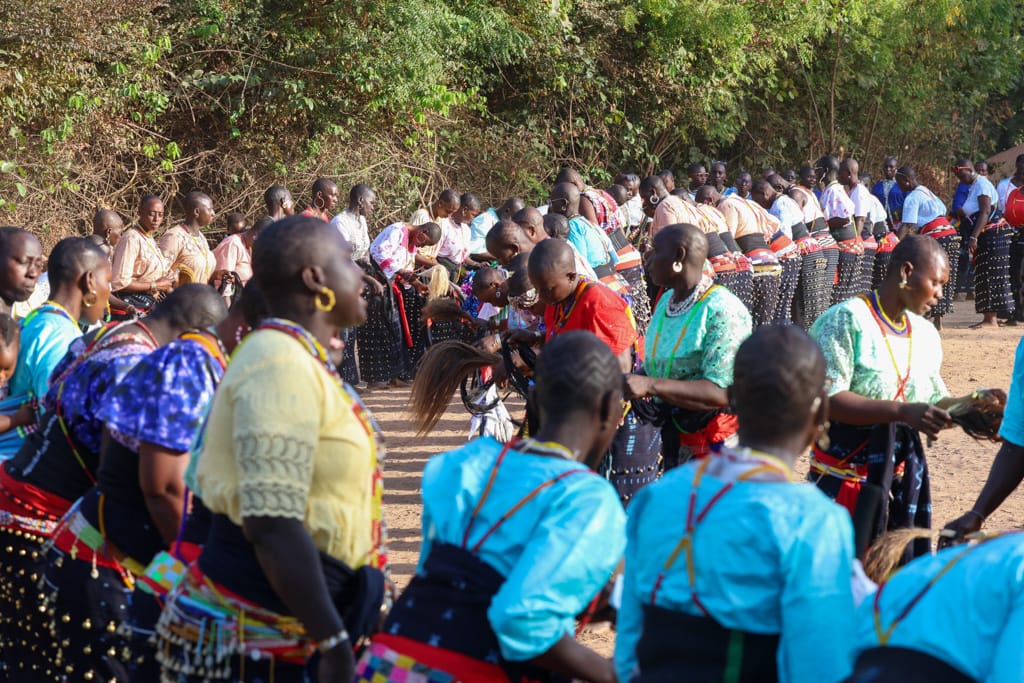
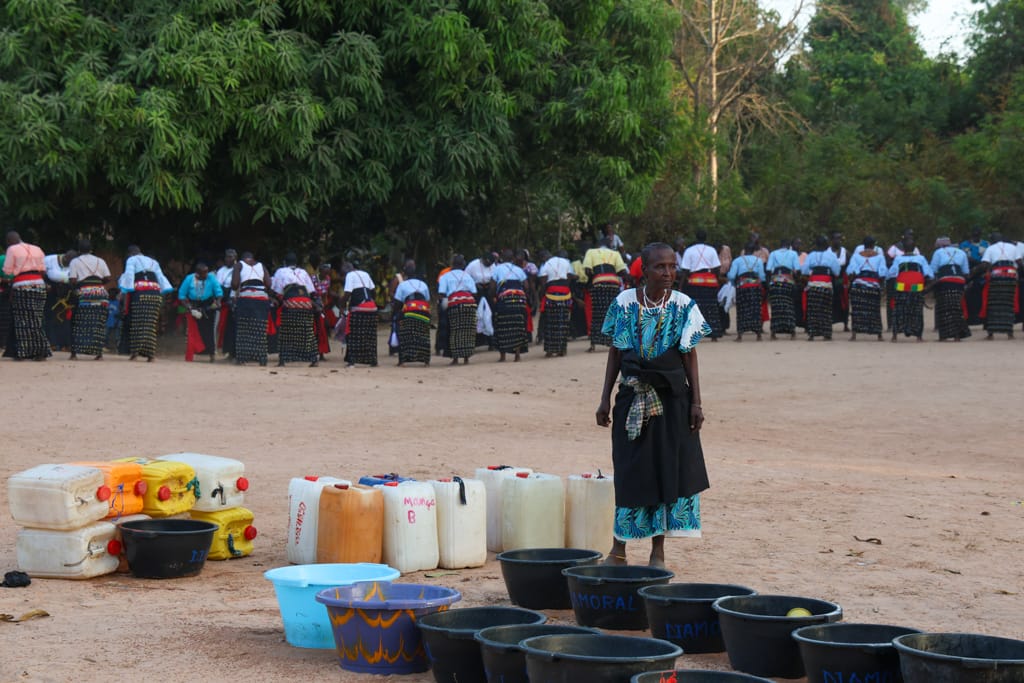
The Karahaye takes place in a large village square, with the drums placed in the center. The ceremony begins with a small group of women and, little by little, women from surrounding villages arrive, each group characterized by its own symbols and practices. The diversity of dress, rhythms and movements creates a rich tapestry of identity and belonging.
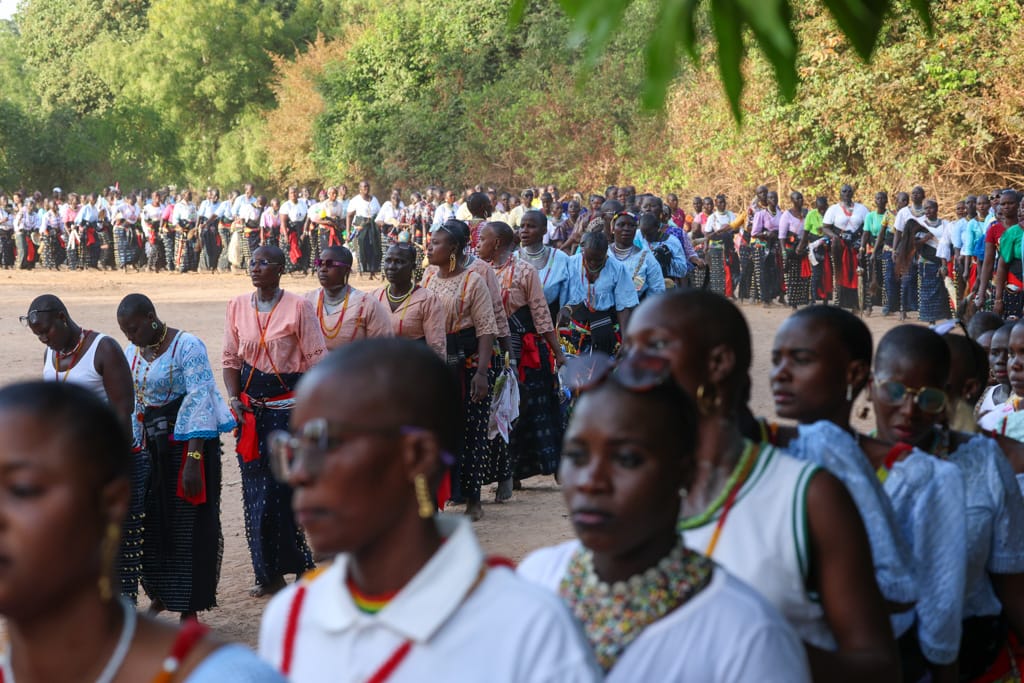
When the leaders of the Karahaye, dressed in black, enter the square, a deep silence fills the crowd. This pause is a gesture of respect and devotion, in recognition of their authority over the time and place of the ritual.
Each group of newcomers circles the square in a single file to complete a full circle. Gradually, the separate groups merge into two parallel rows, forming two concentric circles made up of hundreds of women moving to the beat of coordinated chanting and dancing, their movements guided by the beating of drums and the tinkling of bells on their skirts. The circle is not merely aesthetic, but symbolizes unity, continuity and interconnection between peoples, generations and social roles.
Sound, rhythm and collective participation
The soundscape of the ceremony is dominated by drums played by the women themselves. This is unusual in a region where drumming is usually a predominantly male domain, making Karahaye a remarkable inversion of the usual norms of performance.

Hospitality and field experience
A host family allowed us access to the ceremony and invited us to share a traditional meal of rice and meat, accompanied by palm wine. This gesture of hospitality offered us a unique opportunity to experience the rhythm of the village and its collective preparations. Outside the square, the entire village was in motion, with palpable energy and anticipation, underscoring the central importance of the ceremony in community life.
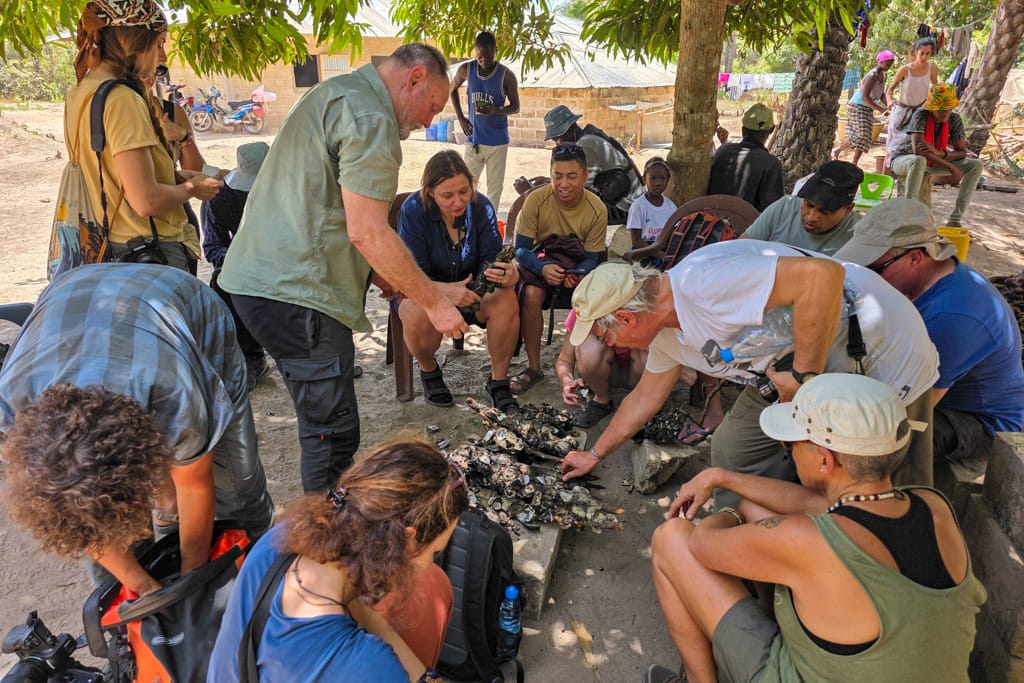
What began as a seemingly localized event turned out to be a grand and intense community ritual, with participation and complexity far exceeding initial expectations. It is an occasion not to be observed passively, but to be felt in the vitality of sound, movement and social cohesion.
The Karahaye and cultural continuity
Karahaye is an example of a rare, deeply rooted and multi-layered cultural practice. Its long cycles, selective participation, material obligations and rich symbolism make it one of the most significant social events among the Diola.

Part of the ceremony is intentionally kept inaccessible, preserved as secret knowledge within the community. This deliberate partial invisibility underscores the depth of the ritual: it is a practice that can never be fully translated, but can only be experienced.
It is, therefore, both a celebration and a guarantee of Diola cultural continuity, uniting generations, women, and sacred knowledge within a living social and spiritual framework.

Autor:
Austerio Alonso
Co-founder of Kumakonda. Passionate of Africa. Specialist in the design, preparation and realization of expeditions in Africa. Content creator.
Travel with us