


Our journey in Casamance continues to delve into the Diola culture. We are immersed in this second edition of the “African Deep Roots 2026”, a special journey through West Africa in search of the initiation rituals that happen at this time of the year. After the impressive Karahay initiation ceremony of the women of Efoc that happens every 30 years, our group visits two different male initiations known as Kahate
Documentation by Francesca Giustini / Photography by Austerio Alonso and Francesca Giustini
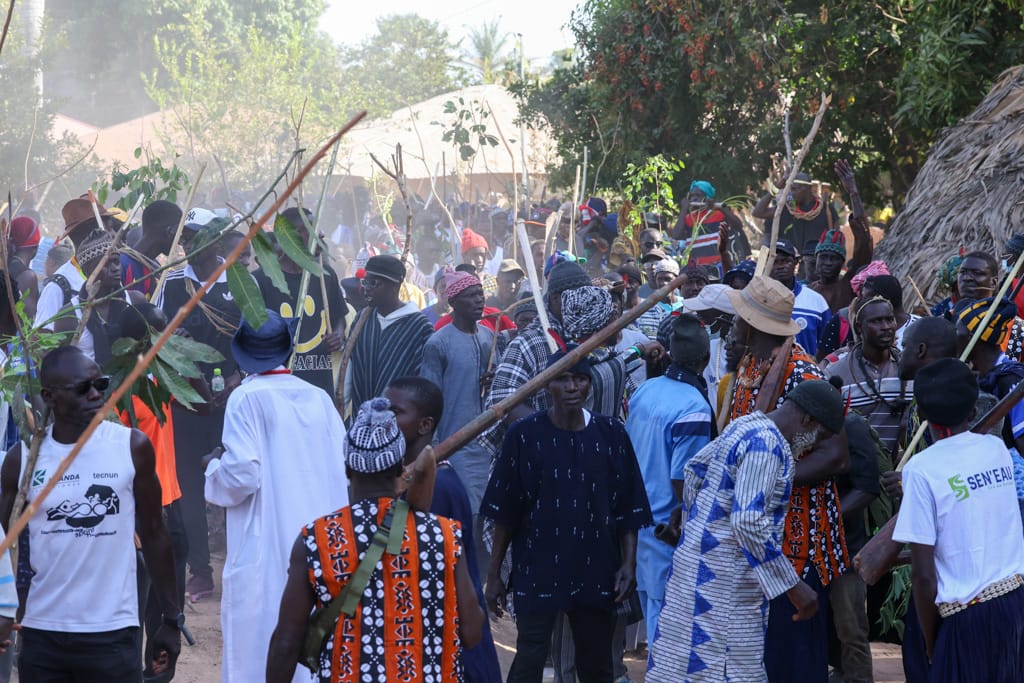
Kahate: The male initiation ceremony of the Diola tribe in Casamance, Senegal.
In southern Senegal, in the Casamance region, the Diola tribe (also known as Jola) represents one of the most culturally cohesive societies in West Africa. Their way of life is deeply rooted in the environment, where rice fields, mangroves and sacred forests are not only landscapes, but active elements that shape the social structure and spiritual beliefs.
The Diola tribe: culture, society and belief systems.
In Diola culture, community life is organized through cooperation, especially in rice cultivation, which requires shared labor and interdependence among families. Spirituality plays a central role in all aspects of life.
The Diola belief system is animistic, in which ancestors, natural forces, and invisible entities are actively present. Sacred forests are among the most important spaces in Diola ceremonies, serving as restricted ritual environments where essential knowledge is transmitted and preserved.
Kahate: a fundamental ceremony in the Diola culture
Among the most important Diola ceremonies is the Kahate, the male initiation ritual that defines full social membership within the community. More than a rite of passage, it is a process of social recognition: without completing the Kahate, a man is not considered fully integrated into the Diola tribe.
Men who have not undergone initiation cannot participate in village decision-making, are excluded from certain ceremonies and are not allowed access to the sacred forest. Their social role remains incomplete and they do not receive the same level of recognition within the community.
The Kahate is held for approximately seven to fifteen years (or even longer), when a new generation is ready. The age of the initiates can vary, usually between 18 and 35 years, although sometimes more, since the preparation is determined collectively and not strictly by age.
The sacred forest: knowledge, secrecy and transformation
Initiation begins in the sacred forest, a space completely inaccessible to those who have not been initiated. In this environment, initiates are guided by elders and men who have already completed the ritual, who are responsible for transmitting essential knowledge about life, social responsibility and the spiritual world.
During the first six days, initiates go through an intense process that includes circumcision, a central but not exclusive element of the ritual. The Kahate is not defined by a single act, but by a broader process of discipline, endurance and learning.
What happens in the forest remains strictly secret. This secrecy is not casual, but fundamental to the preservation of the Diola culture and ensures that knowledge is passed on only within the community.
The return: visibility and recognition within the diola community
After six days, the initiates return to the village, marking a highly symbolic moment. It is at this moment that mothers and wives once again see their men as “initiated” individuals, recognizing a visible transformation.
At the same time, the village becomes the center of a large community celebration. Families gather, prepare and share food, and the whole community participates. Typical dishes include oysters, rice with chicken or pork, accompanied by large quantities of palm wine. Food and celebration are essential components of Diola ceremonies, reinforcing social ties and marking collective transitions.
Appearance, masks and symbolic identity in the diola culture
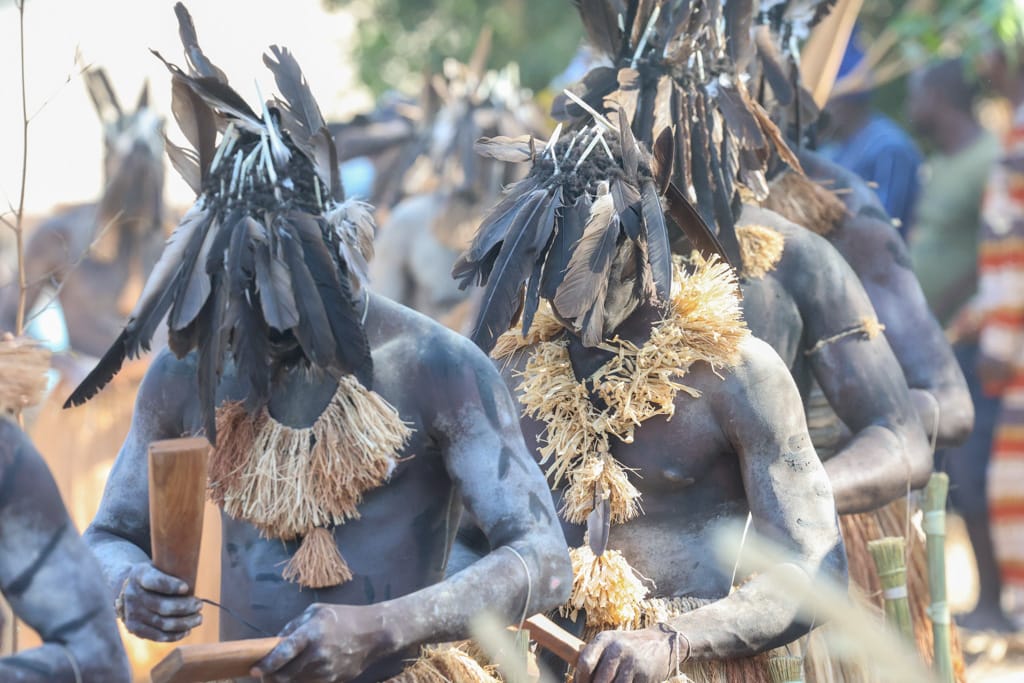
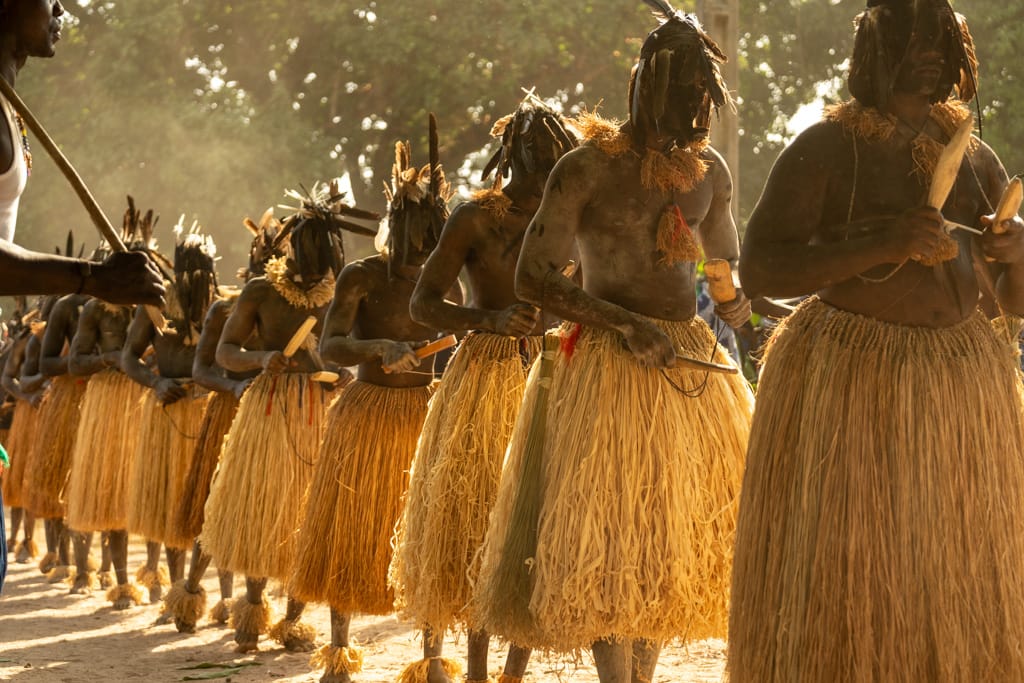
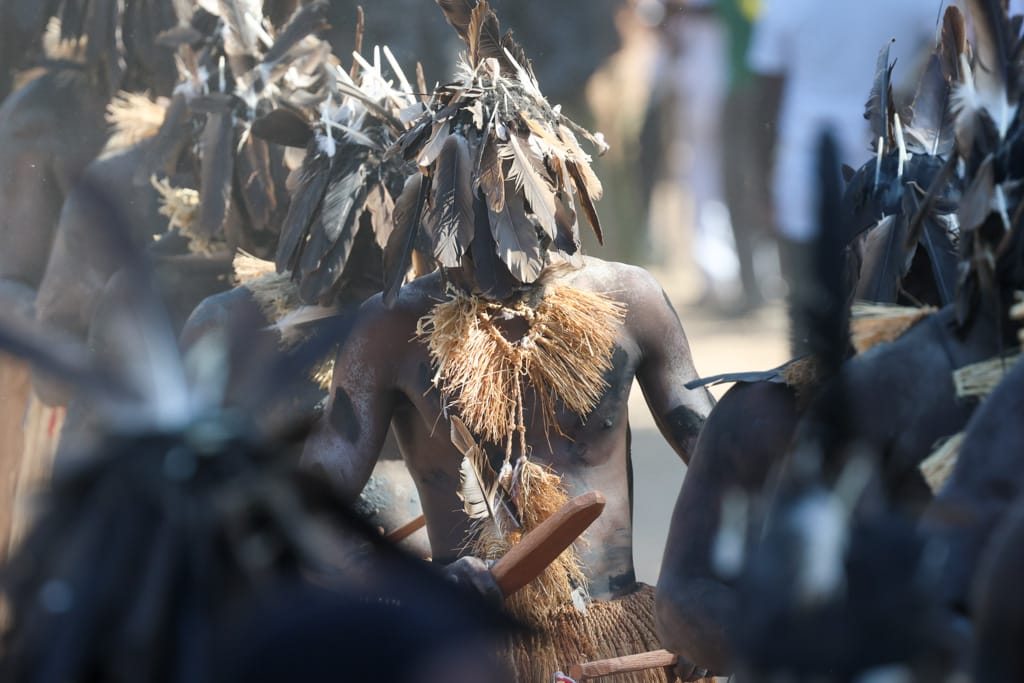
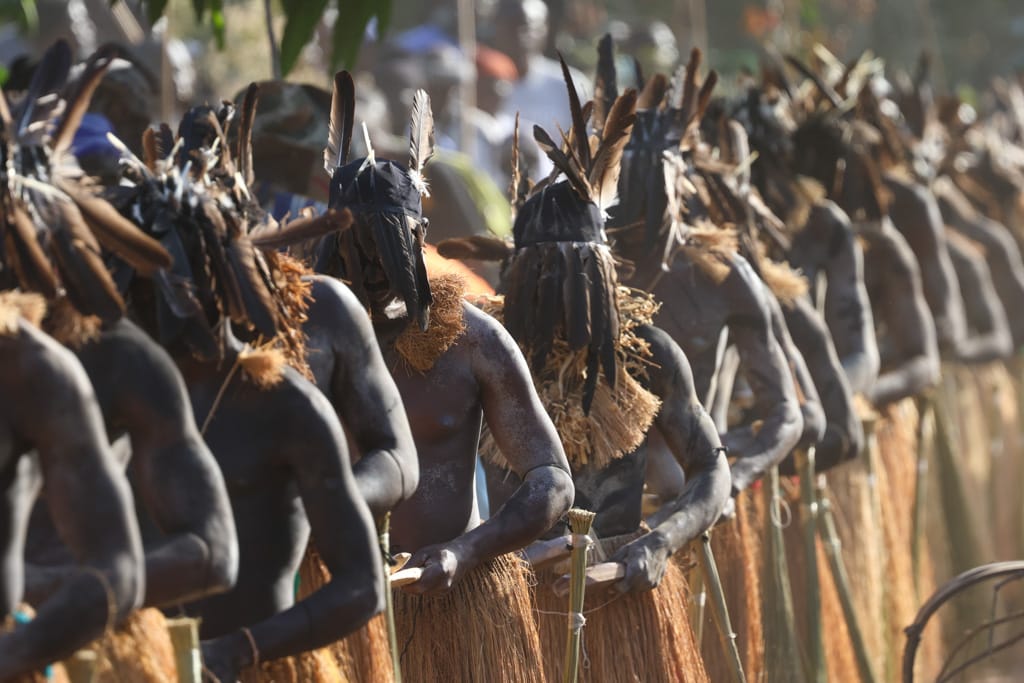
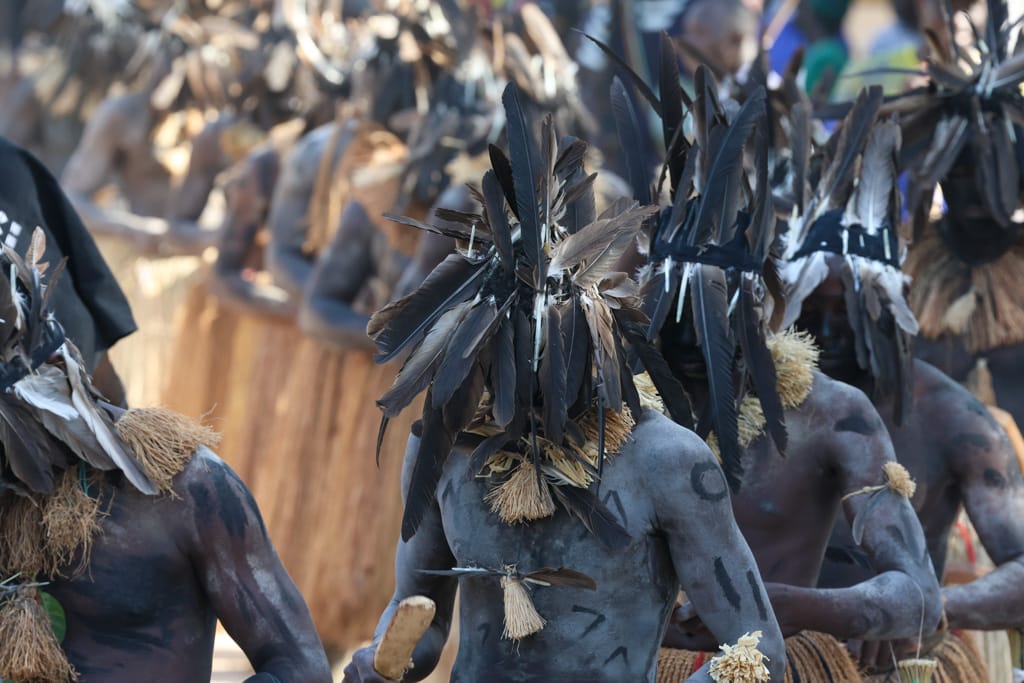
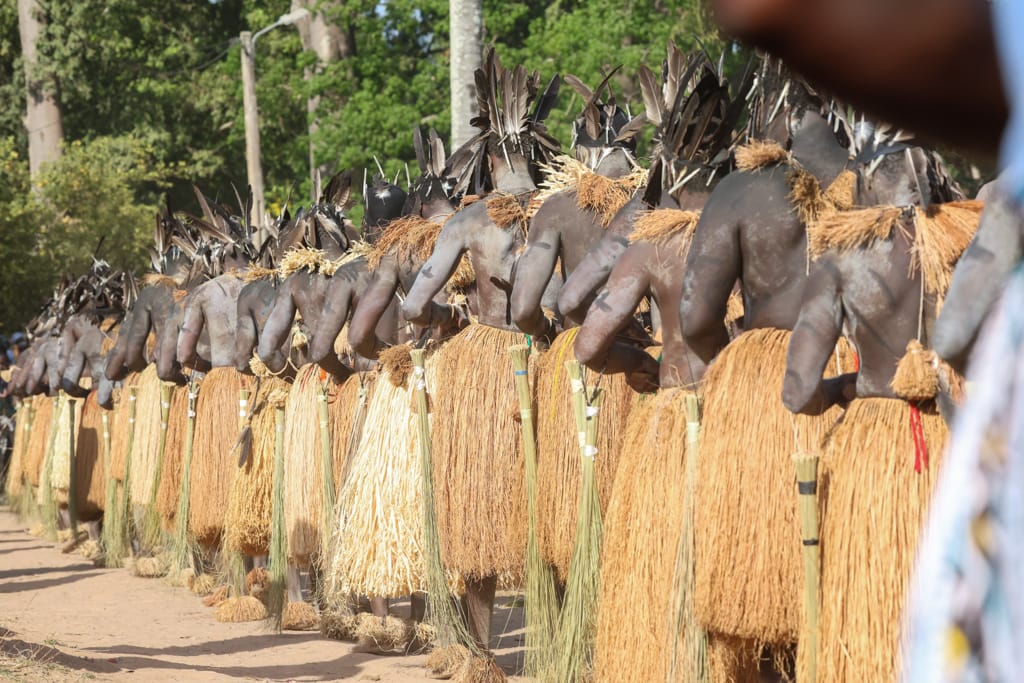
During public appearances, the initiates conceal their identity. They wear feathers around their eyes, which prevents their recognition and transforms them into collective symbolic figures rather than individuals. Their bodies are also adorned with skirts and anklets made of plant fibers, which produce sound when they move, contributing to the rhythmic dimension of the ceremony.
The feathers that cover the faces of the initiates at the exit of the forest
The feathers used have a particular significance: they come from vultures, hunted by the elders specifically to create the crowns of the initiates. This reflects a deep connection between the natural world and ritual symbolism within Diola culture. Elders leading the initiation are distinguished by a red feather in their hats, a clear marker of authority and experience within the ritual system.
Two months in the forest and weekly returns
The Kahate does not end with the first return. After this initial phase, initiates spend approximately two months living in the forest, in a separate camp from the village. This extended period is dedicated to learning, discipline and integration into adult male roles within the Diola tribe.
Every Saturday, however, they return to the village to dance in front of the women and the community. These weekly appearances create a bridge between the hidden ritual process and public life, allowing the community to observe their gradual transformation.
Gender symbolism and ritual performance
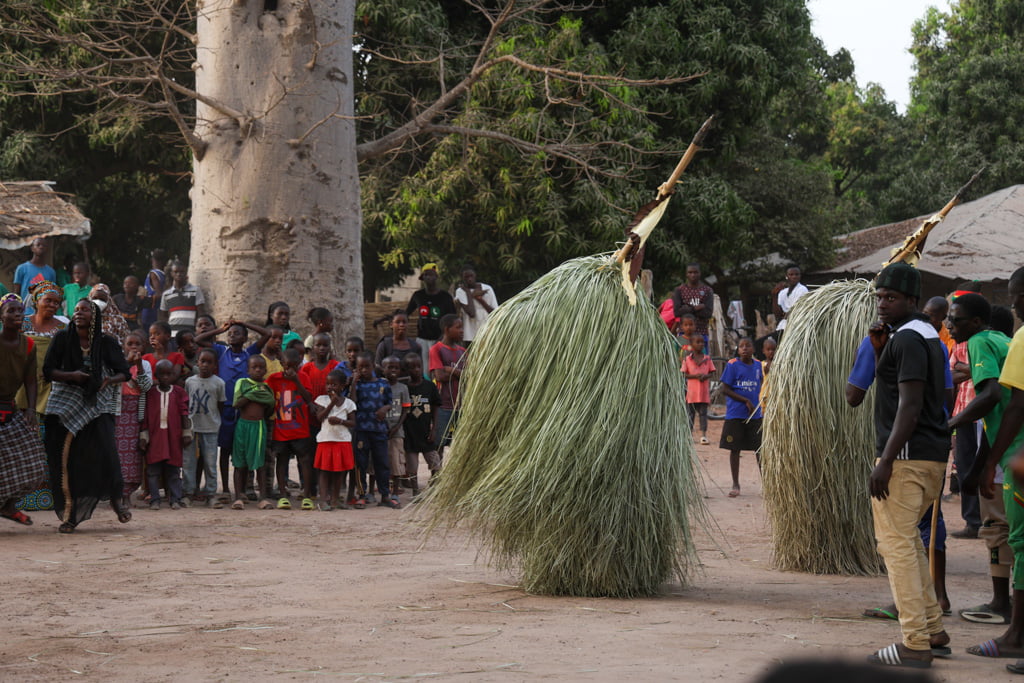
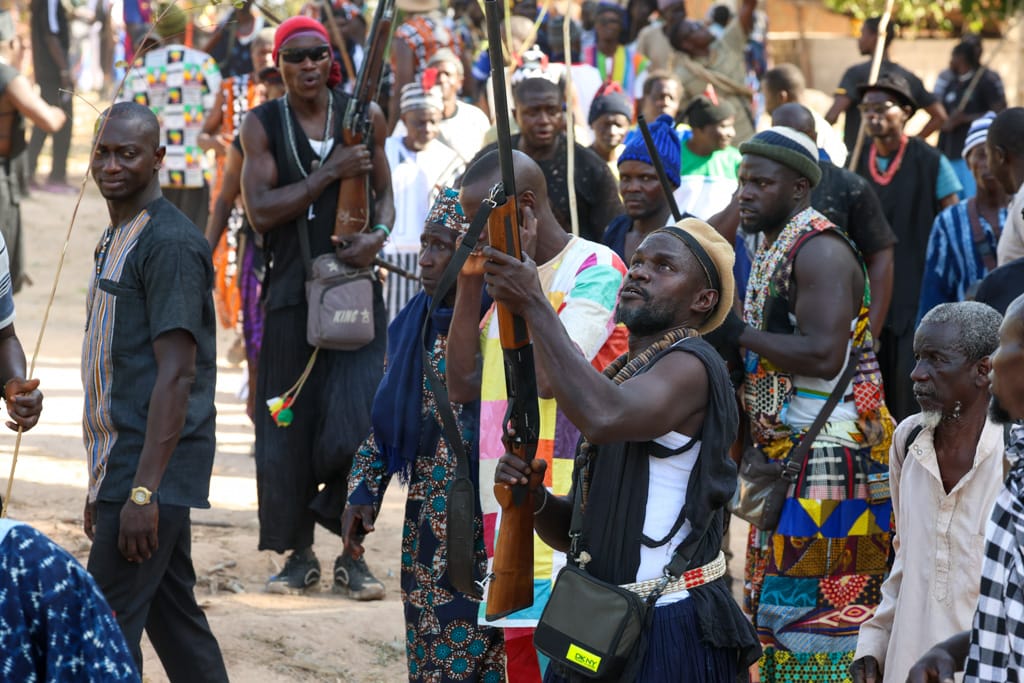
An important and complex aspect of the Kahate is the presence of men who have already completed initiation and who, during the ceremony, dress as women. This act has a specific symbolic meaning: it represents the feminine aspect that is left behind, marking the transition to a fully recognized male identity. It is not a theatrical performance in the Western sense, but a structured symbolic act within diola ceremonies, demonstrating how gender identity is culturally constructed and affirmed through ritual.
Sound, offerings and the role of women
The Kahate is characterized by a powerful soundscape. Gunshots and gunpowder explosions punctuate the ceremony, adding intensity and marking specific moments within the ritual sequence.
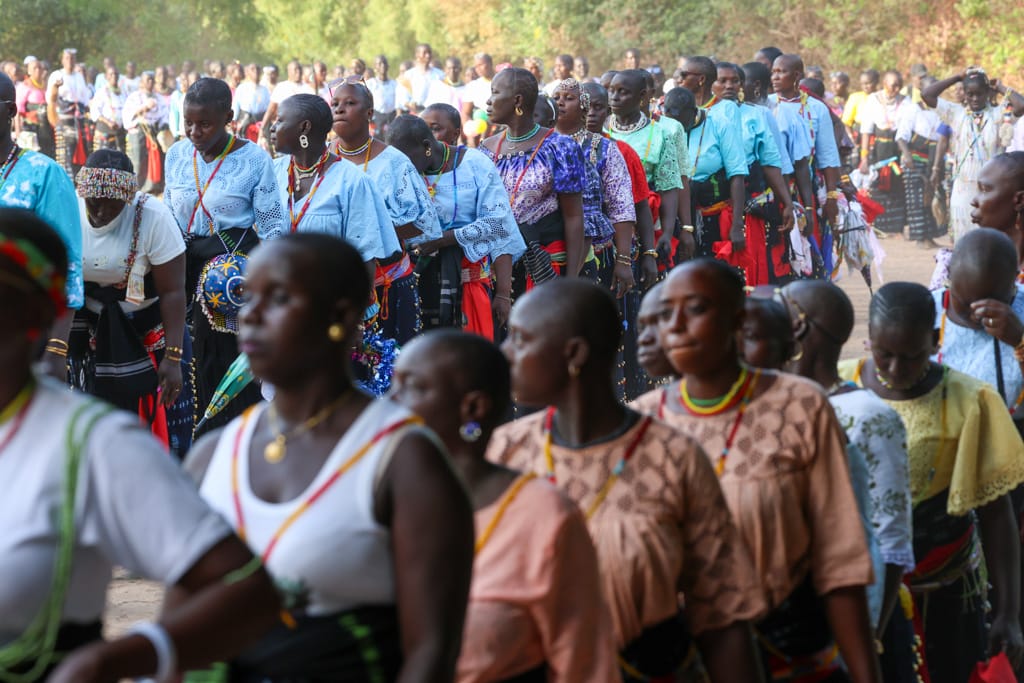
Women play an active role, dancing with baskets balanced on their heads and offering rice and peanuts. These offerings are directly related to the men’s role as cultivators, reinforcing a system of reciprocity between production, food and social recognition.
Social change and cultural continuity diola
Traditionally, men could not marry before completing Kahate. Today, this norm has evolved, reflecting broader social changes. However, the ritual remains a central element in defining male identity within the Diola tribe.
In addition to male initiation, there are also diola ceremonies focused on women, such as the Karahay, associated with the birth of the first child. It is important to note that in these communities women are not subjected to genital mutilation, and there are social norms that prevent marriage with women who have undergone these practices elsewhere. This reflects a distinctive cultural position within the regional context.
Experience in the field: being welcomed by the community
As in other Diola ceremonies, including the female ones, our presence at the Kahate was made possible by the hospitality of local families. As during the Karahaye, we were welcomed into their homes, invited to share meals and included – within clear limits – in the life of the village during this important moment.
This type of access is never neutral. It is mediated by trust, relationships and the willingness of the community to open a small window into a process that remains largely internal. Sharing food, time and space allowed us to observe not only the visible aspects of the ceremony, but also the atmosphere that surrounds it: the preparation, the anticipation and the collective energy that builds for days.
During the Kahate, the village is in constant movement. People gather, cook, prepare offerings and organize the various phases of the ceremony. The rhythm of daily life is transformed to accommodate the ritual, and each individual becomes part of a larger collective process.
At the same time, there is a clear boundary. Certain spaces, especially the forest, remain inaccessible. Some moments are not meant to be seen, documented or explained. This limit is not a restriction, but an essential element of the ceremony itself.
Kahate: identity, belonging and the limits of observation
The Kahate is not simply one of many Diola ceremonies: it is a fundamental system through which male identity is constructed, recognized and legitimized within the Diola tribe. Through isolation, physical transformation, discipline and collective recognition, initiates become full members of the community.
At its core, the Kahate defines belonging. It establishes who has access to knowledge, who can participate in decision-making, and who is fully integrated into the social and spiritual fabric of the village.
However, like many elements of Diola culture, it cannot be fully translated or fully understood from the outside. A significant part of the ritual remains intentionally hidden, preserved within the community as protected knowledge.

Autor:
Austerio Alonso
Co-founder of Kumakonda. Passionate of Africa. Specialist in the design, preparation and realization of expeditions in Africa. Content creator.
Travel with us