


Mask ceremonies and festivals in Burkina Faso
Mask ceremonies and festivals in Burkina Faso are fundamental rites, mainly of the Gourounsi, Bwa, Bobo and Mossi peoples. These ritual masks embody spirits of nature, animals and ancestors and serve to ensure fertility, harvests and social order.

Often held at the end of the dry season in April and May, these frenetic dances accompany rites of passage, funerals and initiation festivals, using masks made from leaves, wood, fibers and natural pigments.
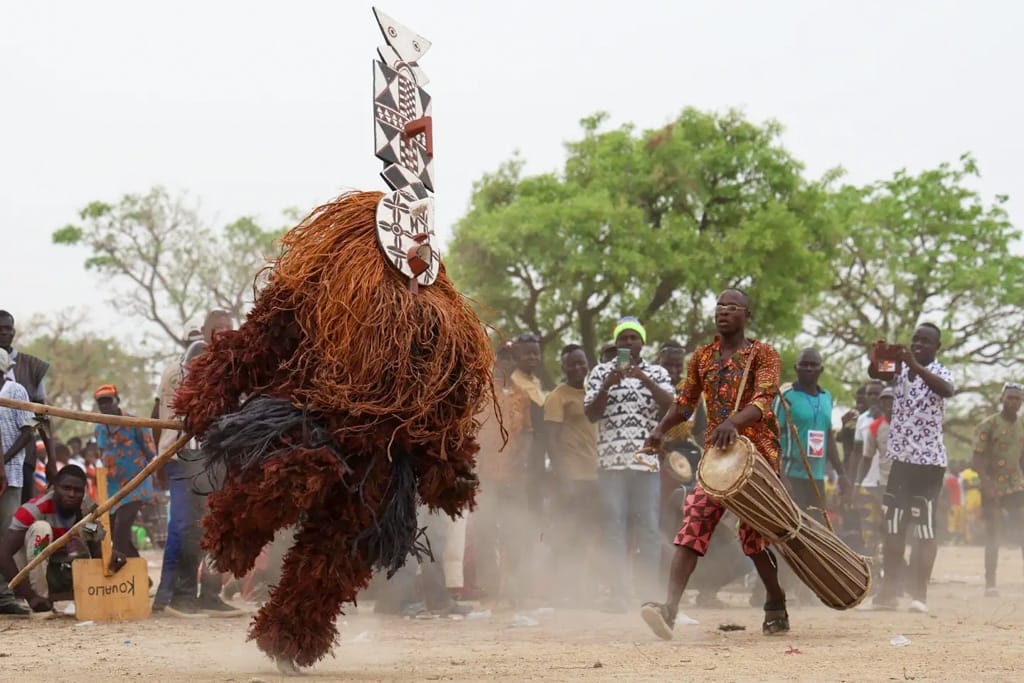
Festival International des Masques et des Arts de Dédougou (FESTIMA)
FESTIMA, organized every two years since 1996 by the Association for the Safeguarding of Masks (ASAMA) in the city of Dedougou, is part of a project to enhance African cultural heritage through the promotion of mask traditions.

During the days of the FESTIMA festival in Dedougou, communities from many regions of Burkina Faso come together to represent the different traditional cultures of the country. In previous years there was also representation from Mali, Ivory Coast, Benin and other countries in the region.
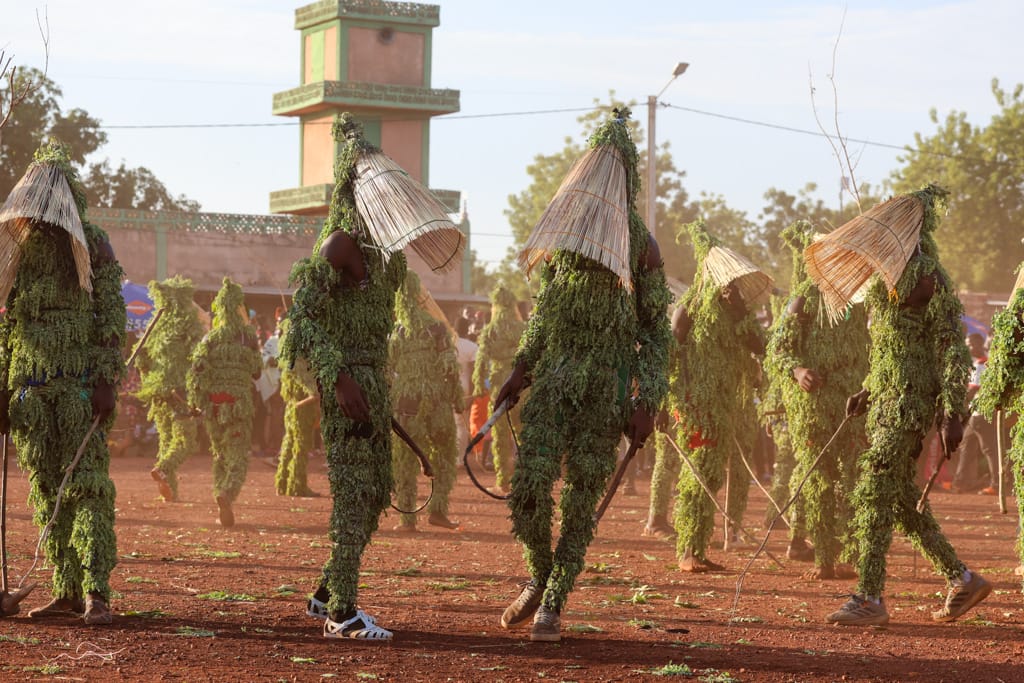
Although today it has a public and festive dimension, its basis remains deeply ritual and communal. FESTIMA (Festival des Masques et des Arts) is the best known event dedicated to traditional masks in Burkina Faso and one of the most important in West Africa.

The participating masks are not simply cultural exhibits. Many come directly from active ceremonial contexts, where their use is still regulated by strict traditional rules: who can wear them, when they can appear, what dances they must perform and what meanings they activate.

Dedougou FESTIMA in 2026
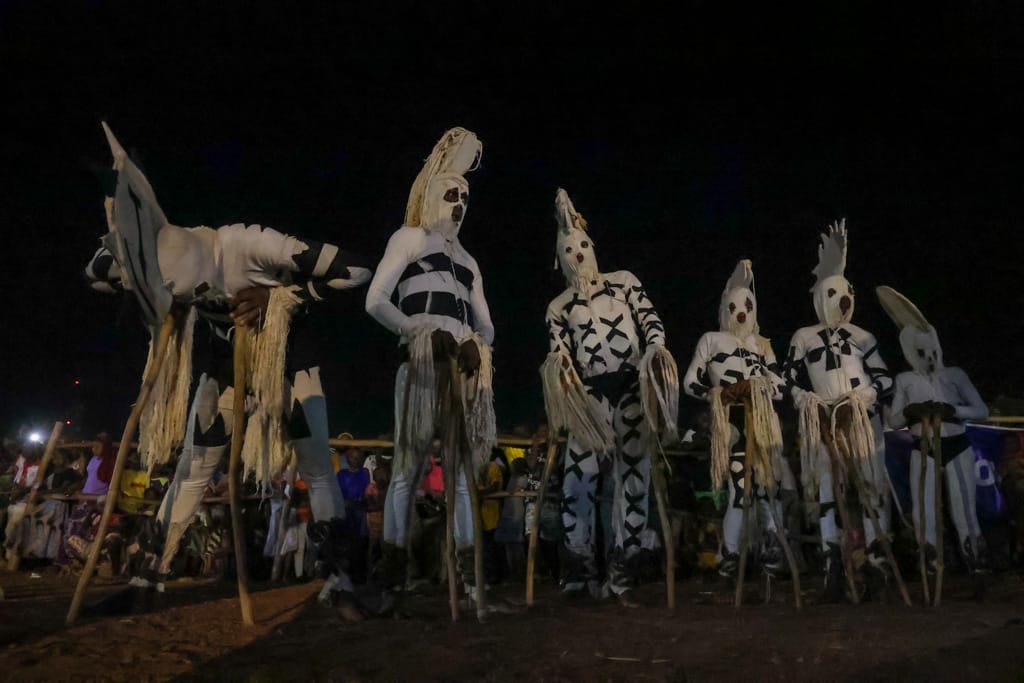
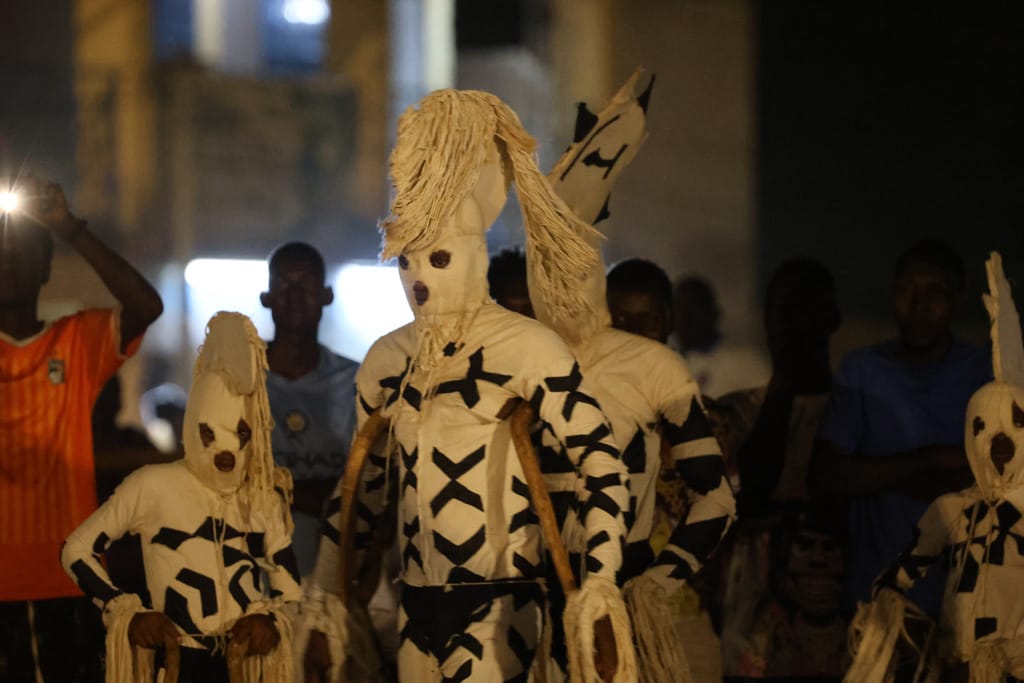
During this last edition of the FESTIMA 2026 Dedougou, we could see representation and dance of various ethnic groups of Burkina Faso such as the Gurunsi, Bobo or Bwa among others. Ceremonial dances of the incredible masks of leaves or the night masks of Bodoukuy known as the “Masques Blancs”.

Bodoukuy known as the “Masques Blancs”.
The “masques blancs” are often associated with Gur peoples such as the Bwa (Bwaba) and neighboring groups in north-central and northern Burkina Faso (also in parts of Mali).
In Burkina Faso, white masks represent spirits and genies and usually only appear at night ceremonies. These masks only appear in the dark of night, often by moonlight, and are sometimes accompanied by cries, songs and music. They embody protective spirits and are considered intermediaries between the world of the living and that of the ancestors.

Pouni Festival: living tradition at the heart of the Gourounsi community
The Pouni Festival is a more local celebration deeply linked to the community life of the Nuna people. Here the masks are not intended for an external audience, but for the community itself. Their function is social, spiritual and educational: they mark agricultural cycles, celebrations, initiations and moments of group cohesion. The masks are accompanied by drums and dances that can last for hours, even days.

Each apparition has a specific meaning, and only the initiated fully understand the symbolic language that unfolds.


Big funerals of the Bobo people in Burkina Faso
The great Bobo funerals in Burkina Faso, often called Sangâbâ, are important traditional rituals in the Bobo-Mandarè region (Bobo-Dioulasso area) that mark the end of the mourning period and the passage of the deceased into the realm of the ancestors. These intense ceremonies, usually held in April and May, include the appearance of fiber masks, dances, sacrifices and strong social cohesion.
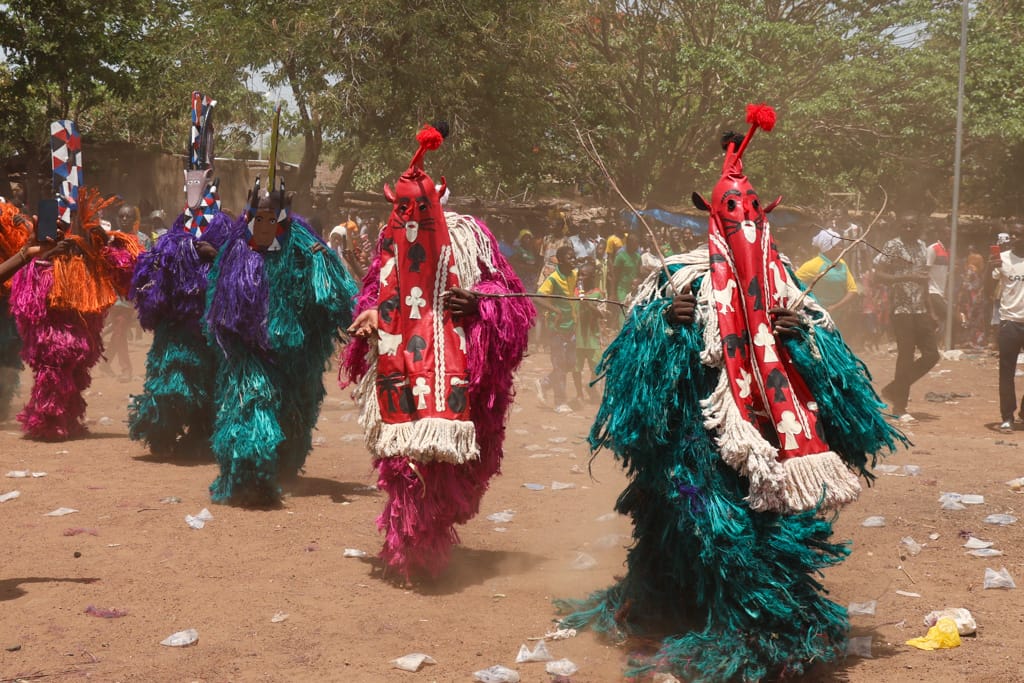
Funeral rites: masks as a bridge between worlds
In groups such as the Bwa or the Nuna, funeral rites constitute one of the most complex contexts for the use of masks. Death is not conceived as a punctual event, but as a transition process that must be ritually managed. The masks intervene precisely in this intermediate phase, where the status of the deceased is ambiguous.

In this context, masks can:

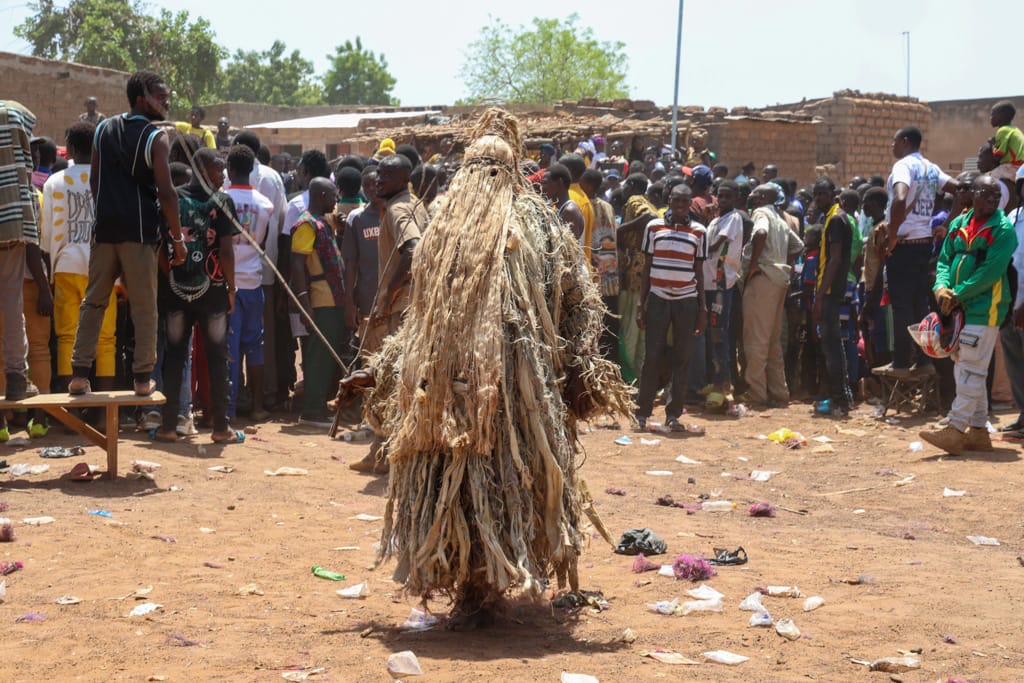
Each type of mask has a specific function within the ritual system, and its appearance follows strict rules transmitted orally through generations. Not all masks can intervene in funerals; some are reserved for agricultural, initiatory or social regulation contexts. In this sense, the mask does not symbolize the dead, but acts as an operator within the process of reorganization of the social and cosmological order.
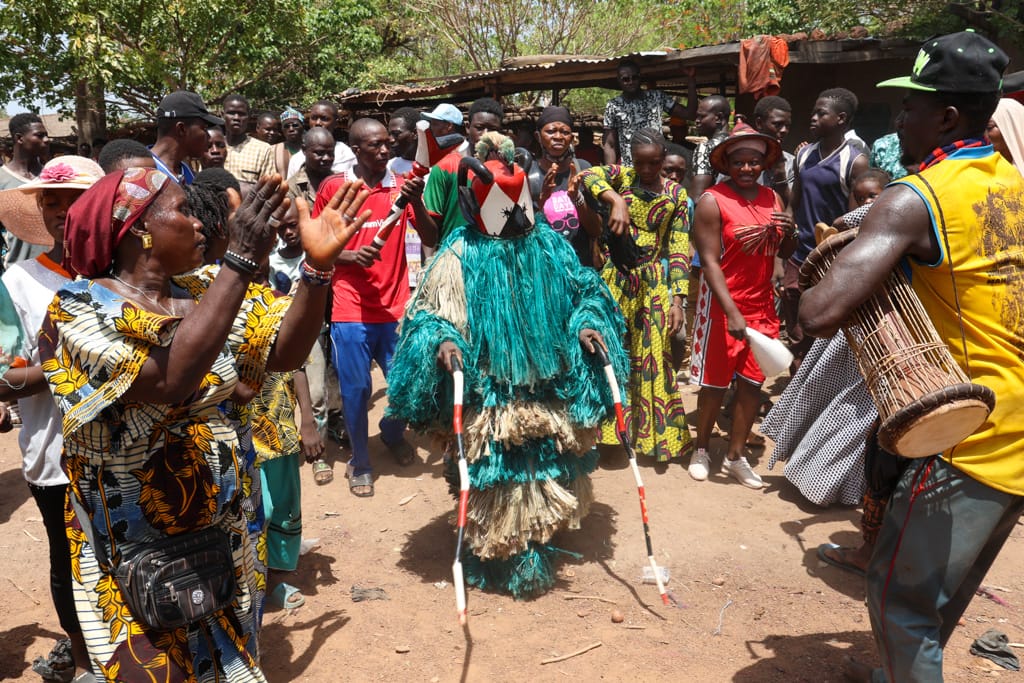
Mask ceremonies in Burkina Faso, a tradition as a knowledge system
Mask ceremonies in Burkina Faso cannot be understood solely as cultural expressions, but as situated knowledge systems. Through the mask, communities articulate their relationship with territory, time and memory.

It is not a “representation of the world”, but a way of producing it and keeping it in balance. To the outside observer, it may look like a dance. For those who live it from the inside, it is a complex system of communication with the invisible, where the social, the spiritual and the ecological form a single reality.

Autor:
Austerio Alonso
Co-founder of Kumakonda. Passionate of Africa. Specialist in the design, preparation and realization of expeditions in Africa. Content creator.
Travel with us