


Chad on the Move: Fulani Nomads of Chad
Chad is currently the leading African country in terms of the diversity and number of ethnic groups that practice transhumance. In Chad, we can find “pure” nomadic pastoralist communities whose way of life is closely tied to livestock, the seasons, and the vast open spaces of the Sahel. Among them are the Fulani or Peul, a group of pastoralist peoples found in numerous countries in West and Central Africa.
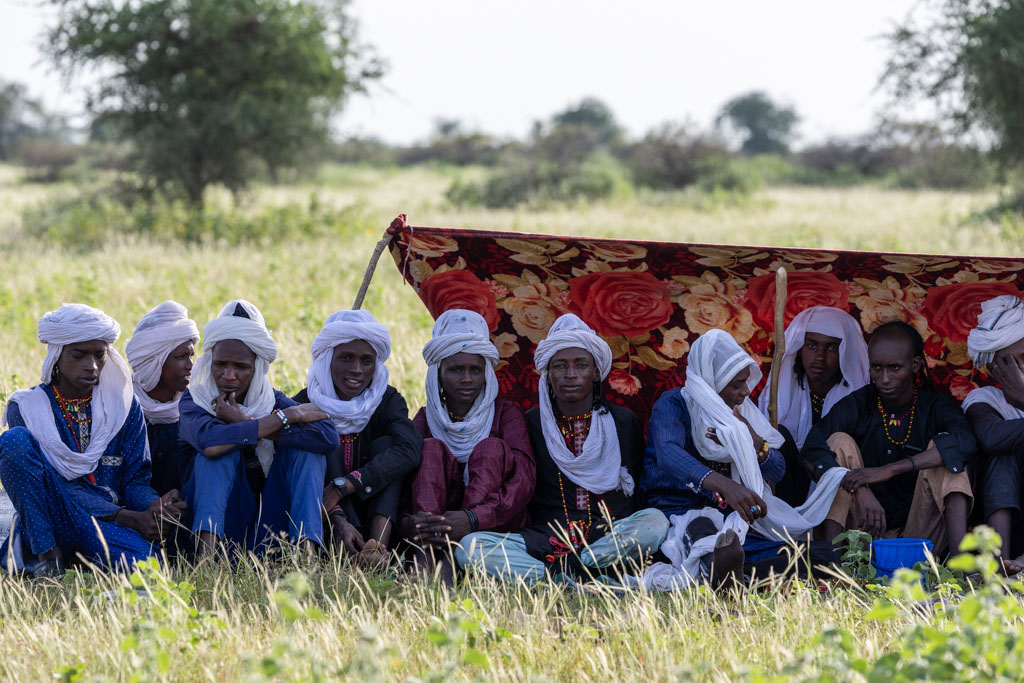
Although the Wodaabe are probably best known for their Gerewol celebrations, the diversity of the Fulani people of Chad goes far beyond that. The Yayai of Lake Chad, the Kanoumoudji, the Alidjan, the Hontorbé, the Weila, and many others represent distinct identities and traditions within this vast cultural universe.
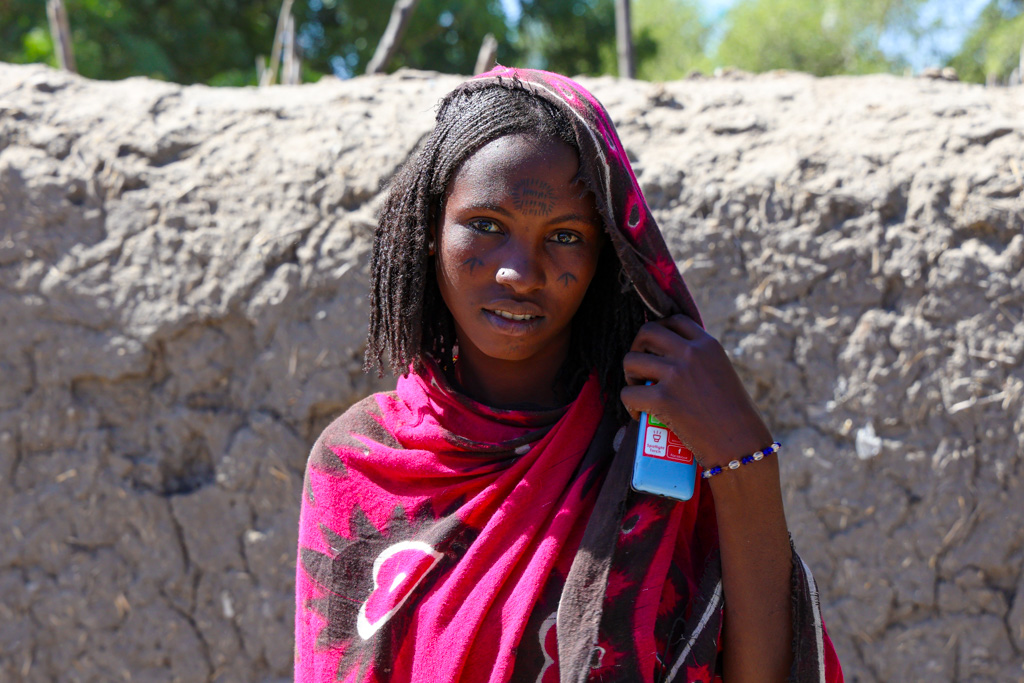
During our trips through Chad, we’ve had the opportunity to visit camps of several of these communities. We were particularly struck by the extraordinary headdresses and adornments of the Kanoumoudji women, as well as the scarifications of the Yayai and the hairstyles of the Weila women.
Getting to know these peoples means discovering a Chad where cattle drives, family ties, and adaptation to a changing landscape continue to set the pace of life.
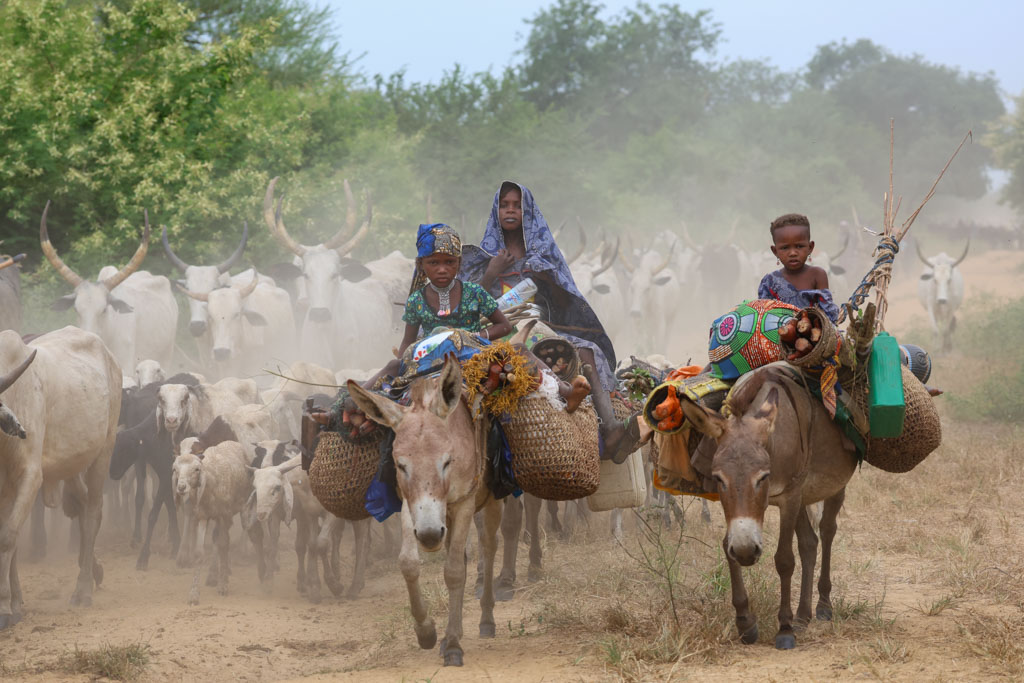
Who Are the Fulani of Chad?
The Fulani, also known as Fulbe, Peul, or Fulani, are one of Africa’s major ethnic groups. They are found from Senegal and Mauritania to Niger, Cameroon, Chad, and other regions of Central Africa.
Historically, many of their communities have developed an economy based on cattle raising and transhumance, although not all Fulani are nomads. There are also sedentary populations, farmers, merchants, and residents of large cities, such as in Guinea-Conakry and specifically in the Fouta Djallon region.
In Chad, Fulani pastoralist communities are found primarily in the central, western, and southern regions of the country, following transhumance corridors that connect the pastures of the Sahel with more humid areas.
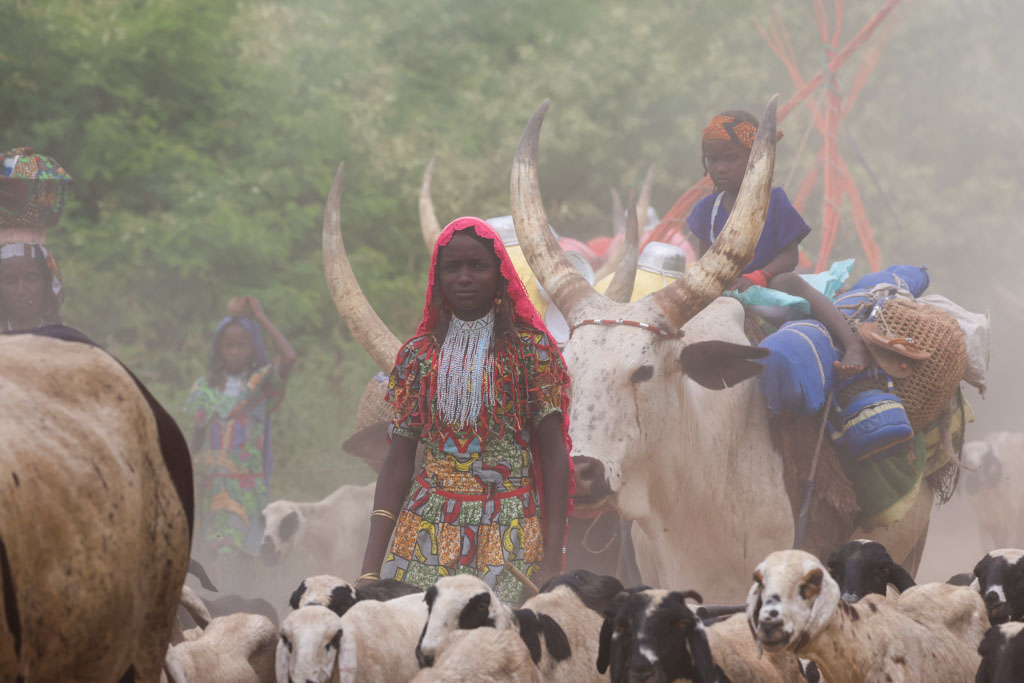
During the dry season, the search for water and pasture forces many families to move with their herds. With the arrival of the rains, these movements may reverse so that they can take advantage of the new pastures and avoid flooded or cultivated areas.
However, there is no single form of Fulani nomadism. Each community organizes its movements based on its customary territories, the needs of its livestock, agreements with other communities, and weather conditions.
Diversity is also reflected in the names of the groups. Some names refer to lineages, while others refer to regional groups or locally recognized identities. As a result, classifications may vary depending on the source and the region.
The Yayai: Nomadic Fulani of Lake Chad
Among the Fulani communities we have encountered, the Yayai of Lake Chad hold a special place.
Their distinctive hairstyles, facial markings, handcrafted jewelry, and close relationship with their livestock reflect a culture in which identity and daily life are deeply intertwined.
The lake’s surroundings constitute one of the most fascinating human-shaped landscapes in Central Africa. Far from being a uniform expanse of water, it is an ever-changing landscape of islands, channels, floodplains, grasslands, and farmland, where fishermen, farmers, and herders live side by side. The Yayai are part of this complex pastoral world.
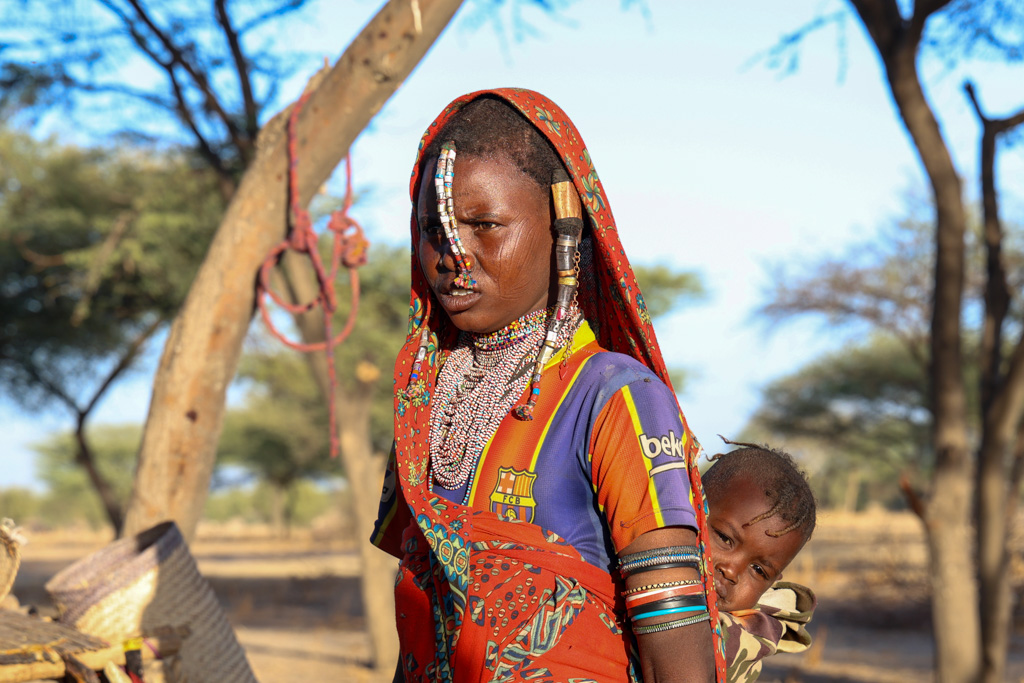
The Gero and the Gimul of the Yayai: Other Ceremonies on Lake Chad
After many years of trips in Chad, we have continued to discover and be amazed by this great country. For example, during a recent visit to the Lake Chad region, we managed to locate a large Yayai nomadic camp where we were able to witness two spectacular and large-scale dances: the Gimul and the Gero of the Yayai nomads.
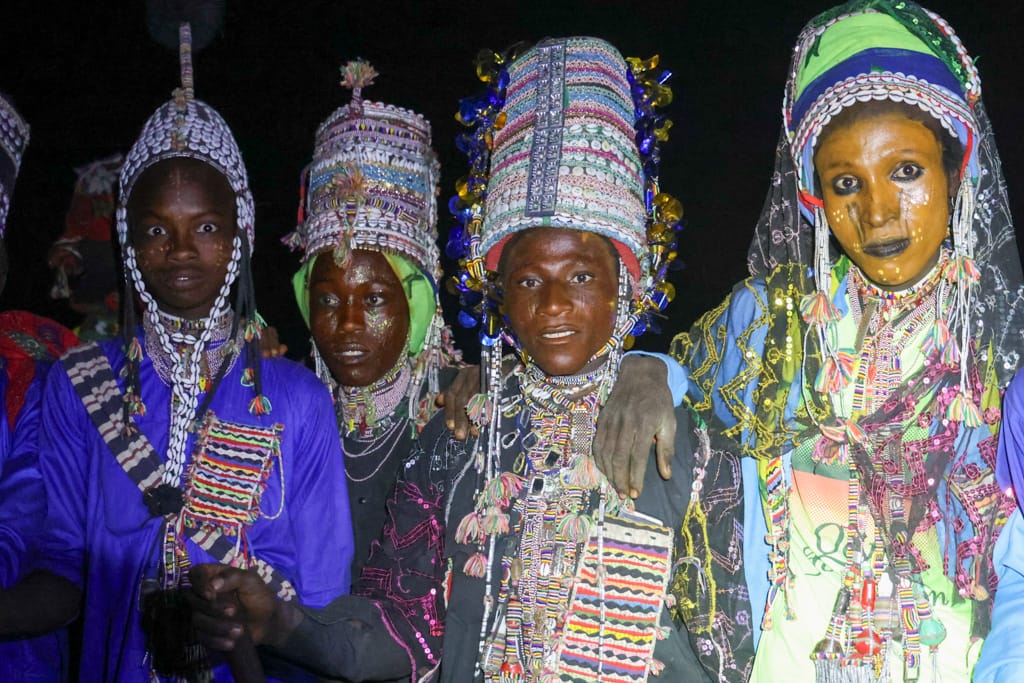
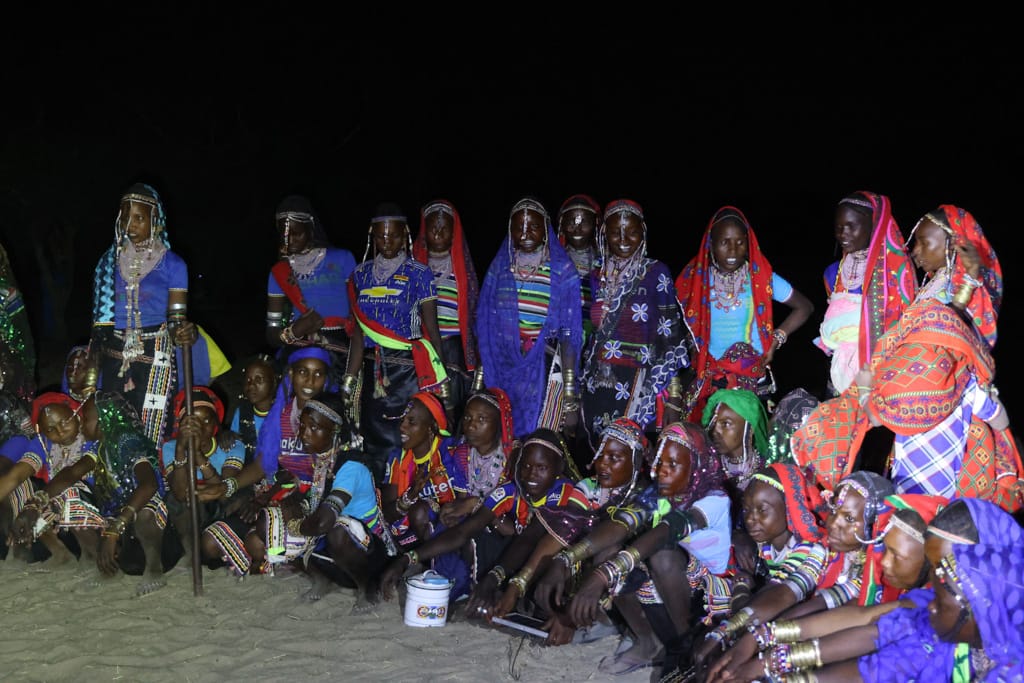
These are dances of celebration, beauty, and courtship. The Gero dance bears many similarities to the Gerewol of Chad, and Gimul is a frenetic dance in which men and women mix. Both are tremendously energetic dances.
Even more striking than the men’s adornments is the powerful visual impact of the women with their traditional hairstyles and scarification. Furthermore, there are far more women present than at the other traditional Gerewol festivals in Niger and Chad.
The Kanoumoudji: The Extraordinary Headdresses of Fulani Women in Chad
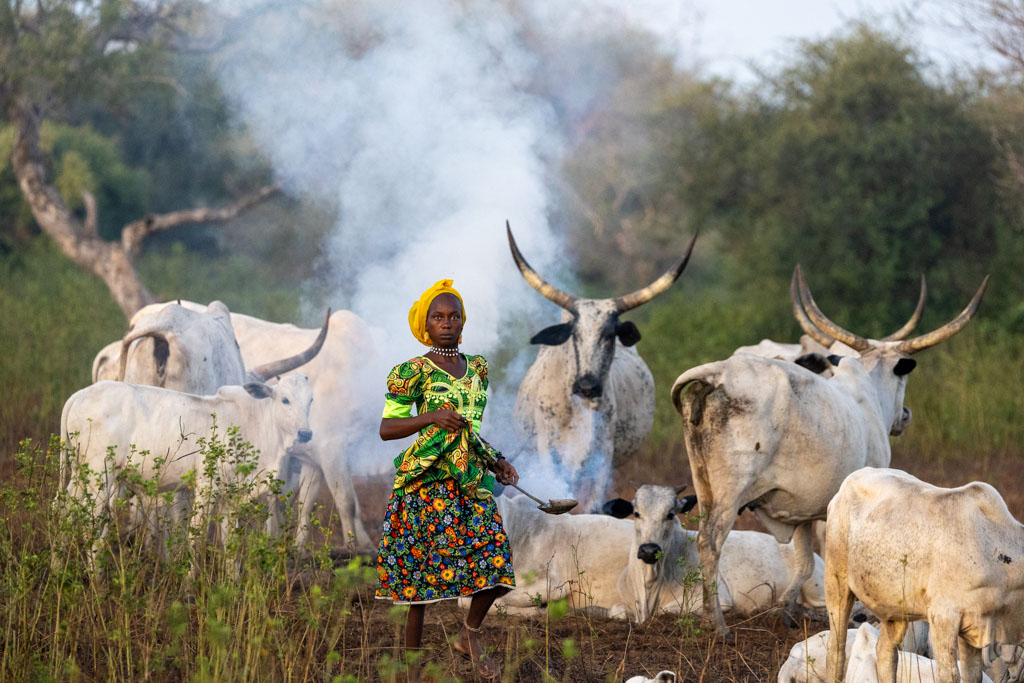
The Kanoumoudji, the Fulani of Kanen, are one of the most striking nomadic Fulani communities we have encountered in Chad, especially because of the women’s distinctive appearance. Easily recognizable by their headdresses, hairstyles, jewelry, and color combinations, they represent one of the most unique visual expressions of Chad’s pastoral world. This is also because they primarily herd white cows.
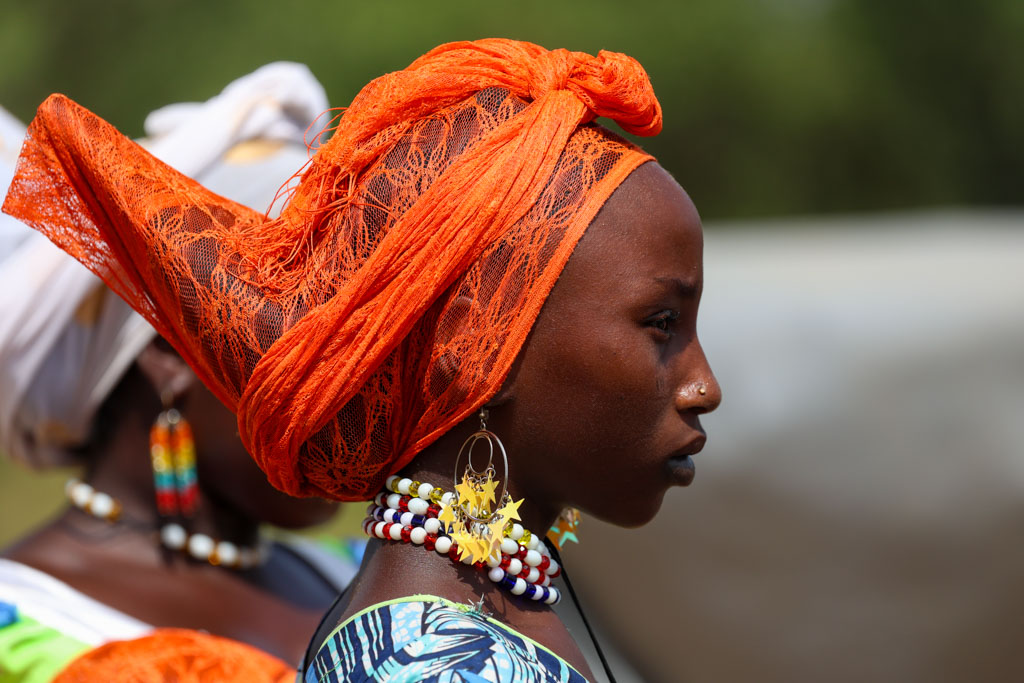
In the camps, the presence of Kanoumoudji women is particularly striking because of the care taken with their clothing and the ornate nature of their adornments.
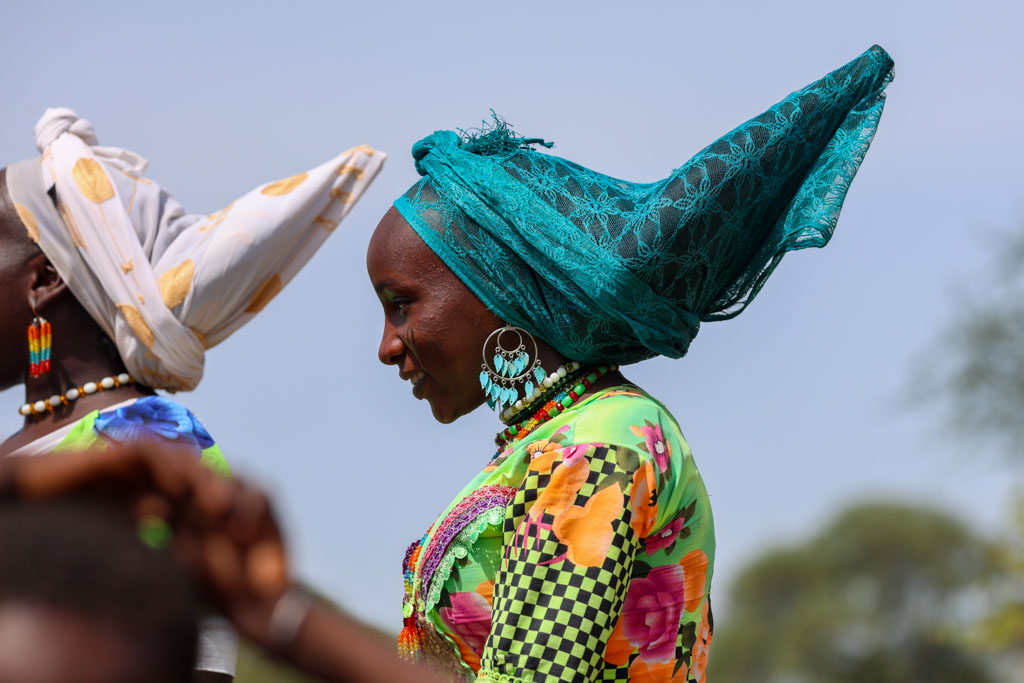
Headdresses, hairstyles, and jewelry of the Kanoumoudji women
Women’s headdresses are one of the elements that most visually distinguish these women. Scarves, elaborate hairstyles, and ornamental pieces are paired with large earrings and other personal adornments. The vibrant colors of the dresses contrast with the dark tones of some headdresses, creating a highly recognizable aesthetic.
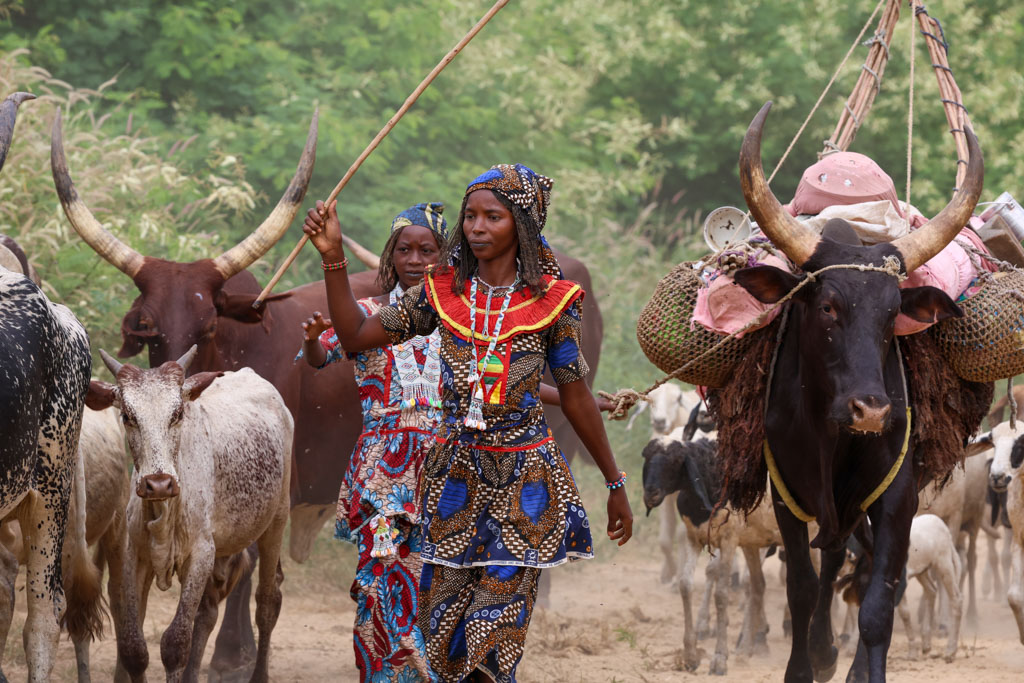
The Pastoral Life of the Kanoumoudji
Like other Fulani communities in Chad, the Kanoumoudji have close ties to livestock herding and seasonal migrations. They are semi-nomadic. They typically move from the interior of Chari-Baguirmi toward the west, along the border with Cameroon.
The Alidjan: Another Identity Among the Nomadic Fulani of Chad
The Alidjan (good morning, Ali)—a name that can also be found in other spellings—are part of the Fulani groups we have encountered during our travels through Chad over the years. Visually recognizable by their darker skin and the dark-colored cows they herd, their presence reminds us that Fulani identity is not uniform. Communities may share a tradition of livestock herding, linguistic elements, and certain cultural practices, but they retain differences in their clothing, family relationships, and forms of organization.
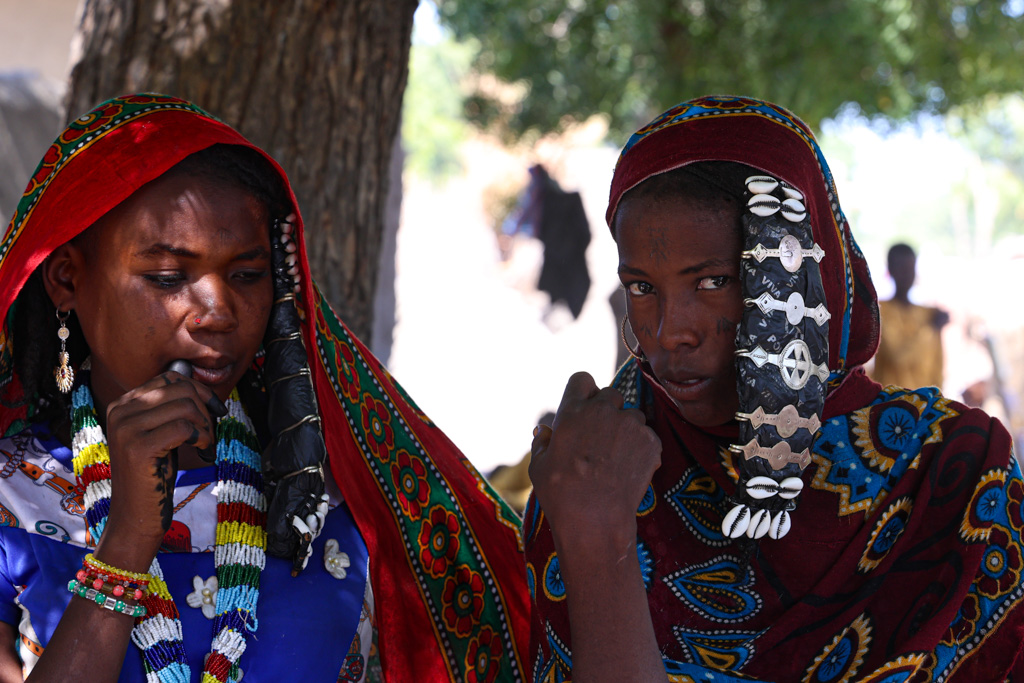
The Weila and the Maria Cristina coins
The Weila (also known as Bibbe Woyla) are another of the many nomadic communities of the Fulani or Peul people living along Lake Chad, whom we visit regularly.
They are easily recognizable by the silver coins (Maria Theresa thaler) that the women wear around their necks. Also by their headdresses. The Maria Theresa thaler: This large silver coin circulated and was accepted for generations throughout the Arab world, the Horn of Africa, and the trade routes of the Sahara and the Sahel
The Wodaabe: Herding, Identity, and the Gerewol Celebrations
The Wodaabe are probably the nomadic Fulani group best known internationally for their Gerewol celebrations. In Chad, certain Wodaabe communities hold ceremonial gatherings in which dance, song, adornments, and male aesthetics take center stage.
However, the Gerewol is only one part of their culture. The Wodaabe people’s lives also revolve around livestock, seasonal migrations, family relationships, and a complex social organization.
At Kumakonda, we have devoted other articles to these celebrations and our encounters with the Wodaabe, so here we prefer to focus on the diversity of the Fulani people of Chad. To learn more about these ceremonies, see: “The Gerewol of Chad and the Wodaabe.”
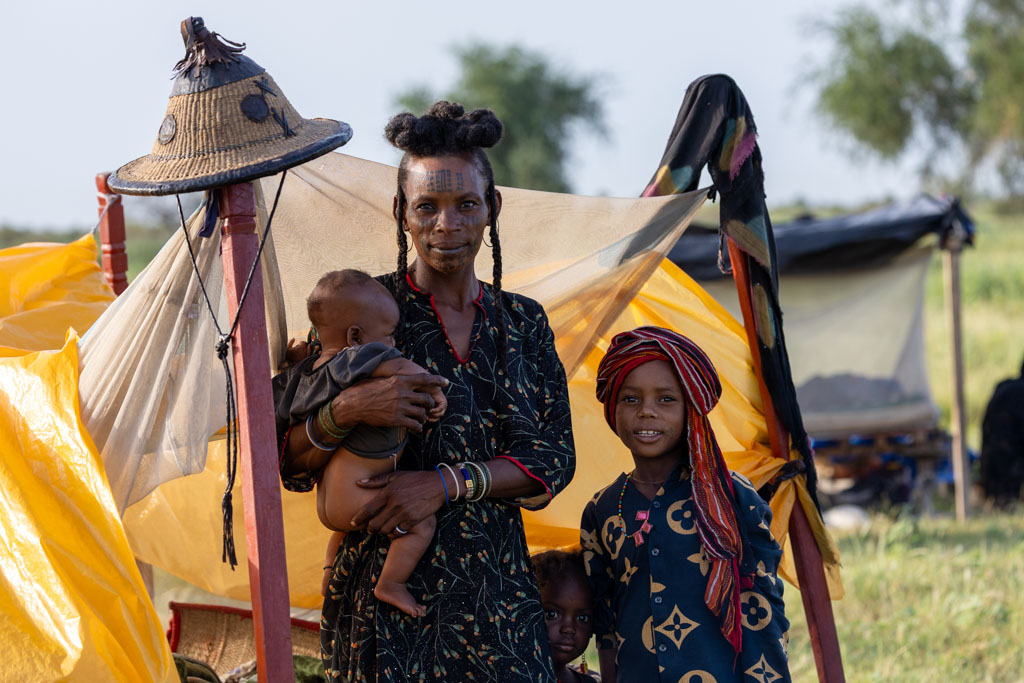
Livestock and the Nomadic Lifestyle of the Fulani in Chad
To understand the nomadic Fulani, one must first understand their relationship with livestock. Cattle are not merely a source of economic wealth; they are also linked to family prestige, social relationships, food, and the transmission of knowledge across generations. Cattle herding requires constant observation of the territory.
Herders must know the locations of waterholes, available pastures, resting places, and the risks that may affect their animals. These migrations can last weeks or months and, depending on the community, may involve entire families or only some of their members.

Mobile Camps
Mobility influences the construction of dwellings and the selection of household items. Lightweight materials, collapsible structures, and utensils that can be transported with relative ease allow camps to be adapted to the needs of each season. Women typically play an important role in organizing the domestic space, while livestock care and herding involve a division of labor that varies among communities and families.
Each camp is, therefore, much more than just a temporary place to sleep. It is a social space that reflects the identity, knowledge, and family relationships of its inhabitants.
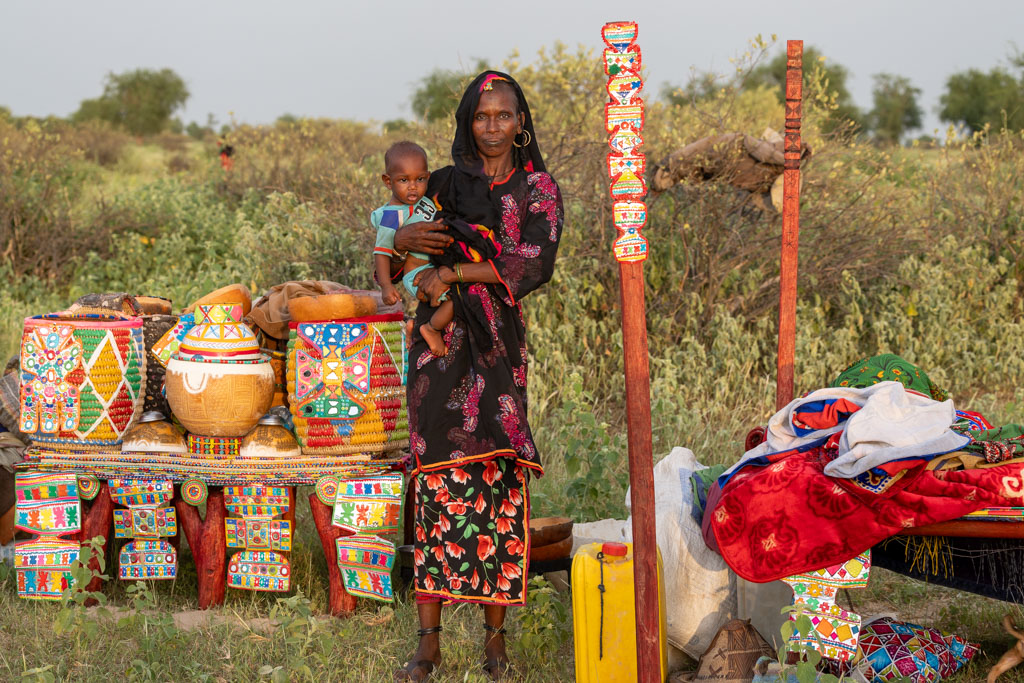
The Future of Fulani Nomadism in Chad
The lives of nomadic herders are undergoing significant changes.
Droughts, fluctuations in rainfall, the expansion of cropland, and difficulties accessing certain livestock corridors are affecting the mobility of many communities.
In some regions, competition for water and pastureland is causing tensions between farmers and herders, although there are also historic relationships of cooperation and exchange between the two groups.
Added to these challenges are economic changes and the aspirations of younger generations, who may combine livestock herding with other activities or seek opportunities outside the camps. Fulani nomadism is not a way of life stuck in the past. It is a contemporary, diverse, and ever-changing reality in which communities are constantly making decisions to adapt to new circumstances.
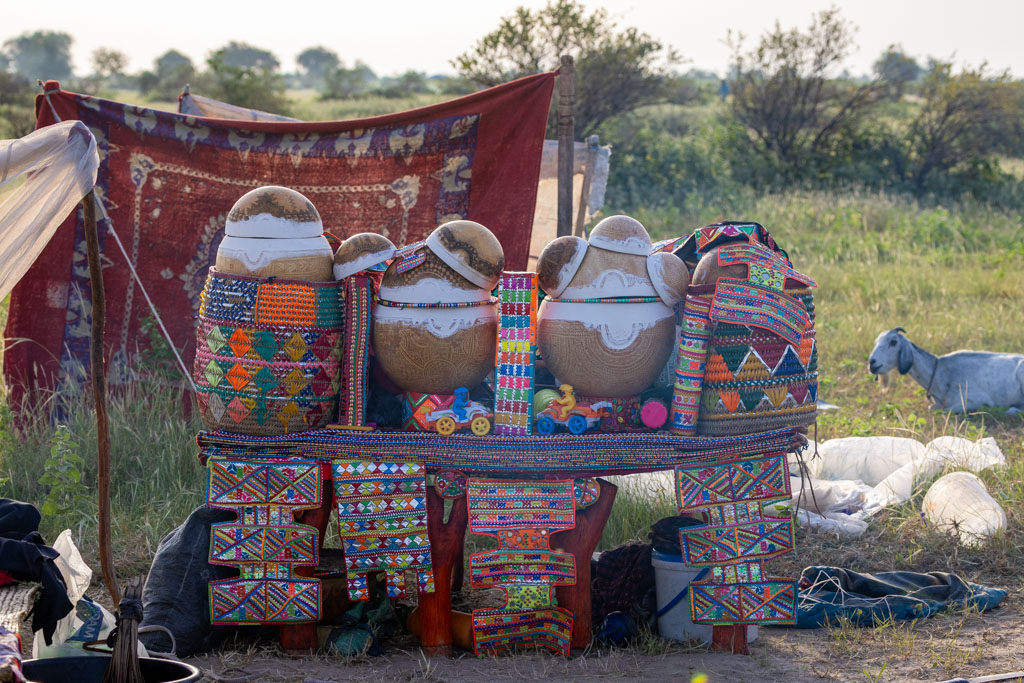
Getting to Know the Nomadic Fulani on Our Trips Through Chad
In Kumakonda, we’ve been traveling through different regions of Chad for years and getting to know the communities that maintain pastoral ways of life.
Our encounters with the Yayai of Lake Chad, the Kanoumoudji, the Alidjan, the Weila, and the Wodaabe have allowed us to learn about different cultural expressions of the Fulani world. Beyond the photographs and the spectacular nature of certain headdresses or celebrations, we are interested in understanding how these families live, how they organize their camps, and what relationship they have with the land.
Chad remains one of Africa’s top destinations for those who wish to explore the diversity of the Sahel’s nomadic cultures.
You can explore our tours and expeditions in the Chad trips section, where we offer itineraries focused on its villages, landscapes, and traditions.

Autor:
Austerio Alonso
Co-founder of Kumakonda. Passionate of Africa. Specialist in the design, preparation and realization of expeditions in Africa. Content creator.
Travel with us