


A Trip to Southern Chad: Initiations and Rites of Passage Among the Sara Peoples
For years, we at Kumakonda have traveled throughout Chad from north to south and from east to west: the fabulous Ennedi, the Ounianga Lakes, the Tibesti Mountains, the nomadic regions of the Sahel, Zakouma National Park, and the shores of Lake Chad and Lake Iro. We’ve walked alongside salt caravans led by Zahawa herders for weeks and explored the banks of the Logone River. However, the southern part of the country remained, for us, a cultural territory yet to be explored in depth.
In September 2026, we set out on a new expedition from N’Djamena to Bongor, Laï, Moundou, Sarh, Kyabe, and the rural areas between the Logone and Chari rivers. Our goal is to conduct field research on the traditions, ceremonies, and initiation rites still practiced by the peoples of southern Chad.
We traveled without a set itinerary. Our trip plan was open to any information that might come up about the area. Traditional celebrations in this part of Chad aren’t usually listed on calendars; in fact, there was practically no recent information available about what was happening. During our trip through Chad, we spoke with traditional authorities, local officials, and villagers, cross-checking information and adjusting our route as new leads emerged. A Kumakonda-style exploratory trip. Once again, we’re pioneers in blazing new trails for our travelers.
The result far exceeded our expectations.
During the trip, we witnessed Lau and Ndo initiations among the Ngabaye, Baia initiations, and a funeral ceremony among the Sara Madjebei, the Mbeul tradition of the Gor people, and a major Ndo initiation among the Mouroum, whose young men return from N’Djamena to Laï to spend six weeks in the forest.
This research expedition will serve as the basis for a new trip by Kumakonda through southern Chad in 2027.
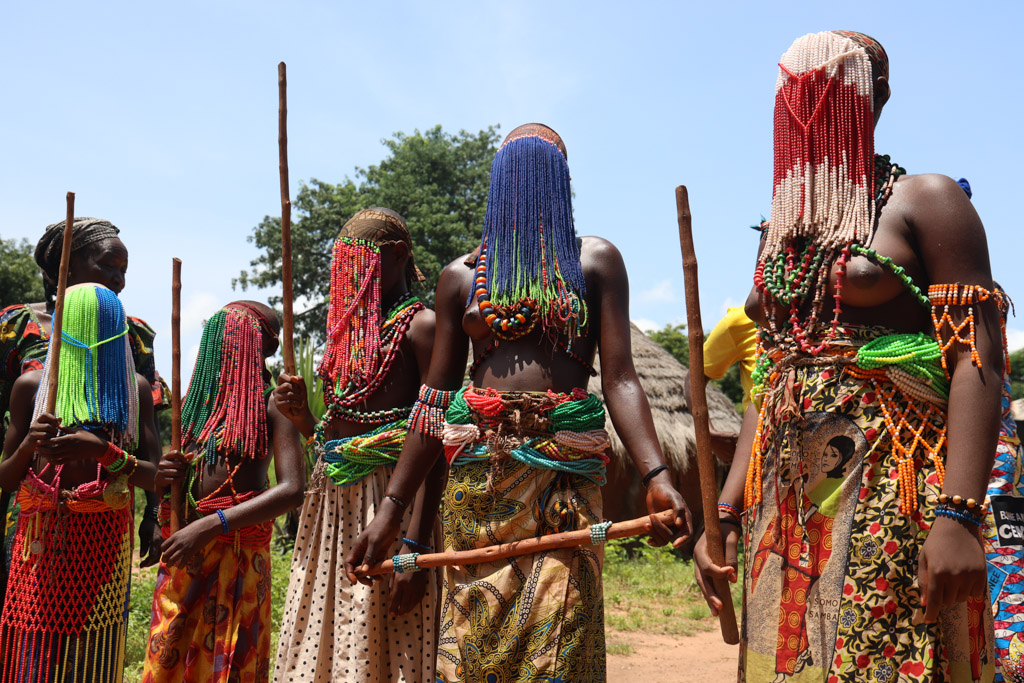
The Sara tribes of southern Chad
The term “Sara ” is used to refer to a broad group of peoples living primarily in the southern regions of Chad and in some nearby areas of the Central African Republic.
This is not a single ethnic group or a homogeneous culture. The Ngabaye, Madjebei, Gor, Mouroum, Mbaye, Goulaye, and other groups each have their own languages, histories, leaders, and traditions.
There are cultural and linguistic ties between them, but their rites of passage can vary greatly. Even among relatively close-knit communities, the name of the initiation, its duration, the symbols used, and the way in which young people return to public life can differ.
This diversity was, in fact, one of the great discoveries of our trip.
A cultural expedition off the beaten path
Traveling through southern Chad means discovering a landscape that is very different from the images typically associated with the country.
The desert gives way to savannas, fields of corn, millet, and sorghum, tall trees, and farming villages. The cycles of rainfall and harvests continue to influence the lives of these communities and the timing of certain ceremonies.
During our journey, we traveled along main roads, rural tracks, and small paths until we reached villages that had never welcomed foreign travelers—at most, aid workers and doctors. The little we had before setting out on the trip was a few names and some old photographs; with that, we began asking around on the ground. Some of the information turned out to be inaccurate; other details were correct. At times, a conversation we had in one village would lead us to a celebration taking place in another town.
That uncertainty is part of what makes a true expedition. It’s not about racking up visits, but about observing, listening, and understanding the context of each encounter. And in my opinion, that ceaseless, creative quest is undoubtedly the best part of the travel business.
What are the Ndo and the Yondo of the Sara people?
“Ndo” and “Yondo” are terms used by various Sara peoples in southern Chad to refer to their major traditional male initiation rites. The names, duration, and sequence of the rituals vary by people and community; therefore, they should not be understood as a single, identical ceremony practiced throughout the region.
These are rites of passage that mark the transition of children or young people into a new stage of life. During the initiation, participants temporarily leave their family environment and stay in a place separate from the community—often in the forest—under the supervision of elders and traditional leaders.
Circumcision may be one of the central moments of the process, but the Ndo and the Yondo are much more than a physical procedure. Over the course of several days or weeks, the initiates undergo a period of learning, discipline, and personal transformation.
The elders pass on knowledge related to the community’s history, the responsibilities of adulthood, respect for older generations, solidarity among peers, and the behavior expected within society. Part of this teaching is secret and belongs exclusively to those who have undergone the initiation.
Isolation represents a symbolic separation from childhood. The subsequent emergence from the forest marks the young people’s return to the community with a different identity and social status.
Music, singing, dancing, and body adornments accompany the public moments of this return. Families gather to welcome the initiates and acknowledge the transformation they have undergone.
In many communities, the term “Ndo” refers to the initiation itself, and “Yondo” refers to the young initiates.
Not all Sara villages celebrate the Ndo or the Yondo in the same way. Some spend long periods in the forest; others have shortened the duration or altered certain practices. Nor are the ceremonies held every year: they may depend on initiation cycles, the decision of the elders, and the number of young people ready to participate.
Despite the changes brought about by schooling, Christianity, urban life, and emigration, these initiation rites remain important in many communities in southern Chad. Even young people living in N’Djamena return to their hometowns to undergo the rite alongside members of their generation.
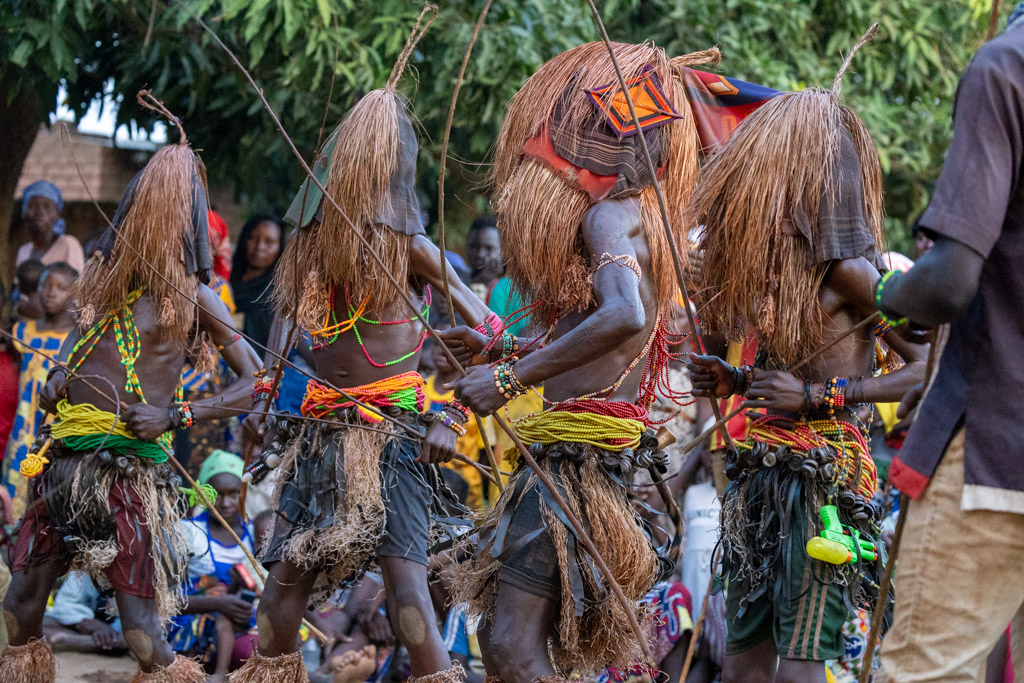
The Laou Initiation of the Ngabaye
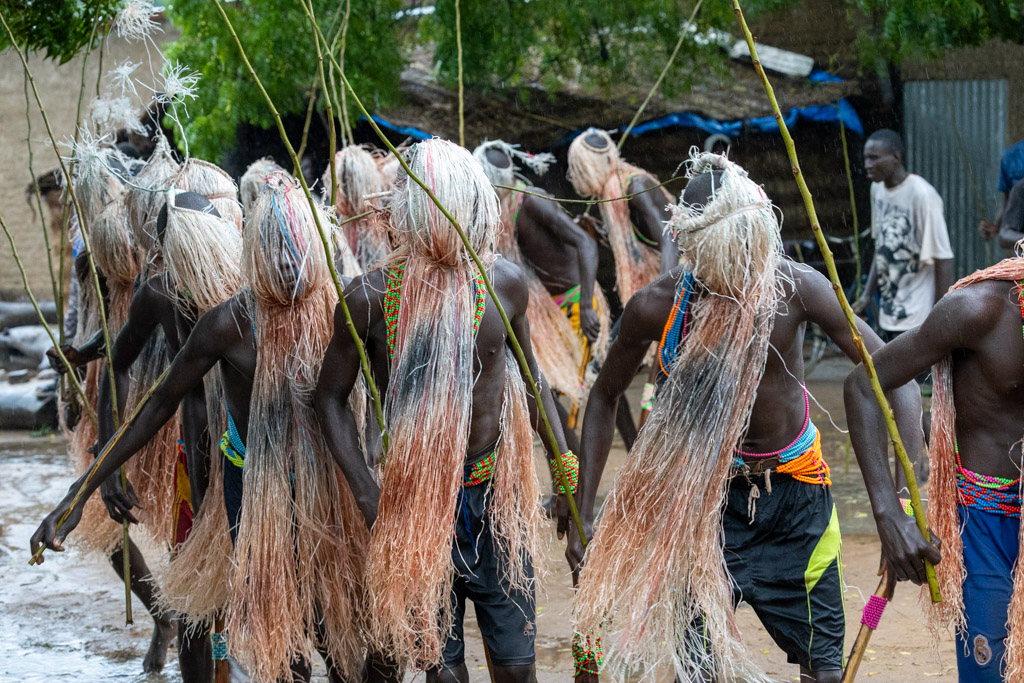
One of the most important events of the expedition was a large Laou initiation ceremony held by the Ngabaye people, in which approximately 225 children participated.
The scale of the ceremony demonstrated the importance that the Laou still holds within the community.
One of its most powerful elements was the appearance of young, masked initiates everywhere. The initiates’ costumes were made, as always, in Africa within the initiation camps in the forest. These masked figures are part of the symbolic language of initiation and of a body of knowledge passed down within the community itself.
The joint participation of 225 children also creates a generation of initiates. Those who undergo the rite at the same time are united by a shared experience and come to occupy a new status recognized by their families and the community at large.
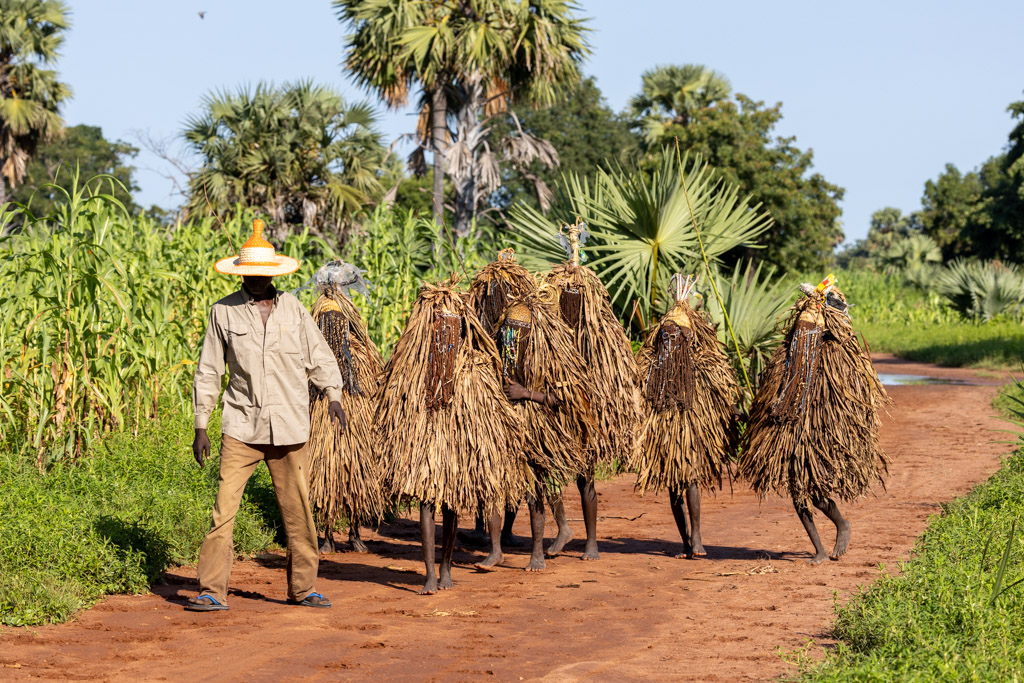
The Ndo Initiation Among the Ngabaye
During the trip, we also encountered an Ndo initiation ceremony among the Ngabaye.
Although Lau and Ndo share some elements typical of rites of passage, they should not automatically be considered the same ceremony. The names, stages, and meanings may vary depending on the community.
During the public ceremonies of the Ndo, music and dance accompany the presentation of the initiates. Families and townspeople welcome the young people and acknowledge the transformation that has taken place during the initiation period.
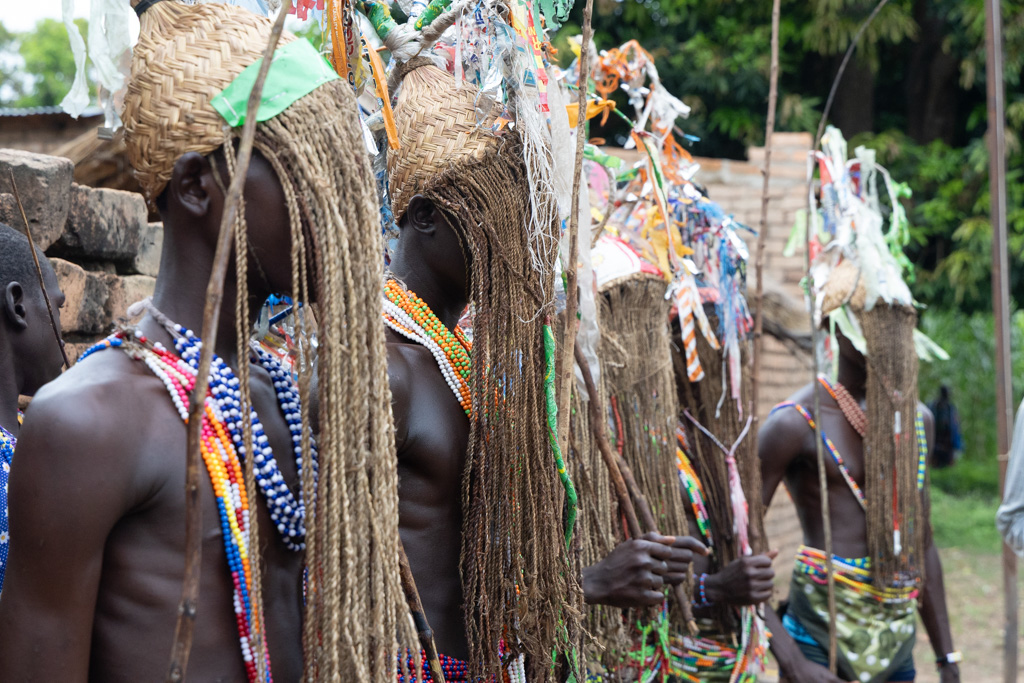
The Mouroum and the Ndo of Laï and Bongor
We learned about the Ndo initiation rite of the Mouroum people, one of the longest initiation processes we encountered during this exploration.
Many young Mouroum currently live in N’Djamena, where they study or work. When the time comes for their initiation, the young men travel from the capital to Laï to reconnect with their home community.
The initiates spend about six weeks in the forest, separated from their daily lives and under the supervision of the elders.
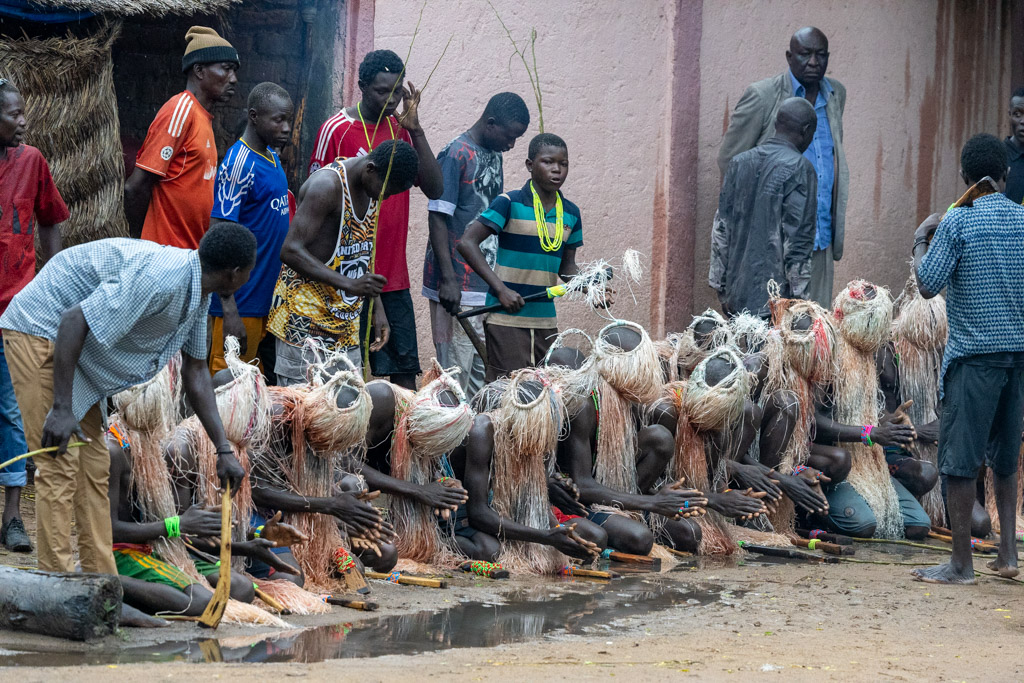
This period is an essential part of the rite. The young people receive instruction, learn about the responsibilities associated with their new status, and form bonds with the other members of their initiation cohort.
The return from N’Djamena shows that tradition retains its power to bring together a scattered community. Even though the young people have grown up in the capital, the initiation ceremony continues to connect them to their place of origin, their families, and their Mouroum identity.
At the end of the weeks of isolation, leaving the forest and returning to the village publicly symbolize the transition to a new stage of life.
The Sara Madjebei and the Baia Initiation
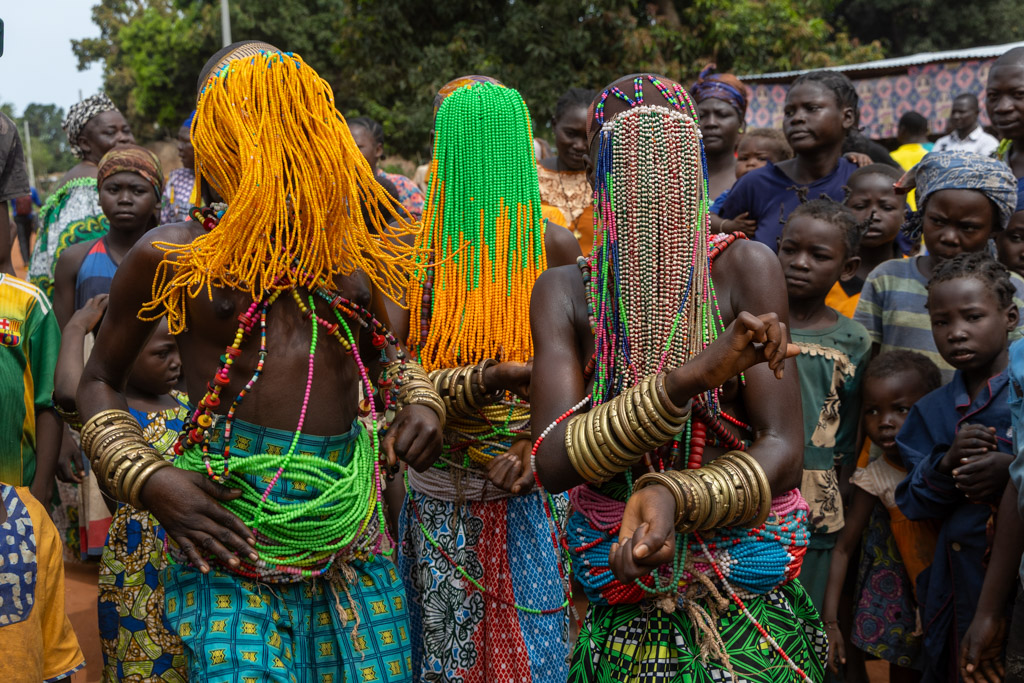
Among the Sara Madjebei, we found a Baia initiation ceremony in which a large group of girls and young women were participating.
The initiates wore ceremonial bracelets that identified them as members of the group. Their adornments, collective movements, and dance were all part of their public presentation to their families and the community.
The Nunga Bracelets and the Baia Initiation
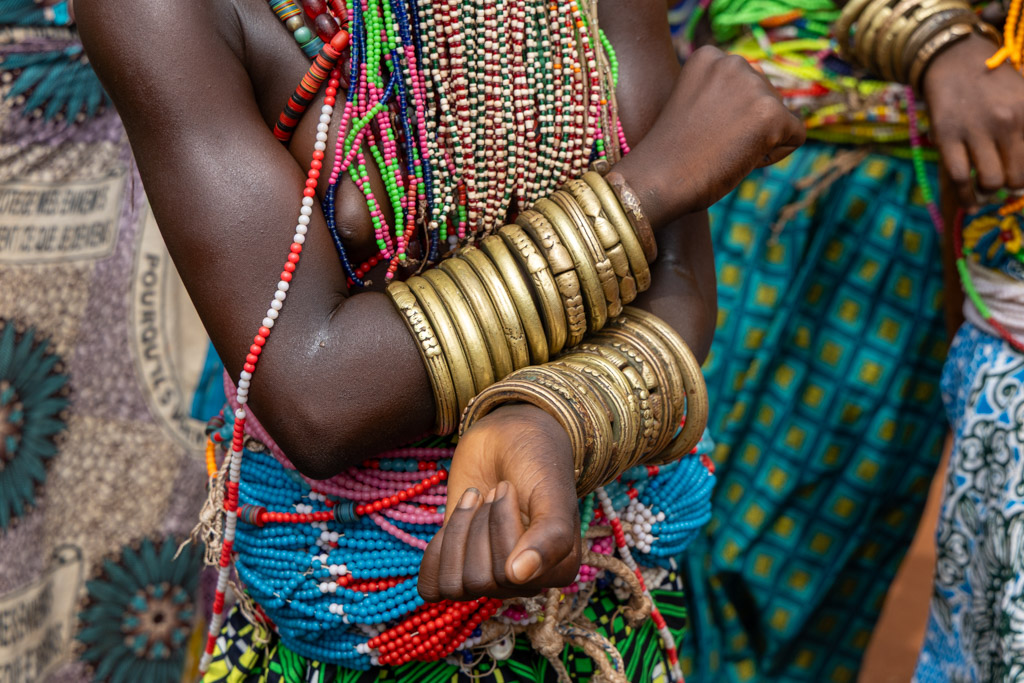
One of the most distinctive elements we encountered during the Baia female initiation among the Sara Madjebei was the Nunga bracelets worn by the girls.
The funeral ceremonies
During our stay, the Baia initiation coincided with a traditional funeral ceremony of the Sara Madjebei people.
The gathering brought together two essential aspects of community life: welcoming a new generation and honoring the memory of a deceased person.
In many communities in southern Chad, funeral ceremonies are not limited to the burial. Afterward, gatherings may be held that include family members, neighbors, and people who have come from other towns.
The Gor People and the Mbeul Ceremony
Our research also led us to the village of Gor and its Mbeul ceremony.
According to information gathered in the field, the Mbeul is part of a ceremonial cycle that may take place approximately every three years. The process can last several months, generally between November and May, although the dates always depend on the decisions of each community.
The connections we made during this expedition will allow us to continue researching the Mbeul and return to the Gor communities when the festival is held again.
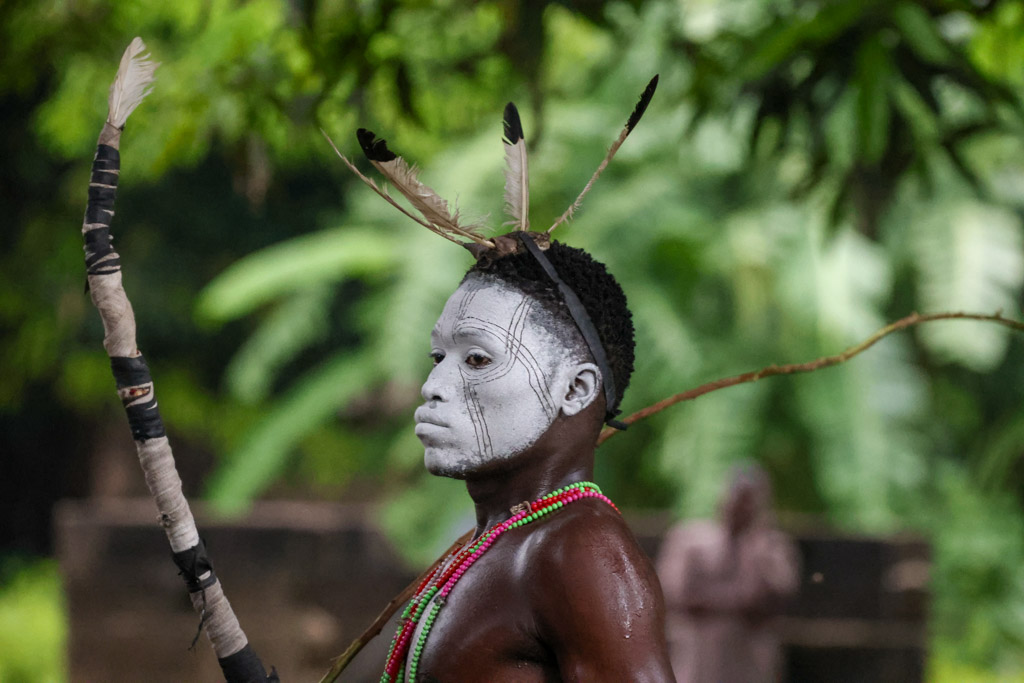
Tradition and Change in Southern Chad
The peoples of southern Chad do not live in isolation from the modern world.
Traditional authorities and rites of passage coexist with Christianity, schools, cell phones, cities, and migration to N’Djamena. Some ceremonies have disappeared in certain towns; others are held less frequently or have modified some of their practices.
Elsewhere, initiation rites continue to bring together hundreds of people. Young people living in the capital return to their communities, families reunite, and elders continue to pass on some of their knowledge.
These cultures are not frozen in the past. They are living societies that decide which elements they wish to preserve, transform, or discard.
Travel with respect for local communities
Witnessing an initiation ceremony is not the same as attending an African festival
The dates are set by the communities and are subject to change without notice. Some parts of the ceremonies are open to the public, while others are reserved for initiates. The opportunity to observe does not automatically imply permission to take photographs or record video.
In Kumakonda, we ask for permission before documenting a ceremony and respect the boundaries set by those in charge. We do not ask for scenes to be repeated, nor do we interfere with the course of the rituals.
A Trip from Kumakonda to Southern Chad in 2027
The expedition carried out in 2026 allowed us to open a new route through southern Chad and establish direct contact with the Ngabaye, Madjebei, Gor, and Mouroum communities.
We’ll be back in 2027
The route will be based on the places, contacts, and insights gained during this exploration. We will seek out ceremonies that may be taking place during the trip and adapt the itinerary when the communities authorize our presence.
We cannot guarantee participation in a specific introductory course. Schedules are subject to change, and the final decision always rests with the participants. We can, however, offer an expedition based on firsthand knowledge of the region, our accumulated experience in Chad, and genuine field research.
Another Side of Chad
Southern Chad offers a completely different view of the Ennedi deserts, the Ounianga lakes, and the Tibesti Mountains.
It is a land of savannas, great rivers, and farming communities where rites of passage still mark key moments in social life.
The corn-leaf masks of the Lau initiation rite, the young Mouroum men returning from N’Djamena to spend six weeks in the forest, the Madjebei girls’ bracelets, and the Gor people’s Mbeul ceremony are all part of an extraordinary and largely undocumented cultural heritage.
After many years of traveling through Chad, this expedition has revealed a new human landscape to us. In 2027, we will return to continue learning and sharing our experiences with travelers who are willing to explore with patience, flexibility, and respect.
Frequently Asked Questions About Traveling to Southern Chad
Who are the Sara people?
Sara is a broad term used to refer to various ethnic groups in southern Chad. Each group has its own identity, language, and ceremonial traditions.
What initiations did Kumakonda encounter?
During our fieldwork, we encountered the Lau and Ndo initiations of the Ngabaye people, the Baia initiation of the Sara Madjebei people, and the Ndo mouroum of the Laï people. We also studied the Mbeul ceremony of the Gor people.
How long does the Mouroum initiation ceremony last?
Young Mouroum spend approximately six weeks in the forest during the Ndo initiation process.
How many children participated in the Lau ngabaye?
Approximately 225 children participated in the ceremony we came across during our exploration.

Autor:
Austerio Alonso
Co-founder of Kumakonda. Passionate of Africa. Specialist in the design, preparation and realization of expeditions in Africa. Content creator.
Travel with us