


In Gabonese nightlife, there is a world of initiation that never sleeps. It is the world of the Bwiti. And on my trip to Gabon in June 2025, I had the opportunity to delve a little deeper into this complex system of rituals and secret initiatory societies known as the Bwiti.
Having attended a number of Bwiti ceremonies in Gabon involving different ethnic groups, I’d like to share with you some of the highlights of this traditional ritual, which lasts all night, from sunset to sunrise, without interruption.
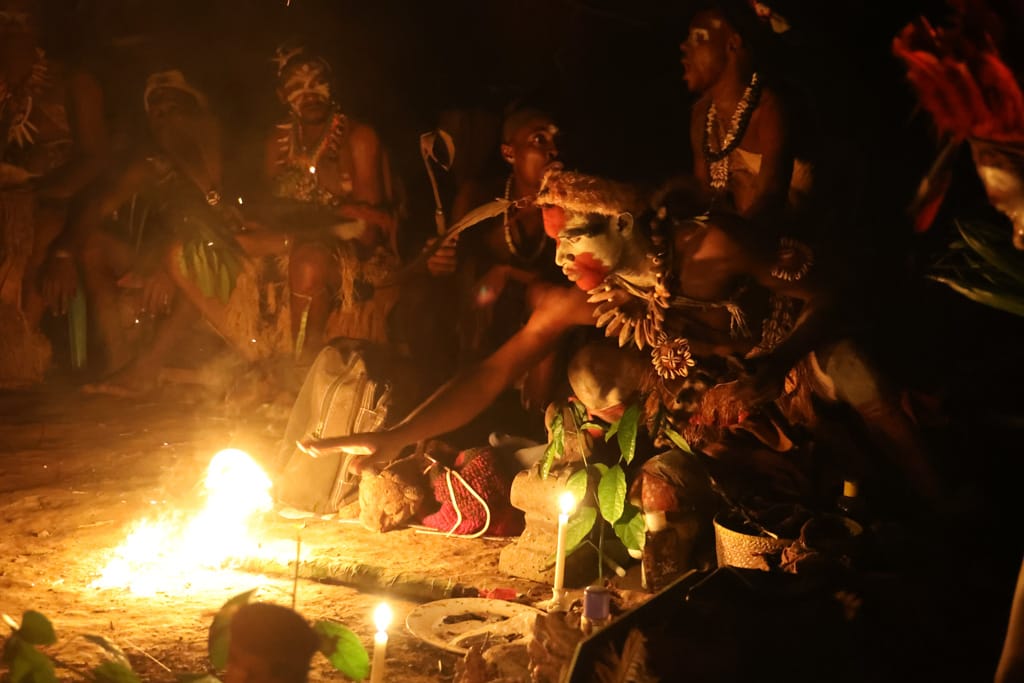
Clarification: I am not initiated into Bwiti, so I do not have access to much of the knowledge or a significant portion of the content of the rituals that take place during the ceremonies. This is a complex world, full of variations and rich in symbolism—one that would take years of study to learn and understand, which is not the case for me.
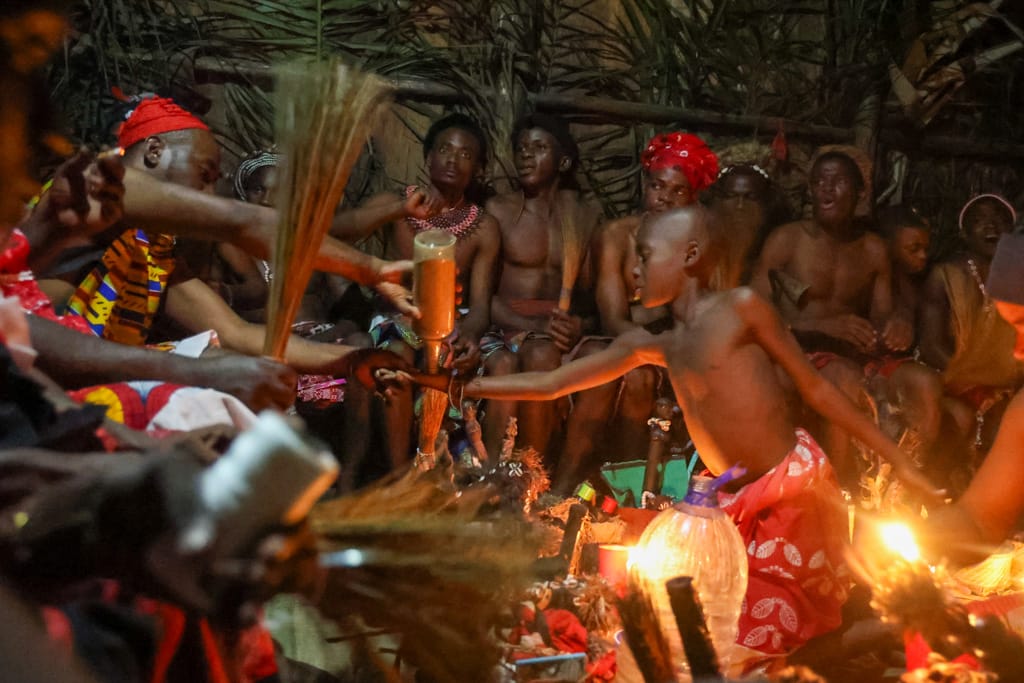
The Power of Bwiti: The Forest Culture of Gabon
Bwiti is a religion that originated in Gabon. An initiatory tradition, rite of passage, philosophy, and spiritual path that is practiced in a wide variety of ways depending on ethnicity, the type of ceremony, or the region of Gabon. This tradition is inseparable from the iboga plant (bois sacré), which is used during the initiation phase and in all ceremonies.
In Bwiti ceremonies, through the consumption of iboga, dance, chanting, and ritual music, participants enter a trance-like state and achieve a spiritual connection with their ancestors that lasts well into the morning.
The Pygmies of Gabon are the guardians of tradition, but various local ethnic groups, such as the Fang and the Simba, have developed the Bwiti and practice it in a wide variety of ways.
The Origins of the Bwiti Tradition in Gabon
Bwiti is the spiritual tradition passed down by the Pygmy peoples, the first inhabitants of the forest. Bwiti is connected to the forest, its elements, its plants, and its entities. Through this practice, the forest and the ancestors are honored. It is believed that the Tsogho people were the heirs to this tradition after the Pygmies, and that it was later adopted and adapted by other ethnic groups in Gabon.

Iboga, Gabon’s “sacred wood”
Iboga is a sacred plant in Gabon and an inseparable part of the country’s culture. It is sacred because it belongs to a very specific environment and is regarded as such within the Bwiti spiritual tradition. The roots of this shrub, which grows only in Central Africa, are used. After uprooting the shrub, the roots are harvested and cut to extract the tenderest part. It can be consumed by chewing it directly or by drying it and grinding it into a powder.
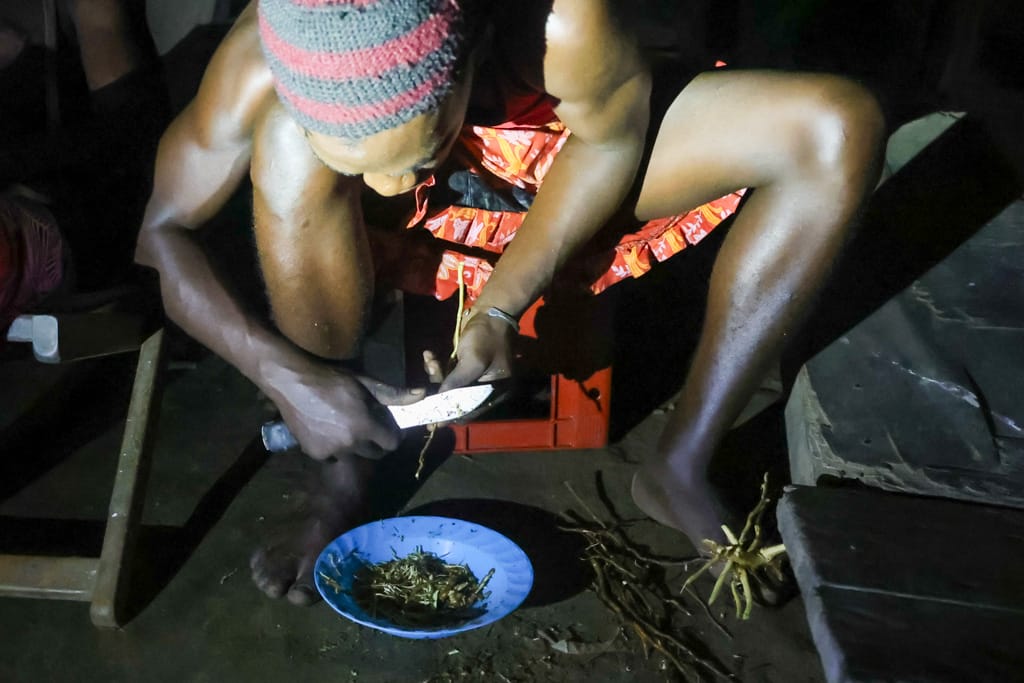
Participants in the Bwiti begin consuming it to varying degrees from the start of the night. Sometimes it is consumed in private, and other times in a ritual and sacred manner in the Ebandza (temple), where the Nganga or Nima (ceremony leader) distributes it to all participants.
After repeatedly consuming this iboga root throughout the night, the participants begin to embark on a “journey of knowledge and experimentation”—which I cannot discuss, as I am not initiated. What I can say is that after ingesting three or four handfuls of iboga, it’s easy to stay awake all night, but in my case, I was far from experiencing any sensory trip. As with any product, there are different qualities and different types of iboga.
The Healing Power of Bwiti
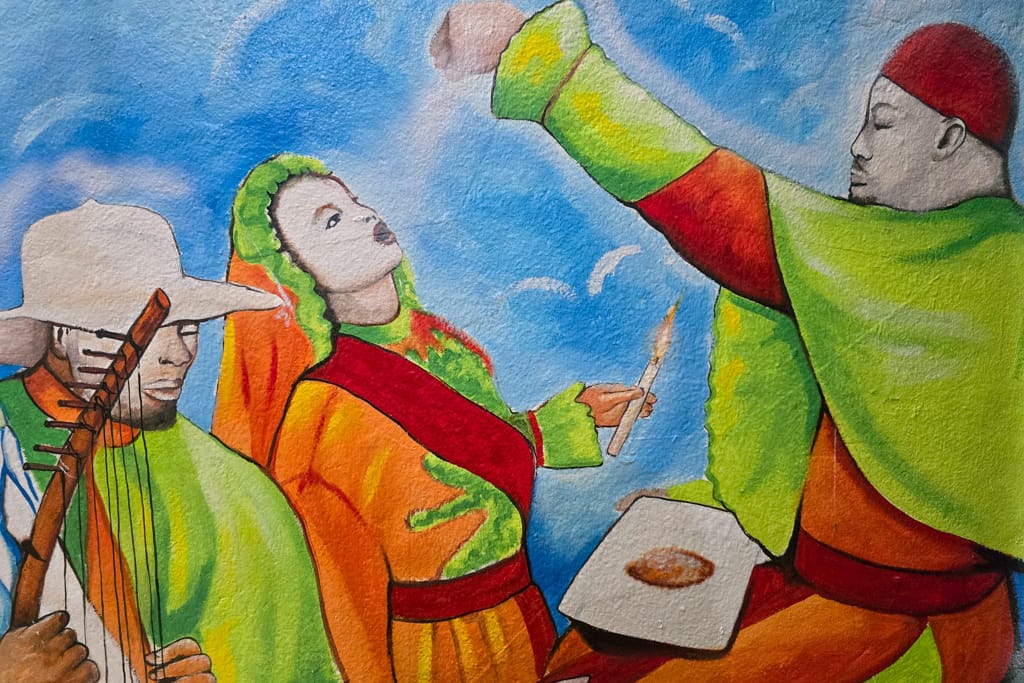
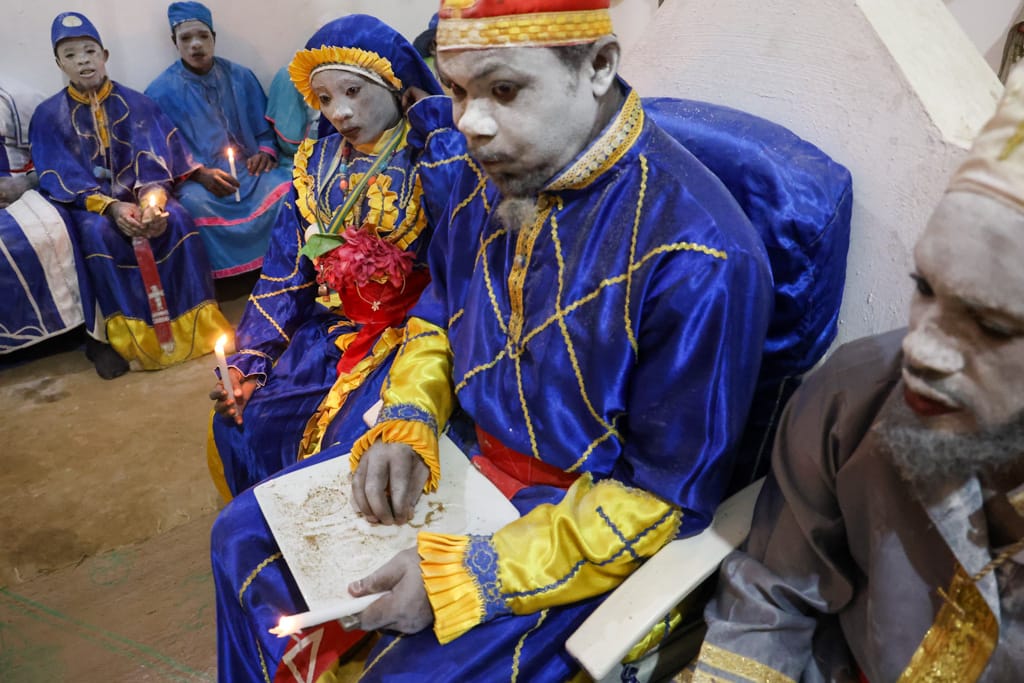
Bwiti is also considered a form of medicine. In Gabon, it is common to hold Bwiti ceremonies focused on healing and curing people. Those who ask the Nima or Nganga to perform a specific ceremony to treat a medical condition are considered “patients.” In the world of Bwiti, no one doubts the healing power of iboga or the practice of Bwiti.
The Ebandza Temple and the Development of Bwiti
Although it depends on the type of ceremony, the Bwiti initiation takes place first in a sacred part of the forest and then in a rectangular structure that serves as a “temple” and is locally known as ebandjà (or ebandza).
In Gabon’s more traditional regions—which is to say, almost all of them—it is common to find at least one ebandja in every village, sometimes two—one for men and one for women—and sometimes more than two, depending on the ethnic group and the specific variant of Bwiti practiced. When the days of an important ceremony arrive, the temple’s caretakers prepare it for the occasion by covering it with green leaves and ensuring it is in perfect condition.

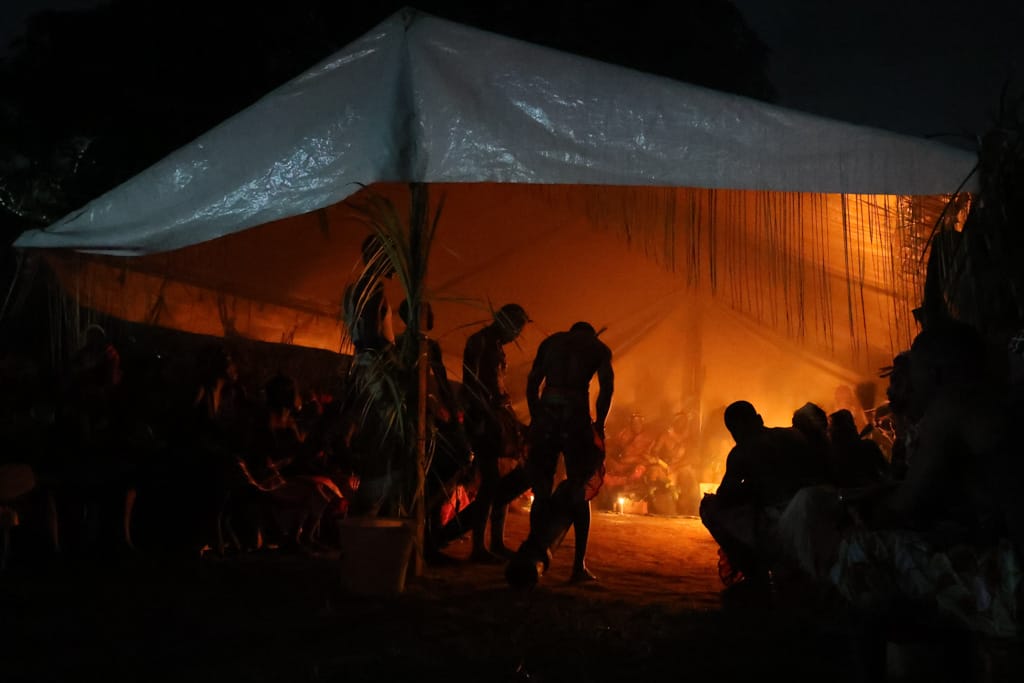
During the ebandja, a connection is established between the participants in the Bwiti, the ancestors, and—who knows—perhaps other worlds, through the ingestion of iboga. The figures of the ancestors and spirits—which take shape in the form of face paint and masks—are carved into poles, harps, and bells.

Bwiti Musical Instruments
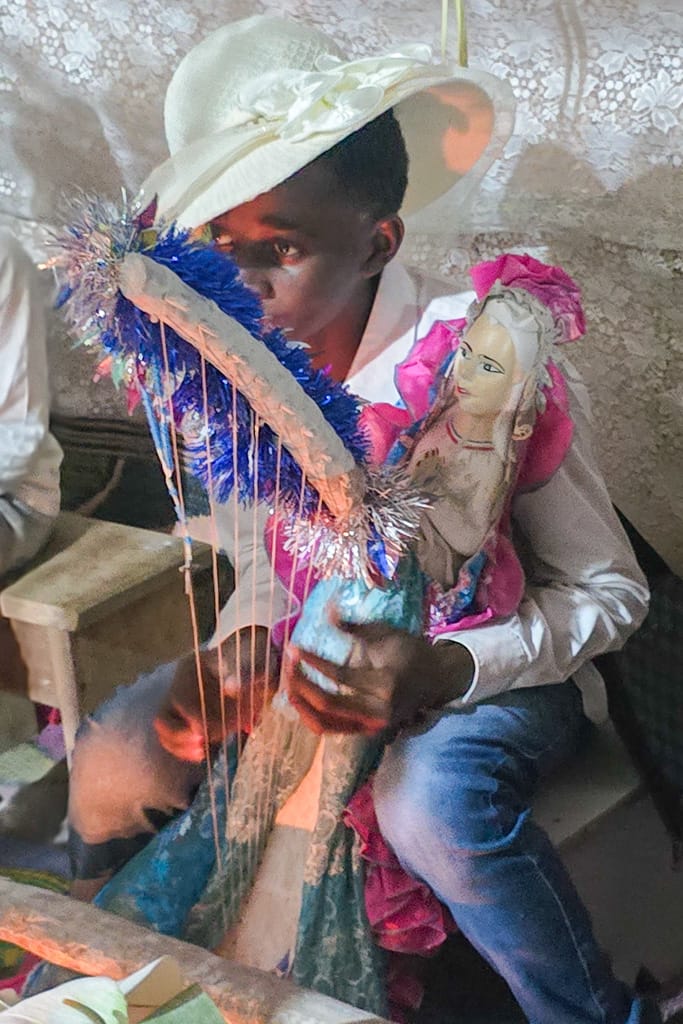
Music, fire, and makeup are omnipresent elements in Bwiti. All ceremonies and initiations require different instruments: stringed, percussion, and wind instruments, with the harp and the mouth bow perhaps being the most important. Most of these instruments are sacred, with very specific meanings, and some—such as the harp in Bwiti Elumba—are considered and represented as God Himself. These instruments are also used during Bwiti rituals to induce a trance.
The Ngombi, the sacred harp and master instrument of the Bwiti
The Ngombi, or harp, goes far beyond the boundaries of musical folklore in Gabon to enter the ethno-religious world of the Fang people. I have only seen this instrument used in Bwiti Mbiri Fang ceremonies, which does not mean that other ethnic groups, such as the Tsogho or the Simba, do not use it in specific ceremonies or occasions. I do not know.

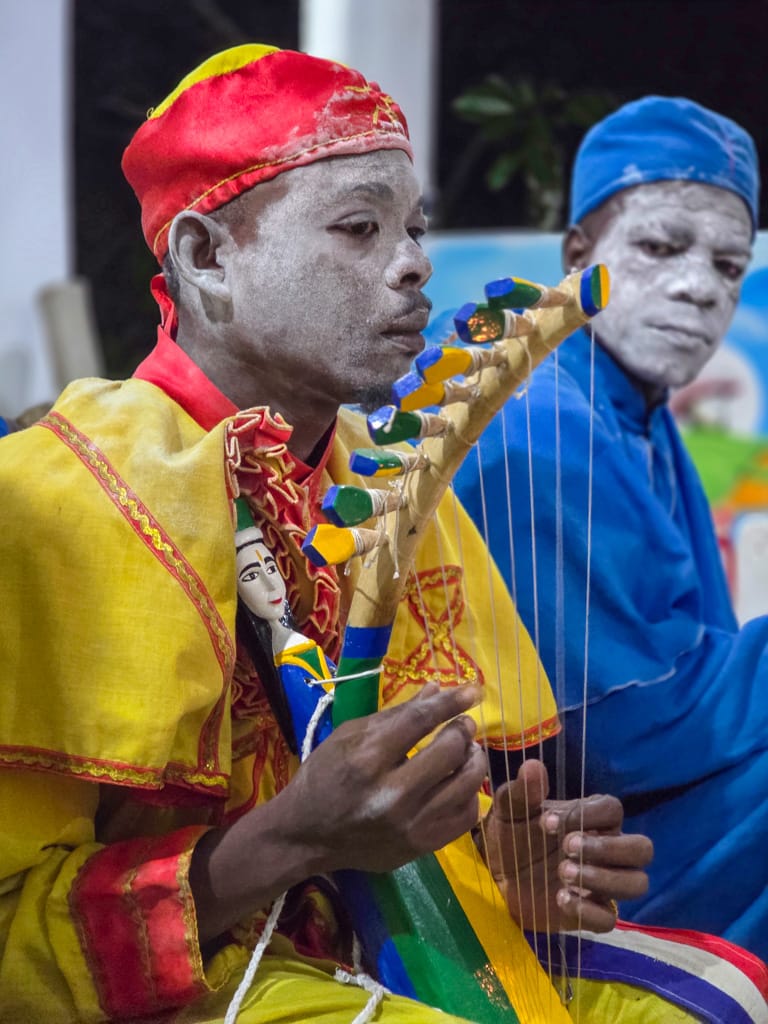
According to the beliefs of the Fang people “initiated” into the Bwiti, the harp reenacts and dramatizes the mythical story of the death of a woman sacrificed during nighttime ceremonies. The Ngombi represents the body of the woman whose first ancestor, Disumba, is represented by the left head carved at the end of the harp’s neck. The harp is God to the Fang during the Bwiti. For the “initiates” themselves (who are often also Catholics), the harp also symbolizes the Blessed Virgin, the Gningone Mebeghe, about whom the Fang have composed numerous hymns. They venerate her as the savior of the black race and dedicate weekly prayers and dances to her.
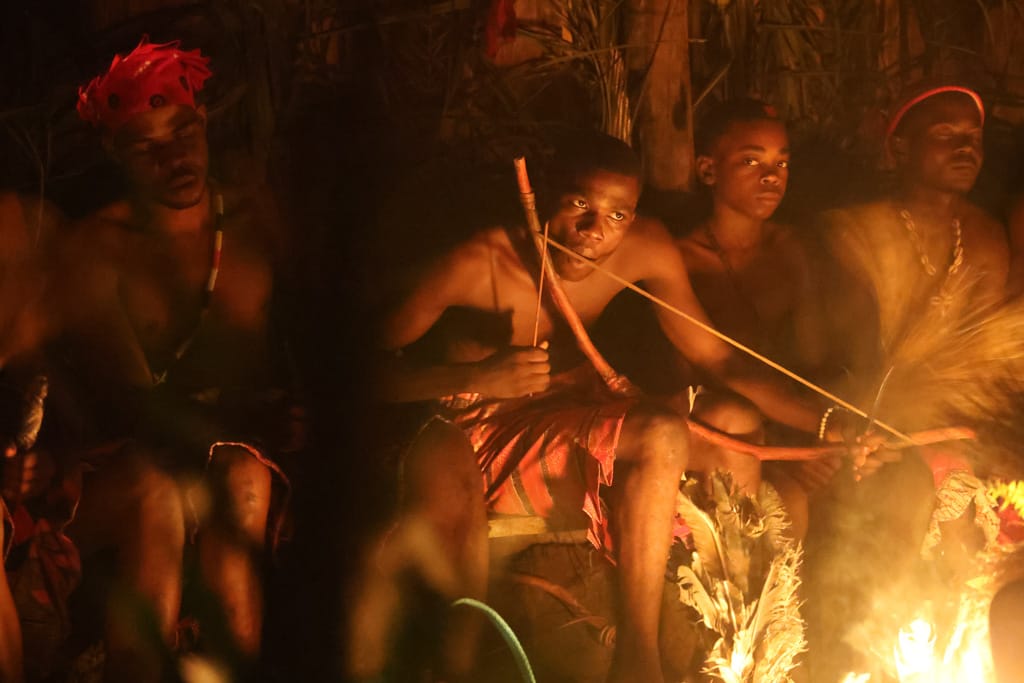
The Mougongo, or mouth bow, and other Bwiti instruments
The mougongo, or “arc en bouche,” is considered the oldest stringed instrument and has been used in the traditional music and rituals of many peoples in Gabon since time immemorial.
The mougongo is made of bent wood and rattan string; it is played by striking the string with a stick and modifying the sound with another stick, creating a unique symphony. For the Pygmy peoples of Gabon, the stringed bow represents “the voice of the Creator.”
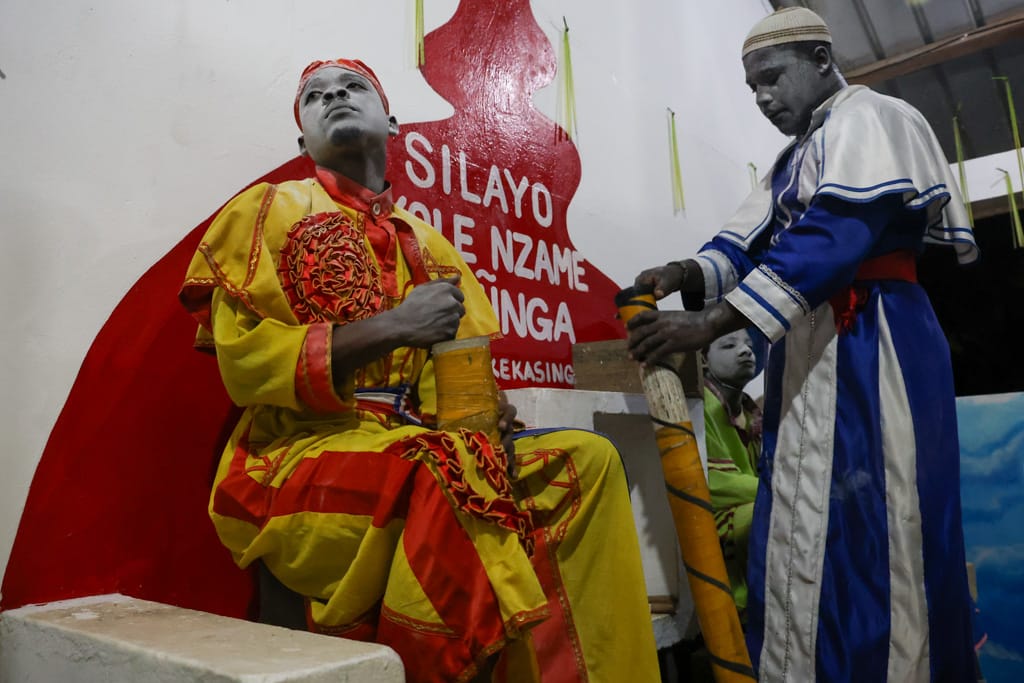
Each ceremony and each ethnic group uses different instruments. Some, such as the bizumba—hollow bamboo tubes—I only saw during the Bwiti Mbiri ceremonies, where they are used in place of drums.

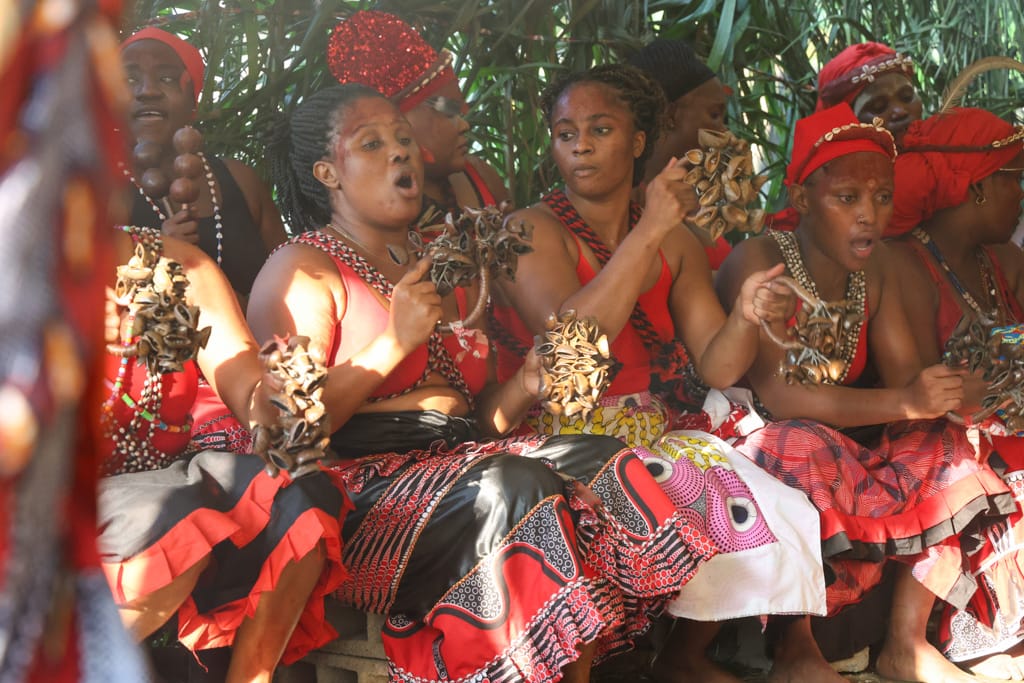
Fire and the Moupeto, the torch that accompanies the Bwiti
Fire plays a central role in Bwiti ceremonies. The Bwiti tradition has always used fire as a tool for protection against evil spirits, healing, transformation, and connection with the divine. Fire is considered a sacred element, just as iboga and the harp (musical instrument) are.
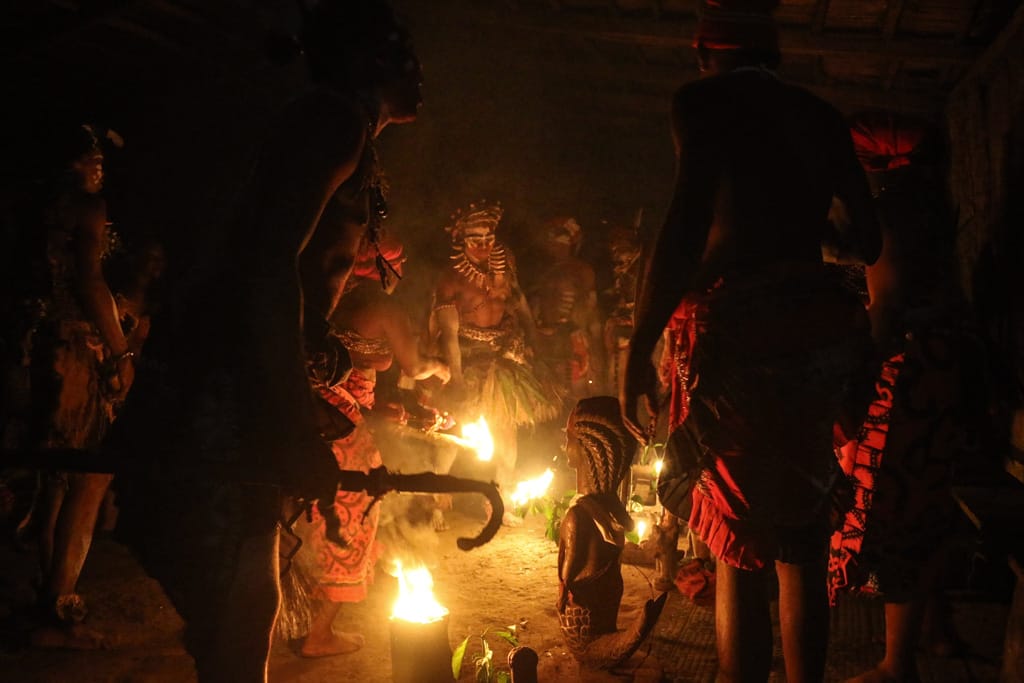
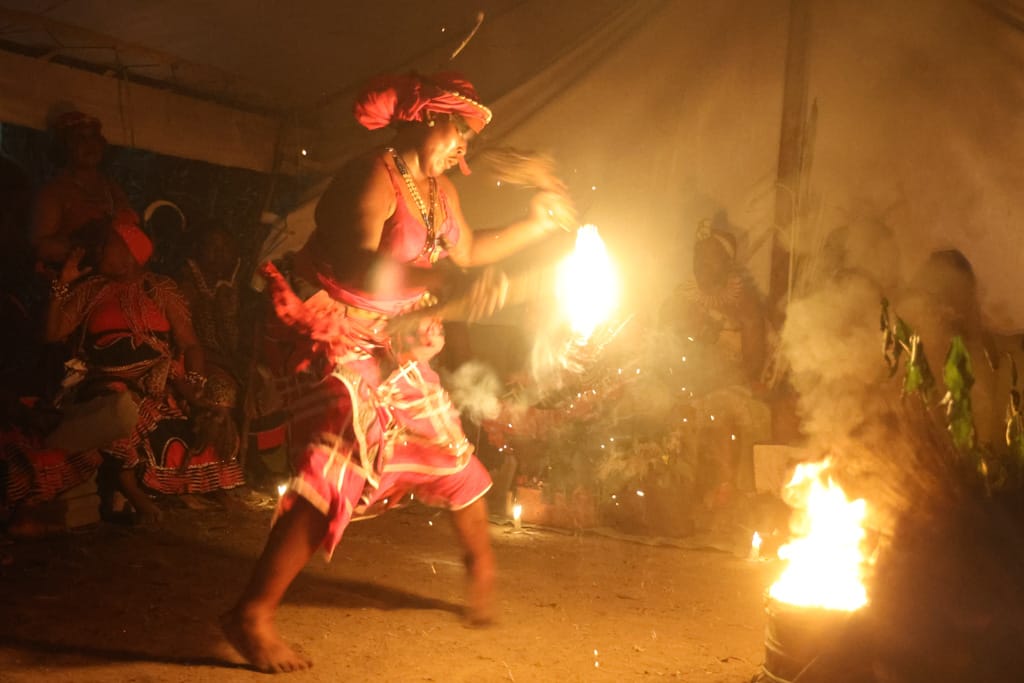
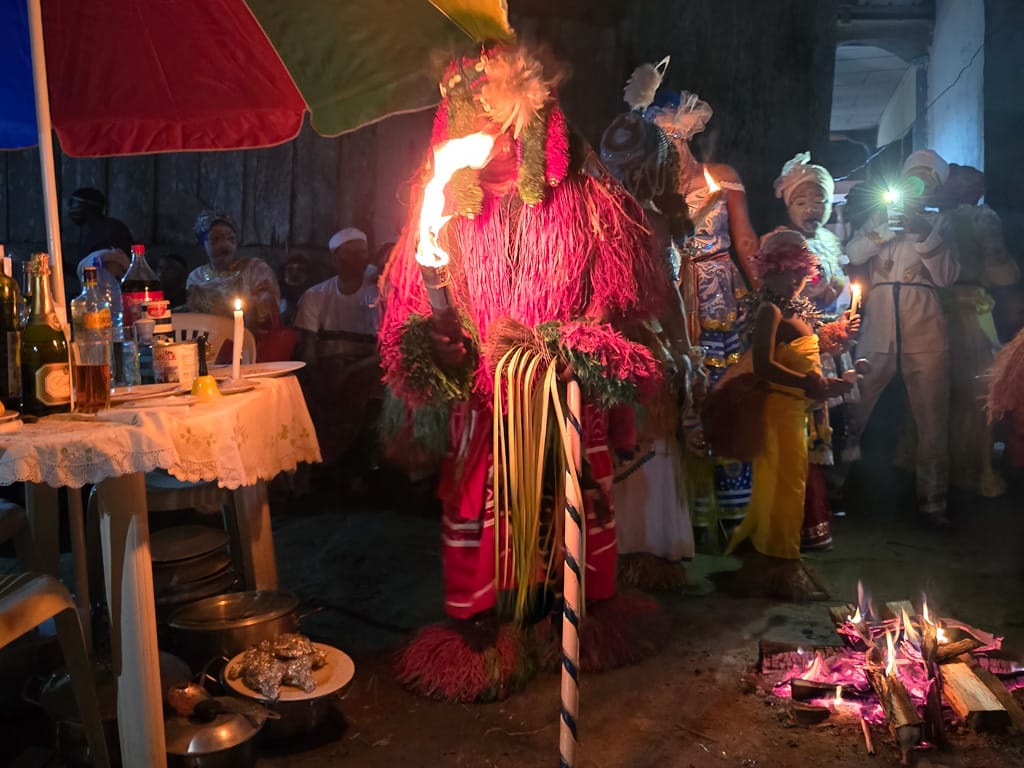
Throughout the night, various Banzis (initiates) will be responsible for keeping the fires burning during the Bwiti ceremonies; these fires not only illuminate the ebandja (temple) but also hold deep significance. There is the torch and a cylindrical ceremonial fire around which everything takes place. The torch, or “Moupeto,” is made from the sap (resin) of the Okoumé tree and the bark of the Okala (a tree native to Gabon); it is an indispensable element during Bwiti rituals and serves to ward off evil spirits, as well as being effective against mosquitoes. These torches, which burn all night long, give off a distinctive aroma.


Makeup, or When the Spirits Come…
Bwiti nights begin gradually. The banzis, or initiates, arrive at the ebandja (temple) and take their places. It is time for the speeches. The master of ceremonies—also known as the Nima or Nganga—delivers a long speech interspersed with energetic music and songs.
These hours, from the afternoon until the early morning, are the period during which the initiates gradually enter a trance through the use of iboga.
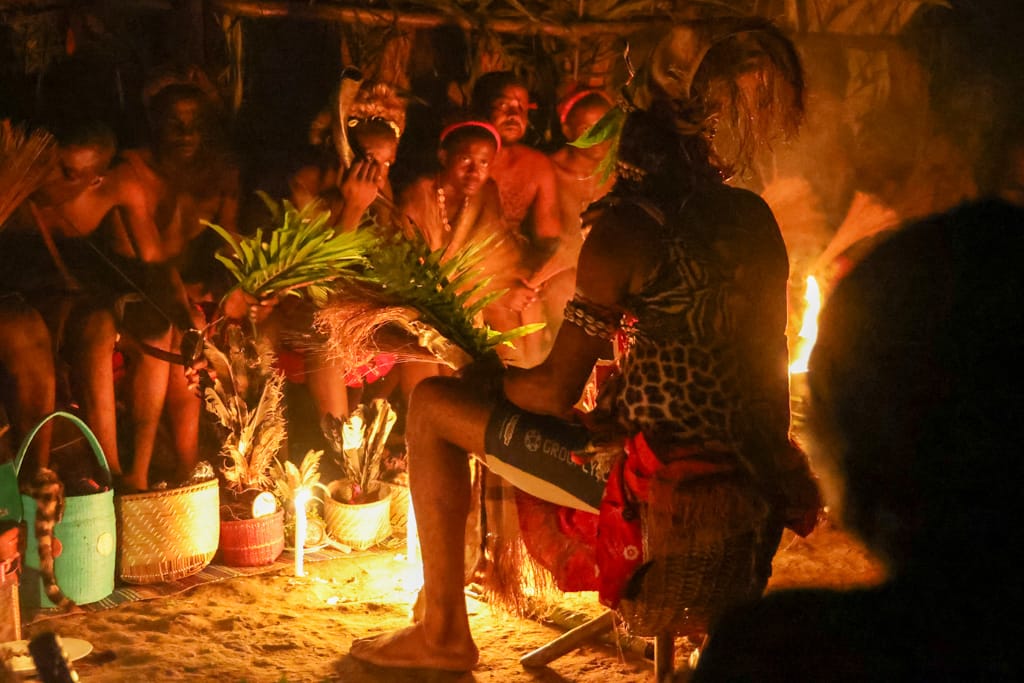
As can be seen in the photo above, each participant arrives at the temple with a basket or backpack. Inside, they carry their outfits, a mirror, and their makeup for when the time comes—well into the early morning—to communicate with the spiritual world through iboga.
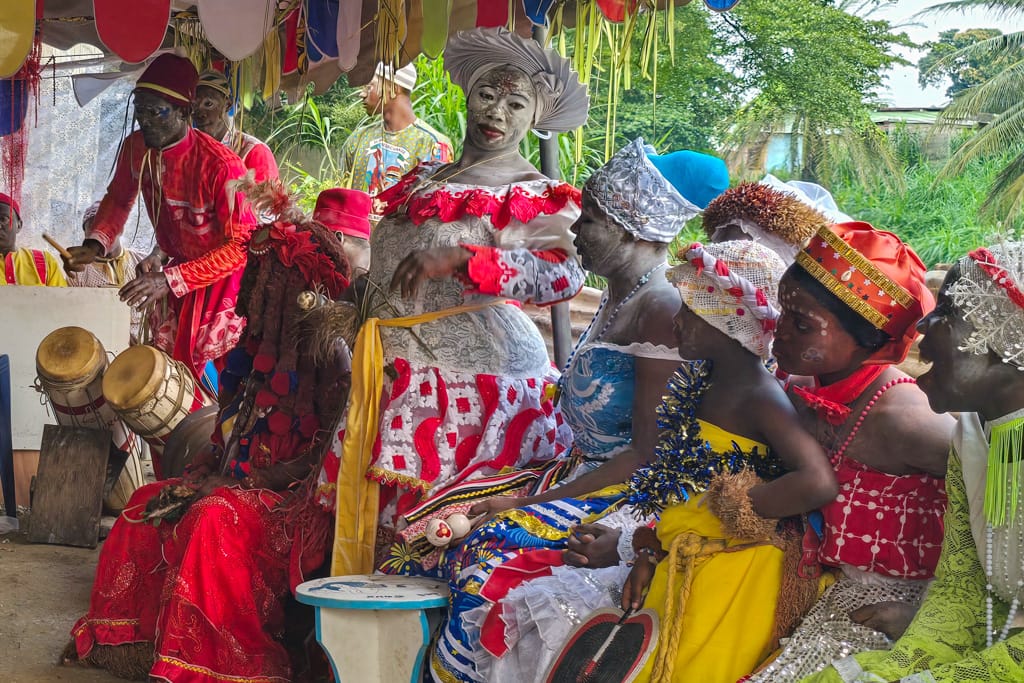
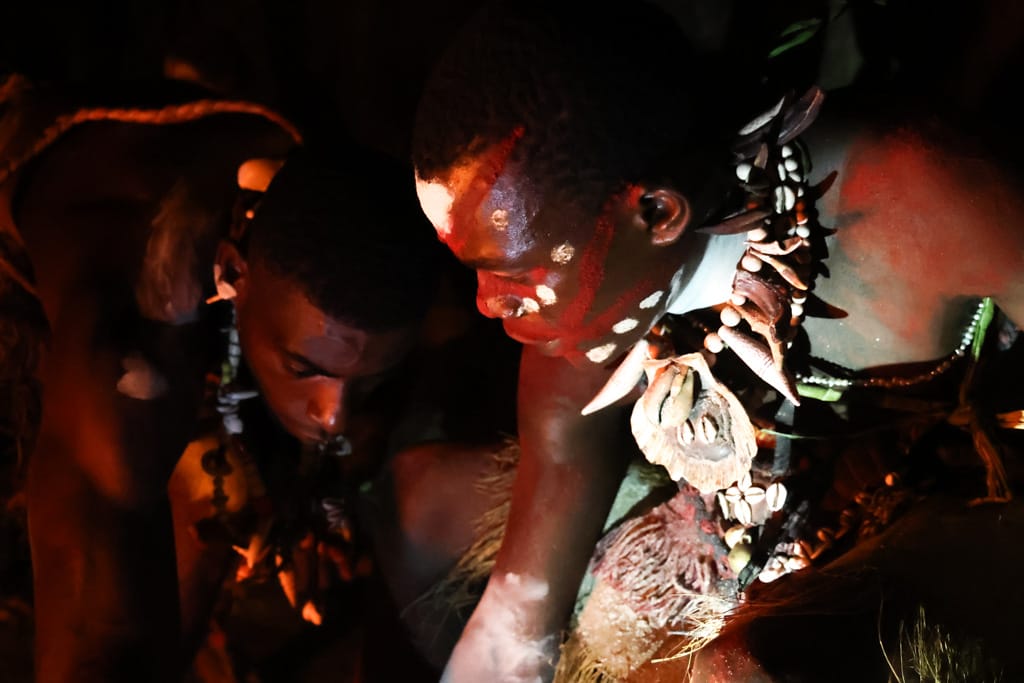
In every Bwiti ceremony I attended—whether in the traditional style of the Pygmy, Simba, or Tsogho peoples, or in the Fang style—the same pattern always repeats itself. At a certain point in the early morning, the ceremony pauses; the women usually go to a house, and the men either go to the river to wash or begin to get dressed and apply makeup, each one embodying the spirit or ancestor they represent.

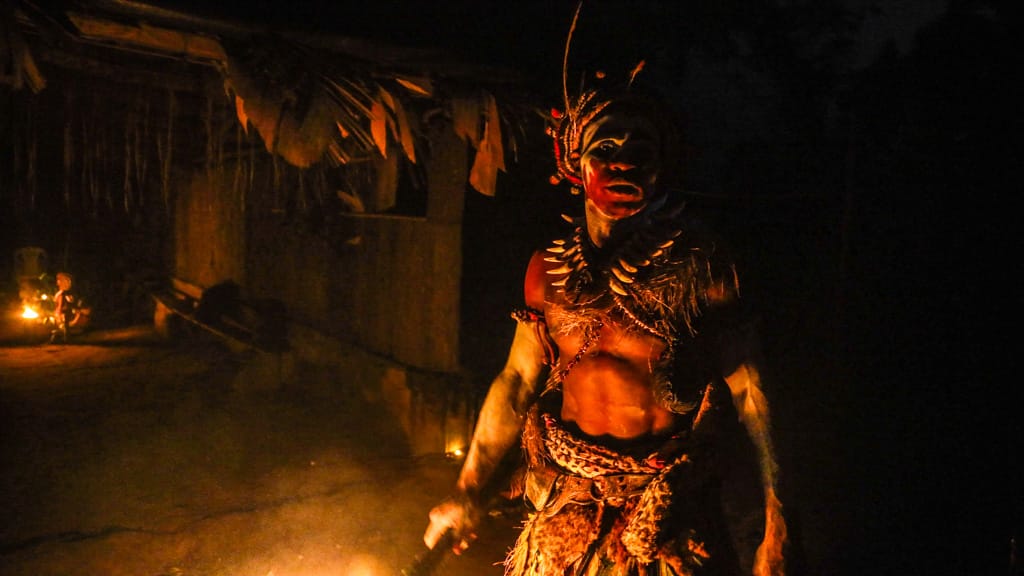
The men gradually change their clothes, begin to don animal skins that ward off evil spirits, and also start applying makeup. Watching the preparation process—in which each Banzi will represent a spirit—is one of the most spectacular parts of the ceremony from an outsider’s perspective.

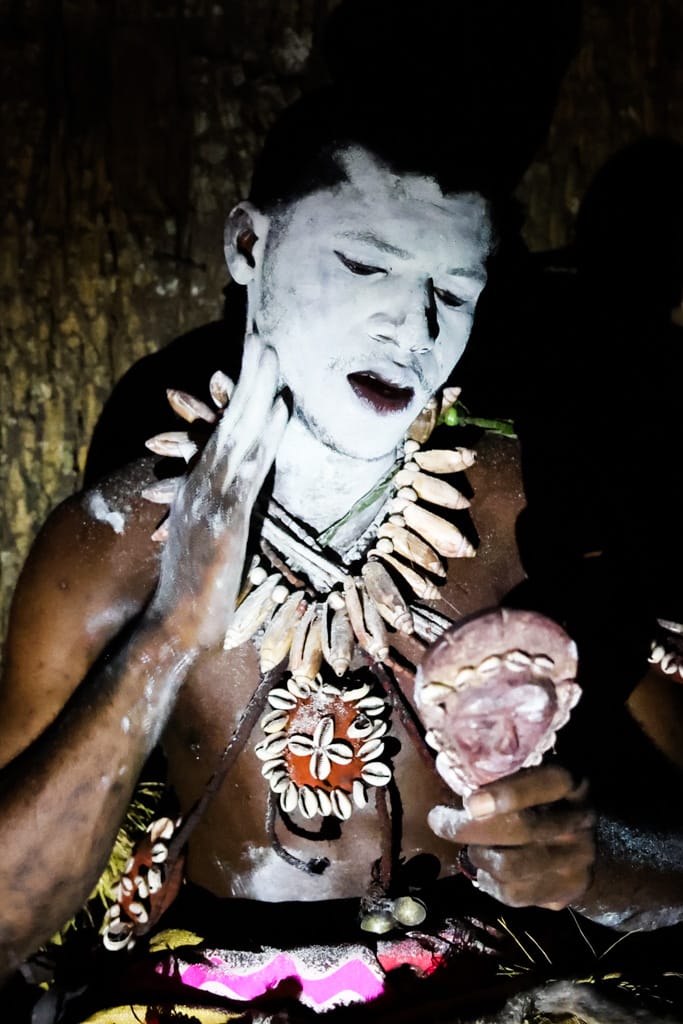
The Role of the Mirror in Bwiti
Nothing happens by chance during the ceremonies, not even the one involving mirrors; we are in a higher realm accessible only to the initiated. The purpose of the mirror is to remind us of the presence of the ancestors, who influence and can influence the lives of the living. The mirror is a symbolic and magical element, like a gateway to the world of the ancestors.

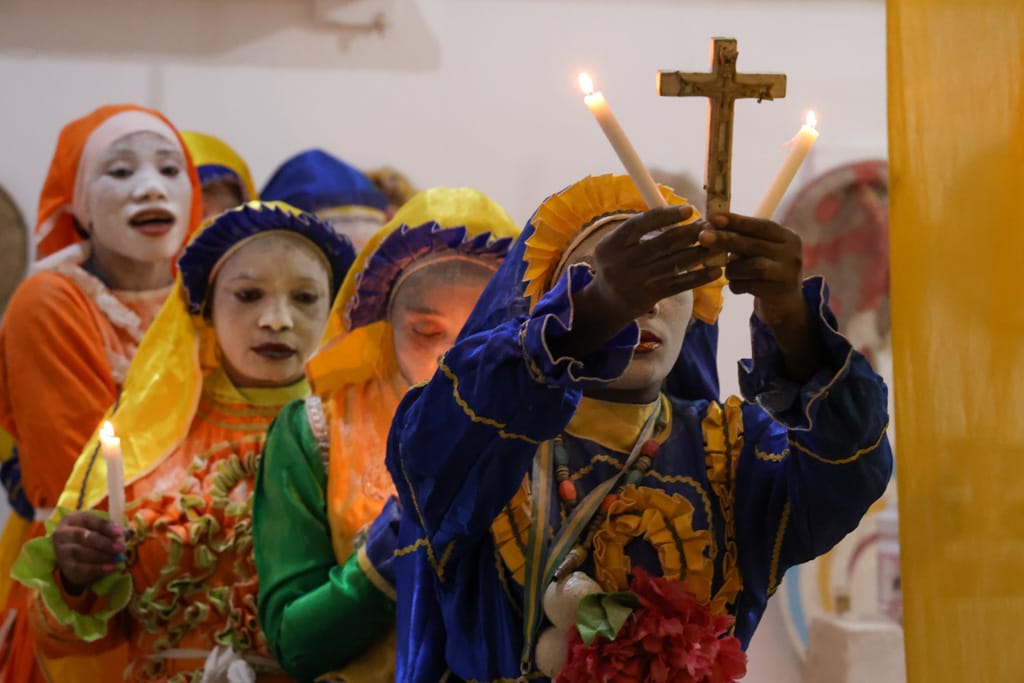
Little by little, the women begin returning to the temple; they, too, are wearing makeup and dressed differently, in much more elaborate outfits. It is around 2:00 a.m., and the ceremony now changes substantially.
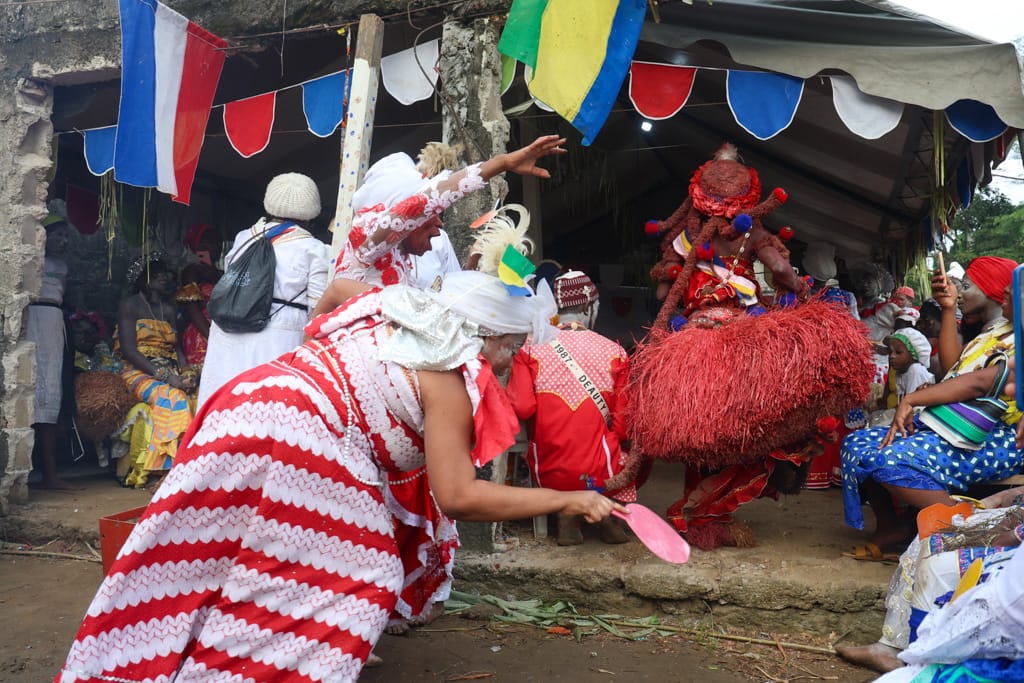
Now each of the spirits will step into the center of the ebandja, performing a frenzied dance with a torch in hand. During this dance, they will travel, one by one, to every corner of the temple and the outer courtyard, cleansing the entire space of evil spirits with the torch’s flame. After the purification, the ritual dance leads to the calling of the spirits. This is common to all the Bwiti ceremonies I have attended. If you’d like to delve deeper into each of the steps of the Bwiti and gain a thorough understanding of this Gabonese religion, I recommend visiting the following link: The Bwiti in Depth.
Consultations with the Ngangas and Spirits
When the ceremony reaches its climax, it is time to consult the spirits. This is done in different ways depending on the type of Bwiti ceremony. It usually takes place around 4 or 5 in the morning. The dances and consultations with the spirits continue until morning. It’s incredible to see how, after 12 hours of ceremony, people can still keep dancing, as shown in the following video.


Mbiri Bwiti Fang Ceremony and Elomba Rituals
On this latest trip to Gabon, I’ve been immensely fortunate to delve into the cultural heart of the country. Honestly, I hadn’t managed to do that on previous trips there. Of course, this was thanks to the people I met along the way during those three weeks of travel. These Bwiti ceremonies are private, and it’s not always easy to gain access to them or to be invited.

Of all the cultural experiences I’ve had nonstop on this trip, I think I was undoubtedly most deeply moved by what I experienced on the last Saturday of my trip to Gabon. If I had to choose the Bwiti experience that made the biggest impression on me, it would surely be the Mbiri Fang and the Alomba ceremony.


I believe that the Alomba is one of the most profound cultural experiences one can have on the African continent. Not only because of its visual impact, but also because of its rich symbolism and the complexity of its ceremonial structure. It is a breathtaking spectacle. It is clear that such heights can only be reached through iboga and over many generations. The Elumba Fang is possibly the most expensive ceremony held in Gabon.

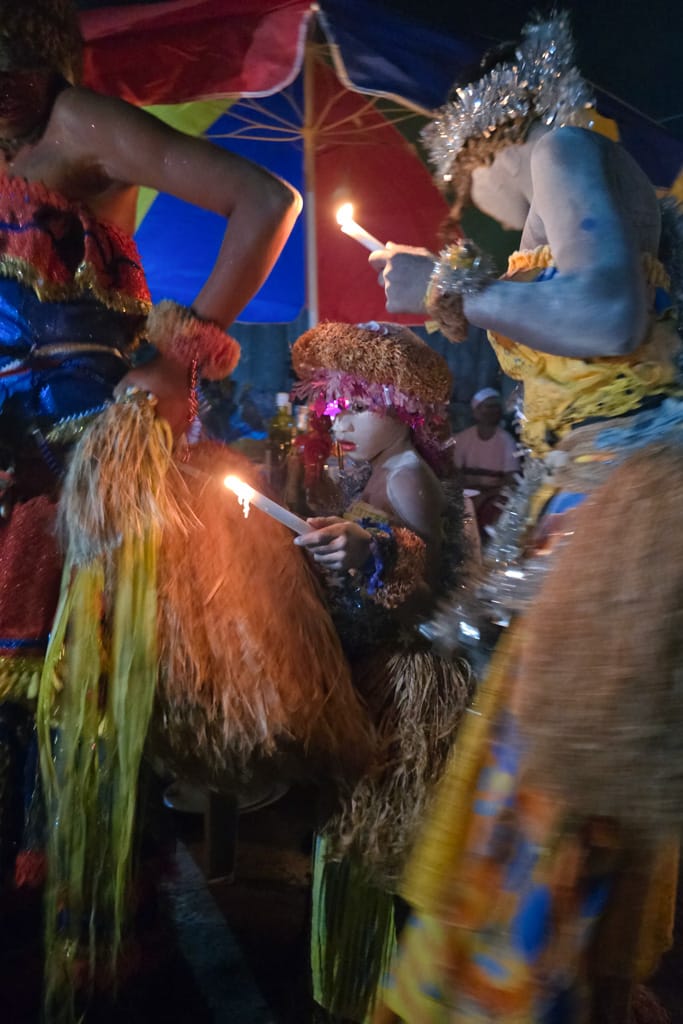
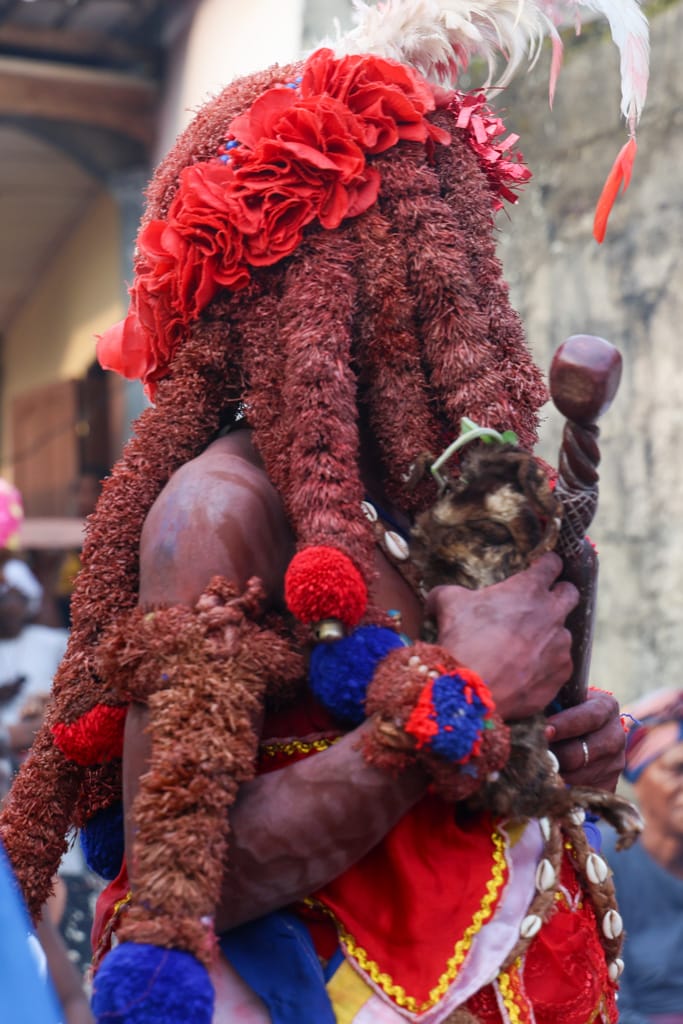
The Nima, great spiritual masters, spend large sums of money on each of these ceremonies, where an all-you-can-drink bar featuring top-brand beverages of every kind, food banquets (before and after the ceremony), and, of course, iboga flow freely to summon the spirits. And what outfits!!

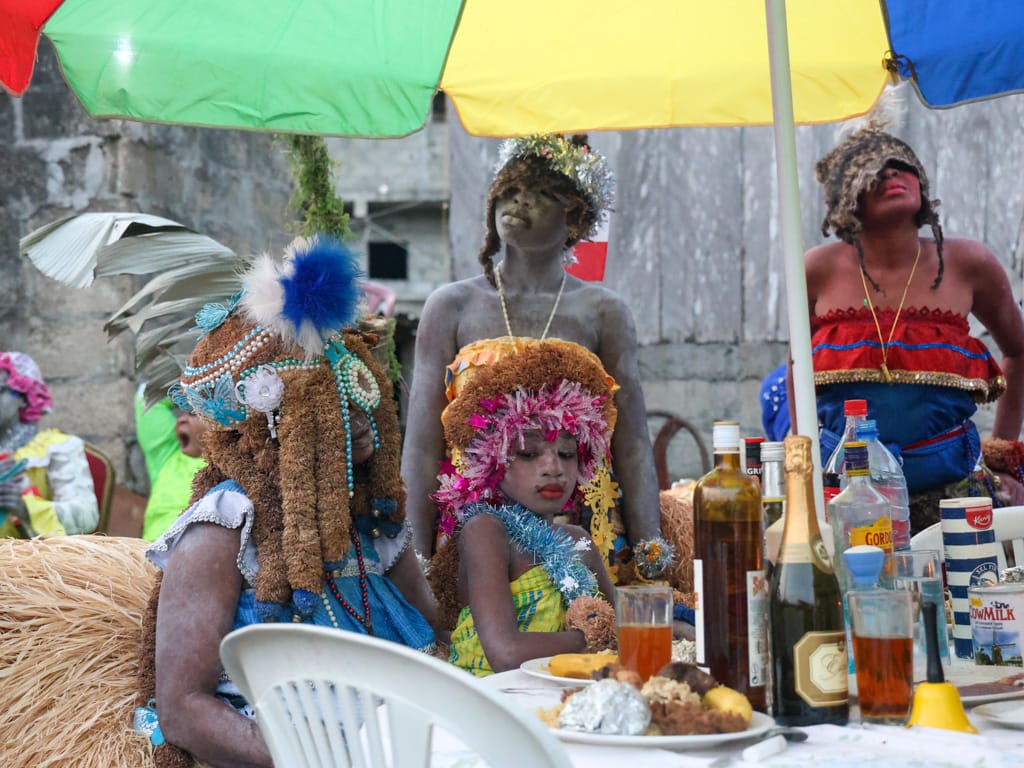
This was an important vigil to “cleanse” a specific neighborhood. Eight different spirits were summoned, and they appeared in a trance well into the early morning. Each spirit is different, and their hierarchy and seniority are determined by the number of “Pokis” (dreadlocks) they have. The more Pokis a spirit has—and the longer and thicker they are—the more senior that spirit is.

Travel to Gabon with Kumakonda
On our trips to Gabon, we combine nature with traditional culture. If you’re interested in visiting this country and want to learn a little about all that Gabon has to offer, we recommend the following article about one of Africa’s best natural destinations: Ivindo National Park.
You can also email us at info@kumakonda.com

Autor:
Austerio Alonso
Co-founder of Kumakonda. Passionate of Africa. Specialist in the design, preparation and realization of expeditions in Africa. Content creator.
Travel with us