


The Buduma (Boudouma) herders of Lake Chad
Lake Chad is not just a lake. It is a changing landscape.
The water rises and recedes; islands, channels, and grazing areas appear; navigable routes change; and people, animals, and camps move along with them.
The Yedina—better known outside their own community as the Buduma or Boudouma—have lived in this extraordinarily dynamic landscape for centuries; they are one of the peoples most closely tied to Lake Chad.
For years, during our trips through Chad, we have visited various Buduma camps. In 2026, we returned once again to the lake region to continue documenting their way of life, the movements of their families, and, above all, their extraordinary relationship with the Kuri cattle.
Many years ago, we were pioneers in organizing trips to locate their seasonal camps, both on the islands in the lake and in the lake’s watershed—the area to which they migrate during the rainy season.
The Buduma (Yedina) are not only herders but also fishermen, sailors, and inhabitants of a territory where water, livestock, kinship, and mobility are all part of the same system.
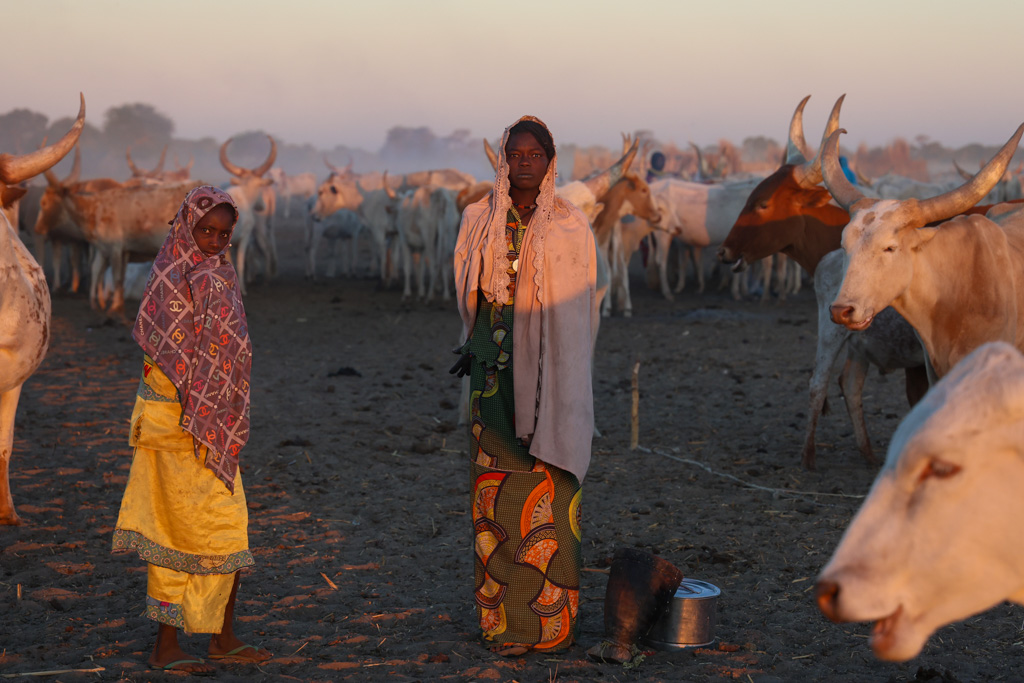
The Buduma and the Islands of the Lake
Historically, the Buduma have been particularly associated with the islands and archipelagos in the northern and eastern parts of Lake Chad.
This geography is essential to understanding its history.
Over the centuries, canals, shallow waters, vegetation, and a multitude of islands created a territory that was difficult to control from the outside and allowed the lake’s populations to maintain a considerable degree of autonomy from the major regional powers, including Kanem-Bornu.
But it would be incorrect to speak of isolation. The lake has also been a place of trade, navigation, exchange, alliances, conflicts, and the constant movement of people. And it continues to be so.
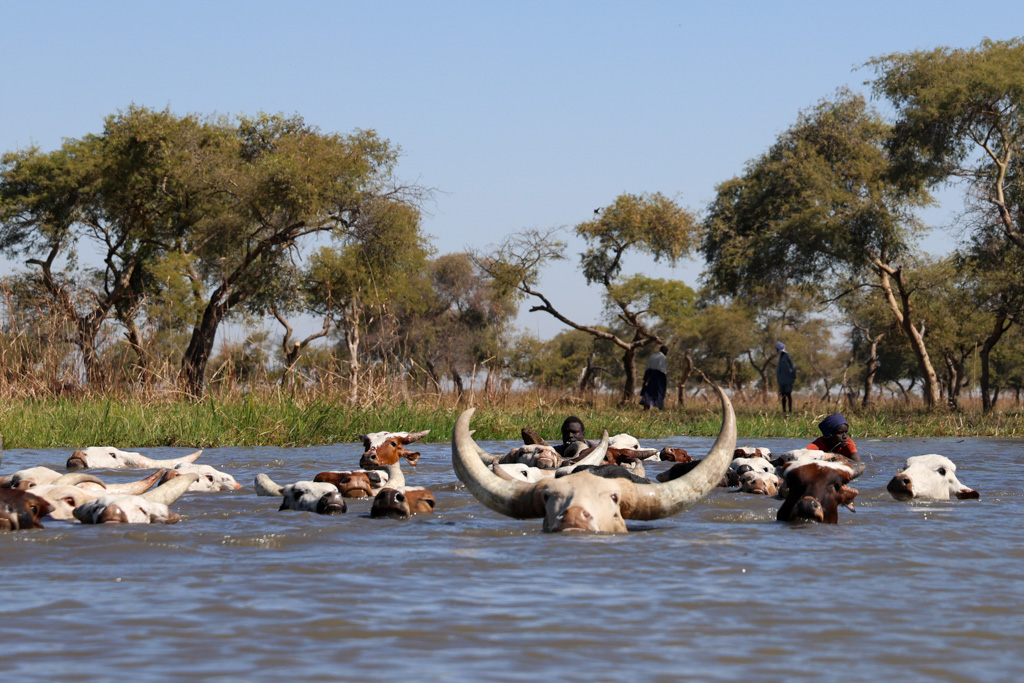
A lake that never stays the same
One of the mistakes people make when picturing Lake Chad is to think of it as a large body of water with clearly defined boundaries.
The reality is much more complex. Water levels fluctuate, and the landscape changes. Places that are separated by water at certain times may later become connected by areas of dry land. New pastures appear, and certain paths disappear. Channels that were once navigable become impassable, while others reopen.
The severe drought of the early 1970s brought about a particularly profound transformation of the lake and the activities carried out around it.
But the change continues.
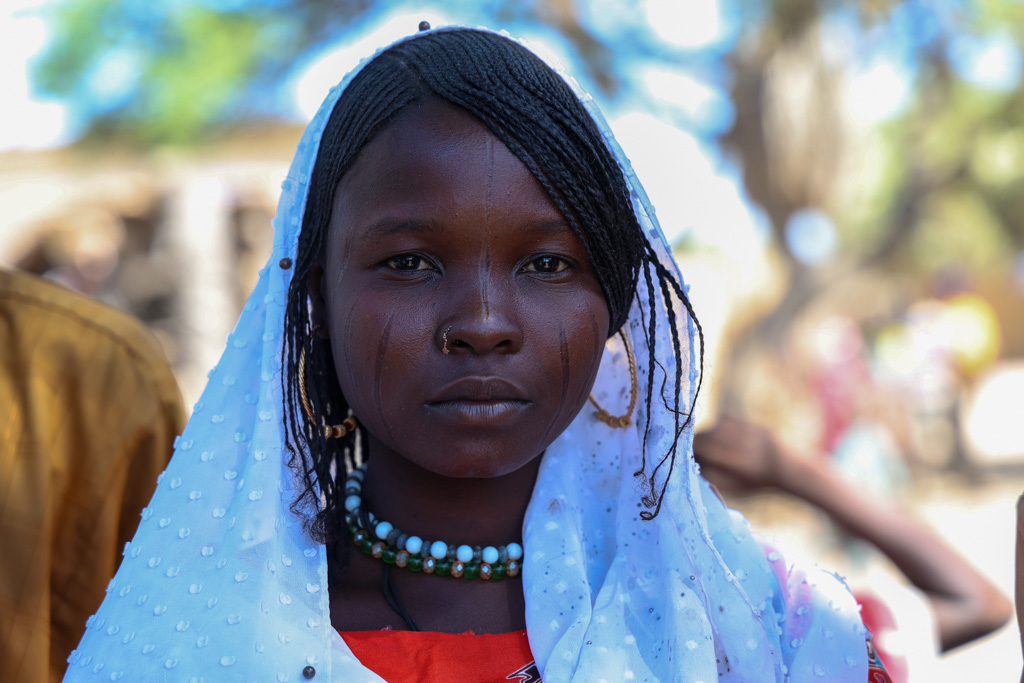
Kuri Cattle: The Extraordinary Cattle of Lake Chad
If there is one animal that is inseparable from the cultural landscape of Lake Chad, it is the Kuri cattle. Their most striking feature is their enormous horns, which in some individuals take on extraordinary bulbous shapes.
The Kuri is a cattle population historically associated with the island and riparian environments of Lake Chad. Recent genetic studies also reveal a complex history, with both taurine and zebu components.
For the families who raise them, however, a Kuri is not a genetic classification. It is livestock.
And livestock means milk, reproduction, property, inheritance, trade, and prestige, in addition to being a fundamental part of the family economy.
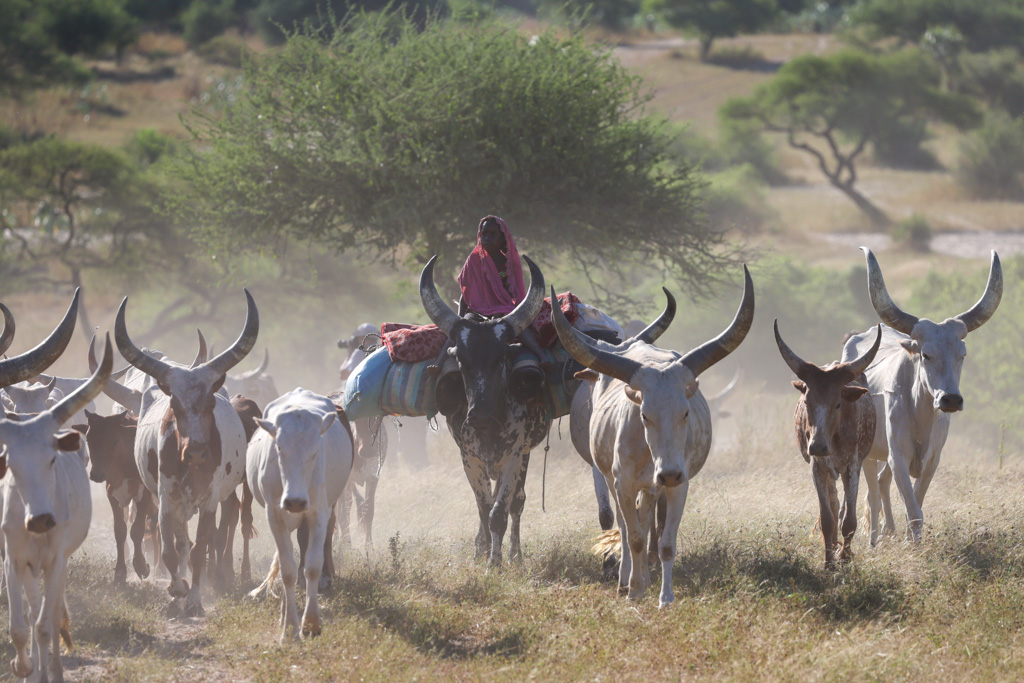
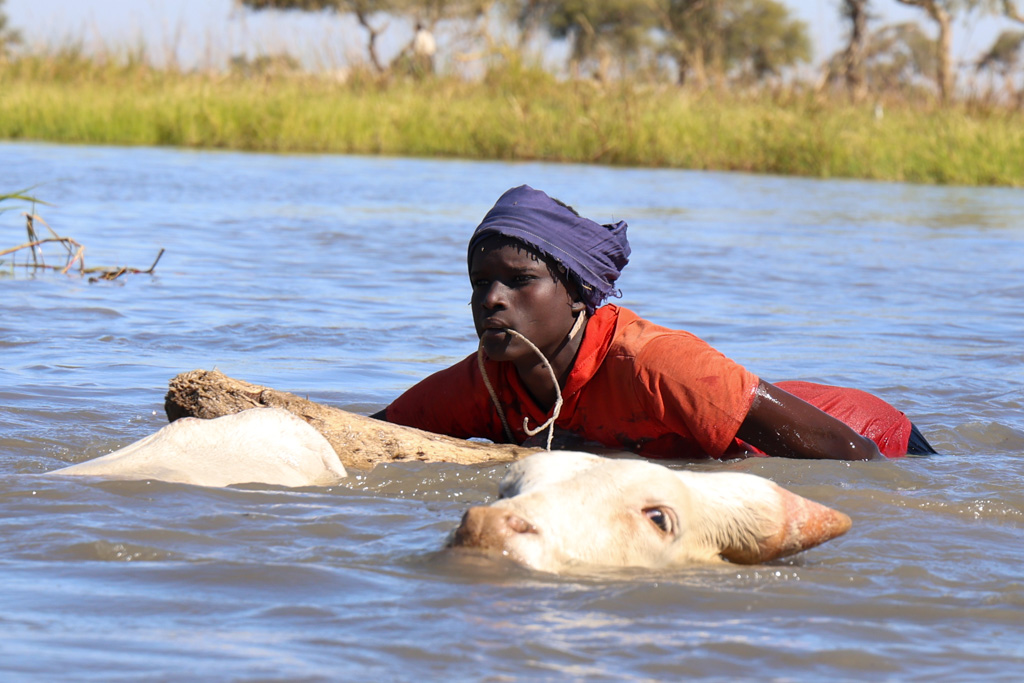
Cows walking and swimming in the water
One of the most breathtaking sights on Lake Chad is watching herds moving through the water.
The cows move through shallow areas, and when the water gets deeper, they may swim to reach other grazing areas or move between different parts of the lake.
Here, the relationship between the Yedina and their territory is perfectly clear.
It’s not as if there’s the lake on one side and the livestock on the other.
Water, pastures, animals, and mobility are all interconnected.
Water levels determine the herd’s movements. Pastures determine where the herd can stay. The health of the animals, market conditions, family relationships, and, nowadays, security conditions can all affect the routes.
Are the Buduma a fishing community?
Historically, the Buduma have combined livestock raising, fishing, trade, and agriculture in varying proportions. In addition, intensive commercial fishing and the techniques used on the lake have also changed considerably over the past few decades.
Lake Chad is currently a multi-ethnic region.
The Buduma, Kanembu, and other communities live alongside, trade with, and share certain resources with fishermen, farmers, and herders from different regions.
The lake is a human mosaic as ever-changing as its waters.
Canoes and Boating on Lake Chad
Navigating this area requires a deep understanding of the water.
Boats provide transportation between islands, camps, markets, and points along the shore. Routes depend on waterways, water depth, vegetation, and the season.
Navigation is also one of the elements that has historically captured the attention of travelers and ethnographers.
Some early theories went so far as to link the Buduma to the Sao and even with the ancient Egypt, drawing on oral traditions and apparent similarities between plant-based boats, large-horned livestock, and certain elements of material culture.
These are fascinating hypotheses, but there is not enough evidence to present the Egyptian origin of the Buduma as a proven historical fact.
They are part of the various theories and stories surrounding the origins of the lake’s populations.
You can read more about the villages around Lake Chad in this article, and about its changing ecosystem in this other one.

Autor:
Austerio Alonso
Co-founder of Kumakonda. Passionate of Africa. Specialist in the design, preparation and realization of expeditions in Africa. Content creator.
Travel with us