


The Impressive Caravans of Arabs nomads in Chad
Across the vast expanses of the Sahel and in the Chadian savanna forests—in the regions of Lake Chad, Kanem, Batha, Ouaddaï, and Salamat—it is still possible to see long caravans of dromedaries and oxen moving slowly across the plains.
They are families of nomadic Arabs from Chad who travel with their homes on their backs—that is, with their animals, their belongings, and everything they need to set up a new camp wherever water and pasture take them.
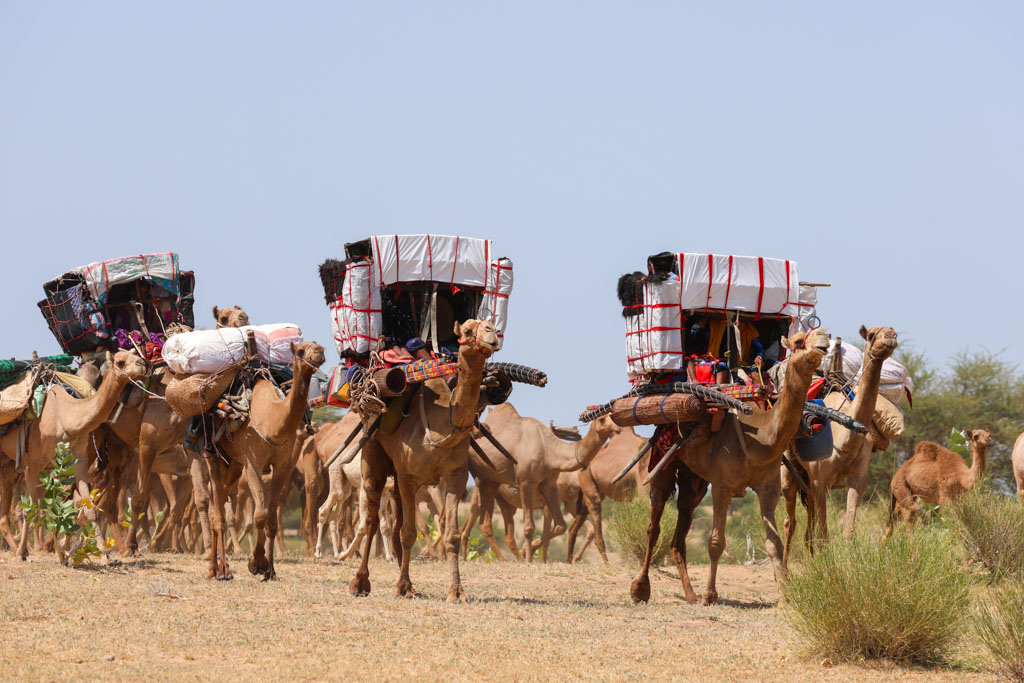
These caravans are one of the most fascinating sights in Chad. Dromedaries—and sometimes oxen—walk in single file, laden with mats, containers, housing structures, and other household items.
Women and children take part in some of the trips, seated on saddles that rise above the animals’ backs.
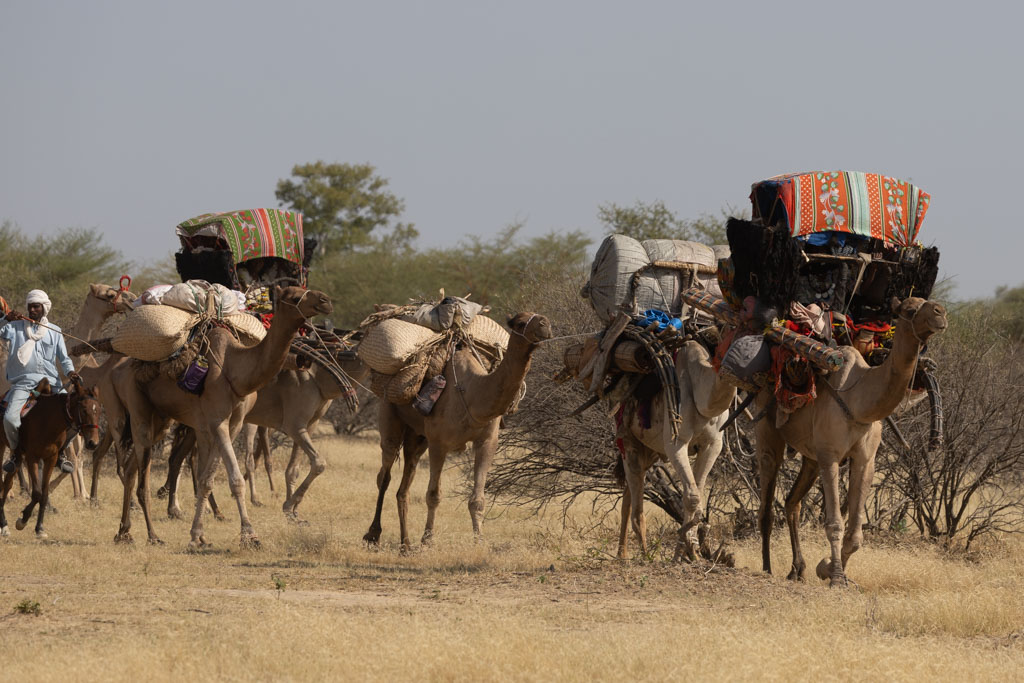
And although the best-known are the Arab nomads who herd dromedaries, over the years we have also visited camps of Arab nomads who herd cows.
The largest group among the latter are those who move eastward toward southern Chad, specifically toward Lake Iro. We have also encountered Arab nomads who engage in transhumance from Nigeria and Cameroon to Chad.
Trips in Chad: Encountering Nomads
Over many years of trips through Chad, we have had the opportunity to meet these communities and observe a way of life in which movement remains an essential part of their culture.
In Kumakonda, we have been pioneers in organizing trips throughout the country to meet these nomads—from Kanen to Batha and from Chari-Baguirmi to Lake Iro.
During the rainy season, we visited their camps in northern Chad, along that imaginary line that separates the Sahel from the Sahara—a strip of land stretching from just north of Mao to Kalait. From there, as the seasons change, they migrate south, where they set up enormous camps in which they settle for the dry season. There, in the southernmost part of Chad, we also found them and lived alongside them.
These transhumance journeys cover more than 500 kilometers southward.
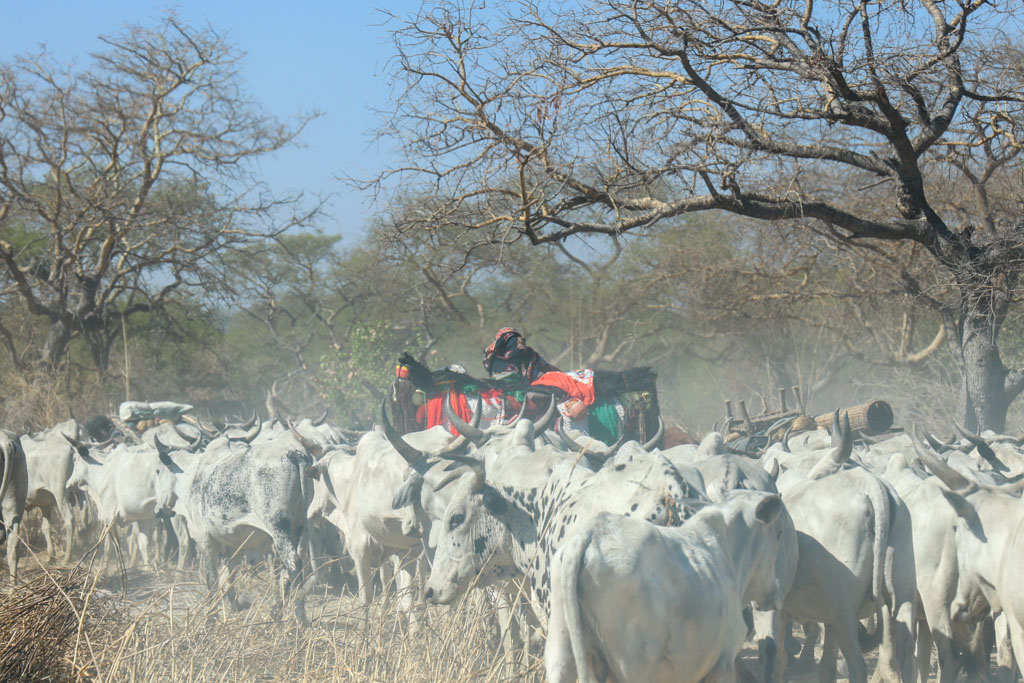
The nomadic Arabs are likely the largest ethnic group of herders in Chad and the most impressive to watch as they move.
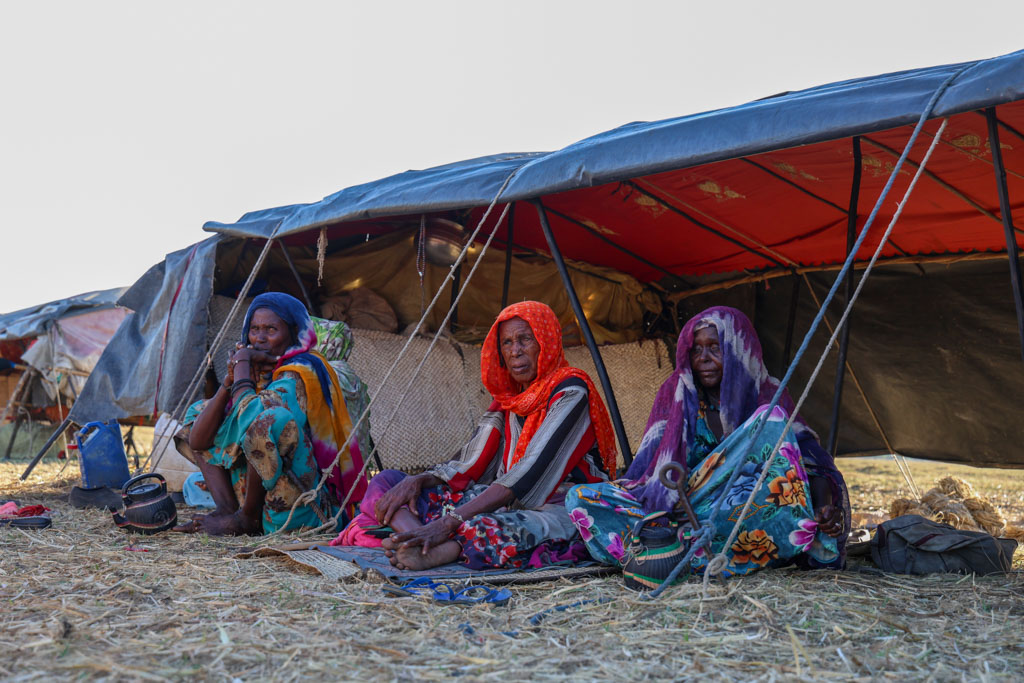
The Arabs of Chad: Diversity
The Arabs of Chad comprise a diverse group of communities, some of which are sedentary, while others have traditionally engaged in nomadic and transhumant livestock herding.
Among them are the Choa or Shuwa Arabs, who live in the Lake Chad basin, as well as the Ouled Rachid, the Missiriyé, the Salamat, and other groups scattered throughout Kanem, Batha, Ouaddaï, and the central regions of the country.
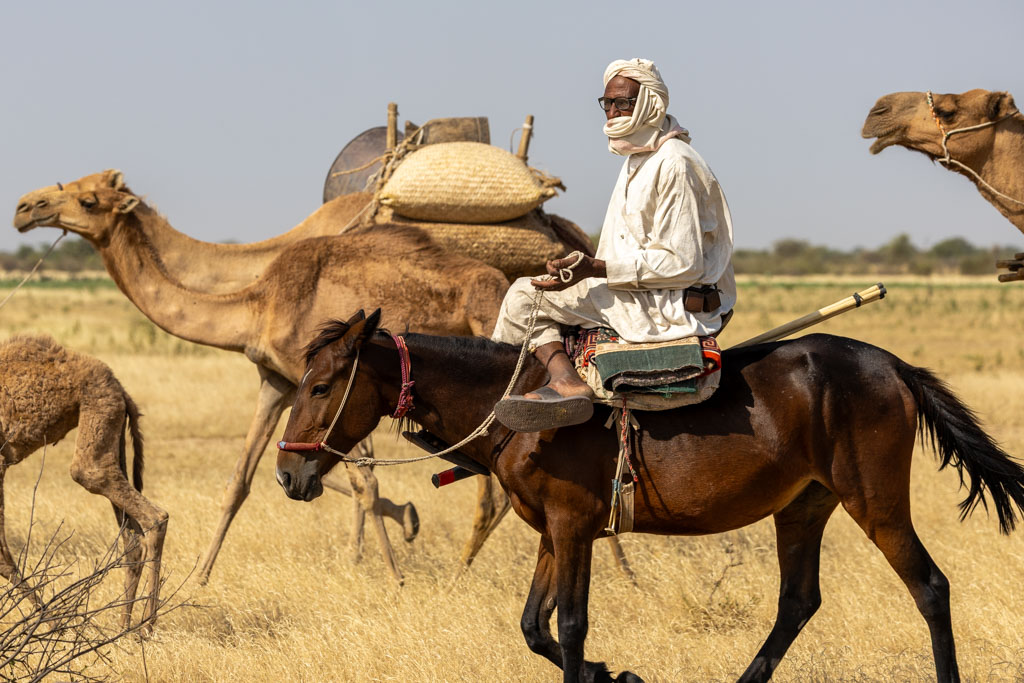
Some communities focus primarily on raising dromedaries, while others keep large herds of cattle, goats, and sheep. Their movements depend on the seasons, the availability of water, and pasture, but they typically follow three or four major transhumance routes in Chad
Arab nomads who raise cattle
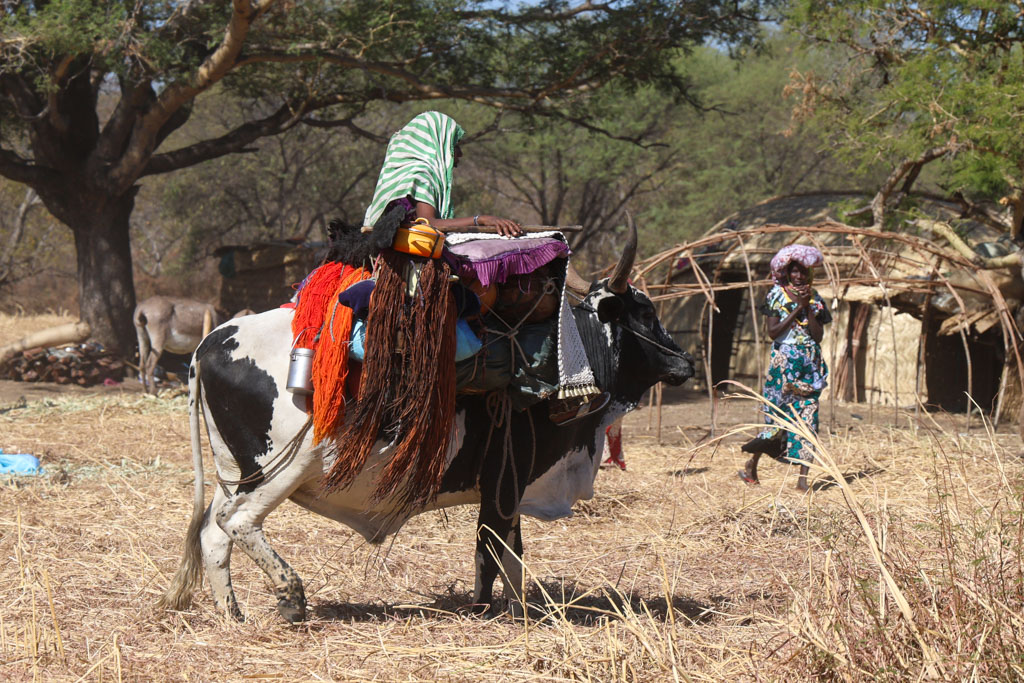
Not all Arab nomads own herds of dromedaries, as we noted earlier; there are clans that tend and raise cattle. The scenes change as women and children ride enormous oxen, which are the ones that are beautifully decked out.
In Kumakonda, we had the opportunity to visit their camps and watch them on the move in the Sarh region.
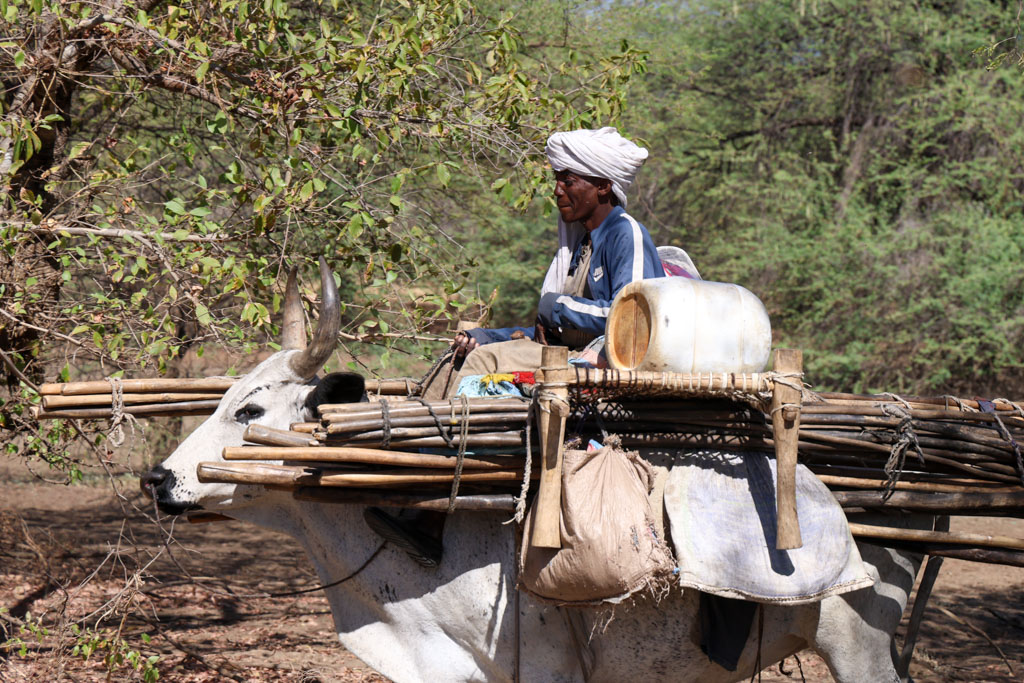
Life in Nomadic Camps
When a family arrives at the place they have chosen to settle, they begin setting up camp. There are temporary camps during the weeks of transhumance, and there are large seasonal camps where nomadic Arabs settle for about two months.
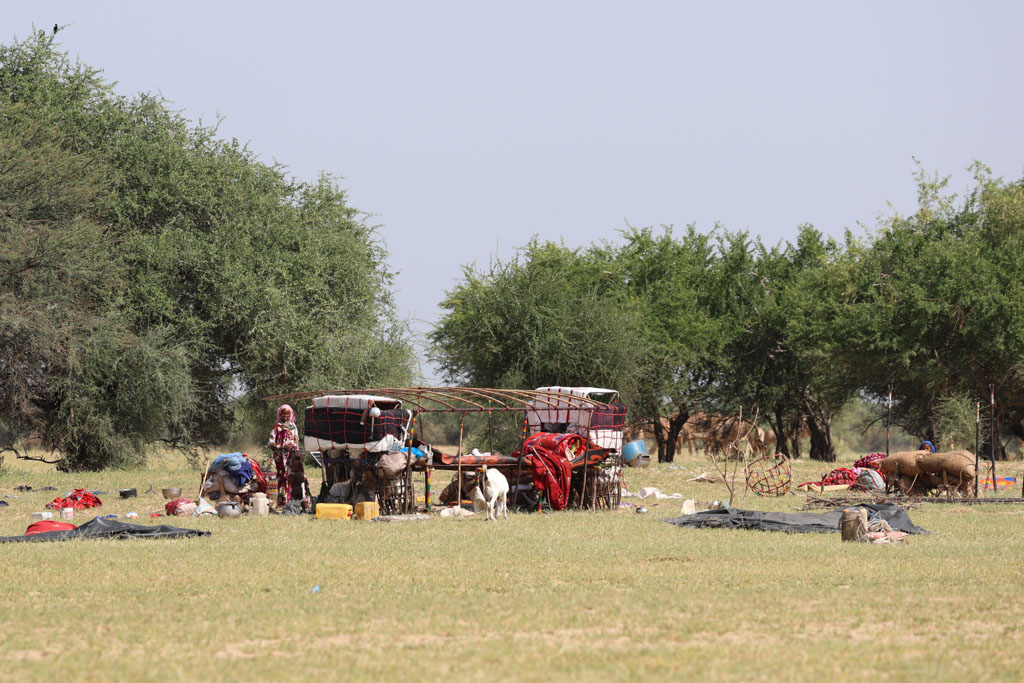
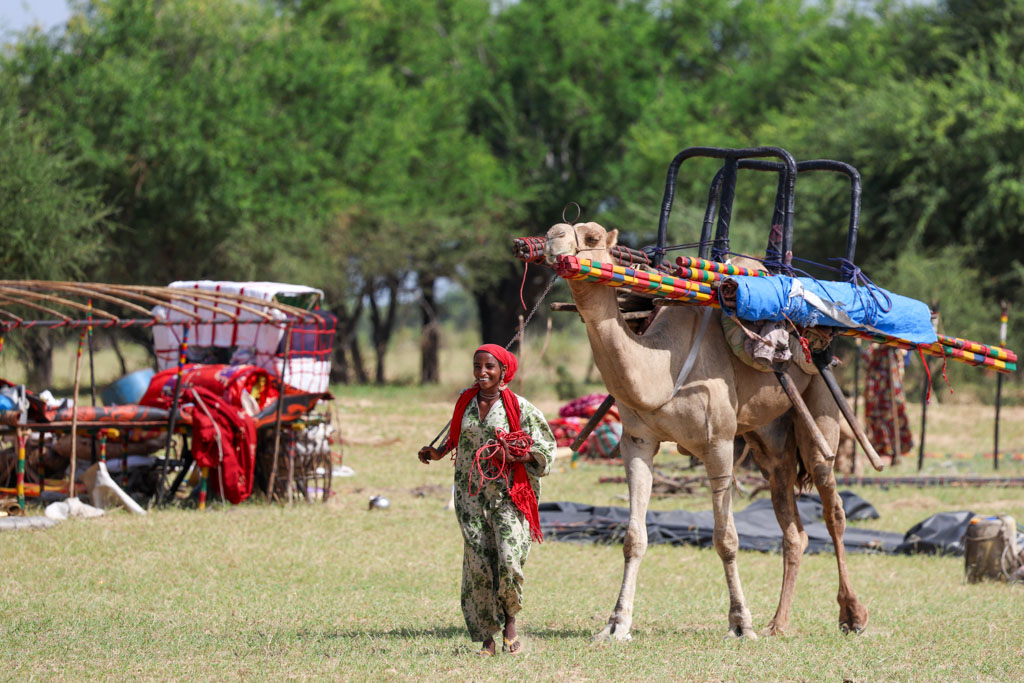
Homes are built using lightweight structures, mats, and fabrics that can be taken apart and transported when it is time to leave. Their shape and the materials used vary depending on the region and the traditions of each community.
The dromedaries rest near the settlement, while the herds are led to available pastures. Families organize their activities around water, livestock, and household needs.
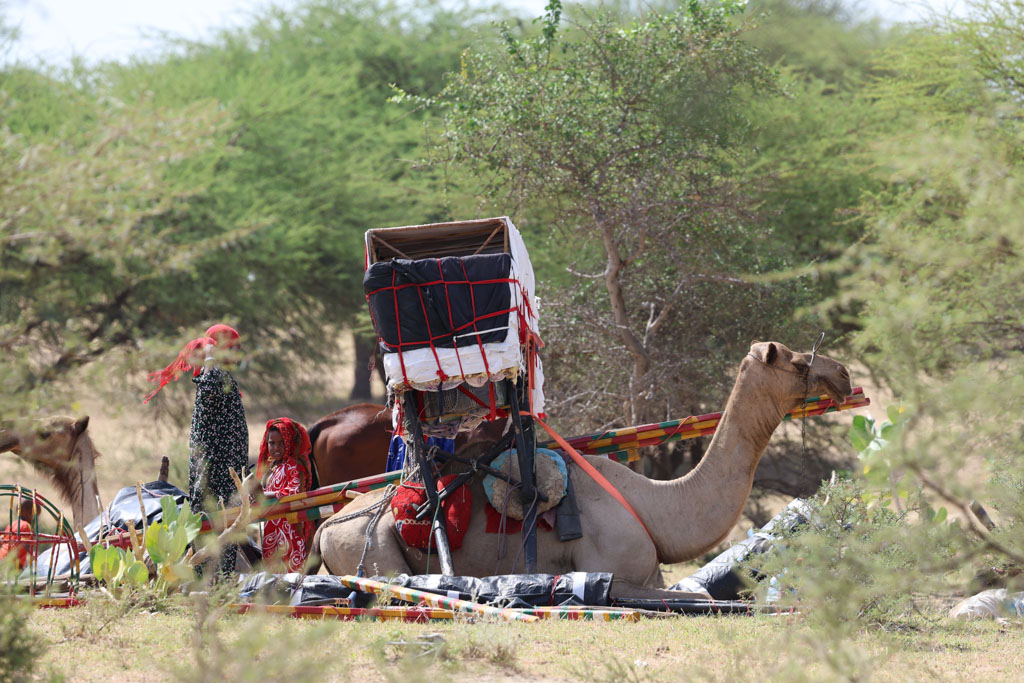
Life in these camps is shaped by the rhythms of nature, but also by family ties, interactions with other communities, and knowledge passed down from one generation to the next.
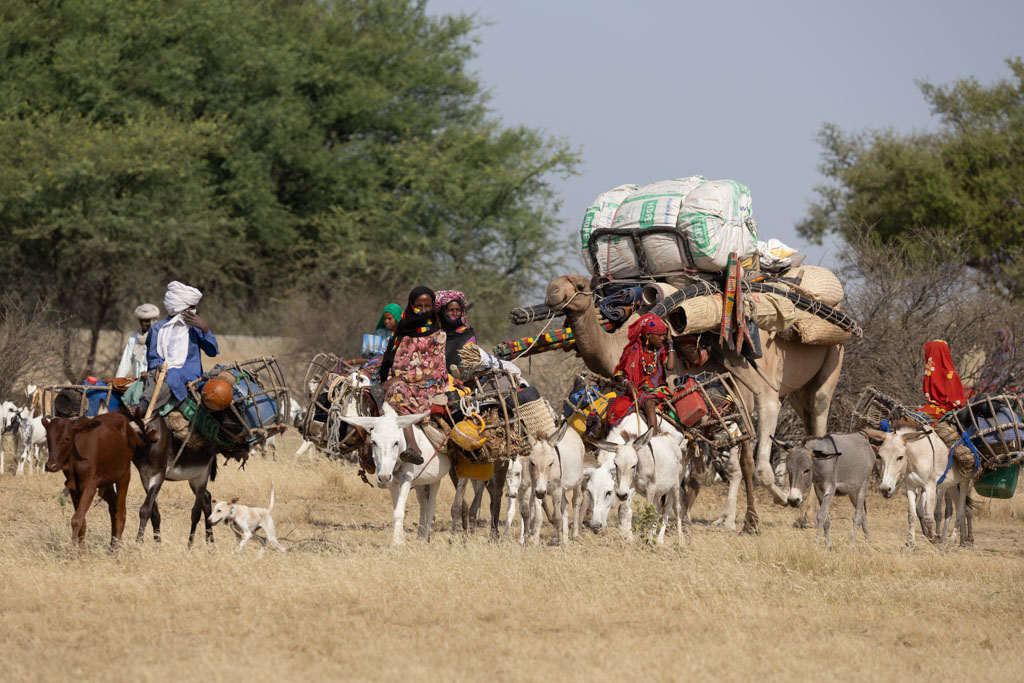
Caravans of dromedaries: an entire home on the move
One of the most impressive sights in the Sahel is coming across a caravan of Arab families moving from one camp to another.
The animals move forward laden with large bundles, fabrics, containers, and the dismantled structures of their homes. At times, the caravans stretch for hundreds of meters, forming a line of dromedaries that seems to disappear into the horizon.
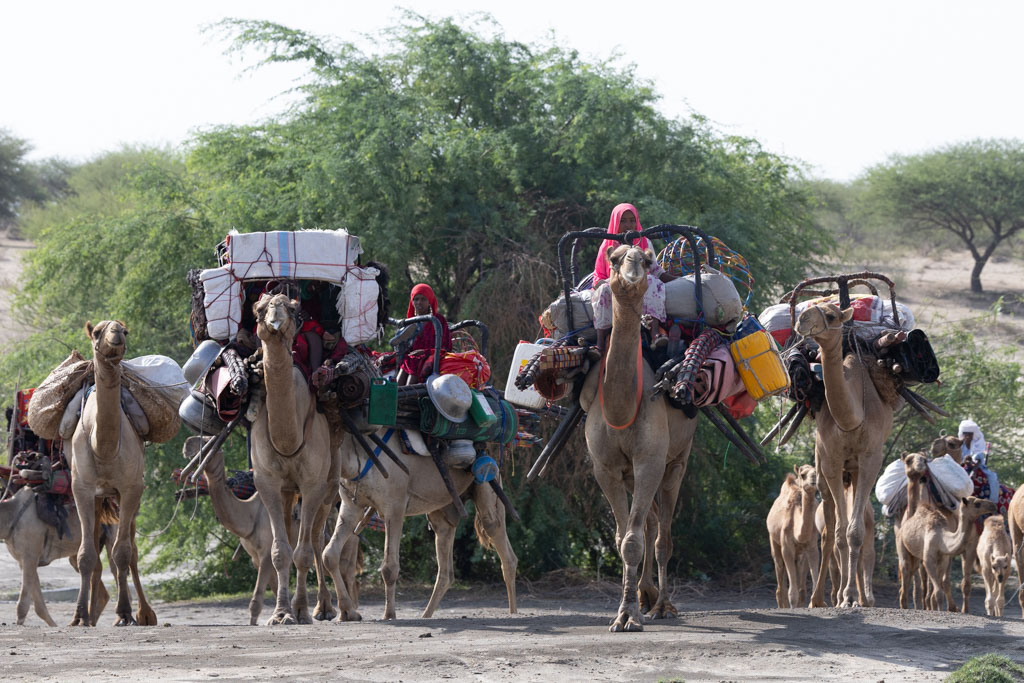
The Palanquins: The Spectacular Rides of the Dromedary Caravans
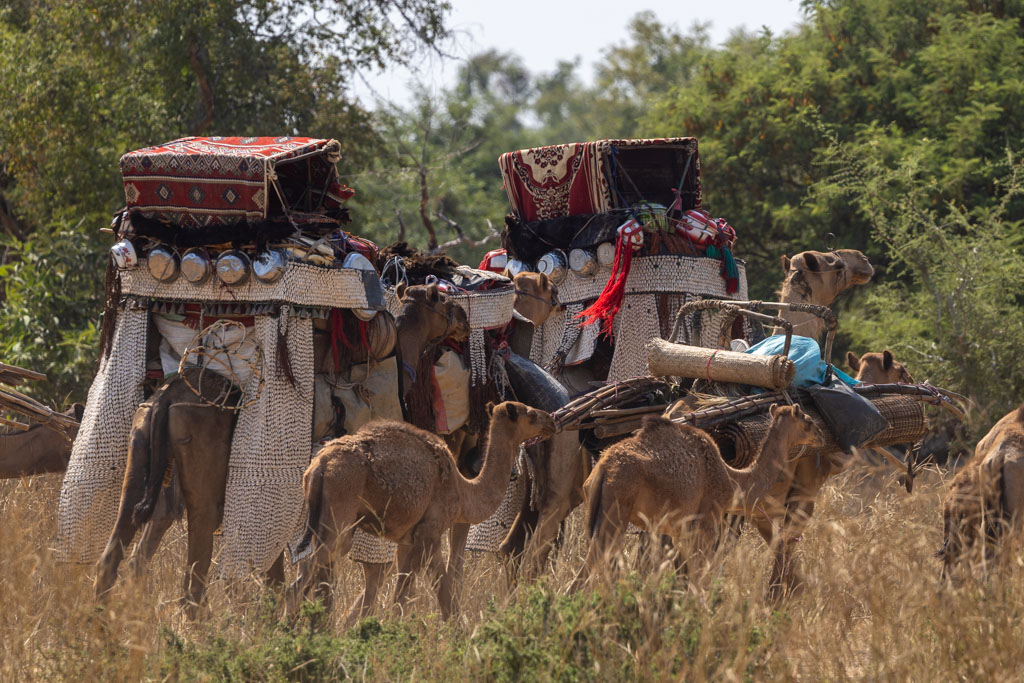
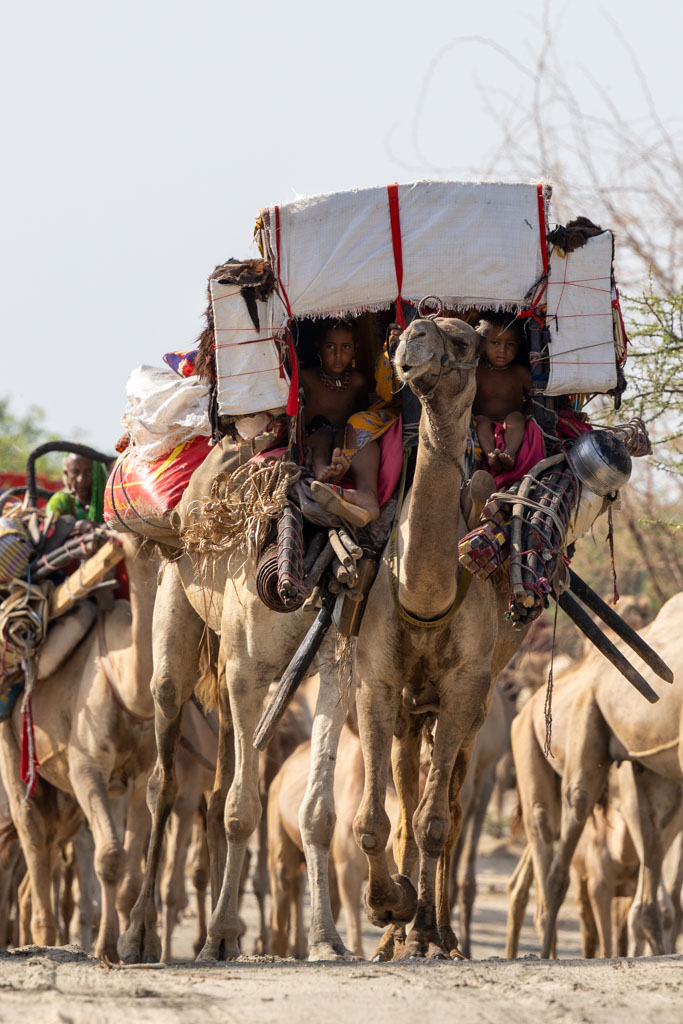
One of the most striking sights in the caravans of Chad’s nomadic Arabs is the palanquins mounted on the dromedaries—raised structures that allow women and young children to be transported during long journeys.
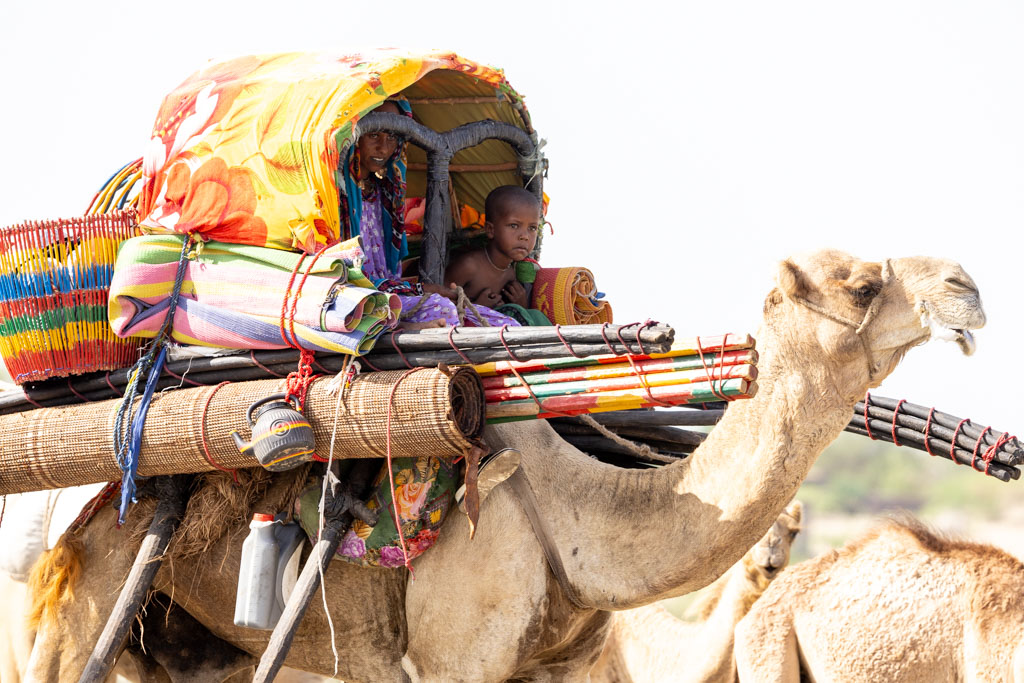
Known in Arabic as hawdaj or howdah, these palanquins are built on a wooden frame, sometimes covered with fabrics, blankets, and mats that provide shade and some protection from the sun and wind.
From a distance, the dromedaries look as if they are carrying small, moving rooms. Children peek out from behind the curtains as the animals move slowly along with the rest of the caravan, laden with containers, rugs, utensils, and the disassembled frames of their homes.
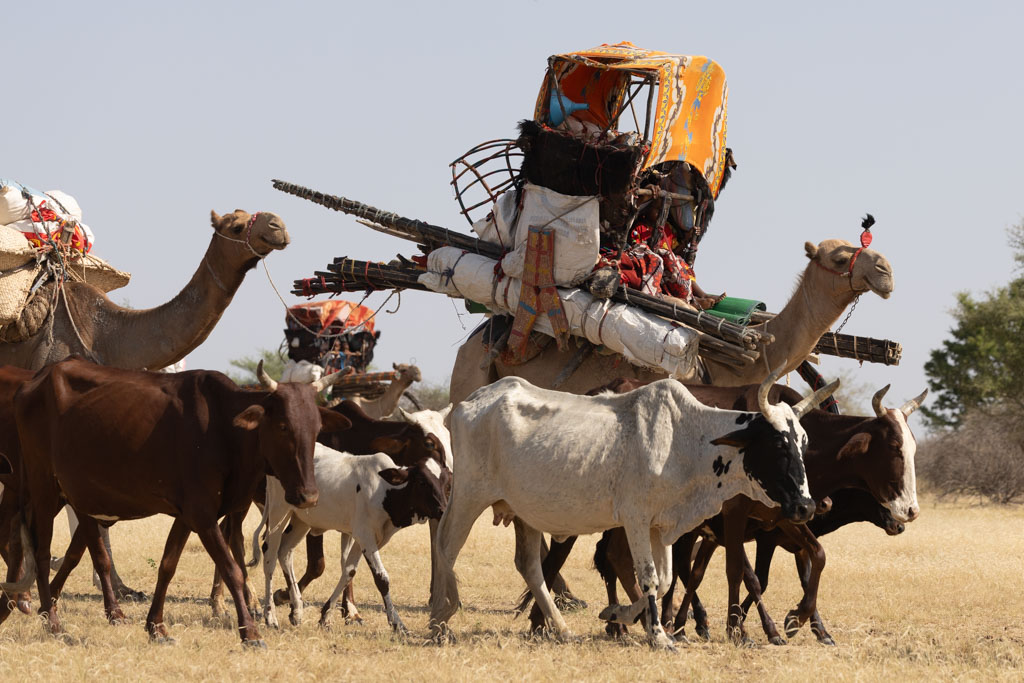
While some family members drive the animals, others accompany the march on foot or on horseback. The herds move toward new pastures, and with them, the entire camp.
These are not commercial caravans like the old trans-Saharan salt expeditions, but rather family migrations tied to the livestock-raising cycle.
Nomadic Arab Women: Beauty, Dress, and Adornments
The women of Chad’s nomadic Arab communities are among the key figures in our meetings in the Sahel.
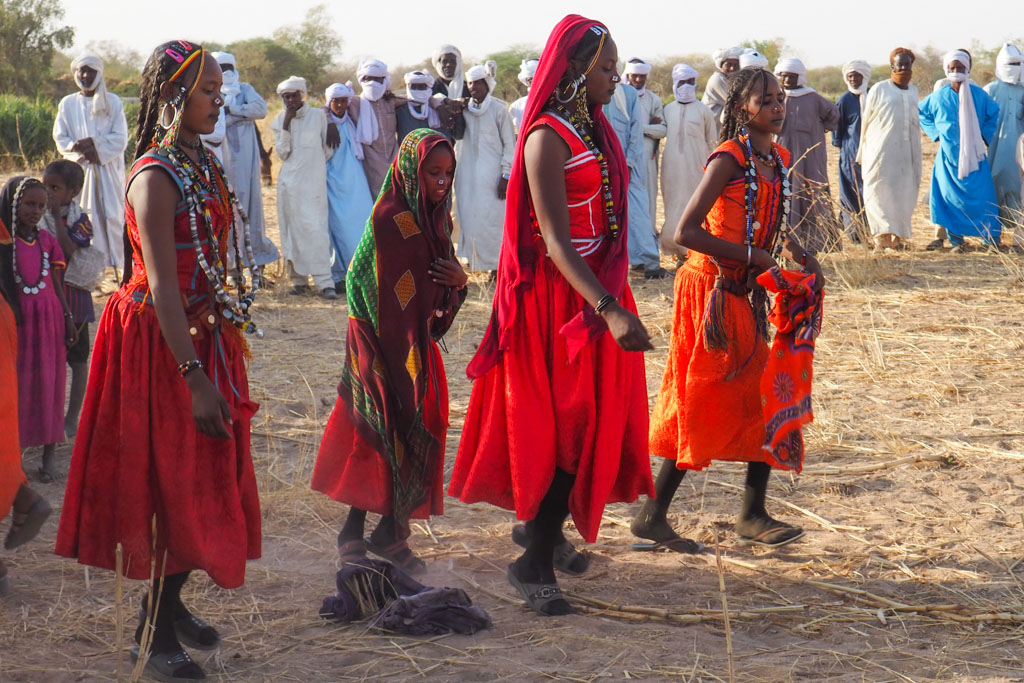
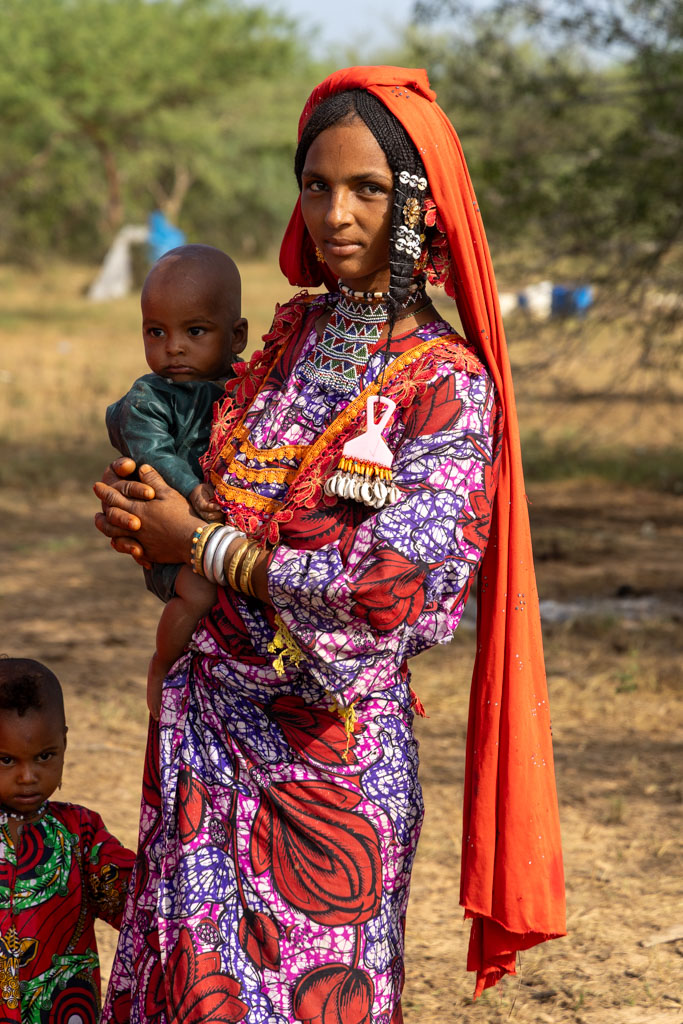
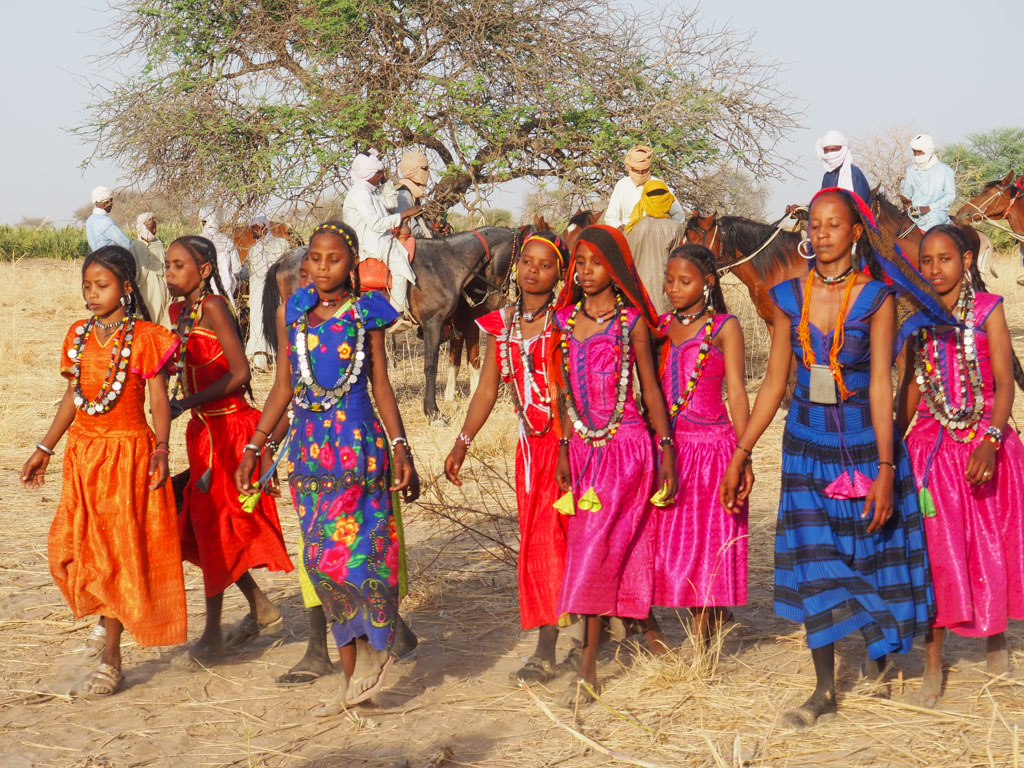
Their brightly colored dresses, the scarves that cover and adorn their heads, and their earrings and jewelry contrast with the earth’s ochre tones and the arid landscapes.
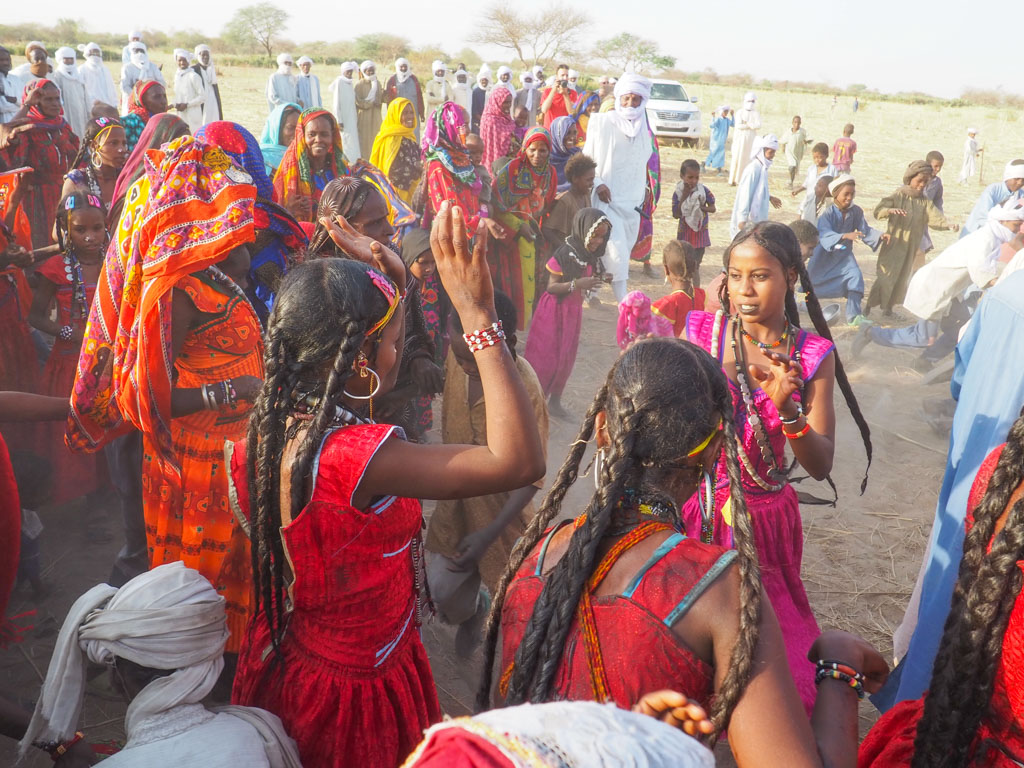
In certain groups, hairstyles, fabrics, and personal adornments vary in ways that are part of their aesthetic traditions. Women combine these elements according to family customs, personal preferences, and the occasion.
The beauty of their faces and the elegance with which they wear their dresses and headdresses is spectacular.
But women also play an essential role in nomadic life. They are involved in household management, child care, food preparation, and setting up shelters, with responsibilities that vary depending on each family and community.
The Long Hair of Arab Women in Chad and the Chébé Ritual
Among some nomadic Arab communities in Chad, women’s hair is an important symbol of beauty and cultural identity. Particularly striking are the extremely long braids that some women wear down to their waists or even lower, carefully crafted and maintained using techniques passed down from mothers to daughters.
One of the best-known traditions is the use of chébé, a plant-based preparation used for hair care. It is made from the seeds of Croton gratissimus, which are dried, roasted, and ground into a fine powder. This powder is mixed with water, oils, and butters to condition the hair and help maintain its length.
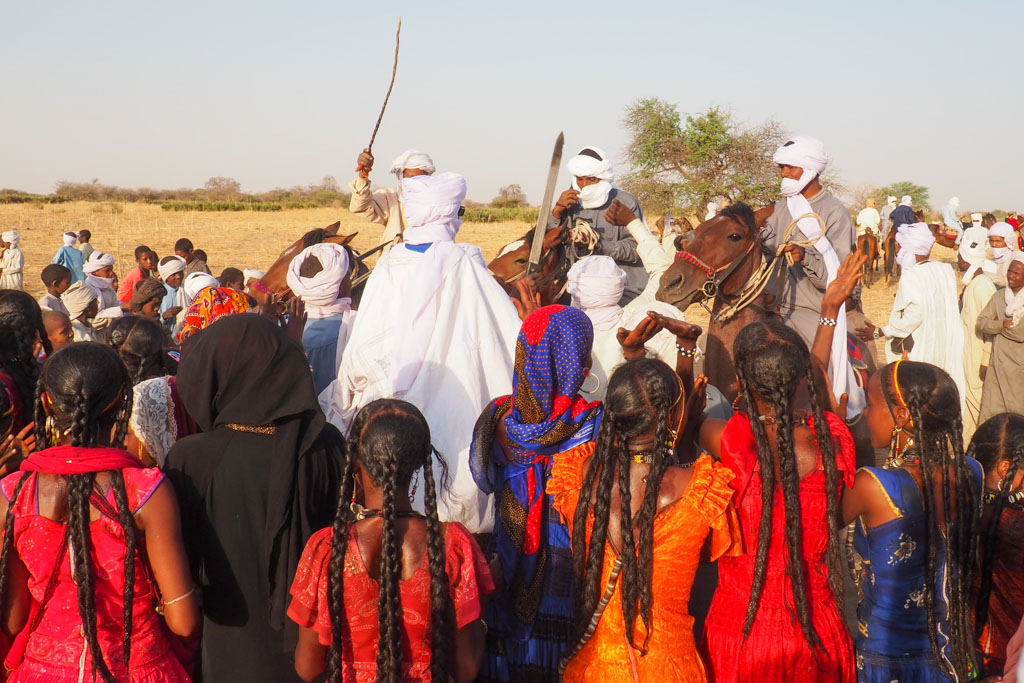
Applying chébé is a labor-intensive process that can take several hours. Women separate the hair into sections, apply the mixture, and braid it into long plaits. In addition to being a beauty ritual, it is an opportunity to share knowledge and strengthen intergenerational bonds.
This tradition has been documented among the Bassara Arab women of Guéra and the Ouled Badr of Batha, though it should not be attributed to all Arab communities in Chad.
The hairstyles—the small braids that frame the face and the hair ornaments—are part of a very distinctive feminine aesthetic, which makes portraits of these women some of the most fascinating images from the Sahel.
The Arab camps at Lake Fitri and Lake Iro
The inland lakes of Chad are vital to numerous pastoralist communities. In a region marked by alternating dry and rainy seasons, the lakes’ waters and the surrounding pastures attract herding families who move about with their herds.
Lake Fitri: A Gathering Place for Nomadic Herders
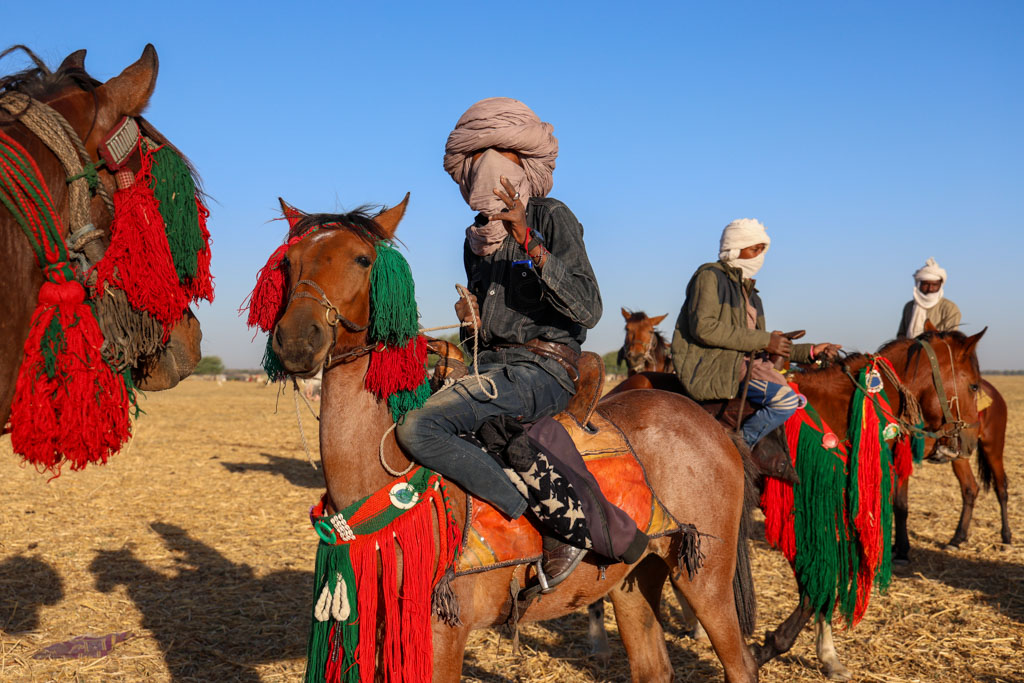
Located in the Batha region, Lake Fitri is one of the major transhumance areas in central Chad. Its waters, seasonal pastures, and surrounding wetlands attract various pastoralist communities, including Arab groups that come from other parts of Batha and neighboring regions.
During the dry season, the area around the lake can host numerous temporary camps. Families set up their temporary shelters, organize their living spaces, and drive their animals to grazing areas. The landscape combines the activities of local communities—especially the Bilala—with the seasonal presence of transhumant herders. Agriculture, fishing, and livestock raising share a territory whose resources change throughout the year.
Not all camps are equally temporary. Some families have established more permanent settlements, combining livestock raising with other activities.
Lake Iro: Herders and Camps in Southern Chad
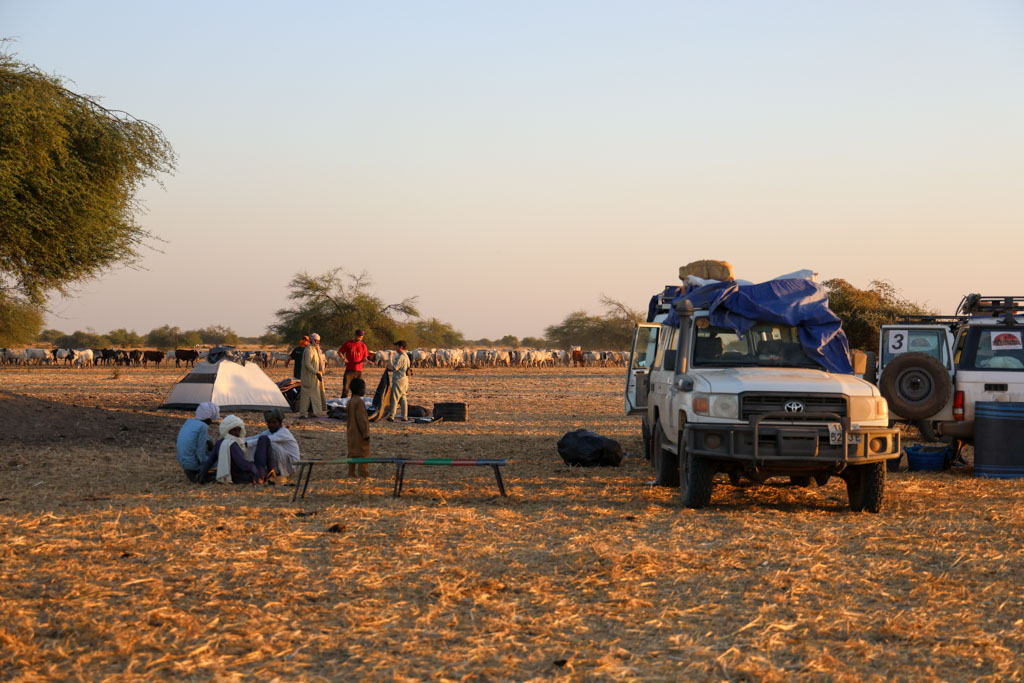
Much further south, in the Moyen-Chari region, Lake Iro is situated in a different landscape, characterized by savannas, more abundant vegetation, and seasonal wetlands.
This environment is part of the southern Chad territories used by various pastoralist communities. Migrations to these latitudes allow them to take advantage of the pastures when conditions are drier in other regions of the country.
The herders’ camps, the herds of livestock, and their relationships with farming communities reveal another facet of Chadian pastoral life, far from the vast arid expanses of Kanem and Batha.
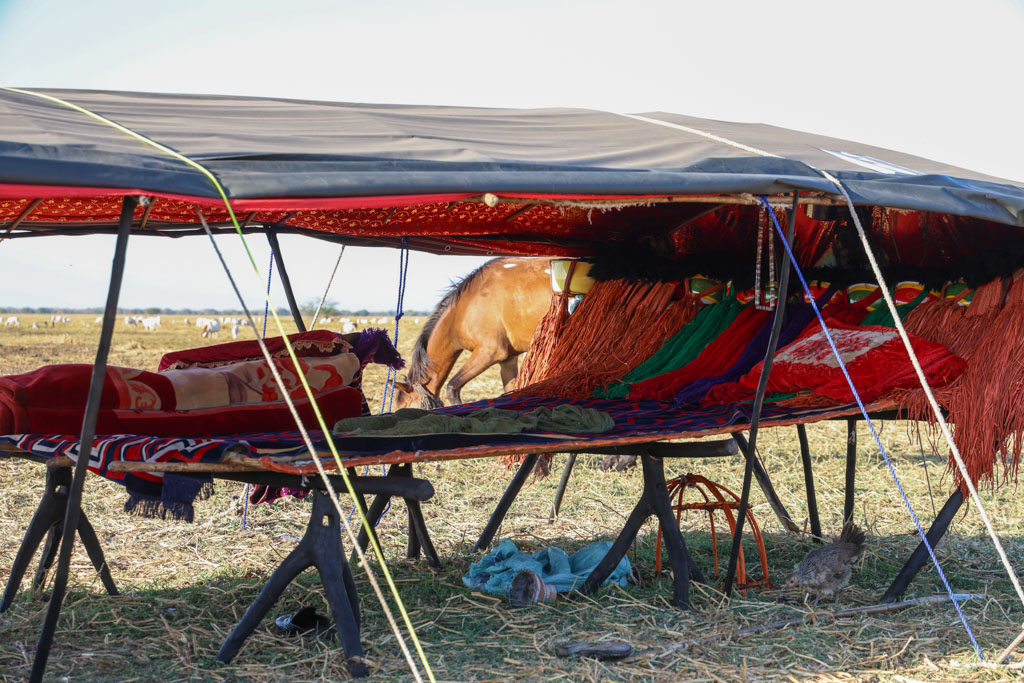
On several trips we’ve taken in the area, we’ve had the opportunity to visit various nomadic camps located around Lake Iro. These are usually very large camps, situated in clearings in the savanna forests, where nomadic families spend about two months. There, we observed how all the ornaments worn by the dromedaries and oxen during their transhumance are neatly arranged inside the tents.
The Uede: The Trousseau of Nomadic Arab Women in Chad
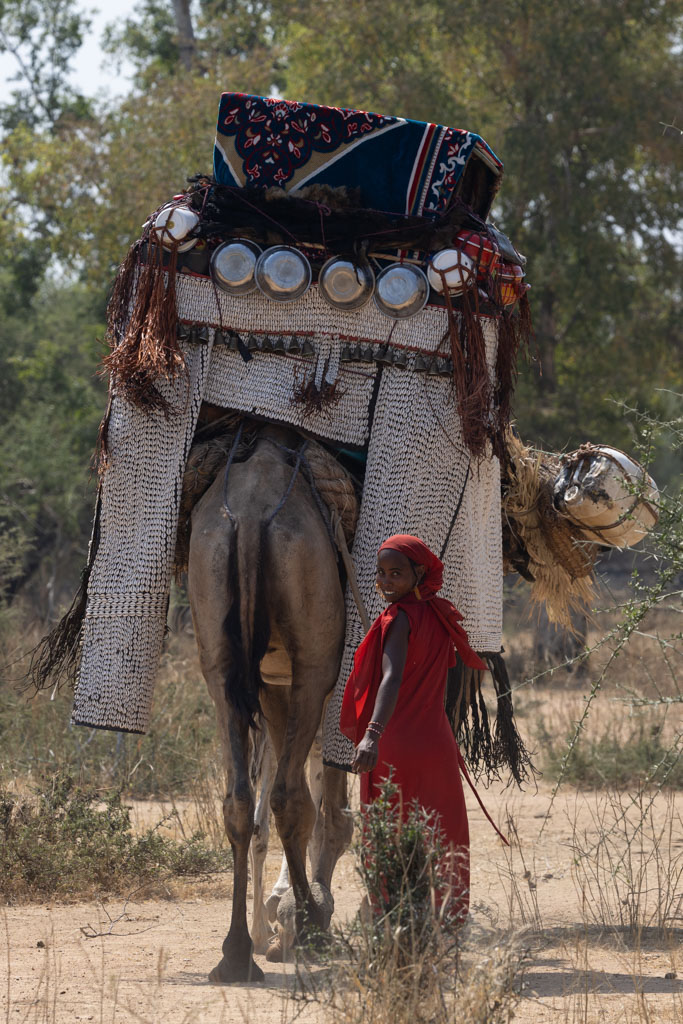
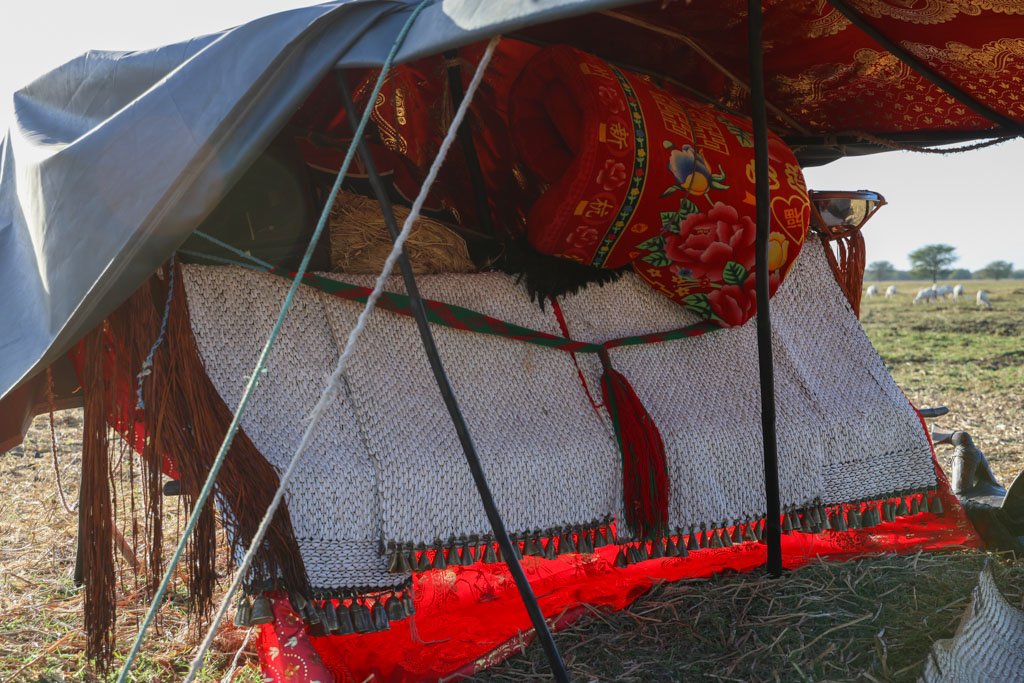
Among the Salamat Arabs of Chad, the Uede is part of the dowry that mothers and sisters prepare for future brides. It consists of long strips and panels of fabric carefully decorated with cowrie shells, representing an important family heritage and an expression of women’s craftsmanship.
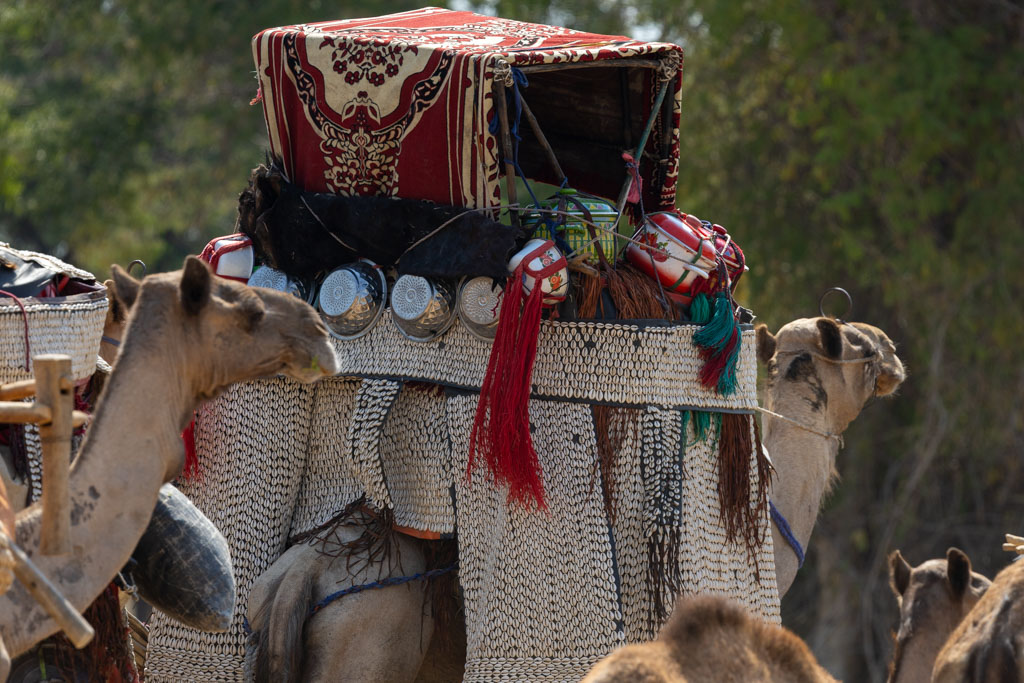
During seasonal migrations, these pieces adorn the structures set up on the dromedaries, where women and children go on trips. Once the camp is established, the same fabrics are used to decorate the portable dwellings.
In this way, the Uede accompanies families in their nomadic life, linking marriage, family identity, and the transmission of knowledge across generations of women.
Meeting the Nomadic Arabs on Our Trips Through Chad
Traveling through the regions of Lake Chad, Kanem, Batha, and Ouaddaï allows you to discover some of the most unique expressions of African nomadism.
Encountering a caravan of dromedaries laden with a family’s belongings, observing the saddles on which children ride, or visiting a camp in the middle of the plains are experiences that reveal a little-known side of Chad.
At Kumakonda, we are particularly interested in connecting with these communities, their culture, and their relationship with the vast landscapes of the Sahel.
Discover our unique expeditions on Trips to Chad.

Autor:
Austerio Alonso
Co-founder of Kumakonda. Passionate of Africa. Specialist in the design, preparation and realization of expeditions in Africa. Content creator.
Travel with us