


In Search of the Wodaabe’s Gerewol, the Festival of the Most Beautiful People in the World
Just south of the Sahara lies one of Africa’s most enigmatic and fascinating peoples: the Wodaabe, also known as the Bororo (Mbororo). The Wodaabe are a subgroup of the Fulani (or Peul), an ethnic group found in virtually every country in West Africa, as well as in Chad, Cameroon, and the Central African Republic.
Wodaabe means “people of the taboo“. They are governed by a strict moral and behavioral code called Pulaake, in which values such as discretion, modesty, patience and fortitude prevail.

As we can see every year in our travels in Chad, the Wodaabe are an indomitable people who live by and for their livestock, faithful to their traditions and carry in their blood the love of freedom offered by nomadic life and the open spaces through which they roam.
The Wodaabe people live in complete harmony with their surroundings —which is admirable in this day and age—and are known for being an extremely hospitable people.
Toward Dourbali
From N’Djamena, we continued our journey to Dourbali in the Chari-Baguirmi region. September–October, the end of the rainy season. Every year in the area around Dourbali, about 120 kilometers from the capital of Chad, two large Wodaabe clans (the Soudousoukai and the Japto) gather to hold a spectacular beauty contest known as Gerewol.
We are lucky, it is Wednesday and it is market day in Dourbali, one of the most attractive in the region. The different ethnic groups of the region, Arabs, Kanoumoudji, Alidjam, Weilas, Hontorbe, etc. gather there. We attended a wonderful and colorful show.

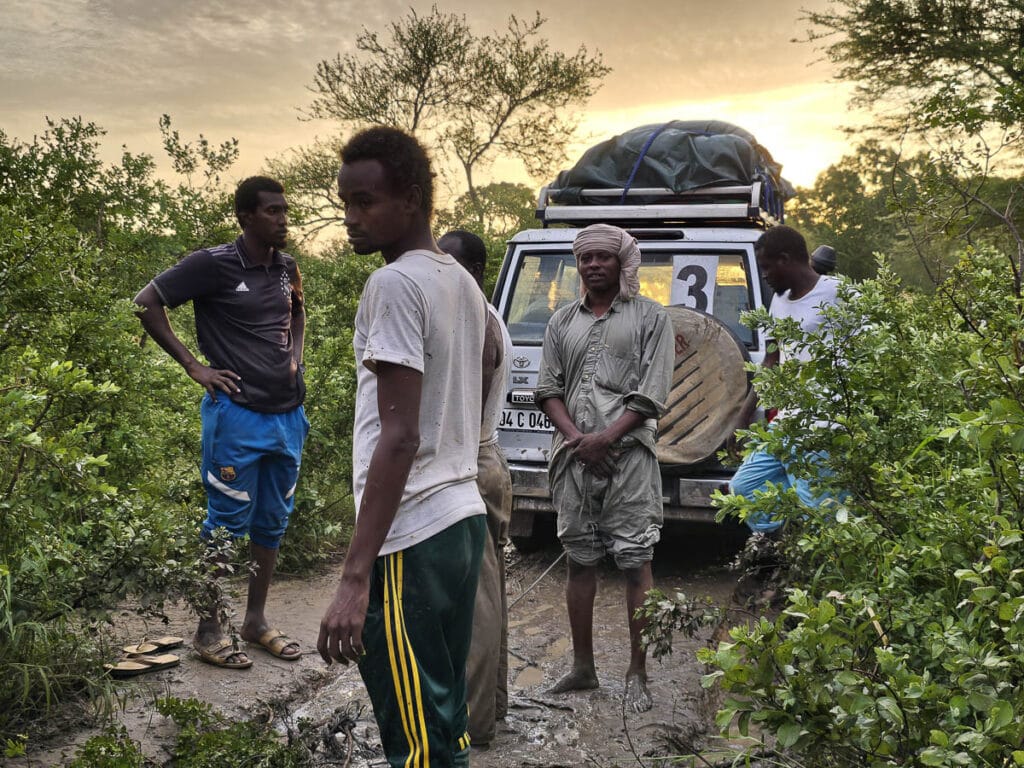
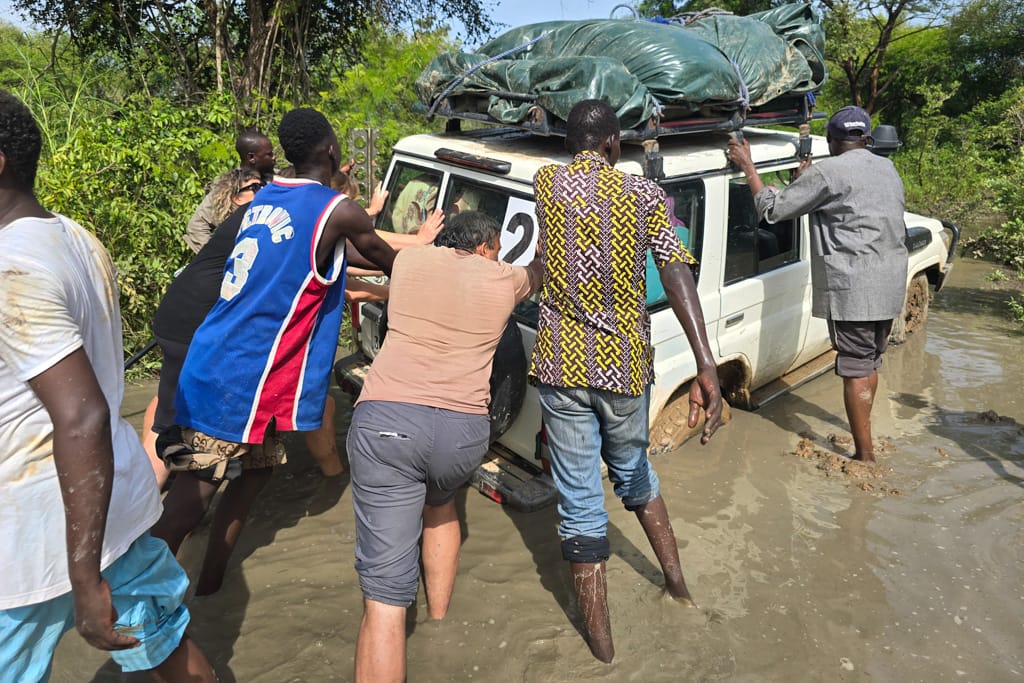
After registering at the gendarmerie of Dourbali and presenting the authorizations of the Ministry of Tourism and Interior, we continue our journey through winding tracks, if not, doing it directly cross-country for a few tens of kilometers until we reach the family with the nomadic camps Wodaabe.
Living with the Wodaabe nomads of Chad
We set up our camp in the savannah, in a huge open space covered with bushes and dotted with acacias, with only a few nomad tents next to us. We are told that the rest of the families will be arriving in the next few hours.


We passed the time without losing sight of the daily life of the families there.
There are three essential aspects of Bororo life. The first concerns personal matters, the second their livestock, and the third their family and relationships with their clan. The Wodaabe consider themselves the most beautiful people in the world. The men usually wear turbans and tunics and are dedicated to tending their livestock.

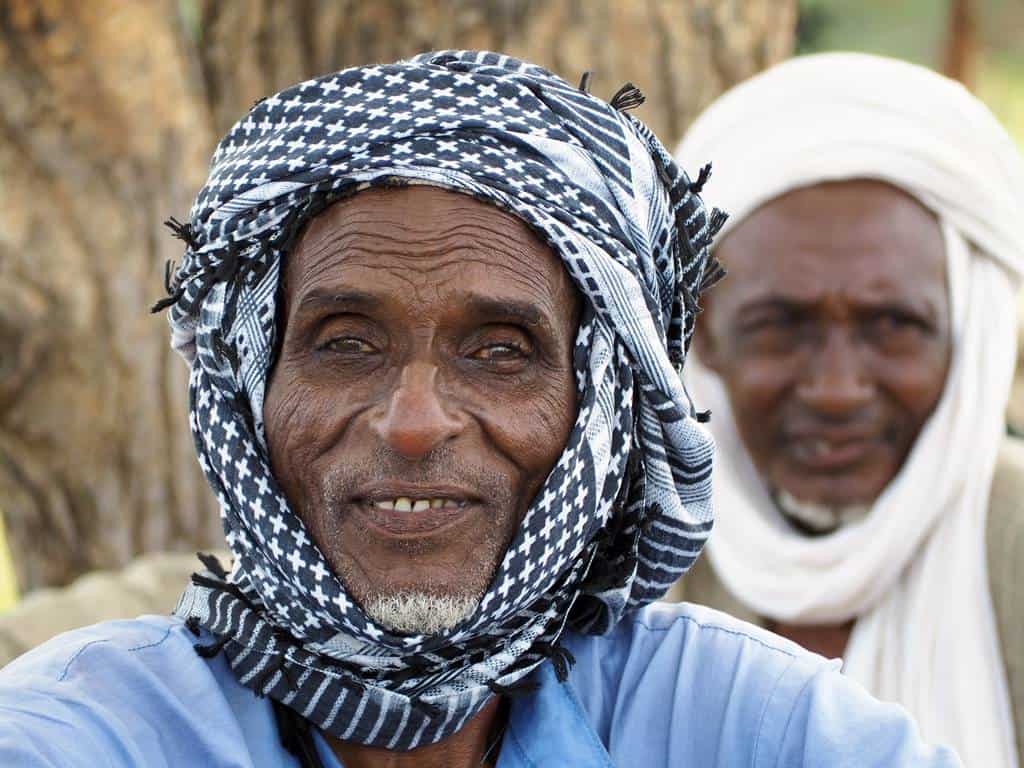
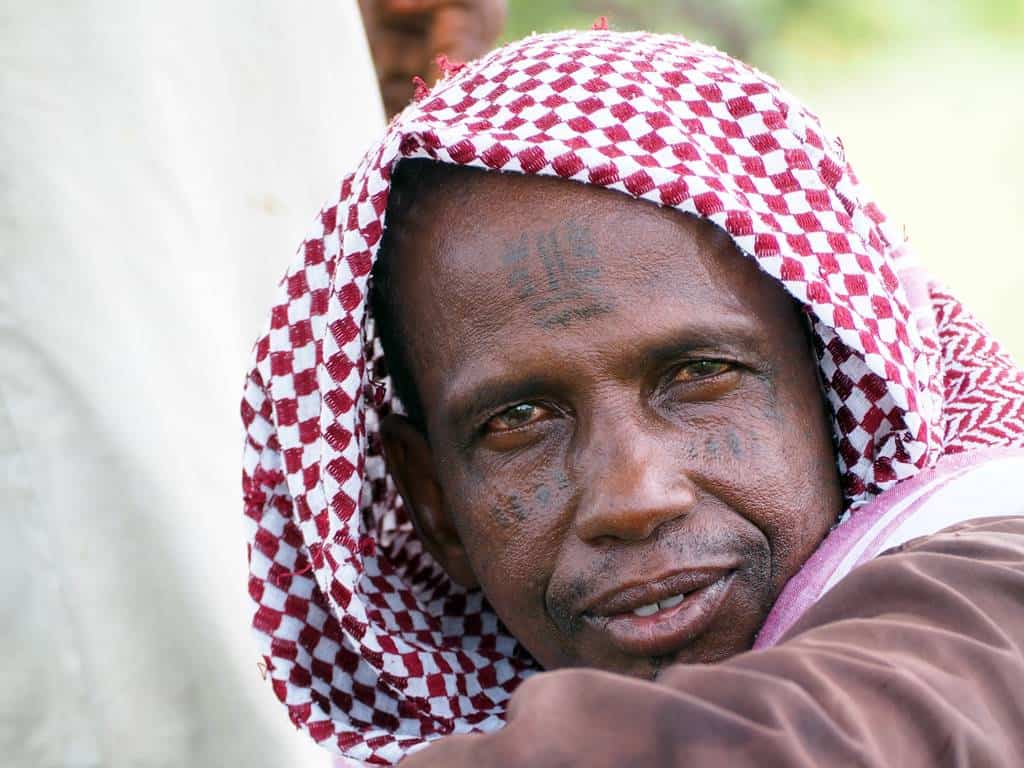
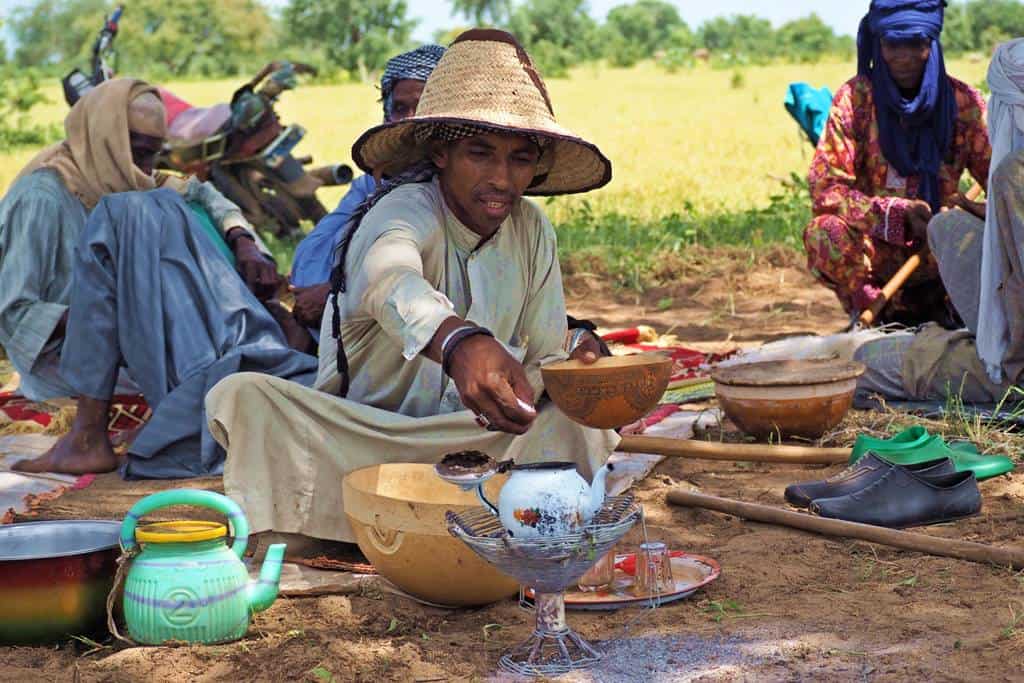
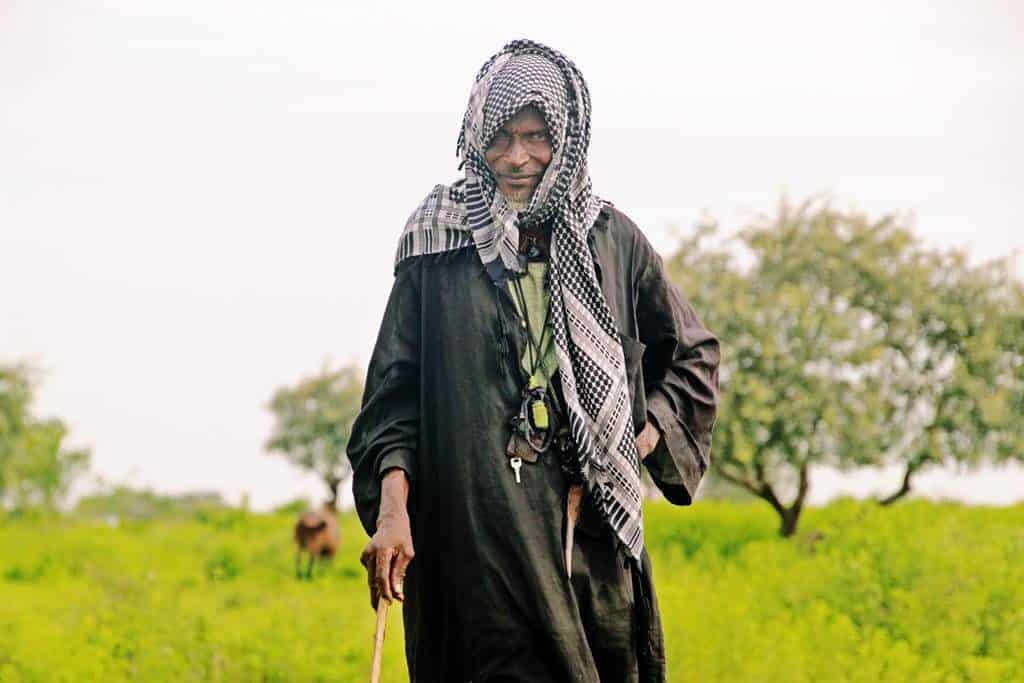
Wodaabe women during the Gerewol
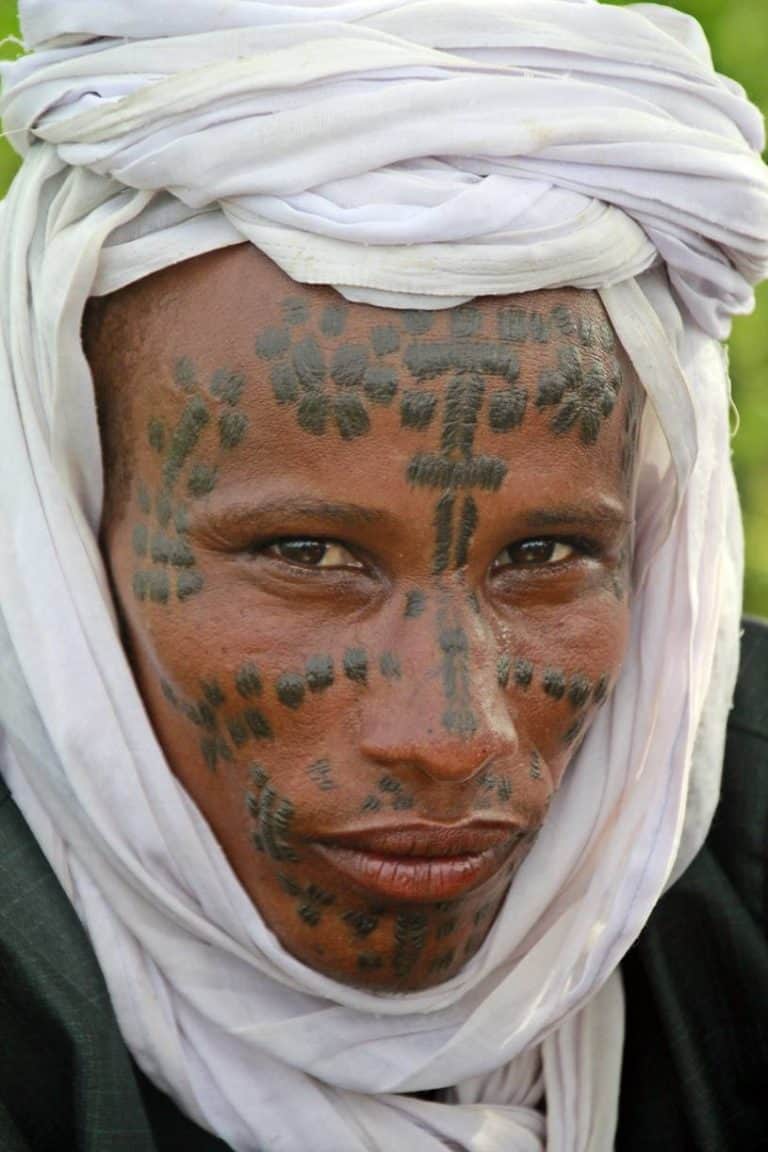
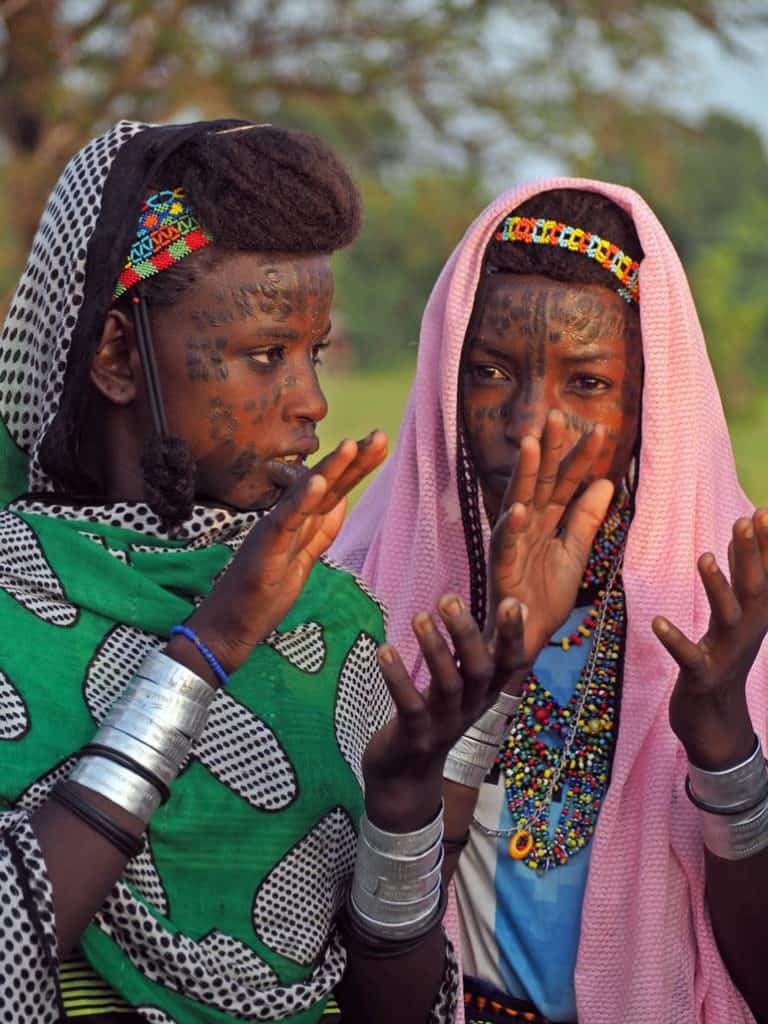
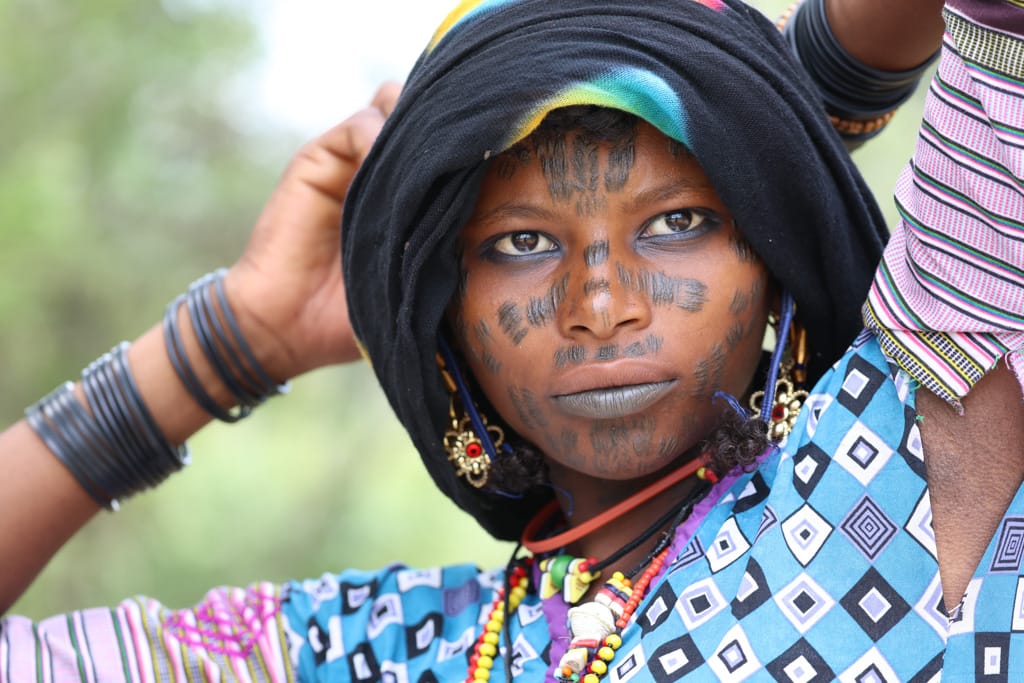
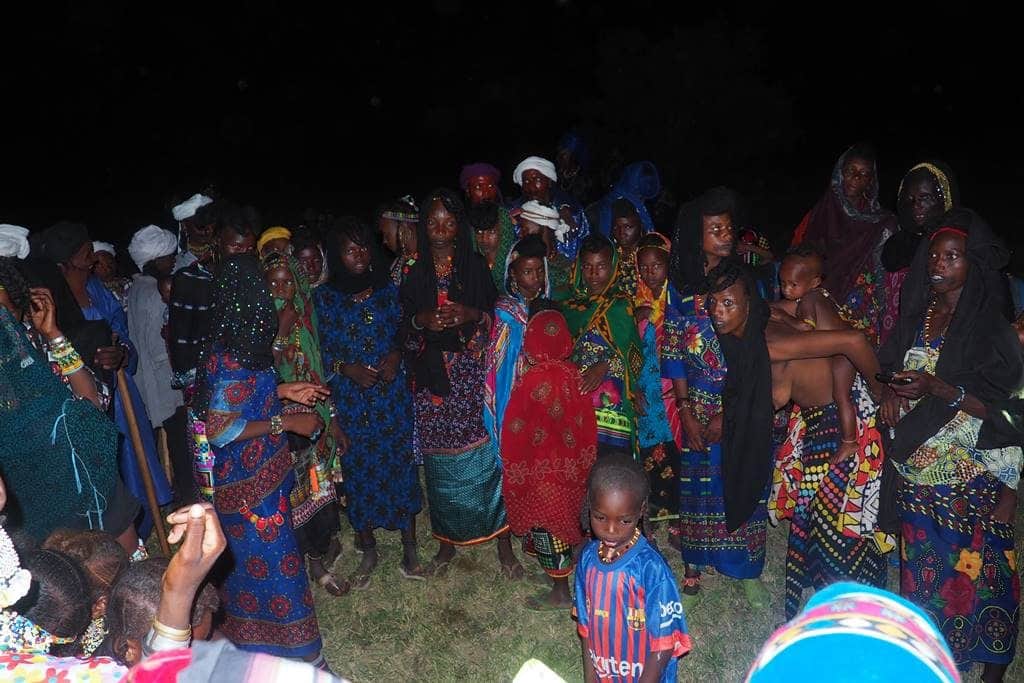
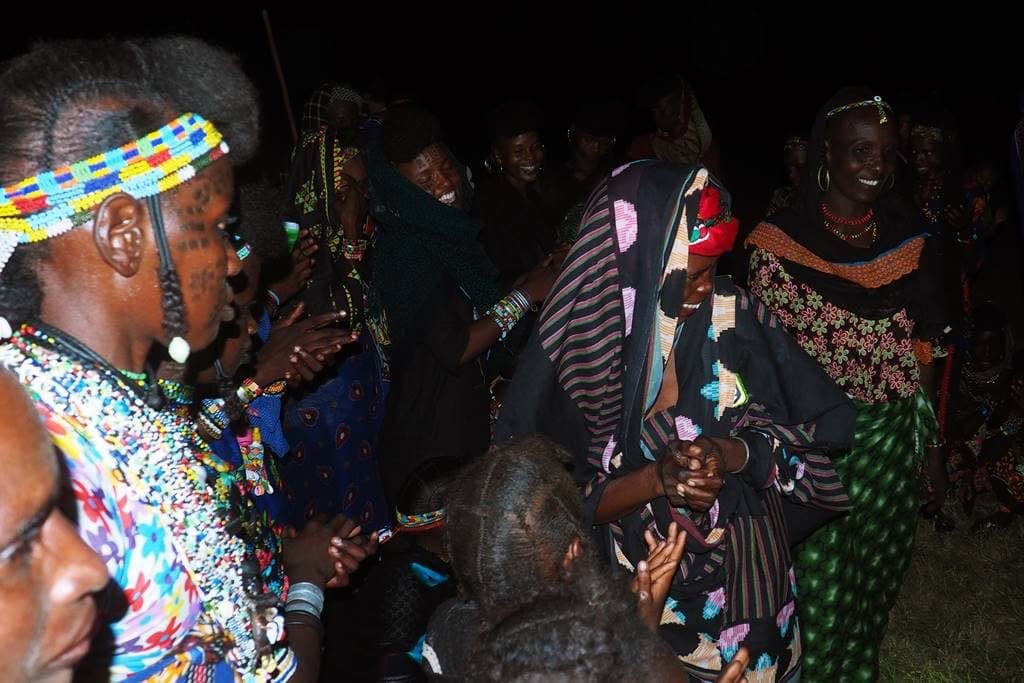
Meanwhile, with much curiosity, we observed that the Wodaabe women are unmistakable. They dress in dark fabrics and are distinguished by their facial tattoos, large earrings in the ears, bulky hairstyles, flashy jewelry and usually 2 braids on each side of the face that for them means a magical protection.


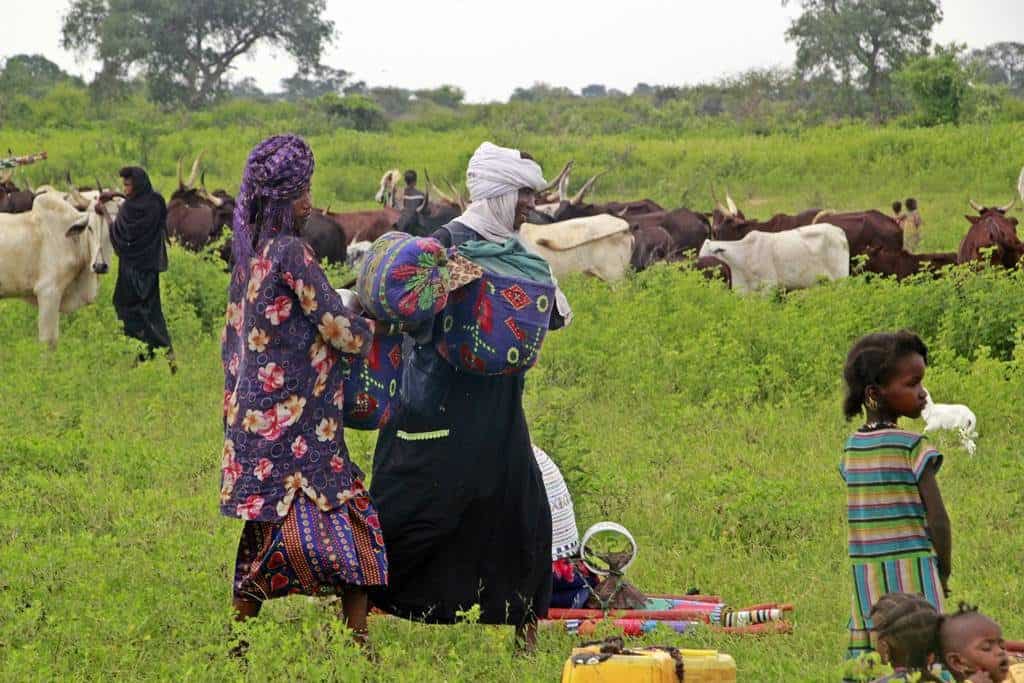
And while for the Wodaabe man wealth and status depends on the number of cattle he owns, for the Wodaabe woman it is the number of pots and gourds she has. These pots will always be clearly visible next to the suudu (Wodaabe nomadic style tent or house).

Wodaabe, one of the largest nomadic groups in Africa
As the hours went by, more families arrived with their herds. On the back of donkeys and zebus: children, women and old people traveled with their belongings. On foot, leading the group, the men.
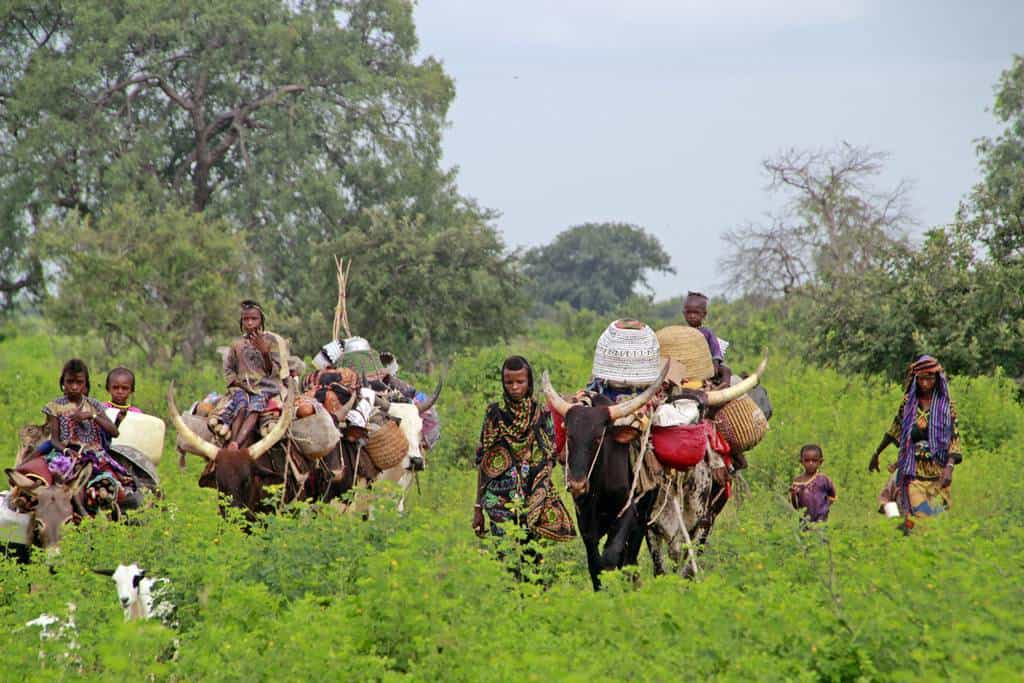


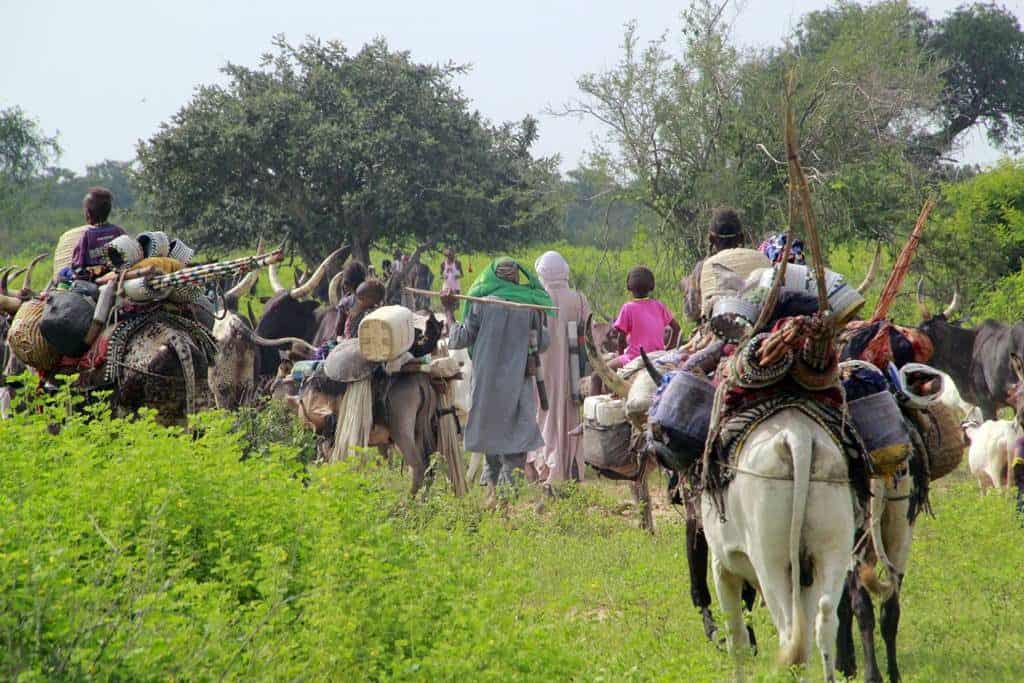
Once the place to set up camp has been chosen, the women are in charge of clearing the site of weeds. They are also in charge of setting up the suudu. Young women and girls are in charge of fetching water.

For the most beautiful people in the world, being beautiful is an obligation. From childhood they are instructed in the cult of the body, even from the birth of the child all care is aimed at improving its external appearance. As soon as the newborn is washed, the midwife molds the head, trying to give it a spherical shape by means of gentle pressure; the nose and the extremities are molded with equal care.

The Gerewol festival, a spectacle of beauty
The Gerewol festival of the Wodaabe combines the three focal points of the Fulani, beauty, livestock and family.
The evening falls and we start to hear some chanting, some men start to gather. The rest of the families have not yet arrived, they tell us that tomorrow will be a great day of celebration.
Sunrise in the Sahel. While we prepare our breakfasts, the Bororo do the same. The first thing is to make a fire to prepare the tea. From early in the morning, the men go about their lives in groups on one side and the women and children on the other, always next to the suudu or tents.


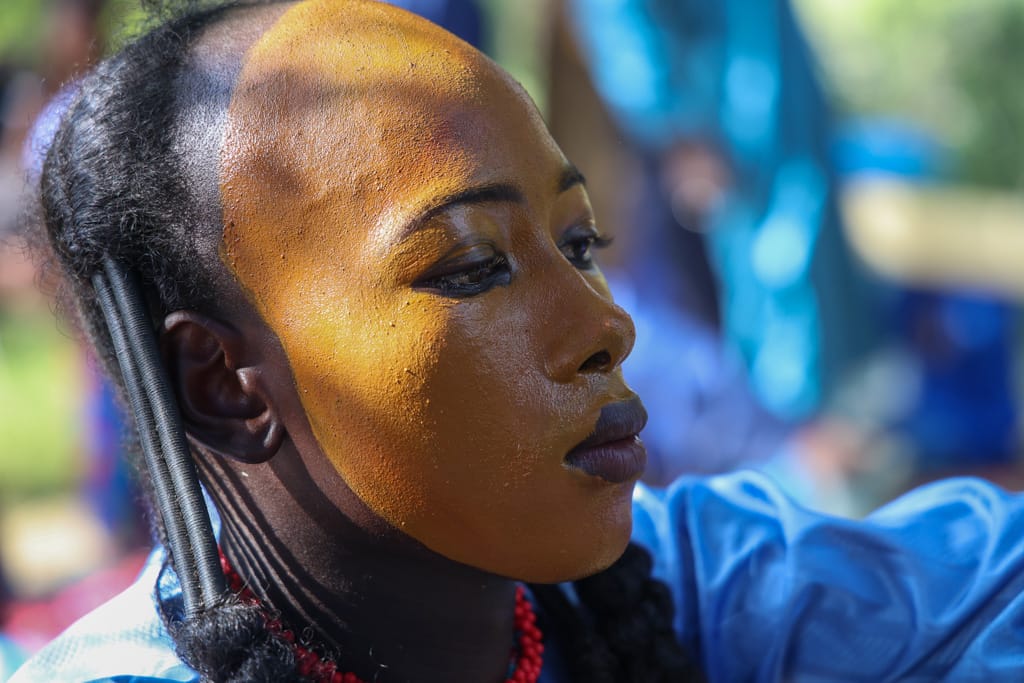
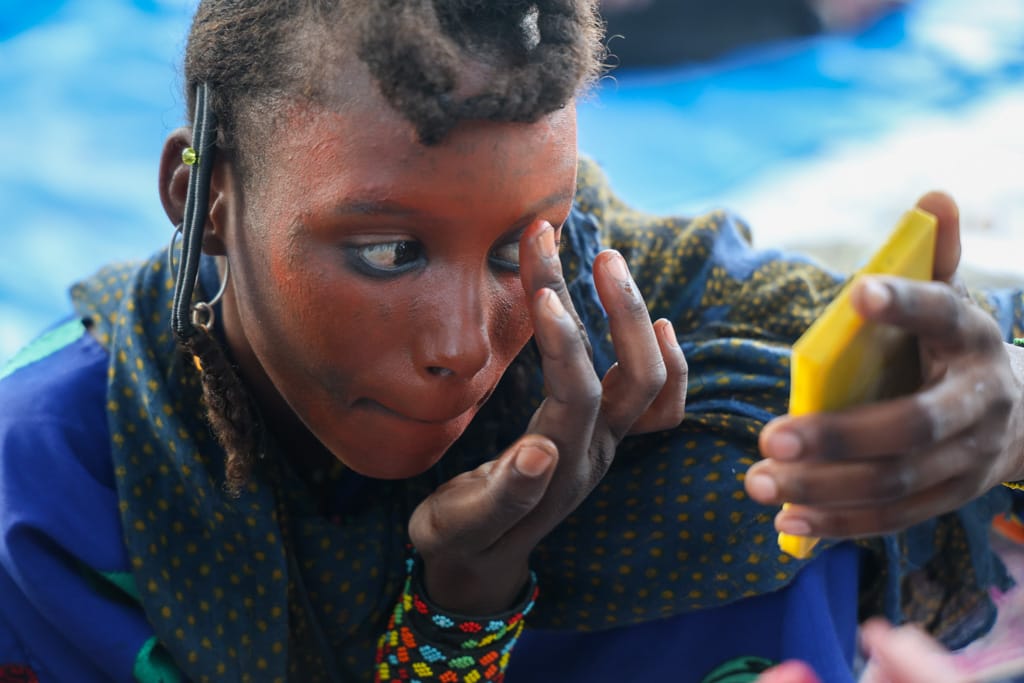
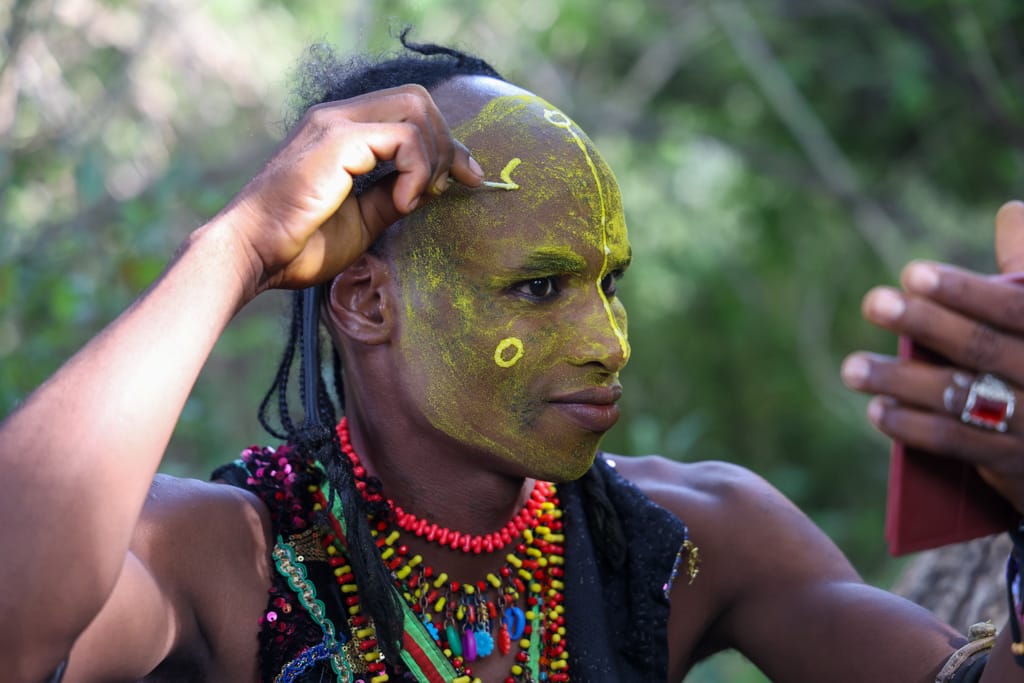
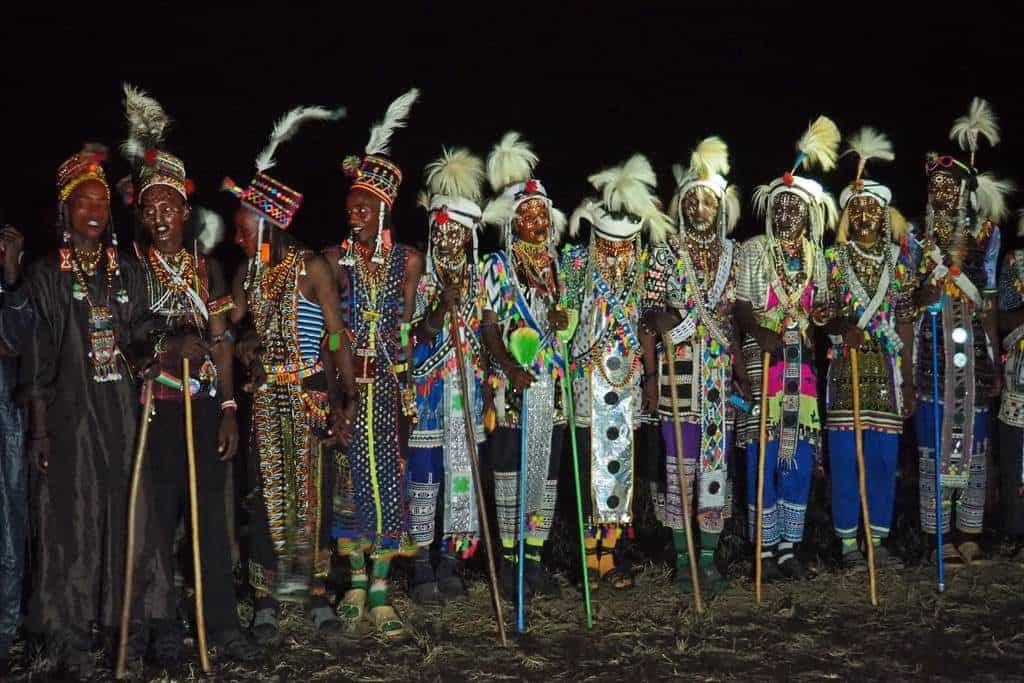
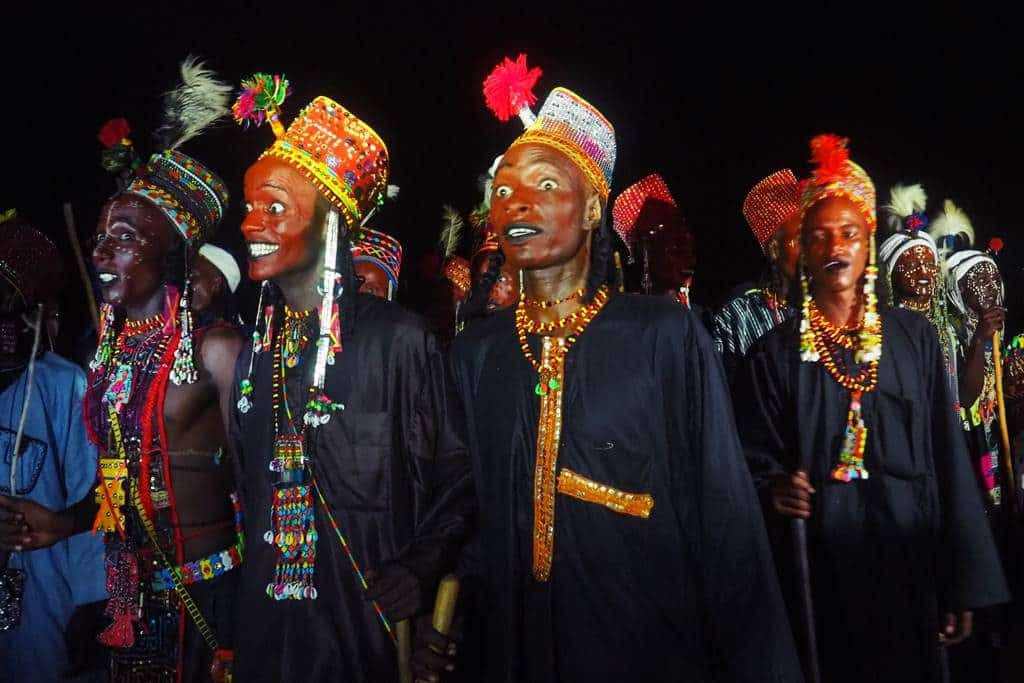
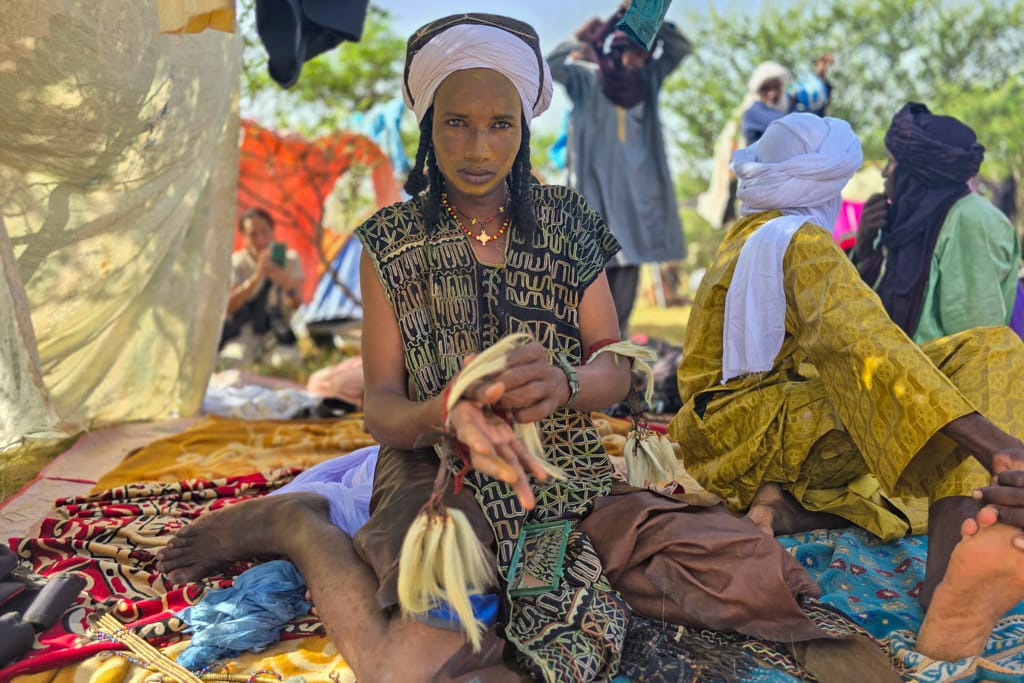
Throughout the morning the men begin to prepare for the Gerewol. With great patience and perfection they make up their faces, sometimes alone and sometimes on each other, but always, always looking in the mirror. I have never seen such a smug village before. If there are two things the Bororo love, it is tea and looking in the mirror.
Due to their nomadic status, the Wodaabe have few opportunities to socialize and find a partner. The Gerewol festival is one of the few opportunities for this.




Gerewol dance
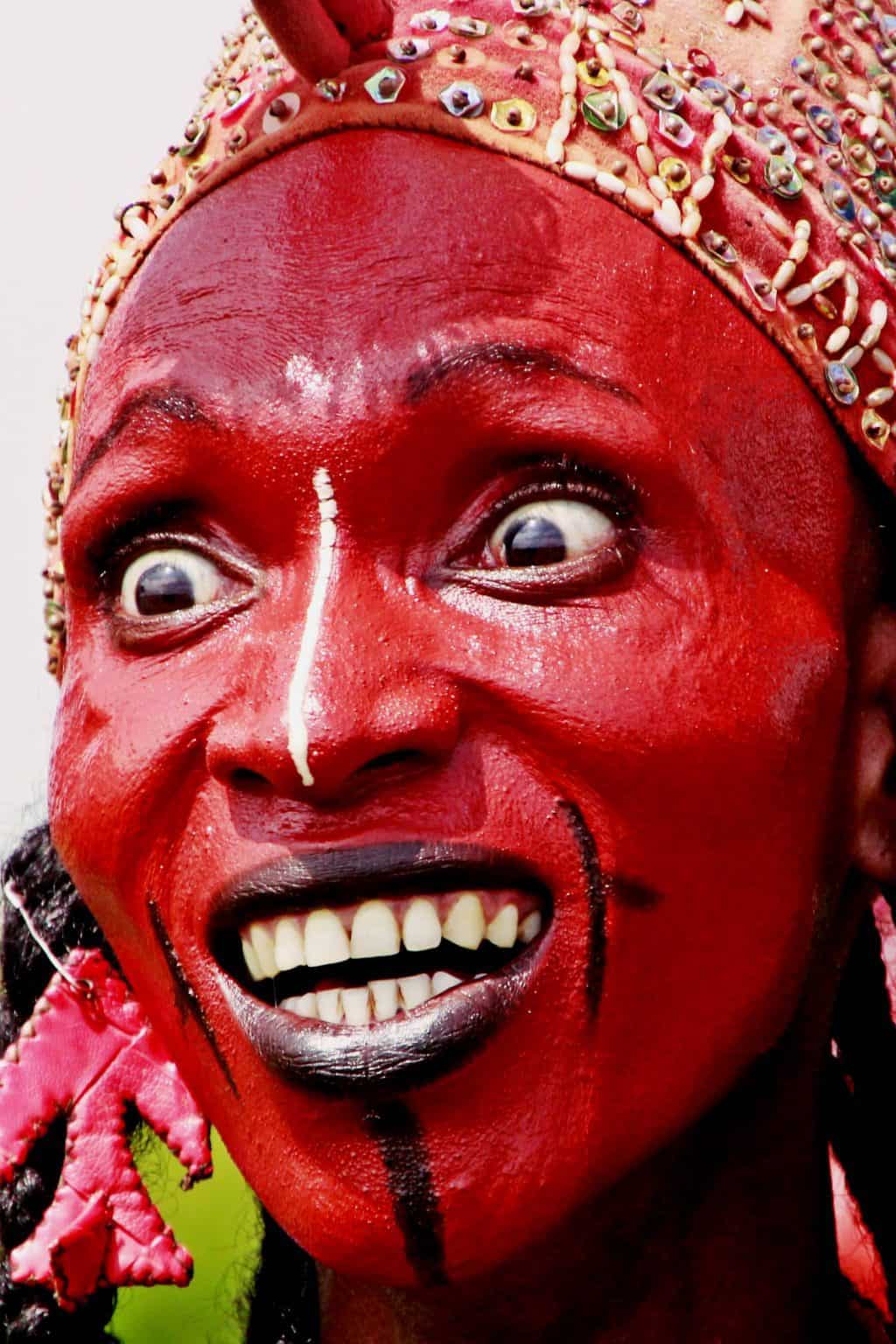
The Gerewol is a ceremony where men dance and compete to be the most beautiful and women are judges and can choose their future husband. For these dances the men prepare themselves thoroughly with their best clothes and accessories, painting their faces red (Gerewol) or yellow (Yaake) and highlighting the eyes and lips with black makeup, which makes the white of the teeth and eyes stand out more. In the dance, the men are arranged in a line, with the youngest being the ones who stand at the extremes. The dances and chants are hypnotic and are repeated for hours on end, sometimes all night long.



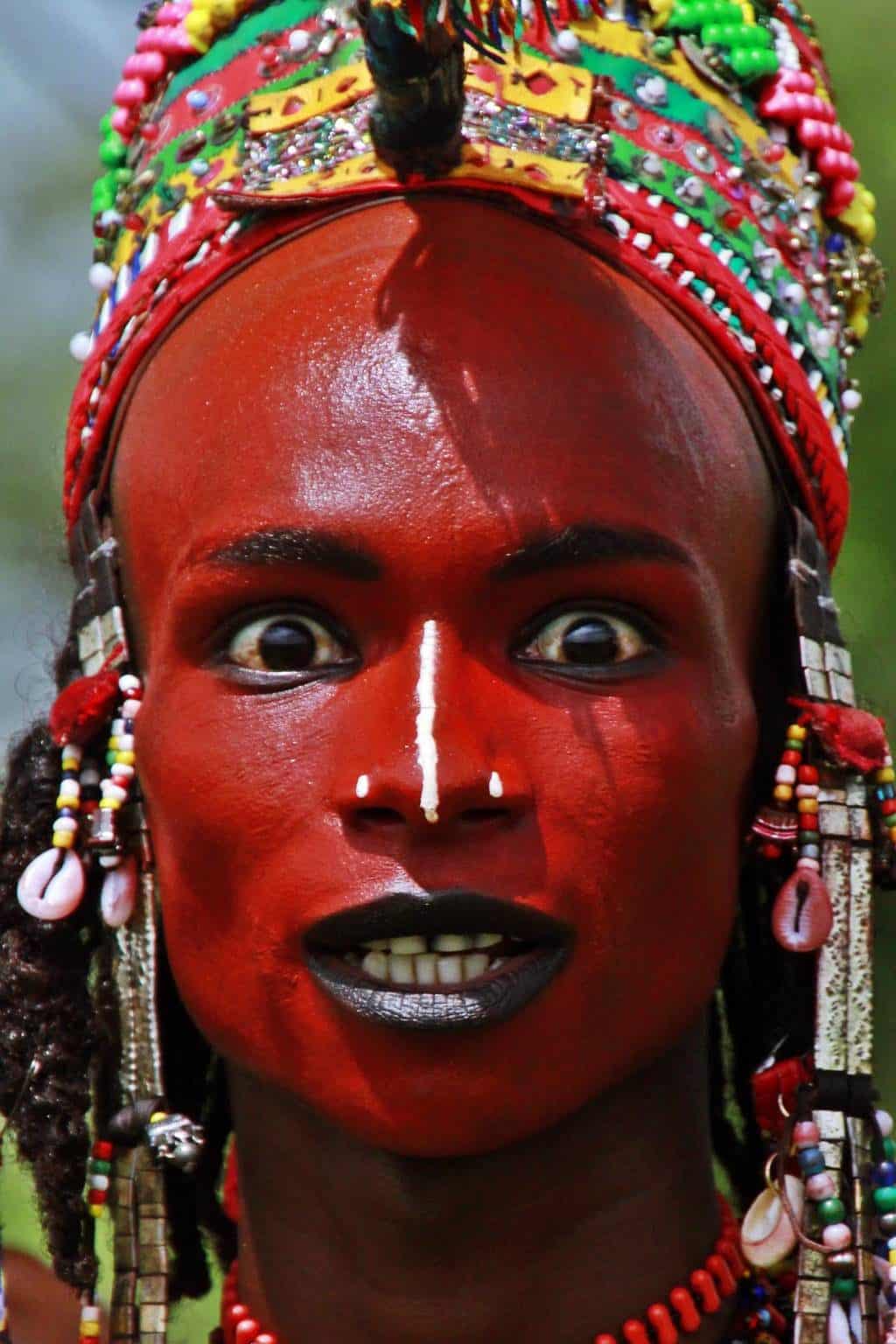

Polygamy in the Wodaabe
The Wodaabe practice polygamy and men can have up to four wives. But in these parties the single girls can have an “affair” with one of the men without any kind of commitment afterwards. They say… if a wife had a husband who was not too handsome, she could change husbands at the Gerewol or even just try to get pregnant with a more handsome man. The latter may have been the case in the old days, or perhaps in other regions. But in this particular part Islam is very influential and I would find it very surprising if this were still the case.
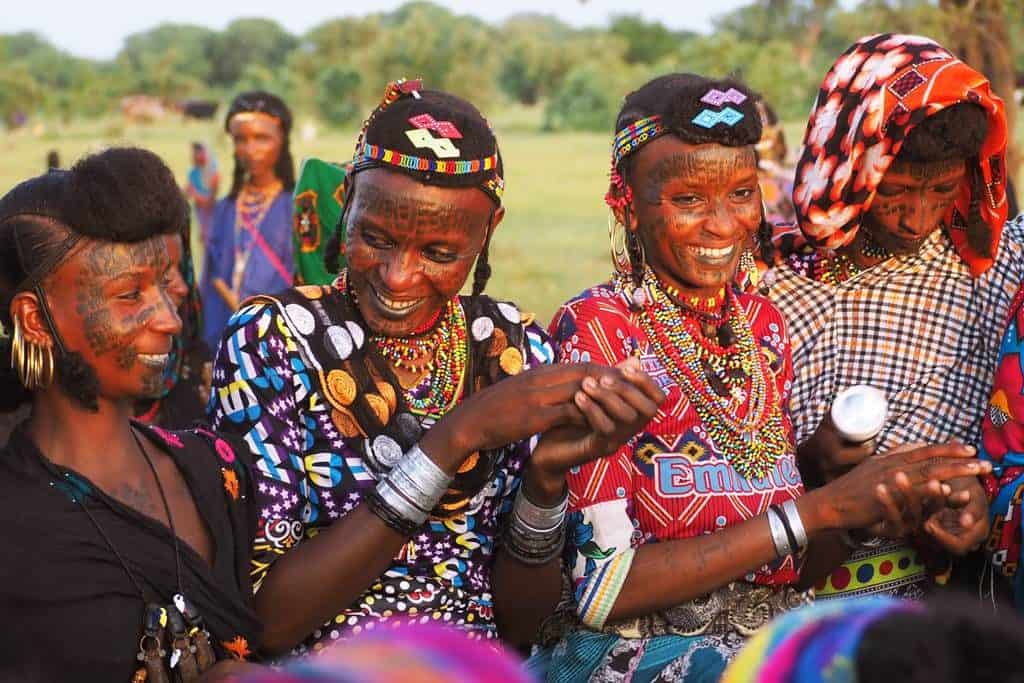


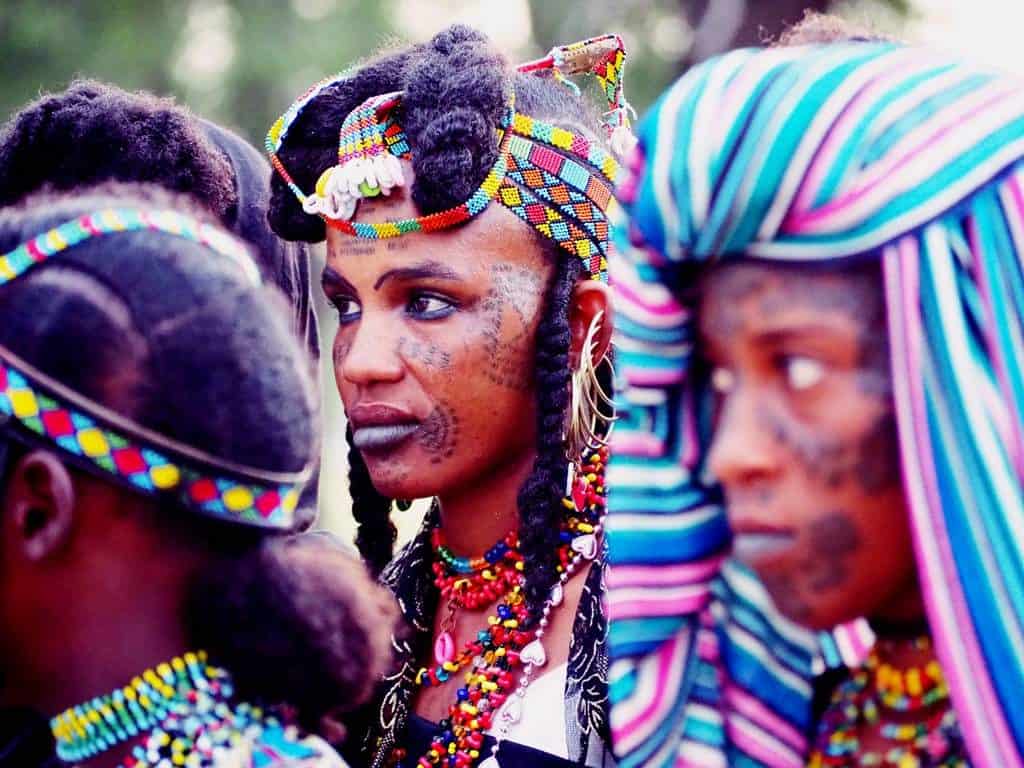
Throughout the day the men dance without a break, only stopping to drink tea and eat. In the afternoon the Gerewol festival reaches its climax, the women attend the dances and dance as well. The spectacle is impressive.
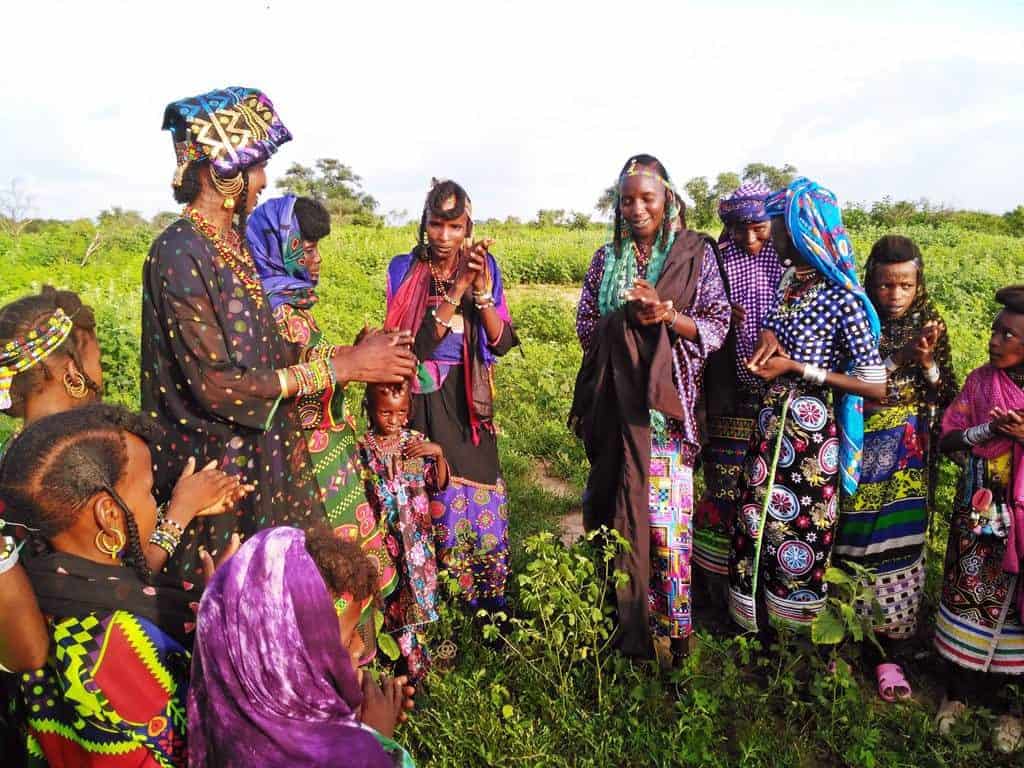
But so do people from other ethnic groups or from small sedentary villages in the surrounding area. The party goes on into the night, without a break. They dance around the bonfires and the participants in the Gerewol enter into a trance, under the effects of secret infusions.






Gerewol Festival in Niger
Similarly, at the end of the rainy season in Niger, a major Gerewol festival is held every year; we have attended it and will try to attend in future years, as long as security conditions in the country allow.
Trips to the Gerewol Festival in Chad
Kumakonda is the pioneering travel agency in Spain dedicated to bringing travelers to the impressive Gerewol Festival in Chad. We have extensive experience and work to offer the best possible experience of this festival every year. If you’d like to travel to Chad with us to attend the Gerewol Wodaabe Festival, you can email us at info@kumakonda.com or check out our scheduled trips.

Autor:
Austerio Alonso
Co-founder of Kumakonda. Passionate of Africa. Specialist in the design, preparation and realization of expeditions in Africa. Content creator.
Travel with us