


Dzanga Sangha Reserve in the Central African Republic
Deep within the tropical rainforest of the northern Congo Basin lies the Dzanga Sangha Reserve, a protected area that is home to an astonishing variety of wildlife. From the most amazing and diverse small insects—such as hunter ants and butterflies—to western lowland gorillas, chimpanzees, leopards, and elephants, as well as a large number of birds.
On the edge of the reserve lives one of Africa’s most fascinating peoples: the Ba’Aka Pygmies, the great keepers of the forest.
The first time we visited, we entered from northern Cameroon to take a trip to the Central African Republic, a country that has suffered decades of conflict and instability. Although Dzanga Sangha is located in a region far from the main conflict zones, taking a trip to this reserve requires careful planning and staying informed about security and access conditions at all times.
Today, our journey begins in Bangui, Central African Republic, a good starting point for reaching this little paradise.
Dzanga Sangha and the Sangha Trinational Reserve
The Dzanga Sangha Reserve is located in the extreme southwest of the Central African Republic, in the heart of the Congo Basin, where the borders of Cameroon, the Central African Republic, and the Republic of the Congo meet.
The Dzanga-Sangha protected areas, which include Dzanga-Ndoki National Park and the Dzanga-Sangha Special Reserve, are part of the Sangha Trinational,a vast protected area spanning these three countries. This territory also includes the Lobéké National Park (Cameroon) and the Nouabalé-Ndoki National Park (Republic of the Congo), and was designated a UNESCO World Heritage Site in 2012.

Many consider Dzanga Sangha to be the best tropical forest reserve in Africa, andwe couldn’t agree more.Want to know why? Here are some great reasons why you shouldn’t miss the Dzanga Sangha Reserve.
The Congo Basin, the world’s second-largest tropical rainforest
The Congo Basin is one of the planet’s most important remaining forest regions and contains the world’s second-largest expanse of tropical rainforest.
The Congo Basin is teeming with wildlife, comprising an incredible mosaic of rivers, forests, savannas, swamps, and flooded forests.

Dzanga Bai, the sanctuary of the forest elephants
If the Dzanga Sangha Reserve is known for anything, it is for its wonderful Dzanga Bai.
Bais are clearings in the forest. Their soil and water are rich in minerals, attracting wildlife such as elephants, bongos, sitatungas, wild pigs and forest buffaloes, among others.
Dzanga Bai is a truly exceptional place in Africa, where large numbers of forest elephants can be observed at almost any time of day. On certain occasions, more than 100 elephants can gather simultaneously, offering one of the most impressive wildlife spectacles on the continent.
Dzanga Bai has an elevated observation point from which to peacefully observe the bai’s wildlife.

Western lowland gorillas in Dzanga Sangha
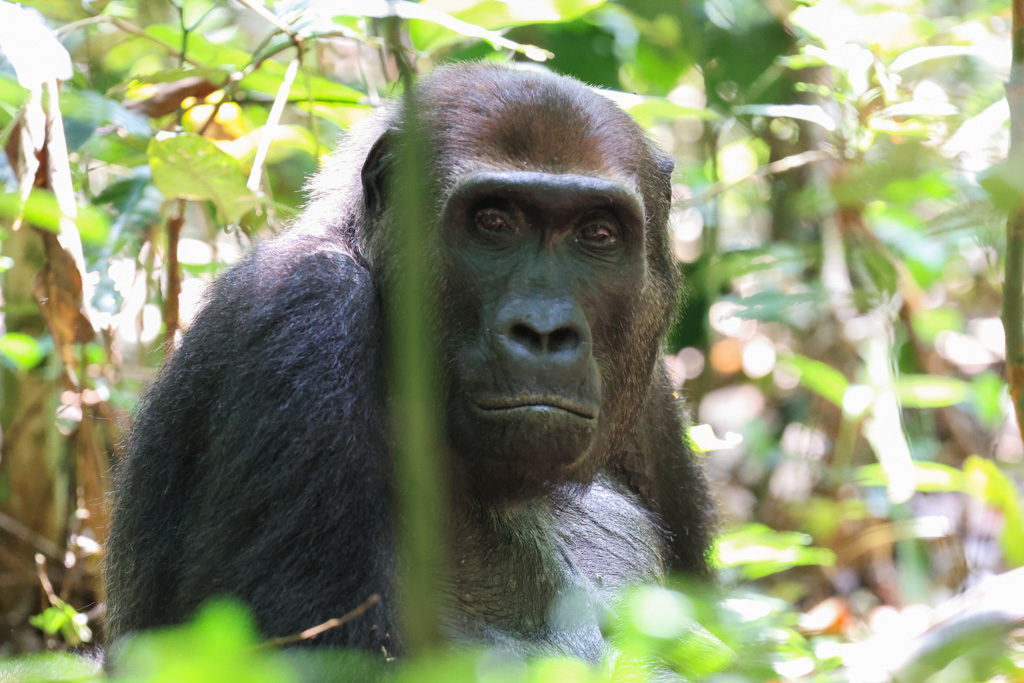
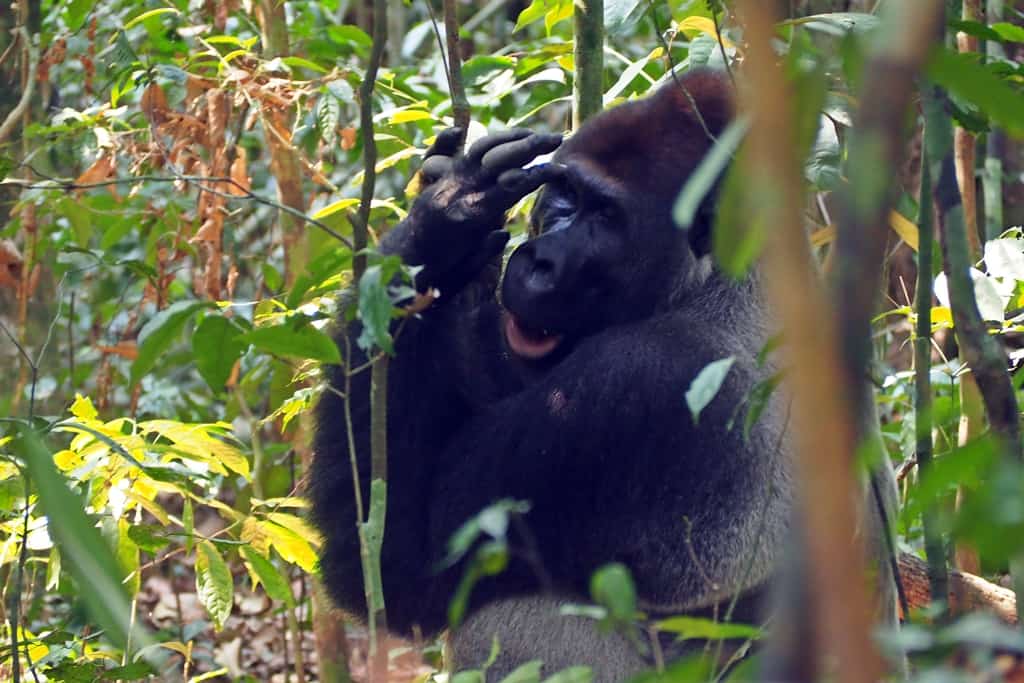
Western lowland gorillas, a critically endangered species, live in Dzanga Sangha. Some groups have been habituated to human presence, allowing visitors to observe a family of gorillas at close range in their natural habitat without the animals fleeing.
This habituation process involves several years of daily work in the forest and relies heavily on the participation of Ba’Aka trackers, who are experts on the jungle.
Currently, the Limo group—led by an impressive silverback male—is the highlight of the tours. To reach them, we venture deep into the Dzanga Sangha forest, accompanied by specialised trackers and guides.
We follow narrow trails through the dense tropical vegetation until we find the gorillas. The time it takes to track them varies and depends on the animals’ movements, but the encounter with a family of gorillas in the wild is, without a doubt, one of the most extraordinary experiences you can have in Africa.

The Ba’Aka, inhabitants and experts on the Dzanga Sangha rainforest
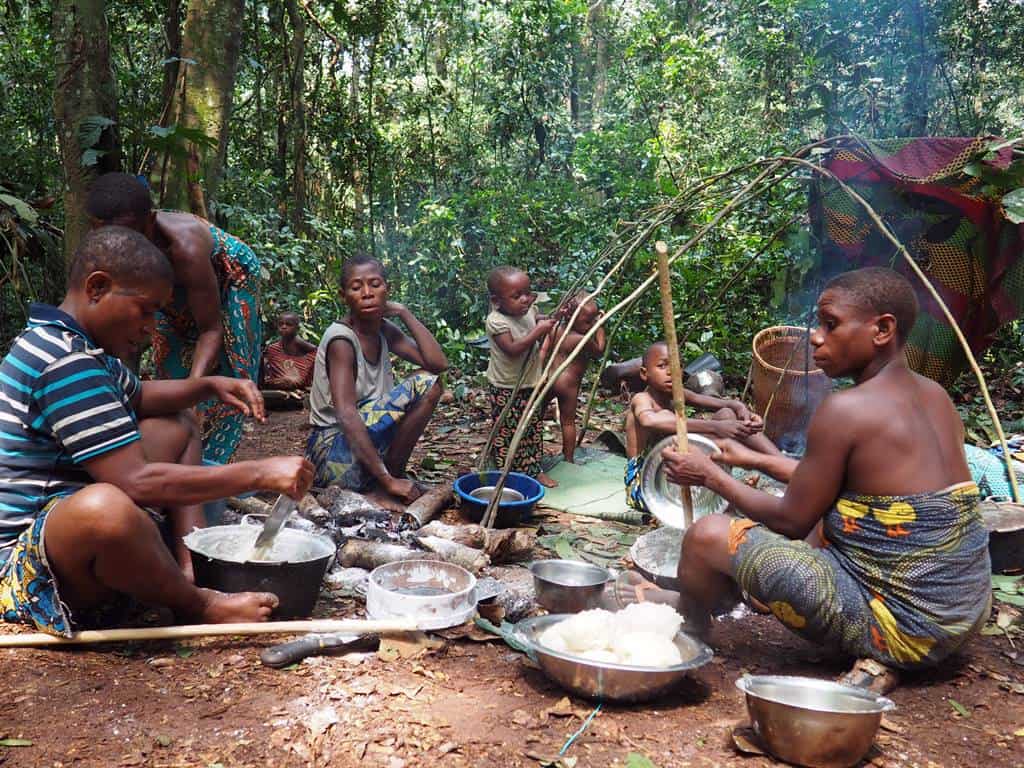
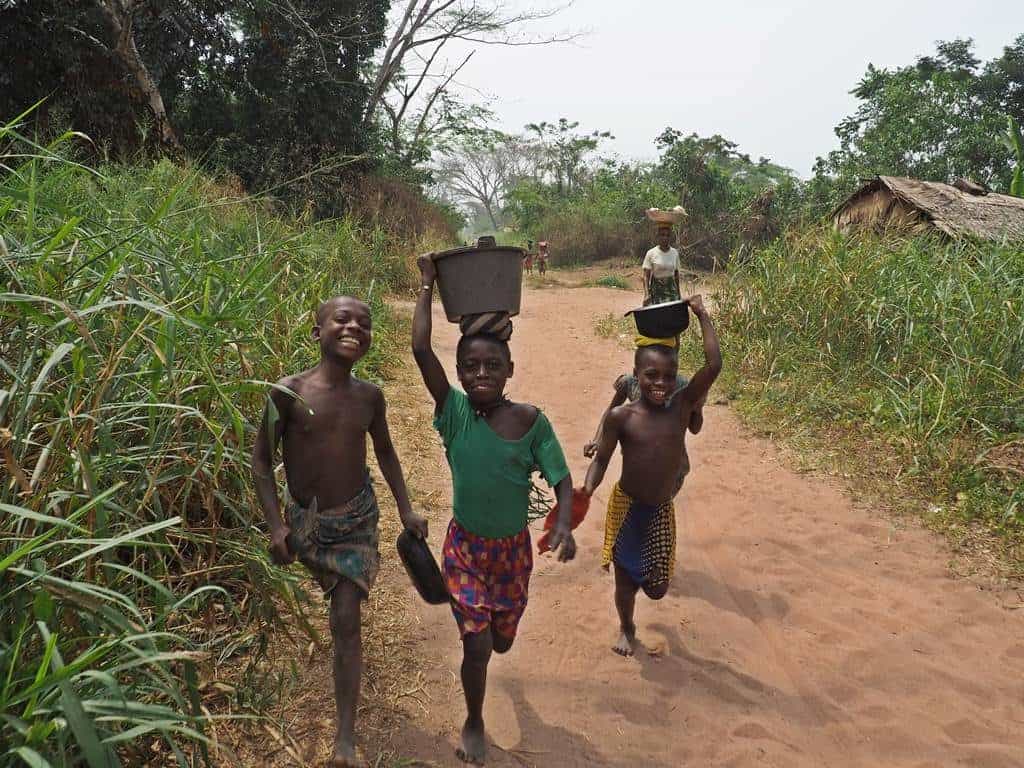
The Ba’Aka, also known as the Aka or Bayaka, are one of the indigenous peoples of the Central African rainforests. They live primarily in the southwest of the Central African Republic and the north of the Republic of the Congo.
Spending a night or two in the forest with them and getting a closer look at their culture and traditions is a truly extraordinary experience. Going out hunting with them, seeing how they use nets to corral and catch their prey, learning about the medicinal plants they use, and watching how the Ba’Aka women extract them from various trees and shrubs, or watching how they build their huts in just a few minutes using branches and leaves to shelter from the rain—these are just a few examples of what it’s like to spend a couple of days with them.
On our most recent trips, we’ve spent several days hiking the jungle trails alongside the Ba’Aka, sharing in their daily lives and attending some of their traditional ceremonies. You can read the account of our experience here.
Agile Mangabeys in Dzanga Sangha
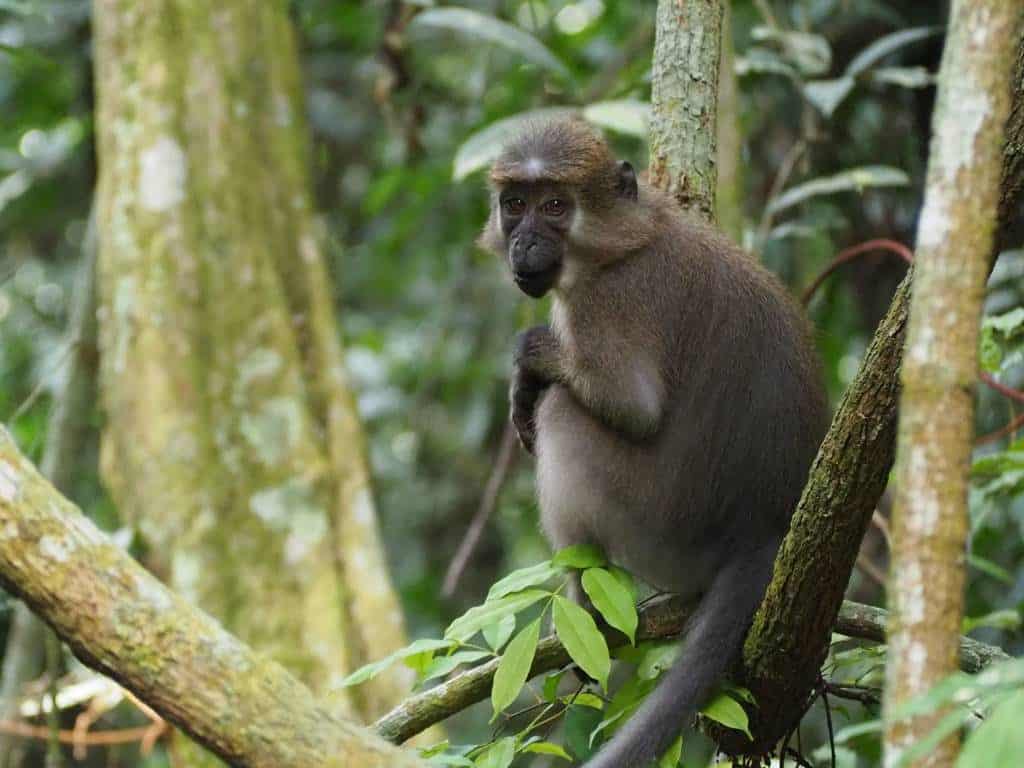
The area around Bai Hokou, in Dzanga Sangha, is home to a large group of agile mangabeys (Cercocebus agilis) that are accustomed to human presence. Since 2004, the WWF’s primate habituation program has made it possible to study and observe these monkeys in their natural habitat.
This is an extraordinarily large group, which can number several hundred individuals—something unusual for this species, as they typically form groups of 20. Walking through the forest while the mangabeys move among the trees and along the ground is another of the great experiences Dzanga Sangha has to offer.
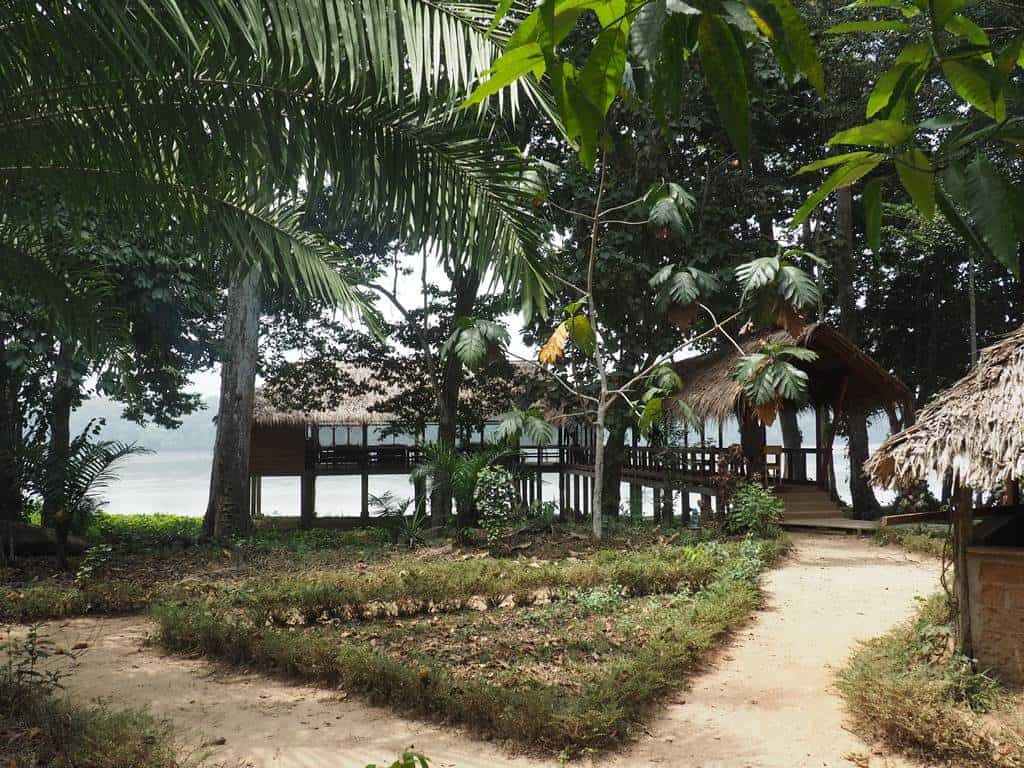
Doli Lodge, accommodation on the banks of the Sangha River
Doli Lodge is the perfect base for our trip to Dzanga Sangha.
Located on the banks of the Sangha River, Doli Lodge stands at the entrance to the reserve, just a short distance from the pleasant riverside town of Bayanga.
Doli Lodge offers comfortable accommodation and an excellent terrace overlooking the river, where you can enjoy a meal, a cold drink or a chat with your fellow travellers after a day in the rainforest.


When to Visit Dzanga Sangha and How Many Days to Spend There
The best time to visit Dzanga Sangha is usually from December through March, during the relatively drier months, although it’s possible to take trips to the Reserve year-round. We’re in the heart of the rainforest, so rain, mud, and humidity are all part of the experience no matter the season.
To fully enjoy this wonderful reserve, we recommend spending at least four or five days there, combining elephant watching in Dzanga Bai, tracking gorillas and mangabeys, and cultural experiences with the Ba’Aka. For those who want to venture even deeper into the jungle, it’s worth adding one or more nights of camping in the forest.
Travel to Dzanga Sangha with Kumakonda
Dzanga Sangha is one of those places we always want to return to. We’ve explored its forests on numerous occasions and continue to consider this reserve one of Africa’s most extraordinary natural areas.
On our trips to the Central African Republic, we combine encounters with western lowland gorillas, elephant watching in Dzanga Bai and rainforest hikes with the Ba’Aka people, sharing experiences that go far beyond a conventional safari.
If you’re passionate about African rainforests, wildlife, and the cultures of Central Africa, discover our tripsand join us on an upcoming expedition.

Autor:
Austerio Alonso
Co-founder of Kumakonda. Passionate of Africa. Specialist in the design, preparation and realization of expeditions in Africa. Content creator.
Travel with us