


In October 2025, we took a trip to the Algerian gems of the Tassili n’Ajjer (Plateau, Tadrart Rouge, and the northwestern region), exploring some of the most breathtaking and culturally rich landscapes in the Sahara. Their combination of rock art, geological formations, and unique ecosystems makes them must-see destinations that are easily accessible to travelers seeking to explore the mysteries of the desert. The Tassili n’Ajjer, a UNESCO World Heritage Site, is not only a testament to humanity’s distant past but also remains a place on the map where nature and history intertwine in a fascinating and profound way.

Tassili n’Ajjer: A Refuge of Rock Art and Fascinating Geology
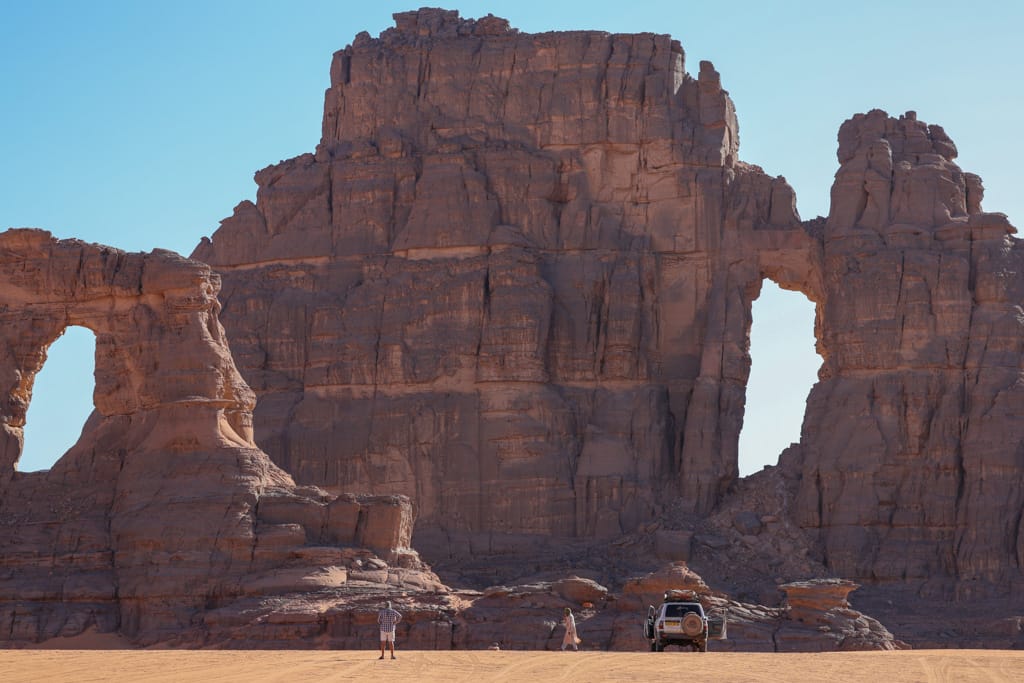
The Tassili n’Ajjer is a vast plateau located in southeastern Algeria, known for its impressive geological formations and ancient rock art sites. This region, covering an area of approximately 72,000 km², is marked by gigantic rock formations, deep valleys, canyons and plateaus, all framed by the aridity of the desert.
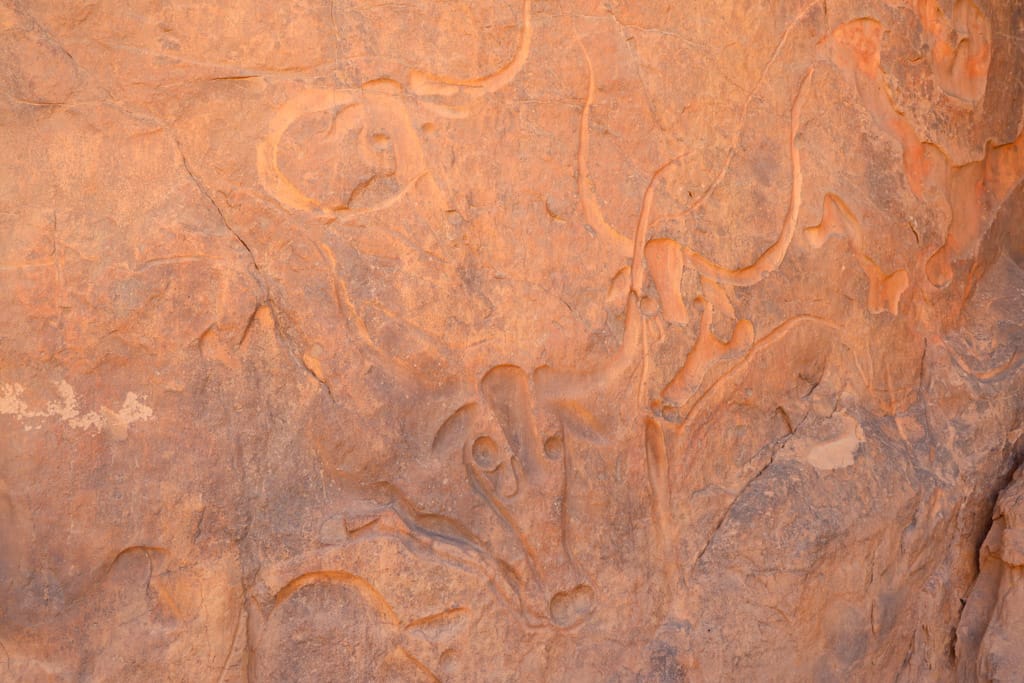
One of the highlights of the Tassili n’Ajjer is its impressive rock art. The walls of its caves and rocks are covered with thousands of paintings and engravings dating back more than 10,000 years.
These depictions show a wide range of scenes, from human and animal figures to complex symbolic representations. They undoubtedly offer a unique insight into the prehistoric cultures that inhabited the region, their religious beliefs, customs, and their relationship with the natural environment.
The paintings depict, among other things, people hunting, dancing, and worshiping mythical figures, which reflects the cultural diversity and complexity of the societies that inhabited the area.
The animals depicted include species that are now extinct in the region, such as the wild ox and the desert crocodile, suggesting that the climate was much wetter in ancient times.

Three distinct geographic and tourist zones of Tassili N’Ajjer
Djanet, the gateway to the Tassili n’Ajjer, is the geographic center of the three notable areas worth visiting in this part of Algeria. These three regions are the Tassili n’Ajjer Plateau, the Tadrart Rouge, and the Iherir Valley, located northwest of Djanet.
The Tassili n’Ajjer Plateau is a vast plateau famous for its rock art and unique sandstone formations. The Tadrart Rouge is a mountain range featuring red and orange dunes, and the area northwest of Djanet is a mix of valleys, canyons, oases, and dune fields.
The Plateau of Tassili n’Ajjer
Accessible only on foot, the Tassili n’Ajjer Plateau is a vast, high plateau in southeastern Algeria, bordering Libya. Known for its unique combination of rock art, geological formations, and natural beauty, it is home to the largest collection of rock engravings and paintings in the entire Sahara. It is considered the world’s largest “open-air museum,” and its most notable site is the lost city of Sefar.
To visit the Tassili Plateau, you must hike along 5- to 7-day (or longer) trails, with logistical support from donkeys, which carry backpacks, tents, water, and food.

Tadrart Rouge: A Natural Paradise of Surreal Colors and Landscapes
South of the Tassili n’Ajjer, specifically about 200 kilometers from Djanet, lies the Tadrart Rouge, a region that owes its name to the striking reddish rock formations that dominate the landscape.
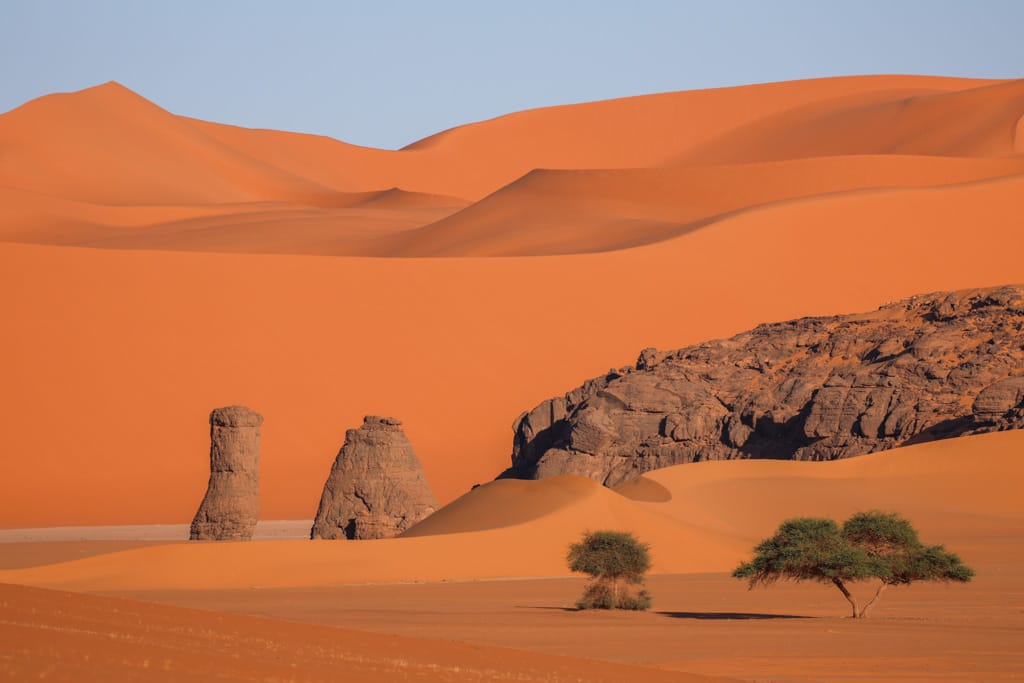
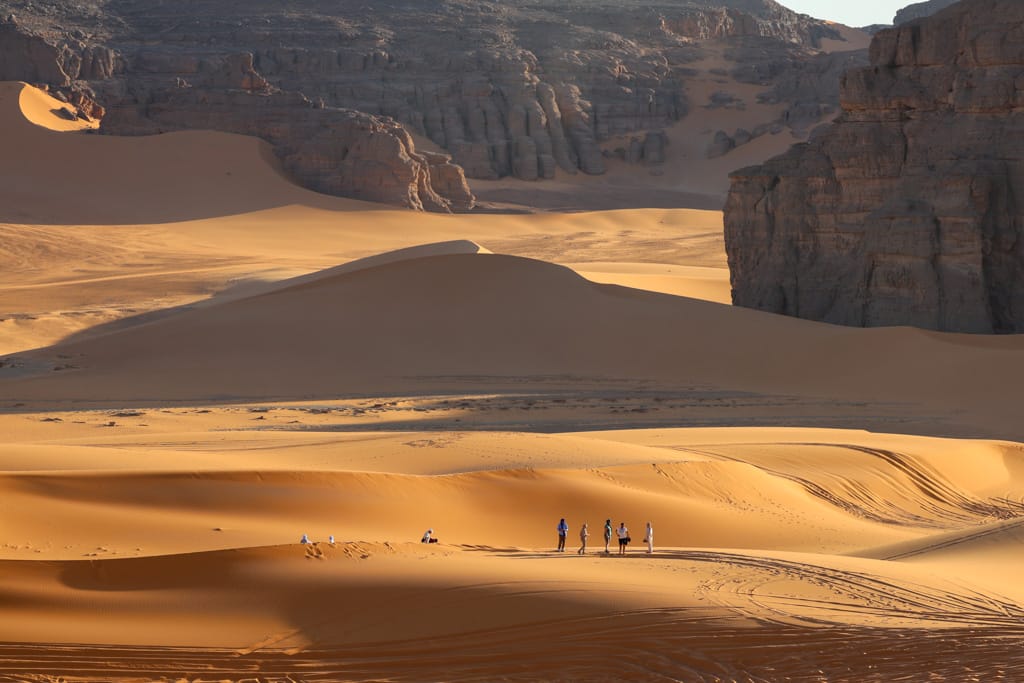
The Tadrart Rouge, which covers an area of about 30,000 km², is a vast and majestic desert of dunes, canyons, and geological formations sculpted by wind and water over millennia.
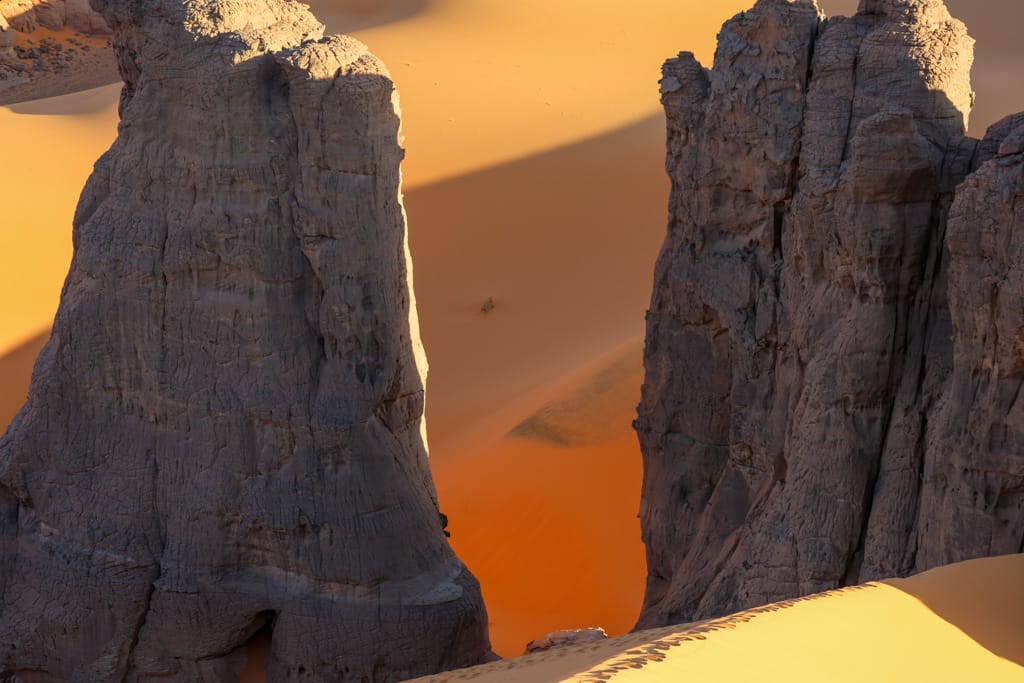
This region is known for its surreal landscape and its “natural sculpture” of the rocks, which present a variety of shapes and colors that seem to be taken from another world. The red sandstone rock found in the Tadrart Rouge creates a stunning contrast with the blue sky and golden desert dunes, creating an environment of unique and evocative beauty.
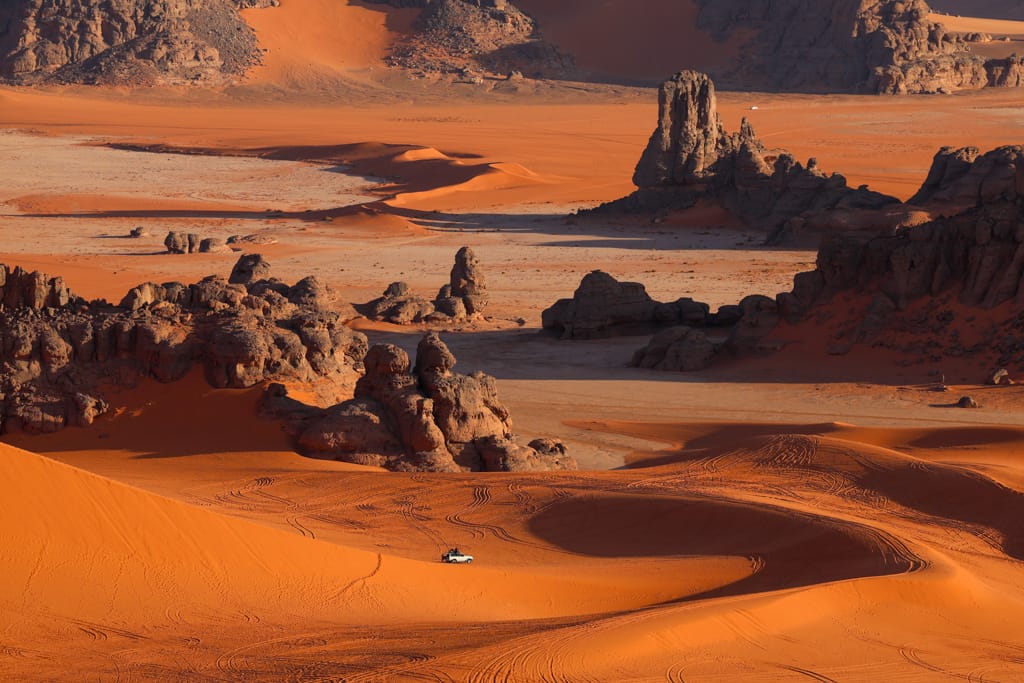
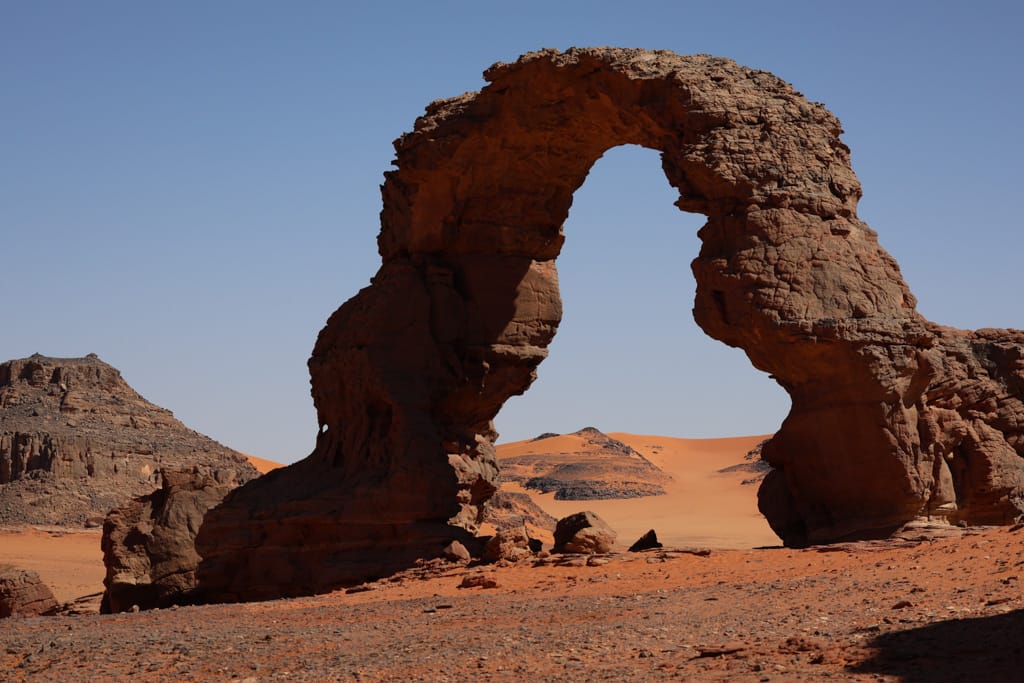
In addition to its natural beauty, the Tadrart Rouge is also home to vestiges of rock art similar to that of Tassili n’Ajjer. Numerous paintings and engravings have been discovered in the rocks, including representations of animals, human figures, and scenes from the daily life of the ancient cultures of the Sahara. As in the Tassili, these representations reflect the symbiotic relationship of humans with their environment, their spiritual beliefs and customs.

Oasis, canyons and sand seas in the northwest of Djanet
The third geographical area into which we divide the Tassili N’Ajjer for tourism purposes is located northwest of Djanet. In our opinion, it is the most interesting and diverse. Also, due to its enormous size, it is—at first glance—the least crowded.
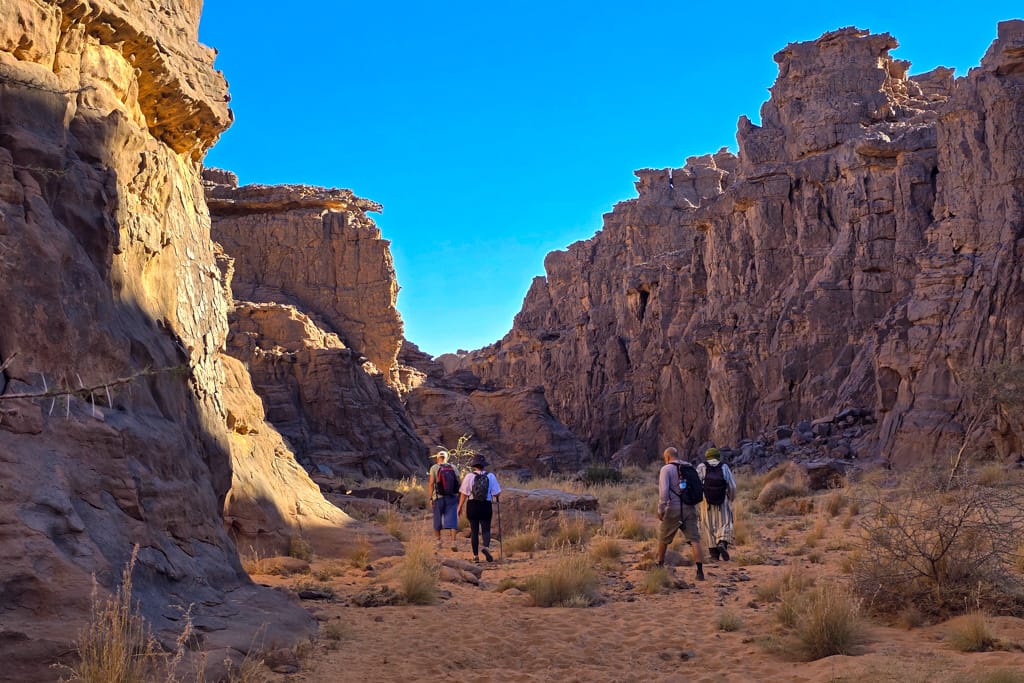
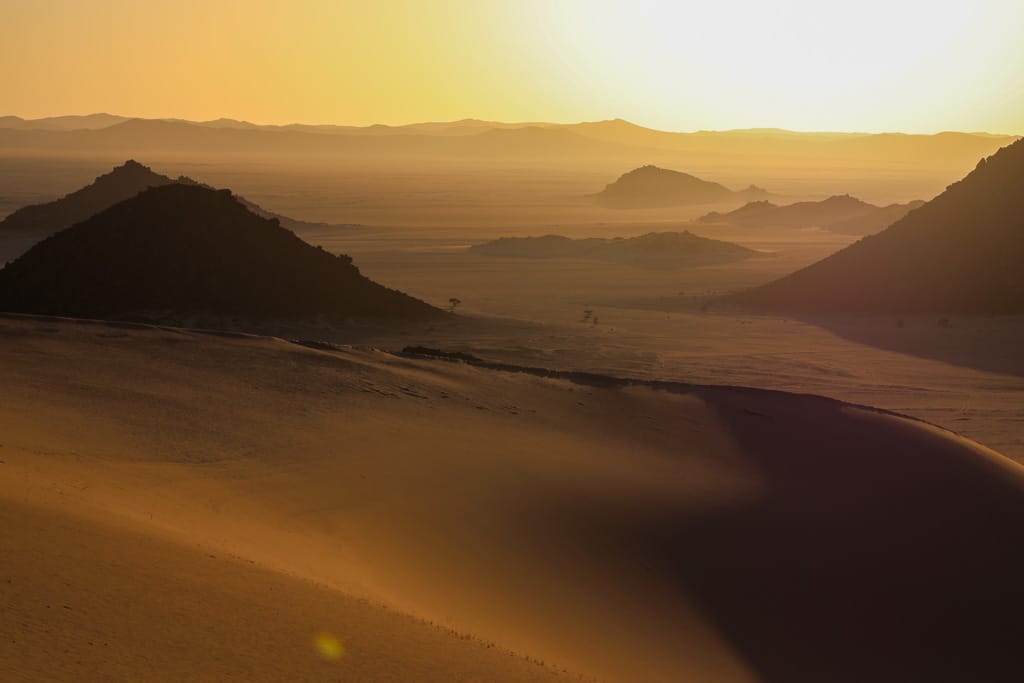
This part of the Tassili is an interesting mix of oases, gueltas, spectacular sand dunes, canyons, and wadis. Here, too, we find fine examples of rock art in the form of paintings and engravings.
Mass and impact tourism in the Algerian desert
At Kumakonda, you know we love to explore the most remote corners of the African continent, often venturing off the beaten path to offer authentic and unique itineraries across the continent. This isn’t possible in the Tassili N’Ajjer, especially in the Tadrart Rouge.
The area of the “classic” routes of the Tadrart Rouge is not too large. We can speak of a triangle of 30 km x 30 km x 20 km. This area concentrates a good part of the major regional attractions and also a multitude of national and international visitors.
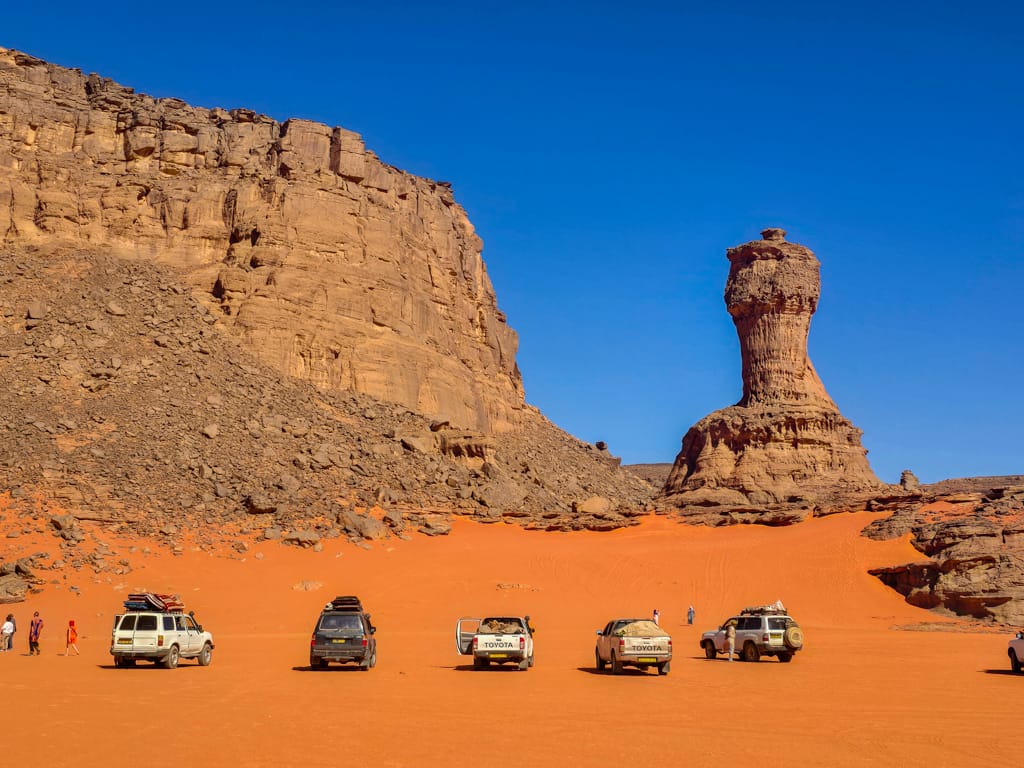
The impact of this type of tourism, although it does not quite qualify as “mass tourism,” is undeniably felt.
Algeria is no exception to—nor is it any different from—what is happening in Spain, Europe, and so many other places. Tourism brings benefits, but it also causes damage. It is also fertile ground for petty crime at various levels.
Conclusion of our trip to southern Algeria
This corner of southeastern Algeria is home to some of the most beautiful Saharan landscapes and an incredible collection of rock art that is well worth a visit. To sum it up briefly, we really enjoyed Tassili N’Ajjer, even though we didn’t like everything we saw.
Tassili n’Ajjer is an easily accessible destination and a good introduction before venturing into other wilder parts of the Sahara where tourism has not yet made its presence felt.
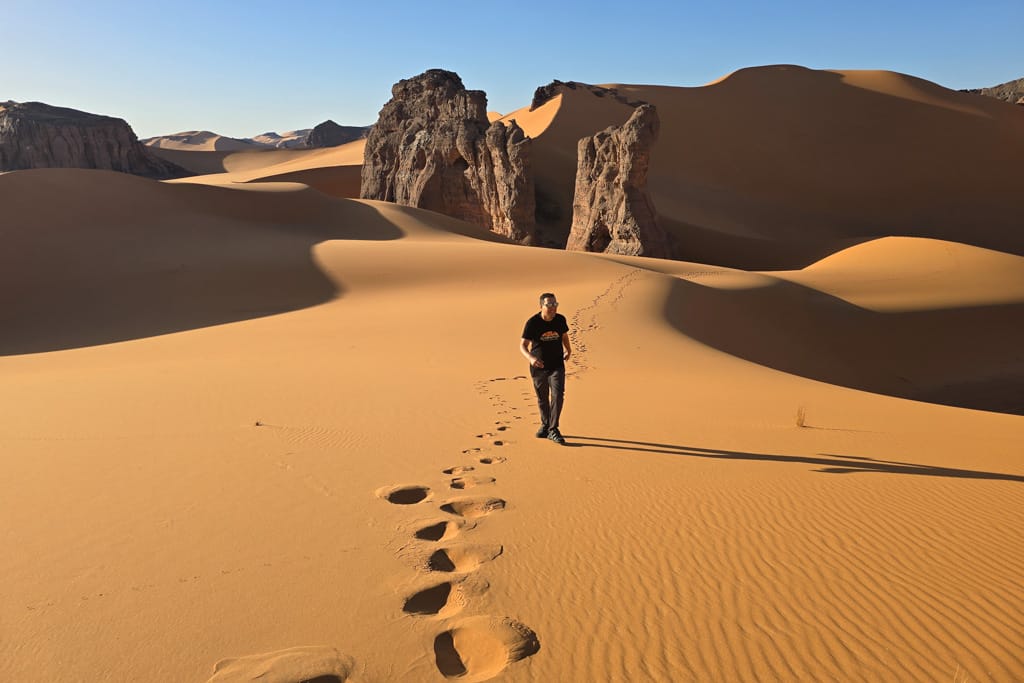
At Kumakonda, we are firmly committed to developing new routes in the Tassili N’Ajjer, combining lesser-traveled areas with the must-see destinations.

Autor:
Austerio Alonso
Co-founder of Kumakonda. Passionate of Africa. Specialist in the design, preparation and realization of expeditions in Africa. Content creator.
Travel with us