


An expedition of more than 1,000 kilometers through the heart of Africa’s river system
Expedition to the Congo River in June 2027. We’re returning to the Democratic Republic of the Congo to travel by boat from Kisangani to Mbandaka. It will be a 16-day river expedition with a maximum of eight travelers.
There are many ways to experience the vastness of the Democratic Republic of the Congo. You can fly over its jungle for hours, gaze down from the air at a territory that seems almost boundless, and travel quickly from one city to another. We propose something very different: moving at the river’s pace and journeying, for more than a thousand kilometers, into the world that exists on its waters and along its banks.
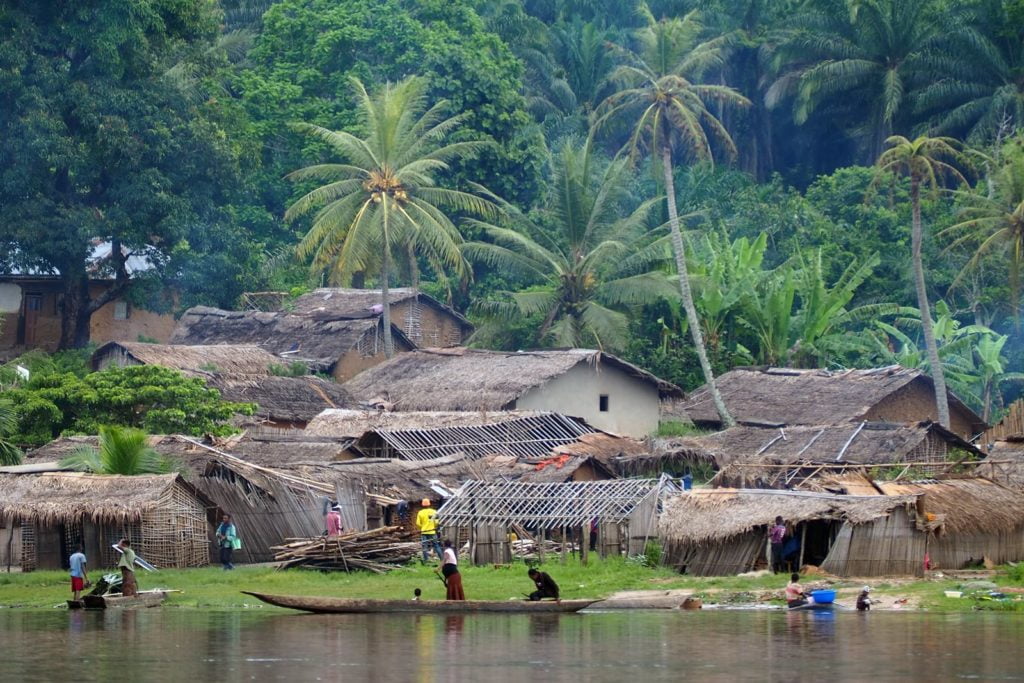
What does it mean to travel along the Congo River?
The Congo is not just one of the world’s great rivers. In much of the Democratic Republic of the Congo, it serves as a road, a marketplace, a workplace, a meeting place, and a link between communities separated by vast expanses of jungle.
Traveling by river allows you to understand the country from a perspective that would be impossible to gain on a conventional trip. During the journey, we’ll see large river convoys loaded with people and goods, fishermen’s canoes, small riverside markets, missions, historic cities, and villages that are barely accessible by land.
We will not simply stand by as spectators in the face of this reality. We will stop whenever the river, safety, and local conditions permit, talk with those who make their living from it, and explore some of the most significant sites along the stretch between Kisangani and Mbandaka.
Highlights and experiences of the Congo river trip
Kinshasa: The energy of a capital city that never stops
Kinshasa will be our gateway and the urban counterpart to our river journey. After returning from Mbandaka, we’ll spend a day exploring some of the creative movements that are transforming the Congolese capital.
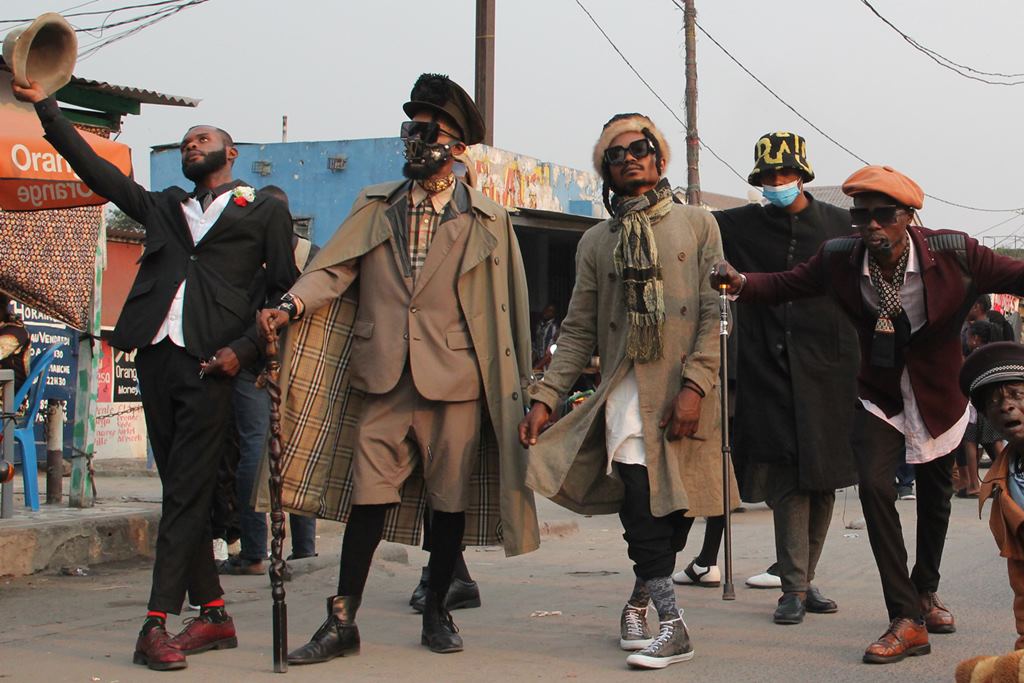
We’ll meet artists associated with KinAct, a creative and performance scene that works in the streets and transforms materials salvaged from the city into sculptures, costumes, and messages about contemporary life. We’ll also explore the world of La SAPE through the sapeurs, with whom we’ll discuss elegance, identity, social recognition, and personal expression.
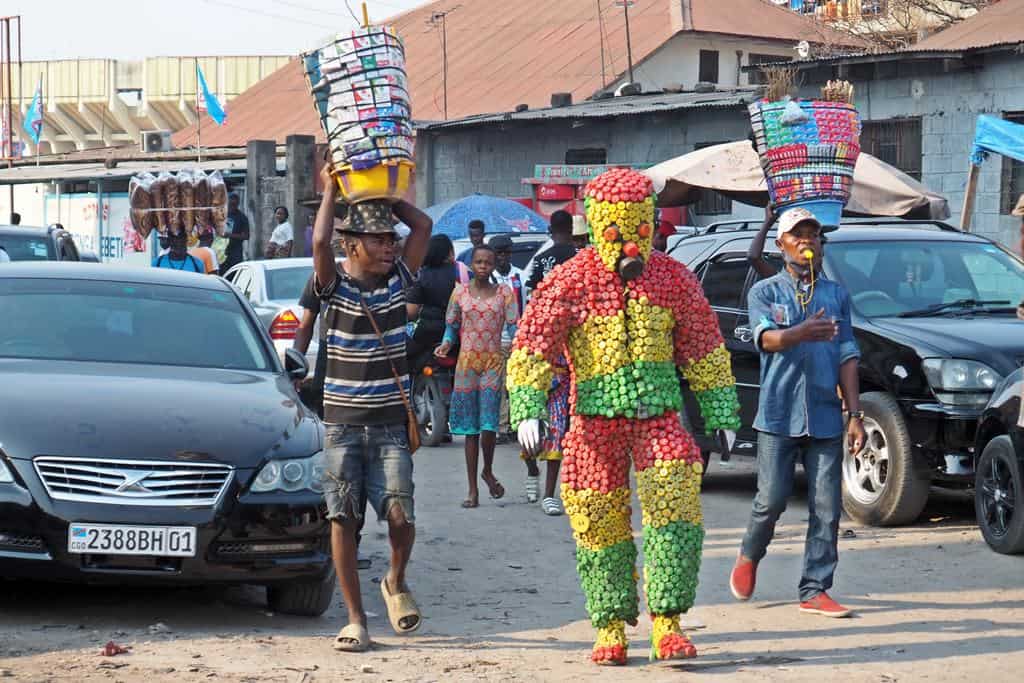
Kisangani: where the great voyage begins
A domestic flight will take us from Kinshasa to Kisangani. Located next to the rapids that block navigation from the east, the city marks the true beginning of the long navigable stretch of the Congo River heading west. We’ll explore its connection to the river, its markets, its neighborhoods, and the visible traces of a complex history. Here, we’ll prepare the boat and the logistics before setting out on the journey to Mbandaka.
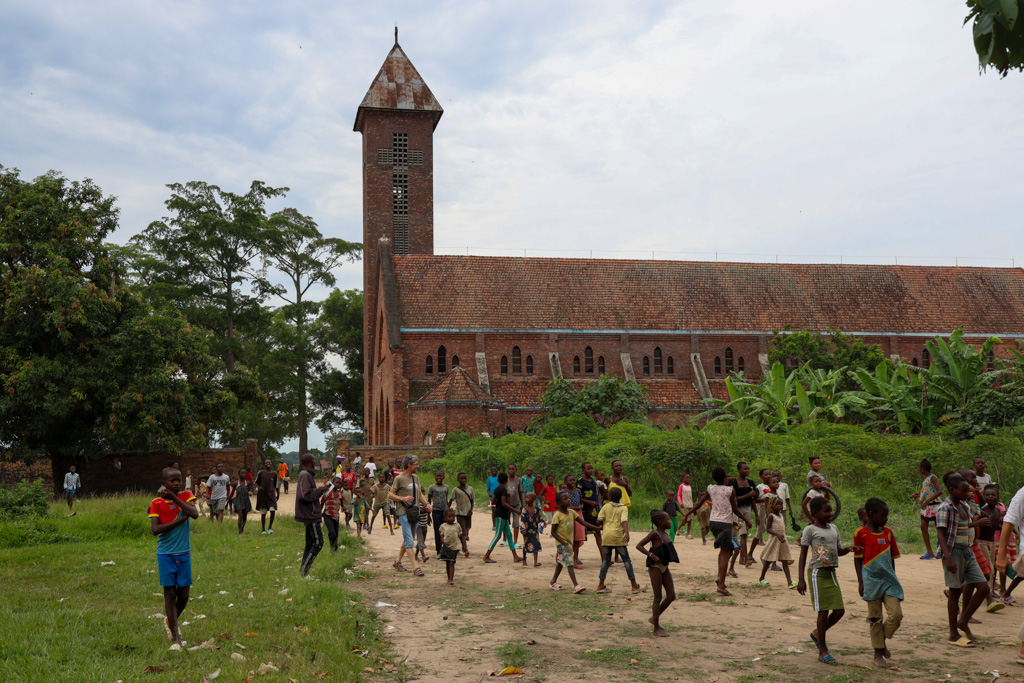
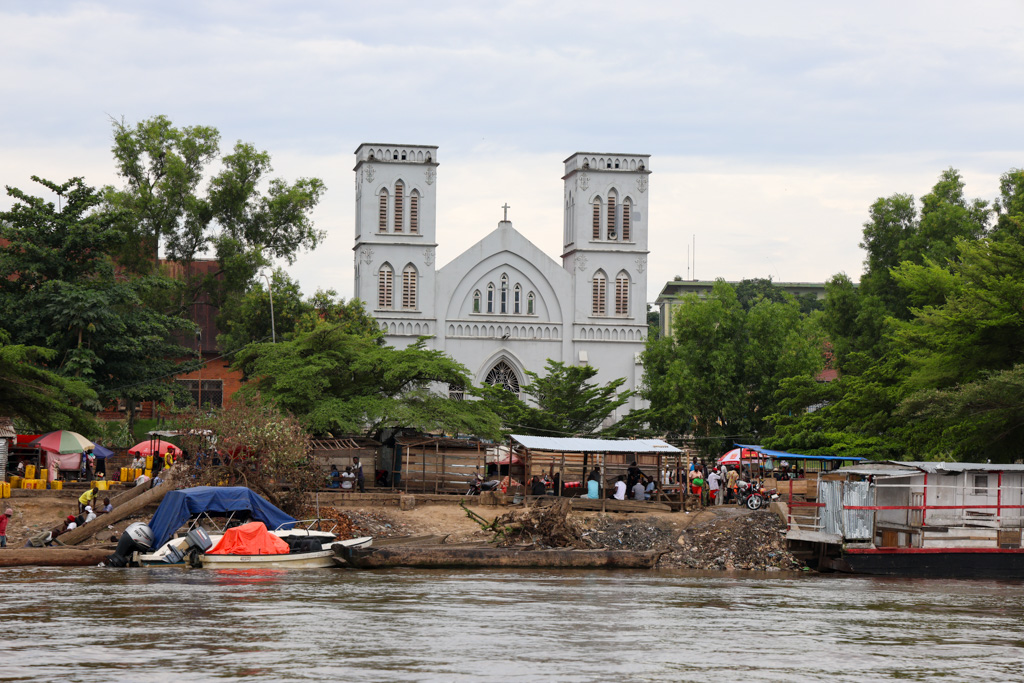
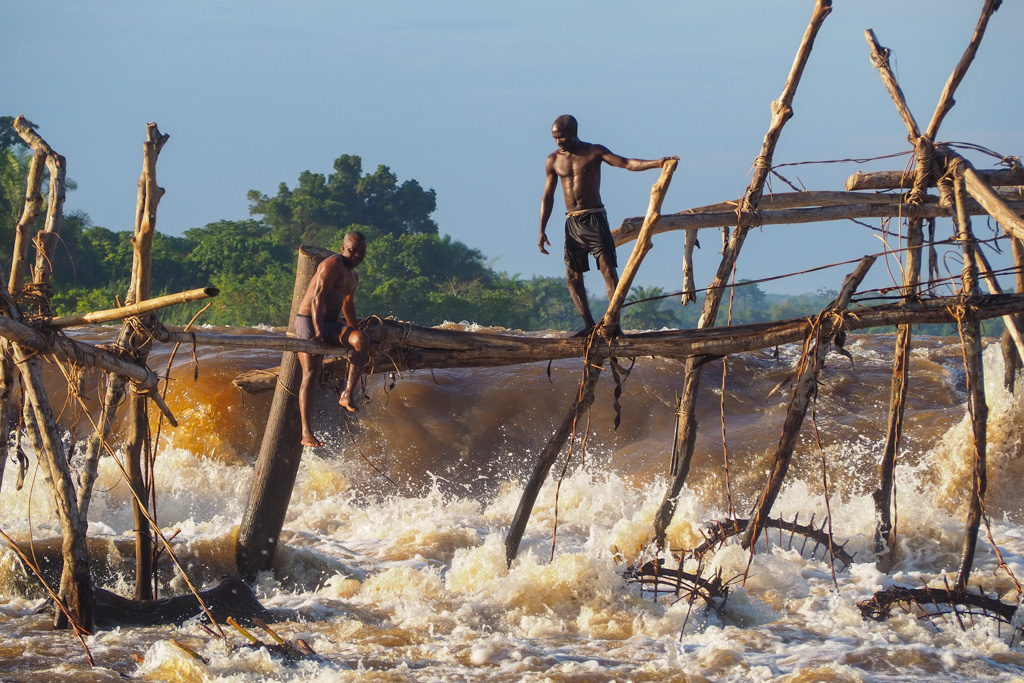
The Wagenia fishermen and the Boyoma rapids
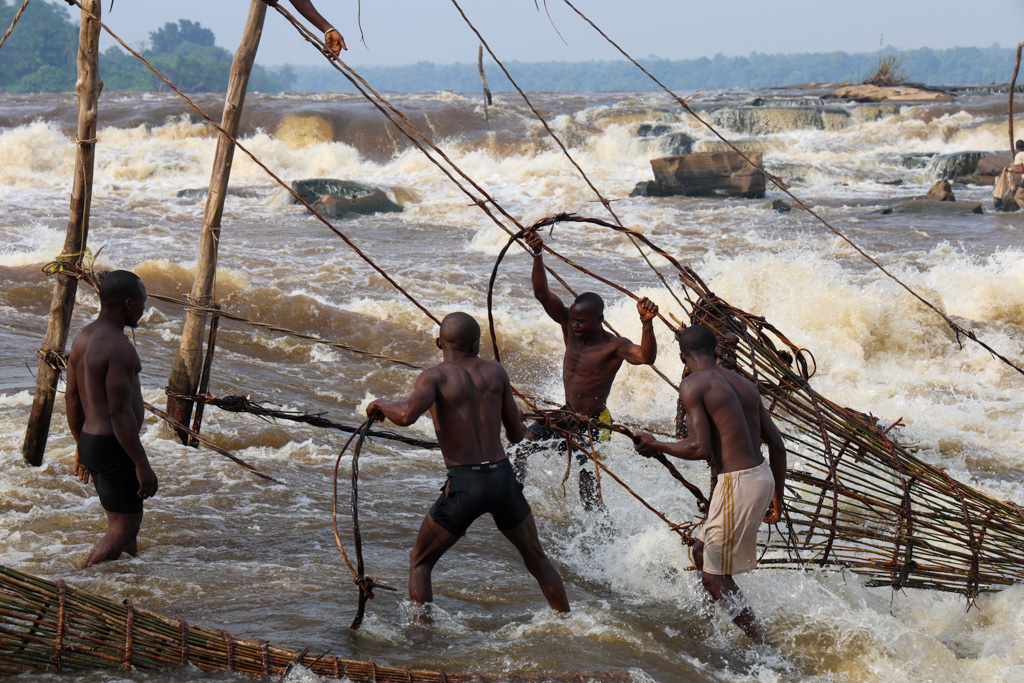
Near Kisangani, we’ll visit the Wagenia fisheries. Wooden structures rise above the rapids, to which large conical traps are attached. The current drives the fish toward these traps, which are used and maintained by fishing families from the Wagenia community. Beyond their spectacular appearance, these fisheries represent technical knowledge passed down through generations and a finely tuned relationship with the force of the water. The visit will take place with local authorization and with respect for the fishermen’s work.
Traveling the Congo river: from kisangani downstream
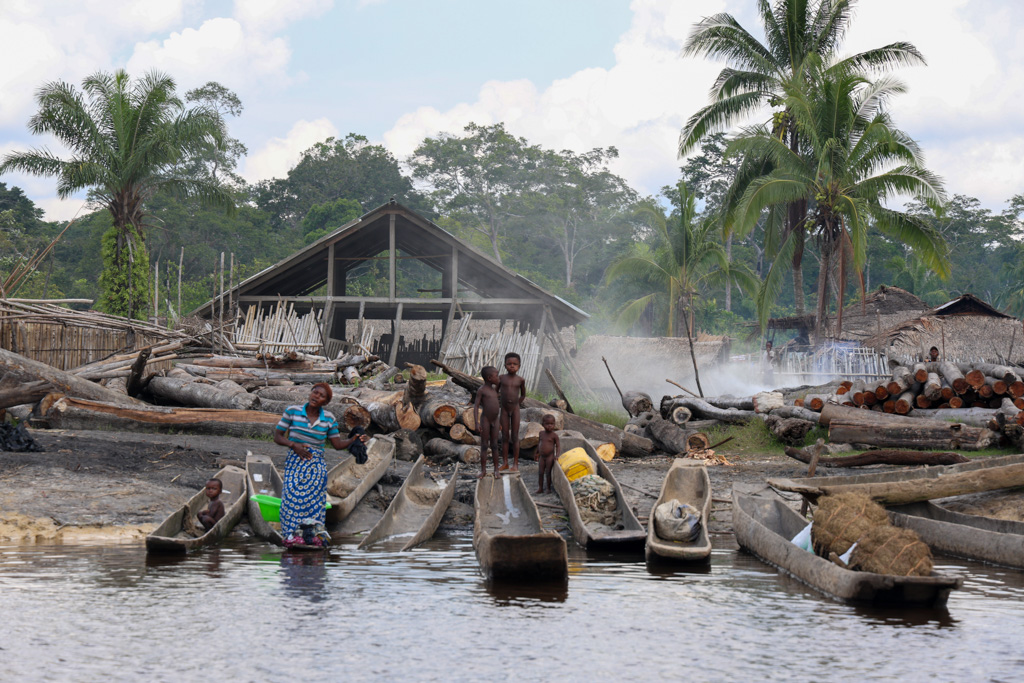
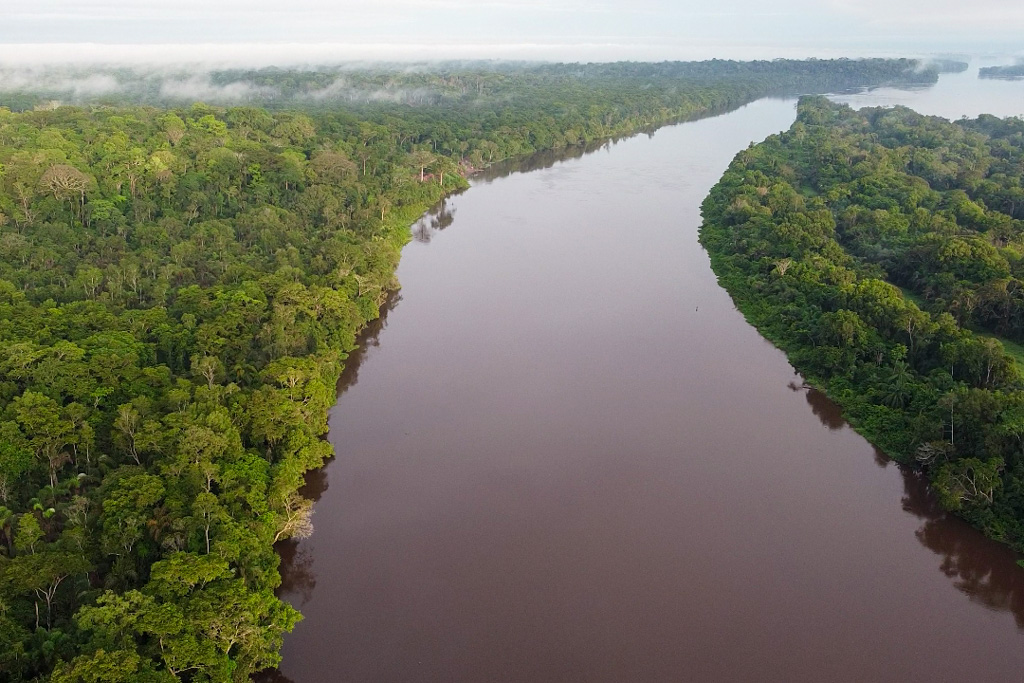
Once preparations are complete, we will leave Kisangani and begin our journey down the great river toward the west. Only after sailing for days does one begin to grasp the true scale of the Congo. At times, its banks seem to recede so far that it becomes like a small inland sea. Large, forest-covered islands divide the river into different channels, and among them, small canoes appear as tiny dots on the water.
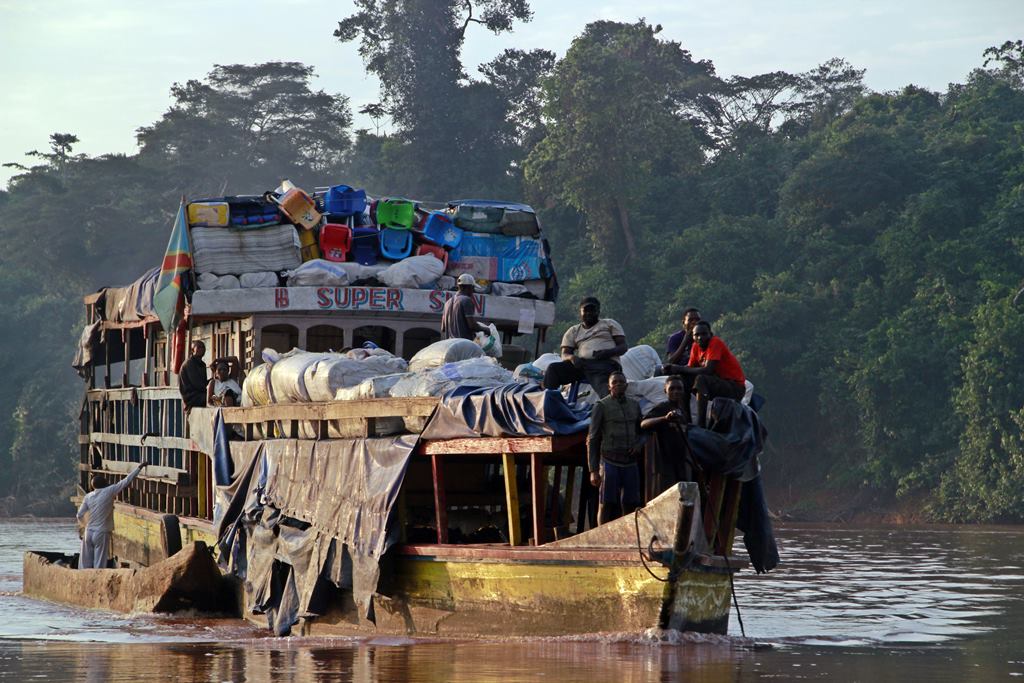
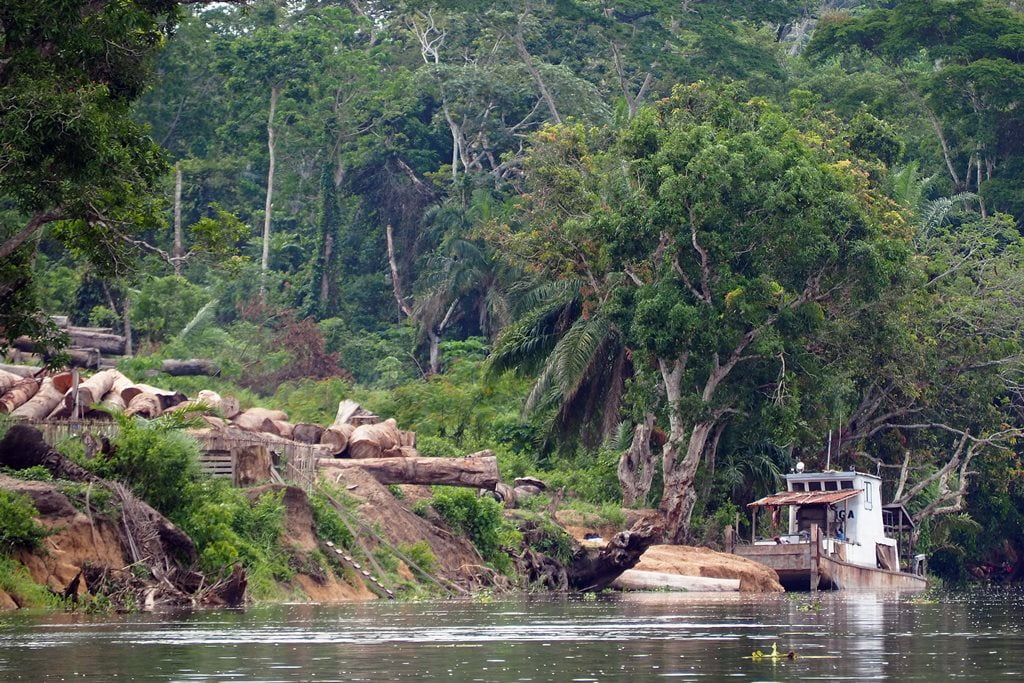
Roads are scarce or nonexistent in vast regions of the country. That is why the Congo continues to fulfill the role that the great rivers have played for centuries. Everything is transported on its waters.
People, fish, cassava, plantains, coal, fuel, animals, motorcycles, construction materials, and practically any goods you can imagine. Some of the large vessels look like veritable floating villages, overloaded with passengers and goods.
Yangambi: science, jungle, and history along the Congo river
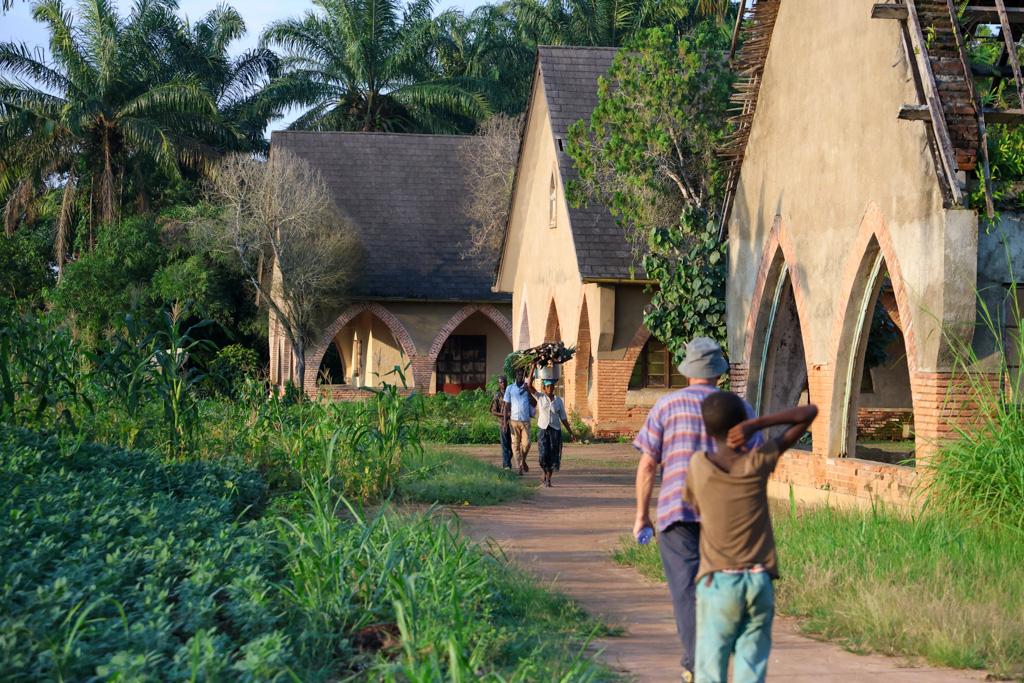
About 100 kilometers downstream from Kisangani lies Yangambi, one of the most unique places in the entire Congo Basin. Between 1933 and 1962, it was home to the main African headquarters of a major center dedicated to the study of tropical agriculture and forestry.
The former scientific city, with its buildings, collections, and landscapes, offers insight into both colonial and postcolonial history as well as current research on the basin’s forests. Yangambi remains a center for research and conservation.
Lokutu: industrial history on the riverbank
We will continue sailing to Lokutu, a town whose history is closely linked to the large palm plantations and the industry that developed during the colonial period. The urban and industrial landscape offers a glimpse into the successive layers of exploitation, abandonment, and survival that have shaped many areas of the Congolese interior.
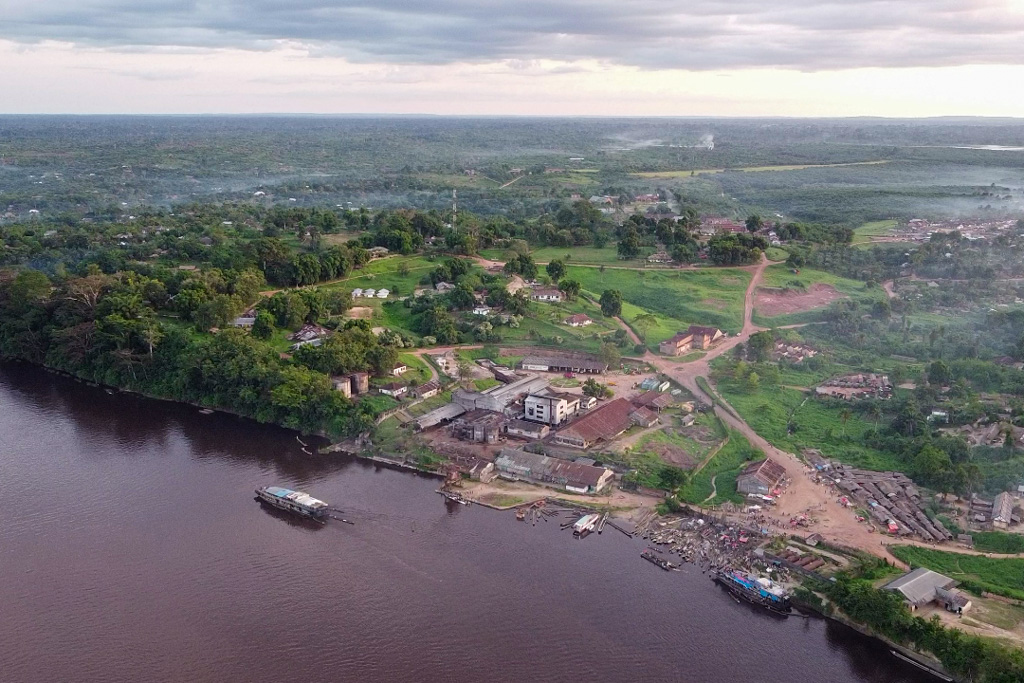
Bumba: a major port in the the central stretch of the Congo river
Bumba is one of the main river hubs along this stretch. Its port, its markets, and the constant flow of goods clearly demonstrate the river’s economic role.
Here we’ll find a Congo quite different from that of the isolated villages: merchants, passengers in transit, boats loading fuel, food, and supplies, and a city whose life revolves around the river’s arrivals and departures. Bumba will also be an important stop for restocking supplies and assessing the conditions for the next leg of the journey.
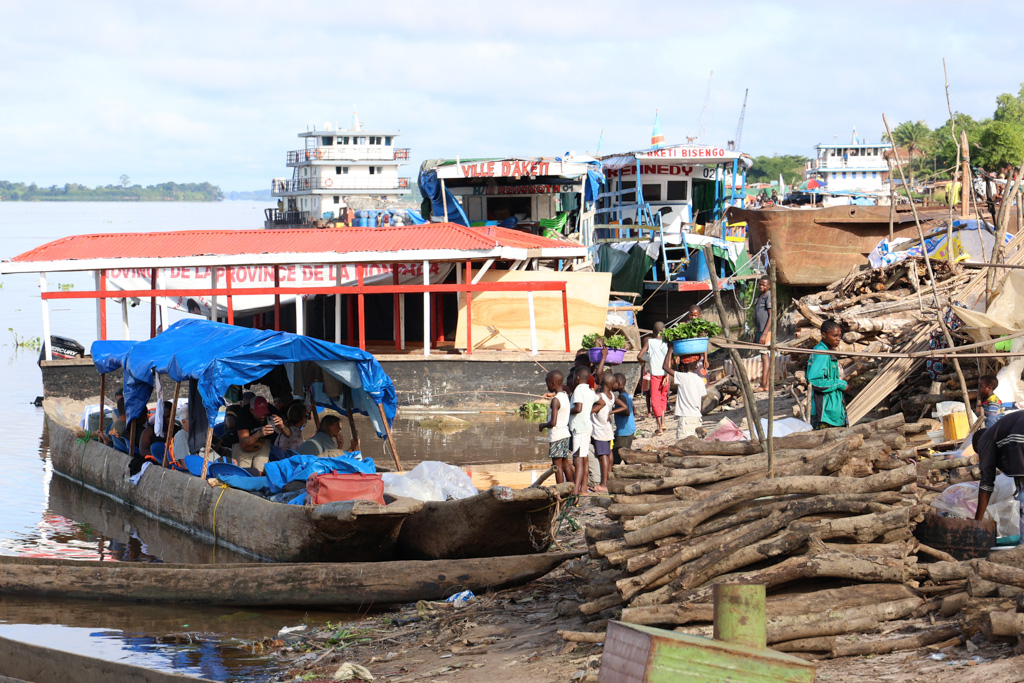
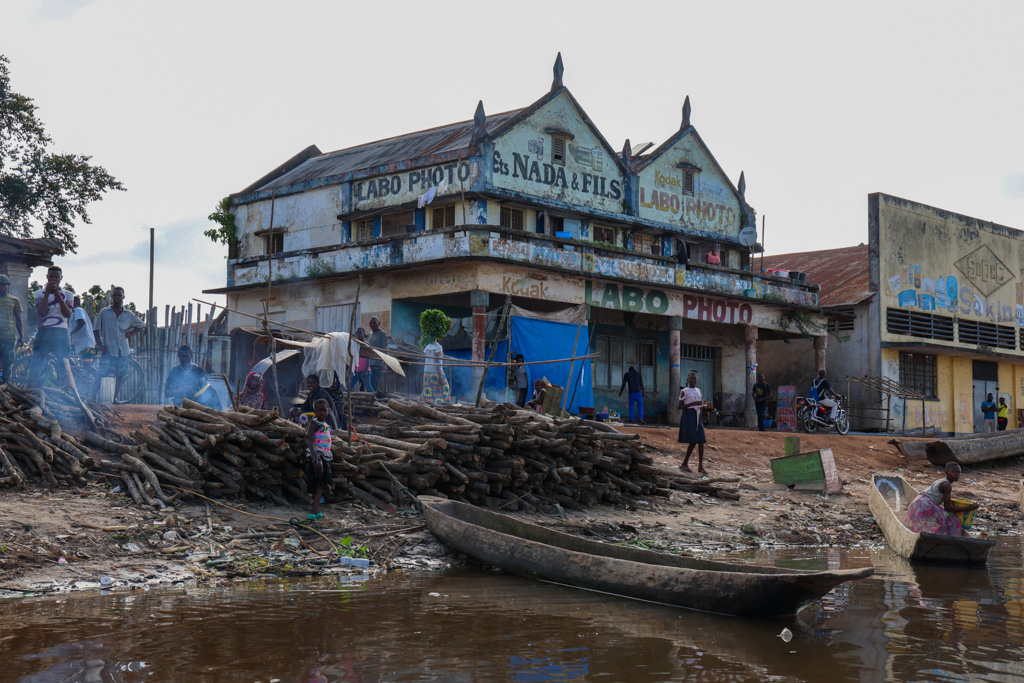
Villages, markets, and life along the river
The main part of the expedition will take place off the beaten path. We’ll stop at fishing villages and small markets where life unfolds.
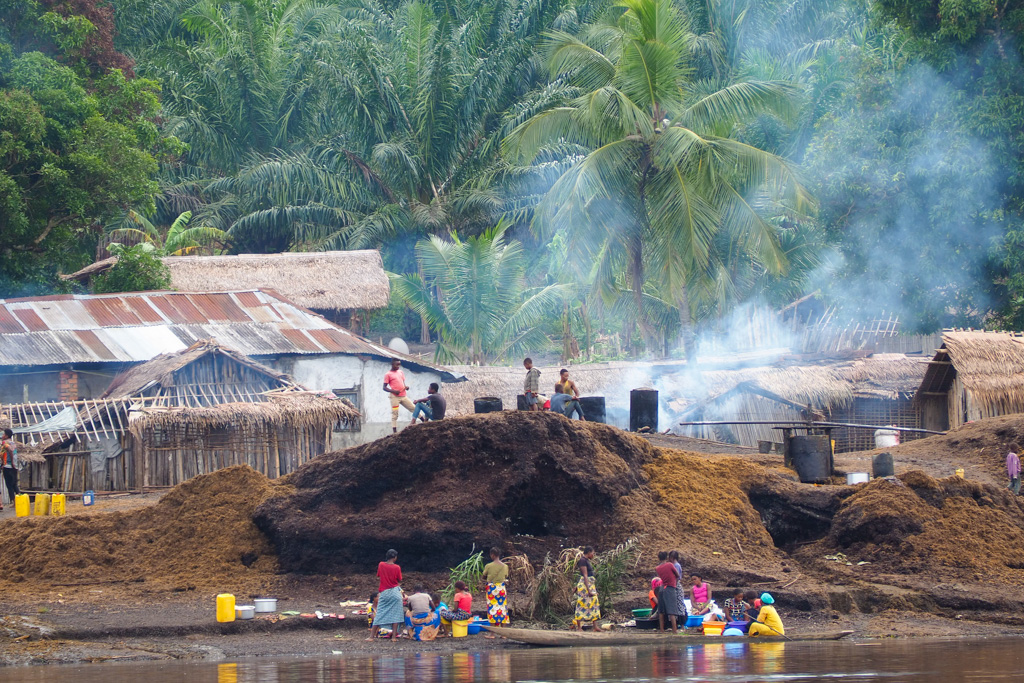
Lisala: history, memory, and life along the Congo river
Lisala is situated on a hill overlooking the Congo River and holds a prominent place in the history of the former Zaire. We’ll explore the city, its riverfront, and its markets, while also searching for traces of the Mobutu era that still linger in local memory.
The stopover will provide an opportunity to rest, restock supplies, and observe how the river changes as it flows toward the great central basin. From here on, the distance between the banks, the islands, and the channels heighten the sensation of navigating a waterway of continental proportions.
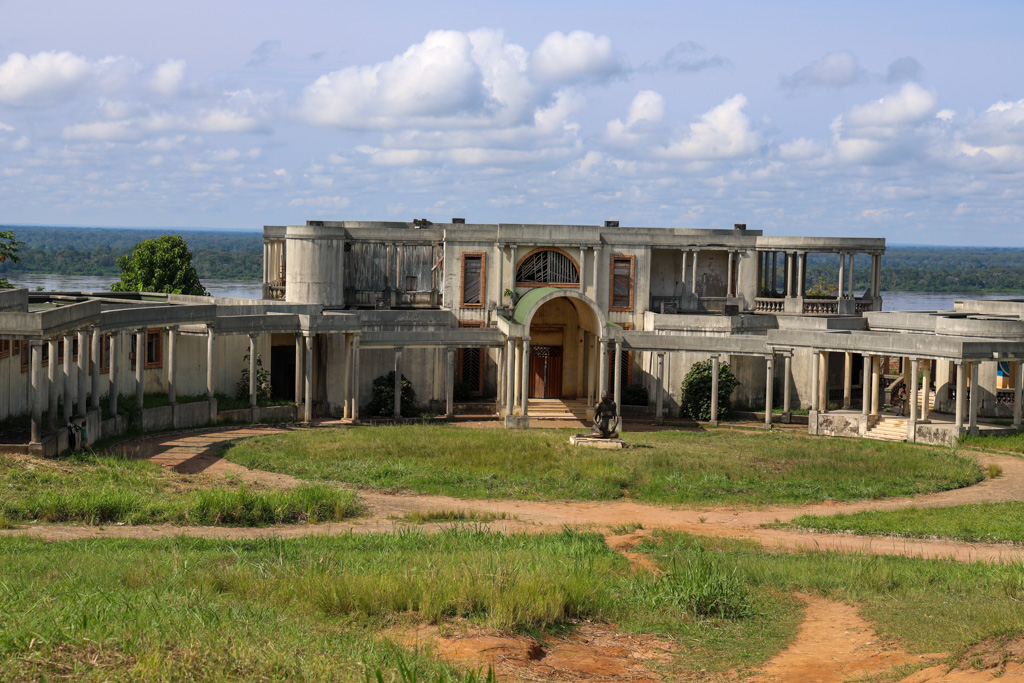
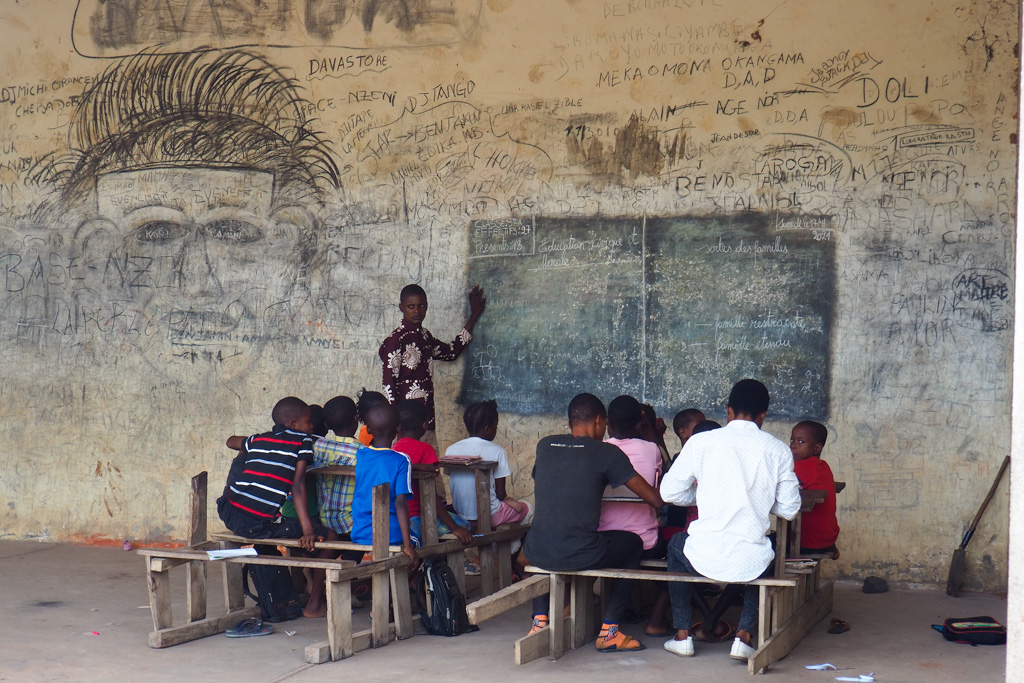
During our stop, we will visit the Mobutu’s former palace, a building that recalls the regime’s years of power and excess. But what is most surprising is not so much its architecture as its subsequent transformation. Far from serving any of its original purposes part of the complex has been converted into a school, while other spaces have been occupied and are now used as homes by local families.
Living on the Water
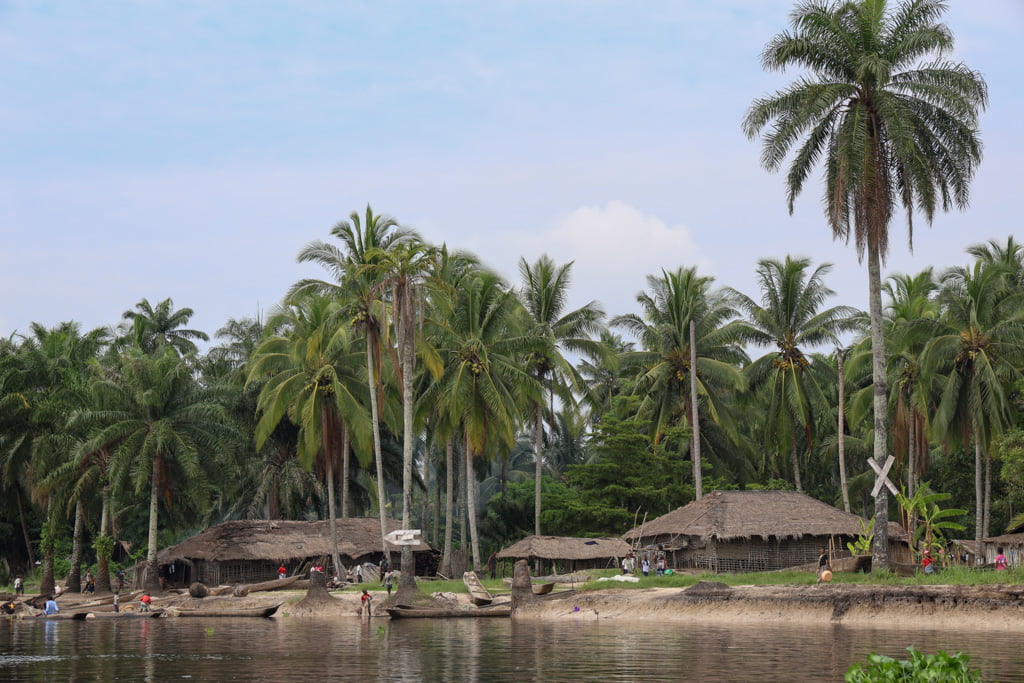
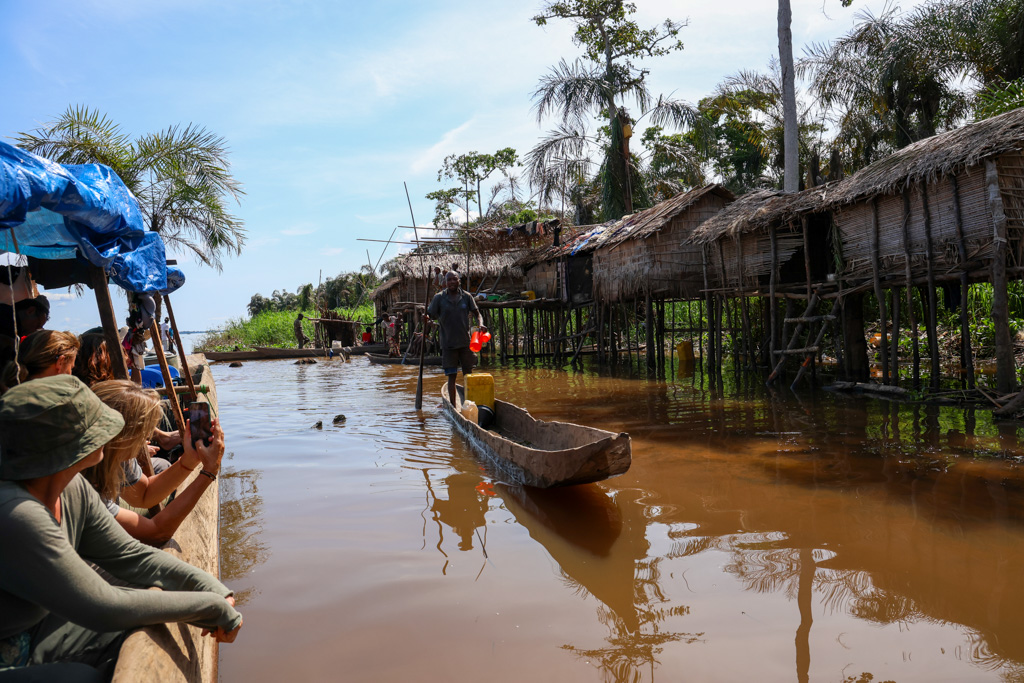
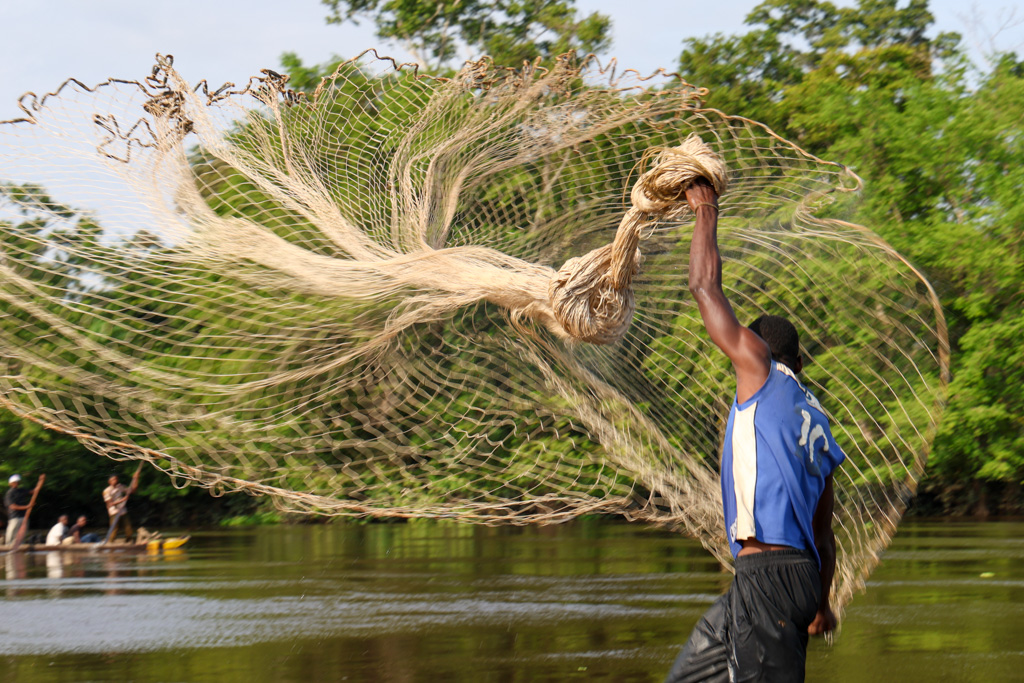
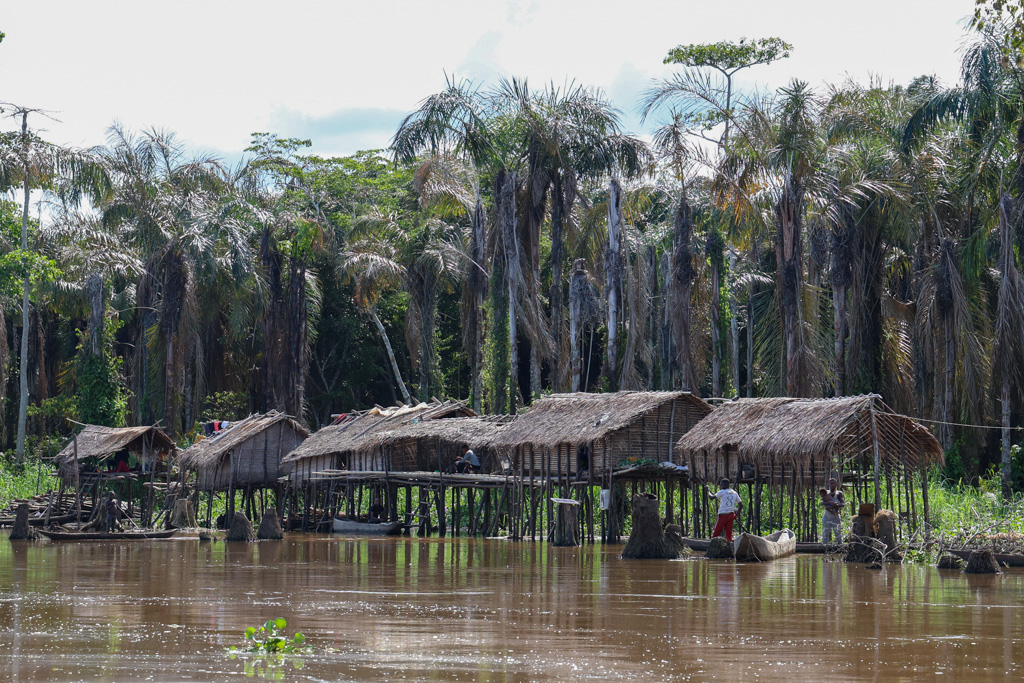
Small villages built along the water. Houses built on stilts. Children traveling by canoe. Fishermen checking their nets. Women carrying goods to small markets.
In the vast majority of these small communities, there are no streets or roads. The river and its channels serve that purpose, and canoes take the place of cars and motorcycles.
For days, we’ll feel as if we’re traveling through a world built around water.
Mbandaka: End of the river journey and gateway back to Kinshasa
Mbandaka will be the final stop on our river journey. Located near the equator, the city is one of the major historical and commercial centers of the the central stretch of the Congo River and a natural link between the river and the interior of the basin.
After sailing more than 1,000 kilometers, we will arrive at a city whose way of life remains deeply connected to the water. From Mbandaka, we will take the flight back to Kinshasa to complete the final leg of the expedition.
Nzambe ya Bakoko: God of the Ancestors
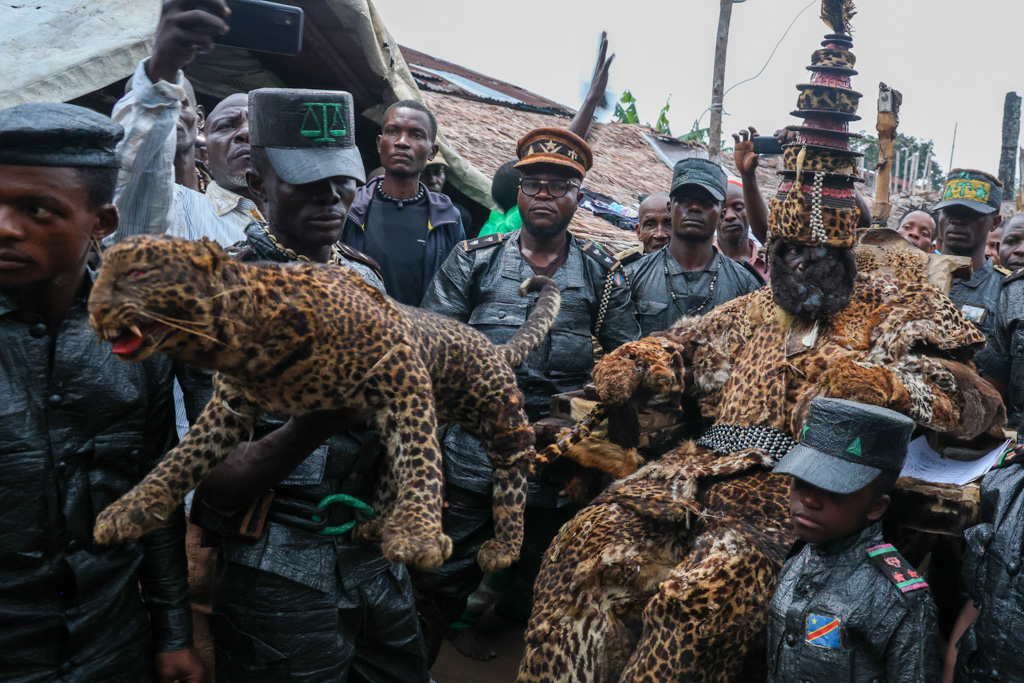
The final stage includes a visit to Nzambe ya Bakoko, an expression that can be translated as “God of the Ancestors.” This Congolese religious movement has a community in the Mbandaka area.
This visit will allow us to learn about one of the Congolese religious movements that emerged in the Democratic Republic of the Congo and to understand how its members explain their faith, their organization, and their relationship with their ancestors. The visit is subject to authorization from the community’s leaders and will be conducted with an attitude of listening and respect; it is not intended as a spectacle, nor does it promise the opportunity to witness a ceremony.
Sailing the Congo river: an everyday experience
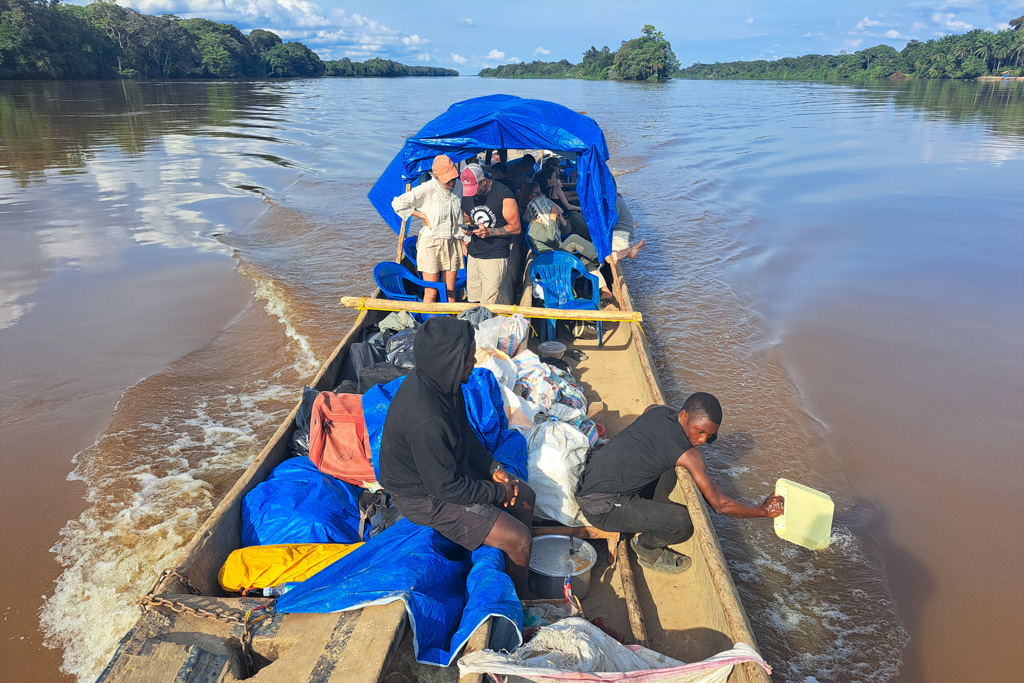
Boating will be the focus of the trip, not just a means of transportation between visits. We’ll spend many hours each day on the water, observing how the river, its banks, and the life unfolding around us
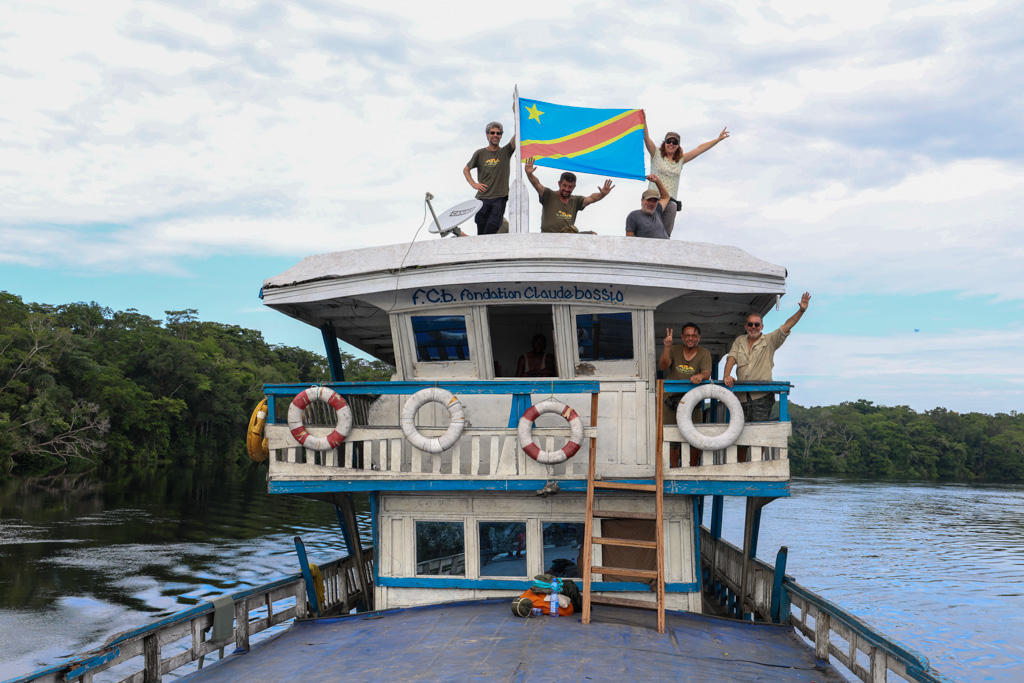
We’ll travel in a motorized canoe equipped with seats and a canopy to protect us from the sun and rain. It’s not a cruise ship or a tourist boat. The days can be long, and the noise of the engine, the heat, the humidity, and changes in the weather are all part of the experience.
Life on the river will dictate our schedule. There will be early sunrises, stops to buy fish or fresh produce, administrative checks, unexpected encounters, and days when we’ll have to change our planned sleeping spot.
Logistics and what to expect on this trip to the Congo river
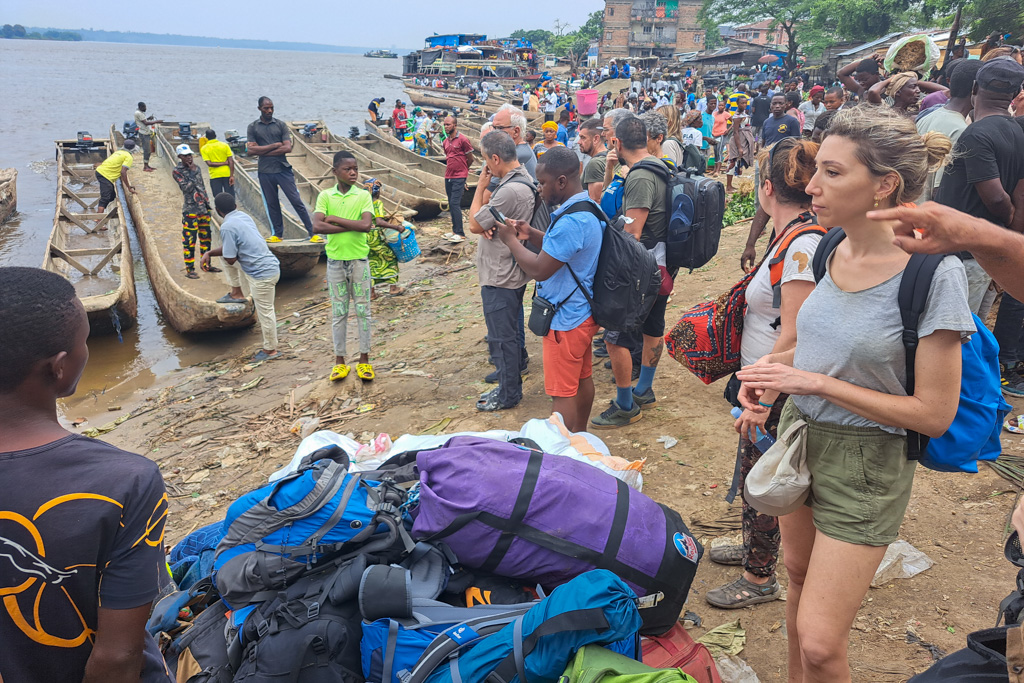
To join an expedition like this in the Democratic Republic of the Congo, travelers must be open to changes in plans and be flexible. A trip down the Congo River like this is a real adventure. This is a genuine expedition, not a conventional tour or a river cruise. There are many challenges involved in a trip like this, and travelers must be very clear about what they’re getting into. In this country, the itinerary must be understood as a flexible framework rather than a rigid timetable
Accommodation during the expedition
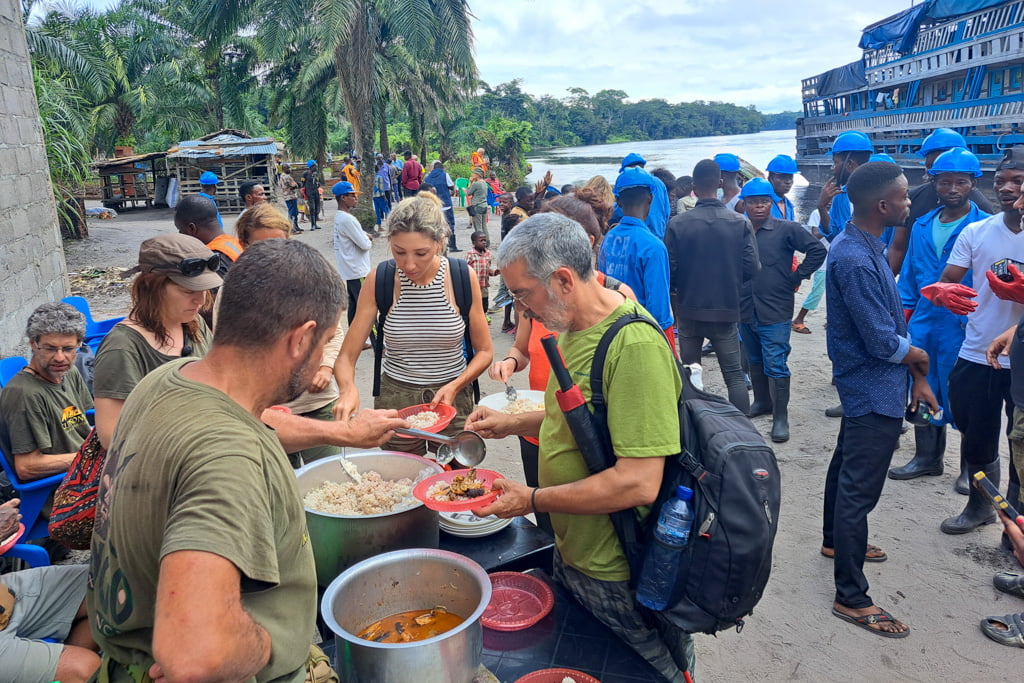
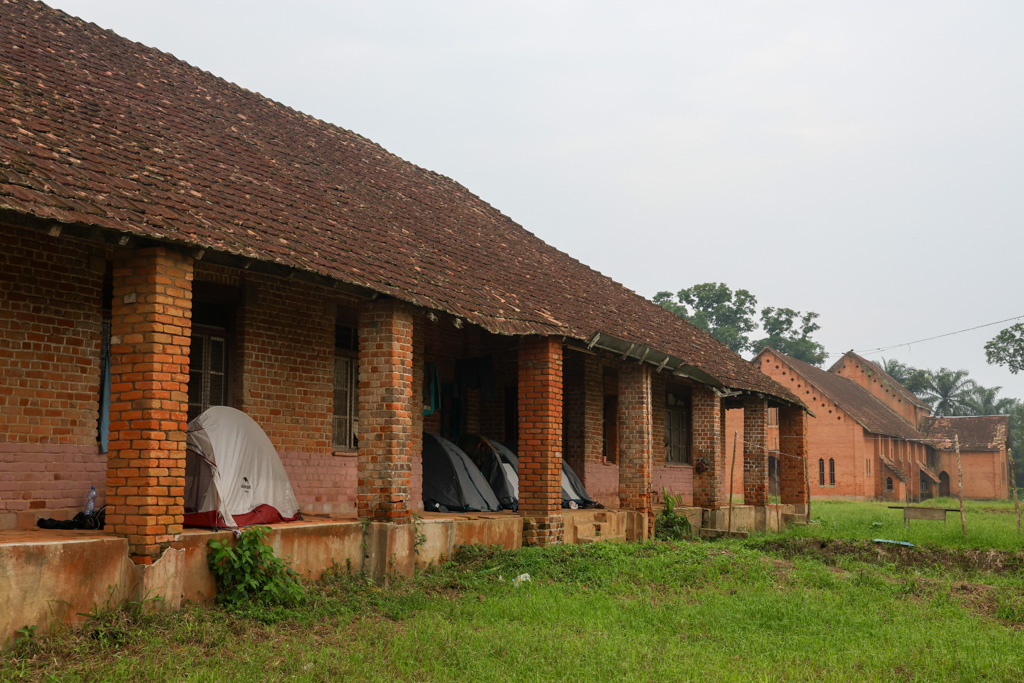
In Kinshasa, Kisangani, and Mbandaka, we will stay in hotels. Outside of these cities, accommodations will be very basic and vary.
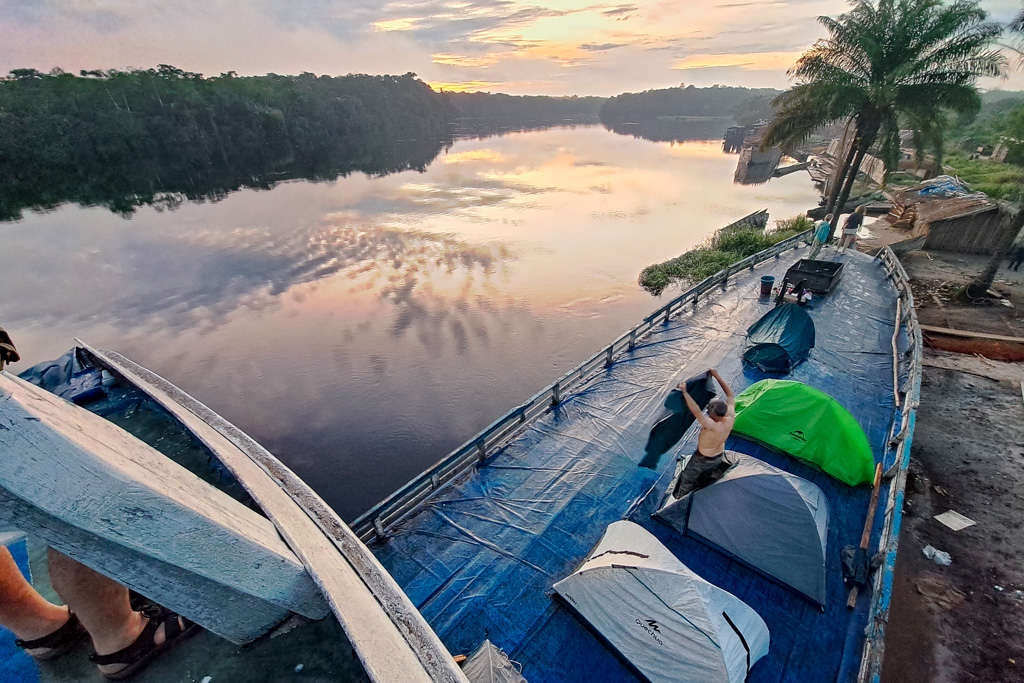
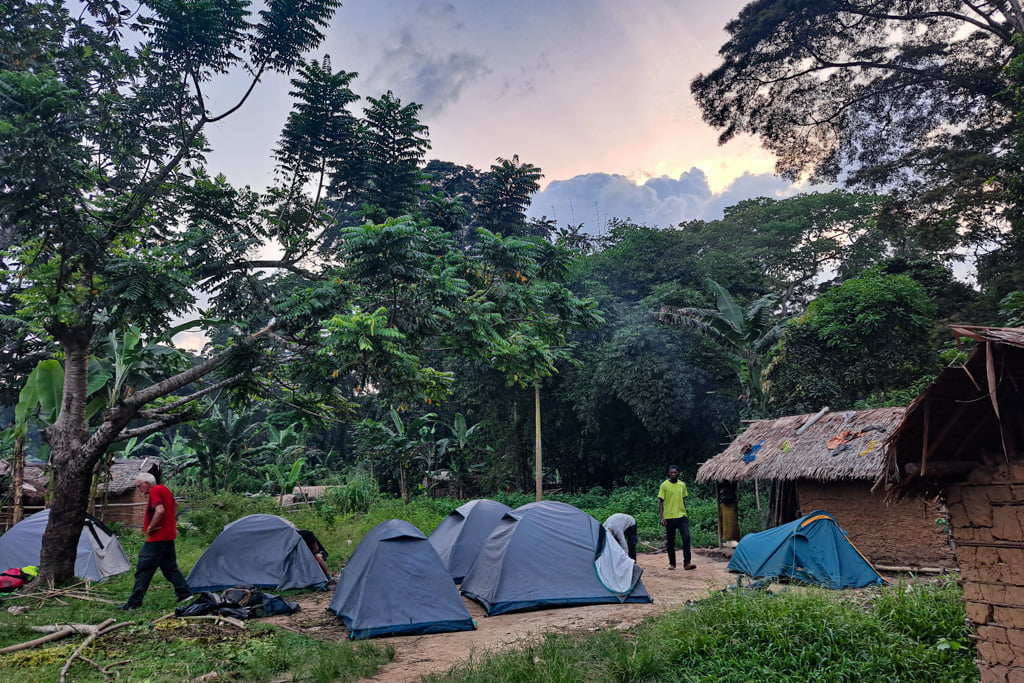
We’ll be staying in small guesthouses, Christian missions, or local lodgings. Some nights we’ll need to camp in villages, by the river, or in another suitable location. There may not always be enough rooms for the entire group, or running water, electricity, or private bathrooms.
Meals and life aboard
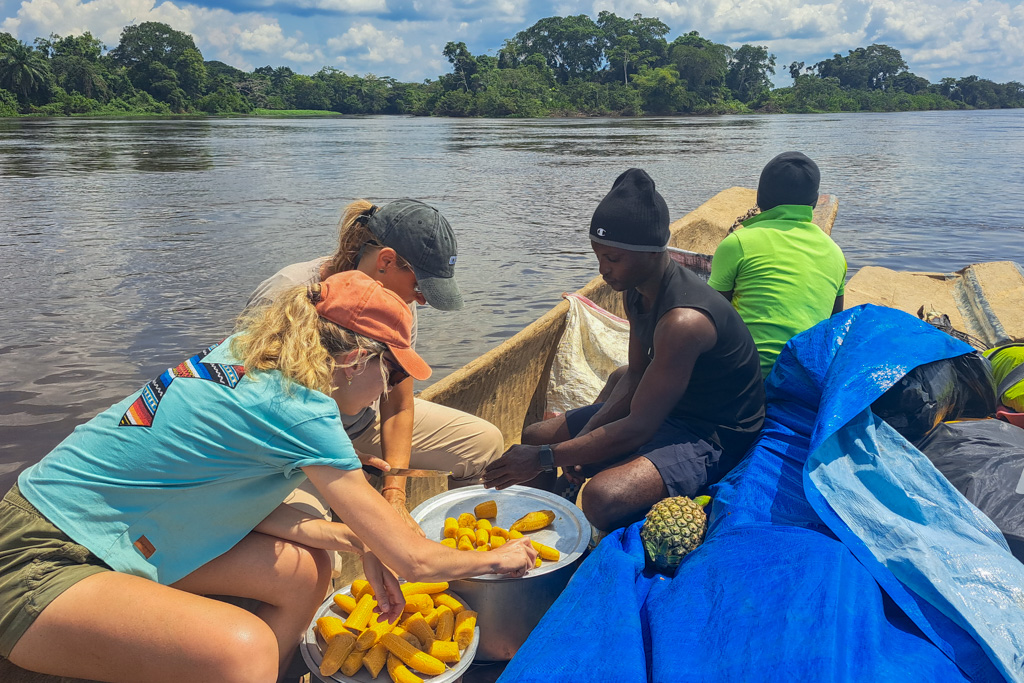
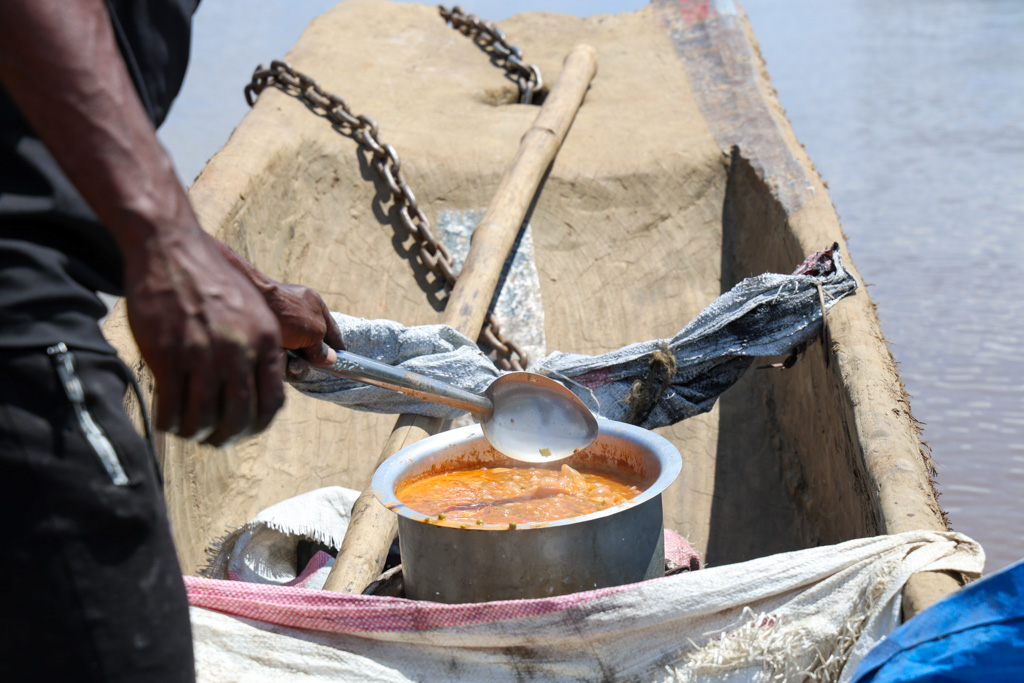
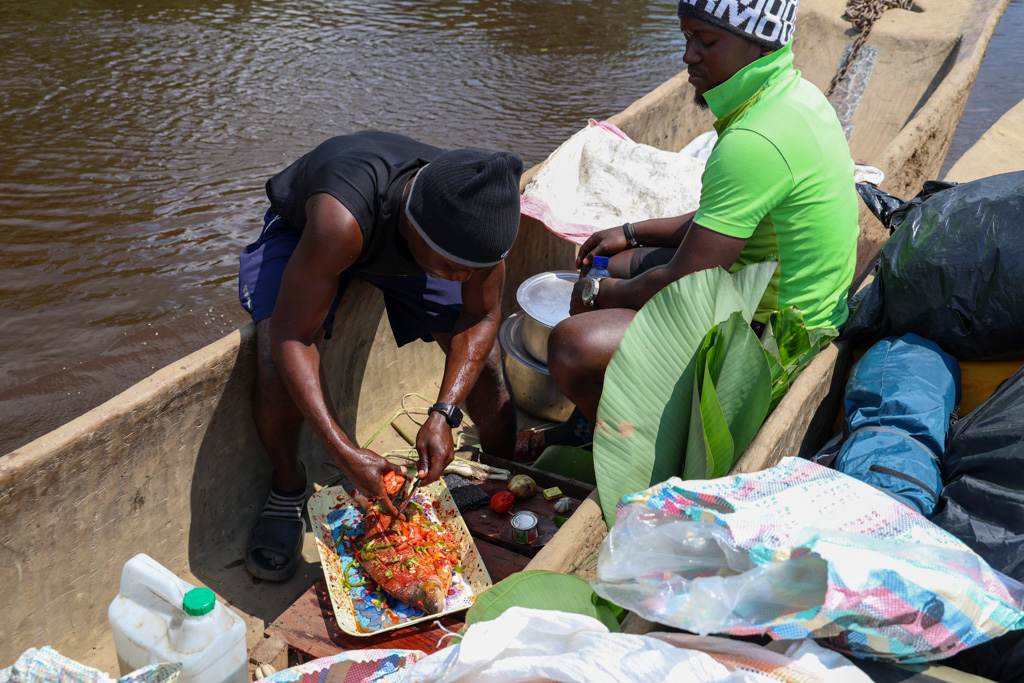
While sailing, we will prepare simple meals using ingredients available in the towns and markets along the route. The variety will be limited, and it won’t always be possible to stick to a regular schedule. In the major cities, we will eat at local restaurants or at our accommodations.
How difficult is this trip?
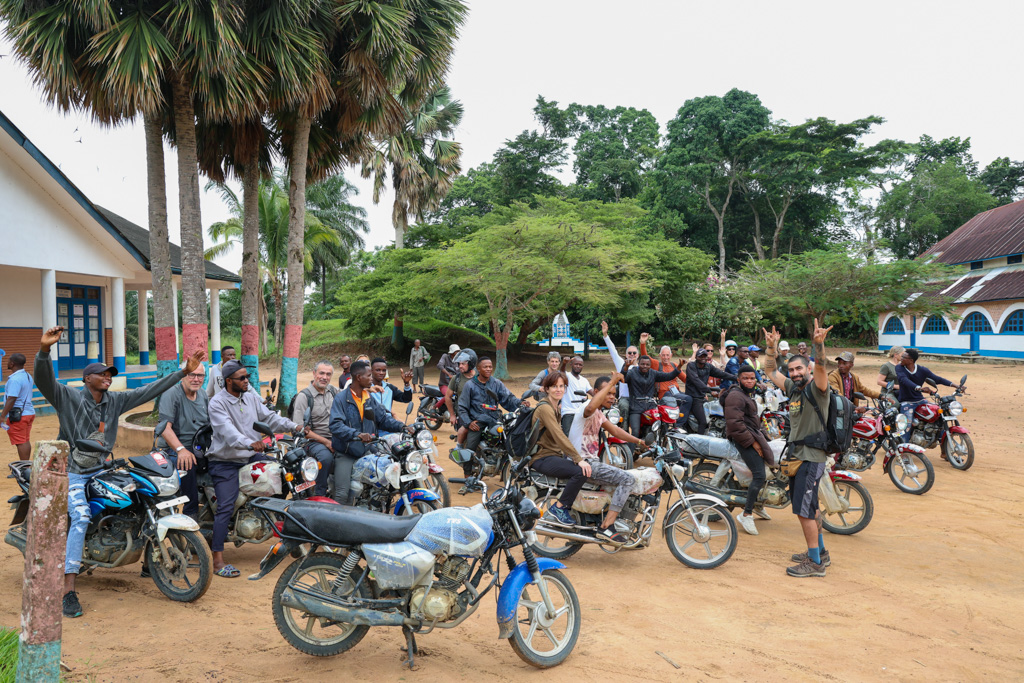
This expedition requires more adaptability than physical fitness. Travelers must be able to get in and out of a canoe, walk over uneven terrain, spend long days travelling, and sleep in very basic conditions. We’ll use motorcycle taxis to get around towns and cities.
The heat, humidity, rain, insects, lack of privacy, and schedule changes can be more challenging than the physical activity itself. A flexible and cooperative attitude will be essential.
Who is this expedition intended for?
This trip is designed for experienced travelers who want to understand the Congo from the inside and are willing to accept that uncertainty is part of the journey.
This could be your expedition if:
- Do you like real adventures?
- Are you interested in daily life in the most remote parts of Africa?
- to learn about the realities of a remote but incredibly interesting part of the African continent
- you enjoy observing, talking, and taking the time to get to know people;
- Do you have the patience to put up with the never-ending Congolese bureaucracy?
- You’re okay with basic accommodations and possibly spending some nights camping
- You can live in a small group and participate in daily activities as a member of the group, rather than just as a spectator.
- You understand that the itinerary may change for operational or safety reasons.
This isn’t the right trip if you’re looking for constant comfort, strict schedules, privacy, a cruise-style boat on the Congo River, or the guarantee that every visit will go exactly as originally described.
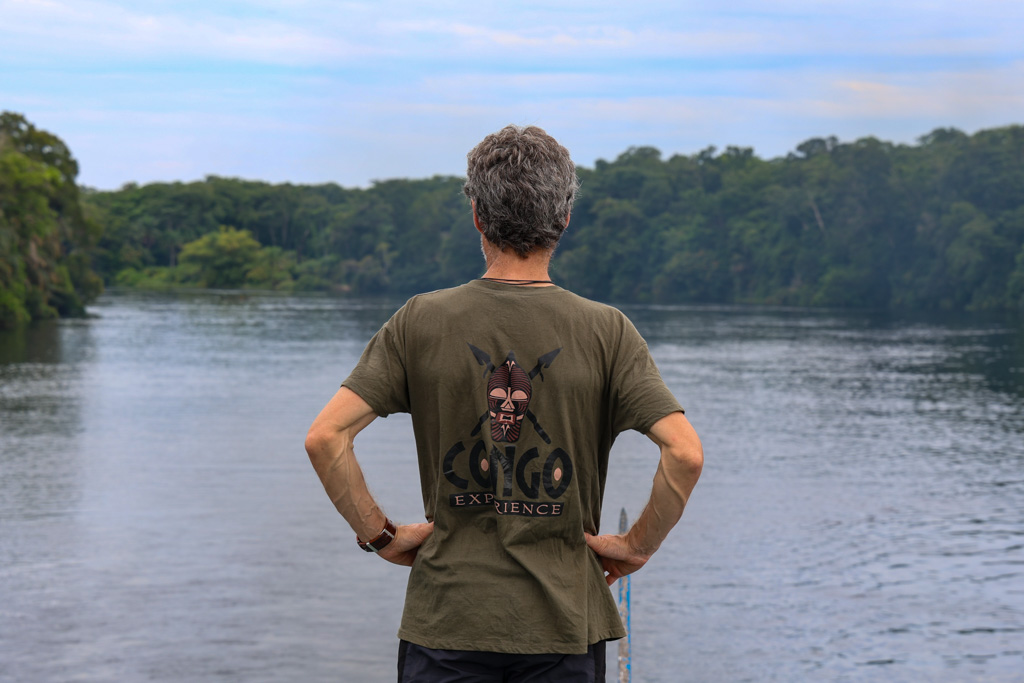
Traveling Through the Democratic Republic of the Congo with Clarity and Flexibility
The Democratic Republic of the Congo is a logistically complex country. Domestic flights are subject to change, fuel is not always available, permits can be delayed, and a storm or a mechanical failure can disrupt an entire day’s schedule.
Kumakonda is familiar with these challenges from firsthand experience and will work with the local team to make the safest and most appropriate decision at all times. The planned route is Kisangani–Mbandaka, but the itinerary may be adjusted depending on river conditions, the local situation, or any other circumstances that may arise.
Will you join us on our journey down the Congo River?
Only eight travelers will take part in this 16-day expedition. We are looking for experienced, well-informed travelerswho want to navigate one of Africa’s great rivers, travel with a small group, and engage respectfully with the human realities of the Congo.
We don’t suggest looking down on the rainforest from an airplane window. We suggest spending several days along its main artery, following its rhythm, and understanding why the Congo River continues to sustain and connect a vast part of the country.
The 2023 Expedition: 35 Days Through the Heart of the Congo
In 2023, Kumakonda brought together 16 international travelers for a 35-day expedition through the Democratic Republic of the Congo. That was the second time we had traveled there. We spent weeks navigating the Congo, Lopori, and Lulonga rivers, traveled more than 150 kilometers by motorcycle on trails winding through the jungle, and reached some of the most isolated villages in the basin.
That experience—one of the most intense of our careers—is the foundation upon which we have designed the 2027 trip: a more focused itinerary, limited to eight travelers and devoted entirely to navigating the main channel of the Congo River between Kisangani and Mbandaka.
Before you join us, we invite you to read the full story of that journey: “Expedition to the Congo River: 35 Days Through the Heart of Africa.”
- Kumakonda’s tour guide and coordinator
- Invitation letter notarized in Kinshasa
- Congolese guide
- Single occupancy
- Two scheduled domestic flights in the DRC (Kinshasa–Kisangani and Mbandaka–Kinshasa)
- All the transportation needed to complete the route, primarily canoes
, motorboats, and motorcycle taxis. - The visits described in the itinerary, subject to local authorization, river conditions and operational circumstances.
- Decathlon-style single-person tents
- Transfers to and from airports
- Mineral water during the river trip
- Meals while we’re sailing
- International Flights
- “Go Pass” airport taxes at airports (approximately 30 USD per person and
one-way) - Travel and Cancellation Insurance
- Meals when we’re staying somewhere
- Local taxis for getting around Kinshasa and other cities when there are no scheduled visits
- Visas
- Special invitation letter from the DGM (required by some embassies, primarily in the U.S.) $200
Travel with us
€ 6,900
/PERSON
- registration open
Trip details
Countries visited
- DR Congo