


Trip to Ennedi and the Ounianga Lakes: A Grand Journey Through the Chadian Sahara
Eastern and northern Chad are home to one of the great Saharan journeys that can still be undertaken in Africa. It is a vast territory where the roads disappear and the journey continues along trails, waterholes, and ancient routes that have been used for centuries by nomadic peoples.
From N’Djamena, we’ll cross the Sahel to Moussoro, where our true journey eastward begins. We’ll follow the Route of the Wells to Kalait and then venture into the Ennedi Massif—a world of rock and sand where massive arches, canyons, goues, and rock shelters covered in cave paintings alternate with camps and herds belonging to the desert herders.
From Ennedi, we will continue on to some of the most remote areas of the Chadian Sahara, crossing the Mourdi Depression —where we may encounter camel caravans that still transport salt across the desert—until we reach the extraordinary Ounianga Lakes.
The route continues south, passing by the battle ruins of Bir Kora from the war with Libya and through the eastern regions of the country to Abéché, from where we will return to N’Djamena.
A 4×4 expedition through the Sahara, a desert that is still very much alive. We’ll camp under the stars, search for water in its gueltas and wells, follow in the footsteps of ancient caravans, and share the land with the nomadic and semi-nomadic peoples who continue to travel with their herds across one of Africa’s great open spaces.

The Route of the Wells: From Moussoro to Kalait
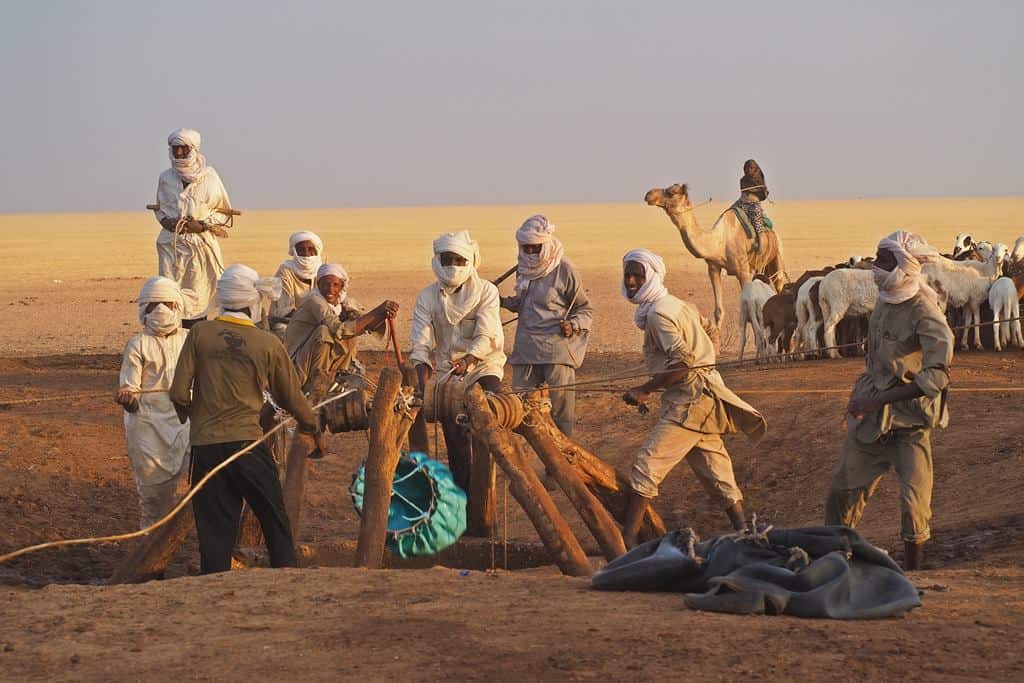
After leaving N’Djamena and reaching Moussoro, we gradually left the roads behind and headed east along what is known as the Route of the Wells, the long dirt road that leads to Kalait and the gateway to the Ennedi.
In these vast expanses, wells have determined the routes of people and animals for generations. Around them, we can find large herds of cows and camels waiting their turn to drink, and meet Daza, Kreda, Anakaza, and Arab herders who travel through these regions in search of water and pasture.
There are no set schedules or planned meetings. Life revolves around the water, and every day is different. It is precisely this uncertainty that makes the journey itself a fundamental part of the expedition.
After several days of traveling eastward, we will reach Kalait, an important supply hub and waystation before entering the mountainous landscapes of the Ennedi.
Ennedi Massif, the masterpiece of the desert
In the northeast of the country, the Ennedi Massif breaks up the monotony of the desert with a fantastic labyrinth of sandstone. Over millions of years, wind and water have carved out canyons and gorges and shaped towers, spires, and some of the most spectacular natural arches in the Sahara. As we travel through the Ennedi, we can admire a spectacular landscape marked by cliffs, dunes, natural arches, and peaks. In the largest canyons, the permanent presence of water plays an essential role in the Ennedi Massif’s ecosystem, sustaining both flora and fauna, as well as human life.
Hundreds of images have been painted and carved into the rocky surfaces of caves, canyons, and shelters, forming one of the largest collections of rock art in the Sahara.
Over the course of three full days, we’ll explore this vast region, visiting its most breathtaking sites. We’ll stop at places like the Hubaike sand dunes, the Uimina peaks, the Djoulia and Aloba arches, the Bachikele and Bechike canyons, the great Chigou dune, theNoi Valley, and the Oyo Labyrinth. These aren’t the only places we’ll visit—there are many more.


Archei Ravine
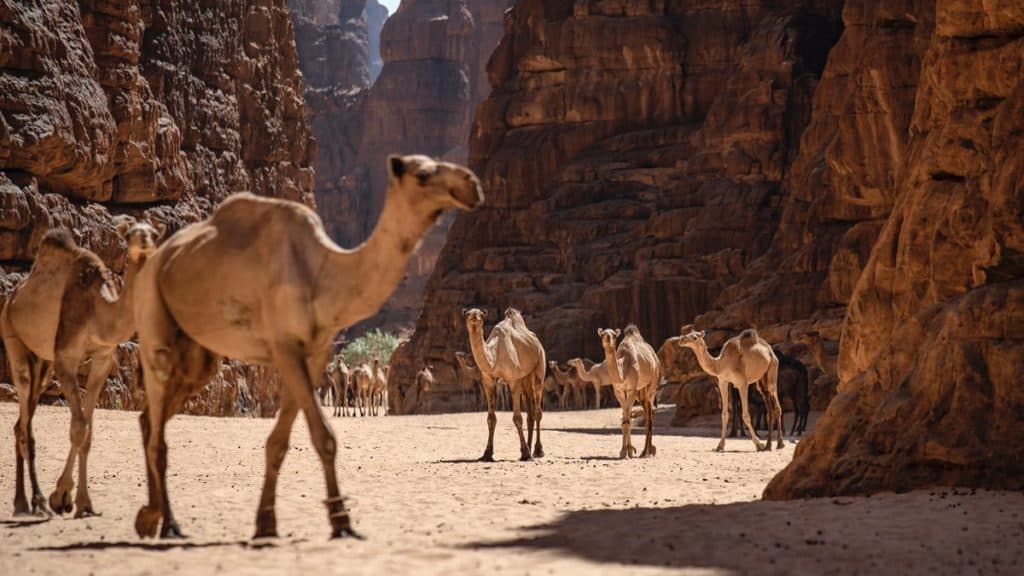
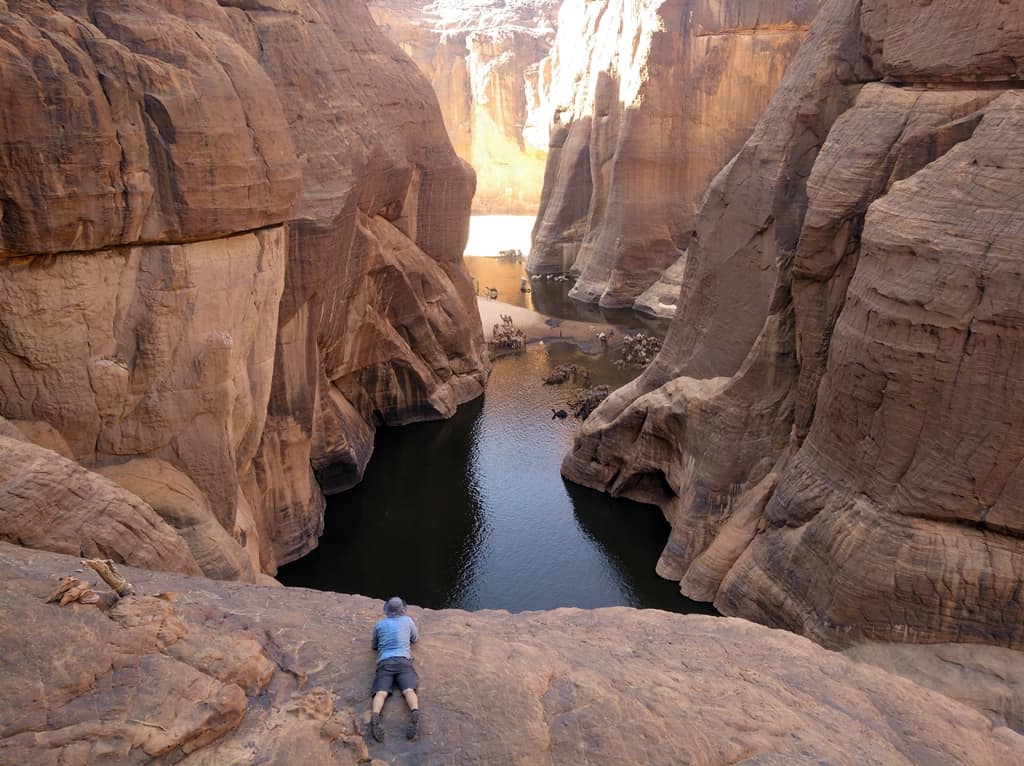
The highlight of this area is undoubtedly the Guelta d’Archei, the only place where water is available year-round. It is located in a spectacular and imposing rocky gorge where it is common to see hundreds of camels drinking. Their bellowing echoes off the rock walls.
The Mourdi Depression and the Salt Caravans
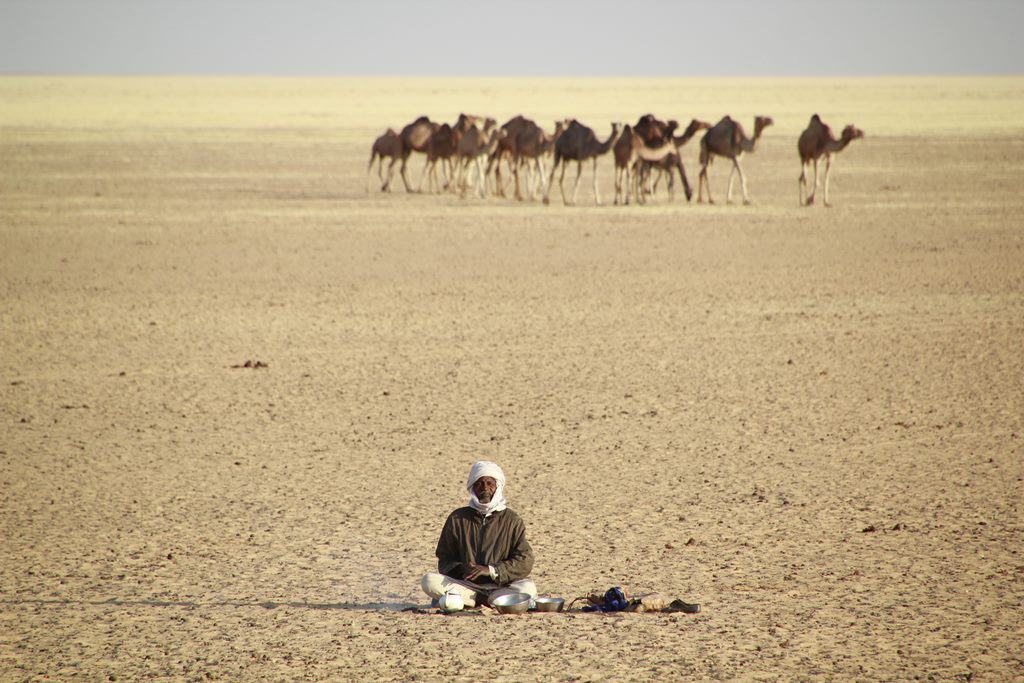
We will gradually leave the Ennedi Mountains behind as we head into the Mourdi Depression, one of the most remote stretches of our expedition. Vast expanses of sand and rock, and horizons with virtually no landmarks, will accompany us as we make our way north.
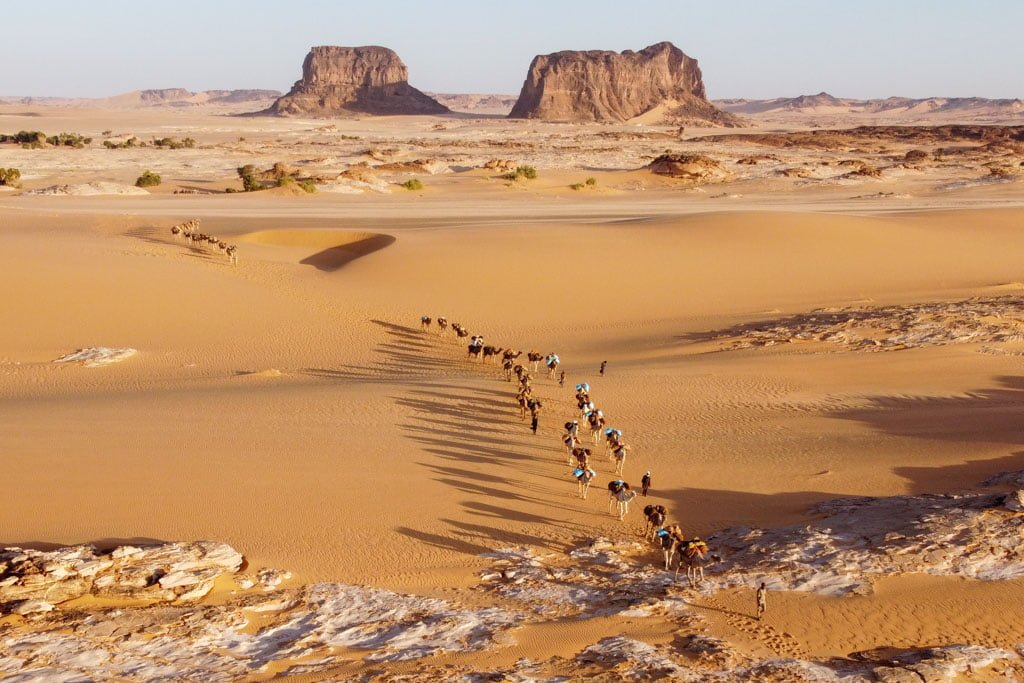
Caravans of camels involved in the salt trade continue to travel along these routes. You can never be sure you’ll encounter one—it depends on the routes, the dates, and desert conditions. But unexpectedly coming across one of these caravans moving slowly across the Sahara would be one of those moments that, all on its own, explains our way of traveling.

The Ounianga Lakes
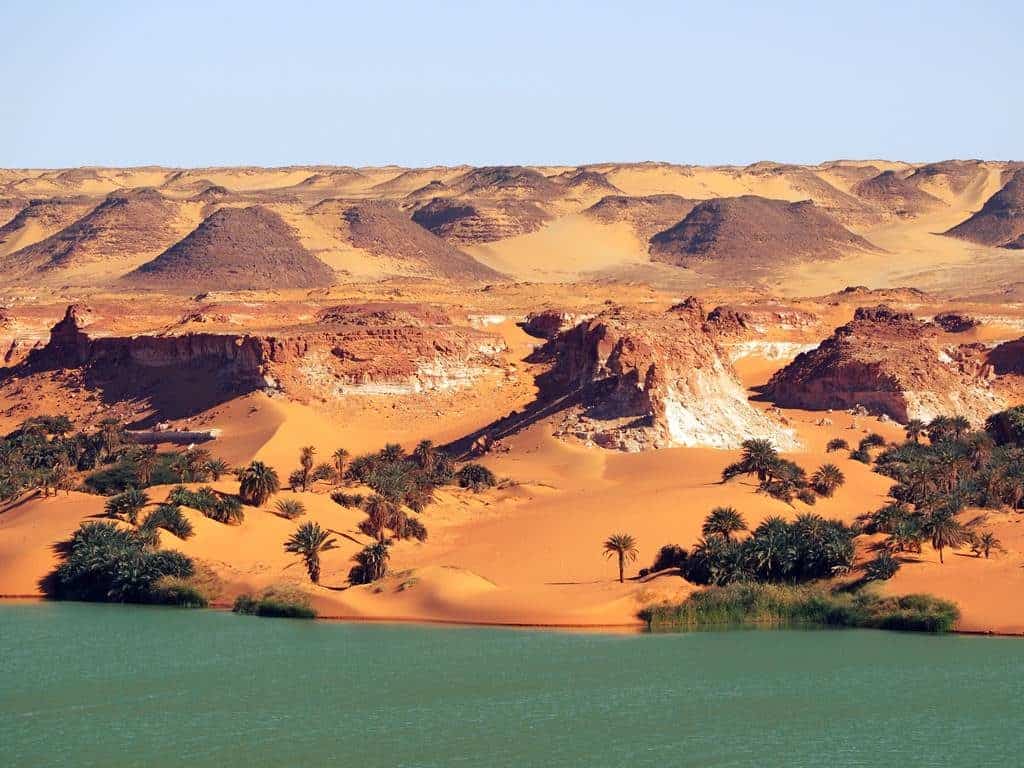
After days of desert, one of the most breathtaking landscapes in the Sahara comes into view: the Ounianga Lakes, designated a UNESCO World Heritage Site.
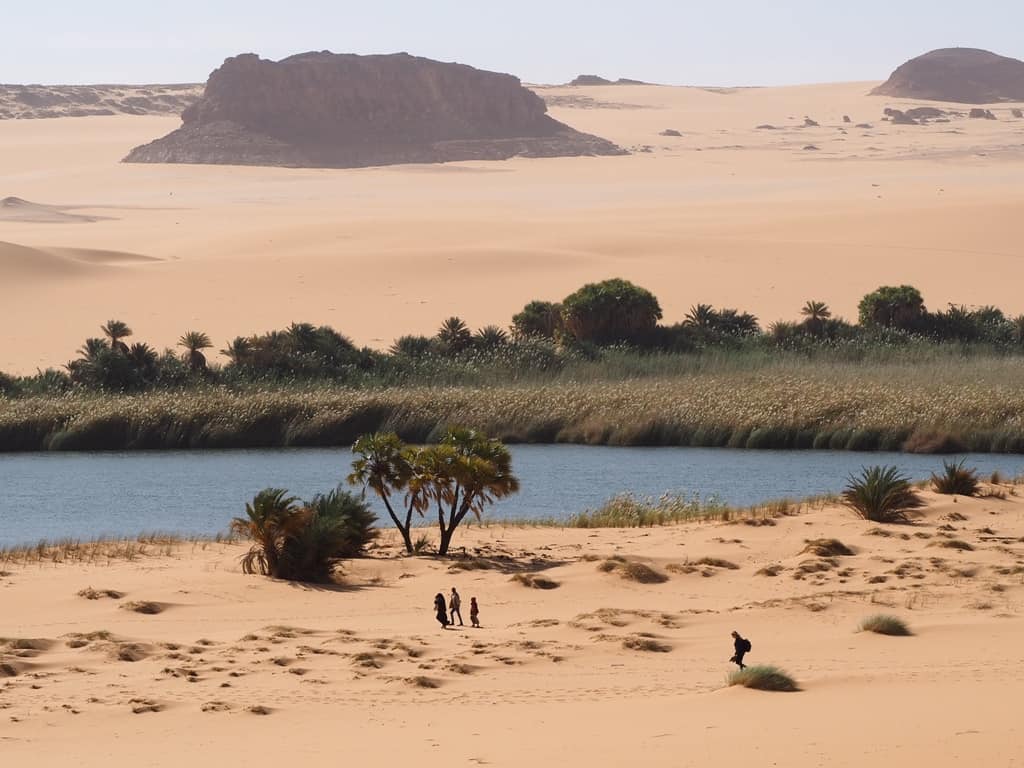
In one of the driest regions on the planet, a series of lakes with blue, green, and reddish waters emerges among dunes, sandstone cliffs, and palm groves. We’ll visit the Ounianga Kebir and Ounianga Serir areas, exploring some of their different lakes and the small settlements that have sprung up along the water’s edge.
The contrast is extraordinary: after traveling through some of the driest landscapes in the Sahara, we come across vast expanses of fresh and salt water that survive thanks to a complex underground water supply system.
Bir Kora: Traces of the Desert War
Our return journey south will take us through Bir Kora, the site of the 1987 battles between Chadian and Libyan forces during the so-called “Toyota War.”
Decades later, the desert still bears the traces of that conflict: military vehicles, armored vehicles, and abandoned equipment lie scattered across the sand, serving as an unusual testament to one of the most recent episodes in the history of the Sahara.
From here, we will continue south toward Abéché, a historic city in eastern Chad and the final stop on our great overland journey, before returning to N’Djamena.

- Toyota Land Cruiser 4x4s
- Kumakonda Companion Guide
- Cook
- All necessary government permits for travel in northern Chad.
- Letter of Invitation to Chad Required to Obtain a Visa
- Airport Pickup and Drop-off Service
- Two-person tents and sleeping pads
- Two nights (arrival and departure days) at the Irrisor Hotel or similar, based on double occupancy with breakfast included
- For almost all tourist attractions in Ennedi and Ounianga, you must pay visitor fees to the local communities. All entrance fees are included in the price of the trip.
- 3 meals a day during the trip
- Mineral water (1 1.5-liter bottle per person per day)
- Exception: Meals are not served upon arrival in and departure from N’Djamena. Meals at local restaurants during the trip are also not included.
- International Flights
- Travel and Cancellation Insurance
- Additional hotel nights
- Taxi Fares for Getting Around N’Djamena
- Visa, or the procedures involved in obtaining one
- Beverages (soft drinks or alcoholic beverages)
- Tips for local guides, drivers, and cooks (optional).
- Meals at restaurants and in N’Djamena.
- A €350 single supplement (room and tent) must be requested at the time of booking. It is not possible to book a “single” room or tent separately. If you only want a single tent, you can bring your own without any problem.
Travel with us
€ 3,100
/PERSON
- registration open
Trip details
Countries visited
- CHAD