


Sierra Leone is one of the least-discussed destinations in West Africa, and also one of the most culturally rich. From the rural interior to the Atlantic coast, traveling through this country offers a very diverse experience. Here are some of the top places to see in Sierra Leone that we think you shouldn’t miss.
- Text: Francesca Giustini
- Photographs: Francesca Giustini, Beatriz Moreno, and Alicia Ortego
What to See in Sierra Leone: Freetown, the Capital of Krio Identity
Freetown, the capital of Sierra Leone, is a vibrant city that embodies many of the country’s social and cultural dynamics.
The city was founded in the late 18th century as a British settlement for freed slaves from the Americas. Over time, it became an autonomous center where different communities intermingled, giving rise to the Krio people and their language.
Today, Freetown is a complex, bustling, and fascinating capital city, where colonial history, urban culture, and local customs coexist on every corner.
The city can be understood through places like the Cotton Tree, a historic symbol of the city’s founding.
This legendary tree reached an age of about 400 years and grew to a considerable size right in the heart of the city. However, in May 2023, it was toppled by a severe storm, leaving only the stump at its base. This happened just one month after one of our visits to Freetown.
The site where it once stood remains an emotional landmark for the people of Freetown, and its memory is a national symbol of Sierra Leone.

But perhaps the true heart of life in Freetown is the large central market and the streets surrounding it. There, every morning, there is a flurry of activity that is impossible to escape. The smells of spices, smoked fish, and piles of colorful fabrics, along with the vendors’ voices mingling in Krio and English.
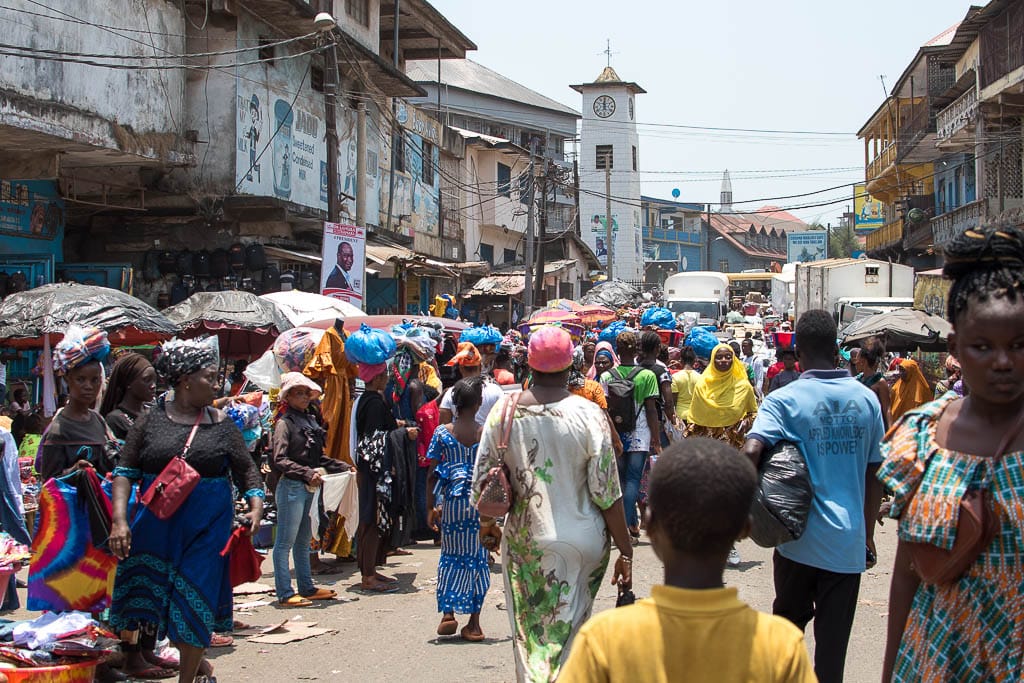
And in another shift in perspective is Kroo Bay, a true slum—a very working-class neighborhood, yet rich in culture and warm hospitality.
We have been welcomed with open arms on several occasions among the shanties. The contrast between the garbage dumps right next to the houses and the hospitality of the people makes this neighborhood one of the most evocative and intense to explore.

Another place is the waterfront, which runs along the city beaches and connects the city to the ocean. It does so by creating spaces where the economy, social life, and daily routines blend together naturally, albeit with various layers of inequality.
Finally, right here in Freetown, if you have the right connections or pay attention to what’s happening on the street, you can witness fascinating ceremonies and masks.
Cultures and Ceremonies in the Interior of Sierra Leone
Like other countries in the region, Sierra Leone has a rich tapestry of cultures and communities. Each has its own unique characteristics, but all share similar traditional practices, such as initiation ceremonies and secret societies.
Although we don’t know all of them, of course, we have witnessed several examples of these cultures, and we’ll discuss them below. But first, we must point out that Sierra Leone is known for the strong presence of so-called secret societies.
Secret societies in Sierra Leone are, in fact, institutions that shape education, identity, social roles, and relationships with the spiritual world. They also play an important role in politics.
Understanding it takes time and observation, but once you start to see it, everything falls into place in a way that’s truly impressive.
Within these societies, masks play an active role in community life. They are tools for cultural transmission, but also means of protection and control that the community deeply respects.
Limba Initiation Ceremonies: The Gbodokali and the Role of the Forest
One of the most intense experiences we’ve had in the northern part of the country is the Gbodokali male initiation ceremony, practiced by the Limba people.
This rite marks the transition to adulthood. The young people, generally between the ages of 8 and 14, spend several weeks in the forest, isolated from the community.
For the Limba people, the forest is a sacred and regulated space where the social and spiritual transformation of the initiates takes place. The entire community treats it with a reverence that is evident in every gesture and every moment of silence.
At the end of the isolation period, the initiates return to the village amid a collective celebration featuring music, dances, and the participation of many communities.
The energy is hard to describe: people are singing, clapping, the drums are beating nonstop, and the boys returning from the forest have a completely different look on their faces than they did when they went in.
During the celebration, families and villages contribute food, gifts, and palm wine. The significance of this goes beyond the event itself. It is a gesture that sustains relationships between communities throughout the year.
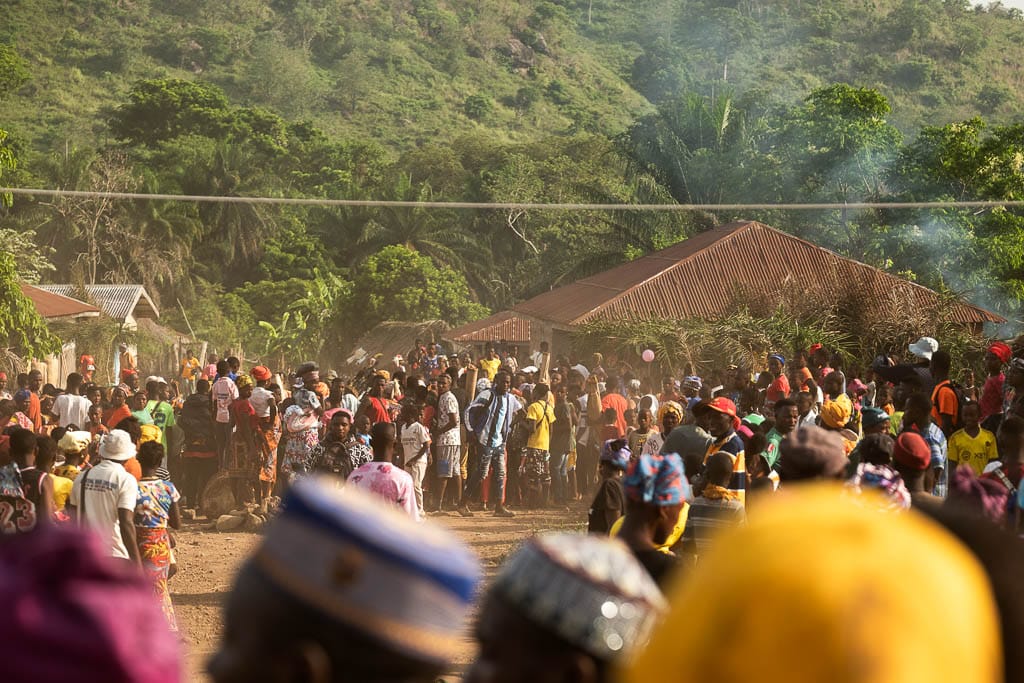
A central symbolic element is the Basanperè mask, which is shaped like a bird. This figure represents the connection between the forest world and the human world, serving as a symbolic guide for initiates during their transition between two states of existence.
We cannot stress this enough: being able to witness such an important and deeply meaningful moment for the community is a truly powerful experience.
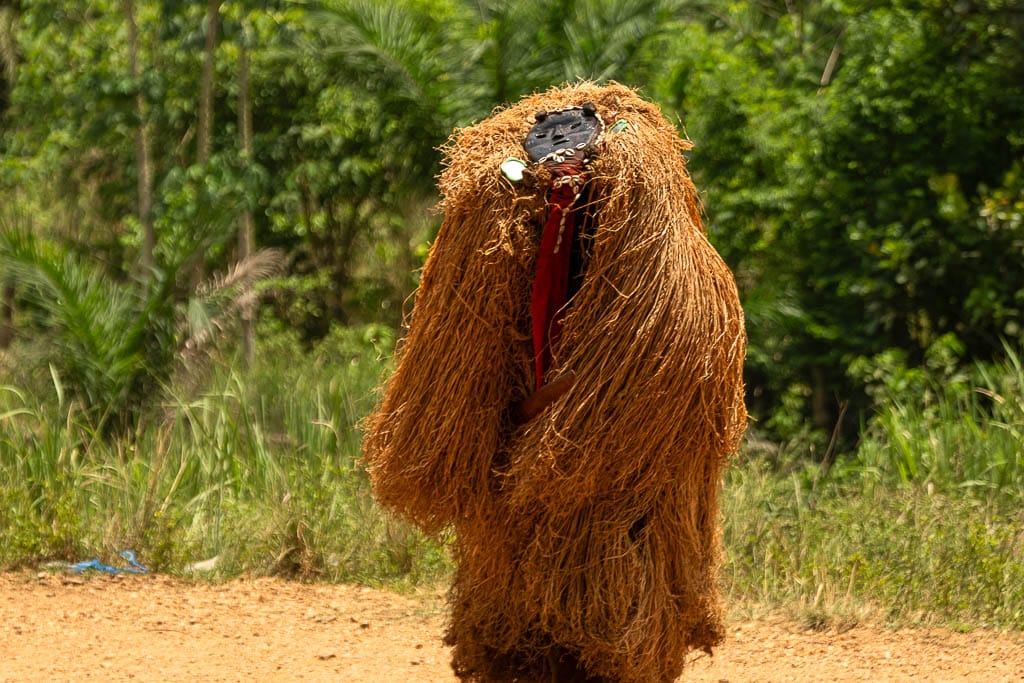
Temne culture, Mende culture
The Temne culture is one of the most important in Sierra Leone.
From the very beginning, it is striking to see how daily life is intertwined with traditional practices: work, family, resource management, healing, spiritual protection, and the relationship with nature.
Among the Temne people, the main secret societies are the Soko Society and the Soko Bana, each of which plays a specific role in passing on values and providing spiritual protection for the community.
The Mende culture, on the other hand, is widespread throughout southern and eastern Sierra Leone and is also present in Liberia and Guinea. Its secret societies share the same structure as those in other regions, but have their own distinctive characteristics. We are referring to the Bondo or Sande Society and the Poro Society, which we discuss below:
Bondo / Sande Society (Mende people): female initiation
La Bondo is an organization made up of multiple independent local groups that are connected by shared practices.
Traditionally, the Bondo prepare girls for their adult responsibilities through an initiation process that involved a prolonged separation from the community.
The young women were taken to a wooded area near the village—the “bush”—where, under the guidance of adult women, they learned social norms, practical knowledge, and essential skills for community life.
Over time, this period has in many cases been reduced to a few weeks, in line with the school calendar. However, the symbolic structure of the rite remains: separation, formation, and return continue to mark a publicly recognized change in status.

The most experienced female figures serve as educational leaders and guardians of the system, and it is striking to see the authority they exude in their movements.

The most important mask of the Sande society is the Sowei mask, which in some contexts is associated with Mbundu forms. It is a polished, dark wooden helmet that represents a female spirit of the forest and water linked to fertility, harmony, and protection.
Seeing it up close is awe-inspiring: its dark, glossy surface and serene features convey a presence that goes beyond the physical object.
Credits: Beatriz Moreno
Poro Society (Mende people): Male Structure and the Goboi Mask
The male counterpart to the Sande is the Poro society.
Their masks appear in ritual contexts to assert male authority, reinforce community norms, and maintain the link between the human and spiritual worlds.
Among the masks associated with the Poro is the Goboi, a visually striking figure linked to forest spirits.
When you see her emerge from the twilight of the forest, accompanied by the deep sound of drums, you understand why these figures command such respect: there is something about their presence that transcends mere representation.
Credits: Beatriz Moreno

Falui and Gongoli: Performative Masks, Irony, and Social Regulation
Alongside the institutional figures, there are more dynamic figures such as Falui and Gongoli.
The Falui plays a role in community ceremonies as a mediator between the ritual and the social spheres. Although less solemn, it retains significant symbolic meaning and contributes to the presence of spirits in everyday life.
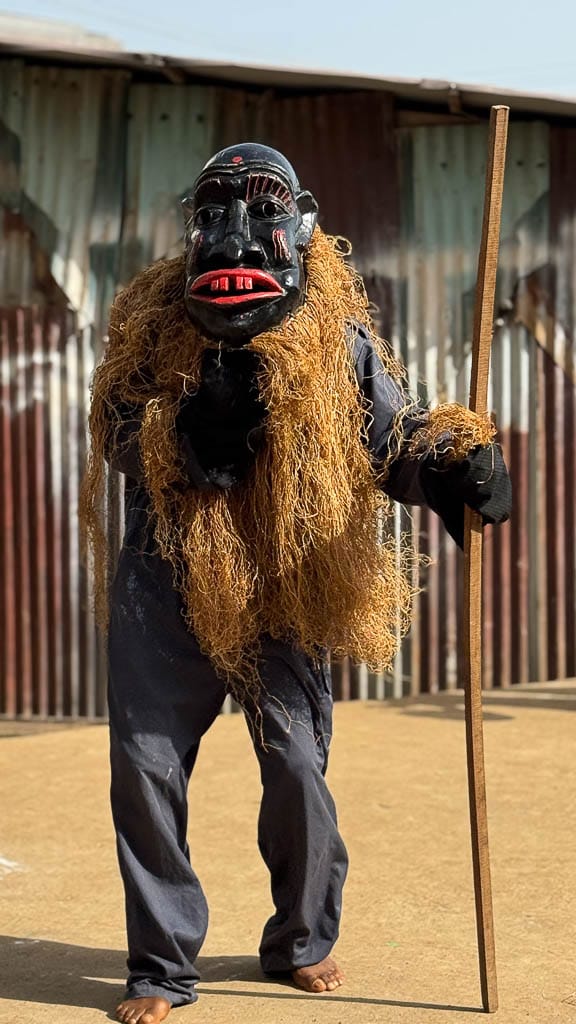
The Gongoli is one of the most recognizable masks due to its performative and satirical nature. Its elongated, exaggerated shape is designed to create movement and a strong stage presence.
During the ceremonies, he may incorporate elements of humor or social commentary, and the audience reacts with laughter, comments, and applause, creating a fascinating moment of collective connection.
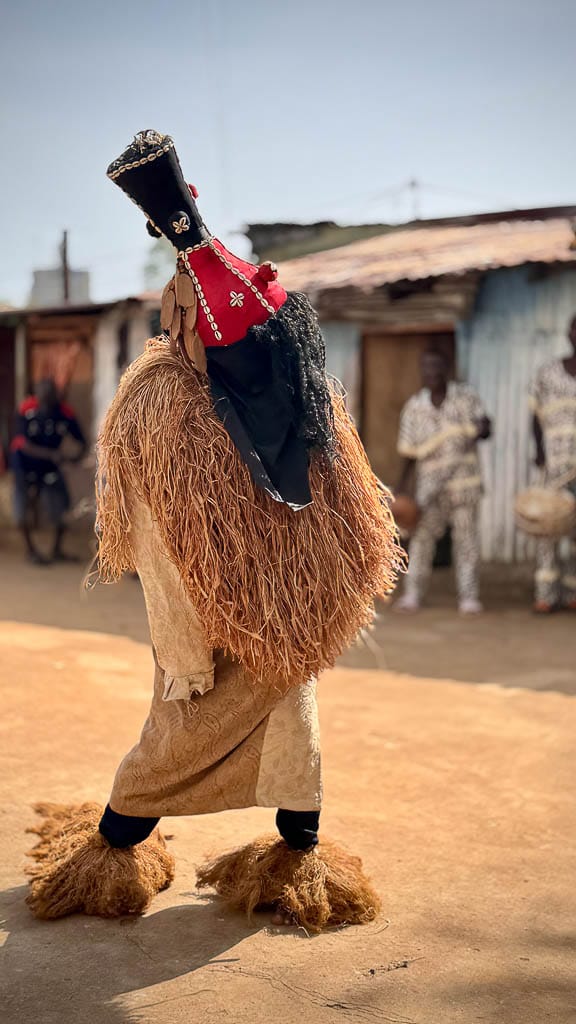
Credits: Beatriz Moreno
Bureh Beach and River No. 2: Coastal Beauty and Environmental Pressure
After the rural areas, Sierra Leone’s coastline offers some of the country’s most spectacular scenery.
Bureh Beach and River No. 2 are known for their long beaches, tropical vegetation, and the open ocean.
Arriving at this little paradise after days of traveling across the country is a striking contrast: the sound of the waves, the salty breeze, the white sand stretching as far as the eye can see. It all shows you that Sierra Leone has a spectacular coastline that very few people know about.
However, this environment is facing a growing process of environmental degradation that is seriously threatening it.
Sand mining for construction and urban development is gradually changing the coastline, disrupting the natural balance, and affecting both the landscape and the local communities that depend on it.
We were very sad to see how this landscape has changed over time, when it used to be wild and untouched.

Why Visit Sierra Leone: A Trip Off the Beaten Path
From the initiation ceremonies in the north to the initiatory societies of the south, from the Temne and Limba communities to the urban complexity of Freetown and the Atlantic beaches, Sierra Leone offers direct access to cultural systems that are still very much alive. This is a reality that can be experienced firsthand, with social structures that are completely different from our own.
A list of things to see in Sierra Leone could be much longer, and in fact, you can read the post on our blog 12 Reasons to Travel to Sierra Leone. But first, you have to accept that this trip operates by different rules. It requires patience and an open mind, but it often rewards you with experiences you’ll hardly find anywhere else.

Autor:
Austerio Alonso
Co-founder of Kumakonda. Passionate of Africa. Specialist in the design, preparation and realization of expeditions in Africa. Content creator.
Travel with us