


Our trip to southern Angola began in Luanda, the capital of Angola, which clearly reflects the country’s rapid development. A former Portuguese colony, it gained independence in 1975 but was immediately plunged into a civil war that lasted more than 25 years and left a deep mark on society and infrastructure.
It was not until the 2000s that Angola began to gradually open up to the outside world, rebuilding cities, ports, and roads, and slowly allowing tourism to develop. Despite this recent history of conflict, much of the southern region still preserves pristine landscapes and ancient cultural traditions, which we observed during our trip to southern Angola. It is a region where the desert meets the ocean and where the vast distances seem to suspend time, but also where communities still exist that maintain social, aesthetic, and spiritual systems deeply rooted in their history.

Why Take a Trip to Southern Angola
A trip to southern Angola takes you through some of the country’s most spectacular and remote landscapes: from the dunes that stretch out into the Atlantic at Baía dos Tigres, to the mouth of the Cunene River and the wild expanses of Iona National Park. But it is in the most isolated inland areas, around Virei, Oncocua, and Lubango, where one finds extraordinary cultural diversity.
Exploring this region brings us face-to-face with ways of life that still exist on the fringes of globalization.
Namib Desert and Baía dos Tigres
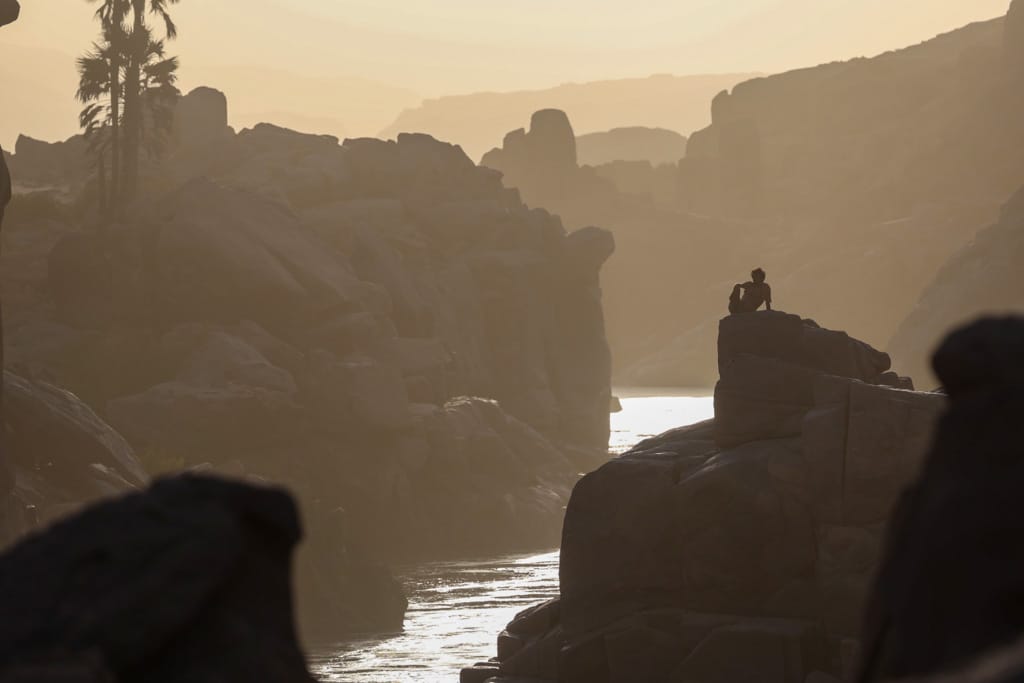
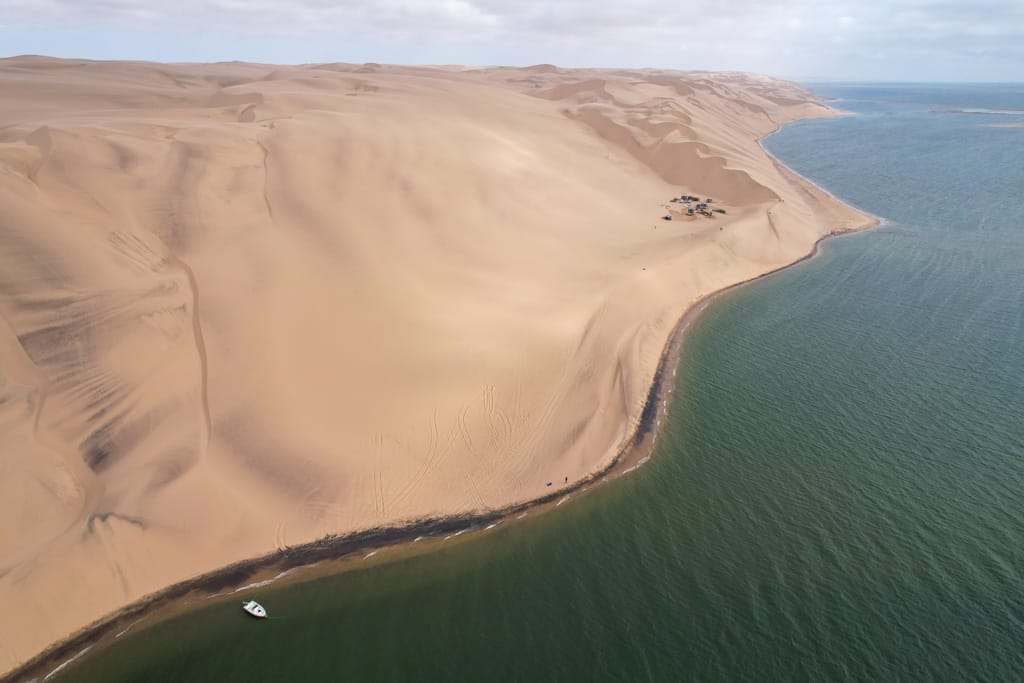
After a brief stop in Moçâmedes, a small colonial and port city, the real adventure began in the Namib Desert, one of the oldest deserts on the planet, where the landscape is essential and powerful: endless dunes, mountains of intense colors and a cold ocean that hits an almost uninhabited coast, home to dolphins and whales.

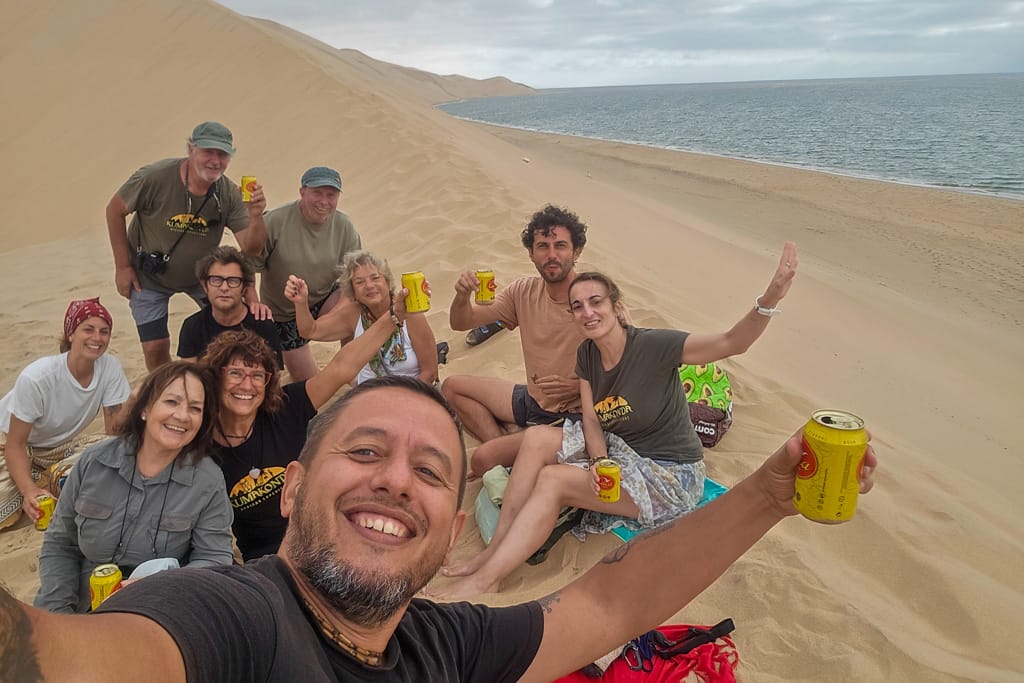
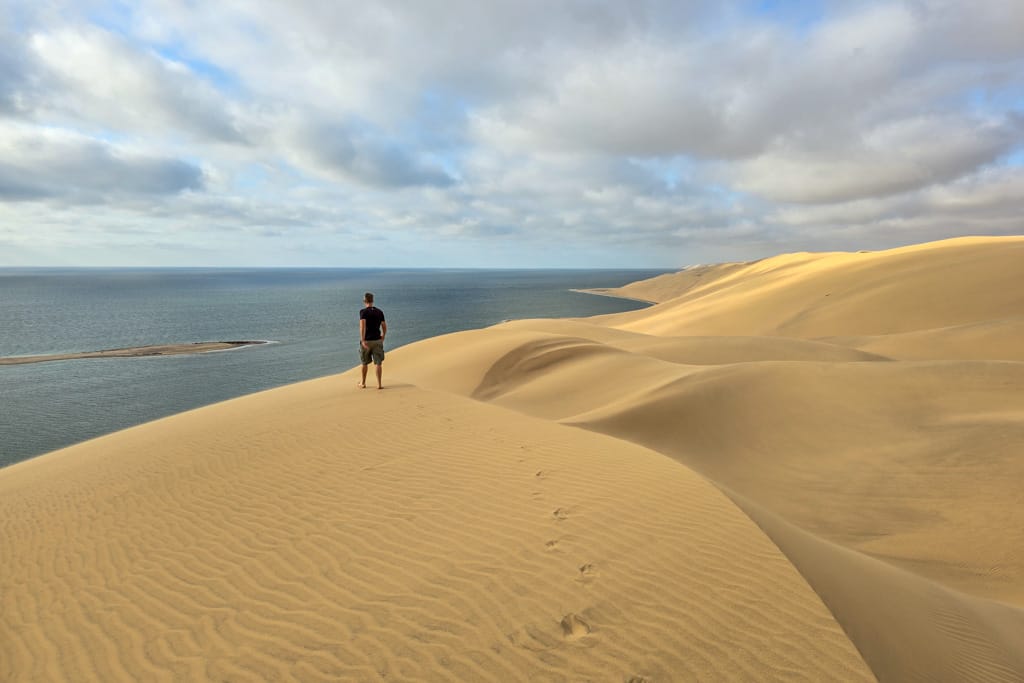
After several hours in 4×4 we finally arrived at Baía dos Tigres, named after the colors of the sand that resemble the stripes of a tiger. We camped the first night among the dunes, surrounded only by the desert and the ocean.

The next morning, in an inflatable boat we reached the island in front of the bay called Ilha dos Tigres, which was formerly connected to the mainland and abandoned by the Portuguese after independence; today it is a ghost island shaped by wind and erosion, where you can still see remains of colonial buildings, shipwrecks and abandoned villages, as well as a colony of sea lions.

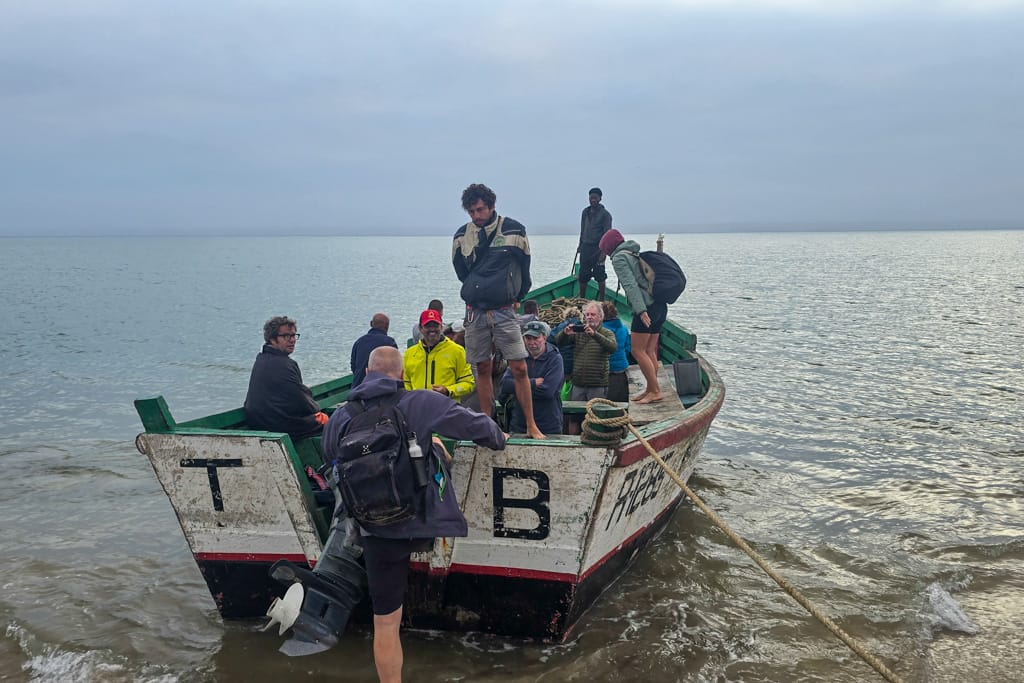


We spent a night on the island, pitching our tents inside an abandoned church or directly on the beach.
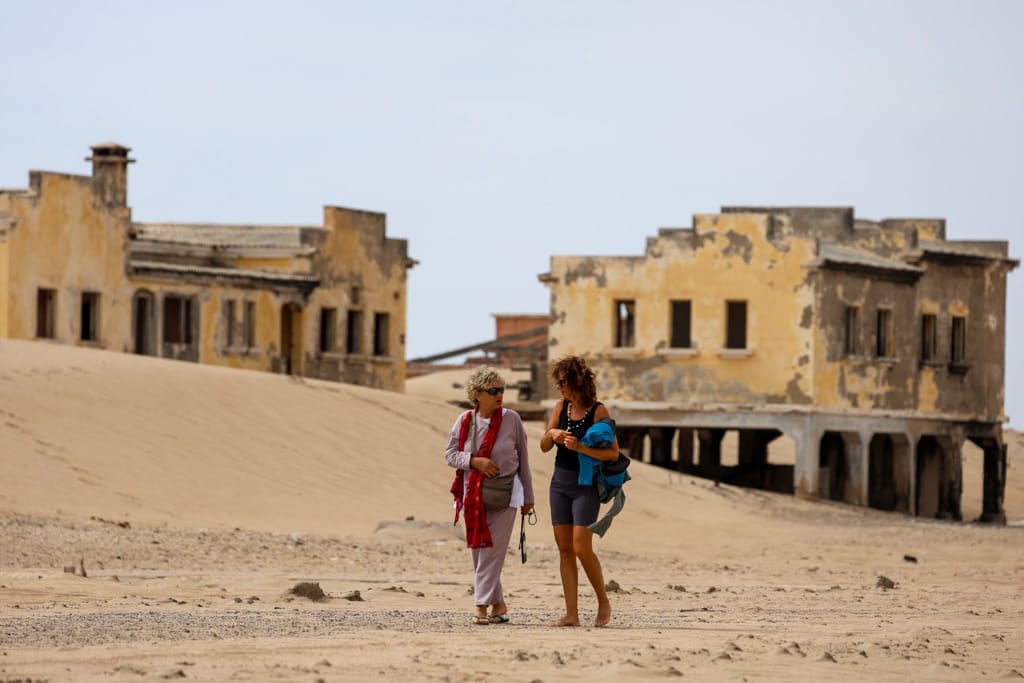

We then continue our journey south until we reach the Foz do Cunene, which marks the natural border with Namibia. Here the Cunene River flows through the desert creating a lifeline in a territory dominated by water scarcity. This fragile balance between aridity and survival is the same balance that for centuries has shaped the pastoral communities that inhabit the interior of the region.
Iona National Park: who lives here
Iona National Park is the largest protected area in Angola and one of the most spectacular landscapes in southern Africa, stretching between dunes, rocky canyons and desert plains where vegetation is sparse but perfectly adapted.
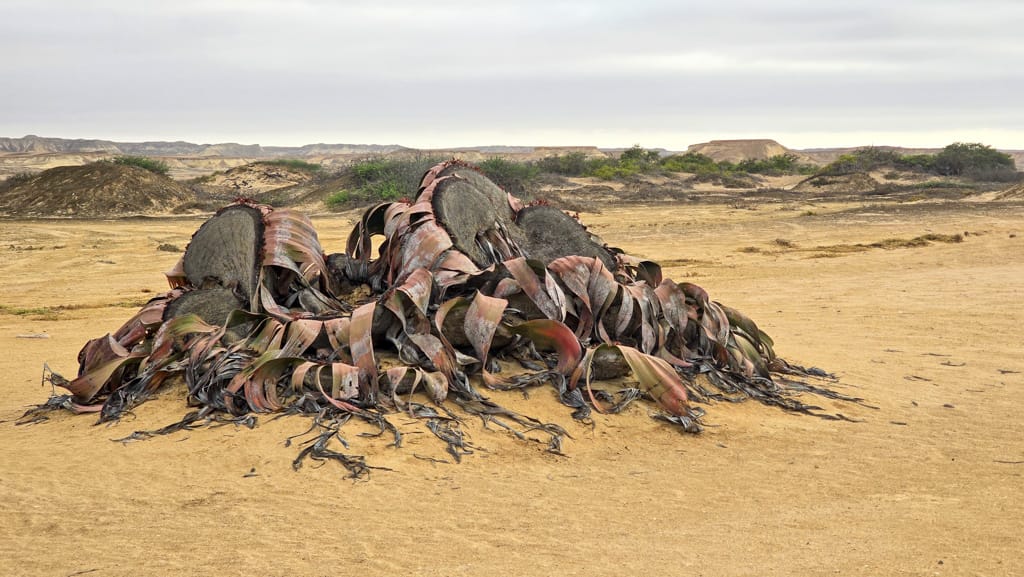
Life here is extremely selective: endemic plants such as welwitschia survive thanks to the oceanic fog, while animals are few but perfectly adapted to the aridity. For the local populations, however, this territory represents grazing areas and seasonal migrations. The relationship between environment and culture is direct: climate, water availability and the presence of pastures determine movements, settlements and even the structure of families. It is in these regions that some of Angola’s most iconic peoples live.
The Himba: identity, aesthetics and relationship with ancestors.
After several days in the sandy desert, the landscape begins to change. The dunes give way to hills with sparse vegetation in an arid and extremely hot environment. The Himba are the first village we encounter: we begin to see boys and girls with cattle grazing, very few within several kilometers, until we finally come across a small village.


The Himba, also present in northern Namibia, are a semi-nomadic pastoralist people whose wealth and social structure revolve around livestock. Herds are not only an economic resource, but, as in many African populations, define social status, descent and family alliances.

Himba spiritual life: okuruwo, the sacred fire
The villages are made up of circular huts built with branches, mud and cow dung. These low, compact structures are perfectly adapted to the hot, dry climate of the region. In the center of the village is the most important element of the Himba spiritual life: the sacred fire called okuruwo. This fire represents the link between the living and the ancestors and should never be extinguished; it is the place where family rituals, prayers and moments of symbolic communication with the spirits of the ancestors take place.
Aesthetics of the Himba
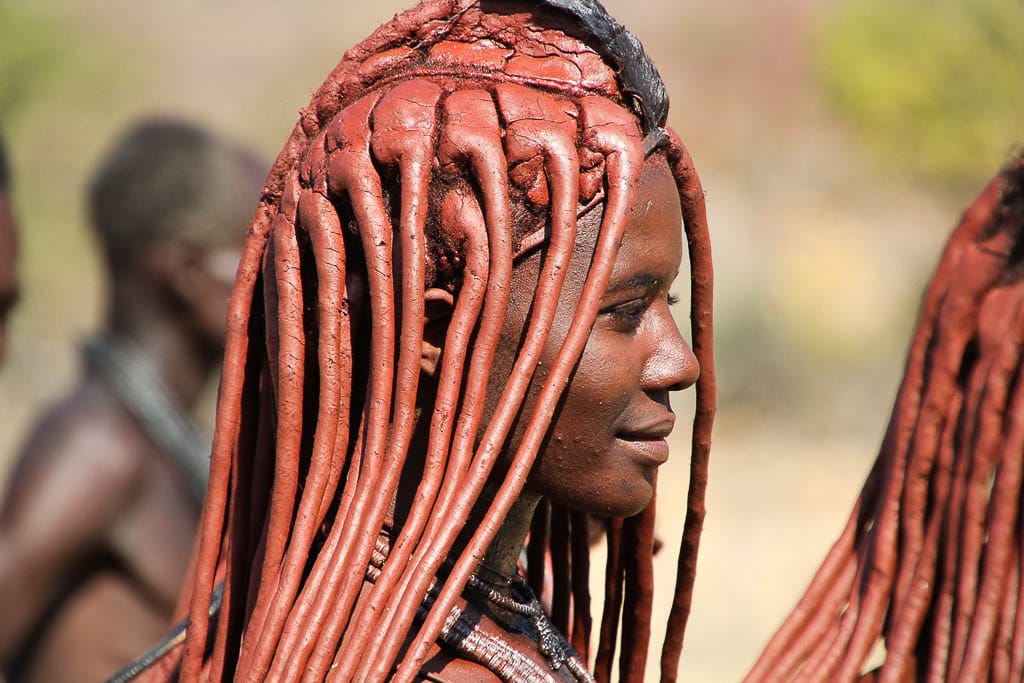
One of the most recognizable aspects of Himba culture is its aesthetics. Women cover their skin and hair with a mixture of animal lard and red ochre powder called otjizea paste whose function is to protect the skin from the intense sun, act as an insect repellent and, at the same time, have a strong symbolic and identity meaning. Hairstyles also convey specific social information: the style and number of braids indicate age, marital status and status within the community.
For example, girls and young unmarried women wear two thin braids over their faces composed only of their own hair, while married women wear more elaborate hairstyles with otjize and decorations made of metals, skins and other materials.
The same is true for men: boys and young men of marriageable age often wear a long front braid indicating their single status.
In recent decades the Himba are facing profound changes related to increasingly frequent droughts that reduce available pastures, forcing many families to move further away in search of water and food for livestock. At the same time, the growing presence of tourism and modernity is introducing new economic and cultural dynamics.
The Mucubal: desert nomads
Among the most numerous ethnic groups in southern Angola are the Mucubal, a semi-nomadic population whose ancestors are believed to have migrated to this region from the African Great Lakes area several centuries ago. The Mucubal territory is one of the most extreme environments in the country, where rainfall is scarce and unpredictable and for this reason many of their settlements are temporary. Many communities move regularly in search of new pastures for livestock. It is not uncommon to find villages completely abandoned or inhabited only by the elderly and children while the adults are away with the herds. Livestock, once again, are at the center of the economy and cultural identity.


Their social structure is clearly organized: while men are mainly in charge of livestock and seasonal migrations, women manage domestic life, food preparation and the care of children who learn traditional life from an early age.

Aesthetics of the Mucubal
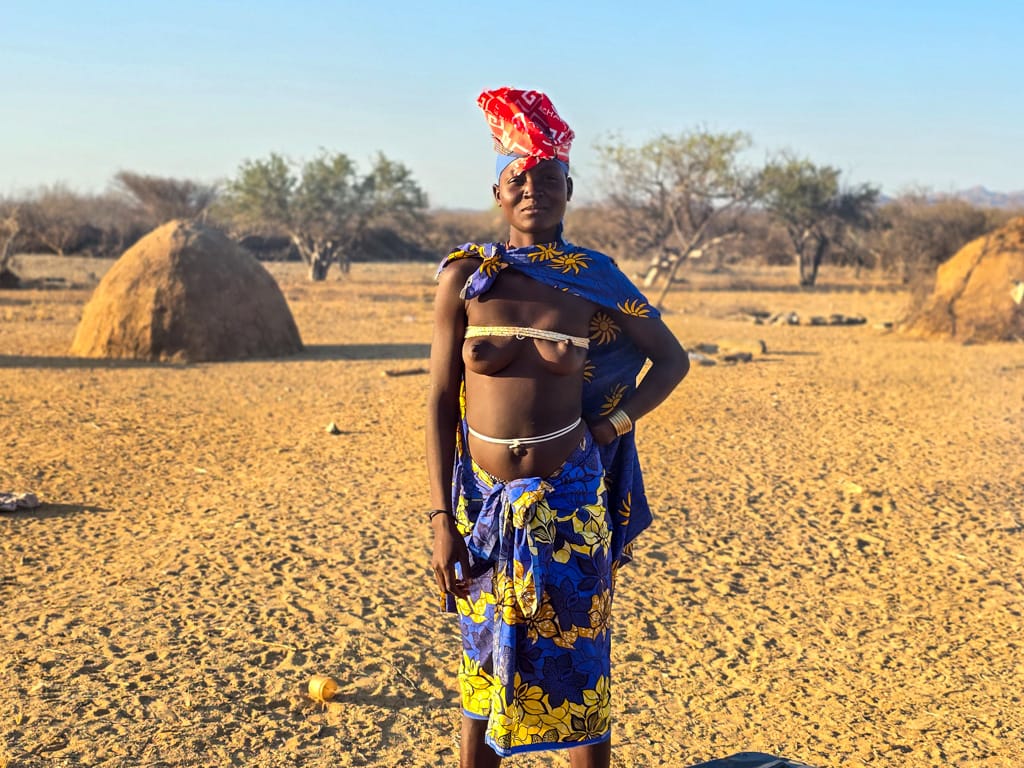
Aesthetics also have a strong cultural value among the Mucubal. Many women wear heavy bracelets and anklets symbolically associated with family wealth and the number of heads of cattle; the more ornaments worn, the greater the social prestige and, here too, the body becomes a visible language of status and belonging. Traditional dress is composed of colorful fabrics, very different from the skins used by the Himba, decorated with handmade ornaments and headdresses generally in blue or light blue.
Among the most recognizable aesthetic practices is also the filing of the lower incisors, in both men and women, an identity sign that allows immediate recognition of cultural belonging. Then there are the strings wrapped around the breast, which women begin to wear after marriage: they serve to support and shape the breast by keeping it attached to the body, but also represent a visible sign of adult femininity according to the aesthetic canons of the community.
Lubango: Green Mountains and New Tribes
The Muhila: identity, aesthetics and spirituality
After more than a week among dirt roads, dunes and rocks, we return to the asphalt leaving behind the arid landscape of the Iona National Park to discover a more lively and green area around Lubango. There we meet the Muhila people, first in the market and then in a village in the mountains, two different environments that have also shaped two different ways of living the same culture.

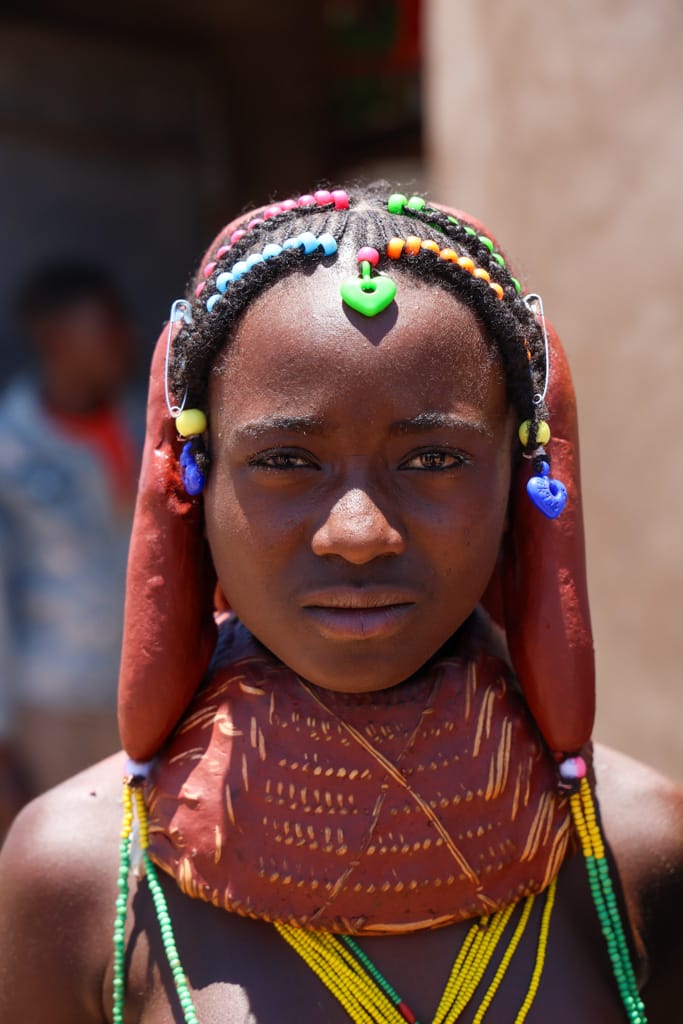
In the plains, where villages are closer to roads and urban centers, the Muhila are mainly farmers. Women grow maize, cassava, pumpkins and other cereals, while men are responsible for livestock and pastoral activities. In the mountains, on the other hand, isolation has made it possible to preserve rituals, aesthetics and social symbols for a longer period of time.
Aesthetics of Muhila women
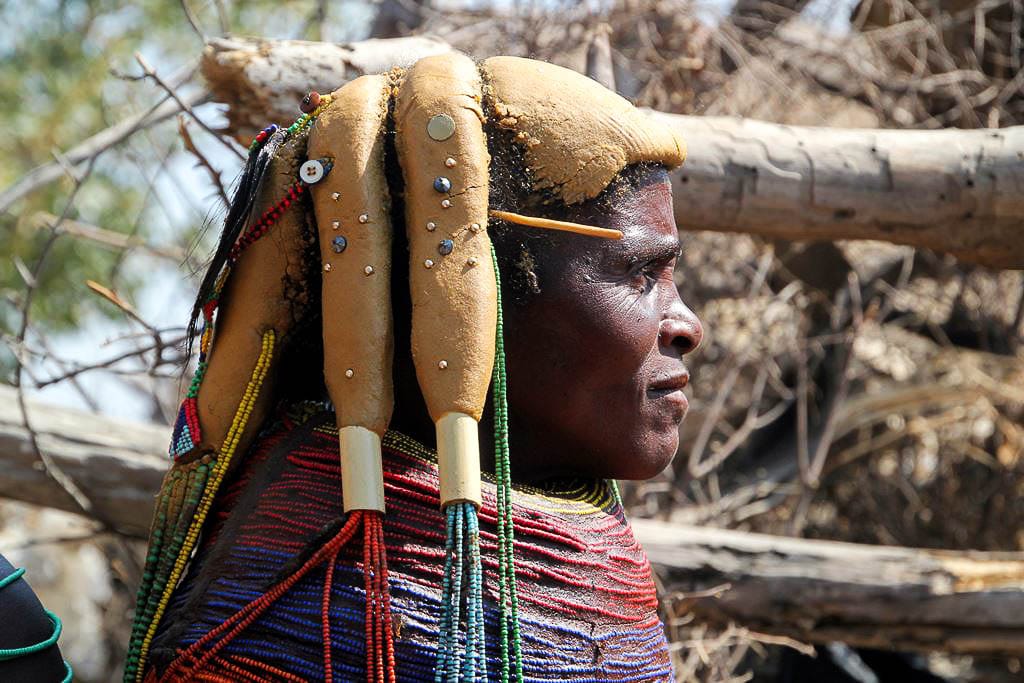
Among the most fascinating elements of their culture is the feminine aesthetics. Women wear large colorful necklaces composed of dozens of strands of beads and ornaments that can weigh several kilograms and represent an important symbol of identity. Hair is often covered with a paste made from pulverized minerals mixed with animal fat, dung and vegetable fibers, creating very characteristic sculptural hairstyles. The body again becomes a social language, a way of making visible the identity of the group.
Traveling with respect: tourism, culture and current threats


Visiting the tribes of southern Angola is a powerful experience, but also a complex one. On the one hand, there is a desire to learn about and document extraordinary cultures that have preserved millennia-old traditions; on the other hand, tourism can easily turn these communities into photo subjects if it is not managed with sensitivity.
Traditional communities are facing a series of increasingly intense pressures that threaten the continuity of their way of life. One of the main threats is climate change, which in recent decades has made the rainy seasons increasingly erratic. The southern region of the country is naturally arid and depends on a fragile balance between pasture and water. Increasingly long periods of drought are drastically reducing the areas available for livestock, forcing many pastoralist families to move more frequently or to abandon their traditional territories.
This environmental pressure is compounded by the progressive expansion of “modernity”. New roads, infrastructure and urban centers are transforming territories that for centuries remained isolated. Young people, increasingly exposed to external cultural models through schools, cities and cell phones, often move away from villages in search of economic opportunities. This creates a generational fracture that weakens the transmission of traditional knowledge, from pastoral techniques to spiritual rituals.
Photo-based tribal economy in southern Angola
Tourism, if not managed sensitively, can also become a source of tension. The growing interest in the aesthetics and lifestyle of these communities has led some areas to develop a kind of economy based on photography and interaction with visitors. This phenomenon, while offering new sources of income, sometimes runs the risk of reducing complex cultures to simple exotic images, altering the social dynamics of villages and transforming living traditions into representations designed for foreigners.

Other challenges for the tribes of southern Angola
Finally, economic pressure related to land and natural resources represents another challenge. The expansion of commercial cattle ranching, the use of land for agricultural or mining projects, and the management of protected areas can limit access to the grazing territories that these communities have used for generations. For peoples whose identity, family structure and spirituality are deeply tied to livestock and seasonal movement across the landscape, the loss of these lands means much more than a simple economic change: it calls into question the entire cultural system on which their existence is based.
Southern Angola remains one of the least visited regions on the African continent because it is not a simple journey: the distances are vast, the infrastructure limited and the environment often extreme. But it is precisely this complexity that makes the trip so extraordinary.
Between desert, ocean and remote villages, Angola offers a rare glimpse into a world where landscape and culture remain deeply intertwined. A place where traditions are not tourist attractions, but living systems that continue to adapt day after day to one of Africa’s harshest and most fascinating environments.

Text and documentation: Francesca Giustini / Image: Francesca and Austerio

Autor:
Austerio Alonso
Co-founder of Kumakonda. Passionate of Africa. Specialist in the design, preparation and realization of expeditions in Africa. Content creator.
Travel with us