Trip to Nigeria, Durbar festivals and Hausa culture
Travel to Nigeria for 7 days to attend the impressive Durbar festivals that take place in Northern Nigeria for the end of Ramadan or the Feast of the Lamb, one of the most fantastic cultural experiences to be seen in Nigeria and all of West Africa.

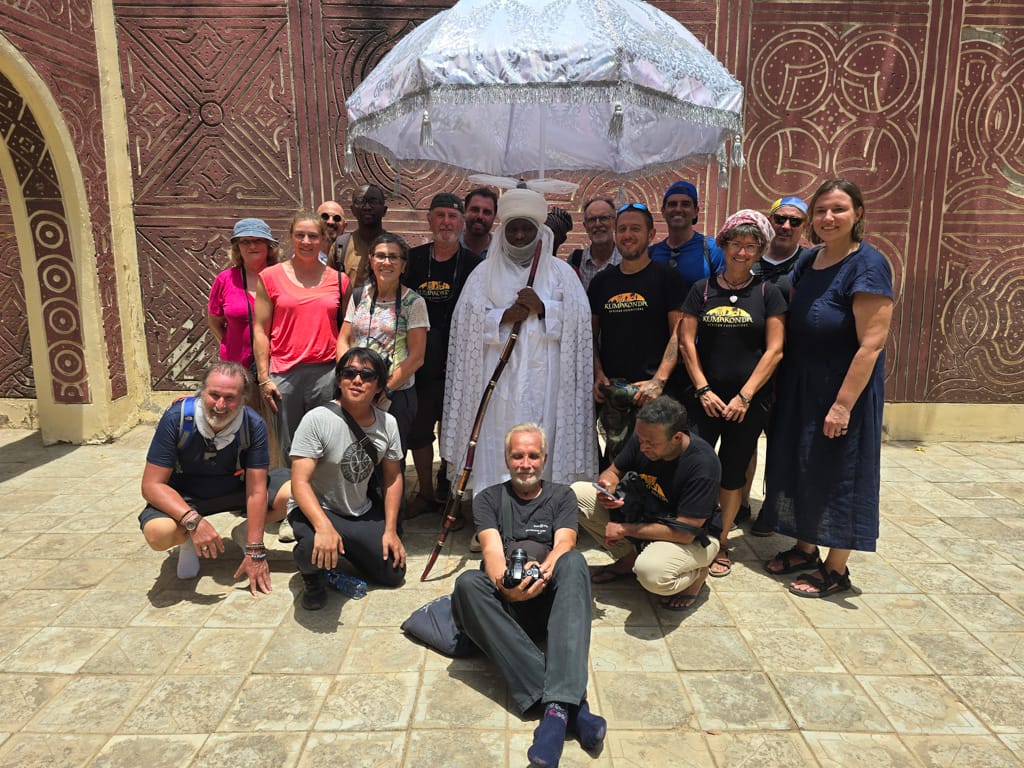
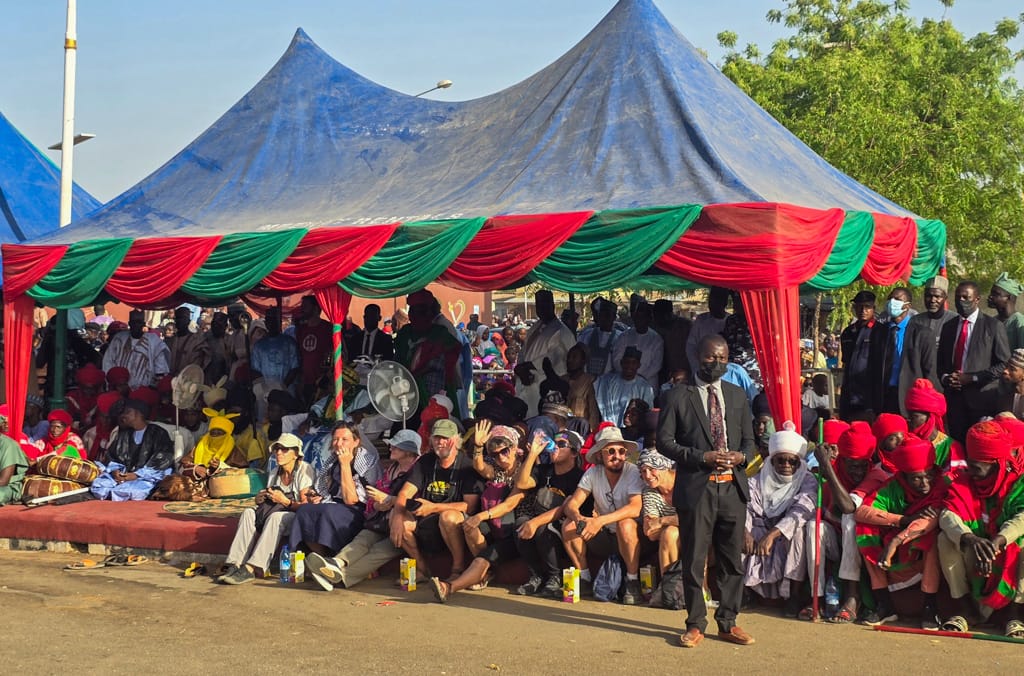
Durbar Festival program in northern Nigeria
On this trip to Nigeria we will attend four different Durbars: Kano, Zaria, Dutse and Kazaure. Each of them has a different atmosphere. Undoubtedly the most impressive and multitudinous is Kano, where we will participate in several tours. Dutse, a newly created emirate, offers a smaller and more intimate but certainly interesting Durbar with beautifully decorated palaces as a backdrop. Kazaure, a rich and historic emirate, offers in our opinion the most diverse Durbar and perhaps the most spectacular horse races. We will arrange visits to these Durbars on the best possible days.
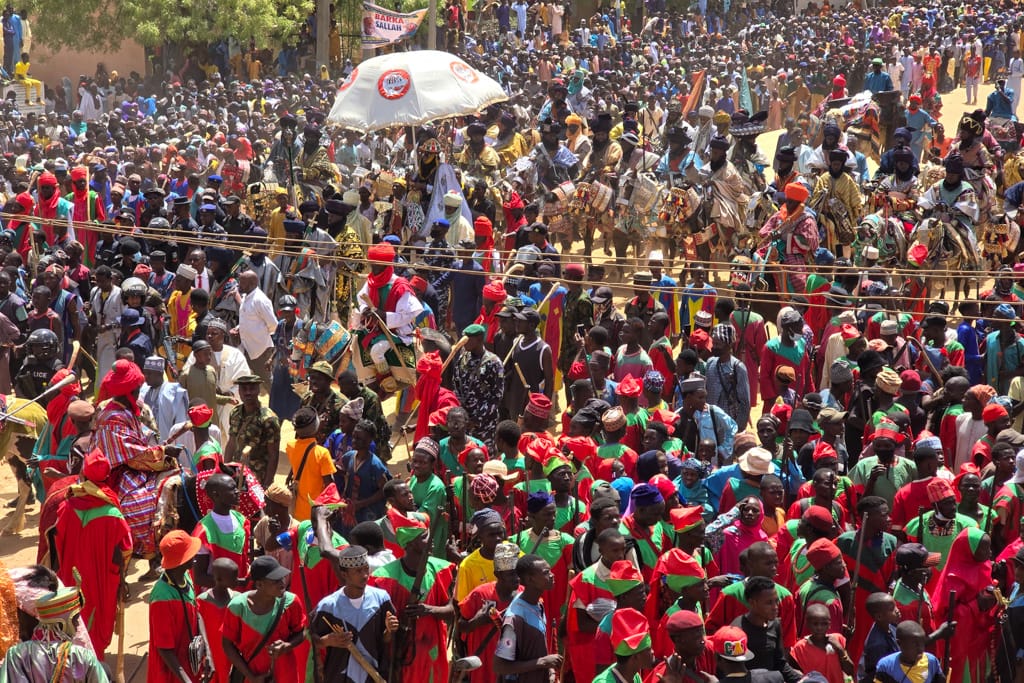
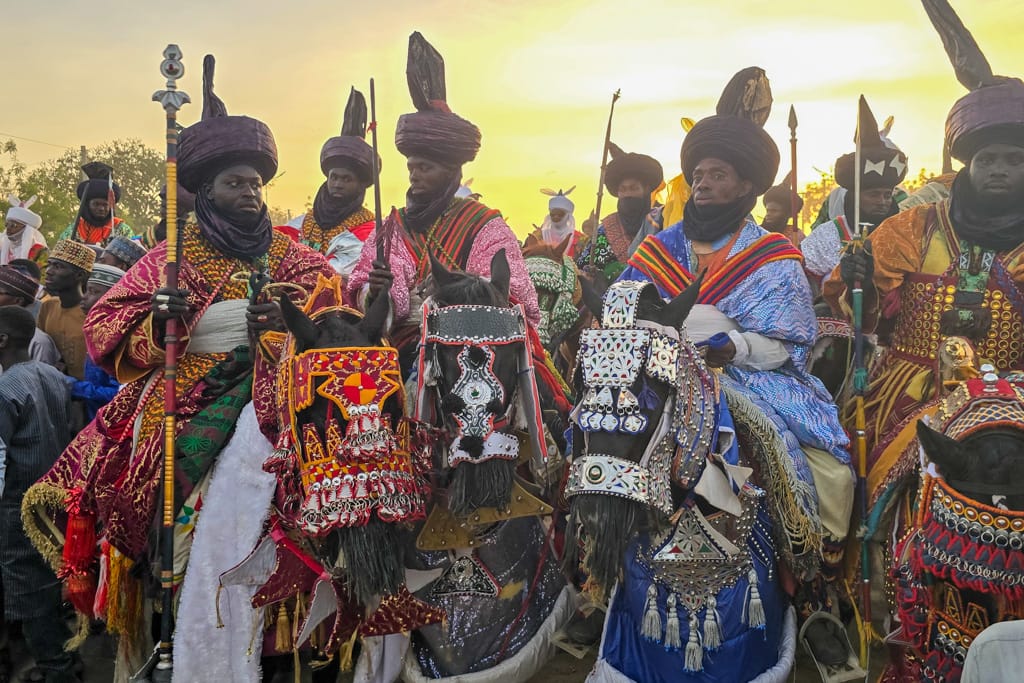
The Durbar festivals of northern Nigeria are celebrated for three days in a row in most major cities and for four days in Kano. After years of attending with our travelers to different Durbars, in Kumakonda we have selected in our trip to attend the best Durbar is its main day.
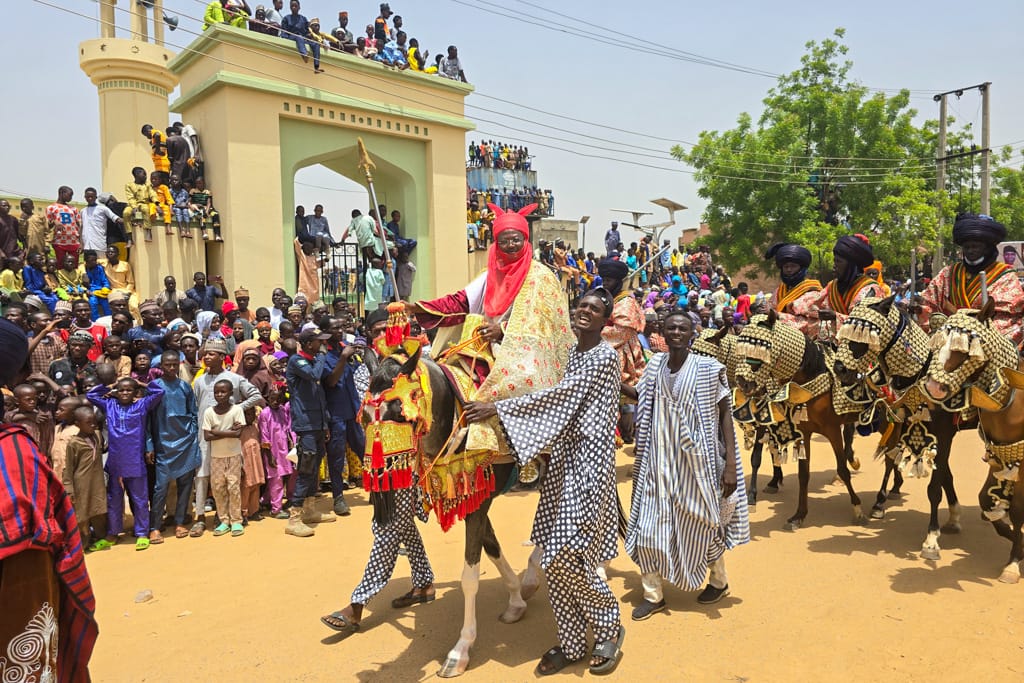
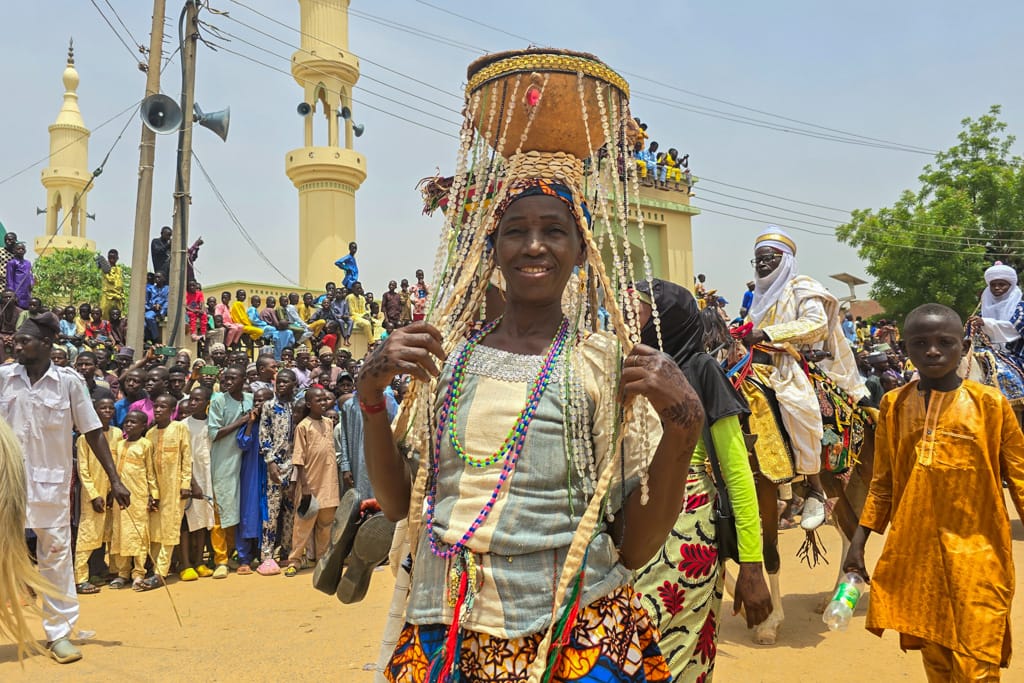
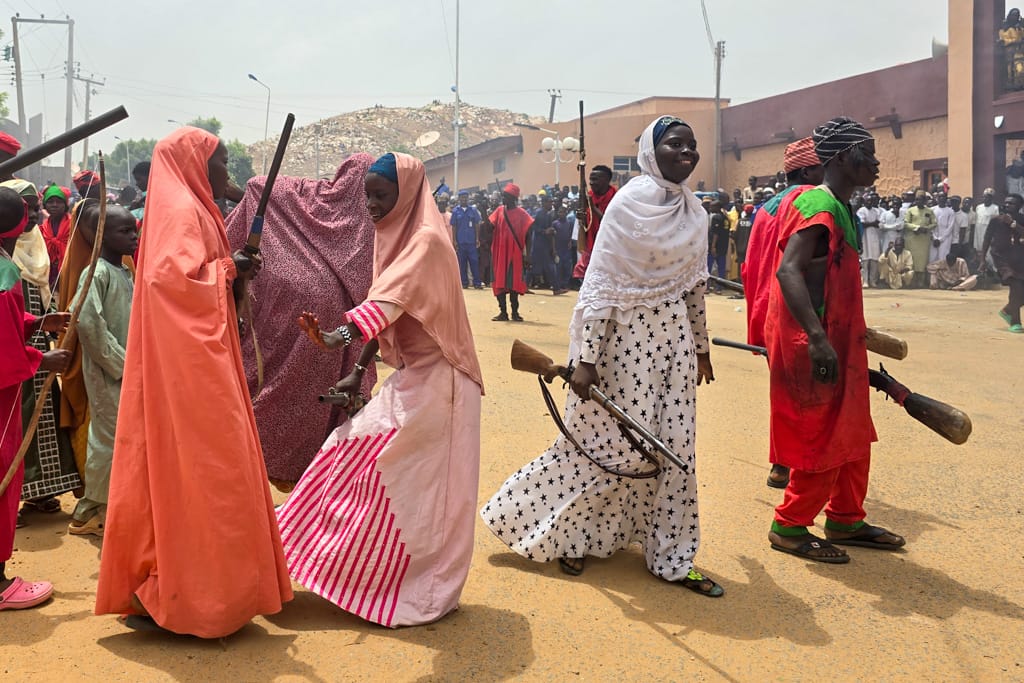
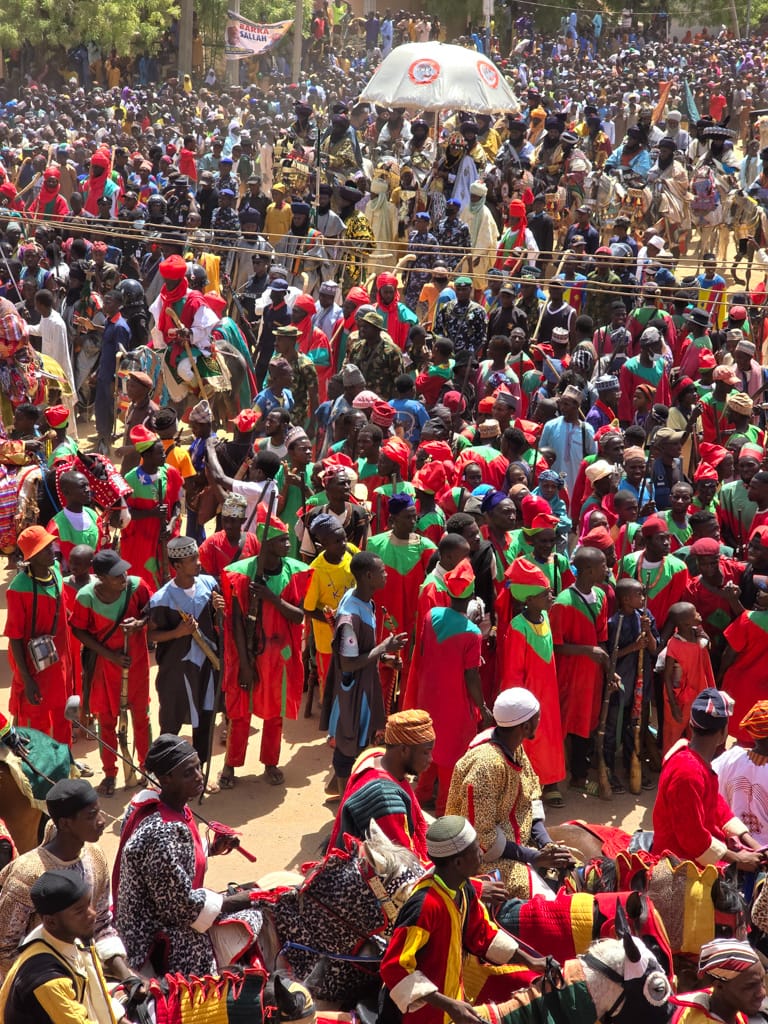
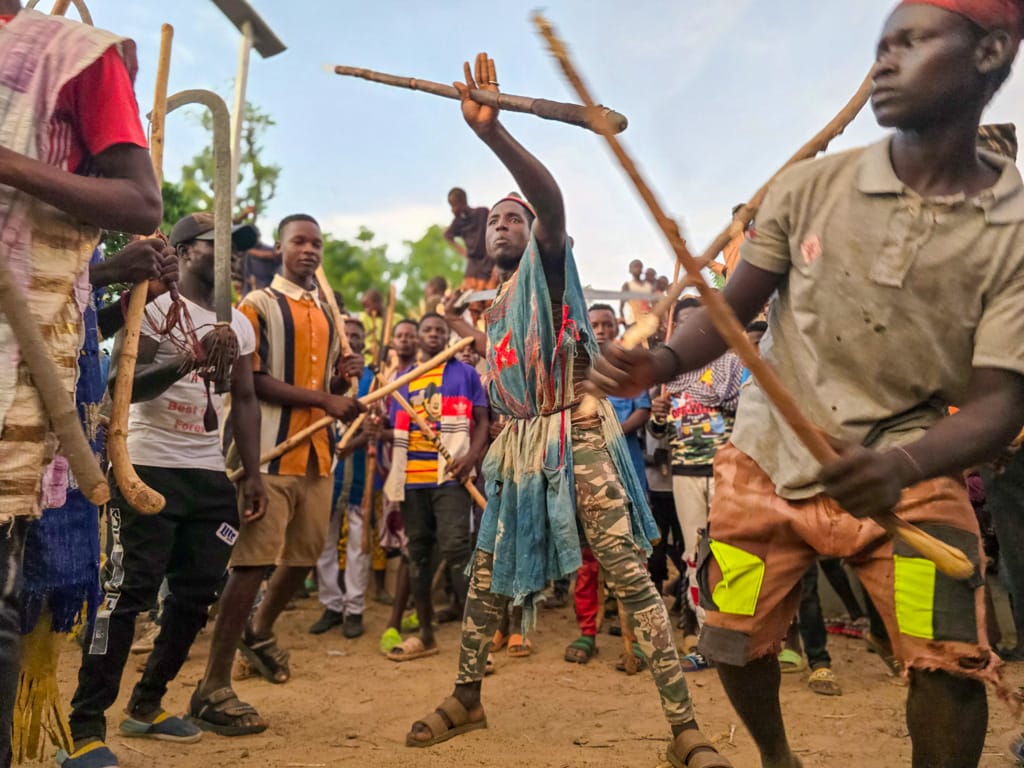
We will not miss the day of “Sallait”, a great communal prayer in which thousands and thousands of people gather and which continues with large parades. While in Kano about a million people gather in other localities have a more intimate character.

Another must-see day during the Kano Durbar is Hawain Dutse. An impressive parade that ends at dusk. The end of each Durbar parade ends with spectacular horse races.

Animism and pre-Islamic rituals in northern Nigeria
As if that were not enough, after a great deal of research and documentation on our previous trips, we will attend various traditional animist ceremonies. One of these ceremonies is that of a small isolated ethnic group that still preserves its initiation rituals and festivals and its sacred masks.

Durbar Festivals on our trip to Nigeria
The Durbar Festival is possibly the most important traditional festival in the north of the country and is held twice a year, on the occasion of Eid-el-Fitr (end of Ramadan) and Eid-el-Kebir (Feast of the Lamb). Also known as Sallah or Hawan Daushe, it is celebrated in several cities, including Katsina, Sokoto, Zazzau, Bauchi, Bida and Ilorin.

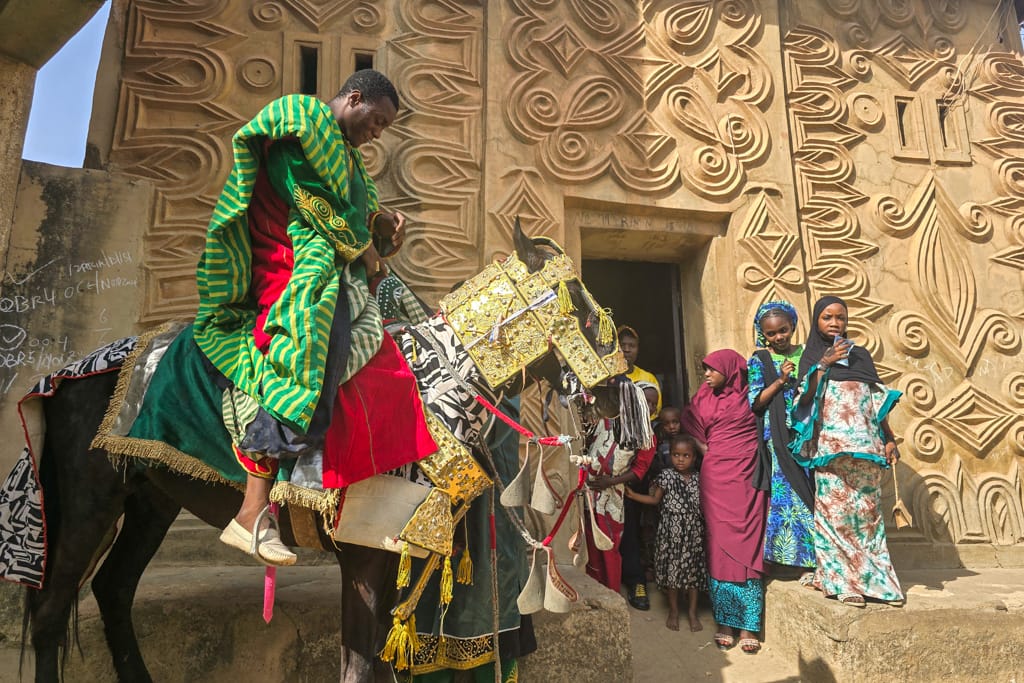
This great cultural, political, religious and equestrian celebration offers all the tribes of the region the opportunity to come and pledge allegiance to the Emir, in a riot of “pomp” and sumptuous costumes.

Kano, the great parades of the Sallah Festival
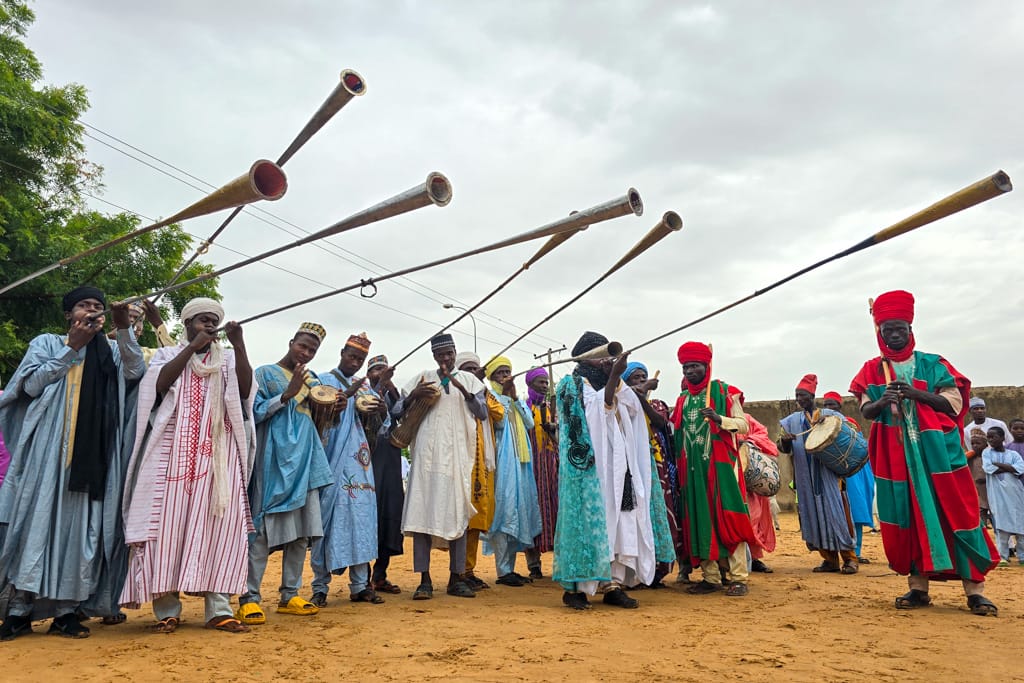
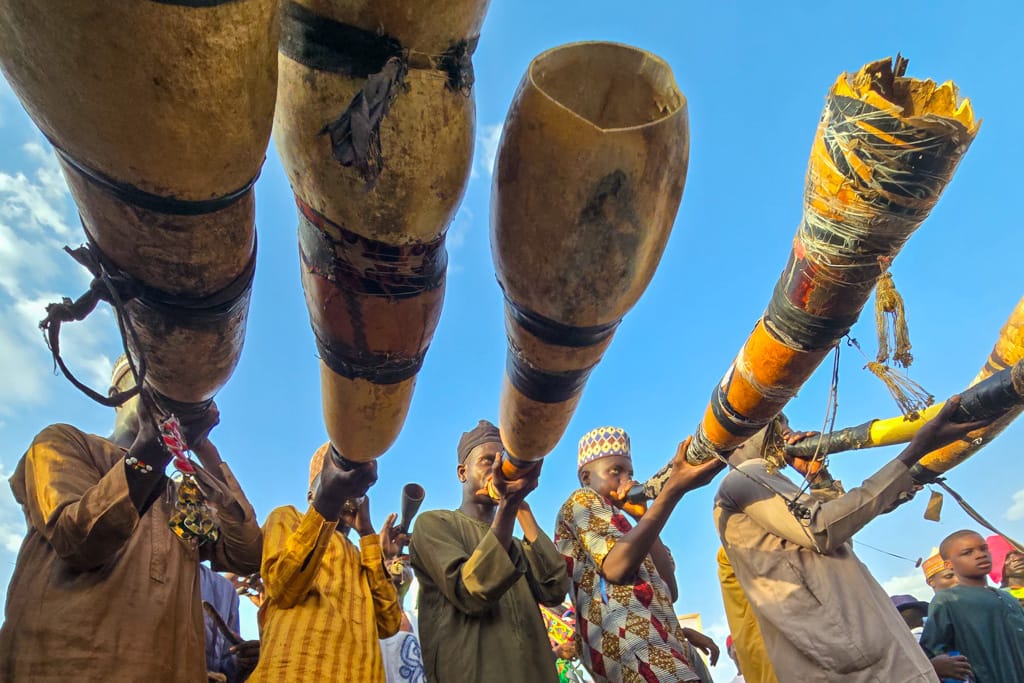
Kano, the oldest city in West Africa, is famous for having the largest Durbar country, it is said that during the festival the largest parade of decorated horses in the world takes place. On this trip to Nigeria we will see hundreds of thousands of people marching on horseback, riders dressed in beautiful cloths and spears under the throbbing sound of the famous traditional trumpets.

Some visitors display their “magic powers”, others play with knives or powder rifles in deafening explosions. A colourful spectacle that will transport you back in time for several days.
If you want to know more about the Kano Durbar, don’t miss our extensive article by clicking here.

Journey to the Hausa culture
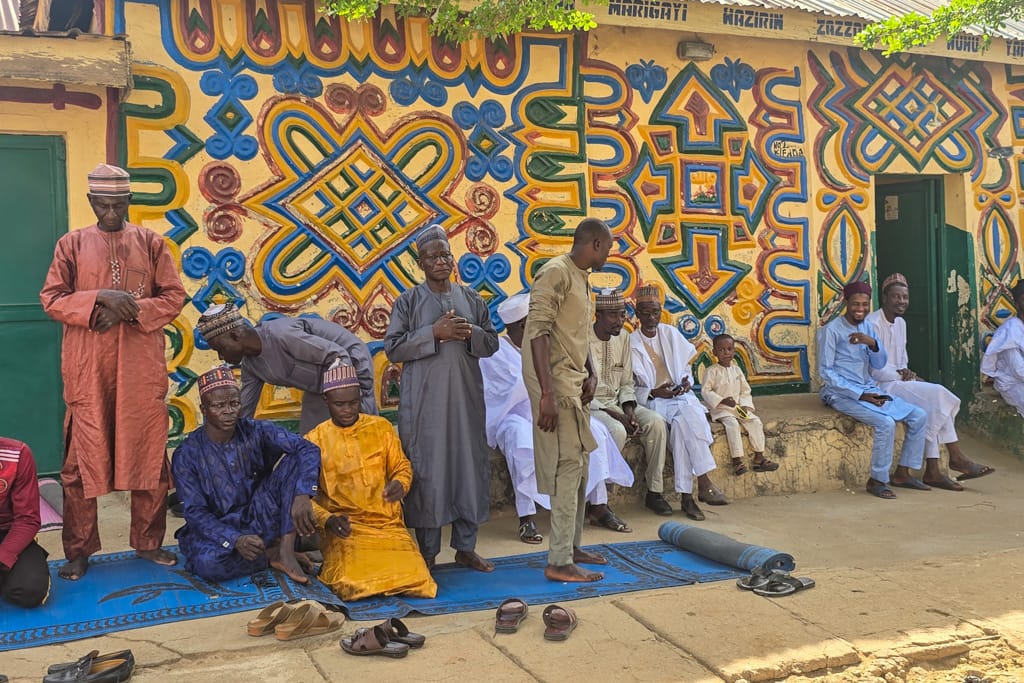
The Hausa culture of northern Nigeria keeps many of its ancient traditions alive. Even in a heavily Islamised region it is possible to find impressive animist ceremonies and rituals related to fire, magic, spiritual possession, transgender people or bodily resistance. We will visit many of these fascinating ceremonies during our trip to Nigeria.
Bori Hausa, possession ceremony
You may be wondering, what is Bori? The Bori religion: gods and traditional medicine.
The Bori religion – ‘the spiritual force that resides in physical things’ – is the belief system of the Hausa maguzawa (maguzawa is the name given to animists).
In the Bori ceremonies of trance and possession, the participants (mediums or Yan Daudu) are possessed by the spirits and communicate with them in order to bring about the healing of sick people. It is thus a ceremony in which the spirits exercise their power, although they are controlled by the mediums during the process of possession. These spirits are mostly female.

Among the mediums we are struck by the men dressed and made up as women, especially in a region where Islamic law is established. They could be representing Yan Daudu or ‘sons of Daudu’, one of the more extravagant gods of the Bori pantheon. They are usually men with a feminine appearance who sometimes engage in sex work, although they do not necessarily identify themselves as homosexuals.

Secret encounters with the transgender community in northern Nigeria. Being a member of the Bori allows you to be registered as a “traditional Bori doctor” and this, in turn, allows you to express yourself bodily and aesthetically openly, being able to wear make-up and dress as a woman during Bori rituals.
Wasan Maquera and Wasan Kari, Hausa ceremonies
During our trip to northern Nigeria we will witness a number of rituals and ceremonies in different places. The Maqera (blacksmiths) are very important figures in the caste groups of the Hausa people, as are the Wanzamai (barbers) and the Mahauta (butchers).

Each of these clans has ceremonial traditions that they perform annually or on important occasions. Most of their traditional activities have been eliminated by Islamic teachings, although some are still practised during certain ceremonial activities.

The Nigerian hyena men
Traditionally in the Hausa culture we find families of street performers and peddlers of traditional medicine who use these animals as amulets and as the center of a show, a mixture of street, ritual, wild and also very cruel, a practice passed down through many generations of hyena men. It should be remembered that in most Durbars hyena men are not invited.
From Kumakonda we have no problem attending or seeing hyena men if they are casually present on the streets but we will not pay for photo shoots or private encounters.

Hausa culture, other visits besides attending the Durbar
The city of Kano is an important economic centre for northern Nigeria and was a crucial part of trans-Saharan trade in pre-colonial times.
In addition to attending the preparations and the Durbar festival in Kano on this trip to Nigeria, we will have the opportunity to visit other highlights of the city, such as its market, its dye wells and we will try to attend some traditional Hausa Dambe boxing.
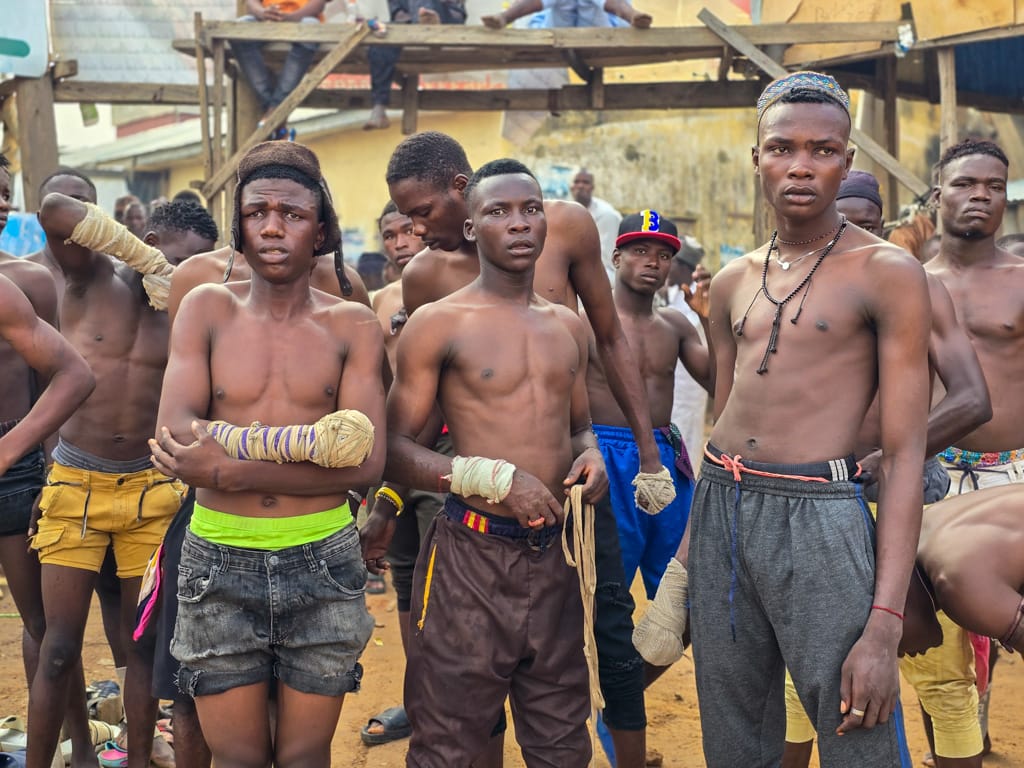
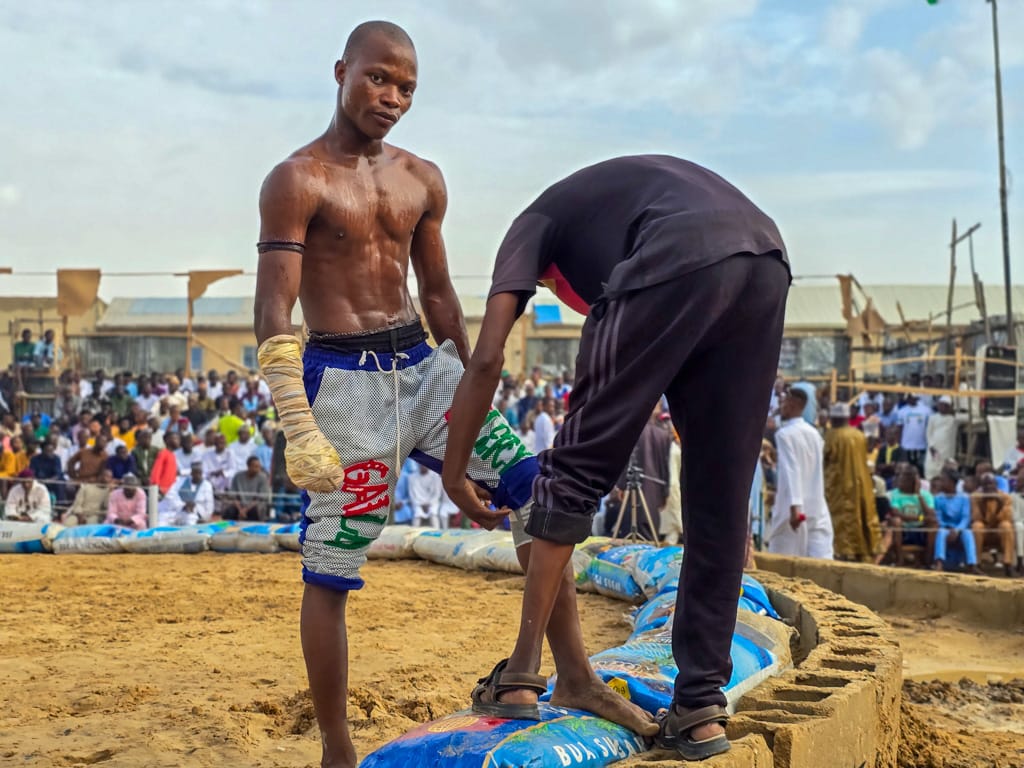
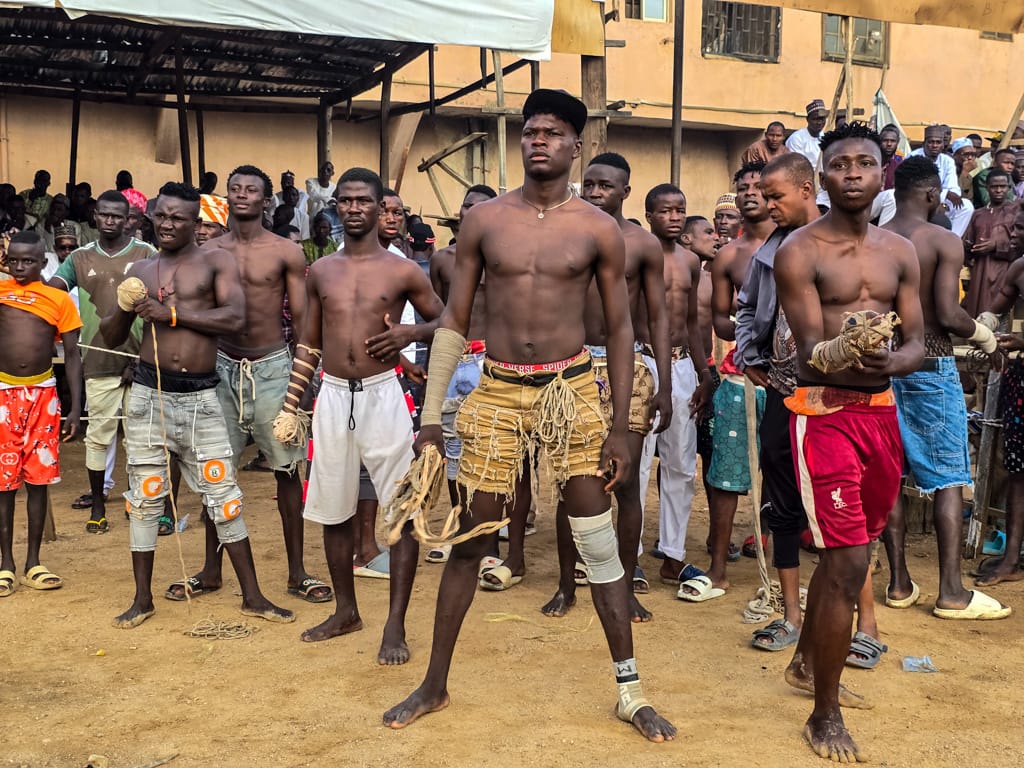
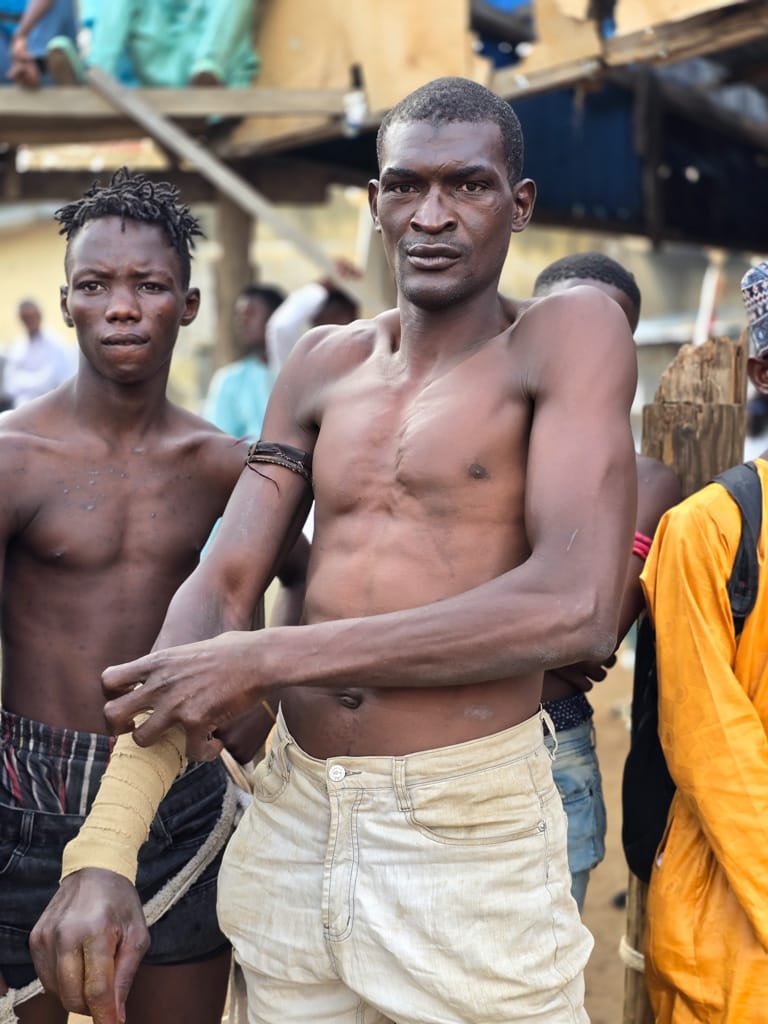
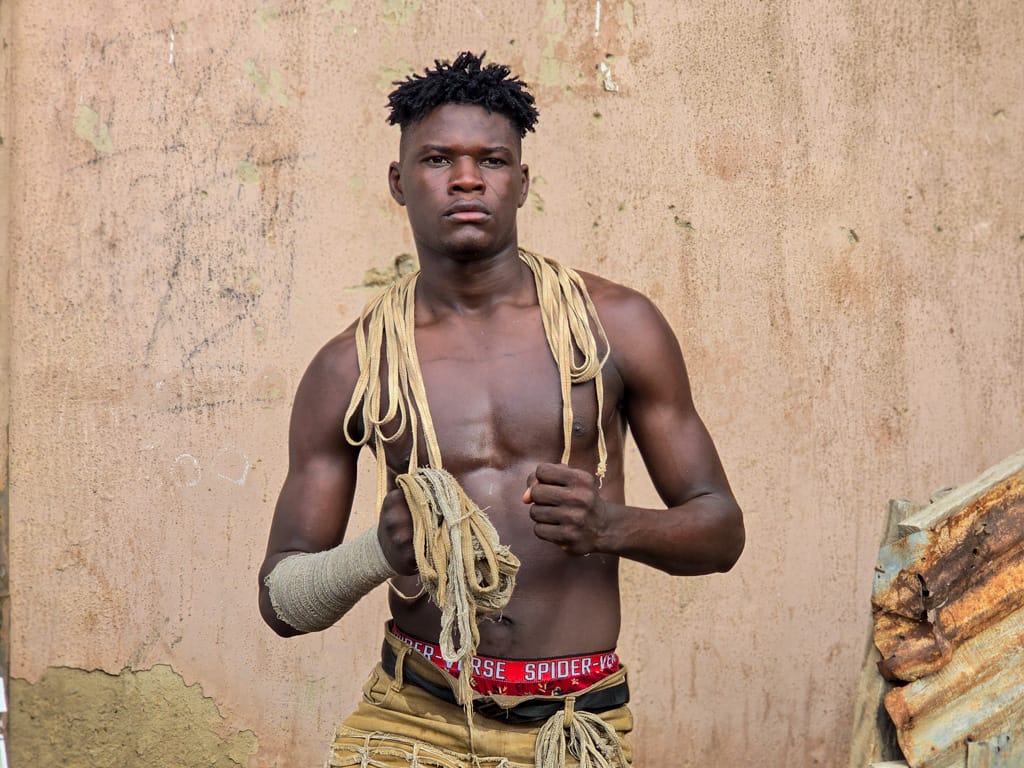
Dambe, the Hausa boxing of butchers
Three centuries old, Dambe is a traditional form of boxing associated with the Hausa people who mainly inhabit northern Nigeria. Although there are many young men from the cities who, seeking prestige, money or just for fun, immerse themselves in the world of Dambe, even today, most Dambe boxing fighters still belong to the caste groups of the Hausa butchers. Visit our post to learn more about Dambe boxing.
Dyeing pits for textile manufacturing
The historic town of Kano has for more than six centuries been home to dyeing pits, where beautiful fabrics are produced using ancient techniques. The materials, dyed a distinctive deep blue colour, have long been sold in Africa and the Middle East. In ancient times the Tuaregs, men of the desert, came to Kano to trade dates and camels for the distinctive blue fabrics.