


Southern Libya and Leptis Magna, the Akakus Desert in November 2026
After our first trip to Libya in November 2025 in which we made a brief survey, we return with a new trip to Libya in which we will focus on the Fezzan region, to cover a large part of the great and varied desert as well as historical sites such as Ghat, an ancient caravan center.
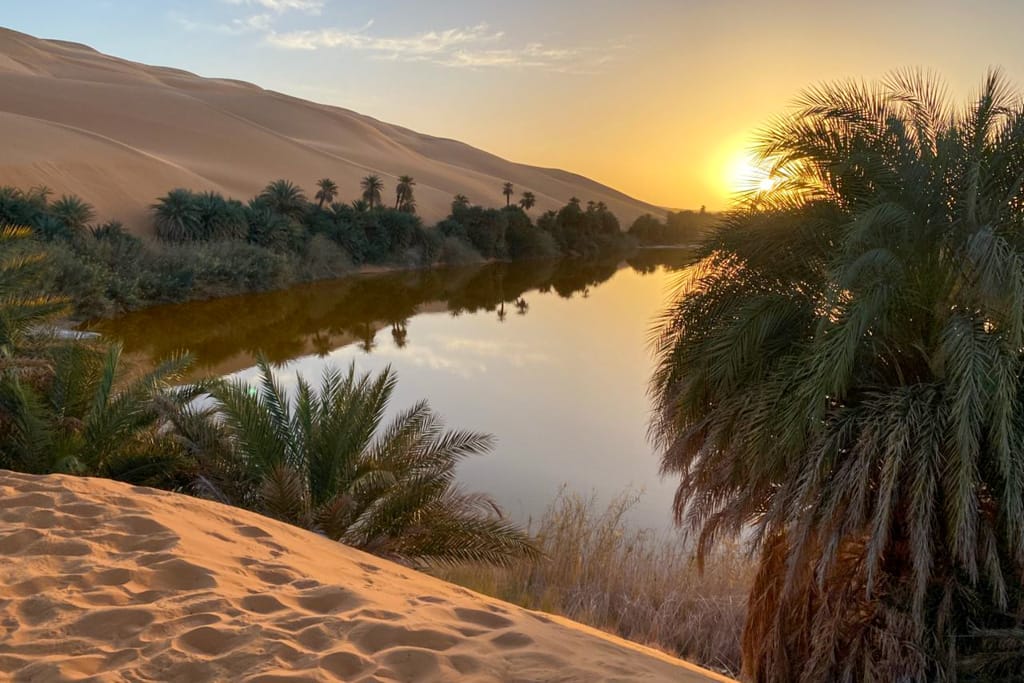
A road trip from Tripoli to the heart of the Sahara, where the rock formations rising from the sand dunes of the Akakus Massif will offer us unforgettable sights. In this corner of the Sahara, past civilizations have left their mark on the rock in the form of paintings and engravings. In this arid desert, we’ll visit the Ubari Lakes, a natural wonder.
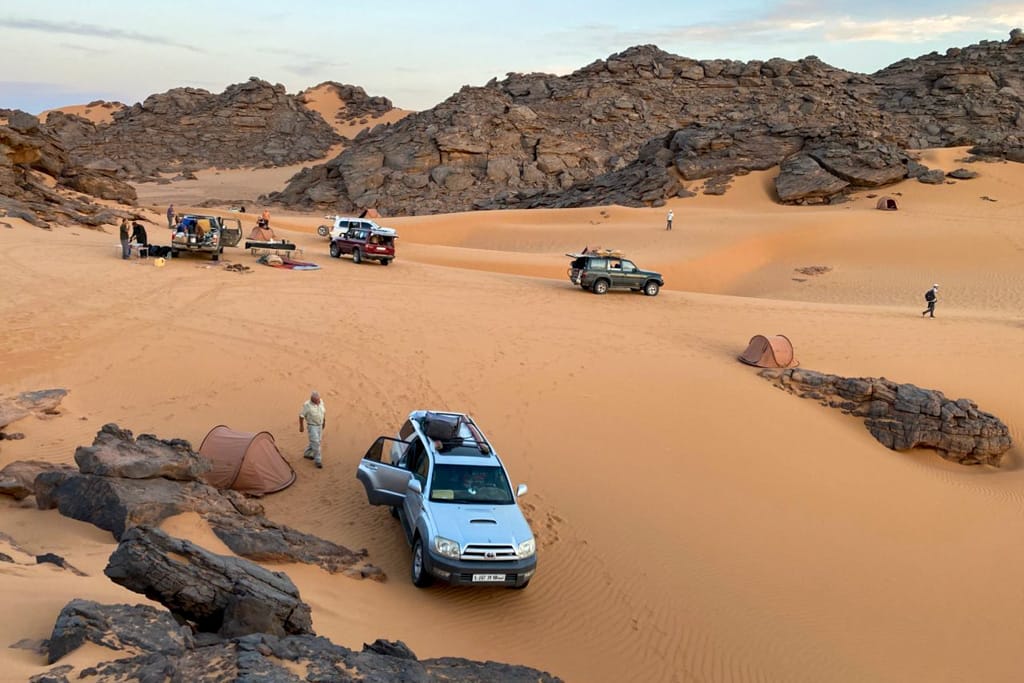
From Tripoli to the Akakus Mountains by road
Domestic flights in Libya and many other countries on the African continent are not reliable. We experienced this in 2025 when for four days in a row our flights from Tripoli to Sabha were cancelled day after day.
This time, we’ve planned a route to travel overland to the Tadrart Akakus from Tripoli. This way, we can ensure the trip will go ahead, and we may have the chance to see more sights along the way, which is always interesting.
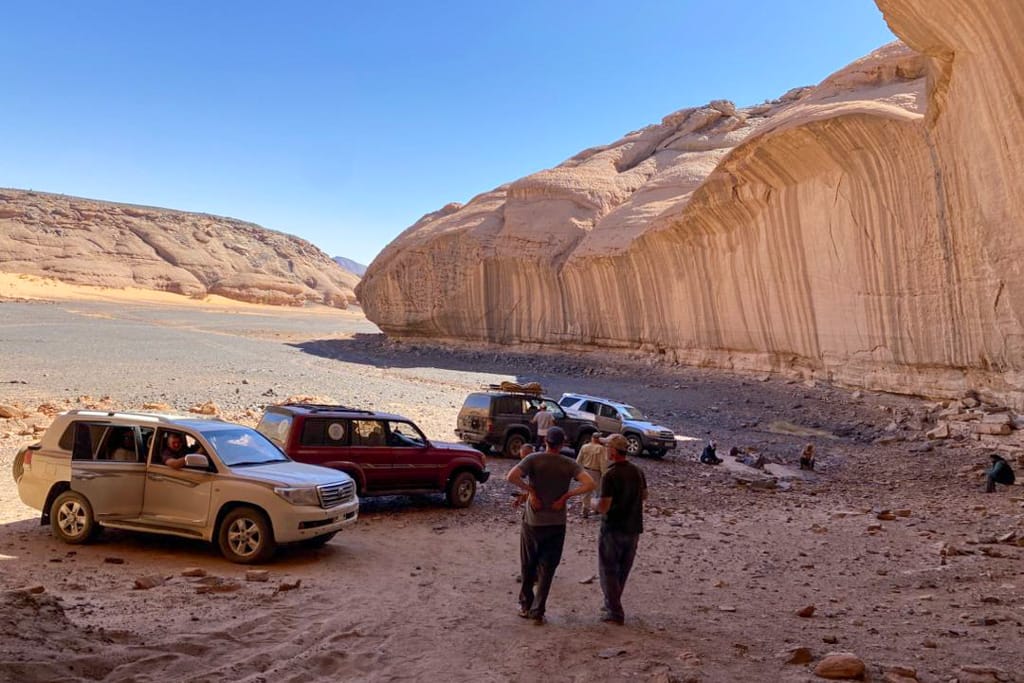
11-day trip to Libya / Tadrart Akakus desert summary
- Arrival in Tripoli (hotel)
- Route to the Zillaf Desert (campground)
- Ubari Lakes – Desert Moon Resort
- Garaments’ Pyramids—Mighedet (campground)
- Ghat Old Town & Fort—Avzger Giant Arch (camping)
- Teshwent Valley, rock art site (campground)
- Awes Prehistoric Engravings – Adad (Thumb Rock Formation) – Ubari (Camping)
- Ubari–Germa (Garaments Old Town)–Sebha City (hotel)
- We traveled back to Tripoli via Alshwerif and Gherian (hotel)
- From Gherian to Leptis Magna and on to Tripoli (hotel)
- Departure from the international airport
Pyramids of al-Htiya – Maghidit.
We will explore the Pyramids of al-Hatiya, resplendent despite oblivion and neglect. They are the pyramids of Hattia, located about 1,123 kilometers south of Tripoli, and stand in the middle of the dunes as a witness to the Garamante civilization that settled in these areas about three thousand years ago.
They are the least famous pyramids in the region compared to the pyramids of Egypt, although these archaeological monuments are no less important. Their discovery dates back to the fifties of the last century, when they were found buried in the sand, and can be reached through many roads, including Ubari, the gateway to the Libyan desert.
The Garaman tombs reveal very diverse burial rituals, with over 200,000 burials in the Valley of Life alone, and many of the shrines included Roman and Greek pyramidal tomb art, suggesting that the Garaman were in contact with other peoples to the east and southeast. Two mummified bodies dating back 2,000 years were also found.
Wadi Meghidit, where sandy valleys weaving between isolated skyscrapers of Mighidit rock are named “the city of ghosts”. Let’s climb to the haunted desert rock citadel at Kaf Ajnoun on the way to Ghat.
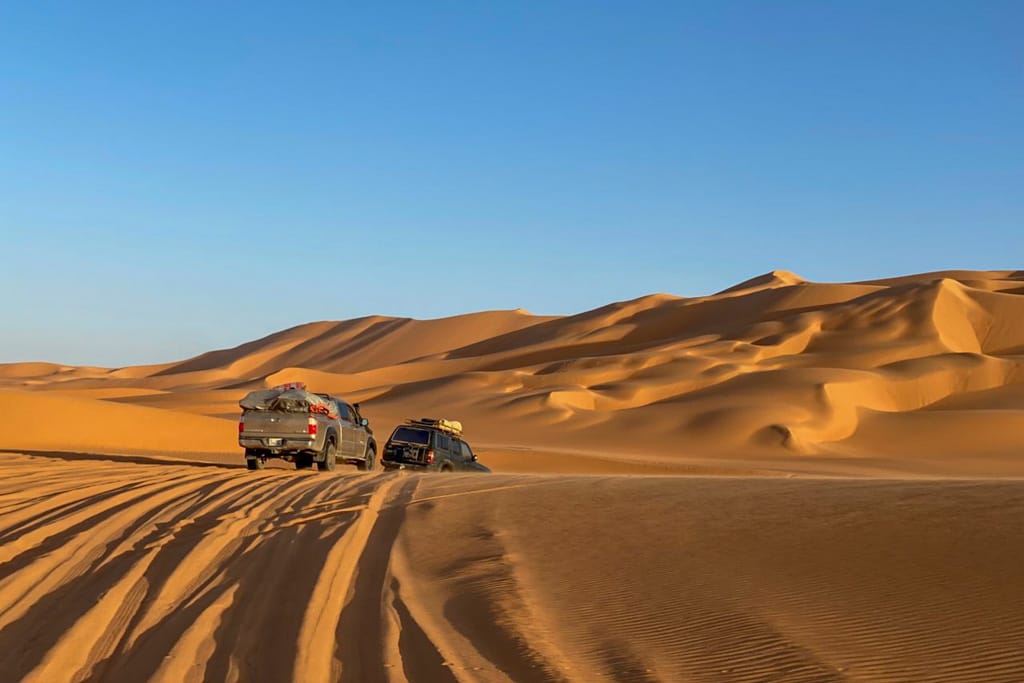
Ghat, caravan city
Visit to Ghat – Afzgar Arch – Tashwinat: We will explore the old town of Ghat, characterized by its traditional mud-brick houses and ancient forts. The city’s unique architecture blends African and Islamic influences, and is a perfect place to marvel at the city’s history and culture.
To the west, the imposing natural rock arches and breathtaking panoramic views of the Jebel AKaKus await us. We will visit the impressive Afzgar Arch, one of the most spectacular landmarks in the entire Jebel Akakus. The sheer rock faces, especially those of Wadi Tashwinat, are the history books of the Sahara. There are also rock paintings here. Overnight in tents in Wadi Tashwinat.
The Ubari Lakes, Wan Kaza and Germa Dunes
We leave the Akakus for a spectacular drive through the desert to Wadi Matkhendoush. Wadi Matkhendoush contains some of the oldest rock paintings in the world. Embedded in the rocky cliff face, the dry riverbed is a veritable prehistoric menagerie that includes life-size elephants, giraffes and crocodiles. We continue to Germa, where we will camp.
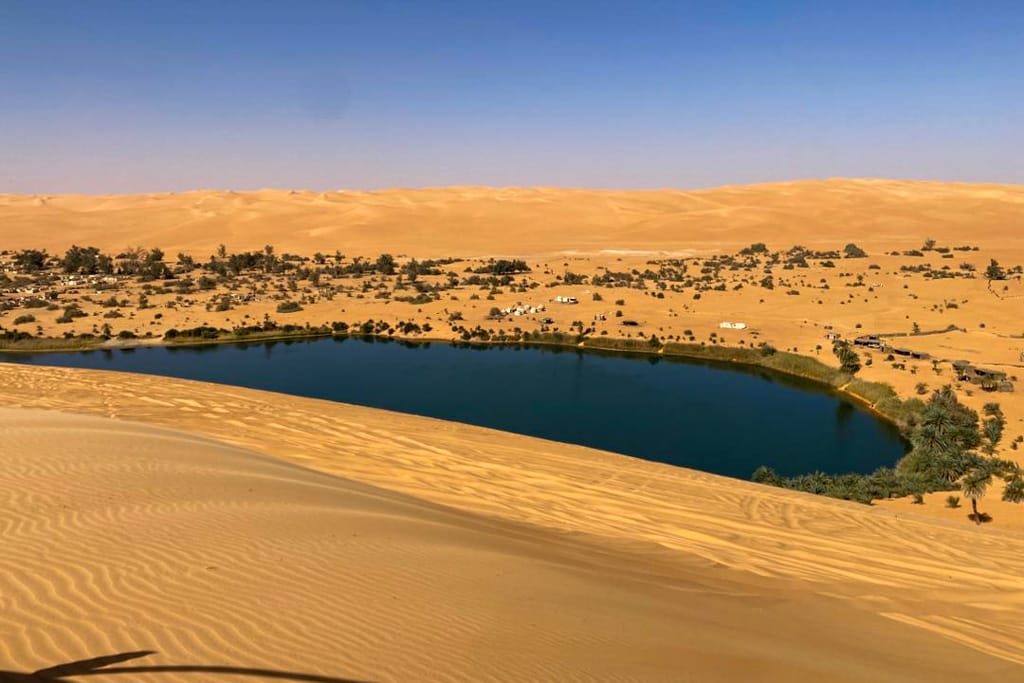
In the morning we will explore an archaeological site known in ancient times as Garama. Continue to Ubari Lakes for an overnight stay at Desert Moon Resort. We will explore the enchanting Ubari Lakes, known for their breathtaking beauty and pristine desert landscapes. Among the most picturesque lakes are Gaberoun and Umm al-Maa (Mother of Water).
Ruins of Leptis Magna
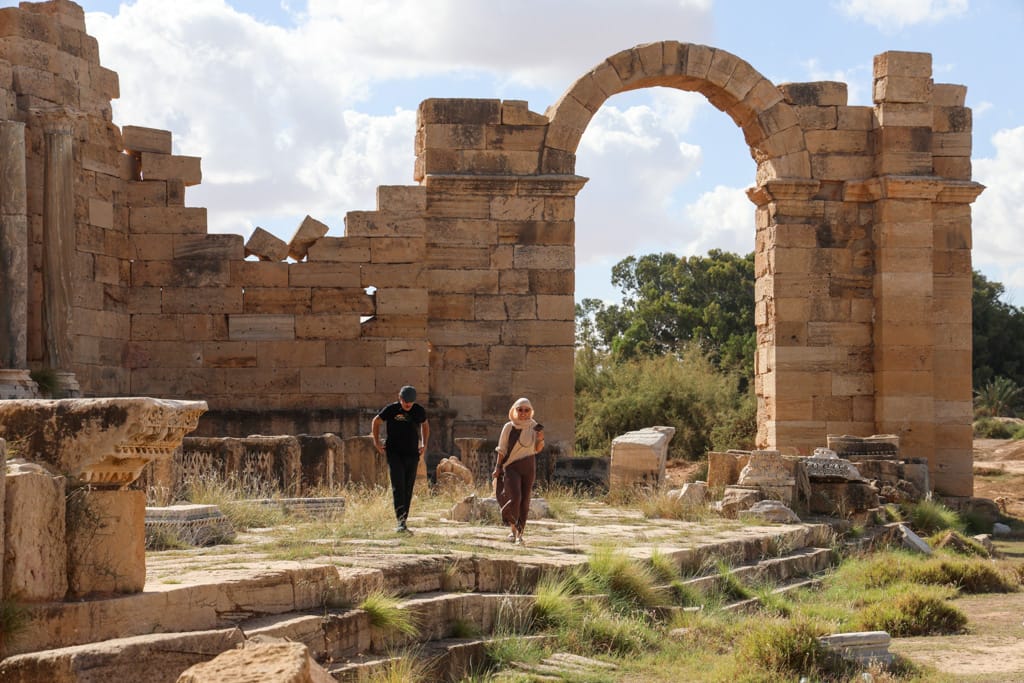
The ruins of Leptis Magna, located in present-day Libya, are an impressive archaeological site that represents one of the most important remnants of Roman civilization in North Africa. Founded in the 3rd century B.C., Leptis Magna became a thriving commercial and cultural center over time.
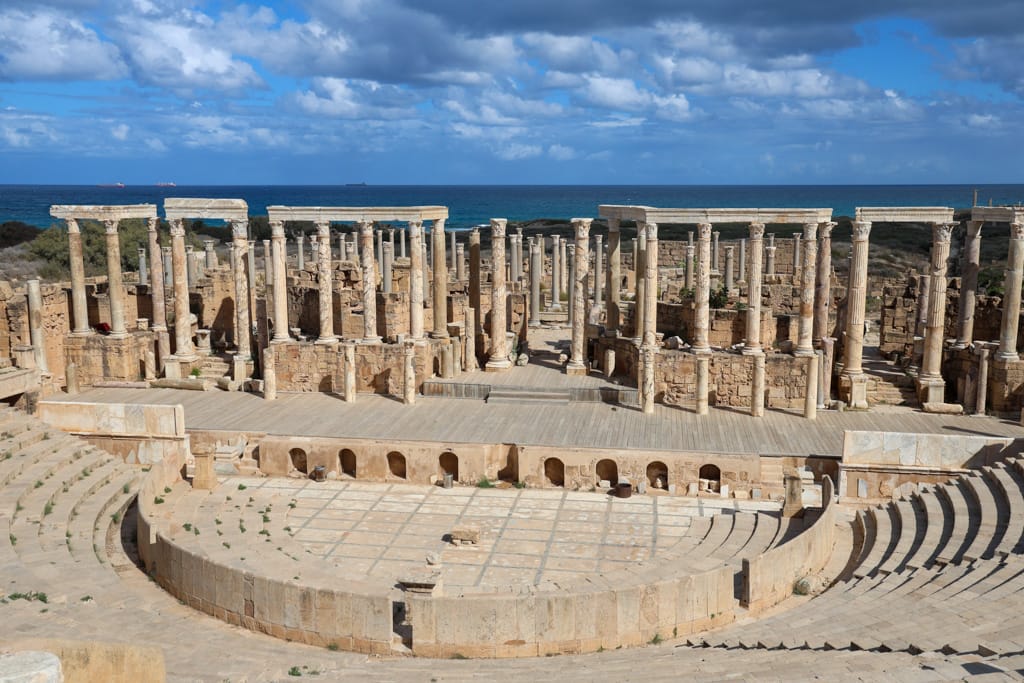
Among the most outstanding structures in the ruins are the Theater, which could hold thousands of spectators, as well as temples, forums and exceptional mosaics that reflect the wealth and artistry of the period. The Temple of Jupiter, the Arch of Septimius Severus and the remains of a basilica are also significant points of interest.
Tripoli, the capital
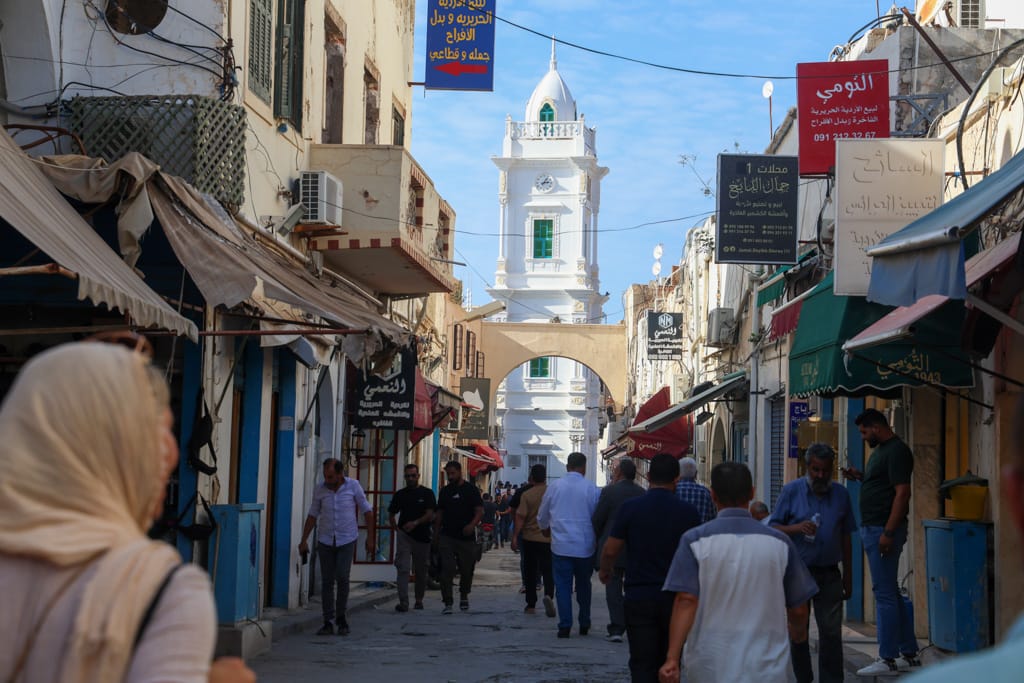
Tripoli, the capital of Libya, combines ancient history with a rich contemporary culture. Located on the shores of the Mediterranean Sea, Tripoli is famous for its historic architecture, bustling markets, and the welcoming atmosphere of its cafes and restaurants

One of the city’s main attractions is the Old City, or Medina, where visitors can lose themselves among narrow cobblestone streets flanked by historic buildings and colorful souks. Here you can find local produce, handicrafts and spices. Don’t miss the impressive Martyrs’ Square, a landmark symbolizing the Libyan people’s struggle for freedom.
- All the listed sightseeing stops and all the transfers needed to complete the itinerary.
- Local guides and the Kumakonda coordinator (Austerio Alonso).
- Authorizations for visas on arrival and assistance.
- Transfers to and from the airport.
- Police escorts.
- Accommodations in double rooms for two people at the hotels, regardless of gender. Optional: single supplement (see the “NOT INCLUDED” section).
- Single-person tents and camping gear.
- Full board for most of the trip, except in Tripoli.
- Mineral water during the tour.
- International flights, nor reservation processing.
- Travel and Cancellation Insurance.
- Visa.
- Individual supplement for hotel stays (camping is in single tents): 300 € per person.
- Optional tips for local guides, cooks, etc.
Travel with us
€ 2,850
/PERSON
- departure confirmed
- registration open
Trip details
Countries visited
- Libya