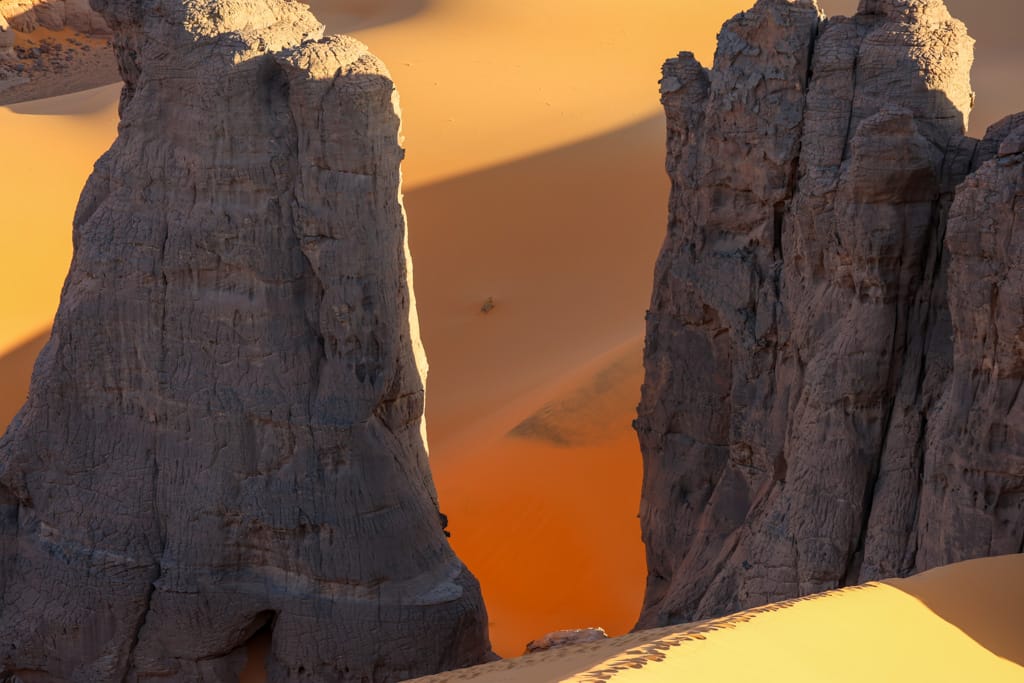
Tassili n’Ajjer, jewel of the Sahara desert in southern Algeria
This past October 2025 we took a trip in Kumakonda to the Algerian jewels of the Tassili n’Ajjer (plateau, Tadrart Rouge and northwest region), traveling through some of the most impressive and culturally rich landscapes of the Sahara. Their combination of rock art, geological formations and unique ecosystems make them must-see destinations and easily accessible for travelers seeking to explore the mysteries of the desert. Tassili N’Ajjer, a UNESCO World Heritage Site, not only bears witness to humanity’s remote past, but also remains a place on the map where nature and history intertwine in a fascinating and profound way.
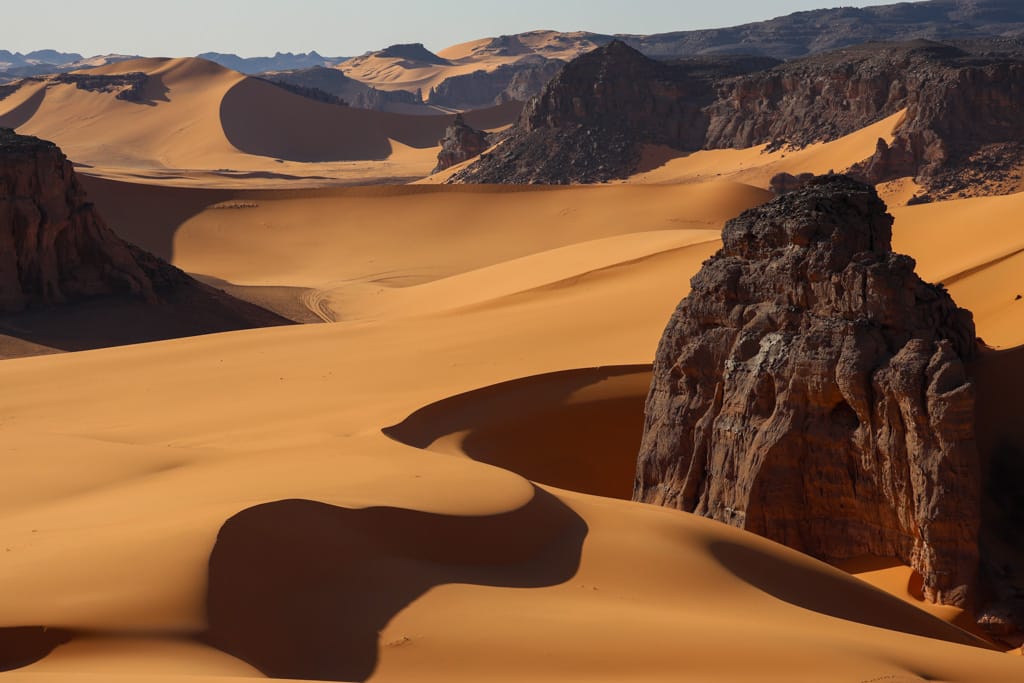
Tassili n’Ajjer: A Refuge of Rock Art and Fascinating Geology
The Tassili n’Ajjer is a vast plateau located in southeastern Algeria, known for its impressive geological formations and ancient rock art sites. This region, covering an area of approximately 72,000 km², is marked by gigantic rock formations, deep valleys, canyons and plateaus, all framed by the aridity of the desert.

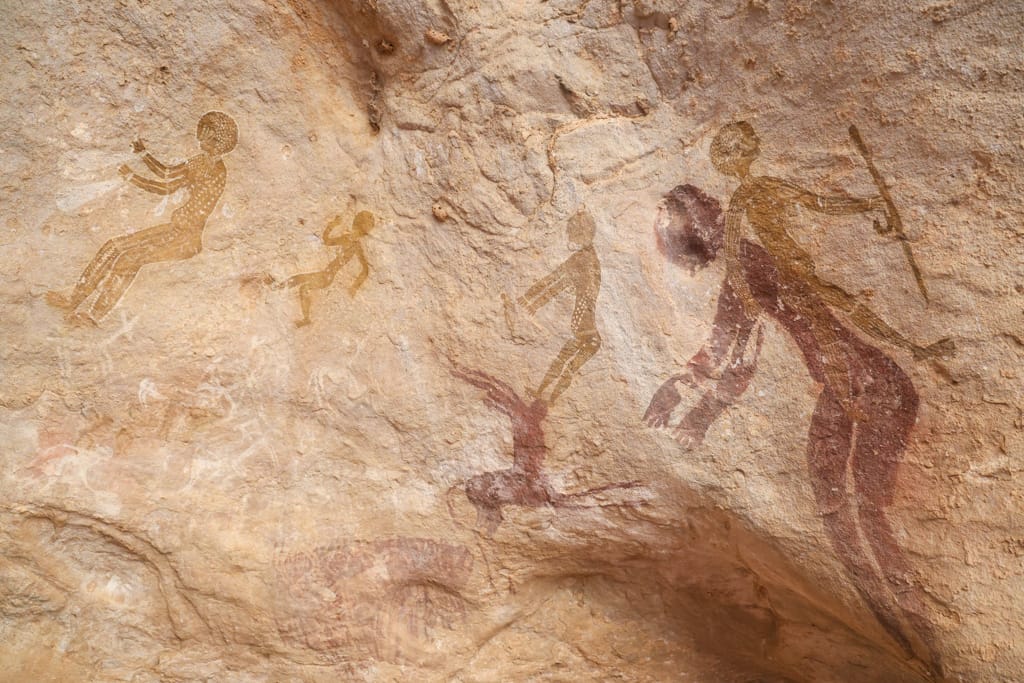
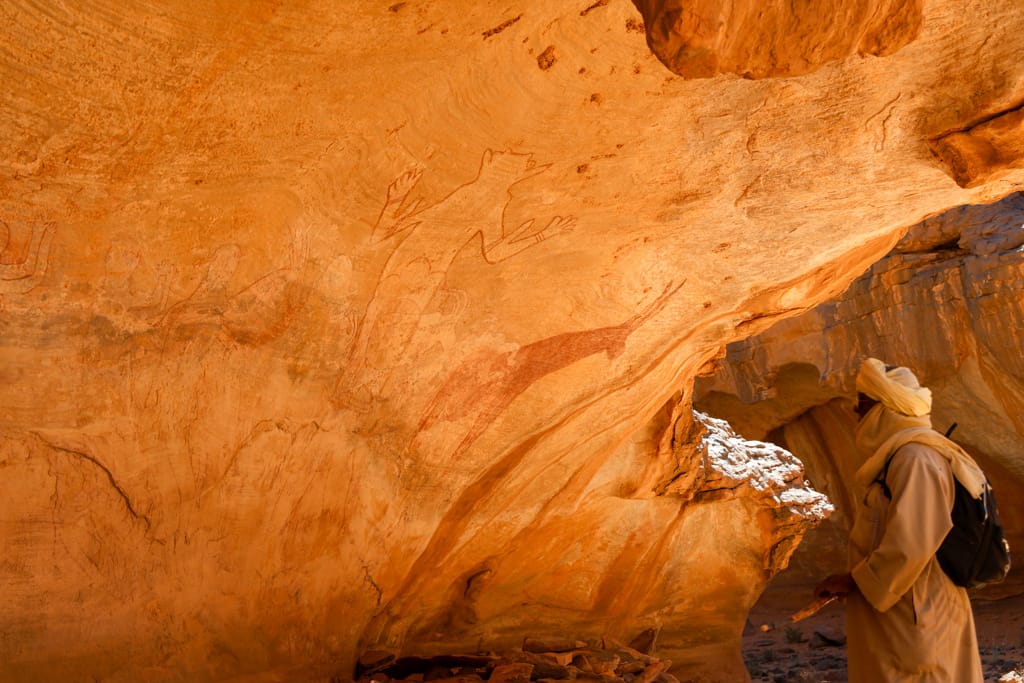
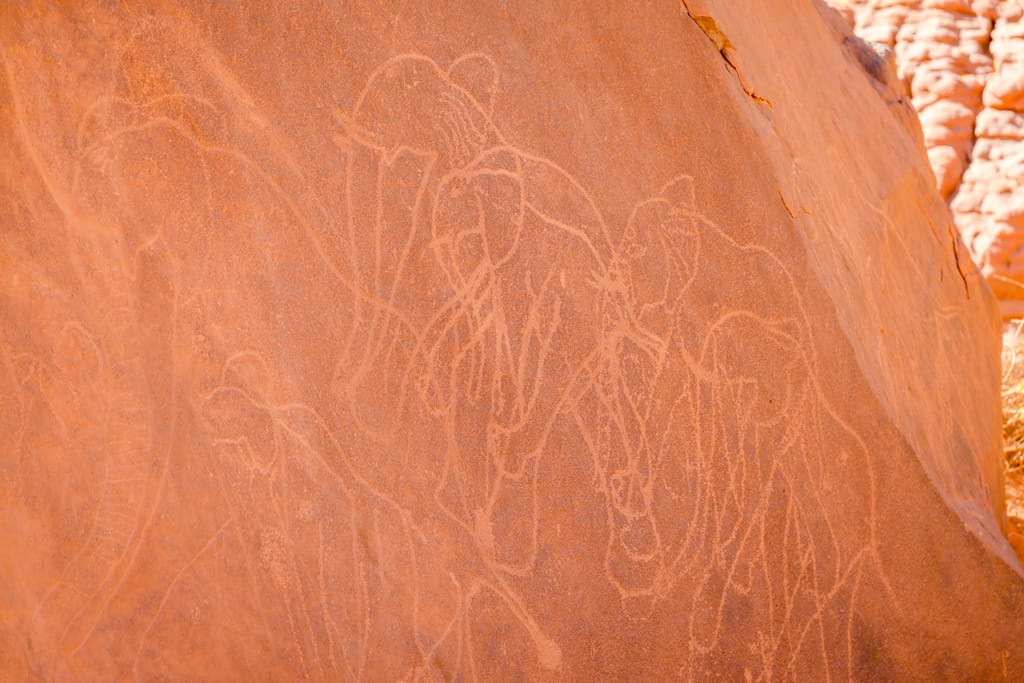
One of the highlights of Tassili n’Ajjer is its impressive rock art. The walls of its caves and rocks are covered with thousands of paintings and engravings dating back more than 10,000 years. These depictions show a wide range of scenes, from human and animal figures to complex symbolic representations. These artifacts offer a unique insight into the prehistoric cultures that inhabited the region, their religious beliefs, customs and their relationship with the natural environment.
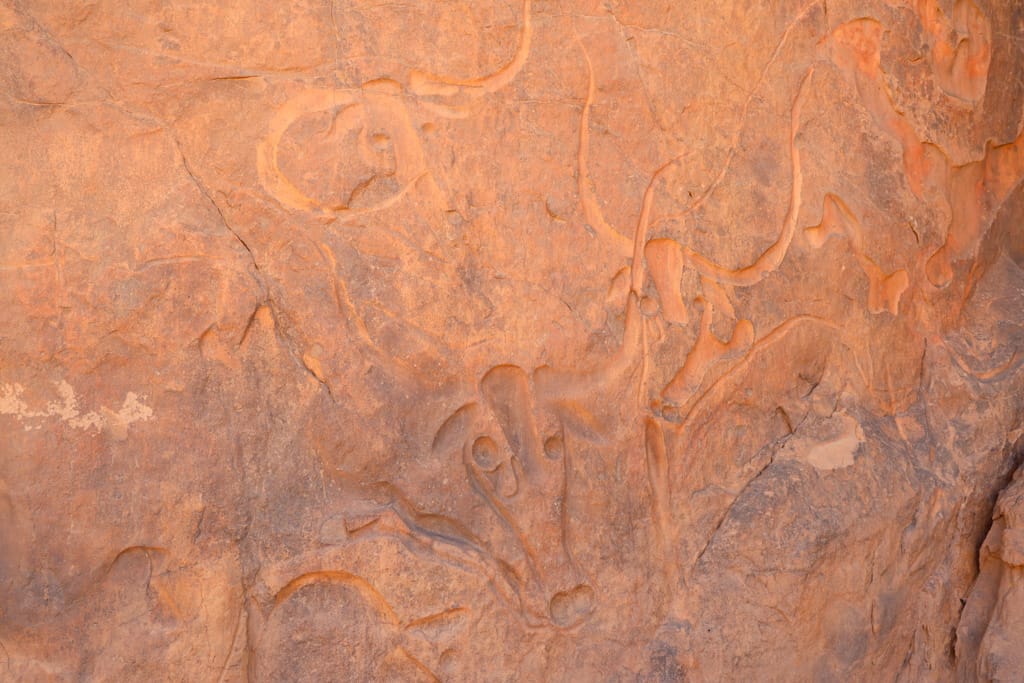
The paintings depict, among other things, humans hunting, dancing, and worshipping mythical figures, which attests to the cultural diversity and complexity of the societies that inhabited the area. The animals depicted include species now extinct, such as the wild ox and the desert crocodile, suggesting that the region’s climate was much more humid in ancient times.
Three distinct geographic and tourist zones of Tassili N’Ajjer
Djanet, gateway to the Tassili N’Ajjer is the geographical center of the three remarkable areas to visit in this part of Algeria. These three regions are the Plateau de Tassili n’Ajjer, the Tadrart Rouge and the Iherir valley northwest of Djanet. The Plateau de Tassili n’Ajjer is a large plateau famous for its rock art and unique sandstone formations. The Tadrart Rouge is a mountain range with red and orange dunes, and northwest Djanet is a combination of valleys, canyons, oases and dune chains.
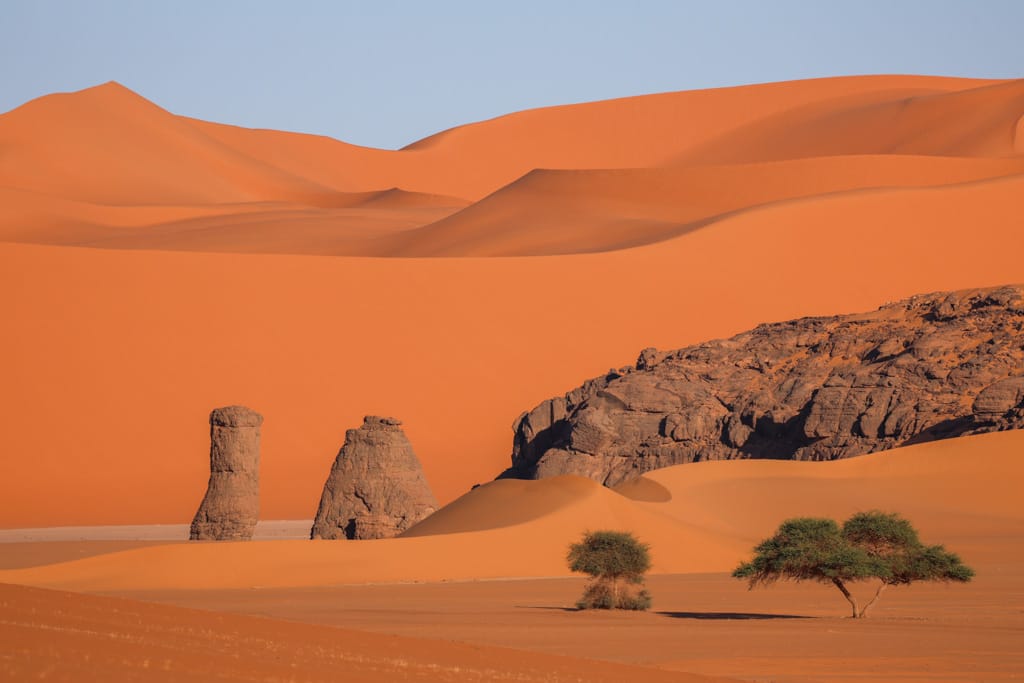
The Plateau of Tassili n’Ajjer
Only accessible on foot, the Plateau de Tassili n’Ajjer is a vast elevated plateau in southeastern Algeria, bordering Libya. Known for its unique combination of rock art, geological formations and natural beauty it houses the largest collection of engravings and rock paintings in the entire Sahara. It is considered the largest “open-air museum” in the world and its most outstanding site is the lost city of Sefar.
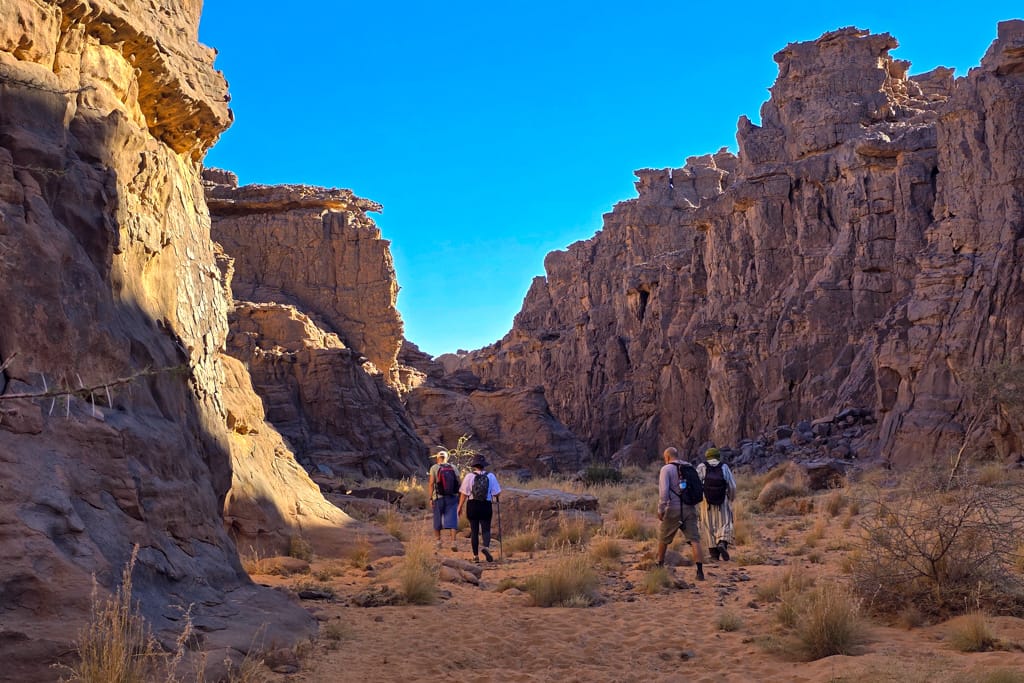
Visiting the Plateau du Tassili
To visit the Tassili plateau it is necessary to do it on foot in routes of 5 to 7 days (or more) logistically supported by donkeys, which carry the backpacks, tents, water and food.
Tadrart Rouge: A Natural Paradise of Surreal Colors and Landscapes
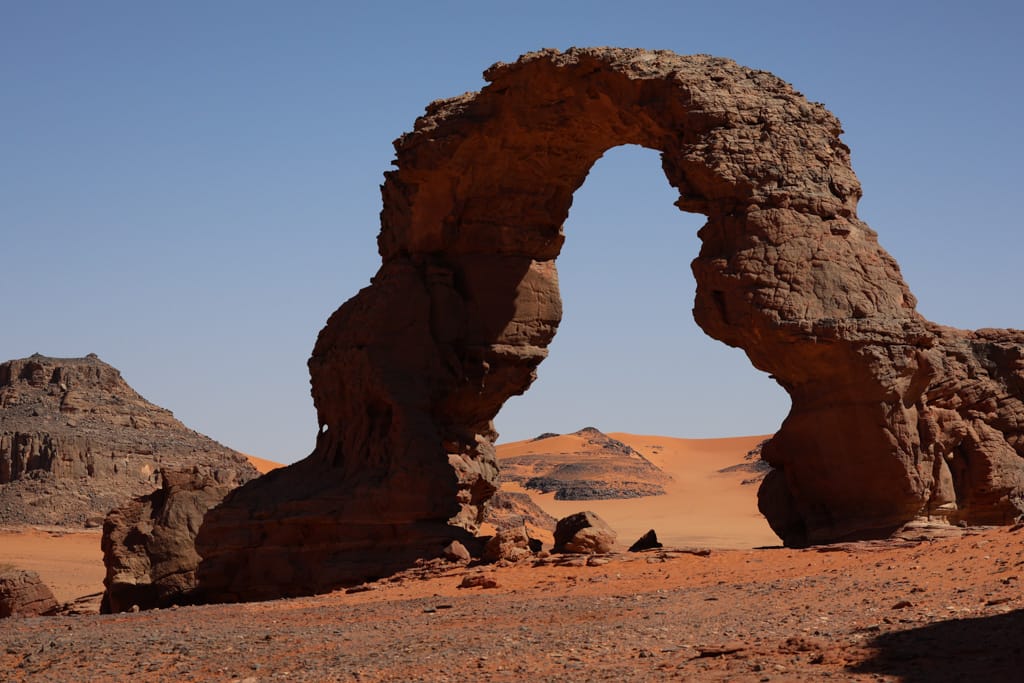
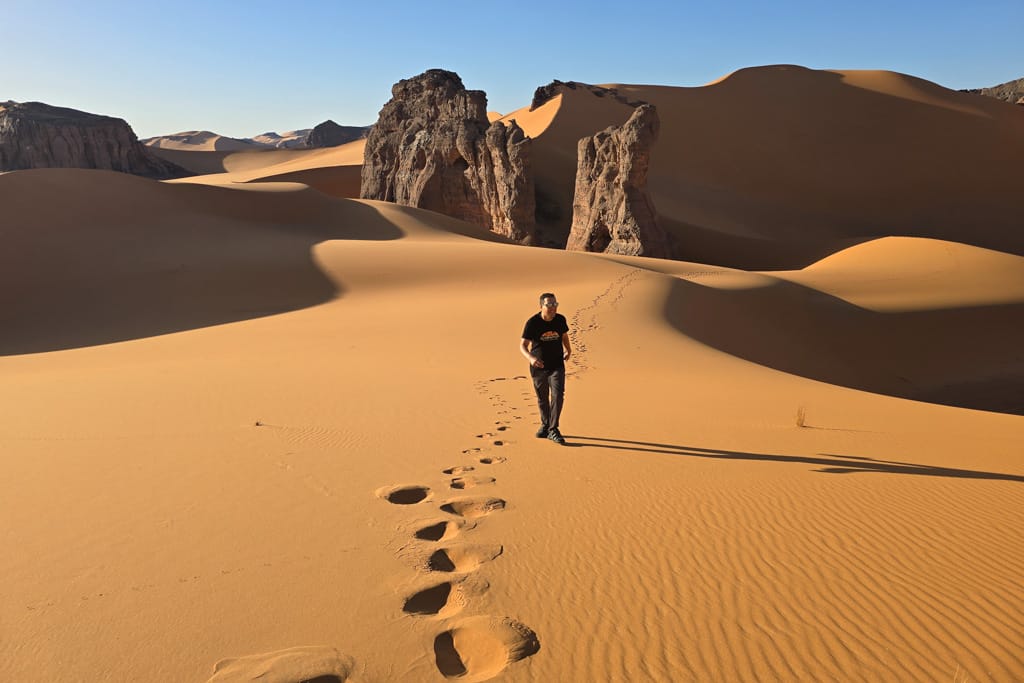
South of Tassili n’Ajjer, about 200 kilometers from Djanet, is the Tadrart Rouge. Tadrart Rougea region that owes its name to the impressive reddish rock formations that dominate the landscape. The Tadrart Rouge, which extends over some 30,000 km², is a vast and majestic desert of dunes, canyons and geological formations sculpted by wind and water over millennia.
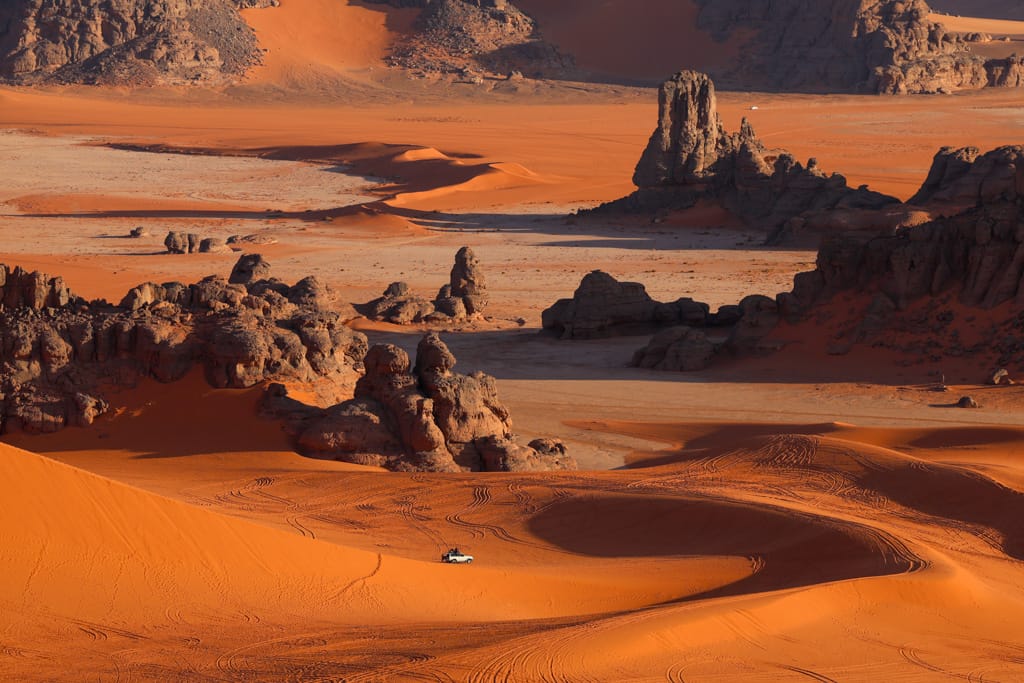
This region is known for its surreal landscape and its “natural sculpture” of the rocks, which present a variety of shapes and colors that seem to be taken from another world. The red sandstone rock found in the Tadrart Rouge creates a stunning contrast with the blue sky and golden desert dunes, creating an environment of unique and evocative beauty.
In addition to its natural beauty, the Tadrart Rouge is also home to vestiges of rock art similar to that of Tassili n’Ajjer. Numerous paintings and engravings have been discovered in the rocks, including representations of animals, human figures, and scenes from the daily life of the ancient cultures of the Sahara. As in the Tassili, these representations reflect the symbiotic relationship of humans with their environment, their spiritual beliefs and customs.
Oasis, canyons and sand seas in the northwest of Djanet
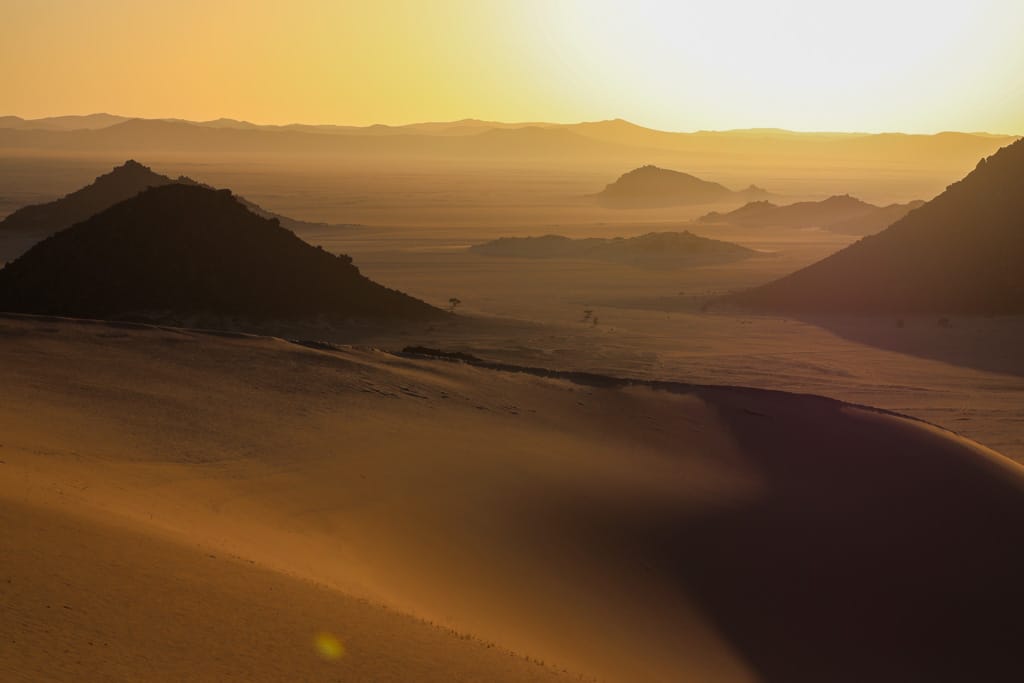
The third geographical area into which we divide the Tassili N’Ajjer for tourism is located northwest of Djanet. In our opinion the most interesting and varied. Also due to its enormous dimensions the least crowded a priori. This part of the Tassili is an interesting combination of oasis, gueltas, spectacular sandy areas, canyons and ouadis. Also here we find good examples of rock art in the form of paintings and engravings.
Mass and impact tourism in the Algerian desert
In Kumakonda you know that we like to reach the most remote places of the African continent, usually going off the beaten track and offering genuine and unique routes across the continent. This is not possible in the Tassili N’Ajjer, especially in the Tadrart Rouge.
The area of the “classic” routes of the Tadrart Rouge is not too large. We can speak of a triangle of 30 km x 30 km x 20 km. This area concentrates a good part of the major regional attractions and also a multitude of national and international visitors.
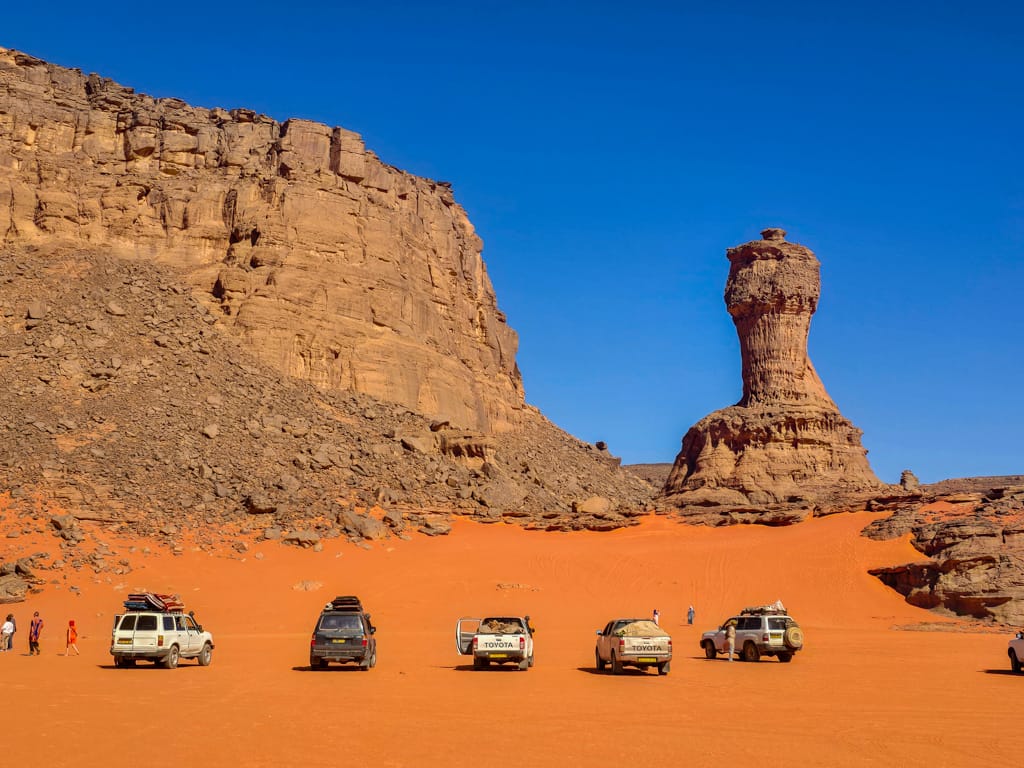
Impact tourism. Economic impact, jobs and a good number of local agencies offering their services. Impact on the environment with a rather insufficient if not non-existent garbage management as it happens in the Plateau del Tassili where there are spaces full of garbage. 4×4 vehicles climbing on top of huge dunes as a game in what is supposed to be a protected area.
Algeria is not alien or different from what happens in Spain, Europe and many other places. Tourism contributes and also destroys. It is also fertile ground for roguery at different levels.

Conclusion of our trip to southern Algeria
This corner of southeastern Algeria is home to some of the most beautiful Saharan landscapes and an incredible collection of rock art that deserves to be visited. All in all we really enjoyed Tassili N’Ajjer even if we didn’t like everything we saw.
Tassili n’Ajjer is an easily accessible destination and a good introduction before venturing into other wilder parts of the Sahara where tourism has not yet made its presence felt.
After this first trip in Algeria of Kumakonda in which we have visited in part the three main regions of the Tassili N’Ajjer we are going to prepare a concentrated route with the best of the Tadrart Rouge and the northwest region. We certainly think that it is possible and necessary to combine and concentrate these two parts that many other agencies offer separately, offering long routes but with little content where the “dead” spaces are too long if not endless, as happened to ourselves in the first days of the trip.